Stepping into the world of model railroading is an exciting journey full of creativity, engineering, and family fun. However, when you first walk into a hobby shop or browse online stores, one of the first terms you’ll encounter is “scale.”
Simply put, scale refers to the proportion of a model train relative to its real-world prototype (often called “prototype scale” or 1:1). Choosing the right scale is the single most important decision you will make when starting out, as it dictates how much space you need, how easy the trains are to handle, and what products are available.
Whether you have a spare bedroom, a small shelf, or a sprawling basement, this comprehensive 2026 beginner’s guide breaks down the world’s most popular model train scales—their sizes, pros, cons, and space requirements—so you can pick the perfect scale for your home!
Model Train Scales at a Glance
| Scale Name | Ratio / Proportion | Typical Size (Locomotive Length) | Best Space Requirement | Ideal Operator Age |
| G Scale | 1:22.5 to 1:29 | 18 – 24+ inches | Large basements or outdoor gardens | All ages (Great for small hands) |
| O Scale | 1:48 | 10 – 16 inches | Living room floor / Large spare room | Ages 5 to adults |
| S Scale | 1:64 | 8 – 12 inches | Medium spare room | General hobbyists |
| HO Scale | 1:87 (World’s #1) | 6 – 10 inches | 4×8 ft table / Small room | Ages 8 to adults |
| N Scale | 1:160 | 3.5 – 5 inches | Coffee table / Compact shelf / Desk | Ages 10 to adults |
| Z Scale | 1:220 | 1.5 – 2.5 inches | Briefcase / Bookcase shelf | Older teens and adults |
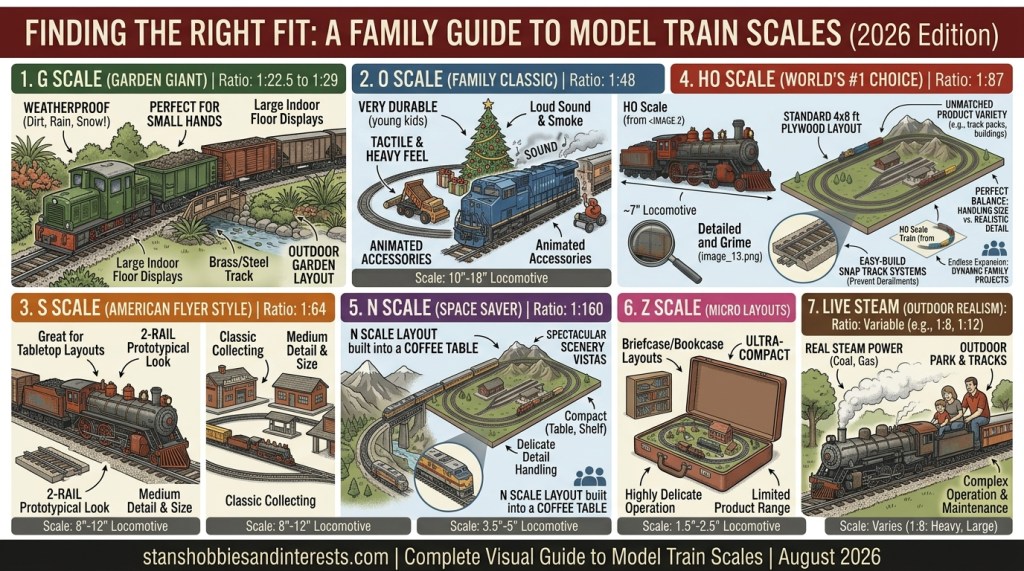
1. HO Scale (1:87 Ratio) — The World’s Most Popular Choice
HO Scale stands for “Half O” because it is roughly half the size of traditional O scale trains. Representing a 1:87 ratio, HO scale is the undisputed heavyweight champion of the model railroading world, making up over 60% of the entire hobby market.
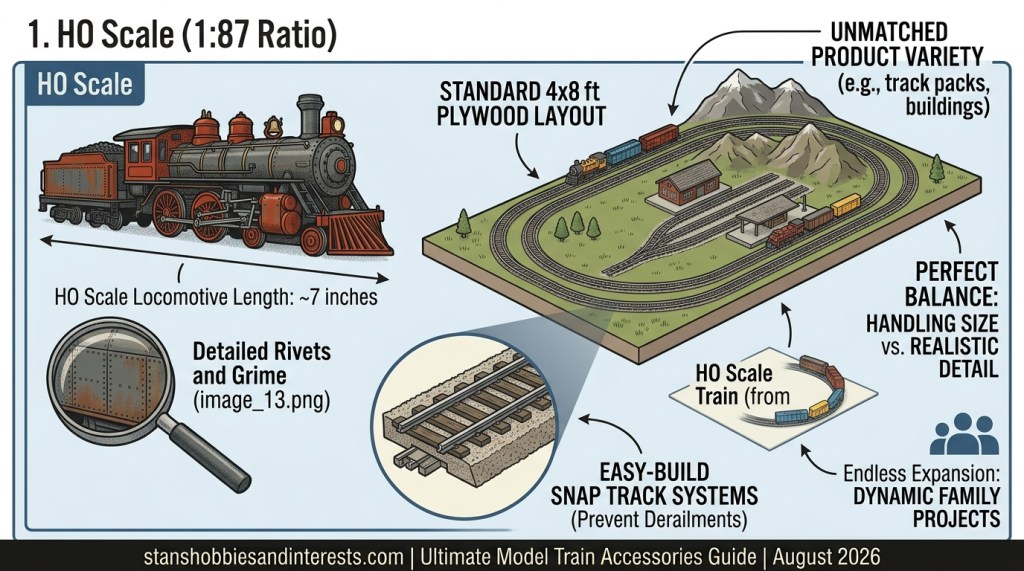
- Size: A standard diesel or steam locomotive is roughly 6 to 9 inches long.
- Space Needed: A standard 4×8 foot sheet of plywood provides ample space for a complete oval layout with sidings, freight yards, and detailed scenery.
- Product Availability: Unmatched. Virtually every railroad line, building kit, freight car, track variation, and digital sound accessory ever created is available in HO scale.
- Pros:
- Perfect balance of handling size and detail.
- Huge selection of budget-friendly starter sets and advanced digital equipment.
- Easy to assemble track systems with built-in roadbeds (like Bachmann E-Z Track or Kato Unitrack).
- Cons:
- Requires a dedicated table or board space (harder to fit on narrow bookshelves).
- Best For: Families with children ages 8 and up who want a balance between high detail, affordable starter options, and endless expansion potential.
2. N Scale (1:160 Ratio) — The Compact Space Saver
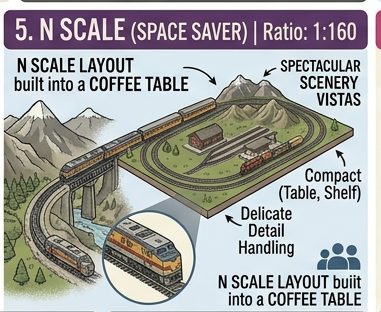
At nearly half the size of HO scale, N Scale (1:160 proportion) allows modelers to build sweeping landscapes and long, realistic trains in very tight spaces.
- Size: A locomotive is roughly 3.5 to 4.5 inches long—about the size of a finger.
- Space Needed: A complete layout with loop tracks, switching yards, and mountains can fit on a 2×4 foot hollow-core door, a coffee table, or a narrow wall shelf.
- Product Availability: Very strong and growing rapidly. Modern manufacturing allows N scale locomotives to feature incredible detail and working digital sound decoders.
- Pros:
- You can run long freight trains without taking over a room.
- Excellent for urban apartments or homes with limited extra space.
- Scenery dominates the layout, creating breathtaking mountain and landscape vistas.
- Cons:
- Tiny wheels and delicate detail parts require patient handling and good eyesight.
- Re-railing cars on track can be challenging for young children.
- Best For: Older kids (10+), teens, and adults who love scenery or have limited indoor space.
3. O Scale / O-Gauge (1:48 Ratio) — The Heavyweight Family Classic
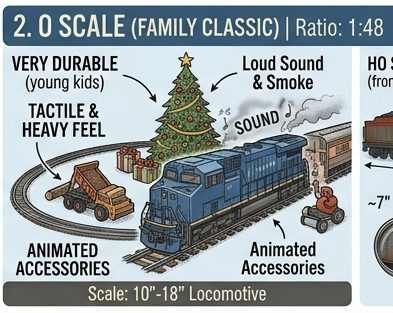
When people think of classic Christmas train sets around the holiday tree, they are usually thinking of O Scale (1:48 proportion), popularized by brands like Lionel. O scale trains are large, heavy, and extremely tactile.
- Size: Locomotives range from 10 to 18 inches long and feel substantial in hand.
- Space Needed: Requires significant room. A basic track circle usually needs at least a 4×4 foot footprint, while a multi-train layout often requires a large basement or full spare room.
- Product Availability: Excellent, especially for ready-to-run sets, animated accessories (like operating log loaders and flashing crossing gates), and classic American railroad names.
- Pros:
- Nearly indestructible; perfect for younger children to handle without breaking fine parts.
- Great built-in action features, smoke generators, and loud, realistic sound systems.
- Easy to place on tracks without frustration.
- Cons:
- Trains and tracks are significantly more expensive than HO or N scale.
- Track takes up a large footprint on floors or tables.
- Best For: Families with young children (ages 5–8), holiday floor displays, and lovers of classic 20th-century toy trains.
4. G Scale (1:22.5 to 1:29 Ratio) — The Garden & Living Room Giant
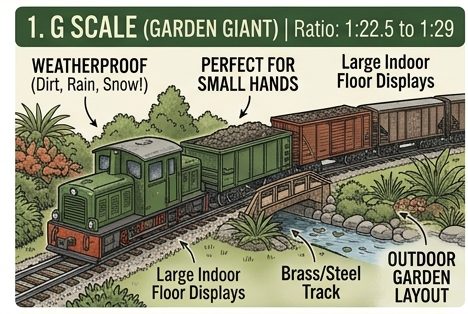
G Scale (short for “Garden Scale”) is the giant of the model train world. Built from weather-resistant plastics and heavy brass or stainless steel rails, these trains are designed to operate both indoors and outdoors in real gardens!
- Size: Locomotives are 18 to 24+ inches long and weigh several pounds.
- Space Needed: Ideal for outdoor backyards, large patios, or surrounding the floor of a spacious living room.
- Product Availability: Good, with major brands like LGB, Bachmann, and USA Trains specializing in rugged garden locomotives, outdoor track, and durable rolling stock.
- Pros:
- Weatherproof: Can run through outdoor garden beds, dirt, rain, and snow!
- Extremely durable and easy for toddlers and grandparents alike to operate.
- Makes an incredible visual centerpiece for landscaping or holiday displays.
- Cons:
- Requires a large financial investment per locomotive and track section.
- Bulky to store indoors when not in use.
- Best For: Outdoor landscaping enthusiasts, backyard hobbyists, and family floor displays.
5. Z Scale (1:220) & S Scale (1:64) — Niche & Specialty Sizes
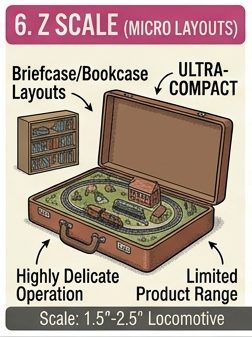
- Z Scale (1:220): One of the smallest micro-scales in existence. Locomotives are barely 2 inches long! You can build a complete operating Z scale railroad inside a briefcase or a picture frame. However, parts are delicate and selection is limited compared to HO or N.
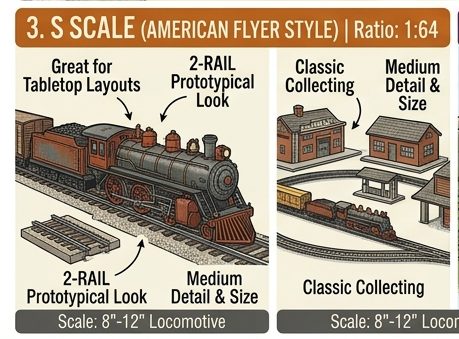
- S Scale (1:64): Famous for American Flyer trains, S scale sits directly between O and HO scale. It offers a great tactile feel with classic 2-rail track, though product variety is smaller and mostly catered to specialized collectors.
How to Choose the Right Scale: A Quick Decision Checklist
To narrow down your choice, answer these three quick questions:
- How much space do you have available?
- Shelf or small corner: N Scale
- 4×8 Foot Table or Spare Room: HO Scale
- Large Floor / Basement: O Scale
- Backyard / Garden: G Scale
- Who will be operating the trains?
- Young children (Ages 3–7): O Scale or G Scale (durable and easy to place on rails).
- School-age kids & Parents (Ages 8+): HO Scale (the ultimate family compromise).
- Teens & Detail Builders: HO Scale or N Scale.
- What is your budget and product goal?
- If you want the widest variety of track, building kits, cars, and budget options, stick with HO Scale.
Final Thoughts: Finding Your Family’s Perfect Scale
There is no single “best” scale in model railroading—only the scale that best fits your family’s space, budget, and imagination. Whether you choose the compact efficiency of N scale, the unmatched variety of HO scale, or the grand presence of O gauge, building a model railroad creates a hands-on learning environment and lasting memories for years to come.
Until then, happy modeling, and keep those trains rolling!

