Welcome to April! We’ve spent the last few months building the “Family Empire” from the ground up. We broke the circle to create our first siding, and last month, we gave our trains a job by introducing trackside commerce. But after a long day of hauling freight and moving commuters, where do your locomotives go to rest?
Just like a real-world car needs a garage and a gas station, your scale locomotives need a dedicated space for refueling, light repairs, and protection from the “elements” (even if those elements are just household dust!). This month, we’re exploring The Iron Horse Stable. Whether you run classic steam or modern diesel, creating a maintenance facility is one of the most rewarding ways to add realism and “character” to your model railroad.
1. Why Every Railroad Needs a “Stable”
In the golden age of railroading, locomotives were the most expensive assets a company owned. Leaving a multi-million dollar machine out in the rain wasn’t an option. Maintenance hubs—known as Engine Terminals—were the heartbeat of the line.
Integrating a stable into your layout serves three major purposes:
- Operational Variety: It creates a new “mission.” Instead of just stopping at a factory, your train now has to navigate back to the terminal for “service.”
- Visual Storytelling: A weathered engine house suggests a history of hard work.
- Protection: Keeping your engines inside a building when not in use helps keep dust off the delicate gears and electronic decoders.
2. The Steam Era: Coal, Water, and Sand
If your “Family Empire” features steam locomotives, your maintenance facility is a sensory experience. Steam engines are “living” machines that require three primary things to keep moving: Fuel (Coal or Oil), Water, and Sand.
The Water Column
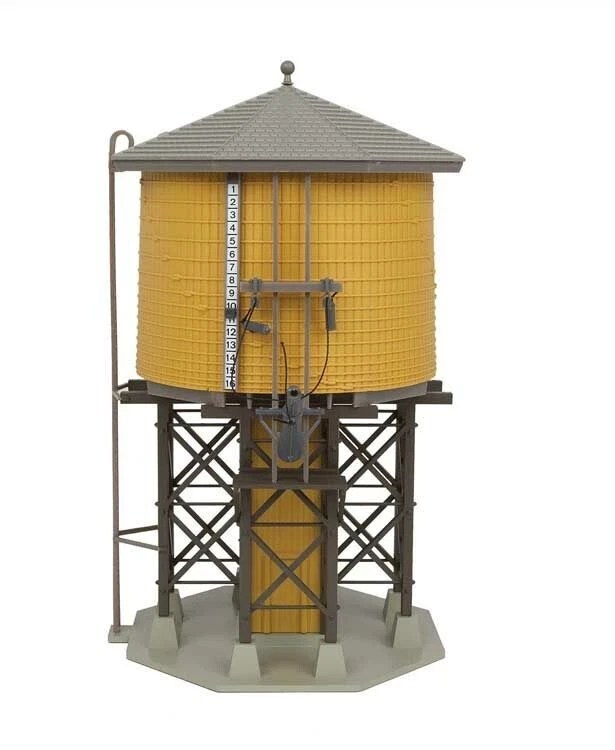
A steam engine is essentially a giant teakettle on wheels. It “exhales” water as steam, meaning it needs constant refills. A Water Column or a Cedar Water Tank is an essential trackside feature.
- Educational Tip: On real railroads, water tanks were spaced roughly every 10–15 miles!
The Coaling Station
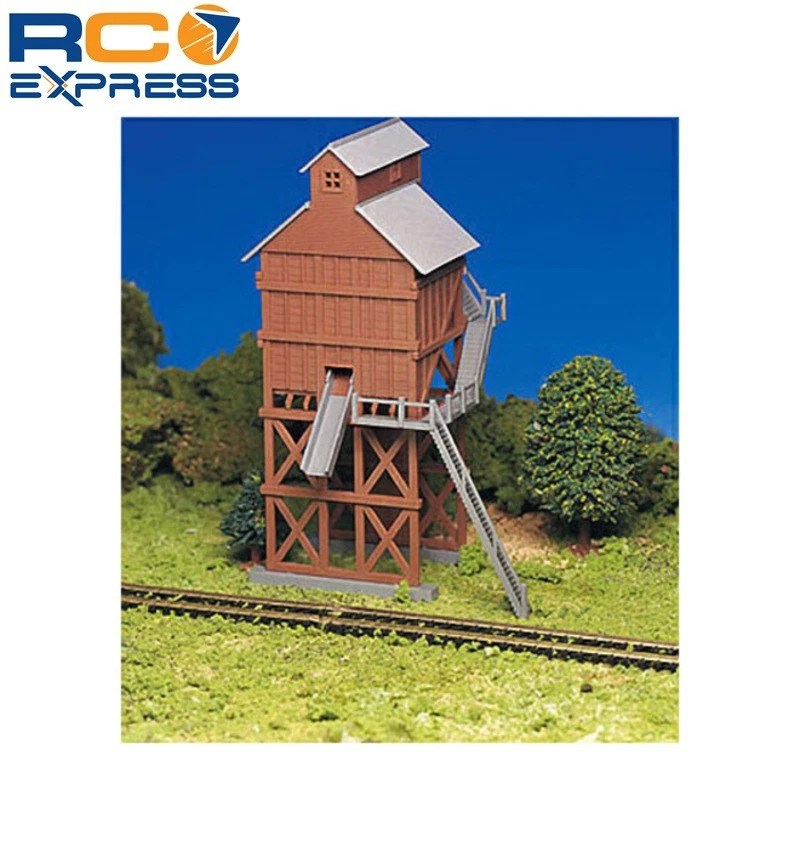
Whether it’s a massive concrete tower or a simple wooden trestle, the coaling station is where the energy comes from. For a beginner layout, a Small Wooden Coaling Tower kit provides a great vertical element that doesn’t take up much space.
The Sand House
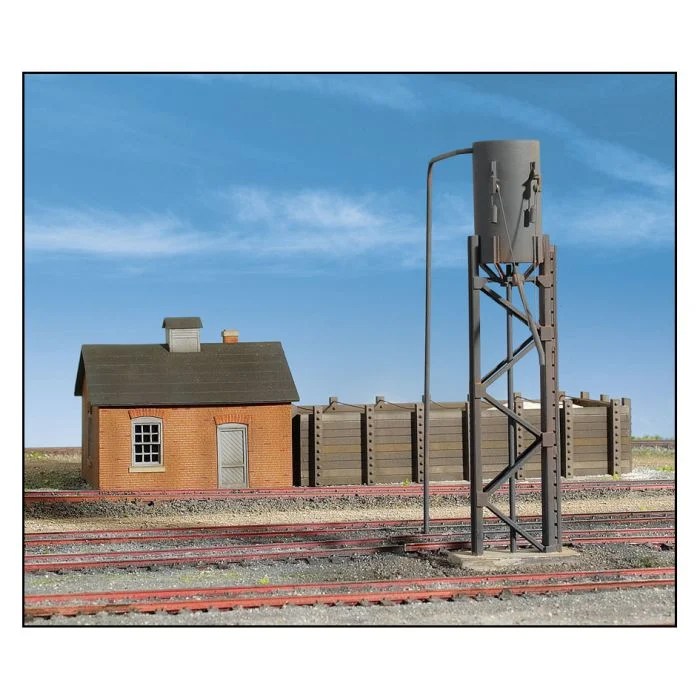
Why sand? To gain traction! When a heavy train tries to start on a steep grade or slippery wet rails, the engineer drops sand onto the tracks in front of the wheels. A small “Sand House” and drying tower is a charming, tiny detail that adds immense realism.
3. The Diesel Era: Fuel Pads and Sanding Towers
If your railroad is set in the modern era, your “stable” looks a bit different. Gone are the coal piles, replaced by the industrial efficiency of diesel service.
The Fueling Pad
Modern diesels refuel at a concrete pad equipped with fuel cranes (large hoses). This is an easy feature to model! You can create a “concrete” pad using a piece of styrene painted grey, and add a few fuel crane details.
- Look for Walthers Cornerstone Diesel Fueling Stations—they are the industry standard for easy-to-assemble kits that look professional right out of the box.
The Modern Sanding Tower
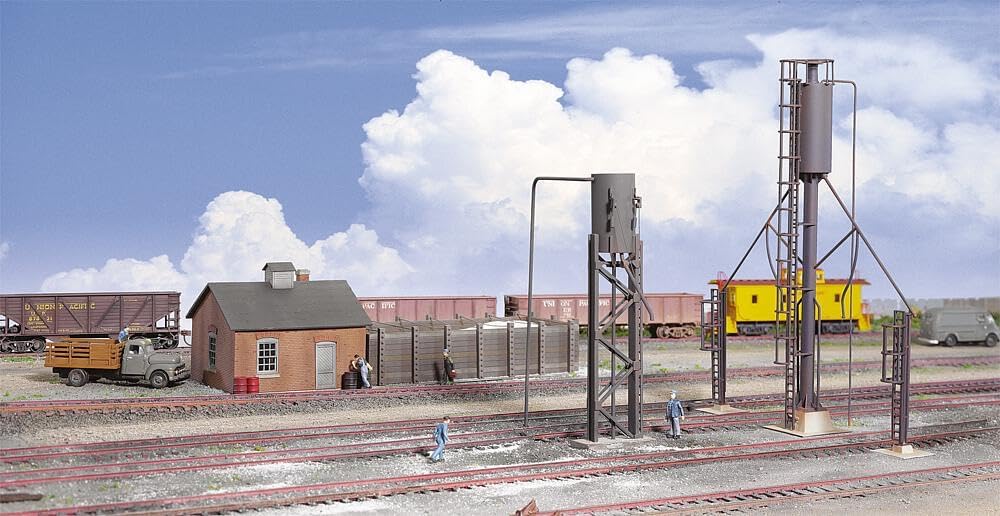
Diesels still need sand! Modern sanding towers are usually tall, thin steel structures. They are often painted silver or safety yellow and provide a great contrast to the dark colors of locomotives.
4. The Engine House: The Heart of the Stable
Regardless of the era, the Engine House is the star of the show. This is the “garage” where light repairs happen.
- For the Small Layout: A Single-Stall Engine House is perfect. It fits at the end of a siding and provides a clear “end point” for your workday.
- For the Growing Layout: A Two-Stall House allows you to keep your primary freight engine and your passenger engine side-by-side.
Choosing the Right Kit
When selecting your engine house, check the “clearance.” Some older steam-era houses have doors that are too narrow or short for modern, “high-cube” diesel locomotives.
- The Pikestuff Engine House kits are fantastic for modern modelers because they are “kitbash-friendly,” meaning you can easily combine two kits to make a longer building for those big “6-axle” locomotives.
5. Maintenance: Treating Your Engines Right
“Maintenance” isn’t just a building you look at—it’s something you do. To keep your “Family Empire” running smoothly for years, your locomotives need a little TLC.
Keep the Rails Clean
The number one cause of “stuttering” trains is dirty track. Before you park your engine in the stable for the night, run a track-cleaning block or a lint-free cloth with a drop of 91% Isopropyl alcohol over the rails.
Lubrication (Less is More!)
Locomotives have tiny moving parts. Every 50 hours of “run time,” a tiny drop of plastic-compatible oil on the gear journals is all you need.
- I highly recommend the Labelle Lubricants Starter Kit. It includes the specialized oil and grease needed for model trains without damaging the plastic parts.
The “White Glove” Treatment
When moving your engines from the track to the stable, try to handle them by the “fuel tank” or the solid chassis rather than the delicate plastic handrails on the top. This prevents “detail parts” from snapping off.
6. Layout Planning: Where Does the Stable Go?
The most realistic place for your Engine Terminal is near the turnout where your trains enter or leave the “main line.” This represents the “Lead Track.”
In a real railroad, engines “dwell” here while waiting for their next assignment. By placing your stable in a visible corner of your layout, you create a “display case” where your favorite engines can sit and look their best even when they aren’t moving.
Summary: Your May Project Checklist
Ready to give your iron horses a home? Here is your “Stable” shopping list:
- An Engine House kit (sized for your locomotives).
- Fueling/Coaling details (depending on your era).
- A Sanding Tower.
- A Maintenance Kit (Oil, grease, and track cleaner).
- Scenery details (Oil drums, spare wheelsets, and “Work in Progress” figures).
Giving your locomotives a place to rest completes the cycle of your railroad. It turns a collection of models into a functional transportation system with a beginning, a middle, and an end to every workday.
Coming in June: Now that the engines are serviced, it’s time to talk about the people! Join us for “The Miniature Citizen,” where we’ll discuss how to choose, paint, and place figures to bring the human element to your Family Empire.

