The Ultimate 2026 Guide to Buying a Kid’s First Telescope — From a Mom (and Grandpa) Who’s Been There

If you have ever stood in your backyard on a clear autumn night, looking up at the Moon while your child gasps at the outline of a lunar crater, you know the magic of astronomy. Getting kids hooked on stargazing is one of the most rewarding family activities imaginable. But let’s be honest: walk down the toy aisle or search online, and you are immediately flooded with plastic scopes promising “600x magnification!” that end up gathering dust in the garage.

As we navigate 2026, telescope technology and optics have evolved significantly. From classic budget refractors to smartphone-guided stars and compact smart imaging devices, finding the perfect scope depends on your family’s experience level, patience, and goals.

Whether you are a total beginner introducing your child to the night sky, a slightly experienced observer looking to upgrade, or a serious amateur astronomer seeking equipment the whole family can share, this comprehensive 2026 guide breaks down everything you need to know.

What Changed for 2026? Key Features to Look For

Before diving into specific models, it helps to know what modern astronomy gear offers today. The era of frustrating, shaky tripods and impossible manual alignment is largely behind us.

  1. Plate-Solving Smartphone Tech: Smartphone-assisted docks use your phone’s camera and location data to analyze star patterns overhead in real time. The screen shows arrows pointing exactly where to push the scope to hit your target.
  2. Accessible Tabletop Dobsonians: Small Newtonian reflectors mounted on sturdy, swivel tabletop bases remain the undisputed champions of value. They drop setup time to under sixty seconds.
  3. Smart Robotic Scopes: All-in-one digital imaging scopes have become lighter and far more affordable. These stack light digitally and stream crisp live color images of faint nebulae directly to smartphones or tablets.

1. Visual Spark / Beginner’s Guide: Young Kids & First-Time Families

Focus: Capturing immediate interest, ease of setup, zero maintenance, rugged design.

When buying for young children (ages 6–10) or families completely new to stargazing, your main goal is quick wins. If it takes thirty minutes to set up, your young astronomer will lose interest before you align the finderscope. You want clear lunar views, bright planets like Jupiter and Saturn, and intuitive manual controls.

Top Beginner Recommendation: Celestron AstroMaster 70AZ Refractor

  • Type: 70mm Refractor on Alt-Azimuth Mount
  • Best For: Kids ages 6–10 and stargazing newcomers
  • Why It Wins: Refractors use glass lenses sealed in a tube—meaning zero optical alignment (collimation) is required. The alt-azimuth mount uses smooth panning controls so kids can naturally point it like a camera tripod. It provides razor-sharp views of Moon craters, Saturn’s rings, and Jupiter’s four main moons.
  • Check Price on Amazon for Celestron AstroMaster 70AZ (Affiliate Link)

Budget Alternative: Celestron FirstScope Signature Series Moon

  • Type: 76mm Tabletop Newtonian Reflector
  • Best For: Young children (ages 5–8)
  • Why It Wins: Weighing under 5 lbs, this ultra-portable tabletop design sits right on a patio table or lap. Kids simply swivel the optical tube toward the Moon without wrestling tall tripod legs.
  • Check Price on Amazon for Celestron FirstScope (Affiliate Link)
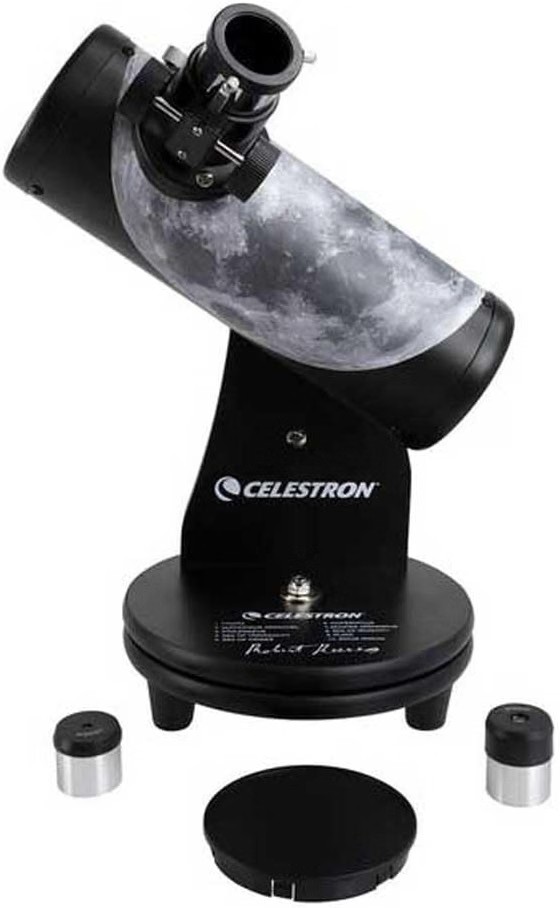
Stan’s Tip: When starting out with young ones, don’t worry about distant galaxies right away. Focus on the Moon! Use a low-power eyepiece (like a 25mm) first to give a wide, bright view. Finding your target easily builds instant excitement.

2. Infographic / Backyard Explorer: Slightly Experienced Astronomers

Focus: Practical, action-oriented backyard observation, larger light gathering, smartphone guidance.

If your family already knows a few major constellations, or if you have a tween ready for a serious tool, it is time to step up in aperture (lens/mirror size). Light gathering power is the true engine of any telescope—the bigger the mirror, the brighter and clearer deep-sky objects become.
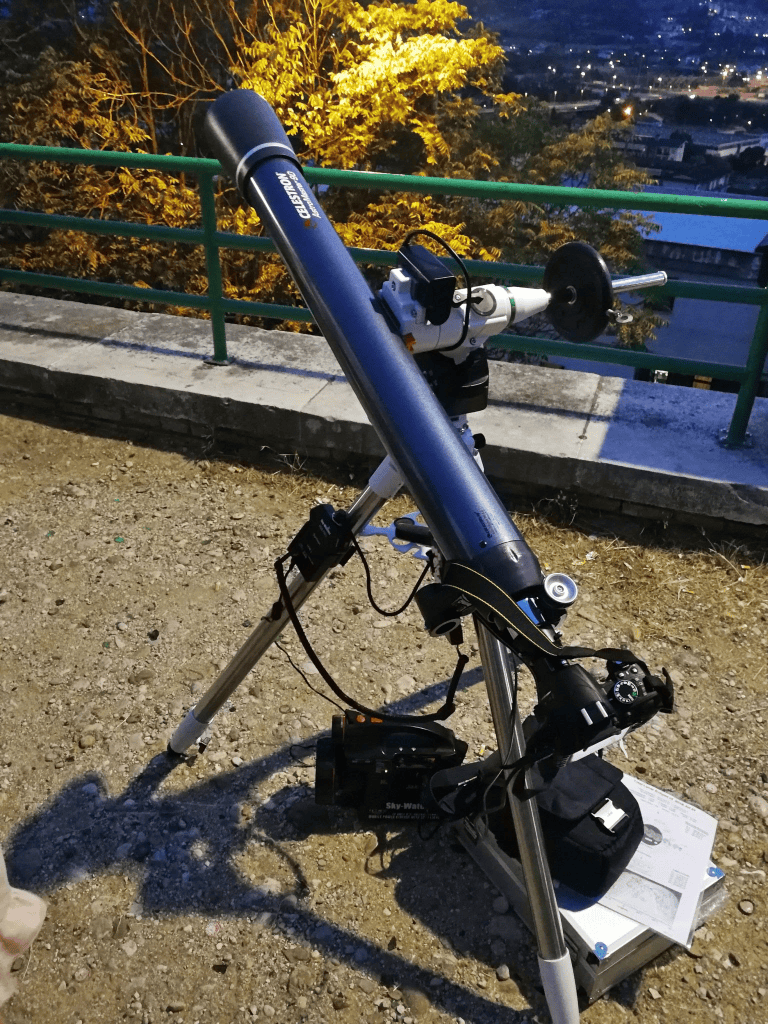
Tripod refractors set up easily in the yard.. Source: lucamato / Getty Images
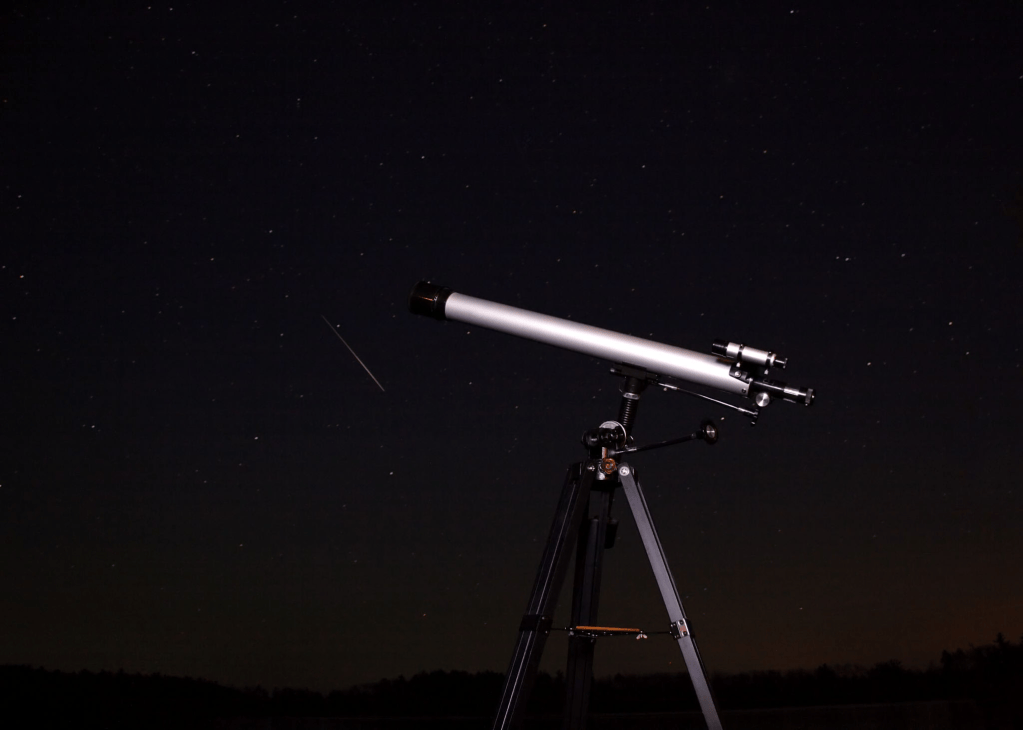
App-guided scopes point directly at celestial targets.. Source: Saturated / Getty Images

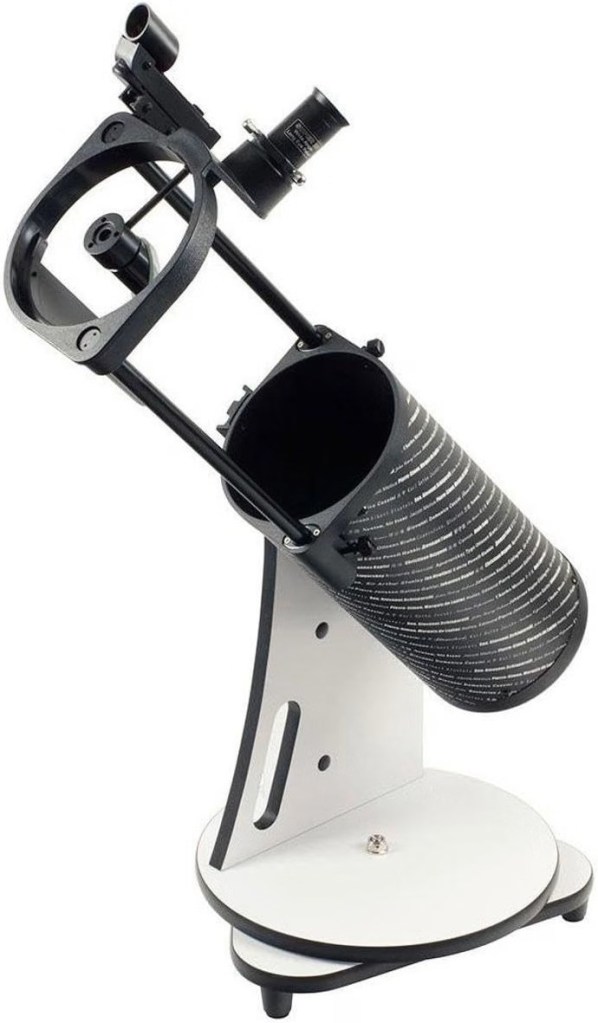
Top Mid-Range Pick: Sky-Watcher Heritage 130 Tabletop Dobsonian

  • Type: 130mm (5.1-inch) Parabolic Truss-Reflector
  • Best For: Growing astronomers, teens, and family backyard nights
  • Why It Wins: The Heritage 130 delivers huge optical performance for its price tag. Its collapsible truss tube makes it compact enough to store on a bedroom shelf or pack for camping trips. The 130mm mirror pulls in subtle details in the Orion Nebula (M42), the Andromeda Galaxy (M31), and delicate star clusters.
  • Check Price on Amazon for Sky-Watcher Heritage 130 (Affiliate Link)
Top Tech Pick: Celestron StarSense Explorer DX 130AZ

  • Type: 130mm Smartphone-Guided Reflector
  • Best For: Digitally-minded kids and families who want zero-frustration target finding.
  • Why It Wins: Place your phone in the integrated dock, open the StarSense app, and let plate-solving technology map the night sky overhead. Follow on-screen arrows to manually push the scope right to open clusters, double stars, and nebulae.
  • Check Price on Amazon for Celestron StarSense Explorer DX 130AZ (Affiliate Link)
Telescope ModelOptical DesignApertureBest Target AudienceKey Advantage
Celestron AstroMaster 70AZRefractor70mmBeginners / Kids 6–10No optical maintenance; sharp lunar views
Sky-Watcher Heritage 130Dobsonian Reflector130mmBackyard Explorers / TweensMaximum aperture per dollar; collapsible
StarSense Explorer DX 130AZSmartphone-Guided Reflector130mmTech-Savvy Families / TeensReal-time smartphone star navigation
Apertura AD8 / 8″ DobsonianFull-Size Dobsonian203mm (8″)Advanced Hobbyists / Lifetime UseDeep-space detail; planetary resolution
ZWO Seestar S30 ProSmart Digital Telescope30mm Triple Apo + SensorAstrophotography / Group ViewingStacks full-color photos to phone screens

Stan’s Tip: Keep a simple red LED flashlight in your pocket during stargazing sessions. White light from smartphones degrades night vision for up to 30 minutes, but red light lets you read star charts without ruining your eye’s dark adaptation!

3. Deep Space & Astrophotography: Advanced Hobbyists & Serious Enthusiasts

Focus: Deep-sky detail, large mirrors, automated tracking, family image sharing.

For families where astronomy has become a serious shared hobby, or for parents wanting a scope that delivers lifetime views, you have two clear directions: massive optical aperture or modern smart imaging.

The Classic Visual Powerhouse: Apertura AD8 8-Inch Dobsonian

  • Type: 203mm (8-inch) Ground-Standing Dobsonian Reflector
  • Best For: Serious amateur astronomers and older teens
  • Why It Wins: Ask almost any experienced astronomer what telescope they would choose if they could only have one, and the answer is almost always an 8-inch Dobsonian. An 8-inch mirror gathers over 800 times more light than the human eye. Spiral arms in distant galaxies, individual stars resolved in globular clusters, and intricate cloud bands on Jupiter are all within reach.
  • Check Price on Amazon for Apertura AD8 Dobsonian (Affiliate Link)

The Modern Smart Revolution: ZWO Seestar S30 Pro Smart Telescope

  • Type: All-In-One Smart Digital Astrophotography Scope
  • Best For: Families wanting living-room image sharing and deep-sky astrophotography without complex software setup.
  • Why It Wins: Compact enough to fit in a small backpack, the Seestar S30 Pro auto-aligns, tracks targets, and digitally stacks light exposures. Within minutes, a vibrant, full-color view of the Ring Nebula or Whirlpool Galaxy renders directly on your tablet or smartphone screen—making it ideal for sharing views with multiple family members simultaneously.
  • Check Price on Amazon for ZWO Seestar S30 Pro (Affiliate Link)

4 Essential Accessories to Complete Your Kit

No matter which telescope you pick, adding a few inexpensive accessories can turn a good night into an unforgettable one:

  1. Planisphere / Adjustable Star Chart: A physical plastic star wheel helps kids learn how constellations rotate throughout the season without relying on batteries.
  2. Quality Moon Filter: The Moon is incredibly bright through a telescope. A neutral density filter threads onto the eyepiece to cut glare and highlight fine crater detail.
  3. Universal Smartphone Adapter: Let your kids snap their very first photo of lunar craters through the eyepiece to share with grandparents or classmates.
  4. Stargazing Logbook: Keep track of targets observed, dates, atmospheric conditions, and drawings of planetary features.

Watching hands-on demonstrations can also make setting up tripods, aligning red-dot finders, and using tabletop bases much simpler.

The video below shows setup steps, manual balancing, and alignment tips for entry-level refractor and reflector telescopes.

Final Thoughts: Making Memories Under the Stars

Buying a child’s first telescope isn’t just about optics, focal lengths, or apertures—it’s about opening a window into the wider universe and sharing moments of wonder together as a family. Start with an manageable scope that fits your space, pack a thermos of hot cocoa, and head out onto the deck or into the backyard on the next clear evening.

Here is a proper summary that reflects the full scope of each of the three article areas:

Visual Spark / Beginner’s Guide: Focuses on capturing immediate interest for newcomers by demystifying the night sky in an accessible, quick-read format. It covers fundamental stargazing basics, constellation identification, and initial celestial navigation without requiring specialized equipment.

Infographic / Naked-Eye Stargazing: A practical, action-oriented guide designed for immediate backyard observation. It outlines clear, step-by-step targets visible to the naked eye or basic binoculars—including bright planets like Jupiter and Saturn, the Orion constellation, and tracking the International Space Station.

Deep Space & Astrophotography: Explores more advanced astronomical concepts, shifting focus beyond the solar system toward deep-sky phenomena like nebulae, star clusters, and distant galaxies. It bridges the gap between basic visual stargazing and using telescope optics to capture and understand cosmic structures.

Clear sky’s and happy hunting.
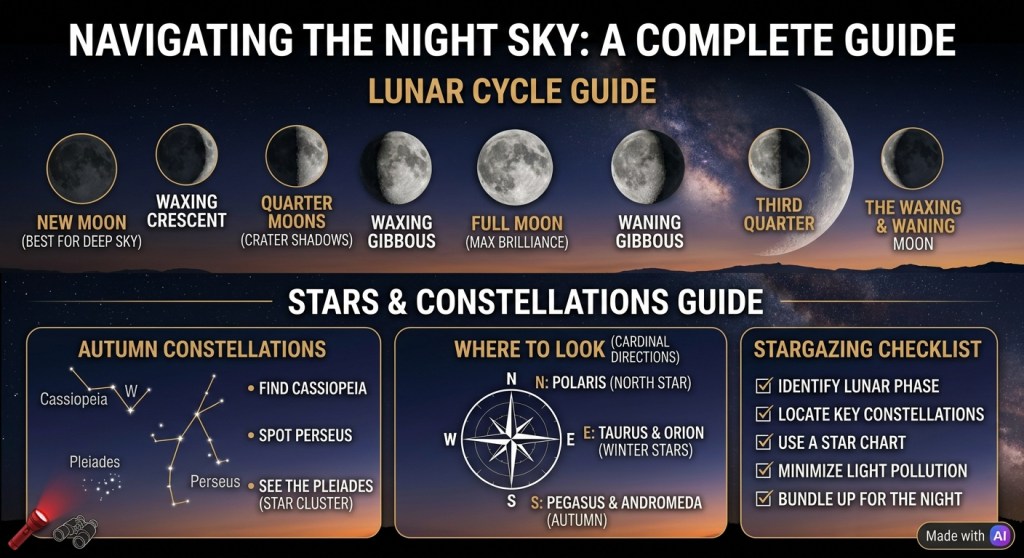
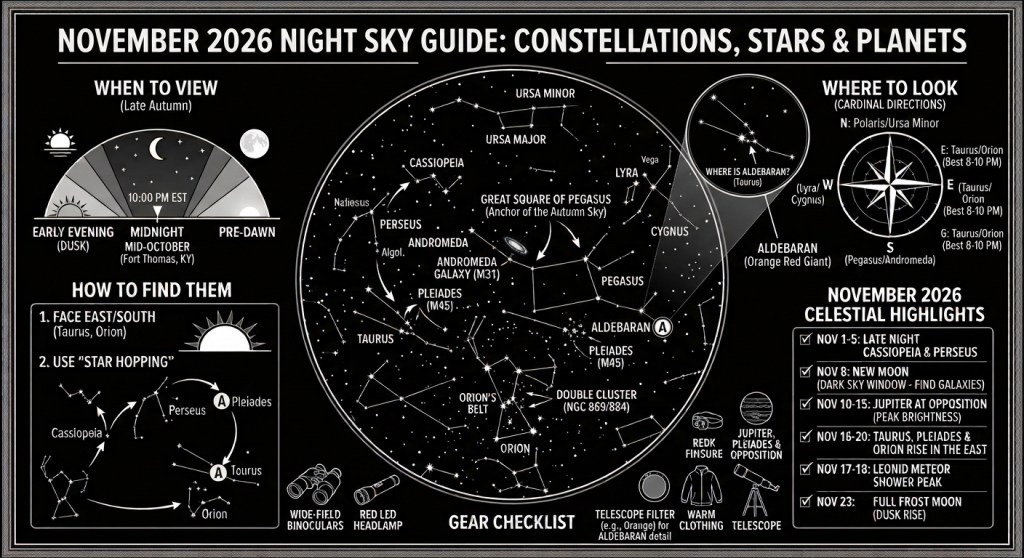
November 2026 Night Sky Guide: Leonid Meteors, Jovian Showcase & Autumn Treasures

As crisp late-autumn air settles across the backyard, November offers some of the finest and most transparent stargazing conditions of the entire year. With dusk arriving early in the evening, long dark nights provide an expansive canvas for families, total beginners, and manual “light bucket” observers to explore solar system giants, bright shooting stars, and distant deep-space galaxies.

Whether you are stepping onto the back porch with your naked eyes, sweeping the Milky Way with a sturdy pair of binoculars, or using a manual reflector telescope, November 2026 delivers a packed calendar of celestial highlights.

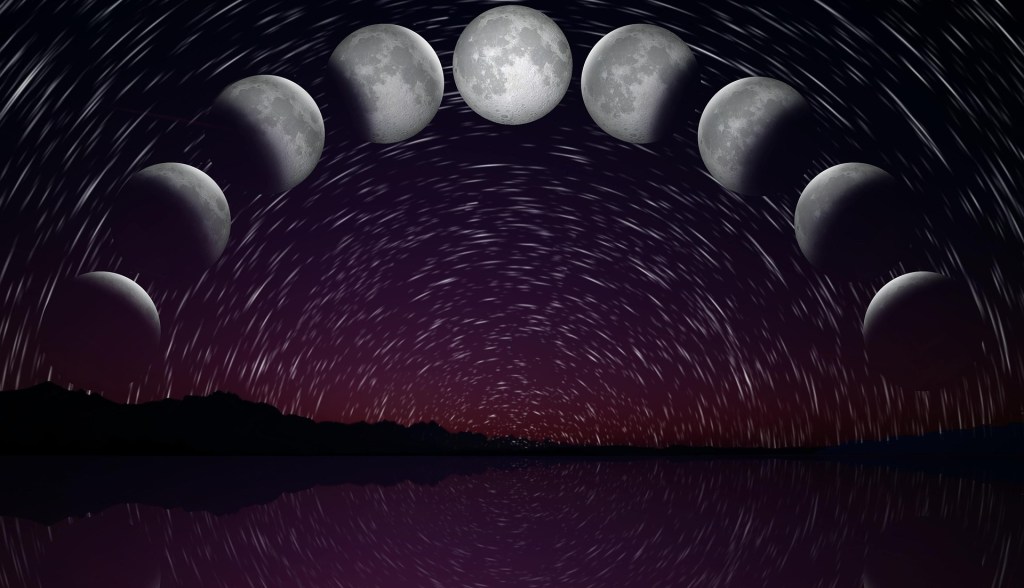
1. The November Moon: Frost Moon & Dark-Sky Windows

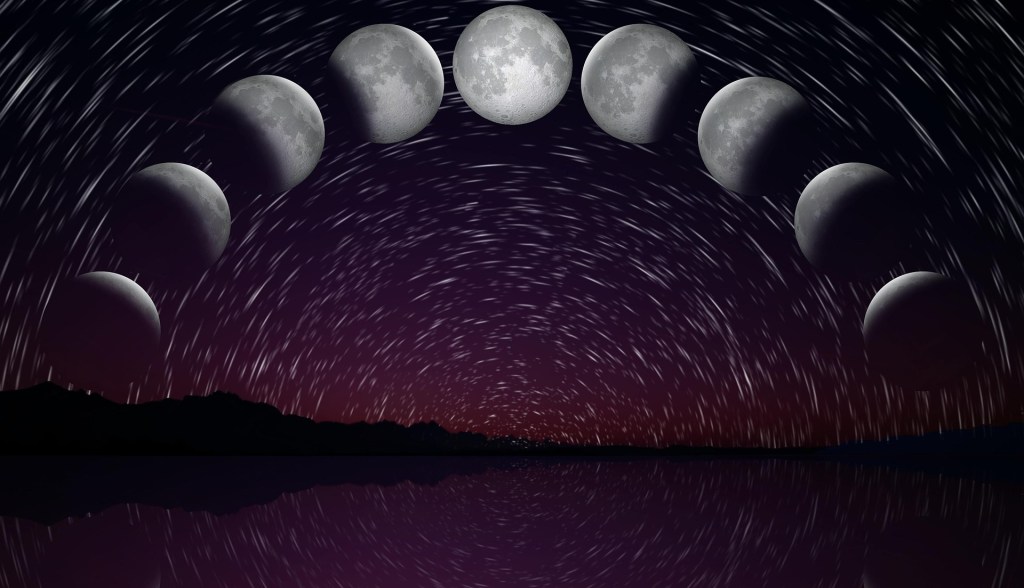
The Moon serves as our primary clock in the night sky, offering dramatic contrast along its terminator line during crescent phases and brilliant ambient light during its full phase.

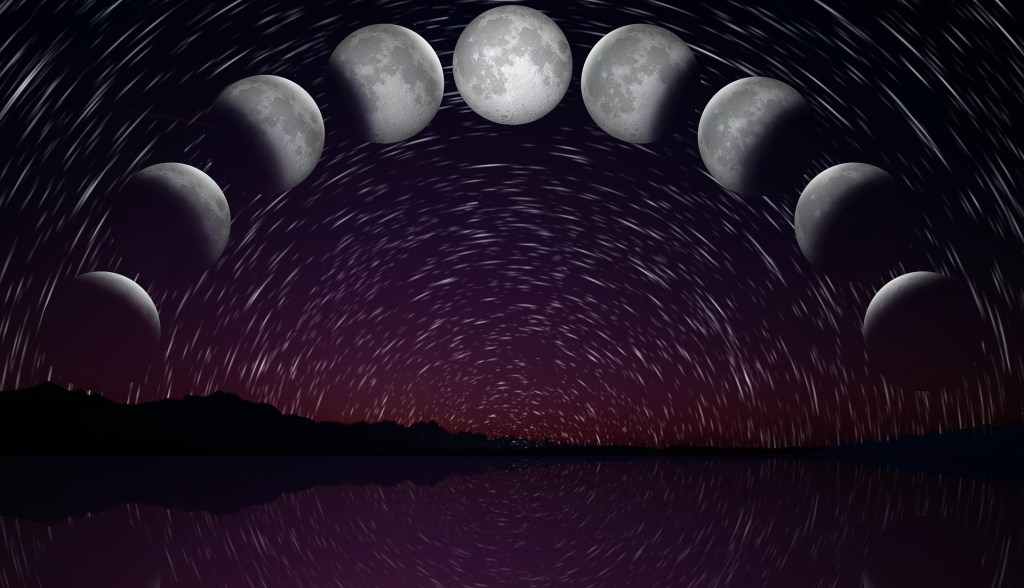
Key Lunar Phases for November 2026

  • November 1–2 — Last Quarter Moon: Positioned high overhead near dawn, casting long, stark shadows across prominent craters like Tycho and Clavius.
  • November 8–9 — New Moon: The prime dark-sky window of the month! With zero moonlight interfering, faint nebulae, star clusters, and distant galaxies glow at their absolute brightest.
  • November 17 — First Quarter Moon: Perfect for early evening family observing sessions. The Moon sits high in the south at sunset, revealing sharp ridge detail along the Mare Imbrium boundary.
  • November 24 — The Full Frost Moon: Rising shortly after sunset, the full moon floods late autumn backyards with a brilliant, silvery glow.

Stan’s Stargazing Tip:During the dark-sky week surrounding the New Moon on November 8–9, target faint deep-space objects like the Triangulum Galaxy (M33) or the Pleiades. When observing the dazzling Full Frost Moon later in the month, thread anAstromania 1.25″ Variable Polarizing Filter onto your eyepiece to cut extreme glare and protect your eye comfort.

2. Planetary Roundup: Jupiter, Saturn, and Pre-Dawn Alignment

November brings phenomenal planetary action, highlighted by brilliant evening gas giants and a rare pre-dawn gathering of bright worlds!

Jupiter: The Autumn Showcase

Jupiter is the undisputed king of the November night sky! Rising in the east during the evening and remaining visible through the night, Jupiter shines at its brightest and largest of the season. Through a simple pair of binoculars, you can easily spot its four Galilean moons—Io, Europa, Ganymede, and Callisto—lined up like bright cosmic beads. Higher magnification with a backyard telescope reveals dark Equatorial Belts and the famous Great Red Spot.

  • Date: November 15–16, 2026 (closest approach) Star WalkStar Walk
  • Planets involved: Jupiter and Saturn (with Mars also nearby in the sky) Star WalkStar Walk+1
  • Angular separation: ~1°11′ (about three Full Moon diameters) Star WalkStar Walk
  • Visibility: Pre‑dawn — best from late evening into the hour before sunrise Star WalkStar Walk+1
  • Location: Visible from Fort Thomas, KY, and much of the U.S. under dark skies Astronomy MagazineAstronomy Magazine
  • Equipment: Naked eye or binoculars; binoculars improve detail www.telescopeadvisor.comwww.t

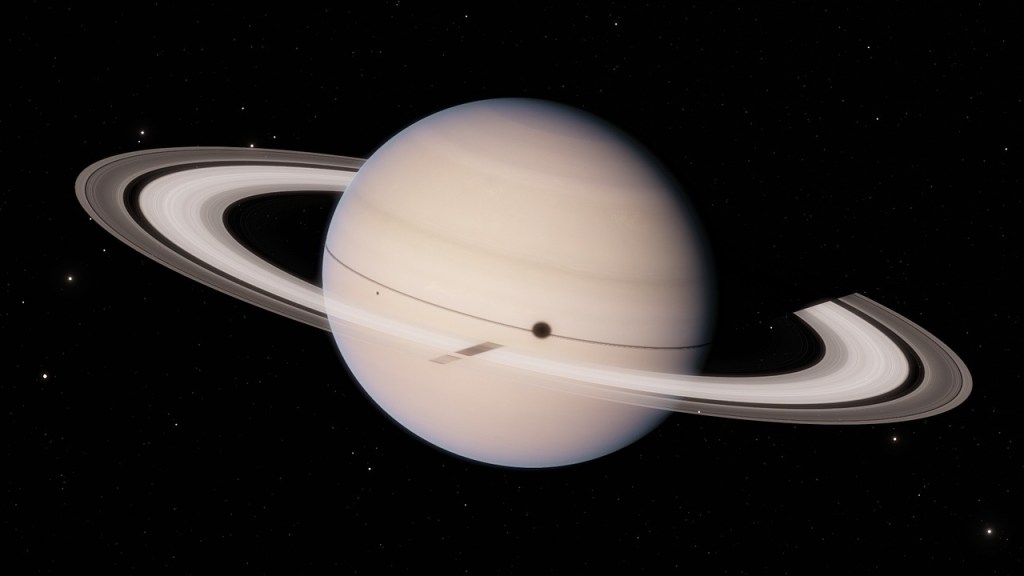
Saturn: Evening Ring Showcase

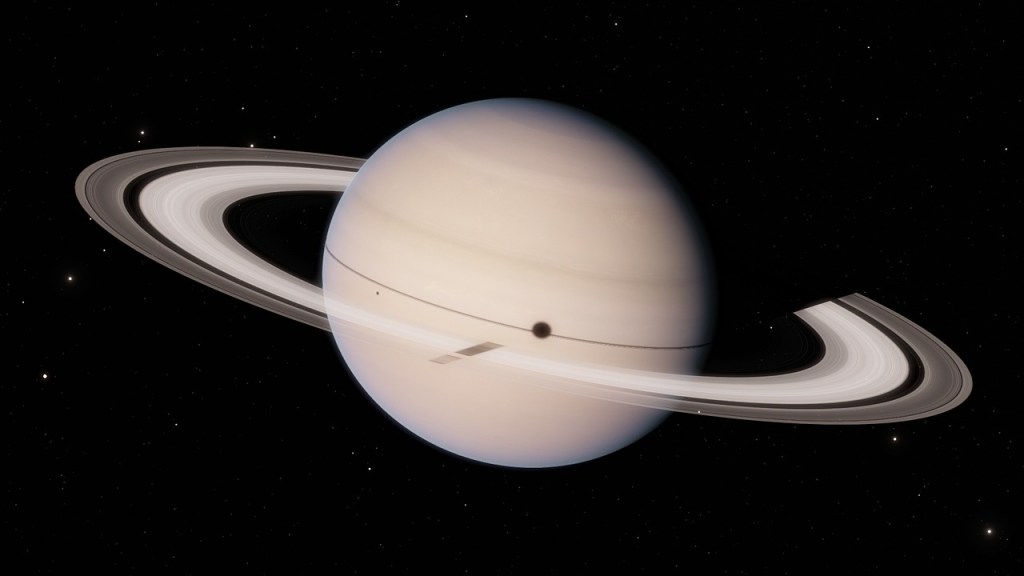
Saturn remains prominently placed high in the southern sky during early evening hours. Its warm golden light offers steady, crisp views. A light bucket telescope easily resolves its magnificent ring system, the dark Cassini Division gap, and its giant moon, Titan, before the planet sets in the late night hours.

Pre-Dawn Parade & Mars-Jupiter Conjunction

For early risers, mid-to-late November presents a dramatic pre-dawn lineup. Around November 15–16, Mars and Jupiter pass extremely close to one another in the sky—close enough to frame together in the same binocular field of view! Meanwhile, dazzling Venus shines as the “Morning Star” low in the east, accompanied by distant Uranus visible in binoculars near Taurus.

3. Stars and Constellations: Taurus, The Pleiades & Perseus

November marks the arrival of classic late-autumn constellations, rich with sparkling star clusters and deep-sky treasures.

Taurus the Bull & The Pleiades (M45)

Look toward the eastern sky during early evening to locate Taurus. Anchored by the bright orange-red giant star Aldebaran, Taurus represents the bull charging across the sky.

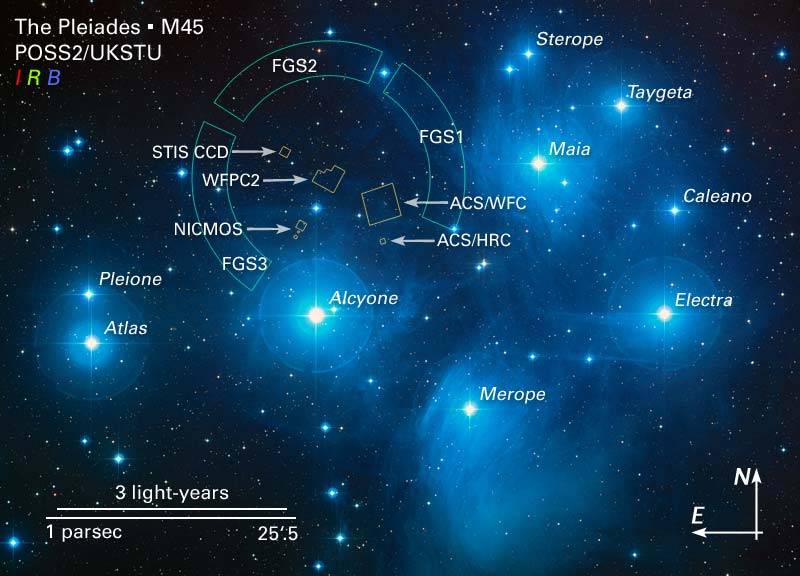
  • The Pleiades (The Seven Sisters / M45): Riding on the back of Taurus, this jewel-box open star cluster is one of the most magnificent sights in the sky. Easily visible to the naked eye as a tiny dipper shape of blue-white stars, a simple pair of binoculars reveals dozens of glittering stars suspended like diamonds on dark velvet.

Perseus & The Double Cluster

High overhead, the constellation Perseus guards the autumn sky. Positioned between Perseus and Cassiopeia sits the famous Double Cluster (NGC 869 & NGC 884). These side-by-side star clusters are easily spotted with binoculars or a wide-field eyepiece, showing hundreds of dense, sparkling stars.

4. November Celestial Events: Leonid Meteors & Conjunctions

DateSky EventTarget / DirectionBest Viewing Time
Nov 8–9New Moon (Dark Sky Window)Deep Sky (Pleiades, Double Cluster)All Night
Nov 11–12Northern Taurid Meteor PeakTaurus / Full Sky (Fireball Watch)Midnight to Pre-Dawn
Nov 15–16Mars & Jupiter ConjunctionEastern Sky (Very Close Pairing)Pre-Dawn
Nov 17–18Leonid Meteor Shower PeakEastern Sky (Leo Radiant)Midnight to Pre-Dawn (Moon-Free!)
Nov 24Full Frost / Beaver MoonEastern HorizonDusk / Early Evening

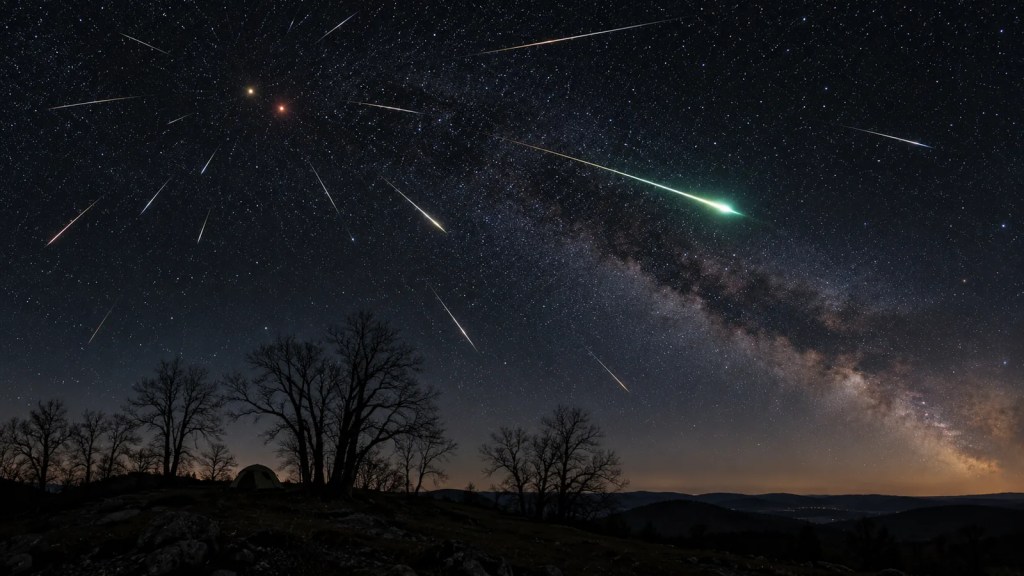
The Leonid Meteor Shower (Peak: November 17–18)

Produced by debris left behind by Comet Tempel-Tuttle, the Leonid Meteor Shower peaks on the night of November 17 into the morning of November 18. The waxing crescent Moon sets early in the evening, leaving a completely dark, moonless sky for peak viewing hours!

The Leonids are world-famous for being extremely fast—hitting Earth’s atmosphere at 44 miles per second—and frequently leaving glowing, persistent vapor trails! Expect around 10 to 15 meteors per hour under dark skies.

Stan’s Stargazing Tip:You don’t need a telescope or binoculars to watch meteor showers—your bare eyes give you the widest field of view! Recline in a cozy lawn chair facing east toward the constellation Leo after midnight, wrap up in heavy blankets, and give your eyes 20 full minutes to adapt to the dark.

Stargazer’s Gear Toolkit for November

Crisp autumn nights mean cold air and dew, so having the right gear keeps your observing sessions warm and productive:

Beginner & Advanced Observer Guide

For the Absolute Beginner

  • Star Hopping 101: Start with bright anchors! Find the “W” shape of Cassiopeia high in the north. Follow the point of the “W” downward to locate Perseus, and then sweep right to land on the sparkling cluster of The Pleiades.
  • Understanding “Seeing” Conditions: If the stars are twinkling wildly overhead, Earth’s upper atmosphere is turbulent. High-power views will look blurry. On nights when stars shine steadily without flickering, fire up your higher-magnification eyepieces for crisp details on Jupiter and Saturn!

For the Experienced Astronomer

  • Targeting the Triangulum Galaxy (M33): Around the New Moon on November 8–9, challenge yourself to find M33 in the constellation Triangulum. Under dark rural skies, this face-on spiral galaxy shows faint, delicate spiral arm structure in 8-inch and larger light bucket reflectors.
  • Jupiter Moons Transits: Check a sky app for precise timing to observe shadow transits, where the dark circular shadows of Io or Europa cross directly over Jupiter’s bright cloud tops.

Quick Reference Checklist for Families

  1. Dress for Autumn Frost: November temperatures drop rapidly after dark. Layer up with thermal clothing, insulated boots, heavy gloves, and bring a thermos of hot cocoa to keep young astronomers warm.
  2. Protect Night Vision: Avoid looking at white flashlight beams or bright cell phone screens. Red light keeps your dark adaptation intact so you can spot faint deep-sky targets.
  3. Manage Dew on Optics: Late-autumn moisture can quickly fog up lenses and eyepieces. Store gear in an unheated garage or porch prior to observing so it matches the outdoor temperature and use dew shields to keep optics dry.

Clear skies and happy hunting!

A Beginner’s Guide to Seeing Planets in Your Backyard Telescope!

There is an unforgettable magic the first time you steer a telescope across the dark void and watch a distant world swim into focus. You are no longer looking at a glossy photograph or a high-tech simulation; you are looking at live, raw photons that bounced off another planet millions of miles away and traveled through deep space to reach your eye.

For families and newcomers, jumping into planetary observing is one of the most rewarding hobbies on Earth. But how do you go from staring at a confusing tube on a tripod to tracking the cloud bands of Jupiter or the icy rings of Saturn?

Whether you are using a modest starter scope or optimizing a classic reflector, this comprehensive guide will give you the essential science, practical tips, and gear know-how to turn your backyard into a front-row seat for the solar system.

The Big Secret: Why Stars Twinkle and Planets Don’t

Before you even touch a focuser, the absolute first step to finding a planet is knowing how to spot one with your naked eye.

Have you ever wondered why stars flicker rapidly while some bright “stars” shine with a smooth, rock-steady light? It comes down to physics and optical distance:

  • Point Sources vs. Disk Sources: Stars are so unfathomably far away that even through the world’s largest telescopes, their light arrives at Earth as a microscopic point. As that tiny needle of light passes through our turbulent atmosphere, atmospheric motion bends it back and forth, making it “twinkle”.
  • Planetary Disks: Planets are much closer to Earth. Through a optic system, they are physical disks. Because the light comes from a wider beam rather than a single point, our atmosphere cannot easily distort the entire beam at once.
  • The Golden Rule: If you see a bright object high in the sky that refuses to twinkle, you are almost certainly looking at a planet!

All planets move along a predictable highway across the night sky known as the ecliptic—the imaginary line representing the flat plane of our solar system. The Sun, Moon, and all major planets travel along this exact path through the constellations of the Zodiac.

What Can You Actually See Through a Backyard Scope?

It is vital to set realistic expectations. Backyard astronomy is not about massive Hubble-style images; it is about delicate, razor-sharp real-time details that reward patient observation.

1. Jupiter: The King of Planets

Jupiter is the undisputed champion for beginner astronomers. Even through a small 60mm telescope, Jupiter reveals its distinct dark reddish-brown Equatorial Belts and bright white zones.

  • The Jovian Dance: With almost any telescope, you will immediately notice up to four bright specks lined up alongside the planet. These are the Galilean Moons—Io, Europa, Ganymede, and Callisto. If you sketch their positions night after night, you can watch them physically orbit Jupiter, just as Galileo did in 1610!
  • Advanced Target: Try tracking the Great Red Spot—a giant storm larger than Earth itself that has raged for centuries. Because Jupiter rotates rapidly (one full day takes under 10 hours!), the Red Spot crosses the front of the disk every night.

2. Saturn: The Jewel of the Solar System

If you want to spark a lifelong love of science in a child, show them Saturn. Even at 30x to 50x magnification, Saturn’s icy ring system snaps into sharp contrast against the deep black of space.

  • What to Look For: On nights with steady atmospheric conditions, look for the subtle gap within the main rings known as the Cassini Division. You will also easily spot Saturn’s giant moon Titan, shimmering nearby like a solitary star.
  • Pro Tip: Earth periodically passes through Saturn’s ring plane, turning the rings edge-on and making them temporarily appear to vanish! Observing how the angle of the rings shifts from year to year is a incredible long-term family project.

3. Venus & Mercury: The Inner Phases

Because Venus and Mercury orbit closer to the Sun than Earth does, we view them from the side. As a result, they display crescent, half, and gibbous phases just like our Moon!

  • Venus: Glowing as the brilliant “Evening Star” or “Morning Star,” Venus is the brightest natural object in the sky after the Moon. While dense sulfuric acid clouds prevent us from seeing surface features, tracking its dramatic changing crescent phases over several months is breathtaking.

4. Mars: The Red Planet

Mars is famously challenging because its distance from Earth changes dramatically. During “opposition” events (when Earth and Mars are closest), a small telescope under high magnification can reveal the stark white polar ice caps and dark surface markings like Syrtis Major.

3 Essential Tips for Crisp Planetary Views

┌─────────────────────────────────────────────────────────────────┐
│ PLANETARY OBSERVING CHECKLIST │
├─────────────────────────────────────────────────────────────────┤
│ [ ] Let your telescope cool down outdoors (30–60 mins) │
│ [ ] Observe from grass instead of warm concrete decks │
│ [ ] Check atmospheric “seeing” (are stars steady overhead?) │
│ [ ] Start with a lower power eyepiece, then boost magnification │
└─────────────────────────────────────────────────────────────────┘

Getting a great view is less about buying the biggest telescope and more about mastering light and atmosphere.

For great information on starter telescopes visit either Amazon or Optics Planet.

1. Let Your Optics Equalize (Thermal Equilibrium)

Glass and metal expand and contract with temperature changes. If you carry a warm telescope straight out of a heated house into the cool night air, internal thermal currents will blur your views like heat waves rising off a summer highway. Set your telescope outside 30 to 60 minutes before observing to let the mirror or lens adjust.

2. Avoid Thermal Plumes (Location Matters)

Never set up your tripod on an asphalt driveway or a wooden deck that has been baking in the summer sun. These surfaces radiate heat upwards all night, creating severe atmospheric distortion. Set up your tripod on grass or bare dirt whenever possible!

3. Do Not Over-Magnify!

The biggest trap for beginners is buying cheap eyepieces that promise “600x Magnification!” On most nights, Earth’s atmospheric turbulence caps usable magnification at around 150x to 200x, regardless of your telescope’s size.

A smaller, sharp, razor-clear planetary image at 100x magnification will always reveal more detail than a large, blurry, washed-out image at 300x!

Gear Up: Essential Accessories for Planetary Astronomy

To get the most out of your backyard sessions, having the right auxiliary gear makes all the difference:

  • Quality Plössl or Planetary Eyepieces: Upgrading from the basic plastic eyepieces bundled with starter telescopes to mid-range dedicated eyepieces dramatically improves contrast and color fidelity. Wide-Field Planetary Eyepieces.
  • Barlow Lenses: A high-quality 2x Barlow lens instantly doubles the magnification of every eyepiece you own without sacrificing eye relief. 2x Achromatic Barlow Lenses.
  • Color Planetary Filters: Threading colored glass filters onto your eyepiece cuts down intense planetary glare and enhances subtle surface features—a #80A Blue filter brings out Jupiter’s cloud belts, while a #23A Light Red filter boosts contrast on Martian ice caps. Planetary Eyepiece Color Filter Sets.
  • Manual Drive Motors & Slow-Motion Knobs: Because Earth rotates, planets will quickly drift out of your field of view at high magnification. Adding a simple clock-drive tracking motor or upgraded slow-motion control cables keeps targets smoothly centered. Telescope Tracking Motors & Mount Upgrades.

Step Outside and Look Up!

You don’t need a degree in astrophysics or an observatory dome on your roof to explore the solar system. Armed with a basic scope, a little thermal preparation, and an eager curious mindset, your family can step out into the yard tonight and witness real cosmic wonders.

Grab your star chart, let your optical tube cool down, and enjoy your journey across the night sky!

To help you get your telescope pointed in the right direction, here is a fantastic video breakdown on aligning finder scopes and star-hopping to solar system targets: How to Use a Beginner Telescope.

This video provides an excellent visual demonstration of setting up a beginner telescope, aligning the finder, and using star charts to locate targets easily.

Clear skies and happy hunting!

October 2026 Night Sky Guide: Orionid Meteors, Gas Giants & Autumn Constellations

As crisp autumn air settles in and crisp October nights lengthen, stargazers are treated to some of the finest backyard observing conditions of the year. With dusk arriving earlier each evening, October 2026 brings an ideal setup for families, beginners, and seasoned observers to explore dramatic lunar features, prime planetary views, and shooting stars.

Whether you are stepping into the backyard with your naked eyes, a trusty pair of binoculars, or a manual light bucket telescope, October delivers a packed calendar of celestial highlights across the autumn sky.

1. The October Moon: Hunter’s Moon & Deep-Sky Windows

The Moon serves as our primary clock in the night sky, offering crisp contrast along its terminator line during early phases and brilliant ambient light during its full phase.

Key Lunar Phases for October 2026

  • October 2 — Last Quarter Moon: High overhead near dawn, casting long, stark shadows across prominent craters like Tycho and Clavius.
  • October 10 — New Moon: The prime dark-sky window of the month! With zero moonlight interfering, faint galaxies, nebulae, and star clusters shine at their absolute brightest.
  • October 17 — First Quarter Moon: Perfect for early evening family observing sessions. The Moon sits high in the south at sunset, revealing sharp ridge detail along the Mare Imbrium boundary.
  • October 24 — The Full Hunter’s Moon: The classic October full moon rises shortly after sunset with a striking amber glow, illuminating autumn backyards late into the night.

Stan’s Stargazing Tip:During the week surrounding the New Moon on October 10, target deep-sky faint fuzzies like the Orion Nebula or Andromeda Galaxy. When observing the bright Full Hunter’s Moon later in the month, thread anAstromania 1.25″ Variable Polarizing Filter onto your eyepiece to cut down extreme glare and improve eye comfort.

2. Planetary Roundup: Saturn, Jupiter, and Morning Planets

October provides excellent evening and early-morning opportunities to spot our solar system’s brightest planetary worlds.

Saturn: Evening Ring Showcase

Saturn remains the star of the early evening sky throughout October. Positioned high in the southeast after sunset, the ringed planet shines with a steady, warm golden light. Through a small reflector telescope or manual light bucket, you can easily spot its majestic ring system, the dark Cassini Division gap, and its bright outer moon, Titan.

Jupiter: Midnight Gas Giant

Rising in the late evening hours and reigning supreme through midnight, Jupiter is an unmissable, brilliant cream-white beacon. Using a basic pair of binoculars, you can easily spot the four Galilean moons—Io, Europa, Ganymede, and Callisto—lined up like tiny cosmic beads. Higher magnification reveals dark Equatorial Belts and the famous Great Red Spot.

Mars & Venus: Pre-Dawn Display

  • Mars: Rising in the early morning sky, Mars glows with a distinct rusty orange-red hue among the stars of Gemini and Taurus.
  • Venus: Shining dazzingly bright low on the eastern horizon right before sunrise, acting as a brilliant “Morning Star” to greet early risers.

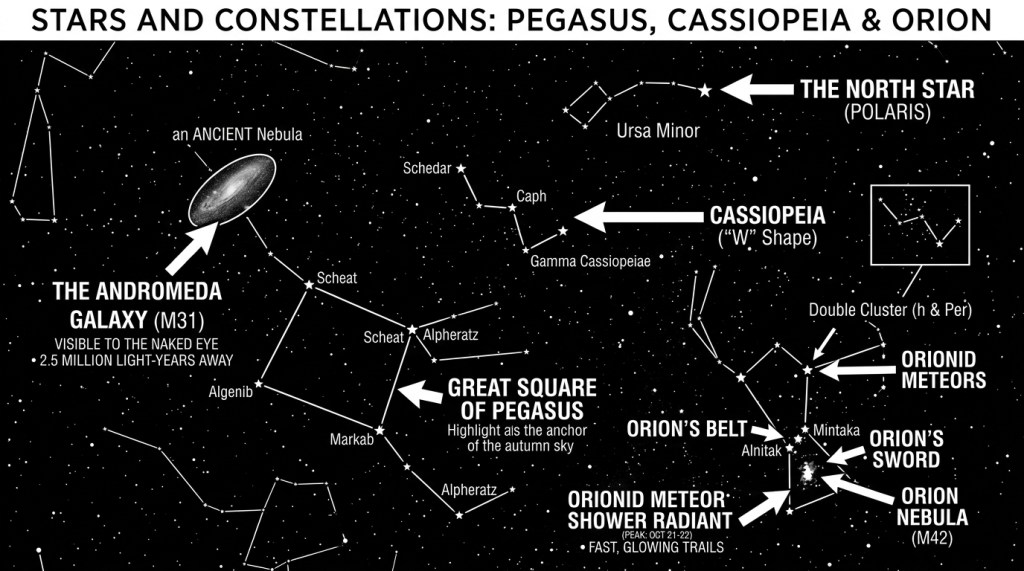
3. Stars and Constellations: Pegasus, Cassiopeia & Orion

October is the hallmark month for classic autumn constellations, while iconic winter patterns begin peeking over the eastern horizon before midnight.

The Great Square of Pegasus & Andromeda

Look directly overhead during mid-evening to locate the Great Square of Pegasus, four bright stars forming a huge celestial diamond. Tracing off the top-left star leads into Andromeda.

  • The Andromeda Galaxy (M31): Located 2.5 million light-years away, M31 is the most distant object visible to human eyes without a telescope! On dark nights around October 10, look slightly above Andromeda’s central star for a soft, oval patch of ghostly light.

Cassiopeia & Perseus

High in the northeast, Cassiopeia forms her unmistakable bright “W” shape right inside the star-rich band of the Milky Way. Following the “W” down leads into Perseus, home to the famous Double Cluster—two dense, sparkling nests of young supergiant stars easily resolved through binoculars.

4. October Celestial Events: Orionid Meteors & Conjunctions

DateSky EventTarget / DirectionBest Viewing Time
Oct 10New Moon (Dark Sky Window)Deep Sky (M31, Double Cluster)All Night
Oct 14Moon & Antares ConjunctionLow Southwestern Sky7:30 PM – 9:00 PM
Oct 21–22Orionid Meteor Shower PeakSoutheastern Sky (Orion Radiant)Midnight to Pre-Dawn
Oct 24Full Hunter’s MoonEastern HorizonDusk / Early Evening

The Orionid Meteor Shower (Peak: October 21–22)

Produced by debris left behind by Halley’s Comet, the Orionid Meteor Shower peaks on the night of October 21 into the morning of October 22. Under dark skies, observers can expect up to 20 fast-moving meteors per hour. Orionid meteors are famous for being fast and leaving persistent glowing gas trails!

Stan’s Stargazing Tip:You don’t need a telescope or binoculars to watch meteor showers—your bare eyes give you the widest field of view! Set up a comfortable reclining lawn chair facing southeast toward the constellation Orion after midnight, wrap up in a warm blanket, and give your eyes at least 20 minutes to dark-adapt.

Stargazer’s Gear Toolkit for October

To get the most out of crisp autumn viewing sessions, these simple tools will make a huge difference in comfort and clarity:

Quick Reference Checklist for Families

  1. Bundle Up for Autumn Chill: October temperatures drop fast once the sun goes down. Dress in warm layers, wear insulated boots, and bring a thermos of hot cocoa to keep young stargazers cozy.
  2. Protect Night Vision: Avoid looking at bright smartphone screens! It takes 15 to 20 minutes for human eyes to adjust to low light, but only a second of white light to reset your night vision.
  3. Check Atmospheric “Seeing”: If stars are twinkling wildly overhead, Earth’s upper atmosphere is turbulent. On nights when stars shine steadily without flickering, fire up your higher-power eyepieces for crisp views of Saturn’s rings and Jupiter’s cloud bands!

Clear skies and happy hunting!

September 2026 Night Sky Guide: Equinox Celestial Highlights & Planetary Parade

As summer transitions into autumn, September brings crisp air, earlier dark skies, and outstanding stargazing conditions. The shift in seasons marks the arrival of the Autumnal Equinox, providing perfectly balanced nights to explore lunar phases, brilliant planetary alignments, and iconic seasonal constellations.

Whether you are stepping out into the backyard with your naked eyes, a light bucket reflector, or a favorite pair of binoculars, September 2026 delivers a full calendar of celestial events for observers of all experience levels.

1. The September Moon: Harvest Glow & Lunar Cycles

The Moon serves as our primary celestial clock throughout September, offering dynamic viewing opportunities as its phase progresses.

Key Lunar Phases for September 2026

  • September 3 — Last Quarter Moon: High in the sky at dawn, revealing dramatic shadows along the craters of the lunar terminator line.
  • September 10 — New Moon: The absolute best night of the month for deep-sky stargazing! With no moonlight in the sky, faint star clusters and galaxies shine at their brightest.
  • September 18 — First Quarter Moon: Ideal for early evening family observing. Craters like Tycho and Copernicus stand out in sharp relief.
  • September 25 — The Full Harvest Moon: Rising shortly after sunset, the famous Harvest Moon provides a rich, golden hue near the eastern horizon.

Stan’s Stargazing Tip:When viewing the Full Harvest Moon through a telescope or binoculars, the glare can be surprisingly bright! Thread a variable polarizing filter onto your eyepiece or use lunar filter caps to cut down the intense light. This reduces eye fatigue and pulls out subtle tonal differences in the dark lunar seas (maria).

2. Planetary Roundup: Jupiter, Saturn, and the Inner Planets

September offers front-row seats to the solar system’s brightest worlds.

Saturn: Prime Evening Target

  • Saturn reaches its peak evening visibility this month. Appearing in the southeastern sky shortly after dark, the ringed planet glows with a steady, warm golden hue. Through even a modest telescope or manual light bucket, you can easily resolve the iconic ring structure, the dark Cassini Division gap, and Saturn’s largest moon, Titan.

Jupiter: King of the Midnight Sky

Rising in the late evening and dominating the midnight hours, Jupiter shines as a brilliant, creamy-white beacon. Using simple binocular optics or a small scope reveals the four bright Galilean moons—Io, Europa, Ganymede, and Callisto—shifting position night after night. Higher magnification reveals dark cloud belts and the famous Great Red Spot.

Mars & Venus: Dawn Showcase

  • Mars: Visible in the early morning sky before sunrise, glowing with its characteristic salmon-red shade against the backdrop of autumn stars.
  • Venus: Dazzling low in the eastern twilight sky right before dawn, acting as a brilliant morning star.

3. Stars and Constellations: Navigating the Autumn Sky

September is a transitional month where summer’s famous patterns begin fading in the west while classic autumn constellations take center stage overhead and in the east.

                  [ NORTH STAR (Polaris) ]
                             |
                             v
                    [ CASSIOPEIA ("W" Shape) ]
                             |
                             v
               [ GREAT SQUARE OF PEGASUS ]
                             |
                             v
                [ ANDROMEDA GALAXY (M31) ]

The Great Square of Pegasus & Andromeda

Look high in the eastern sky for the Great Square of Pegasus, a large, distinct four-star diamond that anchors the autumn sky. Connected to the upper-left star of the square is the constellation Andromeda.

  • The Andromeda Galaxy (M31): Located within the Andromeda constellation, M31 is the most distant object visible to the naked eye at 2.5 million light-years away! On dark nights around the New Moon (September 10), look for a soft, oval patch of light just above Andromeda’s central star line.

Cassiopeia: The Queen’s “W”

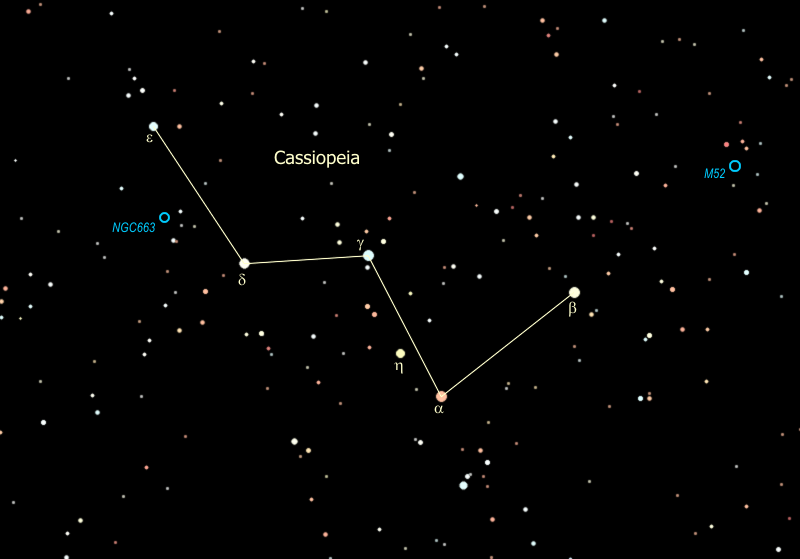
High in the northeastern sky sits Cassiopeia, easily identified by its bright, sweeping “W” shape formed by five prominent stars. Cassiopeia sits directly within the star-rich band of the Milky Way, making it a fantastic hunting ground for rich star clusters using binoculars.

4. September Celestial Events & Sky Highlights

DateSky EventTarget / DirectionBest Viewing Time
Sept 10New Moon (Dark Sky Window)Deep Sky (M31, Star Clusters)All Night
Sept 17Moon & Antares ConjunctionSouthwestern Sky8:00 PM – 10:30 PM
Sept 22Autumnal EquinoxGlobal Event2:05 PM EDT
Sept 25Full Harvest MoonEastern HorizonDusk / Early Evening

The Autumnal Equinox (September 22, 2026)

At exactly 2:05 PM EDT on September 22, the Sun crosses the celestial equator heading south, marking the official astronomical start of autumn in the Northern Hemisphere. On the equinox, day and night are approximately equal in length across the globe.

Stan’s Stargazing Tip:The weeks surrounding the autumn equinox are prime time for observing “Zodiacal Light”—also known as the false dawn. If you step outside about 60 to 90 minutes before sunrise in a dark location, look east for a faint, pyramid-shaped cone of soft light reaching up from the horizon. This is sunlight reflecting off microscopic cosmic dust grains floating along the plane of our solar system!

Gear Toolkit for September Stargazing

To get the most out of your autumn observing sessions, a few essential items will enhance your view:

  • 7×50 Astronomy Binoculars: A bright pair of binoculars like the Celestron Cometron 7×50 Binoculars is the ultimate grab-and-go tool for scanning the Andromeda Galaxy, sweeping the Milky Way in Cassiopeia, and spotting Jupiter’s four moons.
  • Variable Polarizing Filter: Threading an Astromania 1.25″ Variable Polarizing Filter onto your eyepiece cuts down intense moonlight glare during the Harvest Moon and sharpens planetary details on Saturn.
  • Red LED Headlamp: Protect your eye adaptation in the dark with an EverBrite Dual Red/White LED Headlamp. Using the red-light mode keeps your pupils dilated for deep-sky observing.

Master Checklist for Family Skywatchers

  1. Dress in Layers: September nights cool down rapidly once the sun sets. Wearing light layers ensures you stay comfortable during extended viewing sessions.
  2. Plan Around the Moon: Use the week of the New Moon (September 10) to target faint galaxies and star clusters. Save lunar and planetary observing for the brighter phase weeks.
  3. Allow Dark Adaptation: Give your eyes at least 15 to 20 minutes to adjust to the darkness outside. You will be amazed at how many extra stars and faint cosmic structures appear once your eyes fully adapt!

Set up your telescope, grab a warm jacket, and enjoy the front-row seat to the changing autumn sky.

Clear skies and happy hunting!

A Beginner’s Guide to Seeing Planets with the Naked Eye!

Have you ever looked up at the night sky and wondered about those bright, steady lights glowing overhead? You don’t need a telescope, complex computer gear, or expensive equipment to explore space. Some of the most amazing worlds in our solar system can be seen using nothing more than your naked eyes (your own unaided sight)!

In astronomy, five special worlds are known as the naked-eye planets: Mercury, Venus, Mars, Jupiter, and Saturn. To the bare eye, they look like bright, colorful “stars” that don’t twinkle.

Whether you are brand new to skywatching or looking for a fun family activity right from your backyard, here is your ultimate beginner’s guide to spotting our neighbor worlds!

The Secret Trick: Stars Twinkle, Planets Don’t!

When you step outside at night, how do you tell a distant star from a nearby planet? It’s all about the twinkle!

  • Stars Twinkle: Stars are trillions of miles away. Their light travels as a tiny, razor-thin pinpoint that gets bent and bounced around by Earth’s moving atmosphere (air currents). This makes them look like they are blinking or flickering.
  • Planets Shine Steady: Planets are much closer to Earth. Through the sky, they appear as tiny discs rather than pinpoints. Because more light reaches your eyes, atmospheric movement doesn’t disrupt the beam as easily. Planets glow with a calm, steady light.

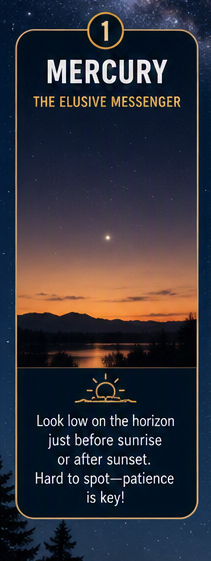
1. Mercury: The Swift Twilight Beacon

Mercury is the closest planet to our Sun, speeding around it in just 88 days! Because it stays so close to the Sun’s bright glare, it never appears high in the dark midnight sky.

How to Spot It:

Mercury is known as an elusive (hard to catch) target. You can only spot it low on the horizon during twilight—the colorful, warm glow in the sky right after sunset or right before sunrise.

Look low toward the horizon where the sun just went down or is about to rise. Mercury will appear as a bright, pinkish-orange pinpoint peeking through the twilight color!

Observer’s Helper: While you can easily spot Mercury with your bare eyes once you know where to look, a light pair of compact binoculars like the Celestron Cometron 7×50 Binoculars can help you sweep low along a colorful horizon to lock onto it faster!

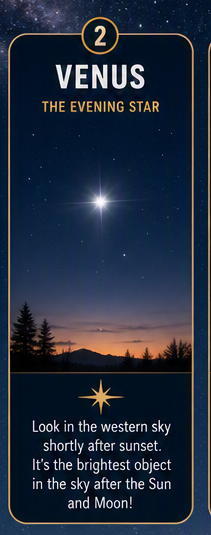
2. Venus: The Dazzling Evening & Morning Star

Venus is the absolute queen of the night sky! It is the third-brightest object in the entire sky, beaten only by the Sun and our Moon. It shines so brilliantly that people often mistake it for a landing airplane or a high-altitude balloon.

What to Look For:

Venus is covered in thick, white clouds that act like a giant mirror, reflecting sunlight back across space directly to your eyes.

  • Evening Star: When Venus is west of the Sun, it hangs high in the twilight sky right after sunset.
  • Morning Star: When it moves to the east of the Sun, it wakes up early, blazing brightly in the dawn sky before sunrise.

When Venus is at its brightest, see if you can head out to a dark park—it can actually cast faint, subtle shadows on the ground!

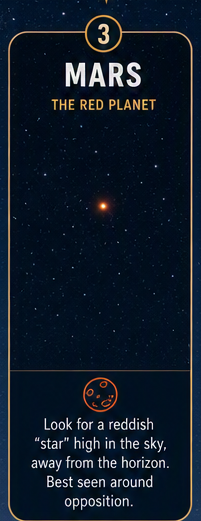
3. Mars: The Rusty Red Wanderer

Mars is world-famous as the “Red Planet,” and your naked eyes can easily confirm its famous nickname!

Why is Mars Red?

The surface of Mars is covered in iron-oxide dust—which is the exact same material as real rust on Earth! When sunlight hits Mars, that rusty dust bounces a distinct, warm salmon-pink or deep orange light across space to your eyes.

What to Look For:

Look up for a bright, reddish-orange beacon that shines steady without flickering. Every two years, Earth and Mars come extra close to each other in an event called opposition. During opposition, Mars grows dramatically brighter in our night sky, outshining almost every star around it!

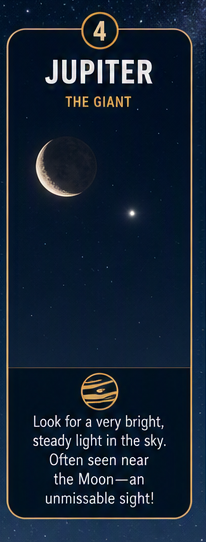
4. Jupiter: King of the Planets

Jupiter is the largest planet in our entire solar system—more than 1,000 Earths could fit inside it! Because it is so massive and covered in bright, reflective gas clouds, it is a magnificent sight to naked-eye stargazers.

What to Look For:

Jupiter shines with a bold, creamy-white light that dominates whichever constellation it happens to be visiting. It is often the brightest object in the midnight sky when Venus has already set.


Fun Family Challenge: While your naked eyes reveal Jupiter’s bright cream-colored disc, holding a basic pair of Bushnell Falcon 10×50 Binoculars steady against a fence post will let you spot up to four tiny pinpoints of light holding hands beside it—Jupiter’s famous Galilean Moons (Io, Europa, Ganymede, and Callisto)!

5. Saturn: The Golden Jewel

Saturn is the farthest world you can easily see with your bare eyes without any optical help at all. It sits nearly a billion miles away from Earth!

What to Look For:

To your naked eyes, Saturn doesn’t show its famous rings, but it glows with a lovely, distinct golden-yellow hue. It moves very slowly across the stars, taking nearly 30 years to make one full trip around the Sun!

Because it shines with a warm, steady golden light, it is easy to pick out against the harsh, blue-white flickering stars surrounding it.

Naked-Eye Planet Hunting Checklist

PlanetColor to Look ForBest Time to Spot ItSecret Sky Hint
MercuryPinkish-OrangeTwilight (Dawn/Dusk)Stays very low to the horizon
VenusBrilliant Silver-WhiteJust after Sunset or before SunriseBrighter than any star in the sky
MarsRusty Salmon-RedHigh in Dark Night SkyNoticeable orange/red color
JupiterBright Cream-WhiteMidnight HoursShines steady with zero twinkling
SaturnWarm Golden-YellowEvening & MidnightFarthest planet seen with bare eyes

Three Easy Tips for Backyard Skywatchers

  1. Give Your Eyes Time to Adjust: When you step out from a bright house into the yard, your eyes need about 15 to 20 minutes to build up “dark adaptation.” The longer you stay in the dark, the brighter the planets and surrounding stars will appear!
  2. Use a Red Flashlight: White light from smartphones or porch lights instantly ruins your dark adaptation. Use a red-light mode on your flashlight, like the EverBrite Red/White Headlamp, so you can read sky maps without blinding your eyes.
  3. Find the “Ecliptic Line”: Planets don’t just scatter randomly across the sky. The Sun, Moon, and all five naked-eye planets travel along the exact same imaginary arch across our sky called the ecliptic path. If you find the Moon, look left and right along that same general path across the sky to spot the planets!

You don’t need fancy equipment to enjoy the wonder of the cosmos. Just step outside on a clear night, look up along the moon’s path, and enjoy the front-row view of our solar system!

Clear skies and happy planet hunting!

August 2026 Night Sky Guide: Fireballs, Planetary Kings, and the Late-Summer Eclipse

August delivers the crown jewel of summer skywatching. As twilight arrives earlier each evening, backyards turn into front-row seats for deep-space sights, bright planetary meetups, and one of the best dark-sky meteor setups in years.

Whether you are stepping outside with your bare eyes from a blanket in the lawn or setting up a telescope, August 2026 brings an exciting mix of cosmic wonders. Here is your guide to navigating the warm midsummer night sky!

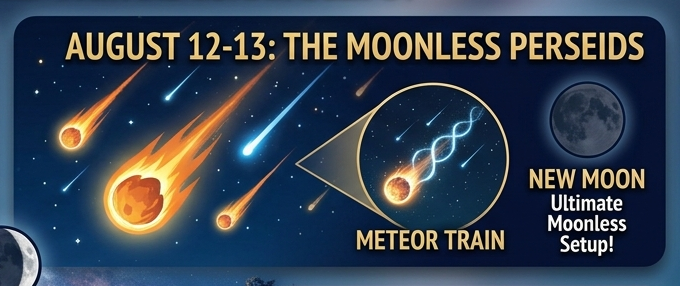
August 12–13: The Grand Moonless Perseids Peak

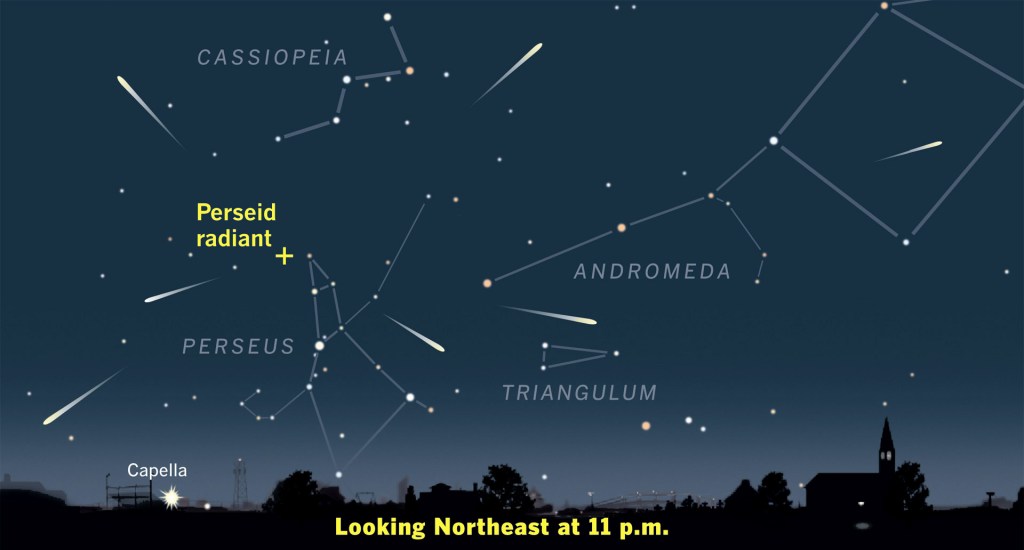
Mark your calendar for the overnight hours of August 12 into the predawn of August 13. The annual Perseid Meteor Shower reaches its peak, and 2026 presents the absolute best setup possible: a New Moon on August 12.

With no moonlight to wash out fainter streaks, observers under dark rural skies can spot up to 60 to 100 meteors per hour! The Perseids are particles shed by Comet Swift-Tuttle. As these tiny pebbles hit Earth’s upper atmosphere at roughly 37 miles per second, they produce intense, swift flashes of light.

Stargazing Tip for the Perseids

You do not need a telescope to enjoy the Perseids! In fact, your bare eyes are the best tool because they offer a wide field of view.

  • When to watch: Midnight through predawn on August 13 offers the highest meteor counts.
  • Where to look: Lie back in a comfortable lawn chair facing northeast toward the constellation Perseus.
  • Bonus sight: Keep an eye out for fireballs—exceptionally bright meteors that leave behind persistent “meteor trains” (glowing ionization trails drifting in upper winds).

August 15: Venus Reaches Greatest Eastern Elongation

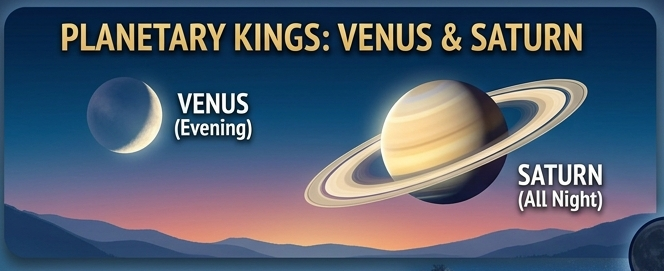
If you look west about 45 minutes after sunset throughout early August, Venus dominates as the brilliant “Evening Star”.

On August 15, Venus reaches its Greatest Eastern Elongation, placing it at its maximum angular distance from the Sun as seen from Earth. Because it sits far to the left of the solar glare, Venus remains illuminated high above the western horizon well into twilight.

If you point binoculars or a small telescope at Venus around this time, you will notice it doesn’t look like a solid circle; instead, it shines like a tiny, brilliant half-Moon!

Mid-to-Late August: Saturn Returns to Prominence

While Venus rules the sunset, Saturn takes center stage for late-night skywatchers. Rising in the east-southeast late in the evening, the ringed planet shines with a steady, golden glow.

How to Observe Saturn

  • Naked Eye: Unlike stars, which twinkle rapidly, Saturn shines with a calm, unblinking light.
  • Small Telescope / Binoculars: A magnification of just 25x to 30x reveals Saturn’s iconic ring system suspended in space, along with its largest, brightest moon, Titan.

Deep Sky Tour: The Summer Triangle and Andromeda

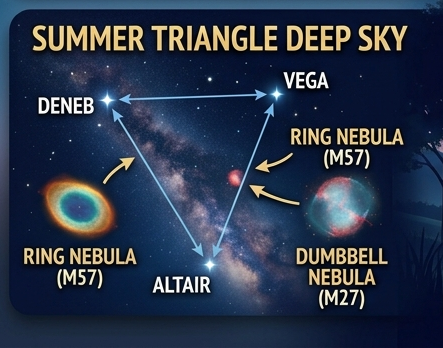
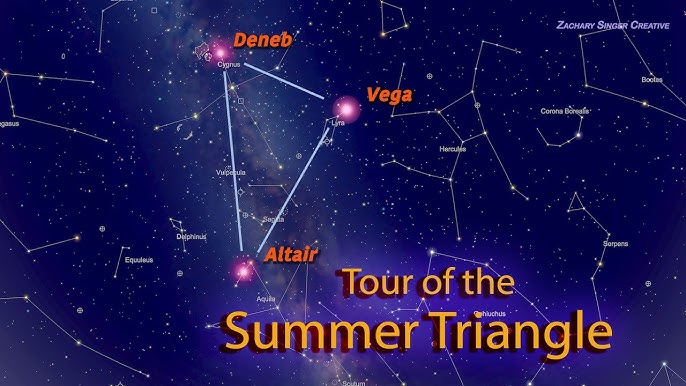
August is prime time for sweeping the Milky Way band overhead. Face high overhead to spot the Summer Triangle, anchored by three bright stars: Vega (in Lyra), Deneb (in Cygnus), and Altair (in Aquila).

Deep Sky Highlights

  • The Ring Nebula (Messier 57): Tucked inside Lyra, this expanding shell of gas from a dying star looks like a tiny glowing smoke ring through modest backyard optics.
  • The Great Hercules Cluster (Messier 13): Look west of Vega toward the constellation Hercules to spot a densely packed ball containing hundreds of thousands of ancient stars.
  • The Andromeda Galaxy (Messier 31): As midnight approaches, look east below Cassiopeia. Situated 2.5 million light-years away, Andromeda is the most distant object human eyes can see without optical aid under dark skies!

August 27–28: The Late-Summer Partial Lunar Eclipse

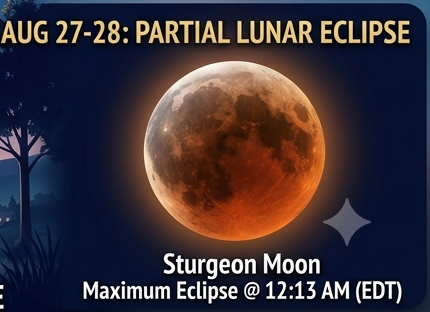
The month closes with a lunar event! On the night of August 27 into the early morning of August 28, the Full “Sturgeon” Moon passes directly through the outer portion of Earth’s shadow, resulting in a Partial Lunar Eclipse.

Unlike a solar eclipse, a lunar eclipse is 100% safe to view with the naked eye! During the peak of the eclipse, Earth’s dark central shadow (the umbra) will bite into the lunar disc, giving the Moon a distinct, dusky appearance.

StageEvent Timing (EDT)What to Look For
Penumbral Start~3:33 AMFaint darkening along the Moon’s edge
Partial Shadow Begins~4:10 AMEarth’s dark umbral shadow begins covering the Moon
Maximum Eclipse~5:12 AMUp to 90% of the Moon shaded in deep shadow

Gear Toolkit for August Stargazing

To get the most out of your late-summer observing sessions, a few simple accessories will keep you comfortable and dark-adapted:

Summary of Key August 2026 Skywatching Events

DateCelestial EventBest Time to WatchLooking Direction
Aug 12New Moon (Dark Sky Night)All NightSkywide
Aug 12–13Perseid Meteor Shower PeakMidnight to DawnNortheast (Perseus)
Aug 15Venus at Greatest ElongationDusk / Post-SunsetLow West
Aug 20First Quarter MoonEvening twilightSouth-Southwest
Aug 27–28Partial Lunar Eclipse & Full Moon3:30 AM – 5:30 AM EDTSouthwest

For a visual breakdown of how to star-hop to the Summer Triangle targets and prepare for the Perseid peak, check out this helpful August 2026 Night Sky Video Guide.

This video provides an excellent visual calendar of the major August 2026 celestial events, making it easy to plan your family observing nights.

Clear skies, keep your red lights ready, and enjoy late-summer stargazing!

August 2026 Light Bucket Guide: Smoke Rings, Fireballs, and the Return of Andromeda

August brings the absolute golden hour of the summer stargazing season. As the sun sets slightly earlier each night, backyards across the country turn into front-row seats for deep-space exploration.

If you own a “light bucket”—a large-aperture manual telescope like an 8-inch Dobsonian or reflector—August is the month to push your mirror to its limits. This month features a rare dark-sky meteor shower setup, iconic planetary nebulae floating high overhead, and the grand return of our nearest giant cosmic neighbor.

Grab your red flashlights, let your telescope’s primary mirror cool down, and get ready for an unforgettable month under the stars.

Target 1: The Moonless Perseid Fireballs and Telescope “Meteor Trains” (August 12–13)

Mark your calendars for the overnight hours of August 12 into the predawn of August 13. The annual Perseid Meteor Shower reaches its peak, and 2026 presents the absolute best condition possible: a New Moon on August 12.

[ Comet Swift-Tuttle Debris Trail ]
|
v (Slamming into atmosphere at 37 miles/sec)
* EARTH * ====> Bright Fireball! ====> [ Lingering Glowing "Smoke Train" ]

Without any bright moonlight to wash out faint streaks, skywatchers can expect dozens of shooting stars per hour under dark skies. While your naked eyes are the best tool for catching fast-moving fireballs across wide stretches of the sky, your light bucket has a secret superpower during a major shower: hunting meteor trains.

How to Catch a “Meteor Train” in Your Telescope

When a particularly bright Perseid fireball (a bolide) vaporizes in Earth’s upper atmosphere at roughly 37 miles per second, it leaves behind a lingering, glowing tube of ionized gas and dust. To the naked eye, this looks like a faint smoke trail that lasts for just a few seconds.

However, if you quickly point your light bucket with a low-power, wide-field eyepiece at the spot where the fireball just zipped through, you can watch that “smoke train” twist, drift, and glow in upper-atmosphere winds for up to several minutes! It looks like a ghostly, churning nebula suspended in real-time motion.

Target 2: Cosmic Smoke Rings and Dumbbells

High overhead in the warm midsummer sky sits the Summer Triangle, an asterism formed by three brilliant stars: Vega, Deneb, and Altair. Nestled inside this cosmic frame are two of the finest planetary nebulae in the entire sky.

                  Vega (Lyra)  <--- Home to the Ring Nebula (M57)
/ \
/ \
(Vulpecula) / \
M27 Dumbbell * \
\ /
\ /
Deneb ---- Altair

Planetary nebulae have nothing to do with planets; early astronomers simply thought their round, greenish discs resembled distant gas giants like Uranus or Neptune. In reality, these are the glowing shrouds of dying Sun-like stars that have gently shed their outer layers into space.

1. The Ring Nebula (Messier 57)

  • Constellation: Lyra the Harp
  • Recommended Eyepiece: Medium-to-high power (9mm to 12mm)

Located directly between the two bottom stars of Lyra’s small parallelogram, the Ring Nebula is remarkably easy to locate. In a small scope, M57 looks like a tiny grey Cheerio. But through an 8-inch light bucket, the ring jumps out with remarkable detail. You can easily discern the dark central void where the star’s white dwarf core resides, surrounded by a delicate, oval ring of glowing gas.

2. The Dumbbell Nebula (Messier 27)

  • Constellation: Vulpecula the Fox
  • Recommended Eyepiece: Low-to-medium power (15mm to 25mm)

Located in the faint constellation Vulpecula (just south of Cygnus), M27 was the very first planetary nebula ever discovered. Through a light bucket, M27 is huge, bright, and unmistakably shaped like an apple core or an hour-glass weight.

Aperture & Filter Tip: To make the delicate gas wings of the Dumbbell and Ring Nebulae pop against the dark background, screw an Astromania 1.25″ UHC (Ultra High Contrast) Filter onto your eyepiece. It blocks light pollution while passing the exact wavelengths emitted by glowing hydrogen and oxygen!

Target 3: The Great Galaxy Returns (Messier 31)

As midnight approaches in August, a massive landmark of the deep sky rises in the east: The Andromeda Galaxy (Messier 31). Situated 2.5 million light-years away, Andromeda is the most distant object human eyes can see without optical aid under dark skies.

       [ M32 Dwarf Galaxy ]
\
((((( M31 ANDROMEDA CORE )))))
/
[ M110 Dwarf Galaxy ]

The Three-in-One Galaxy Field

While smaller telescopes show Andromeda as a faint, oval smudge, a light bucket equips you to explore its true structure and companion satellites:

TargetDescriptionEyepiece Strategy
M31 (Core & Discs)Blazing galactic core surrounded by subtle, dark dust lanes running along the spiral arms.Use a wide-field, 2-inch low-power eyepiece (like a 30mm or 32mm) for maximum field of view.
M32 (Satellite 1)A compact, bright dwarf elliptical galaxy sitting right on the outer edge of M31’s glow.Easily spotted as a small, intense “star-like” fuzz ball in the same field of view.
M110 (Satellite 2)A fainter, elongated dwarf elliptical galaxy positioned slightly further out on the opposite side of M31.Requires good dark adaptation and a light bucket’s light gathering to reveal its soft, oval glow.

Seeing M31 along with both of its satellite galaxies simultaneously in a single wide-angle eyepiece view is one of the ultimate rewards of backyard astronomy!

Recommended Gear for August Light Bucket Sessions

To get the most out of these August celestial targets, having the right accessories handy makes all the difference for comfortable family stargazing:

Family Stargazing Tips for August

  • Patience at the Eyepiece: Teach young astronomers to let their eyes rest at the eyepiece for 30–60 seconds rather than taking a quick 2-second glance. Faint deep-sky details like Andromeda’s dust lanes or the central void of the Ring Nebula gradually emerge as the brain processes the light.
  • Keep a Dew Towel Nearby: August nights can be humid. Keep a small microfiber towel or a portable 12V dew heater band handy to keep your finder scope lens and eyepieces clear of moisture buildup.

For a complete visual walkthrough of how to star-hop to Messier 57, Messier 27, and the Andromeda Galaxy using your finder scope, check out this guide:

August gives us comfortable temperatures, dark moonless nights, and an incredible lineup of celestial targets. Take advantage of these magical summer nights, invite your family outside, and let your light bucket bring the far reaches of the universe into clear focus!

🌌 Preview: September 2026 Light Bucket Edition — Equinox Shadows, The Wild Duck, and Galaxy Hopping

Coming next month: As autumn crispness sneaks into the late night air, September delivers longer nights, crystal-clear atmosphere, and a shifting cosmic lineup.

With summer’s dense core setting in the west and crisp autumn targets taking center stage, September is prime time for your light bucket to hunt down dense star clusters, deep-space planetary nebulae, and dramatic lunar terrain.

What’s Coming to Your Eyepiece in September:

  • The Equinox Shadow Play on the Moon: As we reach the September Equinox, the Sun’s light hits the lunar terminator at a sharp, dramatic angle. We’ll show you how to use higher magnification on your primary mirror to trace long, razor-sharp crater shadows along Copernicus and Tycho, making the lunar landscape look remarkably three-dimensional.
  • Diving into the Wild Duck Cluster (Messier 11): High in the constellation Scutum lies M11, one of the richest and most compact open star clusters in the sky. While binoculars show a glowing triangular cloud, your light bucket will break M11 down into hundreds of individual, glittering stars anchored by a brilliant central beacon star.
  • The Helix Nebula & The Saturn Nebula: We are venturing low into the southern sky to challenge your telescope’s light-gathering power! Discover how to spot the ghostly disc of the Helix Nebula (Caldwell 63)—the closest planetary nebula to Earth—and the distinct “handles” of the brilliant Saturn Nebula (Messier 73 / NGC 7009).
  • The Autumn Galaxy Warm-Up: As Pegasus climbs high into the east, we’ll map out a star-hop path from the Andromeda Galaxy (M31) over to the subtle face-on spiral of the Triangulum Galaxy (Messier 33). Learn the exact wide-field eyepiece strategy needed to pull M33’s faint spiral structure out of the background glow.

Keep your red flashlights ready, prep your wide-angle eyepieces, and look out for our full September 2026 Light Bucket Observing Roadmap!

Clear skies and happy hunting!

July 2026 Night Sky Guide: Planetary Conjunctions, the Milky Way, and Midsummer Meteors

Warm summer nights provide the perfect backdrop for backyard stargazing. Whether you are a seasoned observer with a telescope or a family using nothing but your naked eyes from a blanket in the grass, the celestial calendar for July 2026 is packed with spectacles.

This month features brilliant evening planets, stunning predawn celestial meetups, the peak of our home galaxy’s visibility, and the opening acts of the summer meteor season. Here is your complete guide on what to look for, when to watch, and how to find July’s best cosmic events.

Earth at Its Furthest Point: Aphelion (July 6)

We begin the month with a mind-boggling cosmic fact to share around the campfire. On July 6, 2026, Earth reaches aphelion—the exact point in our annual elliptical orbit where we are furthest from the Sun.

SUN –>>> 94.5 Million Miles to Earth

On this day, Earth will sit roughly 94.5 million miles away from our star. It feels counterintuitive for those of us experiencing midsummer heat in the Northern Hemisphere, but our seasons are dictated by the tilt of Earth’s axis, not our physical distance from the Sun. While it is a purely mathematical milestone that doesn’t change how the sky looks, it is a wonderful reminder of our steady journey through space.

The Evening Star: Venus Swaps Greetings with Regulus and the Moon

If you step outside just after sunset during the first half of July, your eyes will immediately be drawn to the western horizon. Venus reigns supreme as the “Evening Star,” blazing intensely against the twilight glow.

July 9 — Venus and Regulus

Shortly after the sun sinks on July 9, look closely at Venus. Right next to it, you will see a sharp, blue-white point of light. This is Regulus, the brightest star in the constellation Leo the Lion. Known historically as the “Heart of the Lion,” Regulus sits roughly 79 light-years away from us. The visual contrast between the steady, dazzling white light of nearby Venus and the twinkling, distant sapphire of Regulus makes this the prettiest naked-eye pairing of the week.

July 15–17 — The Cosmic Crescent

A few nights later, a young, razor-thin crescent Moon enters the western sky, climbing closer to Venus each evening. By dusk on July 17, the Moon will sit directly beside Venus.

Keep an eye out for a phenomenon known as earthshine, or the “Da Vinci glow.” This is when sunlight reflects off Earth’s oceans and clouds back onto the dark portion of the Moon, subtly illuminating the entire lunar disc. It creates a breathtaking, cinematic view easily seen without any equipment.

The Predawn Parade: Saturn, Mars, and the Seven Sisters

For the early risers—or the night owls who stay up past midnight—the eastern sky before dawn acts as a bustling planetary crossroads this month.

July 7–8 — The Saturn-Moon Rendezvous

In the early hours of July 7 and 8, the Third Quarter Moon climbs above the eastern horizon accompanied by Saturn. The pair will be separated by less than nine degrees, roughly the width of a fist held at arm’s length. Saturn will shine with a steady, golden glow. If you have a modest backyard telescope or high-powered binoculars, this is an excellent time to view Saturn’s famous ring system, which is currently tilted at a narrow angle relative to Earth.

July 11 — The Morning Trio

Set your alarm roughly two hours before sunrise on July 11 for the crown jewel of the month’s planetary alignments. Looking east, a delicate crescent Moon will form a tight, striking triangle with an orange-hued Mars and the sparkling Pleiades star cluster (also known as the Seven Sisters).

While the naked eye can comfortably spot six or seven stars in the Pleiades, viewing this triangle through a pair of standard binoculars will completely change your perspective. Optics pull dozens of hidden, icy-blue stars out of the dark velvet sky, framed beautifully by the ruddy glow of Mars.

July 14: Dark Skies and the Milky Way’s Core

Some of the best stargazing nights do not center around what is arriving in the sky, but rather what is missing. On July 14, the Moon reaches its New Moon phase, meaning it sits between the Earth and the Sun and leaves our night sky entirely dark.

Without natural lunar light pollution, mid-July provides the absolute best window of the year to witness the Milky Way.

How to Find the Galactic Center

  • When to look: Wait until late evening when the sun’s glare is entirely gone.
  • Where to look: Face directly south.
  • The Guidepost: Look for a cluster of stars that forms a shape resembling a classic Teapot (part of the constellation Sagittarius).

From a dark-sky location, such as a state or national park, the dense, glittering core of our home galaxy will appear to rise straight out of the Teapot’s spout like a pale, smoky column of steam.

Late July: The Buck Moon and Overlapping Meteors

The end of the month brings a massive shift in nighttime lighting, transitioning from deepest dark to full lunar brilliance, alongside the kickoff of summer shooting star season.

July 28–29 — The Full Buck Moon

July’s full lunar orb reaches its official peak illumination on the morning of July 29, meaning the evenings of both July 28 and July 29 will offer spectacular moonrises. Known traditionally as the Buck Moon because male deer grow their new antlers rapidly during this stretch of summer, it will dominate the sky from dusk until dawn.

For the most magical view, catch it right as it clears the eastern horizon at sunset. An optical trick of human perception called the “Moon Illusion” will make the orb appear unnaturally massive as it hovers behind distant trees and buildings.

July 30–31 — A Double Meteor Shower

The month closes out with a dual cosmic performance: the Southern Delta Aquariids and the Alpha Capricornids meteor showers both reach their peak on the same nights.

The Delta Aquariids are a steady shower capable of producing up to 20 to 25 meteors per hour under ideal conditions, while the Alpha Capricornids are much sparser but famous for producing slow-moving, bright, colorful fireballs.

Stargazing Tip: Because the moon will be roughly 98% illuminated during the peak nights, its brilliant light will wash out the fainter meteors. To maximize your chances of spotting a shooting star, position yourself so a building or a line of trees blocks the direct light of the moon, and watch the darker patches of sky further away from the lunar disc.

For the best Astronomy equipment and supplies check Amazon and Optics Planet

Summary of Key July 2026 Skywatching Dates

DateCelestial EventBest Time to WatchWhere to Look
July 6Earth at AphelionAll Day (Orbital Milestone)N/A
July 7–8Moon and Saturn ConjunctionAfter Midnight until DawnEastern Sky
July 9Venus glides past Regulus45–60 Minutes After SunsetLow Western Horizon
July 11Moon, Mars, and Pleiades Trio2 Hours Before SunriseEastern Sky
July 14New Moon & Peak Milky Way CoreLate Night / MidnightSouthern Sky (Near the “Teapot”)
July 17Crescent Moon and Venus MeetupJust After SunsetLow Western Horizon
July 28–29The Full Buck MoonSunset to SunriseRises in the East
July 30–31Double Meteor Shower PeakMidnight to DawnAcross the Entire Sky

July 2026 reminds us that exploring the frontier of space doesn’t require expensive technology or long journeys. Grab a blanket, invite your family outside, and simply look up!

For a visual breakdown of where to find these planetary alignments and a preview of the upcoming meteor paths, check out this comprehensive July 2026 Skywatching Video Guide, which walks through each event chronologically to help you plan your nights under the stars.

Clear skies and happy hunting!

The Ultimate Summer Space Race: Your Night-by-Night Cosmic Scavenger Hunt (July & August 2026 Edition)

Are you ready to turn your backyard into a launching pad for interstellar discovery? This summer, we are hosting the ultimate Summer Space Race! Whether you are a parent looking for an exciting, screen-free family project or a seasoned visual observer eager to test the limits of your optics, this progressive, night-by-night scavenger hunt is built just for you.

We have broken this challenge into two parallel tracks that build in excitement from one target to the next:

  • The Starlight Cadet Track: Perfect for families, beginners, and anyone using the naked eye or a pair of entry-level binoculars.
  • The Cosmic Veteran Track: Tailored for experienced backyard astronomers with manual or motorized telescopes who love a good tracking challenge.

Grab your red-lens flashlights, head out to your favorite local dark-sky park, and let the space race begin!

Part 1: The July Warm-Up – Cosmic Alignments & The Teapot

Our scavenger hunt begins in July as the summer Milky Way rises high in the southern sky. To find the best views, consider taking a family trip to a certified international dark-sky location or a national park near you to escape city light pollution.

Level 1: The Planetary Gateway (July 11, 2026)

  • Starlight Cadet Challenge: Wake up early! Two hours before sunrise, look toward the eastern horizon. Your mission is to locate the thin crescent Moon forming a striking celestial triangle with the bright orange spark of Mars and the sparkling, pale-blue fuzzy patch of the Pleiades Star Cluster. Can you see all three within a single glance?
  • Cosmic Veteran Challenge: Center your telescope on that tight cosmic trio. Use a wide-field eyepiece to capture Mars and the Pleiades in the same frame. For an advanced astrophotography goal, try a long-exposure stack to reveal the delicate reflection nebulosity surrounding the Pleiades stars right next to the planetary glow of Mars.

Level 2: Steaming Up the Milky Way (July 14, 2026 – New Moon)

  • Starlight Cadet Challenge: With the moon completely dark tonight, look due south to find the constellation Sagittarius. Look for the famous “Teapot” asterism. Once you spot the spout of the teapot, look closely—can you see the thick, cloudy band of our Milky Way galaxy appearing to “steam” right out of the spout?
  • Cosmic Veteran Challenge: Use the Teapot’s spout as your jumping-off point to hunt down the Lagoon Nebula (Messier 8) and the Trifid Nebula (Messier 20). For a true test of manual navigation, attempt to split the three distinct dust lanes of the Trifid using a high-quality UHN/O-III nebula filter.

🛒 Gear Upgrade: If you want to make the jump from naked-eye viewing to crisp celestial details, a durable pair of waterproof binoculars is the perfect family companion. For deep-sky hunting, a classic, high-light-gathering reflector telescope provides unmatched views of nebulas without breaking the bank.

For Astronomy products please check the links for Amazon and OpticsPlanet.com

Part 2: The August Peak – Meteors, Eclipses, and Deep-Space Gems

August 2026 is bringing some of the most spectacular, pristine astronomical conditions of the decade. The moon is cooperating perfectly for the year’s best celestial fireworks.

Level 3: Navigating the Summer Triangle

  • Starlight Cadet Challenge: Look straight up after dark to find the three brightest stars of summer: Vega, Altair, and Deneb. Congratulations, you’ve found the Summer Triangle! Now, look closer at Altair—did you know this young star spins so fast (once every 8 hours) that it’s actually flattened like a squished beach ball?
  • Cosmic Veteran Challenge: Dive inside the Summer Triangle to locate Messier 27 (The Dumbbell Nebula), the first planetary nebula ever discovered. Once you’ve checked that off your list, slide over to Cygnus and manually star-hop your way to the Veil Nebula. Can you resolve the delicate, wispy shockwaves of this ancient supernova remnant?

Level 4: The Moonlight-Free Finale (August 12–14, 2026)

This is the peak of the Summer Space Race. On August 12, parts of the world will witness a historic solar eclipse. Then, on the nights of August 12 and 13, the legendary Perseid Meteor Shower peaks under a 0% illumination New Moon—meaning absolute darkness!

  • Starlight Cadet Challenge: Find an open field, spread out a blanket, lay flat on your back, and look up toward the constellation Perseus. Because the sky is perfectly dark this year, count how many shooting stars you can spot in a single hour. Keep an eye out for “fireballs”—extra bright meteors that leave glowing smoke trails across the sky!
  • Cosmic Veteran Challenge: This is the ultimate astrophotography challenge of the summer. Set up your camera with a wide-angle lens, attach it to a reliable star tracker, and program an intervalometer to capture continuous exposures throughout the night. Your goal? Capture a single, high-definition composite frame showing multiple Perseid meteors radiating outwards from the constellation Perseus against a sharp, tracked background of the Milky Way core.

The Space Race Scorecard

Track your family’s progress through the summer using our quick checklist:

Target LevelStarlight Cadet GoalCosmic Veteran GoalDate to AttemptCompleted?
Level 1Spot Moon, Mars, & PleiadesImage Mars & Pleiades togetherJuly 11[ ]
Level 2Locate the Sagittarius “Teapot”Manually resolve the Trifid NebulaJuly 14[ ]
Level 3Identify the Summer TriangleResolve the wispy edges of the Veil NebulaEarly August[ ]
Level 4Count 30+ Perseid MeteorsCapture a tracked meteor composite imageAugust 12–14[ ]

🛠️ Pro-Tip for Manual Trackers: Keeping these deep-sky objects centered at high magnification requires a steady hand and a smooth mount. If you are modifying a vintage scope or optimizing a manual mount, upgrading your slow-motion control knobs or introducing an entry-level clock drive can completely transform your tracking accuracy.

For Astronomy products please check the links for Amazon and OpticsPlanet.com

No matter which track you choose, the real prize of the Summer Space Race is the time spent looking up at the wonders of our universe together as a family. Pack up your gear, check your local sky charts, and get out there.

Clear skies and happy hunting!