Creating Cherished Memories: A Family-Friendly Guide to Choosing a Train Set for Christmas

Introduction:

The holiday season is upon us, and there’s a timeless charm to the idea of a train set encircling the Christmas tree, bringing joy and nostalgia to the entire family. Choosing the perfect train set for Christmas involves more than just selecting a model; it’s about creating lasting memories and fostering a sense of togetherness. In this family-friendly guide, we’ll explore the enchanting world of train sets, offering insights into selecting the ideal set that will become a cherished part of your family’s holiday traditions.

The Magic of a Christmas Train Set:

A Christmas train set is not merely a toy; it’s a conduit for creating magical moments. The gentle chug of the locomotive, the clickety-clack of the wheels, and the warm glow of the miniature village passing by – these elements evoke a sense of wonder that captivates both young and old. As you embark on this journey to choose the perfect train set, consider the following factors to make this Christmas truly special for your family.

1. Consider the Age Range:

Family-friendly gifts should be age-appropriate, ensuring that everyone can enjoy the experience. Fortunately, there are a variety of train sets designed for different age groups. For younger children, look for sets with large, durable pieces that are easy to handle. Older kids and adults might appreciate sets with more intricate details and advanced features.

2. Size and Space:

Before selecting a train set, consider the available space in your home. If you have a small living room, a compact set might be more suitable. On the other hand, if you have ample space, you can go for a larger, more elaborate set that includes intricate landscapes and multiple cars.

3. Easy Assembly and Durability:

Christmas is a busy time, and complicated setups can be a source of stress. Look for train sets that are easy to assemble and disassemble, allowing more time for enjoyment. Additionally, opt for durable materials to withstand the inevitable bumps and excitement that come with family gatherings.

4. Theme and Aesthetics:

Train sets come in various themes, from classic steam engines to modern high-speed trains. Consider your family’s preferences and the overall aesthetic of your holiday decorations. A traditional, festive-themed set might complement a cozy, nostalgic Christmas atmosphere, while a more modern set could add a touch of excitement.

5. Inclusivity:

For a true family experience, involve everyone in the decision-making process. Allow children to express their preferences and consider the interests of all family members. Whether it’s a winter wonderland scene, a quaint village, or a bustling cityscape, choose a theme that resonates with everyone.

6. Interactive Features:

Engage your family with a train set that offers interactive features. Some sets come with remote controls, sound effects, and even apps that allow you to control the train’s speed and direction. These features add an extra layer of excitement and engagement for both kids and adults.

7. Expandability:

A great thing about train sets is that they can be expanded upon year after year. Consider this as a long-term investment in your family’s holiday traditions. Look for sets that are compatible with expansion packs, allowing you to add new cars, tracks, and features over time.

8. Safety First:

Safety is paramount, especially when children are involved. Ensure that the train set adheres to safety standards and is made from non-toxic materials. Be cautious with small parts that could pose a choking hazard for younger children.

Creating Traditions:

Once you’ve selected the perfect train set, it’s time to integrate it into your family’s Christmas traditions. Here are some ideas to make the experience even more memorable:

1. Family Decorating Day:

  • Turn the selection and setup of the train set into a family decorating day. Let each family member contribute to the layout and add personal touches.

SHOP NOW for Train Sets

2. Storytelling Sessions:

  • Use the train set as a backdrop for storytelling. Create narratives about the destinations the train is traveling to, involving everyone in the creation of the story.

3. Annual Unveiling:

  • Turn the setup of the train set into an annual event. Unveil it together, perhaps during a special family dinner or as part of your holiday decorations.

4. Christmas Eve Express:

  • Make the train set the centerpiece of your Christmas Eve. Set it in motion as part of the festivities, creating a magical atmosphere for the night before Christmas.

5. Family Competitions:

  • Organize friendly competitions. Who can build the longest track extension? Who can come up with the most creative landscape? This fosters a sense of friendly rivalry and collaboration.

SHOP HERE for Christmas Train Sets

Conclusion:

A Christmas train set is not just a delightful gift; it’s a conduit for creating enduring family memories. As you embark on the journey of choosing the perfect set, consider the age range, available space, ease of assembly, theme, and inclusivity. Opt for durability, interactive features, and expandability to ensure a long-lasting investment in your family’s holiday traditions. With careful consideration and a touch of creativity, your Christmas train set can become a cherished part of your family’s festive celebrations for years to come.

Model Railroading: A Great Family-Friendly Hobby

Model railroading is a hobby that has been enjoyed by people of all ages for many years. It is a unique craft that enables enthusiasts and professionals to develop small-scale railway systems with toy trains. The hobby has no skill or age restrictions, and it is a great way to bring families together. In this article, we will explore why model railroading is a great family-friendly hobby.

  1. Everyone Can Participate

One of the best things about model railroading is that everyone can participate. It is a hobby that can be enjoyed by people of all ages, from young children to seniors. Building a model railroad is a great family-oriented hobby. Every member of the family can be working on some part of things. Mom can be building this part, dad working on that, while the kids are working on something else. It is a great way to spend time together as a family and create something that everyone can be proud of.

  1. Educational Value

Model railroading can be very educational. You can learn a whole range of things, including history, engineering, and design. Railroads reflect the times they operated in, and building a model railroad leads to learning about prototype railroads, their times, and their settings. Model railroads themselves require a bit of engineering to construct. We can learn about electrical wiring, track design, and other technical aspects of the hobby. It is a great way to learn new skills and expand your knowledge.

  1. Therapeutic Value

Model railroading can also be therapeutic. It is a great way to relieve stress and anxiety. The hobby requires a lot of focus and concentration, which can help you forget about your worries and focus on something positive. It is also a great way to exercise your creativity and imagination. You can create your own world and escape from reality for a while.

  1. Endless Possibilities

Model railroading is a hobby that has endless possibilities. You can create your own world and design your own layout. You can choose the era, the location, and the type of trains you want to run. You can also add scenery, buildings, and other details to make your layout unique. The possibilities are endless, and you can always add new features and elements to your layout to keep it fresh and exciting.

  1. Long-Lasting Hobby

Model railroading is a hobby that can last a lifetime. Many people in the hobby started when they were kids and it stayed with them. It is a great way to create memories and pass on the hobby to future generations. It is also a great way to connect with other enthusiasts and share your passion for the hobby.

Conclusion

In conclusion, model railroading is a great family-friendly hobby that has something to offer for everyone. It is a great way to spend time together as a family, learn new skills, and exercise your creativity. It is also a great way to relieve stress and anxiety and create something that you can be proud of. With endless possibilities and a long-lasting appeal, model railroading is a hobby that is sure to provide hours of entertainment and enjoyment for years to come.

A lively debate on Steam vs. Diesel

After the last article I had some comments about the neglect to mention electric power along with steam and diesel. I used creative license and developed a discussion between Mark Twain and John Grisham, my favorite authors from the periods to have a lively discussion about motive power.

I can attempt to emulate the writing styles of Mark Twain and John Grisham (both authors from different eras Mark Twain wrote Huckleberry Finn, John Grisham wrote The Firm, The Pelican Brief and more) in the form of a debate on the topic of modeling steam or diesel locomotives. Both favorite authors.

Mark Twain: Well, here we are, gathered in the realm of model railroading, debating the merits of steam versus diesel locomotives. A delightful topic indeed! Let me begin by extolling the virtues of steam. Its hissing, chugging symphony carries us back to a bygone era, where the romance of train travel enthralled our imaginations.

Steam locomotives embody the very essence of nostalgia and provide a tangible link to our shared history.

John Grisham: Ah, Mark, while I appreciate your fondness for steam, allow me to advocate for the practicality of diesel locomotives. Picture this: sleek, efficient engines gliding effortlessly along the tracks, with the power to transport us to the modern era. Diesel locomotives symbolize progress, representing the advancement and innovation that have shaped the contemporary world we live in.

Their reliability and ease of maintenance make them a sensible choice for any model railroad enthusiast.

Mark Twain: John, I must concede that diesel locomotives have their merits. Their streamlined design and efficient performance do hold an undeniable allure. However, we must not dismiss the historical significance and visual grandeur of steam. The plumes of smoke and rhythmic chugging stir the soul and evoke a sense of adventure.

There’s a reason steam locomotives have captured the hearts of enthusiasts for generations.

John Grisham: Mark, I cannot dispute the emotional connection one may feel with steam locomotives. They do possess a certain charm. However, we must also consider the practical aspects of modeling. Diesel locomotives offer a wide range of models, allowing enthusiasts to explore various eras and railroad lines. They are more accessible, both in terms of maintenance and availability of models and accessories. For those seeking a modern touch, diesel power is the way to go.

Mark Twain: John, I understand your point. The modeling world is indeed fortunate to have a diverse array of diesel locomotives to choose from. But let us not forget that blending the two worlds can create a harmonious fusion. By incorporating both steam and diesel locomotives into our layouts, we can capture the best of both eras, paying homage to the rich history while embracing the dynamic present.

John Grisham: Mark, I must admit your proposition has merit. The juxtaposition of steam and diesel can add layers of intrigue and versatility to our layouts. It allows us to explore different time periods and create a narrative that spans generations. Perhaps a compromise is in order, blending the classic with the contemporary to create a truly captivating model train experience.

Mark Twain: Well said, John. By combining our passions for both steam and diesel locomotives, we can embark on a remarkable journey through time, where the echoes of history mingle with the pulse of progress. Let us celebrate the diversity and possibilities that model railroading offers, irrespective of our chosen power source.

In this lively debate between Mark Twain and John Grisham, we witness the clash of perspectives on the steam versus diesel locomotive dilemma. While Mark Twain champions the nostalgia and historical significance of steam, John Grisham emphasizes the practicality and modern appeal of diesel. Ultimately, they find common ground in the idea of blending the two, allowing for a harmonious coexistence on the model railroad.

The inclusion of Electric Power in the Northeast

Based on research, in response to a comment of a previous article, “Steam or Diesel“, about electric power not being part of the history of that area, I discovered information of electric trains in the northeast.

Trains have always held a special place in the hearts of those who grew up around Philadelphia. Witnessing the evolution of trains, from the magnificent steam locomotives to the sleek electric trains that now dominate the rails, has been a captivating journey through time.

In the early days, the sight and sound of a steam train passing through towns and countryside ignited the imaginations of people of all ages. The powerful locomotives, with their billowing smoke and piercing whistles, symbolized progress and the expanding reach of transportation. Crowds would gather near the tracks, eagerly waving at the engineers as the trains roared past, feeling the earth tremble beneath their feet.

As technology advanced, electric trains became more prevalent, bringing a new era of efficiency and convenience. The electrification of rail lines ushered in a quieter and smoother mode of transportation, forever changing the landscape of train travel. Yet, the nostalgia for the steam era lingered, as people recalled the majestic presence of those old locomotives and the romanticism associated with their journeys.

Trains were more than just a means of getting from one place to another; they were a symbol of progress and connectedness. Grand train stations, with their magnificent architecture and soaring ceilings, served as gateways to new adventures and opportunities. People marveled at the intricate details of these stations, recognizing them as architectural masterpieces that stood the test of time.

Throughout history, trains have played a significant role in connecting people and shaping communities. They were the lifelines that opened up new frontiers, allowing for the expansion of trade, commerce, and cultural exchange. The stories passed down from one generation to another spoke of long-distance travels across the country, with tales of sleeping cars, dining cars, and the camaraderie formed among passengers during these shared journeys.

Today, while the steam trains of the past are but relics of history, the legacy of the railways remains. Electric trains now whisk passengers to and from Philadelphia, offering a modern and efficient mode of transportation. The train whistle’s call still resonates, evoking a sense of nostalgia and reminding us of the transformative impact trains have had on our lives.

As we reflect on the memories and stories of those who experienced the golden age of trains, we honor their connection to the past and their appreciation for the slower, more deliberate pace of travel. The grandeur of those early locomotives, the bustling train stations, and the anticipation of embarking on a new adventure continue to captivate our imaginations.

Trains will forever hold a special place in the hearts of those who witnessed their evolution and embraced the sense of wonder and possibility they brought. They stand as a testament to human ingenuity, a symbol of progress, and a reminder of the enduring spirit of exploration that continues to shape our world.

Steam or Diesel Power

When it comes to modeling locomotives, one of the most important decisions you will make is whether to focus on steam or diesel power. Both types of locomotives have their own unique characteristics and offer different modeling challenges and opportunities. Here are some things to consider when deciding whether to model steam or diesel power:

Steam locomotives were the dominant type of locomotive until the 1950s, and they can provide a lot of nostalgia and historical interest to a layout. However, they are also more complex and require more maintenance than diesel locomotives. Additionally, many steam locomotives are larger in size, which can impact the layout design.

Steam Locomotives:

  • Historical significance: Steam locomotives were once the primary source of power for trains, and they played a significant role in shaping the history of rail transportation. Modeling steam locomotives can provide a sense of nostalgia and historical interest to your layout.
  • More complex: Steam locomotives are more complex than diesel locomotives, with many moving parts that require maintenance and care. Modeling steam locomotives can be more challenging and time-consuming than modeling diesel locomotives.
  • Visual appeal: Steam locomotives are often considered more visually appealing than diesel locomotives, with their distinctive shapes and billowing smoke.

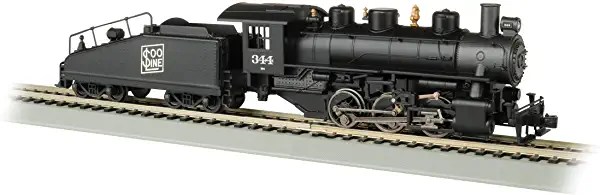
STEAM ENGINES

Diesel locomotives became the dominant type of locomotive in the 1950s and continue to be used today. They are generally more reliable and easier to maintain than steam locomotives, and they offer a wide variety of models to choose from. However, some modelers may find them less visually interesting or less historically significant.

Diesel Locomotives:

  • Modern relevance: Diesel locomotives are the primary source of power for trains today, and modeling them can provide a more contemporary and modern feel to your layout.
  • Simpler design: Diesel locomotives have a simpler design than steam locomotives and are generally easier to maintain and operate.
  • Wide range of models: Diesel locomotives come in a wide variety of models and designs, making them an attractive option for modelers who enjoy collecting and modeling different types of locomotives.

DIESEL LOCOMOTIVES

Ultimately, the decision to model steam or diesel locomotives comes down to personal preference and the era or location you want to model. Both types of locomotives can provide a unique and rewarding modeling experience, and many modelers choose to incorporate both types into their layouts for added variety.

Regardless of your choice, it’s important to research and choose locomotives and rolling stock that are appropriate for the era and location you’re modeling. This will ensure that your layout is historically accurate and visually appealing.

Best way to clean model railroad track

Cleaning model railroad track is essential for ensuring smooth operation of trains and preventing derailments. Here are some of the best ways to clean model railroad track:

  1. Use a track cleaning car: A track cleaning car is a special type of car that has cleaning pads or brushes attached to its underside. As it moves along the track, it cleans the rails and removes any dirt, dust, or other debris.

2. Use a track cleaning fluid: There are various track cleaning fluids available on the market that can be used to clean model railroad track. These fluids are applied to a cleaning pad or cloth, which is then used to wipe the rails clean.

Track Cleaning Fluids

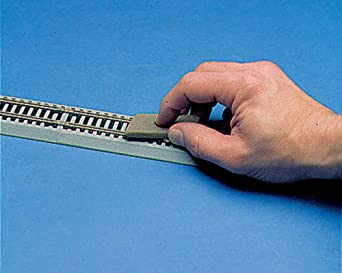
3. Use a track cleaning block: A track cleaning block is a small block of material, such as abrasive rubber or fiberglass, that is used to clean the rails. Simply rub the block over the rails to remove any dirt or oxidation.

Track Cleaning Bright Boy

4. Use a track cleaning tool: There are various track cleaning tools available, such as brushes, scrapers, and erasers, that can be used to clean the rails. These tools are particularly useful for cleaning hard-to-reach areas, such as switches and turnouts.

Tidy Track Rail Tracker Cleaning Kit 

This Woodland Scenics Tidy Track is my preferred method to clean track

5. Use a vacuum cleaner: A vacuum cleaner can be used to remove any loose dirt or debris from the track. Make sure to use a soft brush attachment to avoid scratching the rails.

Vacuums for cleaning track and excess scenery

Regardless of the method you choose, it is important to regularly clean your model railroad track to ensure that it operates smoothly and reliably.

Developing Your First Model Train Layout

To develop your model train layout there are four major steps to take before you begin construction:

1: Select the size of your model train, that is the scale or gauge. Scales range from micro-sized Z scale for tiny layouts to giant G-scale used mostly for outdoor garden layouts.

Visit hobby shops or model train websites and see the various scales available. Staff at a hobby shop will usually be happy to point out the advantages and/or disadvantages of each scale. Your decision about scale/size will be partly based on the space available for your layout. The most popular scales are O scale which is 1/48th actual size and the smaller HO scale which is 1/87th actual size. As a result of being the two most popular scales these have the greatest variety of locomotives, cars and accessories available.

Model Train Scales an article written earlier may also help.

2: Learn about layouts for the scale you have chosen by reading magazines such as O Gauge Railroading and Classic Toy Trains (these two are for O scale). Model Railroading provides detailed information about HO and N scale. All are full of information – all the good train hobby stores carry them or you can pick them up at places like Barnes & Noble or Amazon.

Also visit websites related to your scale choice Google the term “model train layouts” for a great listing of sites with information about model train layouts. You may also wish to check out Youtube for more information on layouts.

Re-visit hobby shops you visited for information when deciding on the scale of your model train set and ask questions about layout. The good ones can provide helpful advice and they sell how-to books on wiring, scenery, detailing and other subjects.

3: You then need to decide on how you start. Do you want to start with a little layout that can later be extended? Do you want to set up a permanent layout right from the start? Do you want to develop a ‘theme’ layout say a layout depicting California logging railroads in the 1920s? The major decisions are to determine your objective and set the size parameters for your layout. Don’t forget that the size parameters for your layout will be determined largely by the space you have available a basement? the corner of a lounge room? portion of your garage? etc.

Deciding a Track Plan Before Building Your Model Railroad Layout another article written here.

4: Begin making sketches and drawings on plain paper it’s easier to make changes to your drawing than to have to physically pry up a section of track that ‘went wrong’. Refer back to magazines and websites during this planning stage just to see what others have done. Many magazines and websites will have photos of layouts appropriate to the scale you have chosen. There are even some computer programs which can help you with designing your layout – look for ads in model train magazines.

Scenery – My six steps

Part 3 Trees

In part 3 we will finally talk about trees.

I part 1 we talked about preparing the contour of the land. We got an idea for the hills and valleys, used crumpled paper for hills and covered it all with plaster cloth. Lightly sprayed to cover the white cloth, then covered it with fine turf (earth). To read part 1 go here

I part 2 we went to the green stuff, grass, (fine turf grass), then some course turf and blended turf for that weedy look. And finally clump turf for the small shrubs and bigger weeds. To read part 2 go here.

Now in part 3 we will finish the six steps with some small trees.

The white area next to the roadbed is plaster cloth that needs to be covered.

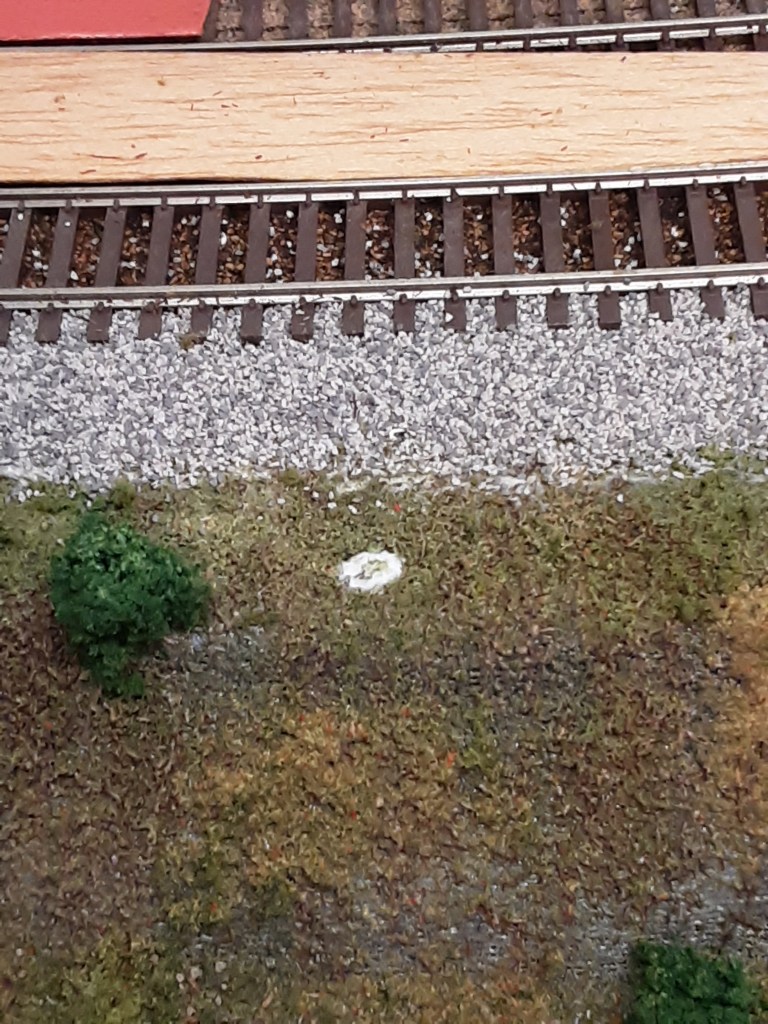
In this photo I have applied ballast, only from the rail to the grass. This area is in fron of the passenger station and I will apply ballast, brick or concrete at a later time.

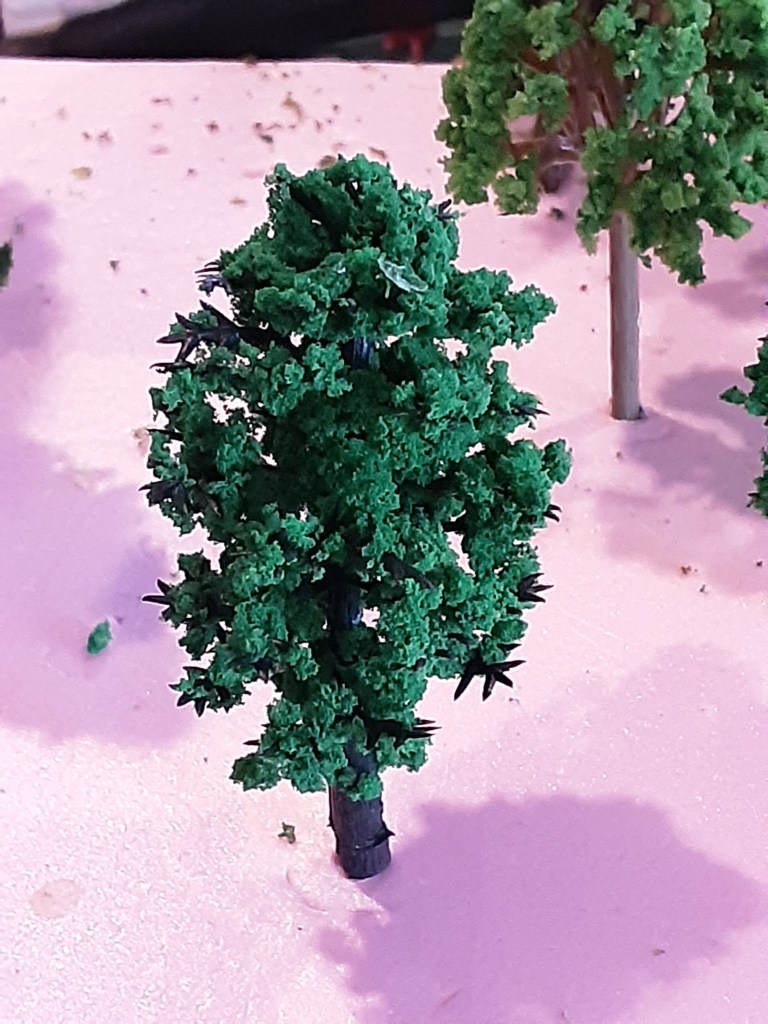
In the photo to the right the tree now looks fuller, you can’t see thru it.

I repeated this process with all the trees to be placed in this area.

In this photo you can see that some of the trees are thin and you can see thru.

to fix this I sprayed the leafy area with Elmers adhesive spray. The sprinkled fine turf over the area just sprayed. Then resprayed and sprinkled a second time to fill out the tree.

Now place a couple of drops of white glue, I use Elmers. On top of the hole, this will hold the tree in place and the snug hole will keep it near straight.

Now the trees will be planted (placed) on the layout. This is random. Take a look at the scene and place the trees where you think they will fit best.

Use an auger or something similar that will create a hole about the size of the tree trunk. You want it to be snug.

You have just planted a tree on your Layout in this scene. The first of many. Repeat this for as many or as few as you feel necessary to complete the scene.

In this short area I placed three trees. Just to appear to be a separator and not to hide what is behind it.

Trees can be used for many purposes one I will discuss in a future article will be to use them to separate scenes. Also I will discuss the various types and brands of trees available.

I hope that you found my six steps of scenery informative, they are quick and easy to complete. At the same time go a long way in bringing your model railroad to life. As you can see from some of the photos I use figures and vehicles and other items that also help bring a layout to life. We will discuss as many as you like in the future.

Thank you for reading. Till the next time.

Scenery – Six steps

Part 1

Many people’s first introduction to model railroading is with a simple circle or oval on a sheet of plywood. No scenery, no landscaping and maybe not even any buildings or vehicles

It doesn’t take long, however, to get the urge to start adding accessories to the railroad to make it more realistic. For many people, this become a lifelong endeavor, and can grow to very large proportions

There are many options for landscaping a railroad. You can add things like grass, trees, lakes or rivers alongside the track. Or you can get a little more in depth and add hills and valleys for your train to travel through, and tunnels through the mountains.

There are many methods and articles for scenery. I have read many articles, attended a few seminars (classes) and and discussed these methods at our club meetings. We have come up with our own methods for scenery. The six steps that work best for us. These steps are not hard and fast rules, merely a suggestion that will help you get to the point where you are not looking at a train running on plywood.

Step 1 The base, for this example, will be a 4 x 8 sheet of Fiberboard. A reasonable starting point. The track plan can be what ever you wish, an oval or something a little different from the internet or magazine. Our emphasis here will be scenery.

If you drive through the neighborhood or around town the main point you will see is that it is not level. Some grade changes are everywhere. (Work in small areas in the beginning, this will help you get experience and the learning process will be easier.) The first thing to do is plan what you you would like to have and where you want it. Then map a small area and begin. This is very easily done by clumping newspaper in piles and draping paper towels dipped in a plaster of paris mix and draping the wet towels over the clumped newspaper. A second method would be to use extruded Styrofoam stacked and carved to form the hills, then use the plaster cloth to form the terrain use Woodland Scenics Plaster Cloth. It’s not very messy. Using the plaster cloth can be used for small grades or larger hills. As the plaster is drying you can smooth the hill by using wet fingers and rubbing lightly for the smooth surface. You will find if you experiment you can have the terrain you desire.

The picture to the above shows two levels, the engine sits about 1.5 inch above the lower level. The blue Styrofoam hides the elevation. As you can see it does not need to be neatly cut. Rolled up newspaper also works well. Its only function is to support the plaster cloth. The styrofoam was glued in place with Elmers white glue

Plaster cloth can be cut to fit any size and location.

Here you see a cut piece of plaster cloth in place. I place the cut plaster cloth in a plastic dish to soak for several minutes then put it in place.

Here another sheet of plaster cloth has been put in place to complete the coverage of the Styrofoam. Use as many sheets as necessary to cover the area.

I like to place two layers of plaster cloth for strength. Then using wet fingers smooth the plaster as you can see in the picture the holes have disappeared by smoothing the plaster adding to the strength. The Styrofoam allows for smooth surface and smooth finish.

Rolled up newspaper will allow for a more hilly finish as the plaster cloth will follow the contours easily.

Here another sheet of plaster cloth has been put in place to complete the coverage of the Styrofoam. Use as many sheets as necessary to cover the area.

Once you are satisfied with the area you are working, paint with an earth color spray or brush whichever you desire. I find spray cans are faster and easier.

If you are working in an area where track has been placed you will want to mask the track as I did.

For this example I used a black spray paint to lightly cover the area.

At this point I walk away to let the paint and plaster dry. Doesn’t take very long.

Step 2 is spreading earth or sifted dirt onto to the wet paint. If you have let the paint dry fear not, you can use a spray on glue. 3M and Elmer’s both make a great product, I have used both. Spray the area with the glue and use a tea strainer to cover the area with earth, gently tap the strainer as you cover the area. You can use the Fine Turf or sifted dirt. The dirt can come from your back yard. Let it dry then put it through a tea strainer. let it sit for a day or two then use it on your scene. If it gets a little thick in areas don’t be concerned, you can smooth it out with a small brush or let it go. At this point you can spray the area with an inexpensive hair spray. That will hold everything in place.

At this point the two levels are connected by a rolling hill, covered in dirt.

In the next installment we will add grass, weeds bushes and shrubs to make the area appear to be ready for trees, people and vehicles. Bringing the railroad to life.

Continue to Part 2.

Scenery – Six steps

Part 2

There are many methods and articles for scenery. I have read many articles, attended a few seminars (classes) and and discussed these methods at our club meetings. We have come up with our own methods for scenery. The six steps that work best for us. These steps are not hard and fast rules, merely a suggestion that will help you get to the point where you are not looking at a train running on plywood.

In part 1 I demonstrated how I use the plaster cloth over the styrofoam or the crumpled paper to create a contour on the land. Then I used the fine turf after lightly painting the surface to simulate the earth. At this point I am ready to start with the addition of the grass. Return to read Part 1.

Since the area has been idle for several days to allow it to dry I sprayed spray adhesive on the area to be covered with grass.

Step 3 is fine green Grass, Woodland Scenics and Scenic Express make several shades of green and burnt grass. Again sprinkle lightly covering all or most of the area. Again if this appears too thick is some area you can work a brush to lightly smooth or let it go.

.

In the photo above you will see more grass on the top and bottom (flat surfaces). Grass isn’t very thick on the slope we’ll fix this shortly. The white areas will be covered with ballast as will the cork roadbed. I’ll cover track and ballast in a later post. I have used several methods and I will demonstrate what I do. I believe in easy.

Step 4 is coarse foam. Again this product is available from both companies. Sprinkle SPARRINGLY. LIGHTLY.

At this point I want to introduce wet water. I prefer water with several drops of dish soap (Dawn or something similar). This is applied with an eye dropper or a spray bottle. This is applied to the area prior to applying a 50/50 mix of water and white glue (Elmers). The wet water helps the glue saturate the the material and hold it to the painted base. You can see this work by first placing a drop of the 50/50 mix on you grass, it will sit there. Put a drop of wet water on the glue and it will penetrate the material.

Cover the area you just completed with wet water followed by the 50/50 glue mix and let it dry.

Step 5 Clump foliage. This clump foliage can be placed or not, it resembled small shrubs. If you do use it, place a small circle of white glue where it will be placed and place the clump there. The glue should be about the same size as the clump and dries clear. Again this step is a personal touch, use it or not.

Above you will see a scene I have on my layout where all the products I have mentioned in part 1 & 2 have been used. In addition to the use of small rocks/pebbles the various trees will be discussed in part three.

Step 6 Trees to be covered in a future article (Part 3 )

Till the next post on trees.

.