Welcome to April! Last month, we celebrated a huge milestone in our Family Empire series: Breaking the Circle. You moved beyond the simple loop of track and laid down your first turnout, creating a dedicated siding. It was a proud moment of construction, but now that the glue has dried and the ballast is set, your layout might feel a little… quiet.
Your locomotive is idling on that new siding, and you’re probably wondering, “Now what?”
In the world of model railroading, a train without a destination is just a toy moving in circles. To turn your layout into a living, breathing transportation system, you need commerce. This month, we’re moving from construction to business. We’ll explore how to choose the right building, where to place it for maximum realism, and how to give your siding its very first “job!”
Why Your Layout Needs an Industry
In the “real world,” railroads don’t build track just for the scenery; they build it to move goods. Every siding you see alongside a main line exists because a customer needs something delivered or shipped.
By adding an industry to your siding, you transform your hobby from running trains to operating a railroad. * Purpose: Instead of just driving around, you are now “delivering a load of grain” or “picking up lumber.”
- Challenge: “Spotting a car” (lining it up perfectly with a loading door) requires skill and slow-speed precision.
- Storytelling: A weathered factory or a bustling rural elevator tells a story about your layout’s history.
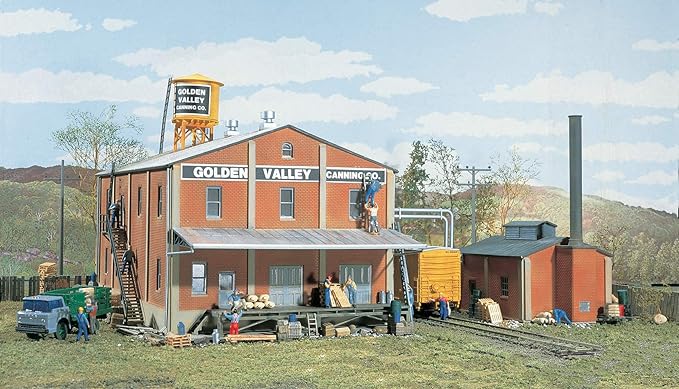
Step 1: Choosing Your “First Industry”
The beauty of model railroading is that you can build whatever you imagine. However, for your very first trackside customer, I recommend choosing a “kit” that is recognizable and fun to build.
The Versatile Warehouse
For those starting out, a classic Walthers Cornerstone Series building is a gold standard. Their kits, like the North Island Refinery or a simple Freight House, are designed specifically for HO and N scales with high detail that fits almost any era.
- Compatible Rolling Stock: Most warehouses use the humble Boxcar. If you don’t have a reliable one yet, the Bachmann Trains Silver Series Boxcars are excellent, budget-friendly options that track beautifully on new sidings.
The Vertical Icon: The Grain Elevator
If you want a building that stands tall and defines the horizon, look for a Grain Elevator kit. These are fantastic because they have a small “footprint” (they don’t take up much table space) but add significant visual height to your scenes.
Step 2: Strategic Placement (The “Sweet Spot”)
Now that you have your building, don’t just glue it down! Placement is where the magic happens. You want to create a scene that looks natural and functions smoothly.
The Loading Dock Alignment
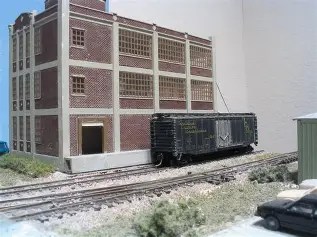
The most common mistake is placing the building too far from the track. For a realistic look, the loading dock should be close enough to the rails that a miniature worker could bridge the gap with a small ramp.
Tip from Stan: Use your widest piece of rolling stock to test the clearance. Slide the car along the siding past the building. It should be close, but you don’t want the paint to scrape! To ensure your tracks are perfectly spaced, a Rix Products Rail Gauge is a “must-have” tool in my toolbox for checking clearances.
Leave Room for “The Rest”
An industry isn’t just a building; it’s a site. When placing your building, ensure there is room for:
- Truck Access: Is there a road leading to the other side?
- Worker Parking: Even a tiny gravel lot made of fine-sifted real dirt or Woodland Scenics Ballast makes a huge difference.
Step 3: Giving the Siding a Job
Once the building is in place, it’s time to write the “job description.” This is the beginning of Operations. Let’s say you chose a warehouse. Here is how you create a “job” for your train:
- The Inbound Move: Your locomotive pulls a boxcar from the main line. This car is “loaded” with supplies.
- The Spot: You slowly back the car into your new siding, aligning the boxcar door perfectly with the warehouse door.
- The Unload: In your mind, that car stays there for a “shift” (perhaps until your next hobby session).
- The Outbound Move: On the next run, your locomotive returns, hooks up to the “empty” car, and pulls it away to be taken back to the “rest of the world.”
Enhancing the Scene: The Little Details
To truly move from “construction to commerce,” you need the signs of life. These small touches are what make a model railroad feel real:
- Weathering: Industrial buildings are rarely pristine. A simple Weathering Powder Kit can add years of “soot” and “grime” to a plastic roof in minutes.
- Signage: A bold company name gives your layout an identity.
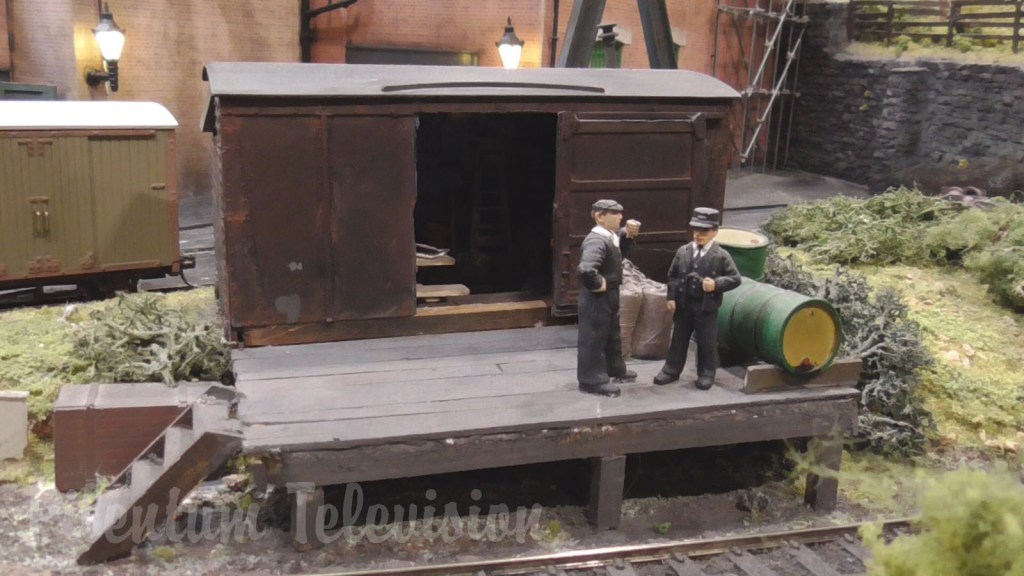
- Pallets and Crates: Scatter a few miniature pallets near the loading dock. It signals to the viewer that work is happening here.
- Figures: Place one or two workers on the dock. It provides scale and a sense of activity.
Looking Ahead: Building Your Empire
By adding your first industry, you’ve officially transitioned from a “train collector” to a “railroad superintendent.” You’ve mastered the circle, conquered the turnout, and now you’ve established your first commercial customer.
The best part? This is just the beginning. As you add more sidings, you create more jobs. Eventually, your “switching” moves will become a complex, rewarding puzzle of logistics.
Share Your Progress!
Did you choose a weathered coal mine or a bustling city warehouse? We want to see your first industry! Tag us on Pinterest or your favorite social spot with #TheFamilyEmpire to show off your new trackside business.
Coming Next Month…
Now that your trains have a reason to move, they need a place to go when the workday is over. Join us in May for “The Iron Horse Stable,” where we’ll discuss engine houses, fueling stations, and how to treat your locomotives to the maintenance they deserve.
Until then, keep those wheels turning!
Quick Reference: Top Beginner Industries
| Industry | Primary Car Type | Why it Works |
| Grain Elevator | Covered Hopper | Iconic look; small footprint; great height. |
| Lumber Yard | Flatcar / Centerbeam | Great for colorful loads; very easy to detail. |
| Freight House | Boxcar | The “Swiss Army Knife”; fits any era or town. |
| Fuel Dealer | Tank Car | Adds variety with piping and vertical tanks. |
 Stan's Hobbies and Interests