As spring fully blossoms in the Northern Hemisphere, April 2025 brings longer days and milder nights, perfect for family stargazing adventures. This month offers a variety of celestial treats, from planets to meteor showers, making it an excellent time to explore the wonders of the night sky. Let’s embark on a cosmic journey through the April 2025 night sky!
Planets on Parade

April 2025 presents several opportunities to observe planets in our solar system. Here’s what to look for:
Venus: The “Evening Star” continues to dazzle in the western sky after sunset. Its brightness makes it easy to spot, even in areas with some light pollution. Challenge your family to see who can spot Venus first as twilight fades!
Mars: The Red Planet will be visible in the constellation Gemini. Its distinct reddish hue makes it stand out among the stars. With a small telescope, you might catch a glimpse of its polar ice caps or dark surface features.
Jupiter: The largest planet in our solar system will be visible in the early morning sky. Even with binoculars, you can spot its four largest moons: Io, Europa, Ganymede, and Callisto. Try observing Jupiter over several mornings to see how the positions of these moons change.
Saturn: The ringed planet rises in the early morning hours. While you’ll need a telescope to see the rings clearly, even small instruments can reveal this breathtaking sight.
Uranus and Neptune: These distant ice giants are challenging to spot without a telescope and will be close to the Sun this month, making observation difficult.
The Moon’s Journey
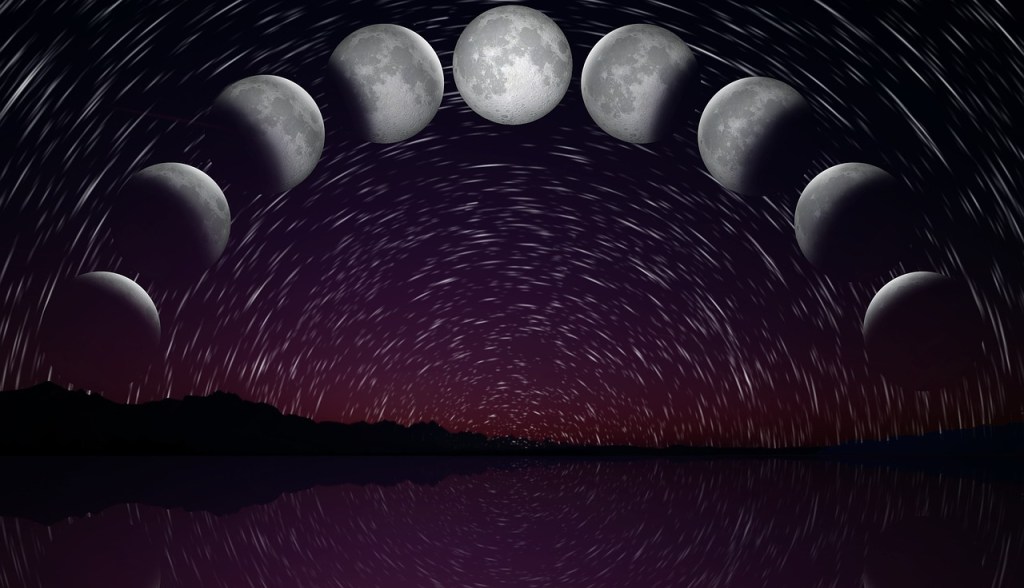
Our celestial neighbor, the Moon, goes through its phases this month:
April 1: Last Quarter Moon
April 8: New Moon
April 15: First Quarter Moon
April 23: Full Moon (Pink Moon)
April 30: Last Quarter Moon
The Full Moon on April 23 is traditionally known as the Pink Moon, named after the pink flowers (wild ground phlox) that bloom in early spring. This is a great opportunity to observe the Moon’s features with binoculars or a small telescope.
Lyrid Meteor Shower

One of the highlights of April is the Lyrid meteor shower, active from April 16 to April 25, with its peak on the night of April 22-23. The Lyrids typically produce about 10-20 meteors per hour at their peak, but occasionally can surge to rates of 100 per hour.
To observe the Lyrids:
- Find a dark location away from city lights.
- Allow your eyes at least 30 minutes to adjust to the darkness.
- Look towards the constellation Lyra, the radiant point of the shower.
- The best viewing time is typically after midnight and before dawn.
Remember, patience is key when watching for meteors. Make it a family event by bringing comfortable chairs, warm blankets, and snacks for a cozy night under the stars.
Constellations of Spring

April offers a mix of winter constellations setting in the west and spring constellations dominating the sky. Here are some to look out for:
Leo: The majestic lion is high in the southern sky. Look for the backwards question mark shape (the Sickle) that forms the lion’s head and mane, with the bright star Regulus at the bottom.
Ursa Major: The Great Bear, which contains the famous Big Dipper asterism, is high overhead. Use the two stars at the front of the Dipper’s bowl to point to Polaris, the North Star.
Boötes: This kite-shaped constellation rises in the east, led by its bright star Arcturus. To find Arcturus, follow the arc of the Big Dipper’s handle.
Virgo: This large constellation is visible in the southeast, marked by its brightest star, Spica.
Corvus: Look for this small but distinctive constellation, shaped like a trapezoid, to the southwest of Spica.
Deep Sky Wonders

For those with binoculars or small telescopes, April offers some beautiful deep sky objects to observe:
The Beehive Cluster (M44): This open star cluster in Cancer is a beautiful sight through binoculars.
The Leo Triplet: A group of three galaxies (M65, M66, and NGC 3628) visible in the constellation Leo with a small telescope.
The Whirlpool Galaxy (M51): This face-on spiral galaxy near the handle of the Big Dipper is a favorite target for amateur astronomers.
The Leo Triplet, with M65 (right top), M66 (right bottom) and
NGC 3628 (left). North is to the left.
Family-Friendly Stargazing Activities
- Moon Journal: Throughout the month, observe and sketch the Moon’s changing phases. This is a great way to understand lunar cycles and improve observational skills.
- Planet Scavenger Hunt: Create a checklist of visible planets and see who in the family can spot them all first.
- Constellation Storytelling: Learn the myths associated with the constellations and create your own stories about the shapes you see in the sky.
- Meteor Shower Watch Party: Plan a family outing to watch the Lyrid meteor shower. Bring comfortable chairs, blankets, and snacks for a memorable night under the stars.
- Astrophotography: Try capturing the night sky with a smartphone or camera. The Moon, bright planets, and star trails make great subjects for beginners.
For ALL your Astronomy Needs please go to EXPLORE SCIENTIFIC and OPTICS PLANET. Links on the left.
Tips for Successful Stargazing
- Choose the right location: Find a spot away from city lights for the best views.
- Allow time for dark adaptation: Give your eyes at least 30 minutes to adjust to the darkness.
- Use red light: If you need light to read star charts or adjust equipment, use a red flashlight to preserve your night vision.
- Dress appropriately: Even spring nights can be chilly, so dress in layers and bring blankets.
- Bring the right tools: Binoculars are a great starting point for astronomy. They’re easier to use than telescopes and can show you many celestial wonders.
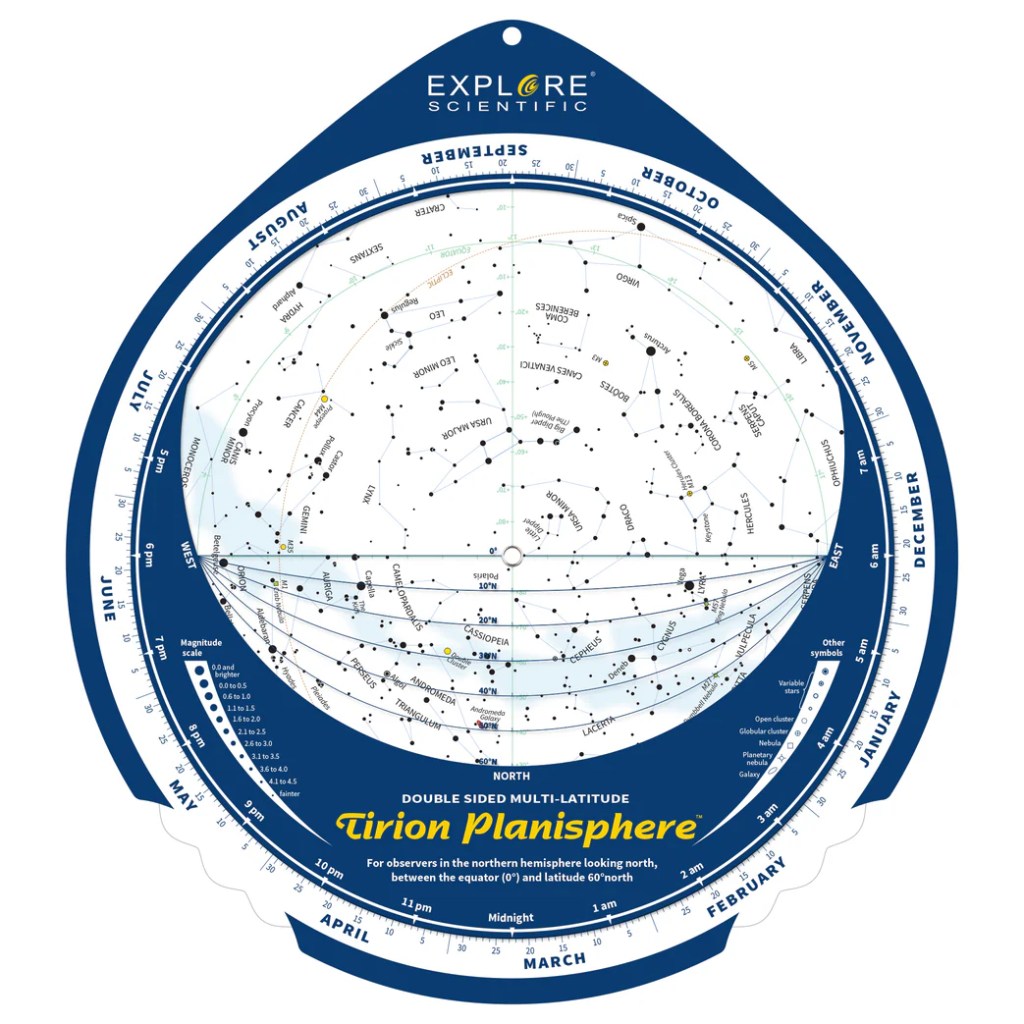
- Use star charts or apps: Sky maps or smartphone apps can help you identify what you’re seeing. Just remember to use night mode on your device to preserve your dark adaptation.
As you explore the April 2025 night sky with your family, remember that stargazing is an activity that rewards patience and persistence. Not every night will be clear, and it takes time to learn your way around the celestial sphere. But with each stargazing session, you’ll become more familiar with the wonders above us.
Take a moment to reflect on the vastness of space and our place within it. The light from the stars you see has traveled for years, decades, or even centuries to reach your eyes. You’re not just looking at the sky – you’re looking back in time.
Stargazing can be a profound and humbling experience. It reminds us of the beauty and mystery of the universe, and our connection to the cosmos. Every atom in our bodies was once forged in the heart of a star – we are, quite literally, made of stardust.
So step outside, look up, and prepare to be amazed by the celestial wonders of the April 2025 night sky. Happy stargazing!
References:
- NASA. (2024). Solar System Exploration. https://solarsystem.nasa.gov/
- International Astronomical Union. (2024). Constellations. https://www.iau.org/public/themes/constellations/
- American Meteor Society. (2024). Meteor Shower Calendar. https://www.amsmeteors.org/meteor-showers/meteor-shower-calendar/
- Sky & Telescope. (2024). This Week’s Sky at a Glance. https://skyandtelescope.org/observing/sky-at-a-glance/
- Stellarium Web. (2024). Online Planetarium. https://stellarium-web.org/
- EarthSky. (2024). Tonight’s Sky. https://earthsky.org/tonight/
- Space.com. (2024). Night Sky, April 2025: What You Can See This Month. https://www.space.com/skywatching
- The Old Farmer’s Almanac. (2024). Full Moon Calendar 2025. https://www.almanac.com/astronomy/moon/calendar
- National Optical-Infrared Astronomy Research Laboratory. (2024). Astronomical Information. https://noirlab.edu/public/products/astronomical-information/
Answer from Perplexity: https://www.perplexity.ai/search/backyard-astronomy-as-a-beginn-5UrB9jN6TReA1CDQWmJimw?utm_source=copy_output
 Stan's Hobbies and Interests