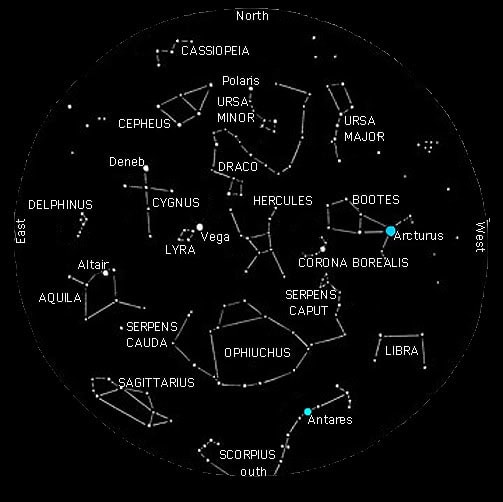
July 2026 Night Sky Guide: Planetary Conjunctions, the Milky Way, and Midsummer Meteors

Warm summer nights provide the perfect backdrop for backyard stargazing. Whether you are a seasoned observer with a telescope or a family using nothing but your naked eyes from a blanket in the grass, the celestial calendar for July 2026 is packed with spectacles.

This month features brilliant evening planets, stunning predawn celestial meetups, the peak of our home galaxy’s visibility, and the opening acts of the summer meteor season. Here is your complete guide on what to look for, when to watch, and how to find July’s best cosmic events.

Earth at Its Furthest Point: Aphelion (July 6)

We begin the month with a mind-boggling cosmic fact to share around the campfire. On July 6, 2026, Earth reaches aphelion—the exact point in our annual elliptical orbit where we are furthest from the Sun.

SUN –>>> 94.5 Million Miles to Earth

On this day, Earth will sit roughly 94.5 million miles away from our star. It feels counterintuitive for those of us experiencing midsummer heat in the Northern Hemisphere, but our seasons are dictated by the tilt of Earth’s axis, not our physical distance from the Sun. While it is a purely mathematical milestone that doesn’t change how the sky looks, it is a wonderful reminder of our steady journey through space.

The Evening Star: Venus Swaps Greetings with Regulus and the Moon

If you step outside just after sunset during the first half of July, your eyes will immediately be drawn to the western horizon. Venus reigns supreme as the “Evening Star,” blazing intensely against the twilight glow.

July 9 — Venus and Regulus

Shortly after the sun sinks on July 9, look closely at Venus. Right next to it, you will see a sharp, blue-white point of light. This is Regulus, the brightest star in the constellation Leo the Lion. Known historically as the “Heart of the Lion,” Regulus sits roughly 79 light-years away from us. The visual contrast between the steady, dazzling white light of nearby Venus and the twinkling, distant sapphire of Regulus makes this the prettiest naked-eye pairing of the week.

July 15–17 — The Cosmic Crescent

A few nights later, a young, razor-thin crescent Moon enters the western sky, climbing closer to Venus each evening. By dusk on July 17, the Moon will sit directly beside Venus.

Keep an eye out for a phenomenon known as earthshine, or the “Da Vinci glow.” This is when sunlight reflects off Earth’s oceans and clouds back onto the dark portion of the Moon, subtly illuminating the entire lunar disc. It creates a breathtaking, cinematic view easily seen without any equipment.

The Predawn Parade: Saturn, Mars, and the Seven Sisters

For the early risers—or the night owls who stay up past midnight—the eastern sky before dawn acts as a bustling planetary crossroads this month.

July 7–8 — The Saturn-Moon Rendezvous

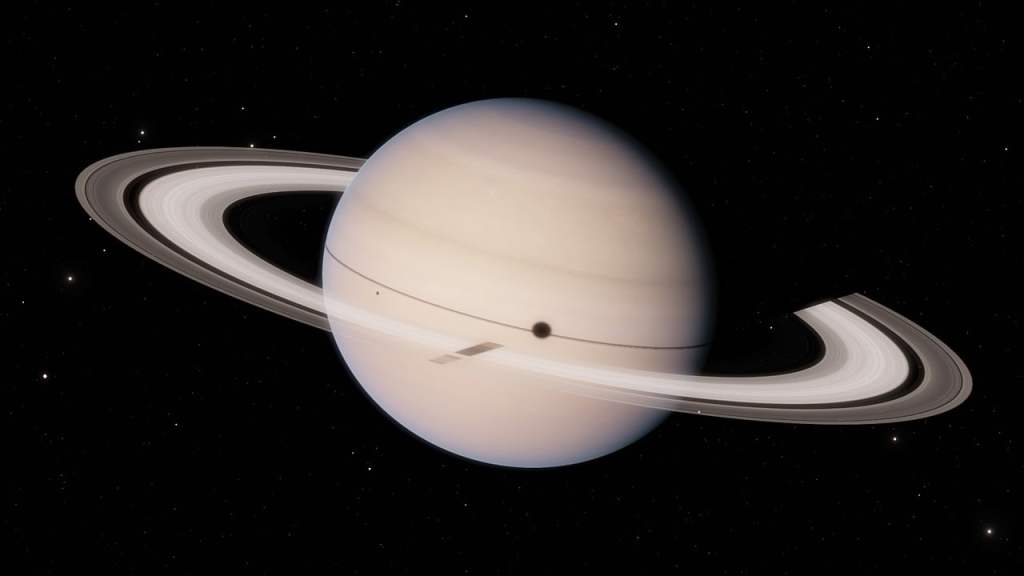
In the early hours of July 7 and 8, the Third Quarter Moon climbs above the eastern horizon accompanied by Saturn. The pair will be separated by less than nine degrees, roughly the width of a fist held at arm’s length. Saturn will shine with a steady, golden glow. If you have a modest backyard telescope or high-powered binoculars, this is an excellent time to view Saturn’s famous ring system, which is currently tilted at a narrow angle relative to Earth.

July 11 — The Morning Trio

Set your alarm roughly two hours before sunrise on July 11 for the crown jewel of the month’s planetary alignments. Looking east, a delicate crescent Moon will form a tight, striking triangle with an orange-hued Mars and the sparkling Pleiades star cluster (also known as the Seven Sisters).
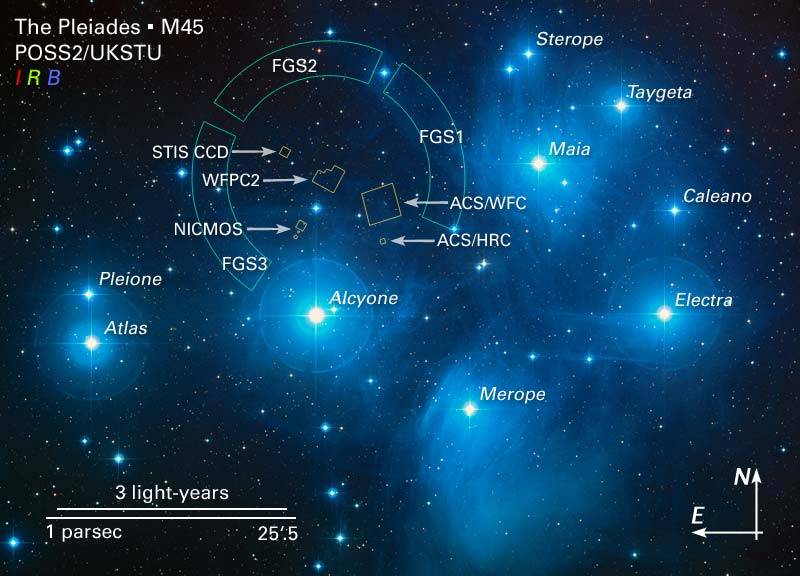
While the naked eye can comfortably spot six or seven stars in the Pleiades, viewing this triangle through a pair of standard binoculars will completely change your perspective. Optics pull dozens of hidden, icy-blue stars out of the dark velvet sky, framed beautifully by the ruddy glow of Mars.

July 14: Dark Skies and the Milky Way’s Core

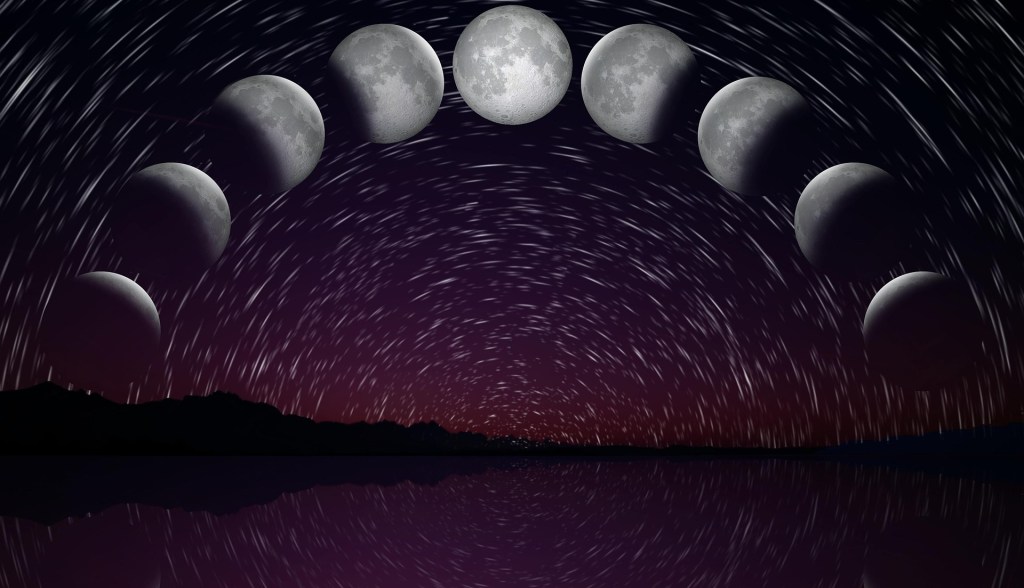
Some of the best stargazing nights do not center around what is arriving in the sky, but rather what is missing. On July 14, the Moon reaches its New Moon phase, meaning it sits between the Earth and the Sun and leaves our night sky entirely dark.

Without natural lunar light pollution, mid-July provides the absolute best window of the year to witness the Milky Way.

How to Find the Galactic Center

  • When to look: Wait until late evening when the sun’s glare is entirely gone.
  • Where to look: Face directly south.
  • The Guidepost: Look for a cluster of stars that forms a shape resembling a classic Teapot (part of the constellation Sagittarius).

From a dark-sky location, such as a state or national park, the dense, glittering core of our home galaxy will appear to rise straight out of the Teapot’s spout like a pale, smoky column of steam.

Late July: The Buck Moon and Overlapping Meteors

The end of the month brings a massive shift in nighttime lighting, transitioning from deepest dark to full lunar brilliance, alongside the kickoff of summer shooting star season.

July 28–29 — The Full Buck Moon
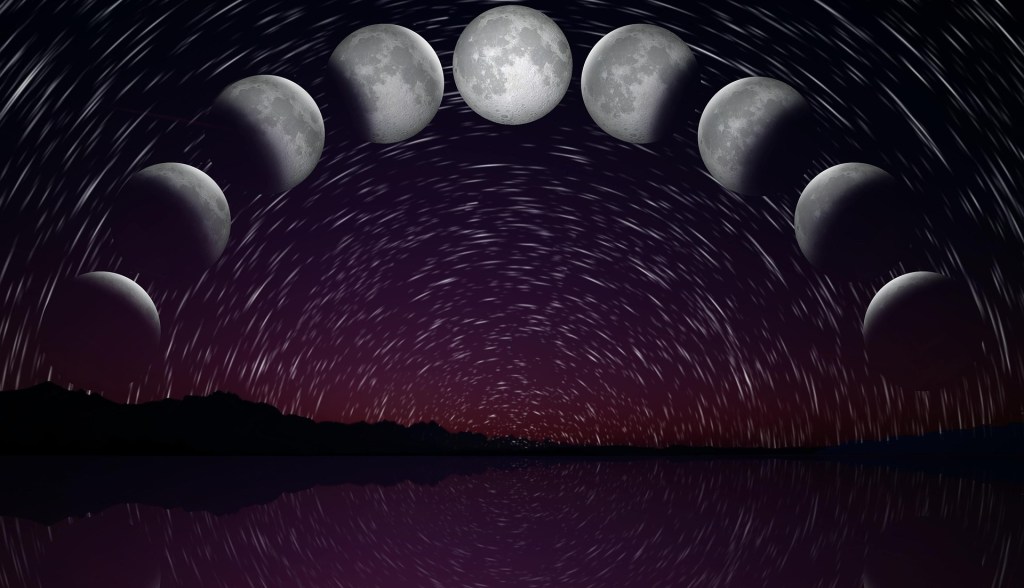
July’s full lunar orb reaches its official peak illumination on the morning of July 29, meaning the evenings of both July 28 and July 29 will offer spectacular moonrises. Known traditionally as the Buck Moon because male deer grow their new antlers rapidly during this stretch of summer, it will dominate the sky from dusk until dawn.

For the most magical view, catch it right as it clears the eastern horizon at sunset. An optical trick of human perception called the “Moon Illusion” will make the orb appear unnaturally massive as it hovers behind distant trees and buildings.

July 30–31 — A Double Meteor Shower

The month closes out with a dual cosmic performance: the Southern Delta Aquariids and the Alpha Capricornids meteor showers both reach their peak on the same nights.

The Delta Aquariids are a steady shower capable of producing up to 20 to 25 meteors per hour under ideal conditions, while the Alpha Capricornids are much sparser but famous for producing slow-moving, bright, colorful fireballs.

Stargazing Tip: Because the moon will be roughly 98% illuminated during the peak nights, its brilliant light will wash out the fainter meteors. To maximize your chances of spotting a shooting star, position yourself so a building or a line of trees blocks the direct light of the moon, and watch the darker patches of sky further away from the lunar disc.

For the best Astronomy equipment and supplies check Amazon and Optics Planet

Summary of Key July 2026 Skywatching Dates

DateCelestial EventBest Time to WatchWhere to Look
July 6Earth at AphelionAll Day (Orbital Milestone)N/A
July 7–8Moon and Saturn ConjunctionAfter Midnight until DawnEastern Sky
July 9Venus glides past Regulus45–60 Minutes After SunsetLow Western Horizon
July 11Moon, Mars, and Pleiades Trio2 Hours Before SunriseEastern Sky
July 14New Moon & Peak Milky Way CoreLate Night / MidnightSouthern Sky (Near the “Teapot”)
July 17Crescent Moon and Venus MeetupJust After SunsetLow Western Horizon
July 28–29The Full Buck MoonSunset to SunriseRises in the East
July 30–31Double Meteor Shower PeakMidnight to DawnAcross the Entire Sky

July 2026 reminds us that exploring the frontier of space doesn’t require expensive technology or long journeys. Grab a blanket, invite your family outside, and simply look up!

For a visual breakdown of where to find these planetary alignments and a preview of the upcoming meteor paths, check out this comprehensive July 2026 Skywatching Video Guide, which walks through each event chronologically to help you plan your nights under the stars.

Clear skies and happy hunting!
The Ultimate Summer Space Race: Your Night-by-Night Cosmic Scavenger Hunt (July & August 2026 Edition)

Are you ready to turn your backyard into a launching pad for interstellar discovery? This summer, we are hosting the ultimate Summer Space Race! Whether you are a parent looking for an exciting, screen-free family project or a seasoned visual observer eager to test the limits of your optics, this progressive, night-by-night scavenger hunt is built just for you.

We have broken this challenge into two parallel tracks that build in excitement from one target to the next:

  • The Starlight Cadet Track: Perfect for families, beginners, and anyone using the naked eye or a pair of entry-level binoculars.
  • The Cosmic Veteran Track: Tailored for experienced backyard astronomers with manual or motorized telescopes who love a good tracking challenge.

Grab your red-lens flashlights, head out to your favorite local dark-sky park, and let the space race begin!

Part 1: The July Warm-Up – Cosmic Alignments & The Teapot

Our scavenger hunt begins in July as the summer Milky Way rises high in the southern sky. To find the best views, consider taking a family trip to a certified international dark-sky location or a national park near you to escape city light pollution.

Level 1: The Planetary Gateway (July 11, 2026)

  • Starlight Cadet Challenge: Wake up early! Two hours before sunrise, look toward the eastern horizon. Your mission is to locate the thin crescent Moon forming a striking celestial triangle with the bright orange spark of Mars and the sparkling, pale-blue fuzzy patch of the Pleiades Star Cluster. Can you see all three within a single glance?
  • Cosmic Veteran Challenge: Center your telescope on that tight cosmic trio. Use a wide-field eyepiece to capture Mars and the Pleiades in the same frame. For an advanced astrophotography goal, try a long-exposure stack to reveal the delicate reflection nebulosity surrounding the Pleiades stars right next to the planetary glow of Mars.

Level 2: Steaming Up the Milky Way (July 14, 2026 – New Moon)

  • Starlight Cadet Challenge: With the moon completely dark tonight, look due south to find the constellation Sagittarius. Look for the famous “Teapot” asterism. Once you spot the spout of the teapot, look closely—can you see the thick, cloudy band of our Milky Way galaxy appearing to “steam” right out of the spout?
  • Cosmic Veteran Challenge: Use the Teapot’s spout as your jumping-off point to hunt down the Lagoon Nebula (Messier 8) and the Trifid Nebula (Messier 20). For a true test of manual navigation, attempt to split the three distinct dust lanes of the Trifid using a high-quality UHN/O-III nebula filter.

🛒 Gear Upgrade: If you want to make the jump from naked-eye viewing to crisp celestial details, a durable pair of waterproof binoculars is the perfect family companion. For deep-sky hunting, a classic, high-light-gathering reflector telescope provides unmatched views of nebulas without breaking the bank.

For Astronomy products please check the links for Amazon and OpticsPlanet.com

Part 2: The August Peak – Meteors, Eclipses, and Deep-Space Gems

August 2026 is bringing some of the most spectacular, pristine astronomical conditions of the decade. The moon is cooperating perfectly for the year’s best celestial fireworks.

Level 3: Navigating the Summer Triangle

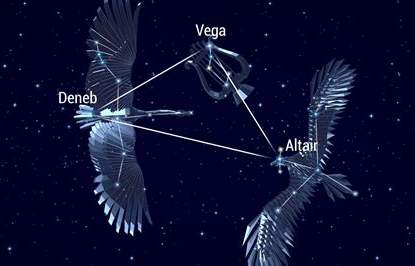
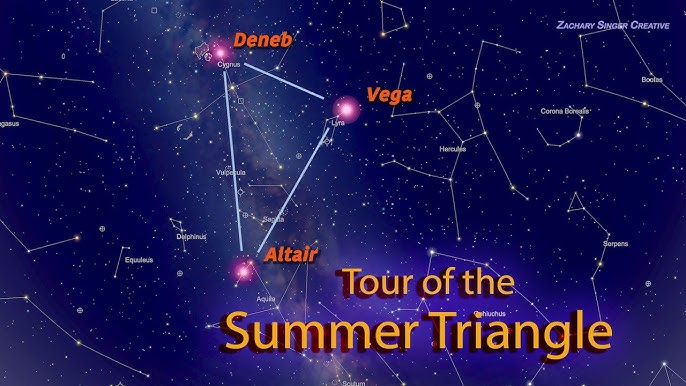
  • Starlight Cadet Challenge: Look straight up after dark to find the three brightest stars of summer: Vega, Altair, and Deneb. Congratulations, you’ve found the Summer Triangle! Now, look closer at Altair—did you know this young star spins so fast (once every 8 hours) that it’s actually flattened like a squished beach ball?
  • Cosmic Veteran Challenge: Dive inside the Summer Triangle to locate Messier 27 (The Dumbbell Nebula), the first planetary nebula ever discovered. Once you’ve checked that off your list, slide over to Cygnus and manually star-hop your way to the Veil Nebula. Can you resolve the delicate, wispy shockwaves of this ancient supernova remnant?

Level 4: The Moonlight-Free Finale (August 12–14, 2026)

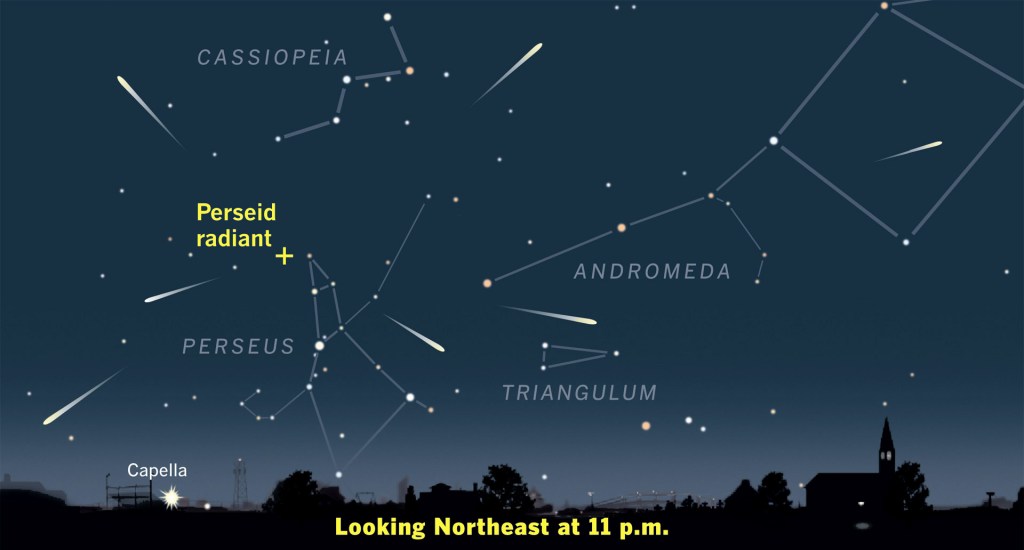
This is the peak of the Summer Space Race. On August 12, parts of the world will witness a historic solar eclipse. Then, on the nights of August 12 and 13, the legendary Perseid Meteor Shower peaks under a 0% illumination New Moon—meaning absolute darkness!

  • Starlight Cadet Challenge: Find an open field, spread out a blanket, lay flat on your back, and look up toward the constellation Perseus. Because the sky is perfectly dark this year, count how many shooting stars you can spot in a single hour. Keep an eye out for “fireballs”—extra bright meteors that leave glowing smoke trails across the sky!
  • Cosmic Veteran Challenge: This is the ultimate astrophotography challenge of the summer. Set up your camera with a wide-angle lens, attach it to a reliable star tracker, and program an intervalometer to capture continuous exposures throughout the night. Your goal? Capture a single, high-definition composite frame showing multiple Perseid meteors radiating outwards from the constellation Perseus against a sharp, tracked background of the Milky Way core.

The Space Race Scorecard

Track your family’s progress through the summer using our quick checklist:

Target LevelStarlight Cadet GoalCosmic Veteran GoalDate to AttemptCompleted?
Level 1Spot Moon, Mars, & PleiadesImage Mars & Pleiades togetherJuly 11[ ]
Level 2Locate the Sagittarius “Teapot”Manually resolve the Trifid NebulaJuly 14[ ]
Level 3Identify the Summer TriangleResolve the wispy edges of the Veil NebulaEarly August[ ]
Level 4Count 30+ Perseid MeteorsCapture a tracked meteor composite imageAugust 12–14[ ]

🛠️ Pro-Tip for Manual Trackers: Keeping these deep-sky objects centered at high magnification requires a steady hand and a smooth mount. If you are modifying a vintage scope or optimizing a manual mount, upgrading your slow-motion control knobs or introducing an entry-level clock drive can completely transform your tracking accuracy.

For Astronomy products please check the links for Amazon and OpticsPlanet.com

No matter which track you choose, the real prize of the Summer Space Race is the time spent looking up at the wonders of our universe together as a family. Pack up your gear, check your local sky charts, and get out there.

Clear skies and happy hunting!
June into July 2026: A Family Guide to Summer’s Brightest Sky Wonders.

As June settles into its warm, firefly‑flecked evenings, the night sky begins one of its most dramatic seasonal transformations. The soft, delicate star fields of spring slowly give way to the bold, brilliant constellations of summer. The Milky Way—our home galaxy—tilts upright and begins its slow climb across the eastern horizon, preparing to take center stage in July. For families stepping outside after dinner, this is the moment when the sky becomes a storybook: full of heroes, mythical creatures, glowing planets, and even a few surprises that streak across the darkness without warning.

The remaining nights of June and the full month of July offer some of the most exciting skywatching of the year. Whether you’re using binoculars, a small backyard telescope, or simply your own eyes, these weeks are rich with bright planets, easy‑to‑find constellations, and a few special events that reward anyone willing to look up.


The Last Half of June: The Milky Way Awakens

In the second half of June, the sky begins its seasonal shift right after twilight. As the Sun dips below the horizon, the western sky still holds the last traces of spring. The constellation Leo, shaped like a backward question mark, sinks lower each night. But turn toward the east, and you’ll see the future of summer rising.

One of the first stars to appear is Vega, a brilliant blue‑white beacon that shines even before the sky is fully dark. Vega belongs to the constellation Lyra, the celestial harp, and it’s one of the easiest stars for beginners to find. If you step outside around 10 p.m., look high in the east for the brightest star you can see. That’s Vega, and it’s your guide to the Summer Triangle.

A little to Vega’s right is Deneb, the tail of the great swan Cygnus. Deneb is one of the most luminous stars known—so powerful that if it were as close to us as Vega, it would cast shadows on Earth. Below Vega and Deneb is Altair, the bright heart of Aquila the Eagle. Together, these three stars form the Summer Triangle, a giant shape that will dominate the sky all the way through August.

Families who enjoy binocular stargazing will find June especially rewarding. Sweep your binoculars slowly between Vega and Deneb, and you’ll notice the sky looks hazy, almost smoky. That soft glow is the Milky Way itself—hundreds of millions of distant stars blending together. In late June, the Milky Way is still low, but each night it rises earlier and climbs higher, preparing for its grand July display.

June also brings a beautiful planetary pairing. Saturn rises in the late evening, glowing with a steady, golden light in the east. It’s not bright enough to compete with Vega, but it stands out because it doesn’t twinkle. If you have a small telescope, Saturn is a delight in June. Even at low magnification, its rings appear clearly separated from the planet, and children often gasp when they see them for the first time.


The Moon’s June Farewell

The Moon plays a gentle role in the last half of June. After the First Quarter phase, it grows brighter each night, washing out some of the fainter stars but adding its own charm to the sky. When the Moon is near Antares—the fiery red heart of Scorpius—it creates a striking contrast. Antares is a red supergiant so large that if it replaced our Sun, its surface would reach beyond the orbit of Mars. Seeing the Moon glide past it is a reminder of how vast and varied the universe truly is.

By the final days of June, the Moon rises later and later, leaving the early evening sky dark and perfect for Milky Way viewing. This is the moment when summer truly begins.


July: The Milky Way Takes Center Stage

July is the month when the night sky becomes a living tapestry. The Milky Way stretches from the northeast to the southwest like a river of starlight, and even in moderately light‑polluted areas, its brightest sections are visible. For families in suburban neighborhoods, the best time to look is between 10 p.m. and midnight, when the Milky Way stands tall in the east.

The heart of the Milky Way lies in the constellation Sagittarius, which rises earlier each night. Sagittarius is shaped like a teapot—one of the easiest star patterns for beginners to recognize. Once you find the teapot, look just above its spout. That faint, glowing cloud is the center of our galaxy, located about 26,000 light‑years away. Even binoculars reveal a treasure chest of star clusters and nebulae in this region.

One of the most rewarding objects for families is the Lagoon Nebula. It appears as a soft, glowing patch of light in binoculars, and in a small telescope, you can see its delicate structure. Nearby is the Trifid Nebula, famous for its dark dust lanes that divide it into three sections. These nebulae are stellar nurseries—places where new stars are born—and July is the perfect month to explore them.


The Planets of July

July 2026 offers a beautiful lineup of planets that are easy for families to enjoy.

Saturn continues to rise earlier each night, becoming a late‑evening object by mid‑July. Its rings remain tilted at a favorable angle, making them easy to see in small telescopes. If you look closely, you may notice Titan, Saturn’s largest moon, shining like a tiny star nearby.

Jupiter returns to the morning sky in July, rising shortly before dawn. It’s unmistakable—bright, steady, and golden. Early risers will find it a rewarding sight, especially when the Moon passes nearby. Through binoculars, you can see Jupiter’s four largest moons lined up like tiny beads. In a telescope, the planet’s cloud bands and swirling storms come to life.

Mars also begins to make a quiet return, though it remains faint in July. It rises in the early morning hours, glowing with a soft orange light. As the year progresses, Mars will grow brighter, but for now, it’s a subtle treat for dedicated skywatchers.


The July Moon: A Guide Through the Stars

The Moon plays a starring role in July’s night sky. Early in the month, it glides past Spica, the bright blue star in Virgo. A few nights later, it moves near Antares again, creating another beautiful pairing. When the Moon is a thin crescent, it reveals Earthshine—the soft glow caused by sunlight reflecting off Earth and illuminating the Moon’s dark side. Children often find this magical, as if the Moon is holding a secret lantern.

The Full Moon of July is known as the Buck Moon, named for the time when young deer begin to grow new antlers. This year’s Buck Moon rises large and golden, creating a perfect opportunity for family photos or a moonlit walk.


The Delta Aquariid Meteor Shower Begins

While the famous Perseid meteor shower peaks in August, July marks the beginning of the Delta Aquariids. This shower produces faint, graceful meteors that seem to glide across the sky rather than streak. The best time to watch is after midnight, when Aquarius rises higher in the southeast. Even though the Delta Aquariids are not as dramatic as the Perseids, they offer a peaceful, steady display that rewards patience.

Families can make a simple tradition of meteor watching: spread out a blanket, lie back, and count how many meteors each person sees. Even a handful of meteors can make the night feel special.


A Sky Full of Stories

What makes June and July so magical is not just the stars themselves, but the stories they tell. Cygnus the Swan flies along the Milky Way, wings outstretched. Scorpius crawls across the southern horizon, its tail curling toward Sagittarius. Hercules stands overhead, guarding the brilliant globular cluster M13, which looks like a tiny ball of diamond dust in binoculars.

These constellations have been guiding travelers, inspiring storytellers, and delighting families for thousands of years. When you step outside on a warm summer night, you’re joining a tradition as old as humanity itself.


A Final Invitation to Look Up

The remaining nights of June and the full month of July offer some of the richest skywatching of the year. Whether you’re exploring the Milky Way, spotting Saturn’s rings, watching the Moon drift past bright stars, or catching a few early meteors, the sky is full of wonders waiting to be discovered.

All you need is a clear night, a comfortable place to sit, and a sense of curiosity. The universe will take care of the rest.

Why Astronomy Binoculars are the Ultimate Family Hobby in 2026

By Stan’s Hobbies and Interests | Updated: February 2026

For decades, the “first step” into amateur astronomy was a bulky, expensive telescope that often spent more time gathering dust in a garage than gathering light from the stars. In 2026, the landscape has shifted. Thanks to massive leaps in Extra-low Dispersion (ED) glass and Image Stabilization (IS) technology, a simple pair of binoculars is no longer just an alternative—it’s often the best way for a family to start their “Empire” in the stars.

In this guide, I’ll explain why your next family camping trip or backyard session needs a pair of “astro-bins” and how to choose the right pair for your budget.

The Binocular Advantage: Why Two Eyes Are Better Than One

Most beginners don’t realize that our brains are biologically wired to process information from two eyes simultaneously. This is called Binocular Summation. When you use a telescope (one eye), your brain has to work harder to ignore the “blank” input from your closed eye.

With binoculars, you get a 3D-like perspective of the lunar surface. The craters look deeper, and the vast star fields of the Milky Way feel like you’re looking through a window into deep space. Plus, for younger children, binoculars are much more intuitive to point and shoot than a complex equatorial mount telescope.

For the “Star-Hopping Cheat Sheet” for February go to – HERE


The 2026 Buyer’s Guide: Top 3 Recommendations

To help you find the perfect fit, I’ve selected three pairs based on the current 2026 market standards. Each serves a different “Family Empire” need.

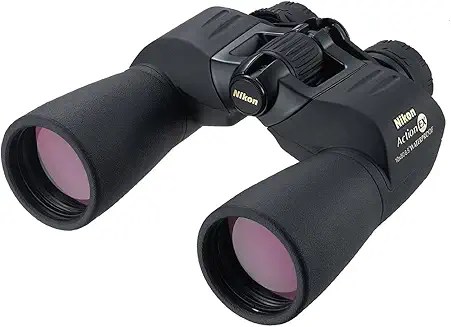
1. The Best All-Rounder: Nikon Action EX 10×50

If you want one pair of binoculars that can do it all—from birdwatching in the morning to spotting the moons of Jupiter at night—this is it. The Nikon Action EX series has remained a gold standard because of its rugged, waterproof build and high-quality BaK-4 pr

Nikon Action EX 10×50

  • Why families love it: It’s “kid-proof” (waterproof and shock-resistant) and provides a bright 50mm aperture that sucks in light.

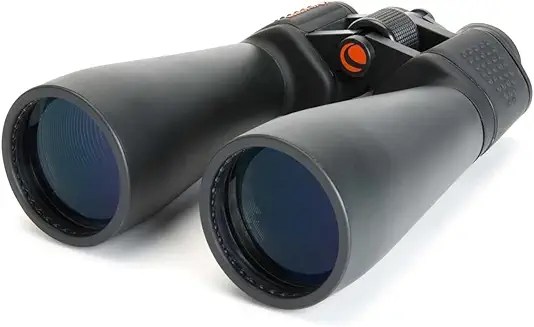
2. The Budget Powerhouse: Celestron SkyMaster 15×70

If your primary goal is to see deep-sky objects like the Orion Nebula or Andromeda Galaxy without breaking the bank, the SkyMaster 15×70 is the undisputed value king.

Celestron SkyMaster 15×70

  • The Trade-off: These are large. While you can hold them by hand for a minute or two, they really shine when mounted on a tripod.

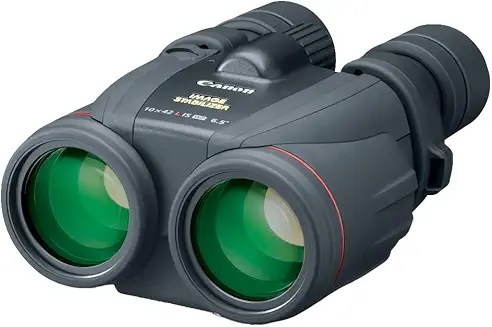
3. The Tech-Forward Choice: Canon 10x42L IS WP

The biggest trend in 2026 is Image Stabilization (IS). One of the main complaints about binoculars is “image shake.” Canon’s IS technology uses internal sensors to “freeze” the stars in place, even if your hands are shaking slightly from the cold or excitement.

Canon 10x42L IS WP

  • The Experience: It’s like having a tripod built into your hands. It’s a premium investment, but for a family that values high-tech gear and portability, it is unbeatable.

Technical Breakdown: Understanding the Numbers

When looking at the specs for your purchase, you’ll see two numbers (e.g., 10×50). Here is the math that matters:

  • Magnification (10x): This is how many times larger the object appears.
  • Aperture (50mm): This is the diameter of the front lens. In astronomy, aperture is king.
  • Exit Pupil: This is the small circle of light that hits your eye. You calculate it using the formula:
  • Exit Pupil = Aperture/Magnification
  • For stargazing, you want an exit pupil between 5mm and 7mm to match your eye’s dilated pupil in the dark.

How to Get the Most Out of Your New Hobby

To truly build a family legacy of learning, don’t just look at the stars—learn them.

  1. Use an App: Tools like Stellarium or SkyGuide (updated for 2026) use AR to show you exactly where to point your binoculars.
  2. Get a Tripod Adapter: For anything over 10x magnification, a $20 L-adapter for your tripod will change your life.
  3. Averted Vision: Teach your kids this “pro” trick: look slightly to the side of a faint object. The outer part of your retina is more sensitive to light, making faint nebulae suddenly pop into view!

Final Thoughts for the “Family Empire”

Astronomy isn’t just about looking at dots of light; it’s about the conversations that happen in the dark. It’s about the “Whoa!” from your youngest child when they see the Moon’s mountains for the first time. Binoculars lower the barrier to entry, making the universe accessible to everyone in your home.


Best Astronomy Binoculars for Beginners

This video provides a visual breakdown of the top-rated binoculars in 2026, including the Celestron and Nikon models mentioned above, helping you see the size and scale of the optics before you buy.

For the “Star-Hopping Cheat Sheet” for February go to – HERE

✨ A Christmas Gift From the Cosmos: Stargazing the Holiday Night Sky of December 2025.


The holiday season is filled with lights—twinkling on trees, glowing in windows, sparkling across snowy streets. Yet above all of that, the greatest light show is happening in the sky. The last half of December 2025 offers a celestial celebration that rivals any Christmas display, with meteor showers, a lingering supermoon, and brilliant planets shining like ornaments hung across the heavens.

Whether you’re a seasoned astronomer with a telescope or a beginner stepping outside with a mug of cocoa, the night sky this season is a gift waiting to be unwrapped.


🌌 The Magic of December’s Celestial Events

The Geminid Meteor Shower: Holiday Fireworks in the Sky

Even though the Geminids peaked earlier in the month, their streaks of light continue into late December. Imagine standing outside on a crisp night, wrapped in scarves, watching “shooting stars” race across the heavens. For children, it’s a chance to make holiday wishes; for advanced observers, it’s an opportunity to track meteor counts and contribute to citizen science.

When you’re lying back to watch the Geminid or Ursid meteors, comfort matters. A reclining lawn chair or a warm outdoor blanket makes the experience magical.
👉 “Make your holiday stargazing cozy—check out this reclining lawn chair for the perfect meteor shower setup.”


The Cold Supermoon: The Moon Before Yule

December’s full moon, known as the Cold Moon, was also a supermoon this year. Even as it wanes, its brilliance lingers, casting silver light across snowy landscapes. Through binoculars, the craters and lunar seas look like a magical ornament etched in stone. For advanced astronomers, the terminator line—the shadow dividing light and dark—offers dramatic detail.

The Moon is breathtaking through binoculars, and they’re a great first step before investing in a telescope. Binoculars for beginners — affordable, easy to use, and perfect for lunar viewing.


The Ursid Meteor Shower: A Christmas Eve Treat

Just before Christmas, the Ursids peak. Though smaller than the Geminids, they feel special because of their timing. Ten to twenty meteors per hour streak across the northern sky, like celestial sparks celebrating the season. Families can make this part of their Christmas Eve tradition—step outside after dinner, look north toward Ursa Minor, and catch a glimpse of the universe’s holiday fireworks.


The Winter Solstice: Long Nights, Bright Stars

On December 21, the solstice marks the longest night of the year. Ancient cultures celebrated this as the rebirth of light, and today it offers astronomers extended hours of darkness to explore. Beginners can trace Orion’s Belt and the Winter Hexagon, while advanced observers can photograph nebulae and galaxies.

Learning constellations together is a fun, educational holiday activity. Printed star maps or app gift cards make great stocking stuffers.
👉 “Turn the solstice into a learning adventure—grab a star map kit to guide your family through the constellations.”


Planetary Encounters: Jupiter, Saturn, and Mercury

Jupiter shines brilliantly in the evening sky, a beacon that doesn’t twinkle. With binoculars, you can spot its Galilean moons; with a telescope, you’ll see them dance night by night. Saturn lingers low in the southwest, its rings visible to those with the right equipment. Mercury makes a brief appearance near the horizon, a challenge for advanced observers but a thrill to catch.

Jupiter’s moons and Saturn’s rings are unforgettable through a telescope. A compact beginner model is affordable and easy to use. Ready to take your stargazing to the next level? Explore the planets with this beginner telescope .


🔭 Observing Tips for Beginners and Experts

For beginners, the key is simplicity. Start with your eyes—trace Orion, find Sirius, and enjoy the Moon. Add binoculars for a closer look at craters or clusters. Use apps like SkyView to guide your exploration.

For advanced astronomers, December offers deep-sky treasures. The Orion Nebula glows like a cosmic Christmas ornament, while the Pleiades cluster sparkles like a handful of diamonds. Astrophotographers can capture meteors, planetary alignments, or the glow of the supermoon.


🎓 The Educational Joy of Holiday Stargazing

Stargazing is more than entertainment—it’s a living classroom. Children learn science by observing planetary motion, history by hearing myths of Orion, and culture by connecting the “Moon Before Yule” to Christmas traditions. Families can measure angles with their hands, explore why stars twinkle, and discover how ancient people used the sky to mark seasons.


🌟 Making Stargazing a Holiday Tradition

Imagine this: after decorating the tree, your family steps outside. You point out Orion’s Belt, your children spot a meteor, and together you marvel at Jupiter glowing like a celestial ornament. It becomes a tradition—just as much a part of Christmas as carols and cocoa.

For advanced astronomers, hosting a neighborhood “star party” can spread the joy. Sharing telescopes and knowledge turns astronomy into community celebration, reminding us that the sky belongs to everyone.


🌠 Conclusion: The Sky as a Christmas Gift

The last half of December 2025 is a cosmic celebration. Meteors streak across the heavens, the supermoon glows like a lantern, and planets shine like ornaments hung in the sky. For beginners, it’s a chance to discover the joy of astronomy; for advanced observers, it’s an opportunity to deepen their craft.

This Christmas, let the stars be part of your holiday lights. Step outside, look up, and embrace the cosmic wonder that has inspired humanity for centuries.


September & October 2025 Night Sky Constellations: A Family-Friendly Guide

September and October are magical months for family stargazing. As days grow shorter, evenings cool, and the night sky swells with brilliant stars, both beginners and seasoned astronomers can find joy in the constellations that rise and sweep overhead. Whether stargazing from a backyard, a park, or on a camping trip, here’s a friendly guide to the brightest, easiest, and most memorable constellations on display—and how families can best enjoy them together throughout early autumn.


Why Early Autumn Is Perfect for Family Stargazing

September and October offer nights that come earlier and last longer, making it easy for kids and adults to explore the sky without staying up late. The air is clear, there’s less humidity and haze than summer, and the moon’s phase lets some moonless nights reveal even fainter stars. For experienced observers, the shift in constellations marks a transition between summer and winter favorites, and brings the celestial equinox—a balance between day and night—right overhead. For more information.


The Brightest Autumn Constellations: Your Top Six

1. Aquila (The Eagle)

  • How to Find: Look high in the southern sky on September evenings for Altair, a blazing white star. Two nearby fainter stars, Tarazed and Alshain, outline Aquila’s “head,” forming a short straight line. Aquila is a part of the famous Summer Triangle, along with Cygnus and Lyra. For more information.
  • Best Time: 9 p.m.–midnight, from September through early October.
  • How to View: Naked-eye for the main shape; sweep binoculars along the Milky Way for star clusters and nebulae.
  • Family Fact: In Greek myth, Aquila carried Zeus’s thunderbolts and the youth Ganymede to the gods.

2. Cygnus (The Swan, or Northern Cross)

  • How to Find: High overhead right after dusk, Cygnus stretches across the Milky Way. Find Deneb, a bright star, as the top of the “cross.”
  • Best Time: 9 p.m.–midnight, best viewed in September; in October it moves westward.
  • How to View: Very easy with just your eyes. Binoculars bring out the rich star clouds nearby.
  • Family Fact: Cygnus resembles a swan flying along the river of the Milky Way.

3. Lyra

  • How to Find: Vega, the dazzling blue-white star, marks Lyra; search overhead or a bit west after sunset.
  • Best Time: 9–11 p.m. in September, earlier evenings in October.
  • How to View: Vega can be seen from cities; binoculars pick out the tiny parallelogram of Lyra and may show the famous Ring Nebula.
  • Family Fact: Vega is one of the closest bright stars to Earth and part of the Summer Triangle.

4. Cassiopeia (The Queen)

  • How to Find: A big “W” or “M” of five bright stars in the northeast. As autumn progresses, Cassiopeia rises higher and is easily spotted all night. For more information.
  • Best Time: All evening, from dusk onward.
  • How to View: Naked-eye; it’s perfect for teaching star patterns to kids.
  • Family Fact: Cassiopeia was a vain queen from Greek myth—her throne now glimmers in the sky.

5. Pegasus (The Winged Horse)

  • How to Find: At dusk in September, look east for the Great Square—a near-perfect diamond of four stars. Through October, Pegasus soars higher, marking the gateway to other autumn constellations.For additional information.
  • Best Time: 9 p.m.–midnight, climbs higher each night.
  • How to View: Naked-eye for the Square; with binoculars, scan for faint star clusters like M15.
  • Family Fact: Imagine the Winged Horse carrying heroes across the sky—let kids create their own stories!

6. Andromeda

  • How to Find: Trace a line from the top left corner of Pegasus’s Square upward. Look for a chain of stars running northeast.
  • Best Time: 10 p.m.–midnight in September; by October, visible earlier in the east. More information.
  • How to View: Naked-eye may reveal the faint smudge of Andromeda Galaxy (M31) under dark skies. Binoculars or a small scope show it as a clear oval.
  • Family Fact: Light from Andromeda’s stars started traveling here over two million years ago!

Other Notable Constellations and Features

  • Capricornus: Faint, low in the south—best seen on moonless nights with a star chart.
  • Pisces & Aquarius: Zodiac patterns rising in the east. Binoculars make finding their stars easier.
  • Perseus & Auriga: In the northeast after 10 p.m., lovely for finding star clusters.
  • Milky Way: Still visible sweeping overhead in early autumn—binoculars reveal clouds and dark lanes near Aquila and Cygnus.Additional information.

How to View: Family-Friendly Tips

With the Naked Eye

  • All the constellations above are easily visible without any equipment, especially under clear, moonless skies.
  • Let your eyes adapt to the dark for 15–20 minutes.
  • Use a reclining chair or blanket for comfort—looking up is much easier!
  • A printed star chart or a phone app (try “Star Walk 2” or “Stellarium”) helps everyone find patterns and learn names.

With Binoculars

  • All you need is a basic pair (7×50 or 10×50). They reveal more stars, clusters, and even the Andromeda Galaxy’s true shape.
  • Sweep Cygnus and Aquila for star clouds; scan Andromeda for the galaxy M31.
  • Avoid city lights; the darker the sky, the more you’ll see.

Best Times to View

  • Early Evening (8–10 p.m.): Great for young families; Pegasus, Cygnus, Vega, Cassiopeia are high.
  • Late Night (10 p.m.–midnight): Andromeda, Perseus, Auriga, and the Milky Way move higher.

Activities for All Ages

  • Star Pattern Drawing: Let everyone draw their favorite constellation or invent new ones.
  • Sky Storytelling: Share the myths for each constellation, or create your family’s own!
  • Constellation Bingo: Make a game out of spotting shapes, bright stars, and unique patterns.
  • Sky Journals: Track what you see each week, watch how the sky moves and changes.

Special September & October Events

  • Equinox: September brings the celestial balance of day and night—observe how sunset time changes!
  • Saturn at Opposition (Sept 21): Glows golden, near Pisces, visible all night. Spot it with the naked eye or binoculars.
  • Blood Moon Eclipse (Sept 7): A total lunar eclipse turns the Moon red for many regions.
  • Orionid Meteor Shower (October 21–22): Watch for “falling stars” near Orion after midnight.

References & Further Learning

  1. [Star Walk – September Constellations]starwalk
  2. [Constellation Guide – September Constellations]constellation-guide
  3. [Sky Guide September 2025 – Bresser]bresser
  4. [Sea and Sky – Astronomy Calendar]seasky
  5. [Young Stargazers – What’s Up for September]popastro

For best stargazing, check local weather, moon phase, and sunset times before heading out. Use apps, join astronomy clubs, and let every family member’s curiosity guide the adventure! Clear autumn skies and happy stargazing!

  1. https://starwalk.space/en/news/september-constellations
  2. https://www.planetary.org/night-sky/night-sky-what-to-see-this-month
  3. https://www.bresser.com/recommendations/sky-guide/sky-guide-september-2025/
  4. https://www.astronomy.com/observing/sky-this-month-september-2025/
  5. https://powerhouse.com.au/stories/sky-guide-september-2025
  6. http://www.seasky.org/astronomy/astronomy-calendar-current.html
  7. https://www.popastro.com/youngstargazers/whats-up/
  8. https://www.constellation-guide.com/constellations-by-month/september-constellations/

September 2025’s Brightest Constellations for Family Stargazing: How, When, and Where to See Them

September

September is one of the finest months for family stargazing—with mild evenings, earlier nightfall, and some of the sky’s most brilliant and easily recognized constellations on full display. Whether you have a backyard, a park, or can drive to a darker spot, these constellations offer a beautiful way for kids and adults to connect with the universe—no telescope required.


Why September Is a Great Month for Beginner Skywatchers

September brings longer nights without freezing temperatures and showcases both late summer and early fall stars. Early evening hours are packed with bright patterns, making it easier for families to enjoy lingering outside together. And this month, you’ll find sky features that spark wonder, stories, and learning in equal measure.starwalk+2


1. Pegasus (The Winged Horse)

  • Best Time: By 9–10 p.m., Pegasus’s “Great Square” is climbing high in the eastern sky.
  • Where to Look: Find a large, almost perfect diamond of four stars rising east, then higher southeast as night advances.
  • How to See: Just your eyes; the four stars make a huge square. Kids can connect the dots in the sky!
  • Fun Fact: The “Great Square” is used as a sky landmark for finding other autumn constellations.constellation-guide+1

2. Andromeda

  • Best Time: 10 p.m. and later, following the line of stars from Pegasus upward.
  • Where to Look: Trace a curved chain of stars leading northeast from Pegasus’s upper left star.
  • How to See: Naked eye. Look for a faint smudge above Andromeda’s stars—this is the Andromeda Galaxy, our nearest galactic neighbor (binoculars show it better!).
  • Fun Fact: Light from the Andromeda Galaxy began its journey over 2 million years ago.kenpress+1

3. Cassiopeia (The Queen)

  • Best Time: Visible all night, easiest in the northeast at 9–11 p.m.
  • Where to Look: Look for a bright, unmistakable “W” or “M” shape of five stars.
  • How to See: Naked eye—its zigzag is excellent for teaching kids patterns and sky mapping.
  • Fun Fact: Cassiopeia was named for a vain queen in Greek myth; the “W” forms her throne in the sky.starwalk+1

4. Cygnus (The Swan, a.k.a. The Northern Cross)

  • Best Time: Overhead or slightly west by 9–11 p.m.
  • Where to Look: High overhead; a long cross pattern with the bright star Deneb at its top.
  • How to See: Naked eye; the Northern Cross shape is easy to point out, with the long “body” running north–south.
  • Fun Fact: Cygnus is part of the giant “Summer Triangle” with Lyra and Aquila, making an epic sky marker for children.skyandtelescope+2

5. Lyra

  • Best Time: Directly overhead or just west of overhead, after dusk.
  • Where to Look: Spot the dazzling, blue-white star Vega—one of the three corners of the Summer Triangle.
  • How to See: Naked eye for the main star; those with binoculars can find nearby star clusters.
  • Fun Fact: Vega is one of the brightest stars in the sky and just 25 light years away.constellation-guide+1

6. Aquila

  • Best Time: High in the southern sky during evening.
  • Where to Look: Look for its bright star Altair, flanked by two fainter stars in a straight line.
  • How to See: Naked eye; the straight line points the way to other Summer Triangle stars.
  • Fun Fact: Aquila represents an eagle in mythology and is connected to the hero Hercules.skyandtelescope+2

  • Best Time: 9:00 p.m. to midnight. This is when all the bright “autumn constellations” are above the horizon and easy for kids who don’t want to stay up too late.
  • Best Place: Any clear spot with an open view of the sky (backyard, field, park). City lights drown out fainter stars, but the constellations above are bright enough to see from suburbs and cities alike.
  • Weather: Look for dry, clear nights—the stars will look their sharpest after a cool front sweeps through.
  • Moon Phase: For spotting more stars, plan viewing near a New Moon (September 21, 2025). Even with some moonlight, bright constellations listed here remain visible.

Family-Friendly Viewing Tips

  • Use a Blanket or Reclining Chair: Looking up for long periods is much more comfortable lying down or with good back support.
  • Let Your Eyes Adjust: Fifteen minutes in darkness helps everyone spot more stars—avoid cell phone screens.
  • Apps and Charts: Use a family-friendly app (like Sky Tonight or Star Walk 2) or print a sky chart to help kids “star-hop.”
  • Star Story Nights: Share the myths and facts about each constellation—let kids imagine and create their own sky stories!

Bonus: What About Binoculars?

Most constellations above are best recognized by eye—but binoculars unlock new delights:

  • See fuzzy star clusters in Andromeda, Cassiopeia, and Cygnus.
  • Spot Jupiter’s moons, Saturn’s golden glow, and even the Andromeda Galaxy’s shape more clearly.

References & Further Exploration

  1. [Star Walk – Astronomical Events September 2025]starwalk
  2. [Constellation Guide – September Constellations]constellation-guide
  3. [Adler Planetarium Skywatch – September 2025]adlerplanetarium
  4. [What’s Out Tonight PDF Sky Chart]kenpress
  5. [Sky at Night Magazine]skyandtelescope
  1. https://starwalk.space/en/news/deep-sky-objects-in-september
  2. https://starwalk.space/en/news/night-sky-tonight-september
  3. https://www.kenpress.com/files/2025WOT09Sep.pdf
  4. https://ts2.tech/en/all-eyes-on-the-skies-september-2025-celestial-spectacles-meteor-showers-eclipses-more/
  5. https://www.space.com/stargazing/15-must-see-naked-eye-skywatching-events-in-2025
  6. https://www.highpointscientific.com/astronomy-hub/post/night-sky-news/2025-astronomical-calendar
  7. https://www.skyatnightmagazine.com/space-science/t-coronae-borealis-nova
  8. https://skyandtelescope.org/astronomy-news/observing-news/this-weeks-sky-at-a-glance-september-20-29/
  9. https://www.livescience.com/space/the-10-best-stargazing-events-of-2025
  10. https://www.rmg.co.uk/stories/space-astronomy/space-astronomy-highlights-2025
  11. https://www.constellation-guide.com/constellations-by-month/september-constellations/
  12. https://www.adlerplanetarium.org/?p=gray_picnic

Exploring the Night Sky with Astronomy Apps: A Family-Friendly Guide for Beginners and Advanced Stargazers

Whether you’re peering out at the Milky Way from your backyard, helping your kids spot the Big Dipper, or hunting down Saturn’s rings with binoculars, the universe is easier to explore today than ever before—thanks to an amazing new generation of astronomy apps. These digital tools turn any smartphone or tablet into an instant, interactive stargazing guide, making skywatching fun, accessible, and endlessly educational for people of all ages.

Here’s a comprehensive, family-friendly article that introduces the best sky identification apps, explains how they work, and shares tips so beginners and advanced astronomers can get the most from every night under the stars.


Why Astronomy Apps Are a Game-Changer for Families

Remember the days of star charts and red flashlights? While they’re still classic tools, today’s stargazers, from kids to grandparents, can now simply hold up a phone or tablet, point it at the sky, and instantly see celestial names and constellation outlines overlaid on the live view. These apps use your device’s compass, gyroscope, and camera to pinpoint exactly what you’re looking at—planets, stars, nebulae, satellites, and more—right in your backyard, on vacation, or at a campground.

Benefits for Families and Beginners:

  • No prior astronomy knowledge needed.
  • Instantly answers “What’s that bright light?” or “Where’s Mars?”
  • Interactive, engaging, and fun for all ages—ideal for family skywatching nights, school projects, and even solo exploration.
  • Encourages outdoor, screen-free learning (well, almost screen-free!).

Advanced Features for Experienced Observers:

  • Deep databases for finding faint objects and rare events.
  • Detailed information, including visibility charts, rise/set times, and object tracking.
  • Telescope-control integration (for compatible models).
  • Event alerts for planet conjunctions, meteor showers, eclipses, and more.

The Best Smartphone & Tablet Astronomy Apps (2025 Edition)

Let’s dive into the top star-gazing apps—their features, platforms, and what makes them stand out for new and experienced astronomy fans alike.

1. Stellarium Mobile – Star Map

Why families love it:
Stellarium is widely praised for its accuracy, beautiful interface, and sheer depth of information. Just open the app, point your device at any part of the sky, and it labels everything you see. Tap any star, planet, or constellation for real-time facts and myths, or explore its catalog of thousands of celestial objects tailored to your exact location and time.

  • Best For: Families wanting a rich, interactive learning experience. Advanced users appreciate the comprehensive settings and search tools.
  • Top Features:
    • AR overlays; identify what’s in frame, day or night
    • Rich constellation art (choose various cultural traditions)
    • Satellites and ISS tracking
    • Calendar of visible events
    • Night (red) mode
  • Platforms: iOS, Android

2. SkyView / SkyView Lite

Why families love it:
SkyView is easy, accessible, and visually striking. Its augmented reality overlays make it simple for anyone to recognize stars, planets, and satellites instantly by just holding up their phone. Great for quick “wow” moments and impromptu learning.

  • Best For: Quick identification and family fun—especially with younger kids.
  • Top Features:
    • “Time Travel” mode—see past and future skies!
    • Find and track the International Space Station
    • Custom reminders for when planets or satellites become visible
    • Simple, colorful graphics
  • Platforms: iOS, Android (free and paid versions)

3. Sky Guide

Why families love it:
Sky Guide’s clean interface and gorgeous animation make it a hit for iPhone and iPad users. It works offline, so it’s great for campouts or rural adventures. Families love its event notifications and easy-to-read constellation stories.

  • Best For: Apple device users and those who enjoy beautiful, intuitive design.
  • Top Features:
    • Real-time AR sky view with overlays
    • Works without Wi-Fi or GPS
    • Notifies you when the ISS or major events are overhead
    • Background music and soundscape for added immersion
  • Platforms: iOS

4. Star Walk 2

Why families love it:
Star Walk 2 combines AR technology with educational stories, vibrant illustrations, and a daily “Visible Tonight” guide—a big help for planning family stargazing outings.

  • Best For: Kids and teens who love bright visuals and learning fun facts.
  • Top Features:
    • Night mode and customizable notifications
    • Calendar of celestial events
    • Mythology and facts for all objects
    • Identify planets, stars, constellations, comets, and satellites
  • Platforms: iOS, Android

5. Night Sky

Why families love it:
Night Sky is a robust, all-in-one tool for sky exploration—especially for Apple users. It features AR overlays, satellite tracking, planet info, and even “Sky Tags” for cataloging discoveries.

  • Best For: iPhones, iPads, and Apple Watch users who want the most features.
  • Top Features:
    • AR planetarium and constellation overlays
    • Works with Apple Watch; use voice search
    • Meteor shower and satellite tracking
    • Deep object catalog
  • Platforms: iOS

How to Use These Apps: Step-by-Step

  1. Download and install your chosen app.
    • Many offer free “Lite” versions; premium versions unlock all features, but basics are usually free.
  2. Allow necessary permissions.
    • The app needs access to your camera, compass, and sometimes location.
  3. Step outside, away from bright lights.
    • The darker your surroundings, the more you’ll see on both the app and in the real sky.
  4. Point your phone or tablet up.
    • The live sky will appear labeled—object names, constellation lines, and sometimes mythological illustrations.
  5. Tap and explore!
    • Press on objects for quick facts, stories, distances, and even telescope recommendations.
  6. Try time-travel or AR features.
    • See what the sky looked like on your birthday, or preview an upcoming meteor shower.

Family and Beginner Activity Ideas

  • Constellation Quest: Each night, challenge the family to find one new constellation or planet using the app.
  • Sky Bingo: Make a list or use the app’s suggestions—can you spot the ISS, Saturn, and the Summer Triangle in one night?
  • Star Stories: Read aloud the myths and facts that most apps include for every constellation or object.
  • Photography Night: Use the app to identify and frame stars or planets, then try to capture them with your smartphone or camera.

Advanced Explorer Tips

  • Plan deep-sky observations: Apps let you know the best nights for faint clusters, galaxies, or nebulae.
  • Track satellites: See the ISS pass overhead (big hit with all ages).
  • Telescope control: Some premium apps can connect to compatible telescopes for automated pointing.
  • Monitor events: Get alerts for eclipses, meteor showers, or planet conjunctions—never miss a sky show!

Frequently Asked Questions

Q: Do I need internet or data while stargazing?
A: No—most good apps download star catalogs in advance and work offline. Some event updates require checking in while you’re still on Wi-Fi.

Q: Are the apps safe for kids?
A: Absolutely! Most are family-oriented, ad-free in paid versions, and full of educational content. Supervise young children using devices outside, especially at night.

Q: Can these apps help in the city?
A: Yes—they filter out objects hidden by light pollution and highlight bright stars and planets visible from your location.

Q: Will binoculars or telescopes work with these apps?
A: Definitely! Use your phone to find the object, then line up your optics for a closer view. Some apps can even suggest telescope settings.


Wrapping Up: A Universe of Adventure in Your Pocket

From finding the North Star to spotting planets and satellites, modern astronomy apps let every family unlock the mysteries of the night with a simple swipe. They level the playing field—no need for expensive gear or expert knowledge—just curiosity and a sense of wonder.

Download one of these top apps, gather the family, and start your sky adventure—who knows what amazing sights you’ll discover together tonight?


References & Further Exploration

  1. Stellarium Mobile – Star Map (stellarium-labs.com)
  2. SkyView® and SkyView® Lite (terminaleleven.com)
  3. Sky Guide (fifthstarlabs.com)
  4. Star Walk 2 (starwalk.space)
  5. Night Sky (iCandi Apps Ltd)
  6. NASA Night Sky Network – Family Stargazing Activities
  7. Sky & Telescope – Best Astronomy Apps for 2025
  8. EarthSky – Getting Started with Stargazing Apps

Clear skies and happy exploring!

101 Amazing Sights of the Night Sky by George Moromisato: A Family-Friendly Review and Summary

Introduction

“101 Amazing Sights of the Night Sky” by George Moromisato is a beloved guidebook—a treasure trove for families, beginners, and even seasoned astronomy lovers who want to make the most of every clear night. Written with warmth and enthusiasm, it brings the universe down to Earth, showing that awe and discovery are always within reach, whether you’re wrapped up on your back porch or hiking to a dark-sky park.target+2

This review summarizes the book’s approach, highlights, and educational value in accessible, family-friendly language—perfect for introducing everyone in your household to the wonders above.

What’s the Book About?

Moromisato’s book is truly what its title promises: an easy-to-use, visually rich tour of the most breathtaking and interesting objects—and events—you can spot in the night sky, no matter your experience level. It introduces a vast menu of 101 objects and phenomena: from the familiar (Saturn’s rings, meteor showers, the phases of the Moon) to the distant (the Andromeda Galaxy, glowing nebulae, faraway planets), and even includes some rare atmospheric and satellite sights.adventurewithkeen+3

Key Features:

  • Each of the “101 sights” is clearly explained, with tips on how, when, and where to view it.
  • The objects are rated for beauty, accessibility, and importance. This helps families and newbies choose which to tackle on their next stargazing adventure.
  • The guide requires only the naked eye or a pair of binoculars for most entries; a few might need a simple, small telescope.
  • Every entry is supported by at least one full-color photograph, including many breathtaking NASA or amateur images.
  • The book includes helpful astrophotography tips for families eager to snap their own night sky shots, making it a great bridge into a hands-on science hobby.

How Is the Book Organized?

Moromisato structures the book to be practical and inspiring for real-life use, with easy reference for planning family skywatching nights.adventurepublications+3

  • Top Sights: The book starts with the “must-see” objects—Saturn, the Moon, the brightest planets—so that even new skywatchers can experience instant wonder.
  • Great Sights: The next section dives into slightly more challenging targets, such as recognized deep-sky objects, bright variable stars, and double stars.
  • Other Sights: The final entries cover atmospheric phenomena (like halos and aurora), satellites, and more elusive cosmic mysteries for those ready to go deeper.

Each sight is presented in a consistent, friendly format:

  • Name and Overview: What you’ll see, and why it’s amazing.
  • How to Find: Constellation/sky directions, seasonal tips, best times of year.
  • Viewing Advice: Whether you’ll need just your eyes, binoculars, or a small telescope.
  • Photographic Image: At least one real, striking photo per entry.
  • Interesting Facts: Pointers and trivia to keep all ages hooked and learning.

What Makes This Book Family and Beginner Friendly?

1. Accessibility and Clarity

Moromisato knows the sky can feel overwhelming. His writing demystifies the subject, walking readers through each object with clear, step-by-step advice. No astronomy jargon here: everything is in plain English and with references to what you’d see standing in your own backyard.wellreadnaturalist+3

2. Hands-On Activities and Learning

  • Skywatching as a Game: The book is like a “checklist” or scavenger hunt for night sky objects. Challenge your family to find as many as you can!
  • Astrophotography for Beginners: Tips are provided for taking your own photos—even with a smartphone—making it easy to share your discoveries and memories.

3. Ratings and Photos

With every sight rated by beauty, accessibility, and importance—plus a full-color image—the book helps families pick sky targets according to weather, time, and interest.

4. Encouragement for All Ages

  • The encouraging, conversational tone makes everyone feel at home—whether you’re 6 or 60, using your first pair of binoculars or a well-worn telescope.
  • Practical advice is provided for dealing with real-world challenges like light pollution, clouds, and late-night fatigue.adventurepublications+1

Here are just a few of the 101 highlights the book will guide you to:

  • Saturn’s Rings: Instructions for viewing and what to expect for first-timers through a scope or binoculars.
  • The Andromeda Galaxy: Step-by-step for finding the nearest major galaxy to our own, even from the suburbs.
  • The Orion Nebula: How to spot this legendary nursery of newborn stars with your eyes or low-powered optics.
  • The Pleiades (Seven Sisters): Family favorite; how to count the stars in this beautiful cluster and what makes it unique.
  • The North Star (Polaris) & Constellations: Helps everyone from true beginners to scouts learn their way across the sky.
  • International Space Station & Satellites: When and how to watch them zip by—a big hit with kids.
  • Meteor Showers & the Milky Way: When to catch spectacular, fleeting events or understand the glowing river overhead.

Equipment Advice: Naked Eye, Binoculars, or Telescope?

The book is rooted in Moromisato’s belief that anybody—anywhere—can enjoy the wonders of the night sky. He reminds readers:

  • Many listed objects need only your eyes and patience.
  • A pair of binoculars (often already in the closet) unlocks dozens of new sights and details, such as star clusters, nebulae, and satellites.
  • A small telescope opens even more, but is not required for most sights. Moromisato gives down-to-earth, non-technical tips for telescope users if your family wants to go deeper.

He also shares “dark sky” tips and tricks for urban viewers who battle light pollution, making the book usable for city and rural families alike.wellreadnaturalist+1

Educational Value and Family Activities

Beyond just looking up, “101 Amazing Sights of the Night Sky” encourages family learning with:

  • History and Mythology: Short stories about how and why objects got their names and their roles in different cultures.
  • Science Facts: Tidbits about distances, sizes, discoveries, and what makes each target unique or scientifically significant.
  • Observation Challenges: Encouragement to try sketching what you see, keeping a stargazing notebook, or engaging in backyard “astronomy nights” as a family tradition.
  • Astronomy as Life-Long Learning: The book closes by reminding readers that astronomy is a journey, not a destination, and always something new awaits—just look up!

Visual Experience

The full-color images are a highlight, inspiring kids and adults to imagine what is possible with their own cameras or a night out with friends. The visuals are not just pretty—they’re tools for learning, showing exactly what to expect and sparking curiosity for more.target+1

Final Thoughts: Why Your Family Will Love This Book

George Moromisato’s guide stands out for its easygoing spirit, practical advice, and inclusive approach. It makes the universe welcoming—no intimidating language or unrealistic requirements. Whether you organize a meteor shower night with neighbors or simply help your child spot Saturn’s golden disk, every chapter helps turn curiosity into a lifetime love of the stars.

Perfect for:

  • Families with young children, teens, or grandparents.
  • Beginners wanting a “bucket list” of the best sky sights.
  • Anyone seeking safe, educational, and memorable nights outdoors.
  • Parents and teachers looking for science enrichment ideas that require little or no gear.

References & Further Reading

For more on George Moromisato’s book, stargazing equipment, and family science activities, these sites provide further background and useful tips:

  1. [Adventure Publications – Book Information]target
  2. [Well-Read Naturalist – Book Review]wellreadnaturalist
  3. [AdventureKEEN Shop – Book Details]adventurewithkeen
  4. [Target – Product Synopsis]target
  5. [Barnes & Noble – Reader Feedback]barnesandnoble
  6. [Apple Books – Book Preview]books.apple
  7. [Adventure Publications Blog – Author Tips]adventurepublications
  8. [NASA Night Sky Network – DIY Stargazing]adventurepublications
  9. [Sky & Telescope – Astronomy for Beginners]wellreadnaturalist

Footnotes

  • Photographs included in the book may be from public NASA sources or the author’s own astrophotography; all presented with educational purposes.
  • Most observing tips are applicable worldwide, but sky objects’ visibility may vary by latitude and season.
  • Equipment recommended (binoculars, telescopes) need not be high-end; the book is tailored for practicality and accessibility.

In short: If your family wants to enjoy the stars, grow closer on summer nights, and get inspired by the universe, “101 Amazing Sights of the Night Sky” is your perfect sky companion.adventurewithkeen+3

  1. https://www.target.com/p/101-amazing-sights-of-the-night-sky-by-george-moromisato-paperback/-/A-83220805
  2. https://shop.adventurewithkeen.com/product/101-amazing-sights-of-the-night-sky/
  3. https://www.wellreadnaturalist.com/2020/06/beginning-to-look-up/
  4. http://blog.adventurepublications.net/2017/01/night-sky/
  5. https://www.barnesandnoble.com/w/101-amazing-sights-of-the-night-sky-george-moromisato/1124463792
  6. https://books.apple.com/mt/book/101-amazing-sights-of-the-night-sky/id1184359936
  7. https://www.goodreads.com/book/show/31213575-101-amazing-sights-of-the-night-sky
  8. https://www.walmart.com/ip/101-Amazing-Sights-of-the-Night-Sky-A-Guided-Tour-for-Beginners-Paperback-9781591935575/55340475
  9. https://www.goodreads.com/author/list/15515530.George_Moromisato
  10. https://shop.adventurewithkeen.com/product/amazing-sights-of-the-night-sky-playing-cards/
  11. https://www.thebirdhouseny.com/product/101-amazing-sights-of-the-night-sky/
  12. https://www.tumbleweedbotanicals.com/product/101-amazing-sights-of-the-night-sky-a-guided-tour-for-beginners-by-george-moromisato/10425
  13. https://business.walmart.com/ip/101-Amazing-Sights-of-the-Night-Sky-A-Guided-Tour-for-Beginners-Paperback-9781591935575/55340475
  14. https://www.armstrongmuseum.org/de/product/101-Amazing-Sights-of-the-Night-Sky
  15. https://booksrun.com/9781591935575-101-amazing-sights-of-the-night-sky-a-guided-tour-for-beginners
  16. https://www.indigo.ca/en-ca/101-amazing-sights-of-the-night-sky-a-guided-tour-for-beginners/1D7A87CA-57BC-4E69-8F1C-C0FCA2CA7E20.html
  17. https://www.mission-valley.com/buy/product/101-amazing-sights-of-the-night-sky-by-george-moromisato-paperback-target-8c00de?model=0&variant=0
  18. https://www.bluewaterweb.com/101-amazing-sights-of-the-night-sky.html
  19. https://cloudbreakoptics.com/products/101-amazing-sights-of-the-night-sky
  20. https://www.goodreads.com/en/book/show/31213575-101-amazing-sights-of-the-night-sky

Space Mysteries: Exploring the Unknown Universe

The universe is a vast and fascinating place filled with mysteries that have captivated humans for centuries. From enigmatic black holes to the possibility of alien life, space holds secrets that challenge our understanding of science and inspire curiosity in people of all ages. In this family-friendly article, we’ll explore some of the most intriguing space mysteries, explain them in simple terms, and discuss what scientists are doing to uncover their secrets.


1. What Are Black Holes?

Black holes are among the most mysterious objects in the universe. They form when massive stars collapse under their own gravity, creating a region where gravity is so strong that nothing—not even light—can escape.

Scientists have discovered different types of black holes:

  • Stellar black holes form from dying stars.
  • Supermassive black holes sit at the centers of galaxies, including our Milky Way.
  • Intermediate black holes are a rare type that falls between the other two categories.

One of the biggest mysteries about black holes is what happens inside them. The center of a black hole, called the singularity, is a point where gravity becomes infinite and space-time breaks down. Scientists use mathematical models to study these regions, but no one knows for sure what lies beyond the event horizon—the boundary around a black hole where escape becomes impossible[^1].


2. Are We Alone in the Universe?

The question of whether life exists beyond Earth is one of humanity’s greatest mysteries. Scientists search for alien life by studying planets outside our solar system, known as exoplanets.

To find habitable worlds, researchers look for planets in the “Goldilocks zone”—a region around a star where conditions are just right for liquid water to exist. NASA’s Kepler Space Telescope and its successor, the James Webb Space Telescope, have identified thousands of exoplanets[^2].

One intriguing candidate is Proxima Centauri b, an Earth-sized planet orbiting our closest neighboring star. While scientists haven’t found direct evidence of alien life yet, they continue to study atmospheres and chemical compositions to look for signs like oxygen or methane that might indicate biological activity[^3].


3. The Mystery of Dark Matter

When astronomers observe galaxies, they notice something strange: The stars within them move as if there’s far more mass than we can see. This invisible material is called dark matter, and it makes up about 27% of the universe[^4].

Dark matter doesn’t emit light or energy, which means scientists can’t see it directly. Instead, they detect its presence through its gravitational effects on visible objects like stars and galaxies.

Despite decades of research, scientists still don’t know what dark matter is made of. Some theories suggest it could be composed of exotic particles that interact weakly with ordinary matter[^5]. Experiments like CERN’s Large Hadron Collider aim to uncover its secrets by studying particle collisions at high energies.


4. What Are Fast Radio Bursts?

Fast Radio Bursts (FRBs) are mysterious flashes of radio waves coming from deep space. These bursts last only milliseconds but release as much energy as the Sun does in an entire day[^6].

FRBs were first discovered in 2007, and since then, astronomers have detected hundreds more using radio telescopes like Canada’s CHIME Observatory. Some FRBs seem to repeat from the same location, while others occur only once[^7].

What causes FRBs? Scientists think they might be produced by neutron stars (the dense remnants of supernova explosions), but other theories suggest exotic phenomena like magnetars or even advanced alien civilizations[^8].


5. The Enigma of Time Travel

Time travel has fascinated humans for centuries and often appears in science fiction stories. But is it possible according to science?

Einstein’s theory of relativity suggests that time isn’t fixed—it can stretch or compress depending on how fast you’re moving or how close you are to a massive object like a black hole[^9]. This means traveling into the future is theoretically possible if you move at near-light speeds or experience intense gravitational fields.

However, traveling into the past presents paradoxes (like changing events before they happen) that make it much harder to explain scientifically. While time travel remains a mystery, it continues to inspire both scientists and storytellers alike!


6. Why Do Galaxies Collide?

Galaxies are enormous collections of stars, gas, and dust held together by gravity—but they don’t stay still! Over billions of years, galaxies can collide and merge into larger structures[^10].

One famous example is the Andromeda Galaxy, which is on a collision course with our Milky Way Galaxy. In about 4 billion years, these two galaxies will merge into one giant galaxy called “Milkomeda”[^11].

Galactic collisions might seem chaotic, but they rarely result in star collisions because stars are so far apart relative to their sizes. Instead, these events create new star-forming regions and reshape galaxies’ appearances over time[^12].


7. The Mystery of Cosmic Inflation

The Big Bang theory explains how the universe began about 13.8 billion years ago—but scientists believe something extraordinary happened just moments after: cosmic inflation. During this period, the universe expanded faster than the speed of light[^13].

Why did inflation occur? Scientists don’t fully understand what caused this rapid expansion or why it stopped after such a short time (less than a trillionth of a second). Studying cosmic microwave background radiation—the faint glow left over from the Big Bang—helps researchers learn more about inflation’s effects on today’s universe[^14].


Fun Activities for Families

Want to explore space mysteries at home? Here are some engaging activities:

  1. Black Hole Simulation: Use marbles and bowls to simulate how objects fall into a black hole’s gravity well!
  2. Alien Planet Design: Create your own exoplanet with features like oceans or diamond rain (inspired by real discoveries).
  3. Dark Matter Hunt: Use flashlights and shadows to explain how invisible forces affect visible objects!
  4. Time Travel Debate: Discuss whether you’d rather visit the future or change history—and why!

Conclusion

Space mysteries remind us how vast and complex our universe truly is—and how much more we have yet to discover! Whether it’s black holes swallowing light or galaxies colliding over billions of years, each mystery challenges us to think bigger and ask deeper questions about existence itself.

As scientists continue exploring these phenomena with cutting-edge technology like telescopes and particle accelerators, we gain new insights into our cosmic origins—and perhaps even clues about our future among the stars! So grab your telescope or stargazing app tonight—you never know what wonders await just beyond Earth’s atmosphere!


References & Footnotes

[^1]: NASA Goddard Space Flight Center (2025). “Black Holes Explained.” https://www.nasa.gov/blackholes
[^2]: Kepler Mission Team (2025). “Exoplanet Discoveries.” https://kepler.nasa.gov/discoveries/
[^3]: James Webb Space Telescope Team (2025). “Proxima Centauri b Observations.” https://jwst.nasa.gov/observations/
[^4]: European Space Agency (2025). “Understanding Dark Matter.” https://www.darkmatter.eu/
[^5]: CERN (2025). “Particle Physics Experiments.” https://home.cern/science/darkmatterresearch
[^6]: CHIME Observatory (2025). “Fast Radio Burst Catalog.” https://chimeobservatory.org/frbs/
[^7]: Nature Astronomy Journal (2025). “Repeating FRBs.” https://nature.com/articles/frbs-repeating-patterns
[^8]: Harvard-Smithsonian Center for Astrophysics (2025). “FRB Origins.” https://cfa.harvard.edu/frb-research/
[^9]: Einstein Relativity Institute (2025). “Time Travel Possibilities.” https://einsteinrelativity.org/timetravel/
[^10]: Hubble Space Telescope Team (2025). “Galactic Collisions.” https://hubblesite.org/galaxies-colliding/
[^11]: NASA Science News (2025). “Milky Way-Andromeda Collision Course.” https://science.nasa.gov/milkomeda-future-galaxy/
[^12]: Space.com (2025). “Star Formation During Collisions.” https://space.com/star-formation-collisions/
[^13]: Planck Satellite Mission Team (2025). “Cosmic Inflation Studies.” https://planckmission.org/inflation-data/
[^14]: Astrophysical Journal Letters (2025). “Microwave Background Radiation Insights.” https://astrophysicaljournal.org/cosmic-background-radiation/