The Ultimate Backyard Summer Space Race: June 2026 Edition

Welcome back to “Stan’s Hobbies and Interests.” If you have been following our monthly night sky journals over the past five years, you know that June is the official gateway to the finest stargazing season of the year. The evening air is warm, the kids are out of school, and the cosmos is shifting gears.

This month, our ongoing 2026 Cosmic Scavenger Hunt takes on a dramatic complexion. As we pass the June Solstice, the brilliant “Spring Diamond” sinks into the west, and the spectacular, star-rich core of the Milky Way climbs into prime viewing position.

To ensure everyone in our growing “Family Empire” can participate, this month’s field guide is split into two distinct operational theaters: The Lunar Ascent for our newcomers, and The Deep-Space Relay for our veteran “Light Bucket” voyagers.

Grab your red flashlights, set up your lawn chairs, and let the June race begin!

1. The Rookie Tracker: The Lunar Ascent Scavenger Hunt

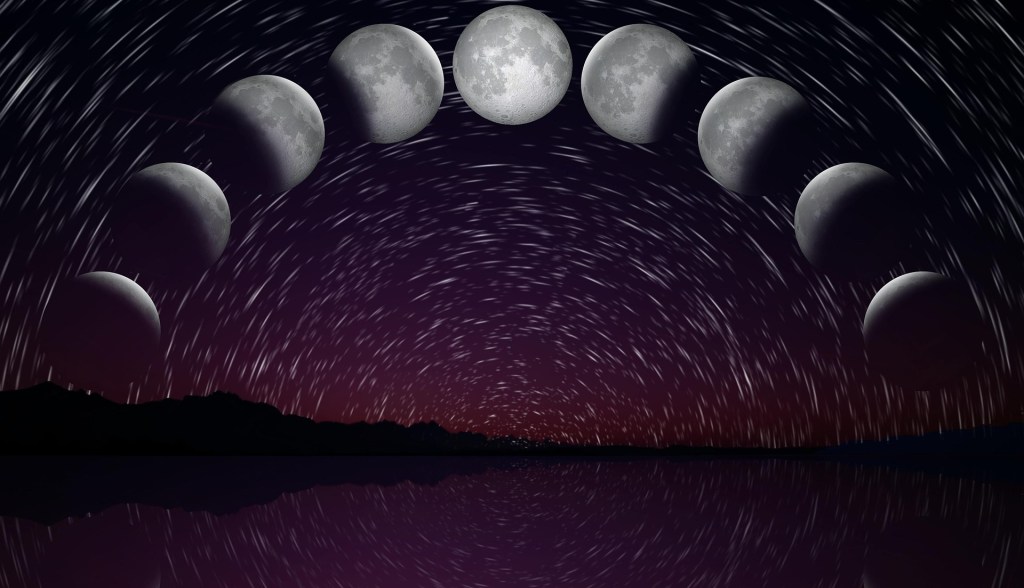
For those who are brand new to the hobby or looking to engage the grandkids with a pair of simple 10×50 binoculars, June 2026 is serving up a high-speed orbital game of catch. Your mission this month is to track the Moon as it acts as a celestial tour guide, pointing out targets you might otherwise miss.

Objective 1: The Ringed Rendezvous (June 5–6)

  • The Target: The Waning Gibbous Moon passing next to Saturn.
  • How to Find It: You will need to set an early alarm for this one, or catch it if you are a night owl. Look toward the east-southeast around 3:30 AM on the morning of June 6. The Moon will be hovering just a few degrees below a steady, pale-yellow light.
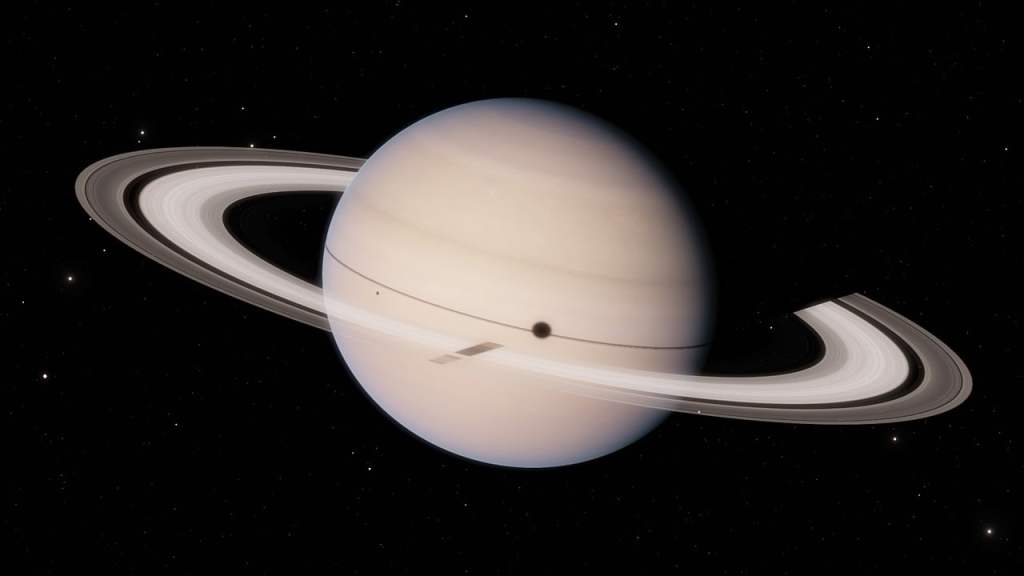
  • The Education: That steady light is Saturn. Through a small backyard telescope, you can cleanly resolve its ring plane. Explain to your young field agents that they are looking at an alien world situated over 800 million miles away, yet its icy rings are reflecting enough sunlight to be seen from a suburban Fort Thomas backyard.

Night-by-Night Chain Reaction: The June 17-19 Planetary Slingshot

This is where the “Space Race” gets exciting. Over three consecutive nights, you can watch the Moon physically sprint past our solar system’s inner rocky worlds.

Objective 2: The Red Planet Intersection (June 17)

  • The Target: The Waxing Crescent Moon meeting Mars.
  • How to Find It: Step outside just before dawn on June 17 and look low in the eastern sky. The thin, beautiful sliver of the crescent Moon will be positioned right next to a distinctly ruddy, orange-red point of light.
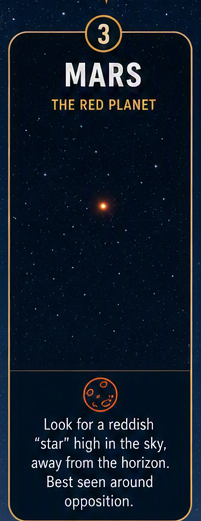
  • The Education: That red dot is Mars. Because Mars is covered in iron oxide (rust), it reflects a warm, copper tone. Contrast this color with the cool, blue-white stars elsewhere in the sky.

Objective 3: The King’s Alignment (June 19)

  • The Target: The Moon aligning with Jupiter.
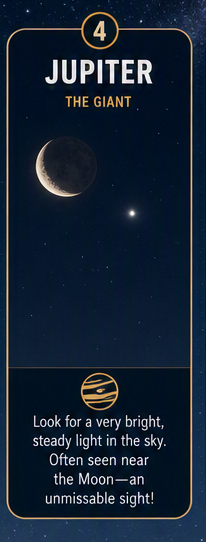
  • How to Find It: Two mornings later, on June 19, return to your morning viewing post. The Moon has now traveled further along its orbital path and will hang gracefully just above Jupiter, the largest planet in our solar system.
  • The Education: If you hold your binoculars steady, you can spot Jupiter’s four largest Galilean moons stretched out in a neat, straight line. You are watching a miniature solar system in action!

2. The Veteran Voyager: The Deep-Space Core Relay

For our seasoned observers wielding an 8-inch Dobsonian “Light Bucket” or a classic Celestron 8, June is the month we leave our solar system behind. As the Earth rotates into the midnight hours, we look directly out of our atmospheric window and straight into the dense, gas-rich core of our galaxy.

Advanced Target 1: The Swan Nebula (M17)

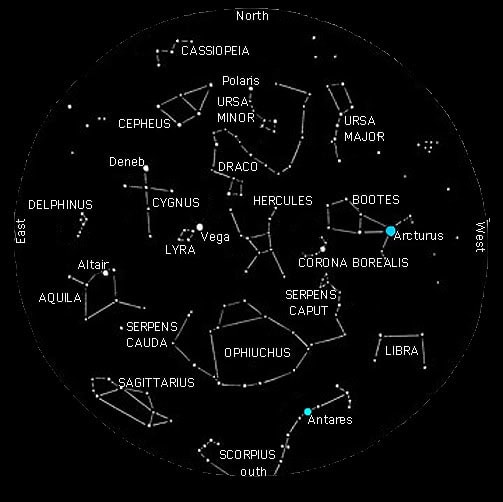
  • How to Find It: Locate the constellation Sagittarius (famous for its “Teapot” asterism) low in the southern sky. Star-hop just north of the teapot’s spout into the constellation Scutum.
  • The View: Through a medium-to-large aperture telescope, M17 reveals itself as a bright, ghostly silhouette shaped remarkably like a swan swimming through a sea of stars. This is a massive stellar nursery—a chaotic cloud of hydrogen gas where brand-new suns are currently being compressed into existence.

The Chain Reaction Leap: From Birth to Intermediate Youth (M11)

  • Advanced Target 2: The Wild Duck Cluster (M11)
  • The Connection: Once you have observed the birthplace of stars at M17, sweep your telescope slightly northward to find M11.
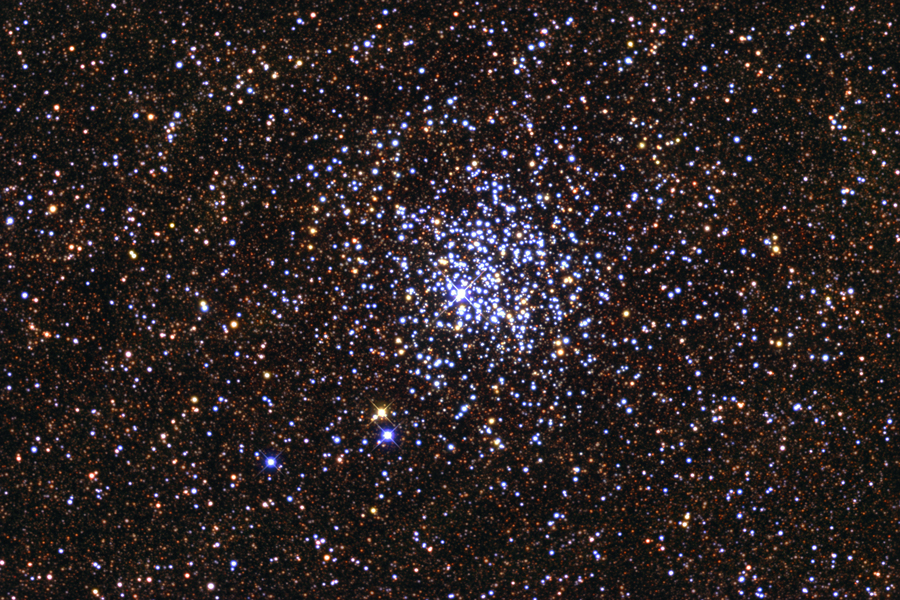
  • The View: M11 is one of the most compact and star-rich open clusters known in the night sky, containing nearly 3,000 stars. Through your eyepiece, it looks like a tight, glittering v-shape of diamonds, resembling a flock of wild ducks in flight.
  • The Educational Tie-In: This introduces a profound lesson in cosmic aging. While the Swan Nebula (M17) represents stars in their absolute infancy, still shrouded in their birth clouds, the Wild Duck Cluster (M11) represents an older, mature family of sibling stars that have successfully blown away their parental gas clouds and are now traveling through the galaxy together.

3. The June 2026 Citizen Science Briefing: The Summer Triangle Survey

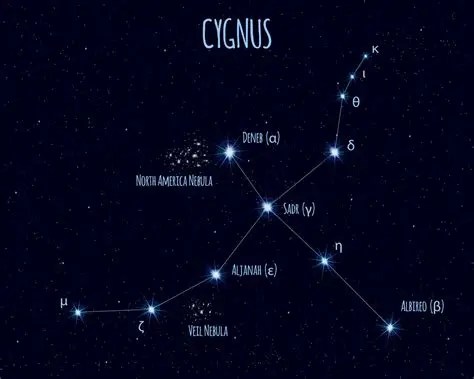
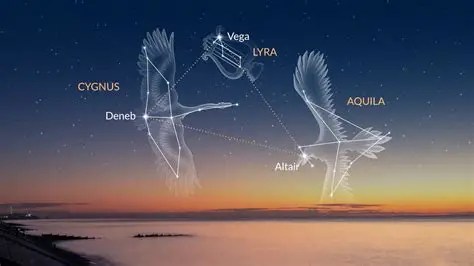
Whether you are a newcomer or a veteran, your June stargazing can directly contribute to international space research. This month, the Globe at Night project is officially tracking light pollution using the constellation Cygnus the Swan and its brilliant anchor star, Deneb.

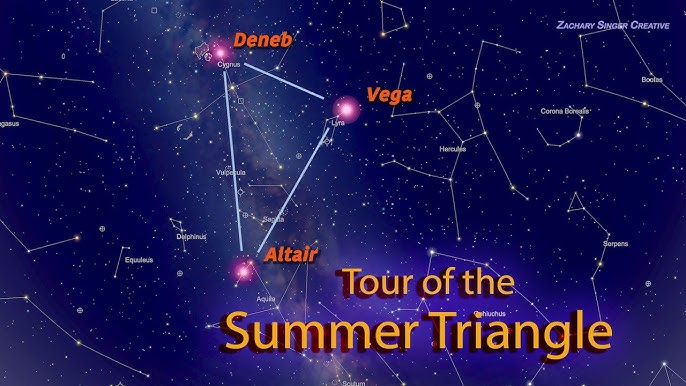
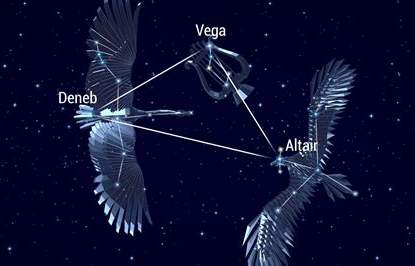
  1. Find the Target: Look East after midnight to find the massive Summer Triangle (formed by the bright stars Vega, Deneb, and Altair). Cygnus forms the central cross of this shape.
  2. Take the Measurement: Match the stars you can see with your naked eye to the magnitude charts provided in the Globe at Night app.
  3. Submit the Data: By logging your observation from your specific neighborhood, your family provides real-world data points that help NASA and global environmental scientists map the changing levels of light pollution across suburban areas in 2026.

4. Stan’s June Gear Recommendations

To check off every item on this month’s scavenger hunt, ensure your equipment locker is stocked with these affiliate-supported tools:

  • Apertura AD8 8″ Dobsonian Telescope: The absolute king of deep-space hunting. Its generous 8-inch mirror is vital for gathering the faint, ancient photons traveling from the Swan Nebula and the distant stars of the Wild Duck Cluster.
  • Celestron Omni 2x Barlow Lens: Essential for the June morning planetary parade. Inserting this lens doubles the focal length of your eyepieces, letting you get close-up, high-magnification views of Saturn’s ring structure and Jupiter’s cloud belts.
  • Celestron SkyMaps (Planisphere): The summer sky moves quickly. A durable, physical, glow-in-the-dark star wheel is the absolute best way to teach the grandkids how to track constellations from twilight to midnight without relying on a battery-draining phone screen.

SEO & Editorial Metadata

  • Primary Keywords: Summer Astronomy 2026, June Night Sky Guide, Track Saturn and Mars June, Backyard Telescope Scavenger Hunt, Deep Space Galaxy Clusters.
  • Local/GEO Standards: Formatted for general northern hemisphere/Midwest suburban viewing.
  • Affiliate Disclaimer: As an Amazon Associate, I earn a small commission from qualifying purchases made through our curated gear links. This helps keep our multi-generational “Family Empire” blog alive, modern, and ad-free!

Stan’s Final Thought for June

“Over the last five years of writing these monthly journals, I’ve watched grandkids grow up, older telescopes get restored, and new families discover the peace of a quiet backyard night. June is the heart of it all. When you stand out there on June 19 and watch the Moon align with Jupiter, you are looking at the same cosmic clockwork that has guided humanity for millennia. Take it slow, enjoy the warm air, and remember: the greatest show of the summer doesn’t cost a dime—it’s playing right above your roof.”

Clear skies and happy hunting!

Clean Out Your Light Bucket: The Remainder of May and the Rise of June

Make sure to clean out your light bucket, because for the rest of May we are going to need every single raindrop. The sky is shifting, the seasons are turning, and your telescope is about to graduate from whisper‑soft galaxies to the glowing heart of the Milky Way.

May ends with subtlety.
June begins with fireworks.

Together, they form one of the most beautiful transitions in the entire night‑sky calendar.


THE REMAINDER OF MAY — The Final Test of the Faint Fuzzies

By late May, the bright showpieces of winter are long gone, and the summer nebulae have not yet risen high enough to steal the show. What remains is a quiet, dark window into deep space — a perfect time to sharpen your observing skills.

This is when the Leo Triplet becomes your teacher.

The Last Weeks of May: Listening to the Sky’s Whisper

The Leo Triplet — M65, M66, and NGC 3628 — hangs in the western sky after dusk, drifting lower each night. This is your last chance of the year to catch these galaxies under comfortable evening skies.

They are faint.
They are subtle.
They demand patience.

And that is exactly why they matter.

What You’re Learning in Late May

  • How to use averted vision to coax detail from darkness
  • How to let your eyes adapt fully before hunting faint objects
  • How to sweep slowly and deliberately through a star field
  • How to recognize the difference between “sky glow” and “galaxy glow”

These skills become essential in June — when the Milky Way returns.

Beginner Goal for Late May

See one galaxy in the Triplet before it sets for the season.

Advanced Goal for Late May

Trace the dust lane in NGC 3628 using averted vision.

If you can do that, you’re ready for what June brings.


JUNE — The Milky Way Awakens

June is the month when the sky changes character. The faint fuzzies of May give way to the glowing river of the Milky Way rising in the east. The sky becomes richer, brighter, and more dramatic — a perfect reward for the patience you built in May.

Early June: The First Glow of the Summer Milky Way

Around 10–11 PM, you’ll notice a pale, misty band stretching from the northeast toward the south. This is the Milky Way’s return — still low, still delicate, but unmistakable.

This is when your light bucket shifts from collecting ancient galaxy photons to gathering the warm, dusty glow of our own galaxy.

Targets for Early June

The Great Hercules Cluster

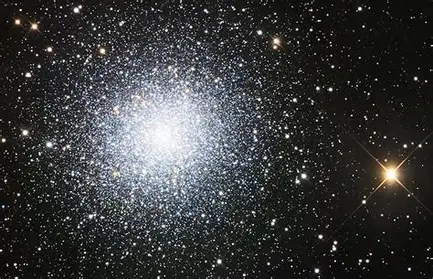
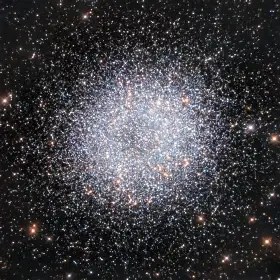
  • M13, the Great Hercules Cluster — a dazzling ball of 300,000 stars
  • M92 — a smaller but beautifully concentrated globular cluster
  • The Double Star Albireo — a golden and sapphire pair perfect for families

These objects are bright, friendly, and forgiving — a welcome change after May’s faint challenges.


Mid‑June: The Nebulae Begin to Rise

By mid‑June, the Milky Way climbs higher, and the great nebulae of summer begin to peek above the horizon.

Objects to Watch For

The Lagoon Nebula

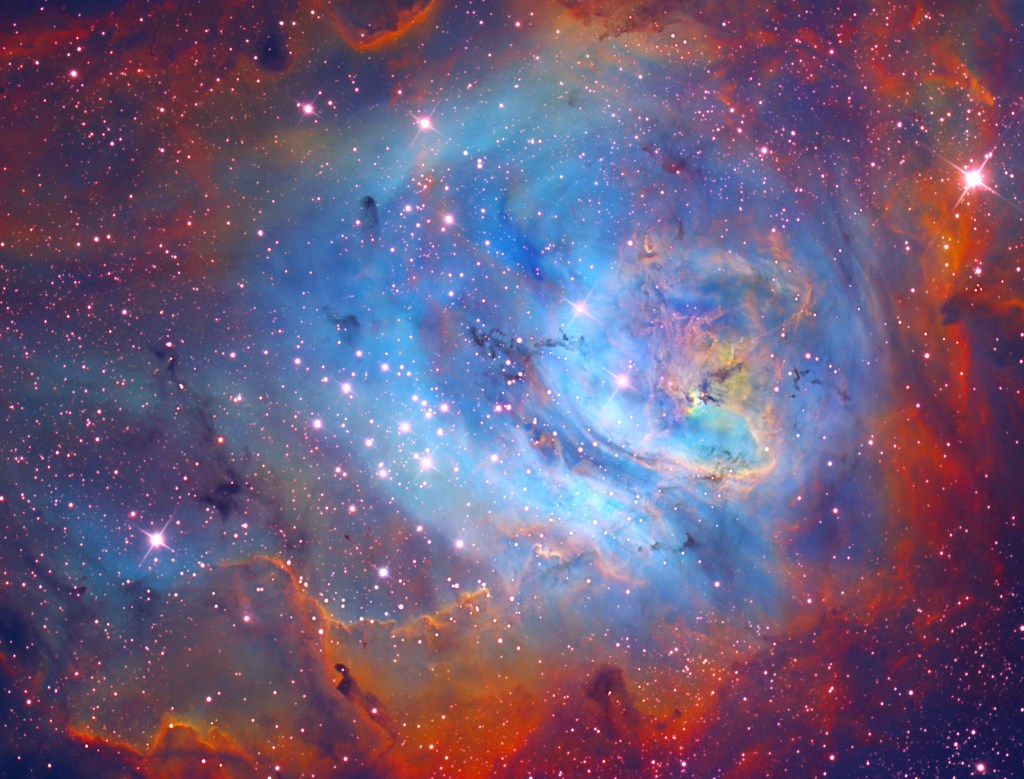
  • The Lagoon Nebula (M8) — a glowing cloud of star birth
  • The Trifid Nebula (M20) — a pink and blue jewel
  • The Swan/Omega Nebula (M17) — bright, structured, and easy to see
  • The Eagle Nebula (M16) — home of the Pillars of Creation

These are the objects that make beginners fall in love with astronomy — and make experienced observers feel like kids again.

This Is When Your May Skills Pay Off

The faint fuzzies taught you:

  • Patience
  • Eye discipline
  • Slow sweeping
  • Averted vision

Now, in June, those same skills reveal detail — texture in nebulae, structure in clusters, and subtle color in stars.


Late June: The Milky Way Takes Over the Night

By the end of June, the Milky Way is a full‑sky spectacle. It arches overhead after midnight, glowing from Sagittarius to Cygnus.

This is the moment your light bucket was built for.

Late June Showpieces

The Wild Duck Cluster (M11)

  • The Sagittarius Star Cloud (M24) — a window into the galaxy
  • The Wild Duck Cluster (M11) — dense and sparkling
  • The Veil Nebula (with a filter) — a ghostly supernova remnant
  • The North America Nebula — a huge, soft glow perfect for wide‑field viewing

June is generous.
June is bright.
June is the month when the sky stops whispering and starts singing.


Why May and June Belong Together

May teaches you how to see.
June rewards you for learning.

May is subtle.
June is spectacular.

May is galaxies — faint, ancient, and patient.
June is nebulae — bright, colorful, and alive.

Together, they form a perfect two‑month journey:

  • From the edge of the universe
  • Back into the heart of our own galaxy

Your light bucket becomes a time machine, a star catcher, and a storyteller all at once.


Coming in July: The Milky Way at Its Peak

If May is the test and June is the awakening, then July is the celebration.
The Milky Way will blaze across the sky, the nebulae will be at their brightest, and your light bucket will be working overtime.

But for now, enjoy the last whispers of May and the first songs of June.

The sky is changing — and you’re changing with it.


If you’d like, I can now create:

  • a Pinterest pin set for this combined May–June article
  • a WordPress‑ready HTML version
  • a featured image concept
  • or a family activity sheet for “May & June Sky Adventures”

Just tell me what you want next.

May 2026 Night Sky Guide: The Flower Moon, Meteor Rain & the Gateway to Summer

As May settles across the Northern Hemisphere, the sky begins its gentle shift toward summer. The evenings warm, the air softens, and the constellations slowly rearrange themselves into their warm-season patterns. For families who love stepping outside together, May is one of the most rewarding months of the year — a month filled with bright planets, a meteor shower born from a legendary comet, and not one but two full moons. It’s a month that invites you to slow down, look up, and rediscover the quiet magic of the night sky.

The Flower Moon: A Bright Beginning to the Month

May opens with a luminous gift: the Flower Moon, rising on the very first night of the month. As the sun sets, the full moon lifts in the east, glowing with a warm, creamy light that seems to echo the blossoms covering the ground below. If you watch it rise from behind trees or rooftops, you may notice the moon looks unusually large — a trick of the mind known as the “moon illusion.” Children love this effect, and it’s a wonderful way to begin a month of skywatching.

Stan’s Tip: If you want to photograph the Flower Moon, try using your phone’s night mode or a simple clip-on zoom lens. Moonrise colors are often richer than the moon at its highest point.

As the days pass, the moon wanes toward new moon on May 16, bringing the darkest skies of the month. This is the perfect window for families to explore fainter objects — galaxies, star clusters, and the delicate constellations that often hide behind moonlight. Then, as May draws to a close, the sky surprises us with a second full moon on May 31. This “Blue Moon” bookends the month with a second burst of brightness, giving May a rare sense of symmetry.

Stan’s Recommendation: If you’re new to stargazing, a simple pair of 7×50 or 10×50 binoculars can transform your night. They’re lightweight, easy for kids to use, and perfect for scanning the moon’s craters. Many families enjoy starting with an affordable pair — you can find several beginner-friendly options on Amazon that offer excellent clarity without stretching the budget.

The Eta Aquariids: A Meteor Shower from Halley’s Comet

One of May’s most exciting events arrives before dawn on May 5 and 6: the Eta Aquariid meteor shower, created by dust left behind by Halley’s Comet. Although the comet itself won’t return until 2061, Earth passes through its debris trail every spring, and the result is a graceful display of fast, bright meteors.

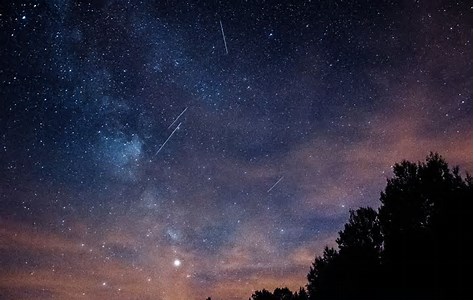
To watch the shower, step outside around 4 a.m. and face the eastern sky. The meteors appear to radiate from the constellation Aquarius, but they can streak across any part of the sky. What makes the Eta Aquariids special is their speed — they are swift, leaving glowing trails that linger for a heartbeat before fading.

Stan’s Tip: Lie flat on a blanket or reclining chair so you can see as much of the sky as possible. Meteors often appear in unexpected places, and kids love calling out each streak.

Stan’s Recommendation: A red-light flashlight is a great addition to any meteor-watching outing. Red light preserves night vision, making meteors easier to spot. Many inexpensive options are available online.

Planets on Display: Venus, Jupiter, Mars & Saturn

May offers a beautiful parade of planets, and even beginners can enjoy the show.

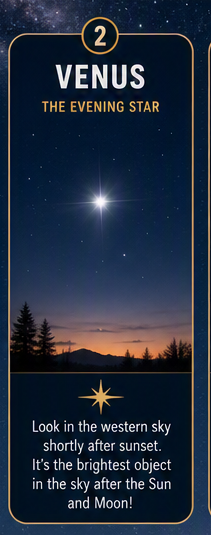
In the evening sky, Venus shines brilliantly in the west after sunset. It’s the first “star” to appear each night, glowing with a steady, unmistakable brilliance. If you’re introducing children to skywatching, Venus is the perfect starting point — easy to find, bright, and reliable.

Jupiter also climbs higher in the evening sky this month. Through binoculars, you may glimpse its four largest moons — tiny points of light lined up like beads on a string. These moons orbit Jupiter in just a few days, so their positions change nightly. It’s a wonderful way to show young skywatchers that the solar system is full of motion.

Stan’s Recommendation: A small beginner telescope — even a tabletop model — can reveal Jupiter’s moons and Saturn’s rings. Many families enjoy starting with a compact, budget-friendly reflector or refractor. Look for models described as “beginner telescopes” or “family telescopes” on Amazon; they’re often surprisingly capable.

In the morning sky, Mars and Saturn rise before dawn. Mars glows with a warm, ember-like light, while Saturn shines pale yellow. If you’re already awake for the meteor shower, take a moment to look for these two planets keeping watch over the early morning hours.

Constellations of Late Spring

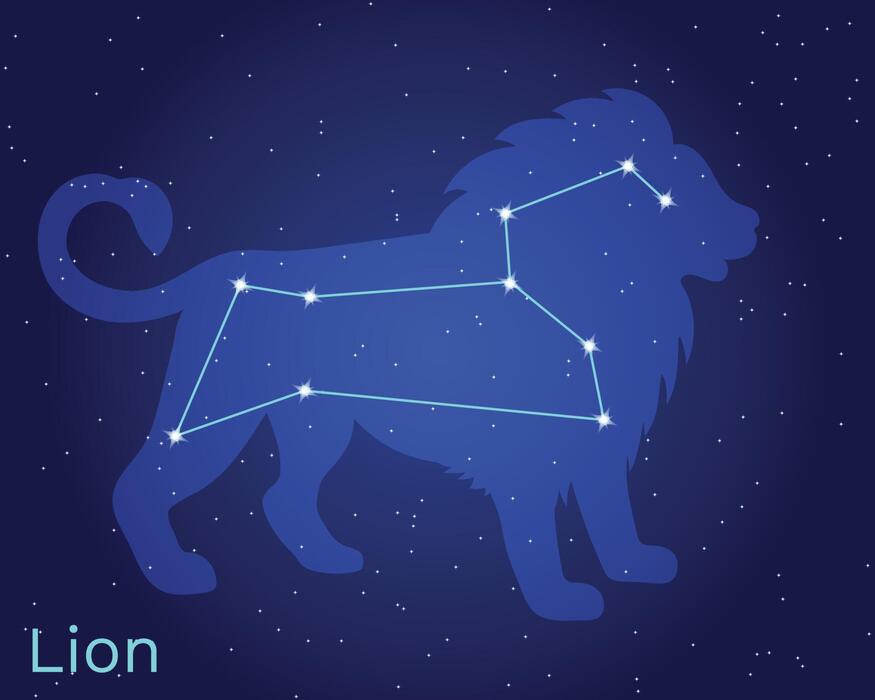
As May unfolds, the constellations shift into their springtime positions. Leo the Lion stands high in the south, its bright star Regulus marking the lion’s heart. Leo’s “sickle” shape — a backward question mark — is one of the easiest patterns to recognize.

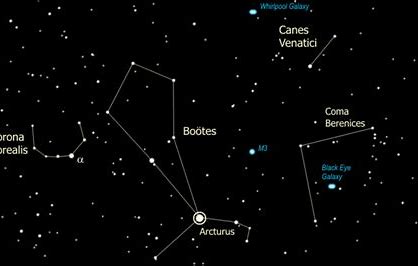
To the east lies Virgo, home to the bright star Spica. Virgo is a sprawling constellation, but Spica anchors it with a steady blue-white glow. If you follow the curve of the Big Dipper’s handle, you’ll “arc to Arcturus” in the constellation Boötes, and then “speed on to Spica.” This simple phrase has guided skywatchers for generations.

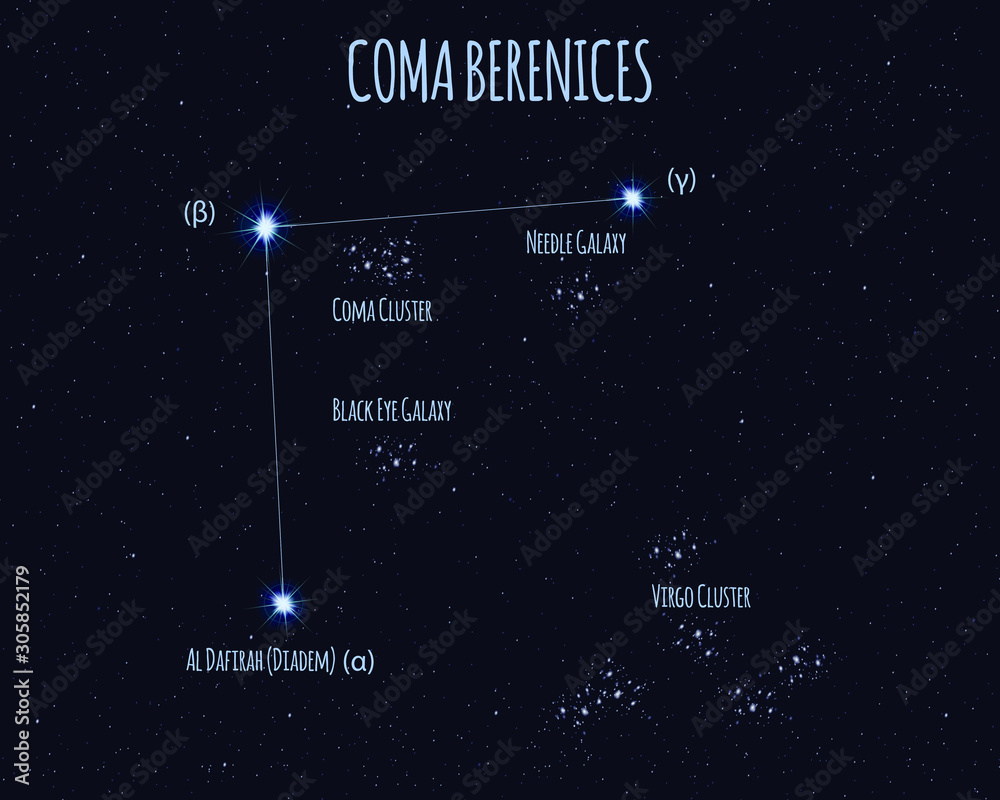
Above Virgo lies Coma Berenices, a delicate cluster of faint stars that shimmer like a handful of diamonds scattered across velvet. This region of the sky is rich with galaxies — dozens of them, far beyond the reach of the naked eye but visible through telescopes.

Stan’s Tip: If you’re having trouble spotting faint constellations, try shielding your eyes from nearby lights. Even turning your back to a streetlamp can make a big difference.

Deep-Sky Wonders of May

The dark skies around the new moon offer a chance to explore some of the deeper treasures of the night. One of the most rewarding binocular targets is the Beehive Cluster in the constellation Cancer. To the naked eye, it appears as a faint, misty patch, but through binoculars it blossoms into a swarm of tiny stars — a true “beehive” of light.

Another favorite is the Whirlpool Galaxy (M51), located near the end of the Big Dipper’s handle. Through a small telescope, it appears as a faint spiral, its arms curling gracefully around a bright core.

For binocular users, try finding M3, a globular cluster in the constellation Canes Venatici. It looks like a tiny ball of frost suspended in the sky, made up of hundreds of thousands of ancient stars packed tightly together.

Stan’s Recommendation: If you want to explore deep-sky objects more easily, consider a planisphere or a beginner star atlas. Many affordable versions are available online, and they make it much easier to navigate the sky with kids.

A Month That Opens the Sky

May is a month of transition — a bridge between the quiet skies of early spring and the brilliant Milky Way nights of summer. With two full moons, a meteor shower, wandering planets, and constellations shifting into their warm-season positions, the sky feels alive with possibility. Whether you’re watching meteors before dawn, tracing constellations after sunset, or exploring star clusters under the new moon, May offers countless opportunities to share the night sky with family and friends.

As the evenings grow warmer, take a moment to step outside, breathe in the soft air, and look up. The universe is waiting, and May is your invitation to explore it.

Clear Skies – Happy Hunting

Backyard Stargazing 101: A Family Guide to the 2026 Spring and Summer Skies

With the warmer air of 2026 finally settling in, it is the perfect season to turn off the patio lights, grab a blanket, and look up. For many of us, the winter months kept our telescopes tucked away in the garage, but spring and summer offer a “re-opening” of the heavens that is uniquely family-friendly. You don’t need a degree in astrophysics or a multi-thousand-dollar observatory to enjoy the show; all you need is a little curiosity and a clear view of the horizon.

This guide is a “refamiliarization” for the seasoned hobbyist and a roadmap for the newcomer. Let’s dive into the basics of exploring the cosmos from your own backyard.


1. Getting Started: The “Three-S” Rule

Before you even touch a telescope or a pair of binoculars, remember the Three-S rule: Space, Stillness, and Shadows.

  • Space: Find the darkest spot in your yard. Even if you live in a suburban neighborhood with streetlights, positioning yourself so that a house or a fence blocks the direct glare of a neighbor’s porch light will dramatically improve what you can see.
  • Stillness: Stargazing is a slow hobby. It takes about 15 to 20 minutes for your “night vision” to kick in. During this time, your pupils dilate to let in more light. If you look at your phone screen (unless it’s on a red-light filter), you reset that clock to zero!
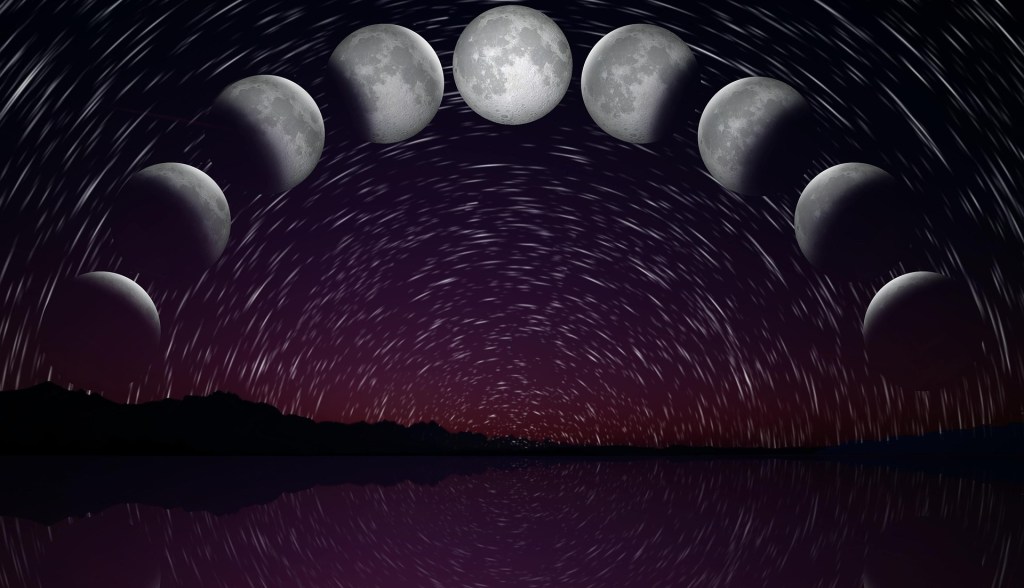
  • Shadows: This is the season of the Lunar Terminator. The “terminator” is the line where day meets night on the Moon. Looking at this line through a “Light Bucket” telescope reveals deep, dramatic shadows in the craters, making them look 3D.

2. The Spring “Anchor” Stars: Finding Your Way

The spring sky is dominated by a few “celebrity” stars that act as your primary landmarks. Once you find these, you can “star-hop” to almost anything else.

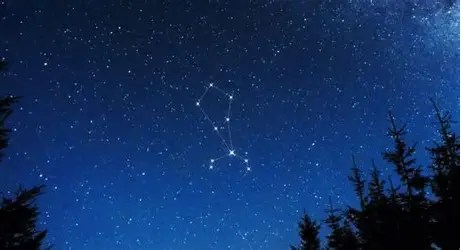
The Big Dipper (Ursa Major): High in the northern sky, the Big Dipper is your cosmic compass.

  • The Pointer Stars: The two stars at the end of the “bowl” point directly to Polaris, the North Star.
  • The Arc: Follow the curve of the Dipper’s handle in a smooth “Arc” to find Arcturus, a bright, friendly orange giant. Arcturus is the anchor for the constellation Boötes and is one of the oldest stars visible to the naked eye.

3. The Summer “Signposts”: The Great Triangle

As we move into June and July, the “Spring Diamond” fades, and the Summer Triangle takes over. This is a massive trio of bright stars: Vega, Deneb, and Altair.

  • Vega: Almost directly overhead and brilliant blue-white.
  • Deneb: Marks the tail of Cygnus the Swan (also known as the Northern Cross).
  • Altair: Marks the head of the Eagle.
  • The Milky Way: If you are in a dark location, the “river” of our own galaxy runs right through the middle of this triangle. This is the best time of year to simply scan the sky with 10×50 binoculars to see “star clouds”—thousands of stars packed so closely they look like glowing dust.

4. Modern Tech: Your Phone as a 2026 Space Tool

We are living in a golden age of “Digital Astronomy.” As we discussed in our “NASA Tool” feature, your smartphone is now a vital piece of gear.

  • Augmented Reality (AR) Apps: Apps like SkyView or Star Walk 2 allow you to point your phone at the sky and see the constellations drawn over the stars. This is the fastest way for kids to learn the difference between a planet and a star.
  • Averted Vision: This is a classic trick every family should learn. When looking at a faint object (like the Hercules Cluster or a comet), don’t look directly at it. Look slightly to the side. The edges of your eyes are more sensitive to light than the center, and the object will suddenly “pop” into view.

5. Targets for the Family: 2026 Special Highlights

  • The Planets: In late spring and early summer 2026, Jupiter remains a stunning target. With a small manual telescope, you can see its four largest moons (the Galilean moons) change positions every night. It’s like a mini-solar system in action!
  • Double Stars: Find Mizar and Alcor in the handle of the Big Dipper. For centuries, this “Horse and Rider” pair was used as an eye test for ancient desert travelers. Can your family see both stars without help?
  • The Hercules Cluster (M13): This is a “Globular Cluster”—a ball of 300,000 stars. In a backyard telescope, it looks like a glowing dandelion puff. It is one of the most popular deep-sky targets for beginners because it is relatively easy to find between the stars of the “Keystone” in Hercules.

6. Recommended Gear for the Season

To make the most of these warmer nights, here are a few “affiliate-ready” suggestions to keep in your astronomy kit:

  • Celestron SkyMaster 15×70 Binoculars: Sometimes, a telescope is too much work for a quick Tuesday night session. These binoculars provide incredible views of the Moon and the Milky Way with almost no setup time.
  • Red Light Headlamp (Black Diamond or Petzl): Essential for reading star charts or adjusting your tripod without ruining your night vision.
  • Smartphone Tripod Adapter: If you want to try your hand at “Astrophotography,” a simple adapter will let you take 10-second exposures of the stars that will amaze your friends on social media.
  • A “Light Bucket” Telescope (8″ Dobsonian): For families ready to see deep-space galaxies and the rings of Saturn in detail, a manual 8-inch Dobsonian telescope offers the best “bang for your buck” in terms of light-gathering power.

Conclusion: The Multitude of the Sky

Stargazing is more than just a hobby; it’s a way for families to connect with something much larger than themselves. When you stand in your backyard and look at the light of Arcturus, you are seeing light that left that star decades ago. You are literally looking into the past.

As we head into the summer of 2026, I encourage you to take at least one night a month to “go dark.” Turn off the screens, put on a light jacket, and remind yourself that the greatest show on Earth is actually happening just above it.

Stan’s Final Tip: “Don’t get frustrated if you can’t find a galaxy on your first try. The ‘hunt’ is half the fun. Even the pros spend nights just wandering the star-fields. The sky isn’t going anywhere—it’s been waiting for you for billions of years.”

The beauty of modern astronomy is that you don’t need to trek to a remote, dark-sky mountain peak to witness the grandeur of the universe. Most of the celestial highlights we’ve discussed—from the craters of the Moon to the brilliant “anchor” stars like Arcturus—are perfectly visible right from a typical suburban backyard. This accessibility turns stargazing into a nightly possibility rather than a rare expedition, allowing families to explore the cosmos in their pajamas. To add a layer of meaningful adventure to your sessions, I highly recommend joining the Globe at Night project. By participating in this citizen science initiative, your family moves beyond simple observation and begins contributing real-time data to NASA and global researchers. It transforms a quiet evening of looking at the stars into a purposeful mission to help protect our night skies for future generations.

Clear skies and happy hunting!

The NASA Tool in Your Pocket: Turning Your Smartphone into a Scientific Instrument

In the “Light Bucket” series, we’ve talked extensively about how traditional optics like your Celestron 8 or high-power binoculars can reveal the hidden wonders of the deep sky. But there is one piece of equipment you likely carry every day that is just as important to modern astronomy: your smartphone.

While we often think of phones as distractions, in 2026, they have officially become “NASA Tools.” Through projects like Globe at Night, your backyard observation isn’t just a hobby—it’s a data point that helps global scientists track the health of our planet.


1. The Mission: Why NASA Needs Your Backyard

NASA satellites are great at measuring light from above, but they struggle to see “Ground Truth”—how light pollution actually affects our view of the stars from the ground. This is where you and your family come in.

The Globe at Night project is a citizen science campaign that asks people to look at specific constellations and report how many stars they can see. In April and May 2026, the project is focusing on Leo (April) and Boötes (May). By using your phone to submit these observations, you are helping NASA map the “loss of the night” across the globe.


2. Your 2026 “Citizen Scientist” Action Plan

Step 1: Dark Adaptation (The 10-Minute Rule)

Before you can be an accurate “tool,” your eyes need to adjust. It takes about 10 to 15 minutes for your pupils to fully dilate.

  • The NASA Pro Tip: Avoid white light at all costs! Even a quick glance at a bright screen can ruin your night vision for another 20 minutes. Use a red-light headlamp or a red filter on your phone to navigate.

Step 2: Find Your Target Constellation

  • In April: Find Leo the Lion. Look for the “Backward Question Mark” (the Sickle) in the southern sky.
  • In May: Follow the “Arc to Arcturus” to find Boötes. Arcturus will be the bright orange anchor star high overhead.

Step 3: Submit Your Data

Open the Globe at Night web app on your phone. It will show you a series of charts (1 through 7). Chart 1 shows only the brightest stars, while Chart 7 shows a sky packed with stars. Simply tap the chart that most closely matches what you see in your actual backyard and hit “Submit.”


3. May Bonus: The “Loss of the Night” Challenge

For families who want to go deeper, download the “Loss of the Night” app (available for 2026 Android/iOS). This app turns stargazing into a game. It will point your phone toward a specific star and ask, “Can you see this?” As you answer, it calculates the exact “limiting magnitude” of your location. It’s a fun, interactive way to teach kids about stellar brightness while contributing to real research.


4. Recommended Gear: The “Citizen Science” Toolkit

To turn your backyard into a professional observation post, these tools are essential for the 2026 season.

  • Celestron NexYZ 3-Axis Universal Smartphone Adapter: If you want to take your “NASA Tool” to the next level, this adapter aligns your phone camera perfectly with your telescope eyepiece. It’s the gold standard for “digiscoping” and capturing the moon or bright planets to share with your blog readers.
  • Apertura Astro Vision Red LED Headlamp: Keeping your hands free is vital when you’re toggling between your phone and your telescope. A dedicated red headlamp preserves your night vision so your “Globe at Night” data is as accurate as possible.
  • Orion RedBeam Mini LED Flashlight: A great, affordable “stocking stuffer” for the grandkids. It’s small enough to keep on a keychain, ensuring you’re always ready for an impromptu citizen science session.
  • Star Target Planisphere (40° – 60°): Even with apps, a physical star wheel is a great educational tool. It helps kids learn the constellations without relying on a battery-draining screen.

5. Why This Matters for the “Light Bucket” Series

Using your phone as a NASA tool bridges the gap between the digital world and the physical universe. When your family submits data to Globe at Night, you aren’t just consumers of science—you are creators of it.

Stan’s Final Tip: “I always tell my readers: the best way to get kids interested in the stars isn’t just to show them a picture; it’s to give them a job. Tell them they are ‘NASA Field Agents’ for the night. You’ll be surprised how much more they see when they know a scientist in a lab is waiting for their report.”


  • Affiliate Note: As an Amazon Associate, I earn from qualifying purchases made through the gear links in this article. These small commissions help keep “Stan’s Hobbies” running and free of intrusive ads!

This video explains the simple steps to participate in the Globe at Night campaign, making it a perfect visual guide for your readers to see the “NASA Tool” concept in action.

Artemis II Countdown: How to Track Friday’s High-Speed Splashdown

1. The “Final Leg” Tracker (Tonight: April 8)

The astronauts (Wiseman, Glover, Koch, and Hansen) are officially back under the influence of Earth’s gravity.

  • The Mission Status: Today, they completed their final exercise routines and began “stowing for entry”—securing all loose gear inside the Orion capsule to prepare for the bumpy ride through the atmosphere.
  • How to Track: Recommend the NASA AROW (Artemis Real-time Orbit Website). It shows the capsule’s exact distance from Earth in real-time. Tonight, they are roughly halfway between the Moon and Earth, traveling at over 2,000 mph.
  • The Visual: Have your readers find the Moon tonight. It’s a Waning Gibbous (about 68% illuminated). Tell them to look at the space just to the “left” (east) of the Moon—that is the path the crew just traveled.

2. Preparing for the “Fireball” Splashdown (Friday, April 10)

The splashdown is scheduled for Friday, April 10, at approximately 8:07 PM EDT (5:07 PM PDT).

  • The Location: The Pacific Ocean, just off the coast of San Diego, California.
  • The Reentry Phase: At 7:53 PM EDT on Friday, Orion will hit the “entry interface.” It will be traveling at 24,840 mph (about 32 times the speed of sound) and will heat up to 5,000°F.
  • The “Blackout”: For about five minutes during reentry, the plasma surrounding the capsule will block all radio signals. This is the most intense “seat-of-the-pants” moment for mission control.

3. The “Light Bucket” Mission for Tonight

Since you are a blogger, give your readers a “Mission Assignment” for tonight to get them ready for Friday’s finale:

  • Target: The Sea of Tranquility on the Moon.
  • The Goal: Photograph the landing site of Apollo 11.
  • The Context: “The Artemis crew just flew over this spot 48 hours ago to scout it for the upcoming Artemis III landing. Look at those craters tonight and realize that for the first time in 50 years, human eyes just looked at them from only 4,600 miles away.”

Summary of Key Dates for Your Post

EventDateTime (EDT)Location/Action
Gear StowageTonight, April 8OngoingCrew securing the cabin for reentry.
Entry InterfaceFriday, April 107:53 PMOrion hits the atmosphere at Mach 32.
SplashdownFriday, April 108:07 PMPacific Ocean near San Diego.
NASA Live CoverageFriday, April 10Starts 6:30 PMWatch live on NASA+ or YouTube.

The “Home Stretch” Alert (Tonight, April 8): The crew has successfully exited the Moon’s gravity and is accelerating toward Earth.

  • Activity: Use the NASA AROW tracker to see the “Earthrise” from the capsule’s perspective.

The “Blackout” Alert (Friday, April 10 – 7:53 PM EDT): This is the most dramatic moment. For several minutes, a layer of ionized air (plasma) will surround the capsule as it hits the atmosphere at 24,840 mph, cutting off all communication with Houston.

The “Parachute” Alert (Friday, April 10 – 8:01 PM EDT): Watch for the deployment of the 11 massive parachutes that will slow the Orion from supersonic speeds to just 17 mph.

The “Splashdown” Alert (Friday, April 10 – 8:06 PM EDT): The final splash in the Pacific near San Diego.

Stan’s “Splashdown” Tip

“For readers on the West Coast, look toward the ocean around sunset on Friday. You might not see the capsule, but the sonic boom and the recovery ships (like the USS John P. Murtha) will be making history right off the shoreline!”

This Artemis II Mission Overview provides a great visual breakdown of the reentry and splashdown process to help you understand the “skip-entry” maneuver Orion will use on Friday.

This video is relevant because it explains the complex physics and timing of the Orion capsule’s return to Earth, which is exactly what your readers will be tracking over the next 48 hours.

Galaxy Season and The Pink Moon: Your Ultimate April 2026 Stargazing Guide

Welcome to April, fellow travelers of the night sky! If March was the “thaw,” then April is the “bloom”—not just for the flowers in our backyards here in Kentucky, but for the light reaching our telescopes from across the cosmos.

This month, we are turning our eyes away from the local stars of the Milky Way and peering into the vastness of intergalactic space. Grab a warm jacket and a thermos of coffee; it’s time for Galaxy Season.

1. The Lunar Cycle: Tracking the Pink Moon

In the world of astronomy, the Moon is both our greatest subject and our biggest “light polluter.” Planning your month means working around her glow.

  • April 1: The Full Pink Moon – Rising in the constellation Virgo, this Moon is named for the creeping phlox that blankets the ground this time of year. While the “Full” phase is beautiful to the naked eye, it’s actually the worst time to see craters because there are no shadows.
  • April 17: The New Moon (The Deep-Sky Window) – This is the most important date on your calendar. From April 14th to the 20th, the sky will be at its darkest. This is your window to hunt for the faint “fuzzies” like the Leo Triplet.
  • April 24: First Quarter – My personal favorite for families. Look at the Lunar Apennines, a mountain range on the Moon that stands out in sharp relief tonight.

2. The Planet Parade: A Morning and Evening Show

2026 is giving us a split-shift for the planets. You’ll find beauty both as the sun sets and before it rises.

The “Jewel and the Necklace” (April 19)

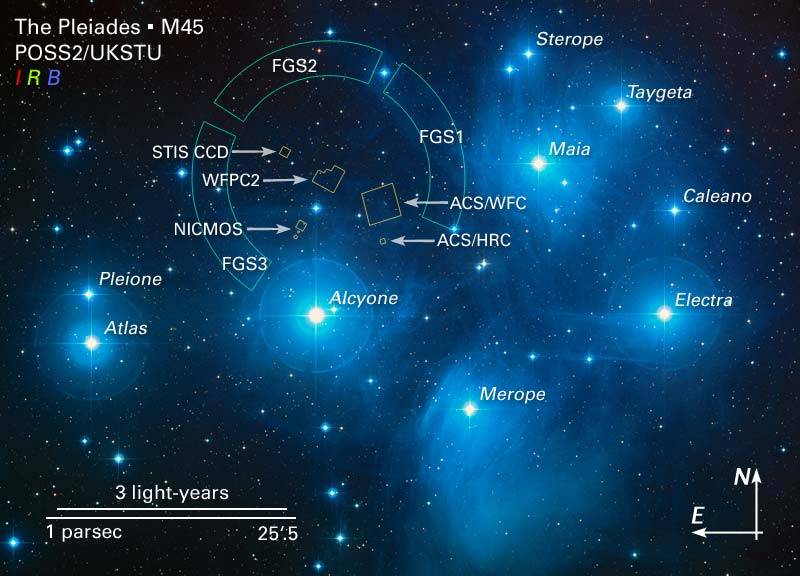
If you only look up once this month, make it the evening of April 19. In the West, the brilliant planet Venus (the “Evening Star”) will climb within 2.3° of the Pleiades Star Cluster (M45).

  • Stan’s Tip: To the naked eye, it looks like a bright diamond sitting next to a tiny, misty dipper. Through binoculars, you’ll see Venus surrounded by the dozens of icy-blue stars of the Seven Sisters. It is the best photo-op of the spring.

The Pre-Dawn Triple Conjunction (April 20)

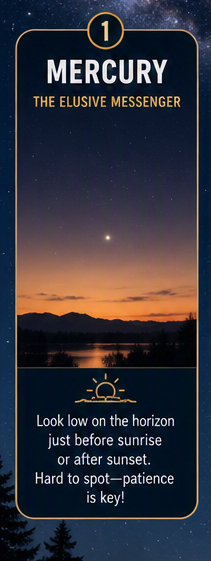
For the early birds, set your alarm for 5:30 AM. Low in the East, Mercury, Mars, and Saturn will form a tight, colorful triangle. Mars will show its distinct reddish hue, contrasting against the golden-yellow of Saturn.


3. Constellations & Major Stars: Navigating the Spring Sky

In April, the “Winter Circle” is setting, and the “Spring Triangle” is rising.

  • Leo the Lion: Look directly overhead. The “Sickle” (backwards question mark) represents the head. At the base is Regulus, a blue-white star that is 79 light-years away.
  • Boötes the Herdsman: Follow the “Arc to Arcturus.” This orange giant is the brightest star in the northern celestial hemisphere and is easy to spot rising in the East.
  • Virgo the Maiden: From Arcturus, “Spike to Spica.” This icy-blue star marks the heart of the region where we find the great Galaxy Cluster.

4. Major Events: Meteors and Comets

The Lyrid Meteor Shower (April 21–22)

This video is relevant because it visually demonstrates the “Arc to Arcturus” and the positioning of the Virgo Cluster, making it much easier for beginners to find these objects in the actual sky.

This is a “Dark Sky” year for the Lyrids! Since the Moon is a thin crescent and sets early, the sky will be perfectly dark for the peak. Expect 15–20 meteors per hour. Look toward the bright star Vega in the constellation Lyra to find the “radiant” point.

The 2026 Comet Wildcards

April 2026 features two potential naked-eye comets.

  1. Comet MAPS (C/2026 A1): After swinging around the sun on April 4, look for a growing tail in the Western twilight between April 10–15.
  2. Comet PanSTARRS (C/2025 R3): Reaches its closest point to Earth on April 26. Look for it in Pisces low in the East before dawn.

5. Deep-Sky Hunting: Galaxy Season

This is the heart of my April column. When you look toward Virgo, you are looking through a “hole” in our own galaxy’s dust.

  • The Leo Triplet (M65, M66, NGC 3628): Located just below the “hindquarters” of Leo. These three spiral galaxies are 35 million light-years away.
  • Markarian’s Chain: In the heart of Virgo, you can see a curved line of eight galaxies. It looks like a “Chain of Pearls” floating in the void.

6. Stan’s Gear Recommendations for April

To make these observations successful, especially for the family, here is what I’m using this month:


7. Why Stargazing Matters for the Family

Astronomy is a lifelong endeavor. It teaches patience, curiosity, and a sense of scale. When you stand in the backyard with your kids or grandkids and point at light that has been traveling since the time of the dinosaurs, you aren’t just looking at stars—you are sharing a moment of cosmic history.

Stan’s Pro-Tip: Use a Nitecore NU25 Red Light Headlamp. It keeps your hands free to handle charts while protecting your “night eyes,” which take 20 minutes to fully adjust but only a second of white light to ruin!

Tease for May: The Return of the King

Make sure to come back next month! In May, we turn our buckets toward the “King of the Planets,” Jupiter, as it makes a spectacular return to the evening sky. We will also explore the Hercules Cluster, a “snowball” of 300,000 stars that is the crown jewel of the summer sky.


The Light Bucket Series: Month 3 – When the Bucket Overflows

In March, we turn our buckets toward the brightest thing in the sky: The Moon. Up until now, we’ve been “hunting photons” from faint, distant galaxies and ghostly nebulae. But this month, we have the opposite problem. Sometimes, our light bucket gets too much rain. When the Moon is high and bright, it doesn’t just fill our bucket; it overflows, washing out the delicate details and leaving our eyes dazzled.

This month, we’re going to learn how to handle that overflow and use contrast to reveal the jagged shadows of lunar craters.


The “Flood” Factor: Why Less is More

When you point your telescope or high-powered binoculars at a nearly Full Moon, the sheer volume of light can actually be uncomfortable. It’s like trying to catch a waterfall in a teacup.

To see the Moon clearly, we have to “limit the rain.”

  • The Moon Filter: This is essentially sunglasses for your telescope. A neutral density filter screws into the bottom of your eyepiece, cutting the brightness while keeping the color neutral.
  • The “Aperture Mask”: Many telescopes come with a dust cap that has a smaller, secondary hole in it. By leaving the main cap on and only opening that small hole, you effectively shrink your “bucket,” allowing less light in and making the lunar surface much easier to look at for long periods.

Shadow Hunting: The Terminator Line

The biggest mistake beginners make is looking at the Moon when it’s Full. At Full Moon, the sunlight is hitting the lunar surface head-on, much like the sun at noon on Earth. This “washes out” the landscape, making it look flat and featureless.

The Secret: Look for the Terminator.

This is the line where day meets night on the Moon. Because the sun is hitting the surface at a low angle along this line, every mountain, crater rim, and canyon casts a long, jagged shadow.

  • In March 2026: Look toward the Moon between March 24 and March 28. During this “First Quarter” phase, the terminator cuts right through the center of the Moon, highlighting the Apennine Mountains—a jagged range that looks like it belongs on the cover of a sci-fi novel.

Handing the Contrast: Tuning Your “Bucket”

To see the fine details of the lunar soil (the regalia), you need to manage contrast.

  1. Avert Your Eyes (Briefly): If the Moon is too bright, look away at a dark patch of sky for a few seconds to let your pupils reset, then go back to the eyepiece.
  2. High Magnification is Your Friend: Unlike with faint galaxies, the Moon loves magnification. By using a “stronger” eyepiece (a lower number like 9mm or 10mm), you spread the light out over a larger area. This naturally dims the view and lets you see individual boulders inside the craters.

March 2026 Light Bucket Target: The Crater Tycho

Look toward the southern limb of the Moon. You’ll see a massive crater with “rays” of white dust shooting out in all directions. This is Tycho.

  • The Challenge: Can you see the tiny mountain peak right in the center of the crater? That’s the “Central Peak,” formed when the ground actually “splashed” back up after the initial impact millions of years ago.

Gear Guide: Mastering the Lunar Light

To help manage the “overflowing bucket,” here are my top recommendations:

  • Celestron 1.25″ Moon Filter: An absolute necessity for any “Light Bucket” owner. It cuts glare and brings out the contrast in the highlands.
  • Celestron Omni Barlow Lens (2x): This doubles the power of any eyepiece you own, letting you “zoom in” on those jagged shadows along the terminator.

For the “Light Bucket” astronomer using a smartphone, the challenge isn’t the camera’s quality—modern phones have incredible sensors—but rather the stability and alignment required to capture light through a telescope eyepiece.

Here are the essential gear suggestions to turn your smartphone into a high-performing astrophotography tool.

1. The Smartphone Digiscoping Adapter

This is the single most important piece of gear. Holding a phone by hand against a telescope eyepiece is nearly impossible for long-exposure shots.

  • Top Pick: NexYZ 3-Axis Universal Smartphone Adapter
  • Why it works: Unlike cheap clamps, this allows you to move the phone along the X, Y, and Z axes using precision knobs. This makes it easy to perfectly center the phone’s camera lens over the “exit pupil” of the telescope eyepiece.

2. Bluetooth Shutter Remote

Even a gentle tap on your phone’s screen to take a picture will cause the telescope to vibrate, resulting in a blurry moon or star.

  • Recommendation: A simple Bluetooth Remote Shutter.
  • Pro-Tip: If you don’t have a remote, use the timer function on your camera app (set it to 3 or 10 seconds). This allows the vibrations to settle after you press the button before the shutter actually opens.

3. Dedicated Astrophotography Apps

The “Auto” mode on most phones will try to overexpose the Moon, turning it into a white glowing ball. You need “Pro” or “Manual” mode to control ISO and Shutter Speed.

  • iOS: NightCap Camera – It has dedicated modes for “ISS,” “Stars,” and “Meteor Showers.”
  • Android: DeepSkyCamera – Designed specifically for taking “light frames” and “dark frames” for stacking later.

4. Specialized Eyepieces

Your “Light Bucket” needs an eyepiece that plays well with a camera lens.

  • Long Eye Relief Eyepieces: Look for eyepieces with at least 15mm–20mm of eye relief. This provides enough space for your phone’s camera to “see” the entire field of view without a black ring (vignetting) around the image.
  • Recommendation: Celestron Omni Series Plössl – These are affordable, provide great contrast for the Moon, and have a flat surface that makes mounting adapters much easier.

5. External Power Bank

Astrophotography apps and long-exposure “Night Modes” drain phone batteries extremely fast, especially in the cool night air of March and April.

  • Suggestion: A small Portable Power Bank that you can Velcro-strap to your telescope tripod leg. This ensures your “bucket” stays powered throughout the entire session.

6. The “Secret Weapon”: A Red Film Filter

If you are using your phone to navigate star charts (like SkySafari), the blue light from the screen will ruin your night vision.

  • Gear: Red Acetate Film.
  • The Hack: Cut a piece to fit your phone screen and tape it on. Even “Night Mode” on apps often leaks enough white/blue light to shrink your pupils; a physical red filter is much more effective.

April Teaser

“Make sure to clean out your light bucket because next month, we are going to need every single rain drop. In April, we turn away from the bright objects and face the ultimate test: Faint Fuzzies. We will travel 35 million light-years to catch the ancient photons of the Leo Triplet galaxies and learn the final secret to seeing deep into the cosmos.”

Stargazing the Spring Shift: Your 2026 Guide to the March & April Celestial Theater

The transition from March to April is one of the most poetic moments in the astronomical calendar. As the “Winter Hexagon” of bright stars like Sirius and Orion bows out in the west, the curtain rises on a deeper, more mysterious stage. This is Galaxy Season, a time when the Earth’s night side points away from the crowded disk of our own Milky Way and out into the vast, silent reaches of intergalactic space.


1. The Main Attractions: Constellations to Watch

Leo the Lion: The Royal Landmark

Leo is the undisputed king of the spring sky. Visible throughout March and April, it is one of the few constellations that actually resembles its namesake.

  • How to Find It: Look for the “Sickle,” a backwards question mark that forms the Lion’s head.
  • Key Star: At the base of the Sickle sits Regulus, the “Heart of the Lion.”
  • The View: By late March, Leo sits nearly at the zenith (directly overhead) around 10:00 PM, providing the clearest possible views through the atmosphere.

Virgo: The Gateway to Other Worlds

Rising behind Leo is Virgo, the second-largest constellation. It is the “Capital City” of Galaxy Season.

  • The “Arc to Arcturus”: Follow the curve of the Big Dipper’s handle to the bright orange star Arcturus, then “Spike to Spica”—the brilliant blue-white star in Virgo.
  • The Virgo Cluster: This region contains over 1,300 galaxies. With a telescope, you can see Markarian’s Chain, a curved string of eight galaxies floating in the void.

2. 2026 Special Events: Meteors, Planets, and the ISS

  • The International Space Station (ISS): Between March 18 and 25, the ISS will make high, bright passes. It looks like a steady, fast-moving white light. Use the NASA App or Spot the Station for exact timings.
  • The March Equinox (March 20): Day and night are equal. In the North, spring begins; in the South, autumn arrives.
  • Venus & The Pleiades (April 19): Look West after sunset. The “Evening Star” (Venus) will sit just 2.3° from the Pleiades (Seven Sisters). A thin crescent Moon will join them, creating the most beautiful alignment of the year.
  • The Lyrid Meteor Shower (April 21–22): Peak occurs after midnight on April 21. With the Moon setting early, the sky will be dark enough to see 15–20 meteors per hour.

3. The “Star Hopper’s” Guide to the Leo Triplet

For telescope users, finding the Leo Triplet (M65, M66, and NGC 3628) is a must.

  1. Locate Chertan: Find the middle star in the triangle of Leo’s hindquarters.
  2. Hop South: Move your telescope halfway toward the star Iota Leonis.
  3. Scan for “Fuzzies”: At low power, you will see three distinct, ghostly smudges—each a spiral galaxy 35 million light-years away.

4. Pro-Tips: Backyard Telescope Setup

  • Daytime Alignment: Align your finder scope during the day. Center a distant chimney in your eyepiece, then adjust the finder’s screws until its crosshairs match perfectly.
  • The “Infinity” Focus: Don’t focus on a dim galaxy. Focus on a bright star like Regulus until it is a sharp, tiny point. Your telescope is now perfectly focused for the entire universe.
  • Averted Vision: To see more detail in a galaxy, look slightly to the side of it in the eyepiece. Your peripheral vision is more sensitive to faint light!

5. Gear Guide: Recommended Products for 2026

Enhance your stargazing with these top-rated tools. (Check these out at major retailers like Amazon or OpticsPlanet.com).

Product CategoryRecommendationWhy It’s Great
Best All-Rounder TelescopeCelestron StarSense Explorer DX 130AZUses your phone to guide you to galaxies like the Leo Triplet—no manual searching required!
Best BinocularsCelestron SkyMaster 15×70Perfect for the Venus-Pleiades conjunction; captures both in one high-detail field of view.
Smart TelescopeZWO Seestar S50 / S30 ProFully automated; takes photos of galaxies and sends them to your phone or tablet instantly.
Night Vision ToolNitecore NU25 Red Light HeadlampKeeps your hands free and protects your night vision with its dedicated red-light mode.
Essential AppSkySafari 8 PlusThe gold standard for sky mapping, ISS tracking, and planning your April 17 “Dark Sky” night.

The Best Sights For Astronomy: A 2026 Guide to the Cosmos

Reprint from 2021

The night sky has been a source of wonder since the dawn of time, but the way we view it is constantly evolving. Since this guide was first published in 2021, new technology and celestial events have transformed the hobby. Whether you are stepping out into the backyard with a pair of binoculars or setting up a dedicated “light bucket” telescope, this updated guide highlights the absolute best sights to find in the 2026-night sky.

1. The Moon: Our Closest Neighbor

The Moon remains the most accessible and rewarding target for any astronomer. In 2026, we are paying closer attention than ever as international lunar missions prepare for a new era of human presence.

  • What to look for: Focus on the “terminator line”—the shadow line between day and night on the lunar surface. This is where craters like Tycho and Copernicus show the most dramatic relief.
  • Mission Gear: To see these details without the blinding glare, a high-quality lunar filter is essential. I recommend the Celestron 1.25-Inch Moon Filter to bring out hidden textures in the lunar highlands.

2. The Ringed Jewel: Saturn

Saturn is often the “wow” moment that turns a casual observer into a lifelong hobbyist.

  • The 2026 Perspective: We are currently approaching a period where Saturn’s rings appear very thin from our perspective on Earth. This unique angle allows you to focus on the planet’s golden hue and its largest moon, Titan, which appears as a bright pinprick of light nearby.
  • Mission Gear: For crisp views of planetary rings, a steady tripod and a specialized eyepiece are key. The Celestron Omni Series Barlow Lens doubles the magnification of your existing eyepieces, perfect for getting a closer look at Saturn.

3. Deep-Sky Wonders: The Andromeda Galaxy (M31)

If you want to look beyond our own neighborhood, the Andromeda Galaxy is your best target. Located 2.5 million light-years away, it is the most distant object visible to the naked eye under dark skies.

  • The View: Through a telescope, it appears as a magnificent glowing oval. In 2026, smartphone astrophotography has made it easier than ever to capture the spiraling dust lanes of this galactic neighbor.
  • Mission Gear: Capturing the Andromeda Galaxy is simple with the right mount. The Celestron NexADapter Universal Smartphone Adapter lets you align your phone to your telescope perfectly for stunning deep-space photos.

4. The Great Orion Nebula (M42)

Found in the “sword” of the constellation Orion, this stellar nursery is a must-see during the winter and spring months.

  • The Experience: Even with modest binoculars, you can see the fuzzy glow of glowing gas where new stars are being born. A medium-sized telescope reveals the Trapezium, a tight cluster of four bright stars at the nebula’s heart.

5. 2026 Special Feature: Comet Wierzchos

While the planets are reliable, 2026 brings us unique visitors. Keep an eye on the latest charts for Comet Wierzchos. Comets are the “wild cards” of astronomy, often growing bright enough to be seen with simple binoculars as they swing around the Sun, trailing beautiful tails of ice and dust.


Recommended “Mission Gear” for 2026

To get the most out of these sights, having the right equipment is key. Here are the top-rated tools for this year’s mission:

  • Binoculars (10×50): The Celestron UpClose G2 10×50 Binoculars are perfect for scanning the Milky Way and finding large star clusters like the Pleiades.
  • The “Light Bucket” Telescope: For those ready to see Andromeda and the Orion Nebula in breathtaking detail, the Celestron NexStar 8SE Schmidt-Cassegrain Telescope is the gold standard for deep-sky observation.
  • Star Maps & Apps: Use a modern sky-mapping app to align your telescope and identify constellations in real-time.

Integrated Article Section

The Best Sights For Astronomy: A 2026 Guide to the Cosmos

June–December 2026 Night Sky Calendar: A Beginner‑Friendly Narrative Guide

As the year moves into summer, the night sky begins a gentle transformation. Constellations shift, the Milky Way rises earlier, and some of the most beloved celestial events return. This extended guide is designed to help beginners, families, and casual skywatchers feel confident exploring the cosmos from June through December.

🌠 June 2026 — The Gateway to Summer Skies

June marks the beginning of true Milky Way season. Once twilight fades, the sky darkens enough to reveal a soft, glowing river stretching across the heavens — our galaxy seen edge‑on.

To find it, step outside after 10 PM and face south. Look for the bright red star Antares in Scorpius, then shift your gaze slightly left toward Sagittarius, shaped like a teapot. The Milky Way rises like steam from that celestial teapot, making it one of the easiest sky landmarks for beginners.

Families can turn this into a fun challenge: who can spot the “teapot” first? And if you have a tripod, even a smartphone can capture the Milky Way with a 20‑second exposure.

🌌 July 2026 — Warm Nights and Falling Stars

July brings the gentle Delta Aquariid Meteor Shower, peaking around July 28–30. These meteors are subtle but steady, offering a peaceful show for late‑night skywatchers.

To find the radiant, look southeast after midnight. Start by locating the Great Square of Pegasus — a large, bright square high in the sky — then drift downward toward the faint constellation Aquarius.

Let your eyes adjust for at least 20 minutes, avoid bright screens, and settle into a reclining chair. You may see 15–20 meteors per hour, each a delicate streak of cosmic dust burning high above.

🌠 August 2026 — The Perseid Celebration

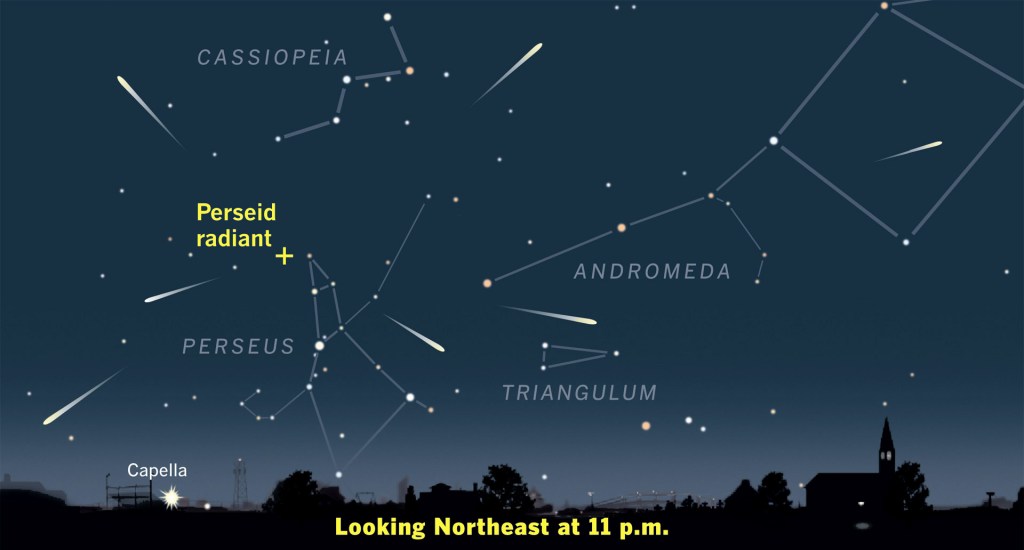
The Perseid Meteor Shower peaks August 11–13, and it’s the highlight of the summer sky. Even from suburban backyards, the Perseids produce bright, fast meteors that often leave glowing trails.

To find the radiant, face northeast after midnight. Look for Cassiopeia, shaped like a giant “W.” The Perseids appear to stream from just below it, near the constellation Perseus.

Beginners should lie flat and look halfway up the sky rather than directly at the radiant — meteors can appear anywhere. Many families make this an annual tradition, complete with blankets, snacks, and whispered wishes under the stars.

🌌 September 2026 — Rings and Equinox

September brings the Autumn Equinox on September 22, when day and night balance perfectly. Around this time, Saturn becomes a showpiece in the evening sky.

Look southeast around 9 PM for a steady, golden light that doesn’t twinkle — that’s Saturn. Through binoculars, it appears as a tiny oval; through a small telescope, its rings become unmistakable.

A helpful beginner trick: use the Moon as a guide. When the Moon passes near Saturn mid‑month, simply follow the Moon’s glow to the planet. It’s a magical moment for first‑time observers.

🌠 October 2026 — Twin Meteor Shows

October offers two meteor showers with very different personalities.

The Draconids peak around October 8 and are unusual because they’re best seen just after sunset. Look north toward the constellation Draco, which winds between the Big and Little Dippers.

Later in the month, the Orionids peak around October 21. These meteors are fast and bright, streaking from the east after midnight near the rising constellation Orion. Beginners can find Orion by spotting the three stars in a row that form his belt.

Both showers are excellent for families — easy to find, easy to enjoy, and full of surprises.

🌌 November 2026 — The Leonid Legacy

The Leonid Meteor Shower peaks November 17–18, famous for its occasional bursts of activity. Even in quieter years, the Leonids offer crisp, fast meteors slicing through the cold autumn air.

To find the radiant, face east‑northeast after midnight and look for the constellation Leo, shaped like a backward question mark. If you’re new to stargazing, use the Big Dipper as a pointer — follow the curve of its handle downward to find Leo.

It’s a rewarding challenge for beginners and a beautiful way to welcome the colder months.

🌠 December 2026 — The Geminid Finale

The year ends with the spectacular Geminid Meteor Shower, peaking December 13–14. Unlike most showers, the Geminids are visible all night, making them perfect for early‑evening family viewing.

Their radiant lies near Gemini, marked by the twin stars Castor and Pollux high overhead. Beginners can find Gemini by locating Orion’s Belt and following it upward.

Geminid meteors are slow, bright, and often colorful — green, yellow, even blue — making them ideal for photography and unforgettable for kids. It’s the perfect cosmic finale to the year


A Dramatic Conclusion

As we gaze upward, we aren’t just looking at points of light; we are looking back through time itself. The photons hitting your eye from the Andromeda Galaxy tonight began their journey long before humans walked the Earth. This connection to the infinite is what makes astronomy a lifelong passion.

But the cosmos is never still, and the wonders of the night sky are constantly shifting. Prepare your lenses and steady your tripods, for next month we journey even further into the void. Join us as we reveal the hidden giants of our solar system in our upcoming April guide!