August 2026 Night Sky Guide: Fireballs, Planetary Kings, and the Late-Summer Eclipse

August delivers the crown jewel of summer skywatching. As twilight arrives earlier each evening, backyards turn into front-row seats for deep-space sights, bright planetary meetups, and one of the best dark-sky meteor setups in years.

Whether you are stepping outside with your bare eyes from a blanket in the lawn or setting up a telescope, August 2026 brings an exciting mix of cosmic wonders. Here is your guide to navigating the warm midsummer night sky!

August 12–13: The Grand Moonless Perseids Peak

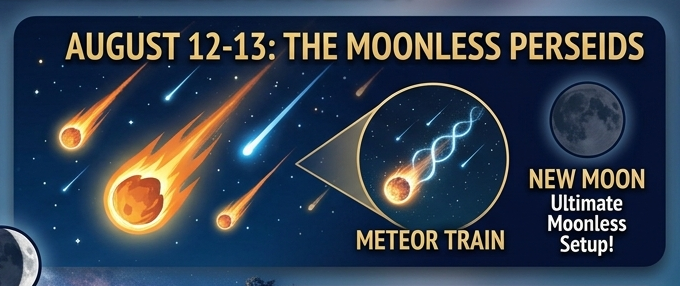
Mark your calendar for the overnight hours of August 12 into the predawn of August 13. The annual Perseid Meteor Shower reaches its peak, and 2026 presents the absolute best setup possible: a New Moon on August 12.

With no moonlight to wash out fainter streaks, observers under dark rural skies can spot up to 60 to 100 meteors per hour! The Perseids are particles shed by Comet Swift-Tuttle. As these tiny pebbles hit Earth’s upper atmosphere at roughly 37 miles per second, they produce intense, swift flashes of light.

Stargazing Tip for the Perseids

You do not need a telescope to enjoy the Perseids! In fact, your bare eyes are the best tool because they offer a wide field of view.

  • When to watch: Midnight through predawn on August 13 offers the highest meteor counts.
  • Where to look: Lie back in a comfortable lawn chair facing northeast toward the constellation Perseus.
  • Bonus sight: Keep an eye out for fireballs—exceptionally bright meteors that leave behind persistent “meteor trains” (glowing ionization trails drifting in upper winds).

August 15: Venus Reaches Greatest Eastern Elongation

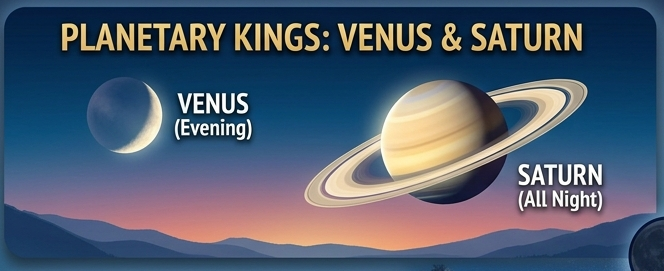
If you look west about 45 minutes after sunset throughout early August, Venus dominates as the brilliant “Evening Star”.

On August 15, Venus reaches its Greatest Eastern Elongation, placing it at its maximum angular distance from the Sun as seen from Earth. Because it sits far to the left of the solar glare, Venus remains illuminated high above the western horizon well into twilight.

If you point binoculars or a small telescope at Venus around this time, you will notice it doesn’t look like a solid circle; instead, it shines like a tiny, brilliant half-Moon!

Mid-to-Late August: Saturn Returns to Prominence

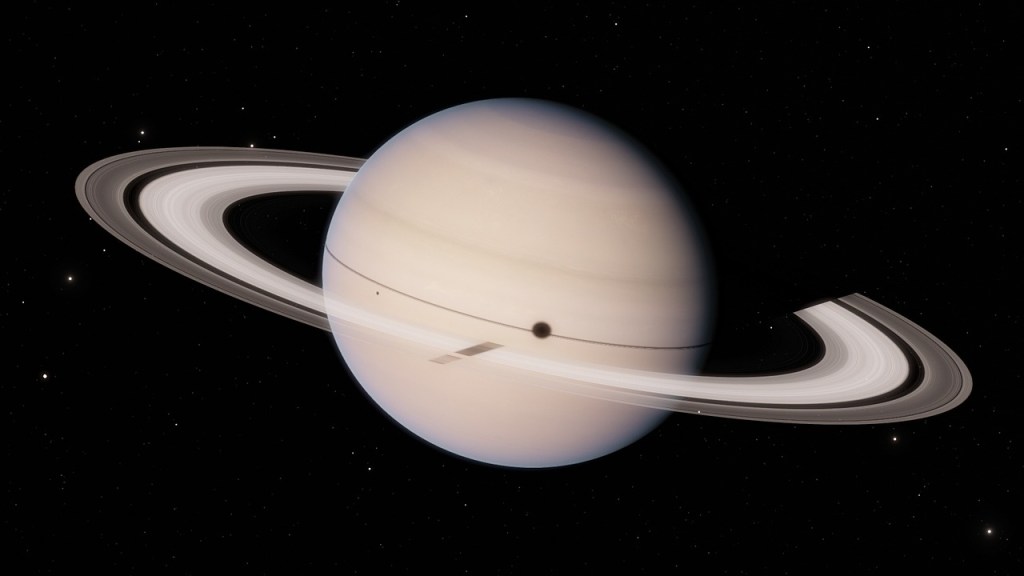
While Venus rules the sunset, Saturn takes center stage for late-night skywatchers. Rising in the east-southeast late in the evening, the ringed planet shines with a steady, golden glow.

How to Observe Saturn

  • Naked Eye: Unlike stars, which twinkle rapidly, Saturn shines with a calm, unblinking light.
  • Small Telescope / Binoculars: A magnification of just 25x to 30x reveals Saturn’s iconic ring system suspended in space, along with its largest, brightest moon, Titan.

Deep Sky Tour: The Summer Triangle and Andromeda

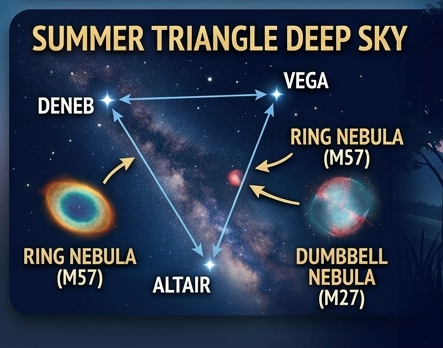
August is prime time for sweeping the Milky Way band overhead. Face high overhead to spot the Summer Triangle, anchored by three bright stars: Vega (in Lyra), Deneb (in Cygnus), and Altair (in Aquila).

Deep Sky Highlights

  • The Ring Nebula (Messier 57): Tucked inside Lyra, this expanding shell of gas from a dying star looks like a tiny glowing smoke ring through modest backyard optics.
  • The Great Hercules Cluster (Messier 13): Look west of Vega toward the constellation Hercules to spot a densely packed ball containing hundreds of thousands of ancient stars.
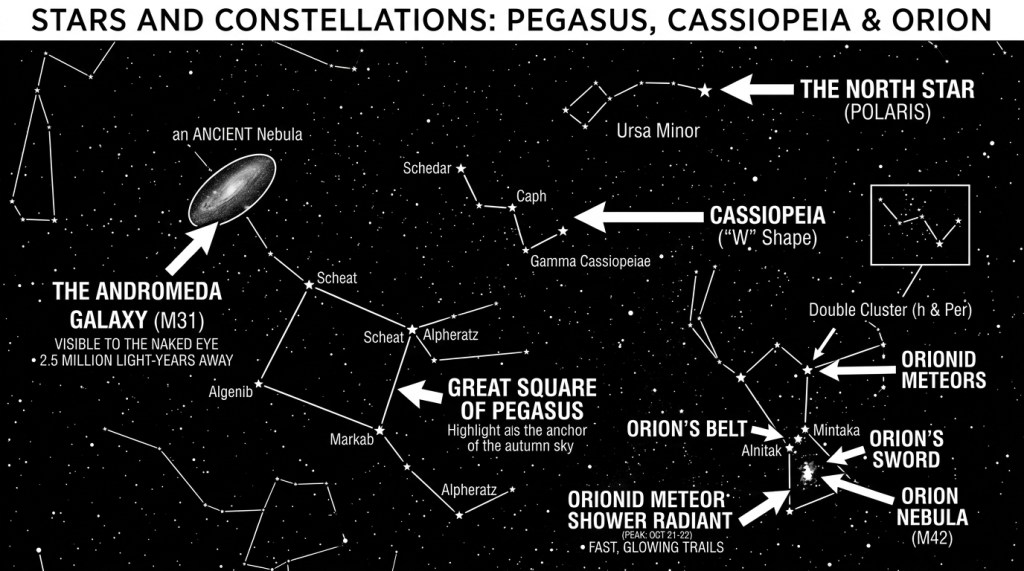
  • The Andromeda Galaxy (Messier 31): As midnight approaches, look east below Cassiopeia. Situated 2.5 million light-years away, Andromeda is the most distant object human eyes can see without optical aid under dark skies!

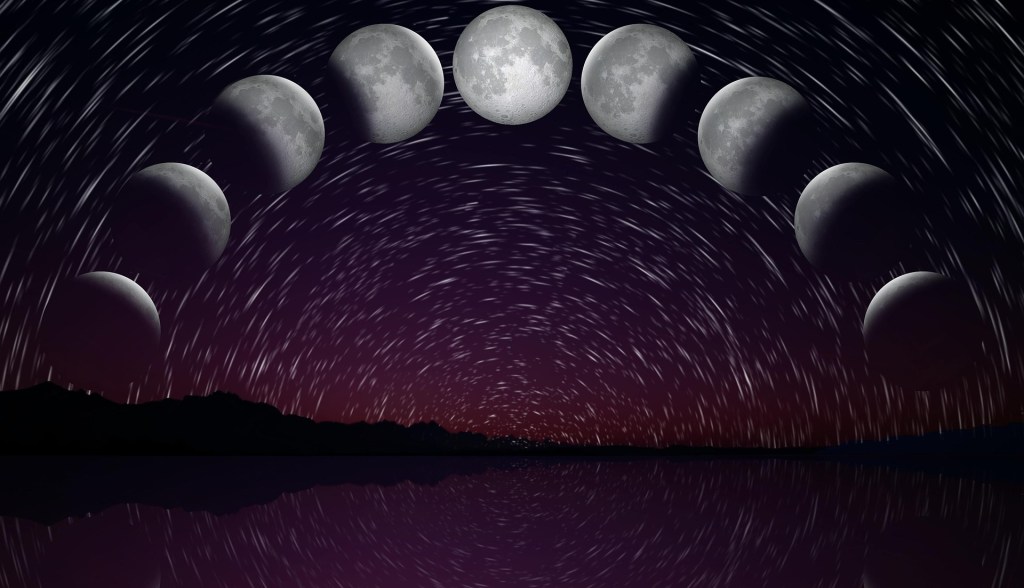
August 27–28: The Late-Summer Partial Lunar Eclipse

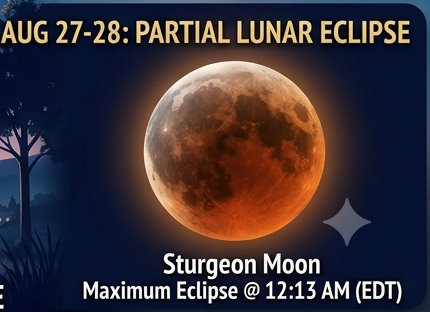
The month closes with a lunar event! On the night of August 27 into the early morning of August 28, the Full “Sturgeon” Moon passes directly through the outer portion of Earth’s shadow, resulting in a Partial Lunar Eclipse.

Unlike a solar eclipse, a lunar eclipse is 100% safe to view with the naked eye! During the peak of the eclipse, Earth’s dark central shadow (the umbra) will bite into the lunar disc, giving the Moon a distinct, dusky appearance.

StageEvent Timing (EDT)What to Look For
Penumbral Start~3:33 AMFaint darkening along the Moon’s edge
Partial Shadow Begins~4:10 AMEarth’s dark umbral shadow begins covering the Moon
Maximum Eclipse~5:12 AMUp to 90% of the Moon shaded in deep shadow

Gear Toolkit for August Stargazing

To get the most out of your late-summer observing sessions, a few simple accessories will keep you comfortable and dark-adapted:

Summary of Key August 2026 Skywatching Events

DateCelestial EventBest Time to WatchLooking Direction
Aug 12New Moon (Dark Sky Night)All NightSkywide
Aug 12–13Perseid Meteor Shower PeakMidnight to DawnNortheast (Perseus)
Aug 15Venus at Greatest ElongationDusk / Post-SunsetLow West
Aug 20First Quarter MoonEvening twilightSouth-Southwest
Aug 27–28Partial Lunar Eclipse & Full Moon3:30 AM – 5:30 AM EDTSouthwest

For a visual breakdown of how to star-hop to the Summer Triangle targets and prepare for the Perseid peak, check out this helpful August 2026 Night Sky Video Guide.

This video provides an excellent visual calendar of the major August 2026 celestial events, making it easy to plan your family observing nights.

Clear skies, keep your red lights ready, and enjoy late-summer stargazing!

The Aurigid Meteor Shower: A Family-Friendly Guide for Beginners and Advanced Astronomers

Introduction

The night sky is a vast natural theater, and meteor showers are among its most magical live performances. Each year, the Aurigid meteor shower peaks in early September, offering a chance to witness shooting stars streak through the constellation Auriga. Whether you’re a curious beginner or a seasoned astrophile, exploring the Aurigids can transform an ordinary night into a cosmic adventure for all ages.


What Are Meteor Showers?

Before diving into what makes the Aurigids special, let’s quickly recap what meteor showers are. Meteor showers occur when Earth, on its journey around the Sun, passes through debris left behind by a comet or asteroid. These tiny bits of rock and dust burn up in our atmosphere, producing the brilliant streaks of light people call “shooting stars.”

Meteor showers are named after the constellation from which their meteors appear to originate—the “radiant.” For the Aurigids, that’s Auriga, the Charioteer.


The Aurigid Meteor Shower: Overview

2025 Peak Dates and Times

The Aurigids peak in early September, typically centering around the night and early morning of September 1. In 2025, ideal viewing conditions are forecast, offering a wonderful show for everyone willing to rise before dawn.

  • Peak Date: Night of August 31–morning of September 1
  • Radiant: Constellation Auriga (easy to spot in the northeast sky)
  • Best Time to Watch: After midnight and before dawn, when the radiant is highest in the sky and the sky is darkest.

2025: What to Expect

  • Meteor Rate: The Aurigids are a modest shower, usually producing 5–10 meteors per hour at their peak under good conditions. However, the Aurigids have delivered spectacular outbursts—spikes up to 100 meteors per hour—in rare years.
  • Visibility: This year, the Moon sets before peak viewing hours, providing a dark sky and optimal conditions for viewing even faint meteors.
  • Meteor Appearance: Aurigid meteors are often fast and can sometimes produce bright, colorful streaks across the sky.

Why Are the Aurigids Significant?

A Historical and Scientific Oddity

The Aurigids stem from Comet Kiess (C/1911 N1), a long-period comet discovered over a century ago. Unlike famous showers (like the Perseids), the Aurigids are less predictable and can range from quiet to surprisingly explosive years. Their unpredictability excites astronomers and motivates meteor network observations worldwide.

Scientific Value:
Observing the Aurigids helps researchers refine orbital calculations for Comet Kiess. It also teaches us about the structure, composition, and age of debris streams that Earth crosses only during specific years.

A Rare Treat for the Northern Hemisphere

The Aurigids are best seen from northern latitudes—they’re a late summer bonus for North American and European skywatchers after the famous Perseids. The relatively faint, often blue-white meteors present a subtler, but deeply rewarding show—especially for those who value sky events off the beaten path.


How and Where to Watch the Aurigids

Step 1: Find the Radiant

The radiant lies in the constellation Auriga. Around 2–4 a.m., Auriga is high in the northeast for most Northern Hemisphere observers. You’ll recognize the bright star Capella as Auriga’s anchor.

Step 2: Choose the Best Spot

  • Seek out a dark-sky site, far from city lights.
  • A flat, unobstructed view of as much sky as possible improves your chances.
  • Bring a reclining chair, blanket, and snacks—comfort is key!

Step 3: Look Up and Enjoy

  • No optical equipment needed! Meteors rain all over the sky; keep your gaze relaxed (peripheral vision is excellent for catching movement).
  • Let your eyes adjust for 15–30 minutes in the dark to spot the faintest meteors.
  • Stay out from midnight to dawn for your best chance.

Advance Techniques for Experienced Observers

  • Photography: Use a wide-angle lens and long exposure settings on a tripod to capture multiple meteors in one frame.
  • Meteor Logs: Record meteor counts, brightness, and color. Multiple observers can coordinate watches to collect scientific data.
  • Networking: Join local astronomy clubs or join online meteor watch parties to share your counts and images.

Making It a Family or Group Event

Meteor showers are among the best astronomy activities for families, classrooms, or scout groups. Here’s how to make it engaging for everyone:

  • Meteor Counting Competitions: Who can spot the most?
  • Meteor Journals: Draw fast meteors, note colors, and write what if feels like to see a “shooting star.”
  • Wish-Making Traditions: Tell stories about meteor origins across cultures—every shooting star can be a wish!
  • Science Challenge: See if anyone can spot a meteor that leaves a persistent train (a glowing after-effect), then look up why this happens.

Frequently Asked Questions

Do I need a telescope or binoculars?
No. Meteor showers are best enjoyed with the naked eye, as their long, sweeping paths often cross large sky areas.

What’s the best time to watch?
After midnight until dawn, especially after the Moon has set.

Will I see them in the city?
Bright meteors can be spotted from urban sites, but the darker the sky, the more you’ll see.

What if it’s cloudy?
Try again the next night—the Aurigids can be active for a day or two around peak, and you may still catch stragglers.


The Aurigids for Advanced Astronomers

If you’re experienced, the Aurigids are scientifically notable due to their dynamic, sometimes surprising outbursts. In some years, the Earth passes through denser clumps of comet debris—the best-known outburst was in 2007, when rates briefly surpassed 100 meteors per hour.

Opportunities include:

  • Coordinated meteor counts with global organizations (such as the International Meteor Organization)
  • Photography for trail analysis and orbital computation
  • Spectroscopy campaigns for those with specialized equipment to analyze meteor composition

Final Thoughts: Why the Aurigids Matter for Everyone

Each shooting star is a connection—between us on Earth and a distant, icy wanderer from the solar system’s past. The Aurigid meteor shower may be modest compared to others, but it shows how even subtle natural wonders can be shared by communities, spark scientific curiosity, and make lasting memories.

So spread out a blanket, invite your friends or family, and let the quiet magic of the Aurigids fill your September night.


References & Further Reading

  1. International Meteor Organization – Aurigids Overview
  2. NASA Meteor Shower Portal
  3. Sea and Sky: Meteor Showers 2025
  4. Star Walk Space: Meteor Showers 2025 Guide
  5. EarthSky: Aurigid Meteor Shower Guide

Footnotes:

  • Times and activity levels may vary locally; check astronomy apps and weather forecasts for the best experience.
  • The Aurigids are best seen from the Northern Hemisphere, but bright meteors can appear at lower latitudes as well.
  • For deeper scientific involvement, visit the International Meteor Organization or join a local astronomy club.

Clear skies, and enjoy the show!

The Delta Aquariid Meteor Shower: A Beginner’s and Family Guide for July 28–31, 2025

Every summer, as July transitions into August, a lesser-known yet enchanting celestial event graces the night sky: the Delta Aquariid meteor shower. Peaking from July 28 to July 31, 2025, this meteor shower promises a memorable spectacle for families, skywatching beginners, and anyone hoping to experience a night of awe under the stars. This guide will help you understand, prepare for, and enjoy the Delta Aquariids—even if you’re new to stargazing.

What Are the Delta Aquariids?

The Delta Aquariids are an annual meteor shower named after the star Delta Aquarii in the constellation Aquarius, where the meteors appear to originate (their radiant point). The shower is caused by Earth passing through debris left behind by the comet 96P/Machholz. As tiny bits of comet dust enter our atmosphere at over 90,000 miles per hour, they burn up and streak across the sky as meteors, or “shooting stars”.

Why the Delta Aquariids Are Special

While the Delta Aquariid shower isn’t as famous as the Perseids in August, it is beloved by skywatchers for several reasons:

  • Steady Meteor Rate: During the peak, you can expect to see 15–20 meteors per hour from a dark, rural sky.
  • Early Show: It kicks off the summer “meteor shower season” and sometimes overlaps with early Perseid meteors for a double show.
  • Long-Lasting Meteors: Many Delta Aquariids produce faint but long-lasting trails—sometimes glowing for a second or more.

When and Where to Watch in 2025

Peak Dates & Times

  • Best Nights: July 28, 29, 30, and 31, 2025
  • Best Hours: Between midnight and 4:00 a.m. (local time). The shower is best after midnight when the constellation Aquarius climbs higher in the southern sky.
  • Moon Phase: The Moon will be a waning crescent, setting before the best radiant hours, leaving the sky mostly dark—excellent for meteor watching.

Where to Look

  • Direction: Face generally southeast or south. Find a broad, open view of the sky, focusing east to south.
  • Constellation: Meteors will radiate from the area near Aquarius, but “shooting stars” can appear anywhere overhead.

Preparing for Your Meteor-Watching Night

What You’ll Need

  • No Telescopes Required: Meteors move too fast for telescopes or binoculars; use just your eyes!
  • Comfort Essentials:
    • Blanket, sleeping bag, or reclining lawn chair to lie back and watch comfortably.
    • Warm clothes and bug spray—even summer nights can get chilly or buggy.
    • Snacks and drinks for your meteor party.
  • Optional:
    • A red flashlight (to preserve night vision).
    • Star charts or a free stargazing app for finding constellations like Aquarius and Capricornus.

Family-Friendly Tips to Maximize the Experience

1. Make It a Nighttime Picnic

Pack favorite snacks and turn the meteor shower into an event. Invite family, neighbors, or friends for a backyard “shooting star” picnic.

2. Get Kids Involved

  • Encourage children to keep count of meteors or sketch their favorite ones.
  • Turn it into a science lesson about comets, space, and Earth’s atmosphere.
  • Have kids make a wish on each shooting star!

3. Safety First

Observe from a safe location away from busy roads. Bring flashlights for safe navigation but keep lights off while watching.

4. Choose the Right Spot

For the best show, escape city lights. A rural park, beach, or even a family-friendly campsite will reveal many more meteors.

What to Expect

  • Patience Pays Off: It can take 15–20 minutes for your eyes to adapt to darkness. The more time spent outside, the more meteors you’ll see.
  • Persistence: Meteors arrive at random. Sometimes, several appear in a quick burst, followed by a lull.
  • Look Up All Around: While the radiant is in Aquarius, meteors may streak across any part of the sky.

Suggested Viewing Timeline

Time (Local)What’s HappeningTips
10:00 p.m.Twilight ends, stars appearSettle in and get comfy
MidnightAquarius rises higher, meteors beginStart serious watching
2:00–4:00 a.m.Peak meteor activityHighest rates, darkest sky
DawnShower ends as sky brightensTime for breakfast stories!

Fun Delta Aquariid Facts

  • Parent Comet: The debris stream comes from Comet 96P/Machholz—a visitor that returns every five years.
  • Speed: Delta Aquariid meteors travel at about 25 miles per second!
  • Best in the South: The further south you are (e.g., southern US states), the higher Aquarius appears, and the more meteors you’ll spot.
  • Double Show: Early Perseid meteors (from August’s more famous shower) sometimes mingle with the Delta Aquariids, offering extra surprises.

Bringing Astronomy to Life

Meteor showers are a magical entryway to astronomy for families and beginners. They require no equipment, no expertise—just a little patience, wonder, and a clear night. Watching shooting stars is also a shared experience, connecting all ages with the wonders of the universe.

If you’d like to identify more stars or planets while you wait for meteors:

  • Look for the bright Summer Triangle stars: Vega, Deneb, and Altair high overhead.
  • Saturn, the ringed planet, will be rising in the southeast before midnight.
  • Jupiter may rise before dawn in the east by the end of July.

Common Questions

Are showers best seen at their radiant?

Not necessarily—meteors can appear anywhere in the sky. But more will appear to originate from the Aquarius region.

What if it’s cloudy?

If clouds cover your location, try another night within the peak window, or tune in to online streams from observatories.

Can I photograph meteors?

A camera with a tripod and long-exposure settings may capture bright “fireballs,” but relax and enjoy watching with your eyes first.

Summary

The Delta Aquariids offer families and beginners a perfect opportunity to enjoy the universe together. On a warm night in late July, all you have to do is lie back, look up, and watch as cosmic dust transforms into fleeting, brilliant streaks of light. The memory of a shared meteor shower may last far longer than the meteors themselves.

References & Further Reading

  1. American Meteor Society – Delta Aquariid Meteor Shower Overview
  2. Star Walk – Delta Aquariids 2025 Viewing Guide
  3. EarthSky – 2025 Meteor Shower Calendar
  4. Royal Astronomical Society – How to Watch Meteor Showers
  5. Sky & Telescope – July 2025 Night Sky Guide

Wishing you clear, star-filled skies and a wonderful Delta Aquariid experience!