September 2026 Night Sky Guide: Equinox Celestial Highlights & Planetary Parade

As summer transitions into autumn, September brings crisp air, earlier dark skies, and outstanding stargazing conditions. The shift in seasons marks the arrival of the Autumnal Equinox, providing perfectly balanced nights to explore lunar phases, brilliant planetary alignments, and iconic seasonal constellations.

Whether you are stepping out into the backyard with your naked eyes, a light bucket reflector, or a favorite pair of binoculars, September 2026 delivers a full calendar of celestial events for observers of all experience levels.

1. The September Moon: Harvest Glow & Lunar Cycles
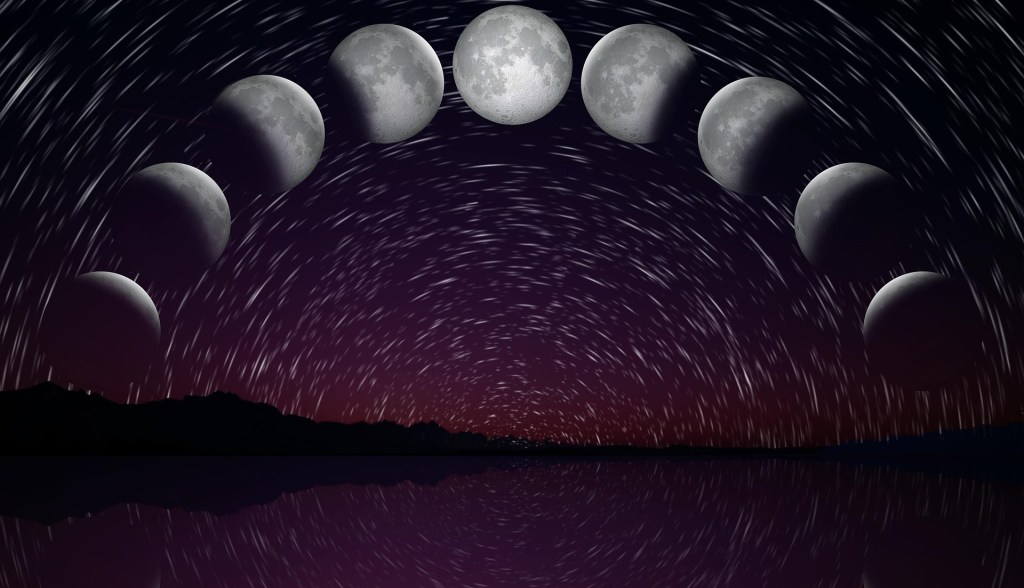
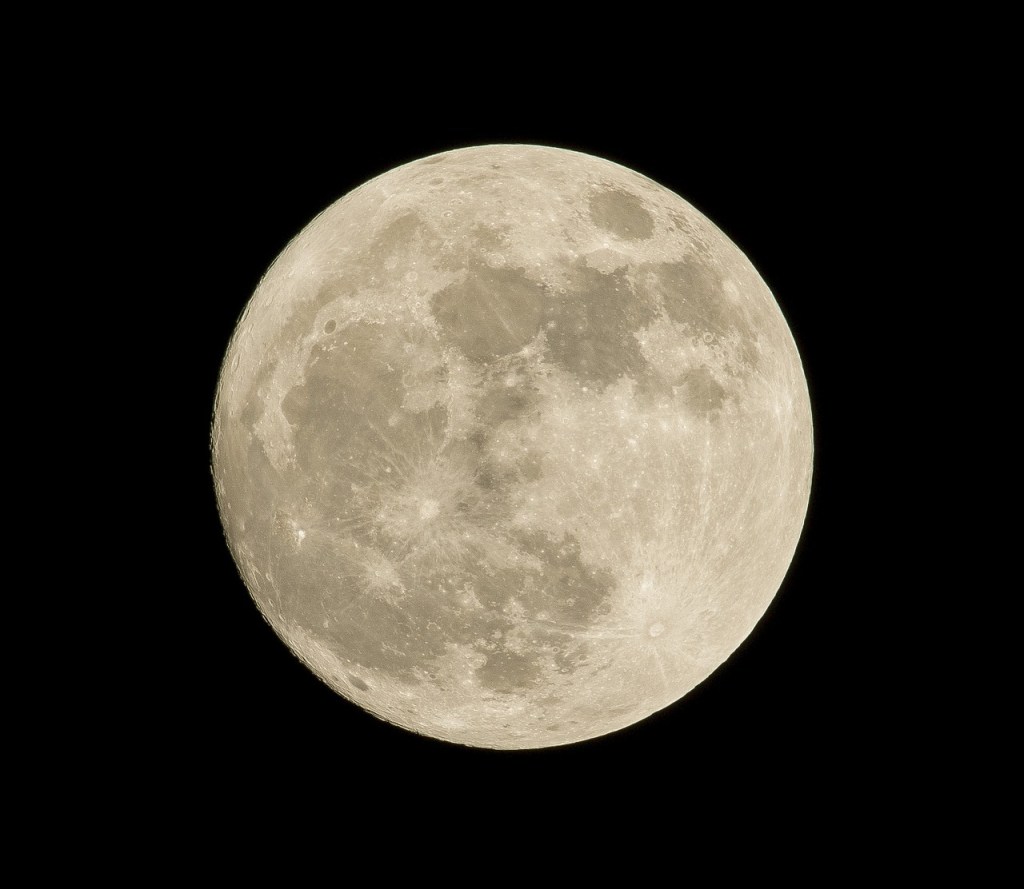
The Moon serves as our primary celestial clock throughout September, offering dynamic viewing opportunities as its phase progresses.

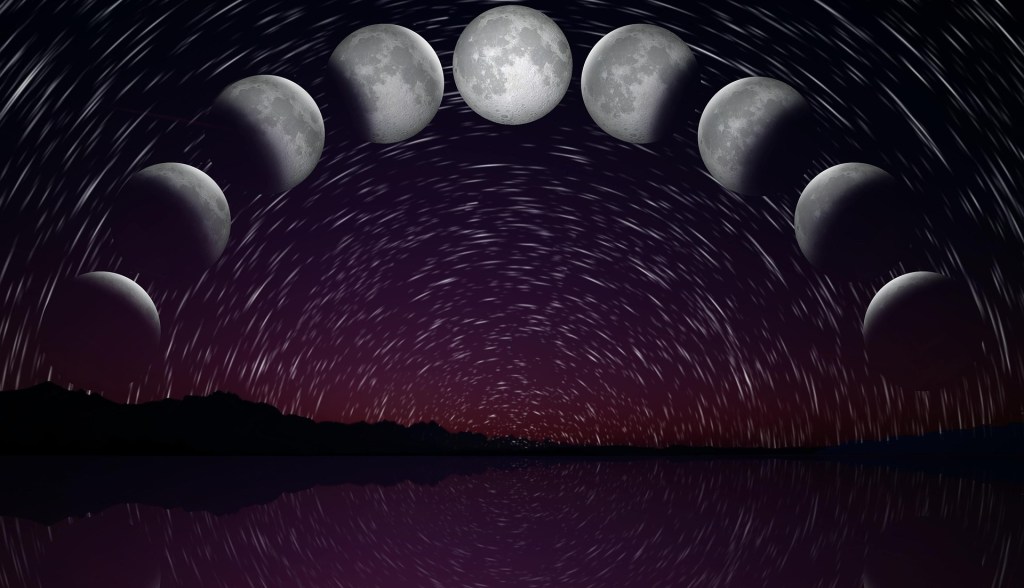
Key Lunar Phases for September 2026

  • September 3 — Last Quarter Moon: High in the sky at dawn, revealing dramatic shadows along the craters of the lunar terminator line.
  • September 10 — New Moon: The absolute best night of the month for deep-sky stargazing! With no moonlight in the sky, faint star clusters and galaxies shine at their brightest.
  • September 18 — First Quarter Moon: Ideal for early evening family observing. Craters like Tycho and Copernicus stand out in sharp relief.
  • September 25 — The Full Harvest Moon: Rising shortly after sunset, the famous Harvest Moon provides a rich, golden hue near the eastern horizon.

Stan’s Stargazing Tip:When viewing the Full Harvest Moon through a telescope or binoculars, the glare can be surprisingly bright! Thread a variable polarizing filter onto your eyepiece or use lunar filter caps to cut down the intense light. This reduces eye fatigue and pulls out subtle tonal differences in the dark lunar seas (maria).

2. Planetary Roundup: Jupiter, Saturn, and the Inner Planets

September offers front-row seats to the solar system’s brightest worlds.

Saturn: Prime Evening Target
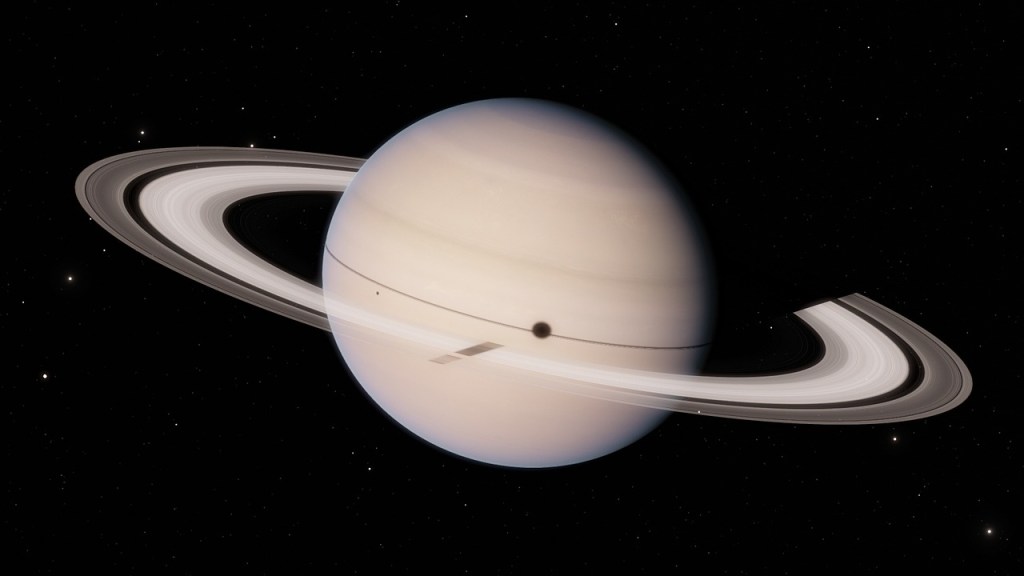
  • Saturn reaches its peak evening visibility this month. Appearing in the southeastern sky shortly after dark, the ringed planet glows with a steady, warm golden hue. Through even a modest telescope or manual light bucket, you can easily resolve the iconic ring structure, the dark Cassini Division gap, and Saturn’s largest moon, Titan.

Jupiter: King of the Midnight Sky

Rising in the late evening and dominating the midnight hours, Jupiter shines as a brilliant, creamy-white beacon. Using simple binocular optics or a small scope reveals the four bright Galilean moons—Io, Europa, Ganymede, and Callisto—shifting position night after night. Higher magnification reveals dark cloud belts and the famous Great Red Spot.

Mars & Venus: Dawn Showcase

  • Mars: Visible in the early morning sky before sunrise, glowing with its characteristic salmon-red shade against the backdrop of autumn stars.
  • Venus: Dazzling low in the eastern twilight sky right before dawn, acting as a brilliant morning star.

3. Stars and Constellations: Navigating the Autumn Sky

September is a transitional month where summer’s famous patterns begin fading in the west while classic autumn constellations take center stage overhead and in the east.

                  [ NORTH STAR (Polaris) ]
                             |
                             v
                    [ CASSIOPEIA ("W" Shape) ]
                             |
                             v
               [ GREAT SQUARE OF PEGASUS ]
                             |
                             v
                [ ANDROMEDA GALAXY (M31) ]

The Great Square of Pegasus & Andromeda

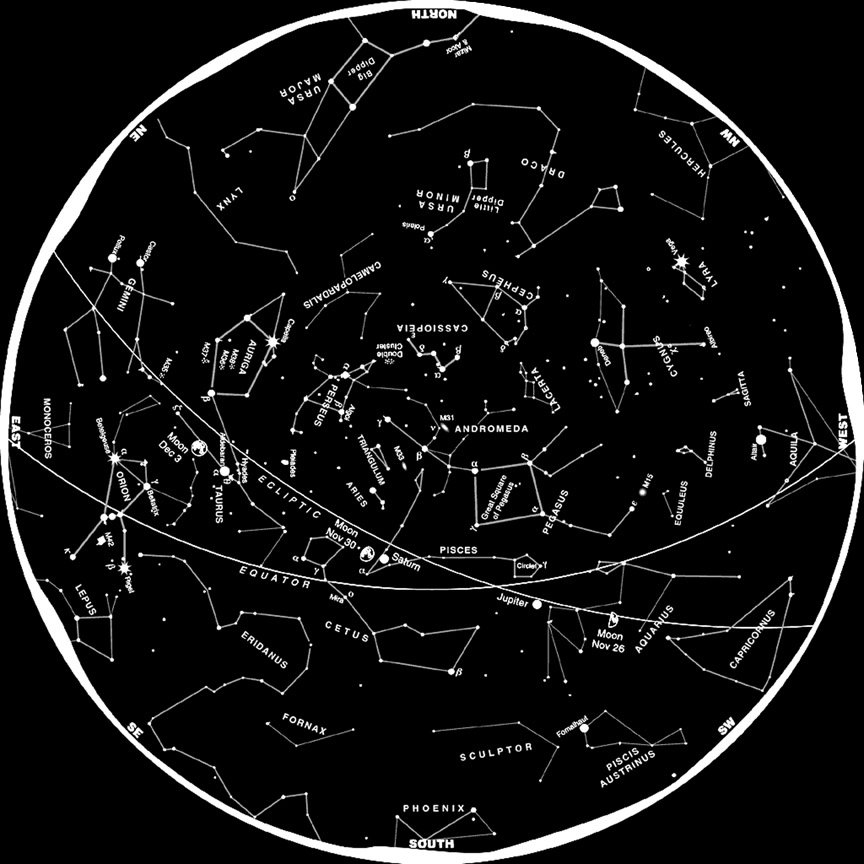
Look high in the eastern sky for the Great Square of Pegasus, a large, distinct four-star diamond that anchors the autumn sky. Connected to the upper-left star of the square is the constellation Andromeda.

  • The Andromeda Galaxy (M31): Located within the Andromeda constellation, M31 is the most distant object visible to the naked eye at 2.5 million light-years away! On dark nights around the New Moon (September 10), look for a soft, oval patch of light just above Andromeda’s central star line.

Cassiopeia: The Queen’s “W”
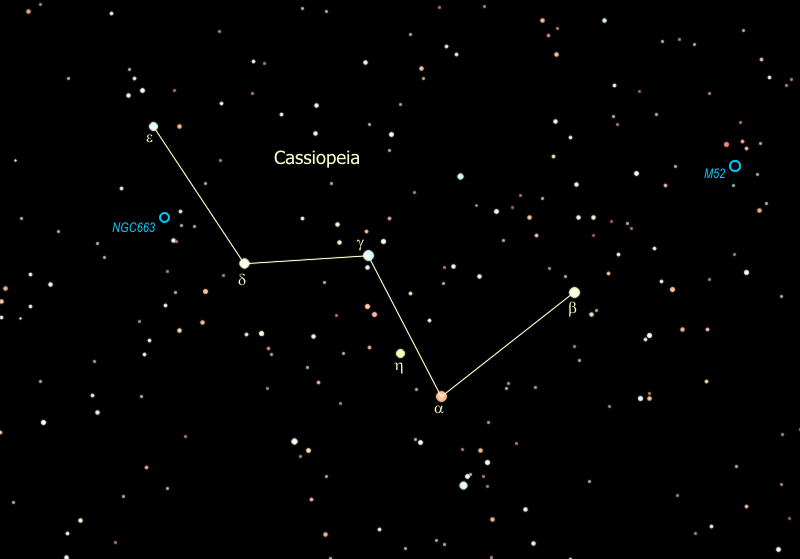
High in the northeastern sky sits Cassiopeia, easily identified by its bright, sweeping “W” shape formed by five prominent stars. Cassiopeia sits directly within the star-rich band of the Milky Way, making it a fantastic hunting ground for rich star clusters using binoculars.

4. September Celestial Events & Sky Highlights

DateSky EventTarget / DirectionBest Viewing Time
Sept 10New Moon (Dark Sky Window)Deep Sky (M31, Star Clusters)All Night
Sept 17Moon & Antares ConjunctionSouthwestern Sky8:00 PM – 10:30 PM
Sept 22Autumnal EquinoxGlobal Event2:05 PM EDT
Sept 25Full Harvest MoonEastern HorizonDusk / Early Evening

The Autumnal Equinox (September 22, 2026)

At exactly 2:05 PM EDT on September 22, the Sun crosses the celestial equator heading south, marking the official astronomical start of autumn in the Northern Hemisphere. On the equinox, day and night are approximately equal in length across the globe.

Stan’s Stargazing Tip:The weeks surrounding the autumn equinox are prime time for observing “Zodiacal Light”—also known as the false dawn. If you step outside about 60 to 90 minutes before sunrise in a dark location, look east for a faint, pyramid-shaped cone of soft light reaching up from the horizon. This is sunlight reflecting off microscopic cosmic dust grains floating along the plane of our solar system!

Gear Toolkit for September Stargazing

To get the most out of your autumn observing sessions, a few essential items will enhance your view:

  • 7×50 Astronomy Binoculars: A bright pair of binoculars like the Celestron Cometron 7×50 Binoculars is the ultimate grab-and-go tool for scanning the Andromeda Galaxy, sweeping the Milky Way in Cassiopeia, and spotting Jupiter’s four moons.
  • Variable Polarizing Filter: Threading an Astromania 1.25″ Variable Polarizing Filter onto your eyepiece cuts down intense moonlight glare during the Harvest Moon and sharpens planetary details on Saturn.
  • Red LED Headlamp: Protect your eye adaptation in the dark with an EverBrite Dual Red/White LED Headlamp. Using the red-light mode keeps your pupils dilated for deep-sky observing.

Master Checklist for Family Skywatchers

  1. Dress in Layers: September nights cool down rapidly once the sun sets. Wearing light layers ensures you stay comfortable during extended viewing sessions.
  2. Plan Around the Moon: Use the week of the New Moon (September 10) to target faint galaxies and star clusters. Save lunar and planetary observing for the brighter phase weeks.
  3. Allow Dark Adaptation: Give your eyes at least 15 to 20 minutes to adjust to the darkness outside. You will be amazed at how many extra stars and faint cosmic structures appear once your eyes fully adapt!

Set up your telescope, grab a warm jacket, and enjoy the front-row seat to the changing autumn sky.

Clear skies and happy hunting!
A Beginner’s Guide to Seeing Planets with the Naked Eye!

Have you ever looked up at the night sky and wondered about those bright, steady lights glowing overhead? You don’t need a telescope, complex computer gear, or expensive equipment to explore space. Some of the most amazing worlds in our solar system can be seen using nothing more than your naked eyes (your own unaided sight)!

In astronomy, five special worlds are known as the naked-eye planets: Mercury, Venus, Mars, Jupiter, and Saturn. To the bare eye, they look like bright, colorful “stars” that don’t twinkle.

Whether you are brand new to skywatching or looking for a fun family activity right from your backyard, here is your ultimate beginner’s guide to spotting our neighbor worlds!

The Secret Trick: Stars Twinkle, Planets Don’t!

When you step outside at night, how do you tell a distant star from a nearby planet? It’s all about the twinkle!

  • Stars Twinkle: Stars are trillions of miles away. Their light travels as a tiny, razor-thin pinpoint that gets bent and bounced around by Earth’s moving atmosphere (air currents). This makes them look like they are blinking or flickering.
  • Planets Shine Steady: Planets are much closer to Earth. Through the sky, they appear as tiny discs rather than pinpoints. Because more light reaches your eyes, atmospheric movement doesn’t disrupt the beam as easily. Planets glow with a calm, steady light.

1. Mercury: The Swift Twilight Beacon

Mercury is the closest planet to our Sun, speeding around it in just 88 days! Because it stays so close to the Sun’s bright glare, it never appears high in the dark midnight sky.

How to Spot It:

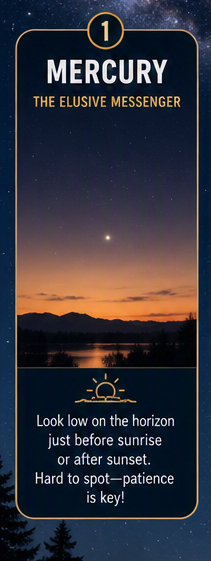
Mercury is known as an elusive (hard to catch) target. You can only spot it low on the horizon during twilight—the colorful, warm glow in the sky right after sunset or right before sunrise.

Look low toward the horizon where the sun just went down or is about to rise. Mercury will appear as a bright, pinkish-orange pinpoint peeking through the twilight color!

Observer’s Helper: While you can easily spot Mercury with your bare eyes once you know where to look, a light pair of compact binoculars like the Celestron Cometron 7×50 Binoculars can help you sweep low along a colorful horizon to lock onto it faster!

2. Venus: The Dazzling Evening & Morning Star

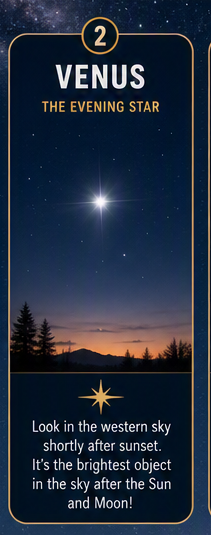
Venus is the absolute queen of the night sky! It is the third-brightest object in the entire sky, beaten only by the Sun and our Moon. It shines so brilliantly that people often mistake it for a landing airplane or a high-altitude balloon.

What to Look For:

Venus is covered in thick, white clouds that act like a giant mirror, reflecting sunlight back across space directly to your eyes.

  • Evening Star: When Venus is west of the Sun, it hangs high in the twilight sky right after sunset.
  • Morning Star: When it moves to the east of the Sun, it wakes up early, blazing brightly in the dawn sky before sunrise.

When Venus is at its brightest, see if you can head out to a dark park—it can actually cast faint, subtle shadows on the ground!

3. Mars: The Rusty Red Wanderer

Mars is world-famous as the “Red Planet,” and your naked eyes can easily confirm its famous nickname!

Why is Mars Red?

The surface of Mars is covered in iron-oxide dust—which is the exact same material as real rust on Earth! When sunlight hits Mars, that rusty dust bounces a distinct, warm salmon-pink or deep orange light across space to your eyes.

What to Look For:

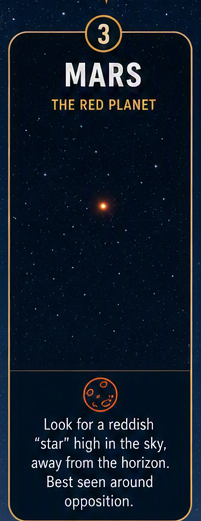
Look up for a bright, reddish-orange beacon that shines steady without flickering. Every two years, Earth and Mars come extra close to each other in an event called opposition. During opposition, Mars grows dramatically brighter in our night sky, outshining almost every star around it!

4. Jupiter: King of the Planets

Jupiter is the largest planet in our entire solar system—more than 1,000 Earths could fit inside it! Because it is so massive and covered in bright, reflective gas clouds, it is a magnificent sight to naked-eye stargazers.

What to Look For:

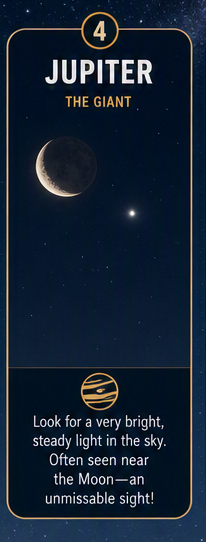
Jupiter shines with a bold, creamy-white light that dominates whichever constellation it happens to be visiting. It is often the brightest object in the midnight sky when Venus has already set.


Fun Family Challenge: While your naked eyes reveal Jupiter’s bright cream-colored disc, holding a basic pair of Bushnell Falcon 10×50 Binoculars steady against a fence post will let you spot up to four tiny pinpoints of light holding hands beside it—Jupiter’s famous Galilean Moons (Io, Europa, Ganymede, and Callisto)!

5. Saturn: The Golden Jewel

Saturn is the farthest world you can easily see with your bare eyes without any optical help at all. It sits nearly a billion miles away from Earth!

What to Look For:

To your naked eyes, Saturn doesn’t show its famous rings, but it glows with a lovely, distinct golden-yellow hue. It moves very slowly across the stars, taking nearly 30 years to make one full trip around the Sun!

Because it shines with a warm, steady golden light, it is easy to pick out against the harsh, blue-white flickering stars surrounding it.

Naked-Eye Planet Hunting Checklist

PlanetColor to Look ForBest Time to Spot ItSecret Sky Hint
MercuryPinkish-OrangeTwilight (Dawn/Dusk)Stays very low to the horizon
VenusBrilliant Silver-WhiteJust after Sunset or before SunriseBrighter than any star in the sky
MarsRusty Salmon-RedHigh in Dark Night SkyNoticeable orange/red color
JupiterBright Cream-WhiteMidnight HoursShines steady with zero twinkling
SaturnWarm Golden-YellowEvening & MidnightFarthest planet seen with bare eyes

Three Easy Tips for Backyard Skywatchers

  1. Give Your Eyes Time to Adjust: When you step out from a bright house into the yard, your eyes need about 15 to 20 minutes to build up “dark adaptation.” The longer you stay in the dark, the brighter the planets and surrounding stars will appear!
  2. Use a Red Flashlight: White light from smartphones or porch lights instantly ruins your dark adaptation. Use a red-light mode on your flashlight, like the EverBrite Red/White Headlamp, so you can read sky maps without blinding your eyes.
  3. Find the “Ecliptic Line”: Planets don’t just scatter randomly across the sky. The Sun, Moon, and all five naked-eye planets travel along the exact same imaginary arch across our sky called the ecliptic path. If you find the Moon, look left and right along that same general path across the sky to spot the planets!

You don’t need fancy equipment to enjoy the wonder of the cosmos. Just step outside on a clear night, look up along the moon’s path, and enjoy the front-row view of our solar system!

Clear skies and happy planet hunting!

July 2026 Night Sky Guide: Planetary Conjunctions, the Milky Way, and Midsummer Meteors

Warm summer nights provide the perfect backdrop for backyard stargazing. Whether you are a seasoned observer with a telescope or a family using nothing but your naked eyes from a blanket in the grass, the celestial calendar for July 2026 is packed with spectacles.

This month features brilliant evening planets, stunning predawn celestial meetups, the peak of our home galaxy’s visibility, and the opening acts of the summer meteor season. Here is your complete guide on what to look for, when to watch, and how to find July’s best cosmic events.

Earth at Its Furthest Point: Aphelion (July 6)

We begin the month with a mind-boggling cosmic fact to share around the campfire. On July 6, 2026, Earth reaches aphelion—the exact point in our annual elliptical orbit where we are furthest from the Sun.

SUN –>>> 94.5 Million Miles to Earth

On this day, Earth will sit roughly 94.5 million miles away from our star. It feels counterintuitive for those of us experiencing midsummer heat in the Northern Hemisphere, but our seasons are dictated by the tilt of Earth’s axis, not our physical distance from the Sun. While it is a purely mathematical milestone that doesn’t change how the sky looks, it is a wonderful reminder of our steady journey through space.

The Evening Star: Venus Swaps Greetings with Regulus and the Moon

If you step outside just after sunset during the first half of July, your eyes will immediately be drawn to the western horizon. Venus reigns supreme as the “Evening Star,” blazing intensely against the twilight glow.

July 9 — Venus and Regulus

Shortly after the sun sinks on July 9, look closely at Venus. Right next to it, you will see a sharp, blue-white point of light. This is Regulus, the brightest star in the constellation Leo the Lion. Known historically as the “Heart of the Lion,” Regulus sits roughly 79 light-years away from us. The visual contrast between the steady, dazzling white light of nearby Venus and the twinkling, distant sapphire of Regulus makes this the prettiest naked-eye pairing of the week.

July 15–17 — The Cosmic Crescent

A few nights later, a young, razor-thin crescent Moon enters the western sky, climbing closer to Venus each evening. By dusk on July 17, the Moon will sit directly beside Venus.

Keep an eye out for a phenomenon known as earthshine, or the “Da Vinci glow.” This is when sunlight reflects off Earth’s oceans and clouds back onto the dark portion of the Moon, subtly illuminating the entire lunar disc. It creates a breathtaking, cinematic view easily seen without any equipment.

The Predawn Parade: Saturn, Mars, and the Seven Sisters

For the early risers—or the night owls who stay up past midnight—the eastern sky before dawn acts as a bustling planetary crossroads this month.

July 7–8 — The Saturn-Moon Rendezvous

In the early hours of July 7 and 8, the Third Quarter Moon climbs above the eastern horizon accompanied by Saturn. The pair will be separated by less than nine degrees, roughly the width of a fist held at arm’s length. Saturn will shine with a steady, golden glow. If you have a modest backyard telescope or high-powered binoculars, this is an excellent time to view Saturn’s famous ring system, which is currently tilted at a narrow angle relative to Earth.

July 11 — The Morning Trio

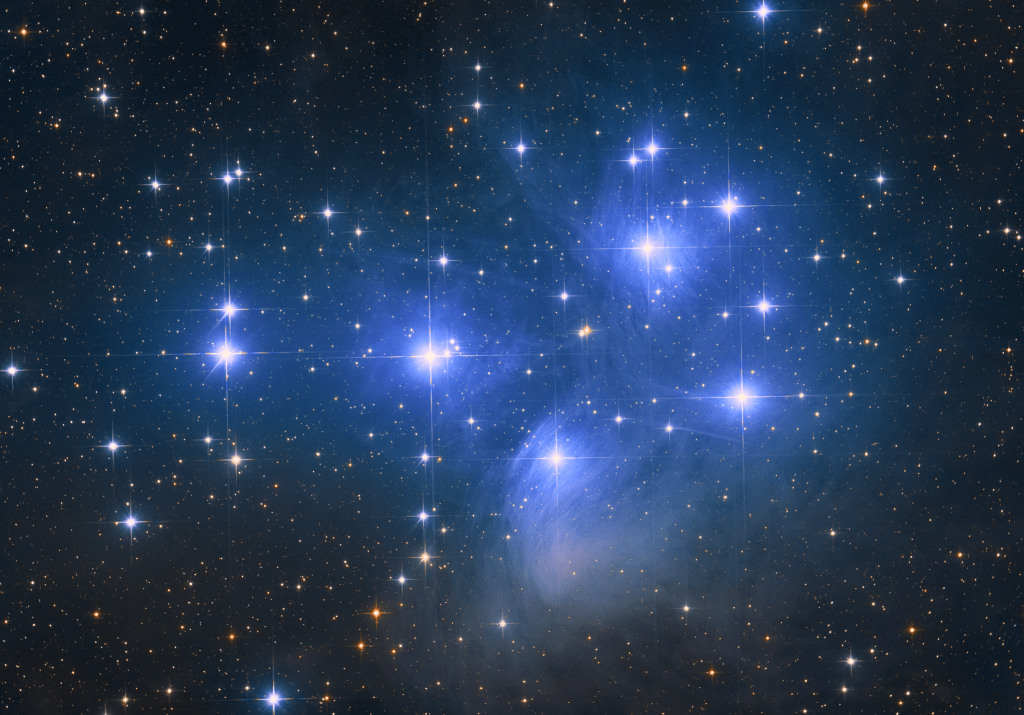
Set your alarm roughly two hours before sunrise on July 11 for the crown jewel of the month’s planetary alignments. Looking east, a delicate crescent Moon will form a tight, striking triangle with an orange-hued Mars and the sparkling Pleiades star cluster (also known as the Seven Sisters).

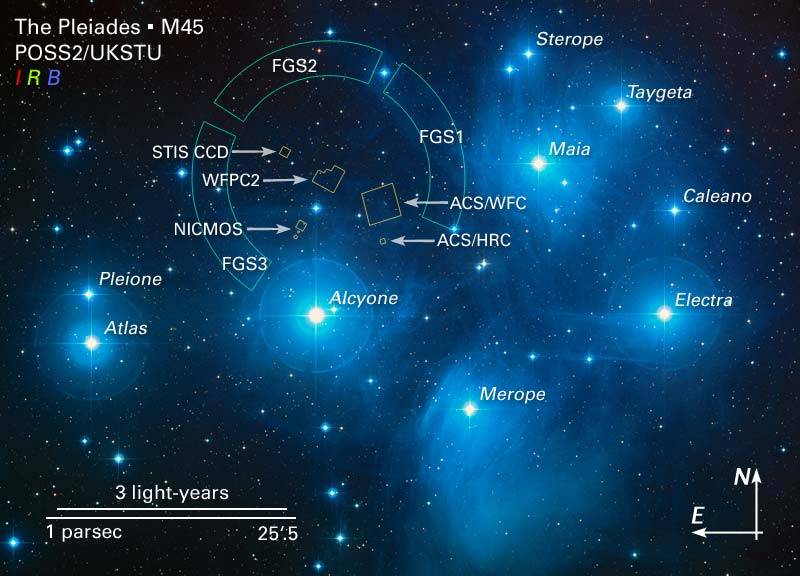
While the naked eye can comfortably spot six or seven stars in the Pleiades, viewing this triangle through a pair of standard binoculars will completely change your perspective. Optics pull dozens of hidden, icy-blue stars out of the dark velvet sky, framed beautifully by the ruddy glow of Mars.

July 14: Dark Skies and the Milky Way’s Core

Some of the best stargazing nights do not center around what is arriving in the sky, but rather what is missing. On July 14, the Moon reaches its New Moon phase, meaning it sits between the Earth and the Sun and leaves our night sky entirely dark.

Without natural lunar light pollution, mid-July provides the absolute best window of the year to witness the Milky Way.

How to Find the Galactic Center

  • When to look: Wait until late evening when the sun’s glare is entirely gone.
  • Where to look: Face directly south.
  • The Guidepost: Look for a cluster of stars that forms a shape resembling a classic Teapot (part of the constellation Sagittarius).

From a dark-sky location, such as a state or national park, the dense, glittering core of our home galaxy will appear to rise straight out of the Teapot’s spout like a pale, smoky column of steam.

Late July: The Buck Moon and Overlapping Meteors

The end of the month brings a massive shift in nighttime lighting, transitioning from deepest dark to full lunar brilliance, alongside the kickoff of summer shooting star season.

July 28–29 — The Full Buck Moon

July’s full lunar orb reaches its official peak illumination on the morning of July 29, meaning the evenings of both July 28 and July 29 will offer spectacular moonrises. Known traditionally as the Buck Moon because male deer grow their new antlers rapidly during this stretch of summer, it will dominate the sky from dusk until dawn.

For the most magical view, catch it right as it clears the eastern horizon at sunset. An optical trick of human perception called the “Moon Illusion” will make the orb appear unnaturally massive as it hovers behind distant trees and buildings.

July 30–31 — A Double Meteor Shower

The month closes out with a dual cosmic performance: the Southern Delta Aquariids and the Alpha Capricornids meteor showers both reach their peak on the same nights.

The Delta Aquariids are a steady shower capable of producing up to 20 to 25 meteors per hour under ideal conditions, while the Alpha Capricornids are much sparser but famous for producing slow-moving, bright, colorful fireballs.

Stargazing Tip: Because the moon will be roughly 98% illuminated during the peak nights, its brilliant light will wash out the fainter meteors. To maximize your chances of spotting a shooting star, position yourself so a building or a line of trees blocks the direct light of the moon, and watch the darker patches of sky further away from the lunar disc.

For the best Astronomy equipment and supplies check Amazon and Optics Planet

Summary of Key July 2026 Skywatching Dates

DateCelestial EventBest Time to WatchWhere to Look
July 6Earth at AphelionAll Day (Orbital Milestone)N/A
July 7–8Moon and Saturn ConjunctionAfter Midnight until DawnEastern Sky
July 9Venus glides past Regulus45–60 Minutes After SunsetLow Western Horizon
July 11Moon, Mars, and Pleiades Trio2 Hours Before SunriseEastern Sky
July 14New Moon & Peak Milky Way CoreLate Night / MidnightSouthern Sky (Near the “Teapot”)
July 17Crescent Moon and Venus MeetupJust After SunsetLow Western Horizon
July 28–29The Full Buck MoonSunset to SunriseRises in the East
July 30–31Double Meteor Shower PeakMidnight to DawnAcross the Entire Sky

July 2026 reminds us that exploring the frontier of space doesn’t require expensive technology or long journeys. Grab a blanket, invite your family outside, and simply look up!

For a visual breakdown of where to find these planetary alignments and a preview of the upcoming meteor paths, check out this comprehensive July 2026 Skywatching Video Guide, which walks through each event chronologically to help you plan your nights under the stars.

Clear skies and happy hunting!
The Ultimate Backyard Summer Space Race: June 2026 Edition

Welcome back to “Stan’s Hobbies and Interests.” If you have been following our monthly night sky journals over the past five years, you know that June is the official gateway to the finest stargazing season of the year. The evening air is warm, the kids are out of school, and the cosmos is shifting gears.

This month, our ongoing 2026 Cosmic Scavenger Hunt takes on a dramatic complexion. As we pass the June Solstice, the brilliant “Spring Diamond” sinks into the west, and the spectacular, star-rich core of the Milky Way climbs into prime viewing position.

To ensure everyone in our growing “Family Empire” can participate, this month’s field guide is split into two distinct operational theaters: The Lunar Ascent for our newcomers, and The Deep-Space Relay for our veteran “Light Bucket” voyagers.

Grab your red flashlights, set up your lawn chairs, and let the June race begin!

1. The Rookie Tracker: The Lunar Ascent Scavenger Hunt

For those who are brand new to the hobby or looking to engage the grandkids with a pair of simple 10×50 binoculars, June 2026 is serving up a high-speed orbital game of catch. Your mission this month is to track the Moon as it acts as a celestial tour guide, pointing out targets you might otherwise miss.

Objective 1: The Ringed Rendezvous (June 5–6)

  • The Target: The Waning Gibbous Moon passing next to Saturn.
  • How to Find It: You will need to set an early alarm for this one, or catch it if you are a night owl. Look toward the east-southeast around 3:30 AM on the morning of June 6. The Moon will be hovering just a few degrees below a steady, pale-yellow light.
  • The Education: That steady light is Saturn. Through a small backyard telescope, you can cleanly resolve its ring plane. Explain to your young field agents that they are looking at an alien world situated over 800 million miles away, yet its icy rings are reflecting enough sunlight to be seen from a suburban Fort Thomas backyard.

Night-by-Night Chain Reaction: The June 17-19 Planetary Slingshot

This is where the “Space Race” gets exciting. Over three consecutive nights, you can watch the Moon physically sprint past our solar system’s inner rocky worlds.

Objective 2: The Red Planet Intersection (June 17)

  • The Target: The Waxing Crescent Moon meeting Mars.
  • How to Find It: Step outside just before dawn on June 17 and look low in the eastern sky. The thin, beautiful sliver of the crescent Moon will be positioned right next to a distinctly ruddy, orange-red point of light.
  • The Education: That red dot is Mars. Because Mars is covered in iron oxide (rust), it reflects a warm, copper tone. Contrast this color with the cool, blue-white stars elsewhere in the sky.

Objective 3: The King’s Alignment (June 19)

  • The Target: The Moon aligning with Jupiter.
  • How to Find It: Two mornings later, on June 19, return to your morning viewing post. The Moon has now traveled further along its orbital path and will hang gracefully just above Jupiter, the largest planet in our solar system.
  • The Education: If you hold your binoculars steady, you can spot Jupiter’s four largest Galilean moons stretched out in a neat, straight line. You are watching a miniature solar system in action!

2. The Veteran Voyager: The Deep-Space Core Relay

For our seasoned observers wielding an 8-inch Dobsonian “Light Bucket” or a classic Celestron 8, June is the month we leave our solar system behind. As the Earth rotates into the midnight hours, we look directly out of our atmospheric window and straight into the dense, gas-rich core of our galaxy.

Advanced Target 1: The Swan Nebula (M17)

  • How to Find It: Locate the constellation Sagittarius (famous for its “Teapot” asterism) low in the southern sky. Star-hop just north of the teapot’s spout into the constellation Scutum.
  • The View: Through a medium-to-large aperture telescope, M17 reveals itself as a bright, ghostly silhouette shaped remarkably like a swan swimming through a sea of stars. This is a massive stellar nursery—a chaotic cloud of hydrogen gas where brand-new suns are currently being compressed into existence.

The Chain Reaction Leap: From Birth to Intermediate Youth (M11)

  • Advanced Target 2: The Wild Duck Cluster (M11)
  • The Connection: Once you have observed the birthplace of stars at M17, sweep your telescope slightly northward to find M11.
  • The View: M11 is one of the most compact and star-rich open clusters known in the night sky, containing nearly 3,000 stars. Through your eyepiece, it looks like a tight, glittering v-shape of diamonds, resembling a flock of wild ducks in flight.
  • The Educational Tie-In: This introduces a profound lesson in cosmic aging. While the Swan Nebula (M17) represents stars in their absolute infancy, still shrouded in their birth clouds, the Wild Duck Cluster (M11) represents an older, mature family of sibling stars that have successfully blown away their parental gas clouds and are now traveling through the galaxy together.

3. The June 2026 Citizen Science Briefing: The Summer Triangle Survey

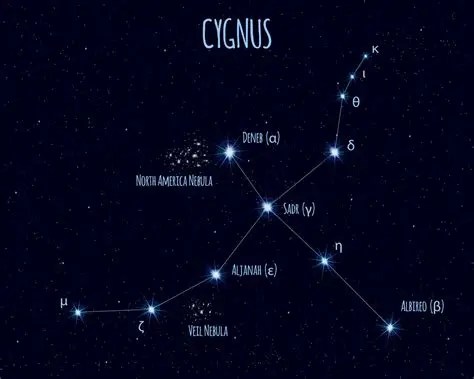
Whether you are a newcomer or a veteran, your June stargazing can directly contribute to international space research. This month, the Globe at Night project is officially tracking light pollution using the constellation Cygnus the Swan and its brilliant anchor star, Deneb.

  1. Find the Target: Look East after midnight to find the massive Summer Triangle (formed by the bright stars Vega, Deneb, and Altair). Cygnus forms the central cross of this shape.
  2. Take the Measurement: Match the stars you can see with your naked eye to the magnitude charts provided in the Globe at Night app.
  3. Submit the Data: By logging your observation from your specific neighborhood, your family provides real-world data points that help NASA and global environmental scientists map the changing levels of light pollution across suburban areas in 2026.

4. Stan’s June Gear Recommendations

To check off every item on this month’s scavenger hunt, ensure your equipment locker is stocked with these affiliate-supported tools:

  • Apertura AD8 8″ Dobsonian Telescope: The absolute king of deep-space hunting. Its generous 8-inch mirror is vital for gathering the faint, ancient photons traveling from the Swan Nebula and the distant stars of the Wild Duck Cluster.
  • Celestron Omni 2x Barlow Lens: Essential for the June morning planetary parade. Inserting this lens doubles the focal length of your eyepieces, letting you get close-up, high-magnification views of Saturn’s ring structure and Jupiter’s cloud belts.
  • Celestron SkyMaps (Planisphere): The summer sky moves quickly. A durable, physical, glow-in-the-dark star wheel is the absolute best way to teach the grandkids how to track constellations from twilight to midnight without relying on a battery-draining phone screen.

SEO & Editorial Metadata

  • Primary Keywords: Summer Astronomy 2026, June Night Sky Guide, Track Saturn and Mars June, Backyard Telescope Scavenger Hunt, Deep Space Galaxy Clusters.
  • Local/GEO Standards: Formatted for general northern hemisphere/Midwest suburban viewing.
  • Affiliate Disclaimer: As an Amazon Associate, I earn a small commission from qualifying purchases made through our curated gear links. This helps keep our multi-generational “Family Empire” blog alive, modern, and ad-free!

Stan’s Final Thought for June

“Over the last five years of writing these monthly journals, I’ve watched grandkids grow up, older telescopes get restored, and new families discover the peace of a quiet backyard night. June is the heart of it all. When you stand out there on June 19 and watch the Moon align with Jupiter, you are looking at the same cosmic clockwork that has guided humanity for millennia. Take it slow, enjoy the warm air, and remember: the greatest show of the summer doesn’t cost a dime—it’s playing right above your roof.”

Clear skies and happy hunting!

Galaxy Season and The Pink Moon: Your Ultimate April 2026 Stargazing Guide

Welcome to April, fellow travelers of the night sky! If March was the “thaw,” then April is the “bloom”—not just for the flowers in our backyards here in Kentucky, but for the light reaching our telescopes from across the cosmos.

This month, we are turning our eyes away from the local stars of the Milky Way and peering into the vastness of intergalactic space. Grab a warm jacket and a thermos of coffee; it’s time for Galaxy Season.

1. The Lunar Cycle: Tracking the Pink Moon

In the world of astronomy, the Moon is both our greatest subject and our biggest “light polluter.” Planning your month means working around her glow.

  • April 1: The Full Pink Moon – Rising in the constellation Virgo, this Moon is named for the creeping phlox that blankets the ground this time of year. While the “Full” phase is beautiful to the naked eye, it’s actually the worst time to see craters because there are no shadows.
  • April 17: The New Moon (The Deep-Sky Window) – This is the most important date on your calendar. From April 14th to the 20th, the sky will be at its darkest. This is your window to hunt for the faint “fuzzies” like the Leo Triplet.
  • April 24: First Quarter – My personal favorite for families. Look at the Lunar Apennines, a mountain range on the Moon that stands out in sharp relief tonight.

2. The Planet Parade: A Morning and Evening Show

2026 is giving us a split-shift for the planets. You’ll find beauty both as the sun sets and before it rises.

The “Jewel and the Necklace” (April 19)

If you only look up once this month, make it the evening of April 19. In the West, the brilliant planet Venus (the “Evening Star”) will climb within 2.3° of the Pleiades Star Cluster (M45).

  • Stan’s Tip: To the naked eye, it looks like a bright diamond sitting next to a tiny, misty dipper. Through binoculars, you’ll see Venus surrounded by the dozens of icy-blue stars of the Seven Sisters. It is the best photo-op of the spring.

The Pre-Dawn Triple Conjunction (April 20)

For the early birds, set your alarm for 5:30 AM. Low in the East, Mercury, Mars, and Saturn will form a tight, colorful triangle. Mars will show its distinct reddish hue, contrasting against the golden-yellow of Saturn.


3. Constellations & Major Stars: Navigating the Spring Sky

In April, the “Winter Circle” is setting, and the “Spring Triangle” is rising.

  • Leo the Lion: Look directly overhead. The “Sickle” (backwards question mark) represents the head. At the base is Regulus, a blue-white star that is 79 light-years away.
  • Boötes the Herdsman: Follow the “Arc to Arcturus.” This orange giant is the brightest star in the northern celestial hemisphere and is easy to spot rising in the East.
  • Virgo the Maiden: From Arcturus, “Spike to Spica.” This icy-blue star marks the heart of the region where we find the great Galaxy Cluster.

4. Major Events: Meteors and Comets

The Lyrid Meteor Shower (April 21–22)

This video is relevant because it visually demonstrates the “Arc to Arcturus” and the positioning of the Virgo Cluster, making it much easier for beginners to find these objects in the actual sky.

This is a “Dark Sky” year for the Lyrids! Since the Moon is a thin crescent and sets early, the sky will be perfectly dark for the peak. Expect 15–20 meteors per hour. Look toward the bright star Vega in the constellation Lyra to find the “radiant” point.

The 2026 Comet Wildcards

April 2026 features two potential naked-eye comets.

  1. Comet MAPS (C/2026 A1): After swinging around the sun on April 4, look for a growing tail in the Western twilight between April 10–15.
  2. Comet PanSTARRS (C/2025 R3): Reaches its closest point to Earth on April 26. Look for it in Pisces low in the East before dawn.

5. Deep-Sky Hunting: Galaxy Season

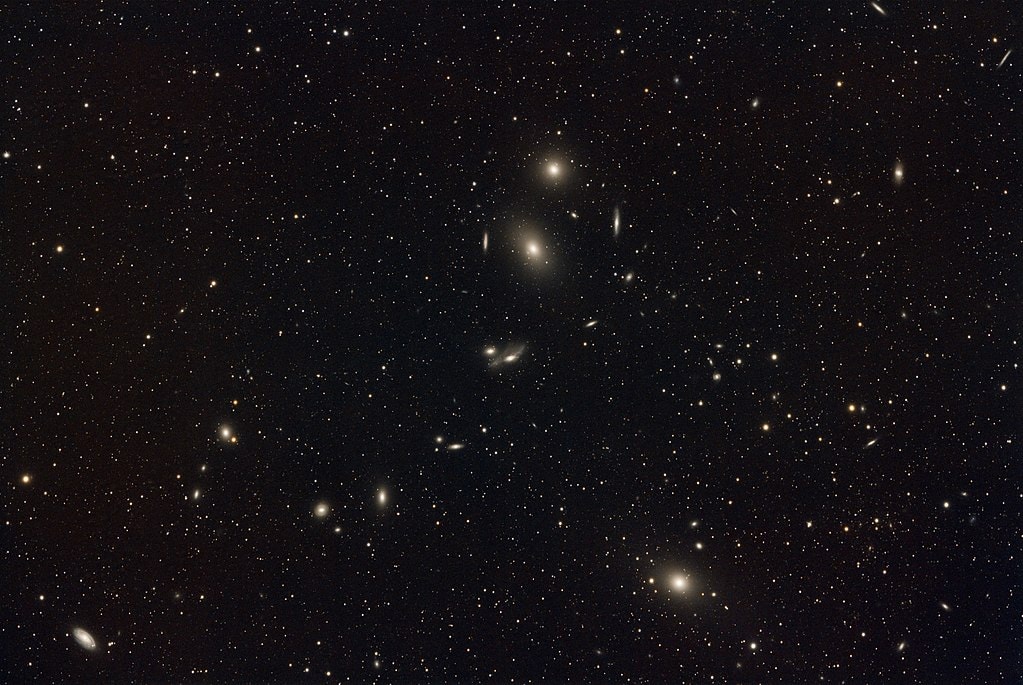
This is the heart of my April column. When you look toward Virgo, you are looking through a “hole” in our own galaxy’s dust.

  • The Leo Triplet (M65, M66, NGC 3628): Located just below the “hindquarters” of Leo. These three spiral galaxies are 35 million light-years away.
  • Markarian’s Chain: In the heart of Virgo, you can see a curved line of eight galaxies. It looks like a “Chain of Pearls” floating in the void.

6. Stan’s Gear Recommendations for April

To make these observations successful, especially for the family, here is what I’m using this month:


7. Why Stargazing Matters for the Family

Astronomy is a lifelong endeavor. It teaches patience, curiosity, and a sense of scale. When you stand in the backyard with your kids or grandkids and point at light that has been traveling since the time of the dinosaurs, you aren’t just looking at stars—you are sharing a moment of cosmic history.

Stan’s Pro-Tip: Use a Nitecore NU25 Red Light Headlamp. It keeps your hands free to handle charts while protecting your “night eyes,” which take 20 minutes to fully adjust but only a second of white light to ruin!

Tease for May: The Return of the King

Make sure to come back next month! In May, we turn our buckets toward the “King of the Planets,” Jupiter, as it makes a spectacular return to the evening sky. We will also explore the Hercules Cluster, a “snowball” of 300,000 stars that is the crown jewel of the summer sky.


🌌 New Year Night Sky 2026: Family Guide to January’s Supermoon, Jupiter Show & Winter Constellations


Welcome to a brand‑new year of celestial wonder! January 2026 brings some of the brightest, boldest, and most family‑friendly sky events of the entire year. Whether you’re a seasoned stargazer or simply love sharing magical moments with your kids, this month’s night sky is packed with excitement — from a dramatic Supermoon to Jupiter’s dazzling display and the sparkling winter constellations overhead.

Bundle up, step outside, and let the universe kick off your year with awe.


🌕 January’s Supermoon: The First Big Sky Moment of 2026

The year begins with a showstopper — a Supermoon that rises big, bright, and impossible to miss. Because the Moon is closer to Earth in its orbit, it appears larger and more luminous than usual.

⭐ Why Families Will Love It

  • No equipment needed — just look up
  • Kids instantly notice the “extra big” Moon
  • A perfect moment to talk about orbits, gravity, and tides
  • Great for photos, journaling, or a quick backyard adventure

🌟 Viewing Tip

Catch the Moon right at moonrise. Near the horizon, it looks even bigger thanks to a fun optical illusion that kids love learning about.


Jupiter Takes Center Stage: The Brightest Planet of January

Jupiter dominates the evening sky all month long, shining like a cosmic beacon. Even with simple binoculars, you can spot its four largest moons — tiny dots lined up beside the planet.

⭐ Why Jupiter Is a Must‑See

  • It’s the brightest object in the night sky after the Moon
  • Its moons shift positions nightly, creating a new view every time
  • A perfect introduction to planetary observing for beginners
  • Kids love seeing “mini worlds” orbiting another planet

🌟 Family Activity

Sketch Jupiter and its moons for a few nights in a row. You’ll see them move — just like Galileo did over 400 years ago.

Check here for deals on Astronomy Equipment.


❄️ Winter Constellations: January’s Sparkling Sky Map

January is famous for crisp, clear nights and some of the most iconic constellations of the year. These star patterns are bright, easy to find, and full of stories that kids love.

Orion the Hunter

Look for the three stars of Orion’s Belt — they point directly to Sirius, the brightest star in the sky.

Taurus the Bull

Home to the fiery red star Aldebaran and the beautiful Pleiades star cluster.

Gemini the Twins

Castor and Pollux shine side by side, marking the heads of the celestial twins.

🌟 Why Winter Constellations Are Perfect for Families

  • Easy to identify
  • Great for storytelling and mythology
  • Ideal for teaching kids how to navigate the sky

🔭 How to Make January Stargazing Extra Special

Pinterest readers love simple, actionable tips — so here are family‑friendly ideas to elevate your night‑sky adventure:

  • Bring warm drinks like hot chocolate
  • Use a stargazing app to help kids identify stars
  • Keep a “sky journal” to record what you see
  • Try binoculars before investing in a telescope
  • Turn off nearby lights to make the stars pop

Deals on Astronomy Equipment.

🌌 A Magical Start to 2026

January’s night sky is a gift — bright, bold, and full of wonder. Whether you’re watching the Supermoon rise, spotting Jupiter’s moons, or tracing Orion across the sky, this month invites families to slow down, look up, and share unforgettable moments together.

October 2025 Night Sky: A Family-Friendly Guide

October is one of the year’s very best months for skywatching—perfect for families, beginners, and experienced observers. The air is crisp, darkness falls early, and the heavens are packed with cosmic treats: a super harvest moon, meteor showers, bright planets, and famous constellations ready for everyone to explore. Here’s your guide to October’s best celestial events, how to see them, and why they’re worth a moment outdoors—whether you spend five minutes or all night under the stars.


The Super Harvest Moon & Saturn Dazzle the Skies

October 6–7 brings this year’s Harvest Full Moon—a supermoon, bigger and brighter than most.
Also called the “Hunter’s Moon,” this full moon rises just after sunset, filling the eastern sky in gold and lighting up fields, parks, and city rooftops. This month’s moon is “super” because it’s especially close to Earth in its orbit, making it up to 14% larger and 30% brighter than average. More Information.

On October 5, Saturn appears close to the full moon in the southeast.
The ringed planet shines as a steady, golden “star” above and to the right of the glowing moon shortly after dark. Point out Saturn to kids: tell them that, even though its rings are not visible without a telescope, they can use their imagination and binoculars to spot its unique color.

Family tip:
No special equipment needed—just step outside after sunset and gaze east. Try taking a moonrise photo with a smartphone or watch the moon usefully light up an evening walk.


Meteor Showers: Orionids Steal the Show

The Orionid Meteor Shower peaks on the nights of October 21–22.
Each year, Earth passes through the leftover dust of Halley’s Comet, resulting in fast, sometimes bright meteors—up to 20 per hour streaking from the direction of Orion’s “shoulder.” This year, the new moon means truly dark skies for peak viewing. Look for the brightest meteors after midnight, anywhere from an open backyard or park. More Information.

Draconids (Oct 8–9):
A minor shower peaking after dusk, best for those who enjoy an early evening search for “shooting stars.” This year, strong moonlight means just a few may be visible.

How to watch a meteor shower:

  • Find a dark spot away from streetlights.
  • Bring blankets or reclining chairs and face southeast (for Orionids) or north (for Draconids).
  • Let your eyes adjust 20–30 minutes to maximize faint meteor sightings.
  • Don’t use binoculars—meteors fly across the whole sky!

Family tip:
Hold a contest: Who can spot the first meteor, or the most meteors in an hour? Every “shooting star” is a great chance for a wish!


Planet Perfection: Saturn, Jupiter, Venus, Mercury

Saturn
Visible all October in Pisces after sunset, Saturn is high in the southeast—easy to spot as a steady, golden light. Early in the month, Saturn appears close to the full moon. More Information.

Jupiter
By mid-October, the solar system’s brightest planet (after Venus) rises after 9 p.m. in the east and grows even brighter as it approaches its November opposition. With binoculars, you can see up to four of its big moons lined up beside it. The moon swings close to Jupiter on October 13. Details.

Venus
Dazzles as the “Morning Star” all month, especially when paired with a slender crescent moon on October 19. It blazes low in the east just before sunrise, impossible to miss—even from cities. Details.

Mercury
The solar system’s speediest planet is toughest to see but reaches its best evening show of 2025 around October 29. Look low in the west just after sunset for a tiny, bright “star.” Use binoculars for your best chance, and pick a flat, unobstructed view. More Information.

Family tip:
Challenge kids to spot Saturn’s steady glow (it doesn’t twinkle!), Jupiter’s brightness, and Venus’s dawn appearance. Use an astronomy app to find the planets’ exact places each night.


October’s Constellations & Deep-Sky Wonders

Pegasus
The Great Square of Pegasus is a huge, easy-to-spot diamond in the eastern sky after dusk, high overhead by midnight. It’s the “stepping stone” to autumn’s most famous constellations.

Andromeda
Follow a gentle line of stars away from the Square to see Andromeda, stretching northeast. If you’re far from city lights, you might spot the faint oval of the Andromeda Galaxy—2.5 million light-years away and the most distant object you can see with your eyes! Binoculars make it easy, even from suburbs.

Cassiopeia
Always visible as a giant “W” or “M” in the northeast, Cassiopeia is a perfect sky marker for beginners. Its legends of a vain queen are fun to share as you star-hop.

Other constellations:

  • Pisces and Aquarius (zodiac): Lower and fainter, but both cross the sky through October, trailing Saturn and Jupiter.
  • Taurus and the Pleiades (the “Seven Sisters”): Rising after 10 p.m. in the east and easily found with a star map or phone app.

Special Sky Events & Group Activities

October 10: Moon Meets The Pleiades

Look east 9–11 p.m. to see a lovely pairing between the waxing moon and the glittering “Seven Sisters” star cluster. Binoculars give a fantastic family view.

October 13–14: Moon and Jupiter Pairing

Shortly after moonrise, see bright Jupiter beside the moon in the evening sky. Binoculars show Jupiter’s moons.

October 19: Crescent Moon, Venus, and Comet Hunt

Before sunrise, look east for a bright Venus and a thin crescent moon paired in the twilight. At sunset, try for Mercury and possibly even Mars with binoculars, low in the west. Check astronomy news for updates about Comet Lemmon, which could make a faint binocular appearance after dusk. Details.

October 21: New Moon & Milky Way

With no moonlight, it’s the best night to see faint constellations and the full sweep of the Milky Way. Try for star clusters in Cassiopeia, Perseus, and Andromeda with binoculars. More Information.

October 23–24: Lunar Triangle

Right after sunset, the crescent moon, Mercury, and Mars gather to form a small triangle low in the southwest (binoculars best).


How, When, and Where to Watch

  • Best Times:
    • Evenings (8–11 p.m.) for the moon, Saturn, Jupiter, and major stars.
    • Pre-dawn for Venus and the moon.
    • After midnight for the Orionid meteor shower.
  • Best Places:
    • Any open space with a low view of the east and west.
    • Parks, backyards, campgrounds, or drive a short way from city lights for a darker view.
    • Even city dwellers can enjoy planets, the moon, and the brightest stars.
  • Tips for Families:
    • Bring a blanket or reclining chair, warm clothes, and snacks.
    • Allow 20 minutes for eyes to adjust to darkness.
    • Try a red flashlight or phone “night mode” to preserve night vision.
    • Use phone apps (“Stellarium,” “Star Walk 2,” “Sky Tonight”) for real-time stargazing help.

Stargazing Fun & Learning

  • Draw Your Night Sky: Sketch the moon’s different shapes or map constellations in a journal each night.
  • Meteor Journals: Count “shooting stars” and make note of color or speed.
  • Planet Spotting: Try to find all visible planets in one night—Jupiter, Saturn, Venus, and Mercury.
  • Constellation Storytelling: Share the mythology of Pegasus, Andromeda, Orion, and Cassiopeia with kids—or create new family legends!
  • Binocular Treasure Hunt: List interesting things to find: Jupiter’s moons, the Andromeda Galaxy, the Pleiades, Saturn’s color.

Quick October 2025 Event Calendar

DateEventBest Viewing
Oct 5–7Supermoon & SaturnAfter sunset, east/southeast
Oct 8–9Draconid Meteor ShowerAfter dusk, face north
Oct 10Moon near Pleiades9–11 p.m., east, binoculars helpful
Oct 13–14Moon near JupiterEvening, east
Oct 19Crescent Moon & Venus (dawn)30 minutes before sunrise, east
Oct 19Mercury & Mars (sunset)15–30 min after sunset, low west
Oct 20–22Orionid Meteor ShowerAfter midnight, southeast/anywhere
Oct 21New Moon (darkest skies)Any time
Oct 23–24Moon, Mercury, Mars triangleAfter sunset, low west
Oct 29Mercury at its best (evening)30–45 min after sunset, west

Resources & Further Reading

  1. [Adler Planetarium – October 2025 Tips]adlerplanetarium
  2. [Hipcamp Stargazing Calendar]hipcamp
  3. [Star Walk Astronomy Calendar]starwalk
  4. [Sea and Sky Astronomy Calendar]seasky
  5. [High Point Scientific – Events Guide]highpointscientific
  6. [What’s Out Tonight PDF]kenpress

October’s night sky is rich with memories, new discoveries, and cosmic stories awaiting your family. Whether you’re five or ninety-five, clear a little space, look up, and let the universe dazzle you!

  1. https://www.hipcamp.com/journal/camping/stargazing-guide-astronomical-calendar/
  2. https://koa.com/blog/celestial-events-2025/
  3. https://www.adlerplanetarium.org/blog/what-to-see-stargazing-tips-october-2025/
  4. https://www.highpointscientific.com/astronomy-hub/post/night-sky-news/2025-astronomical-calendar
  5. https://blog.whiteduckoutdoors.com/stargazing-calendar-for-2025-where-to-camp-to-watch/
  6. https://www.farmersalmanac.com/monthly-stargazing-night-sky-guide
  7. https://phil.camera/2025/?mc
  8. https://www.cruiseamerica.com/trip-inspiration/ultimate-2024-stargazing-calendar
  9. https://www.metroparks.org/mark-your-calendar-astronomical-events/
  10. https://starwalk.space/en/news/astronomy-calendar-2025
  11. https://ts2.tech/en/dont-miss-these-skywatch-wonders-in-october-2025/
  12. http://www.seasky.org/astronomy/astronomy-calendar-current.html
  13. https://kenpress.com/files/2025WOT10Oct.pdf

September 2025 Night Sky Guide: A Family-Friendly Tour from Beginner to Advanced Stargazer.

September 2025 is set to dazzle skywatchers on every continent, with celestial spectacles ranging from dramatic eclipses and bright planets to subtle meteor showers and shifting constellations. Whether you’re an absolute beginner or a longtime astronomy lover, this educational, family-friendly guide will walk you through this month’s most rewarding highlights. We’ll explore naked-eye and binocular sights, provide skywatching tips, and show you how to make the most of every clear night — all optimized for high engagement, readability, and shareability in today’s online world.


Why September 2025 Is So Special

September 2025 brings a rare convergence of events:

  • A stunning total lunar (“Blood Moon”) eclipse
  • A striking partial solar eclipse
  • Saturn and Neptune at their brightest (“opposition”)
  • A lunar meet-up with Venus, visible occultations, and close planetary approaches
  • Constellations shifting from summer to autumn dominance
  • Meteor showers, celestial equinox, and more

No expensive gear is required for many of these sights — just your own eyes, curiosity, and a sense of wonder.


September 2025: Celestial Events Calendar (All dates are approximate; check local apps for timing in your region)

  • September 1: Aurigid meteor shower peaks
  • September 7: Full Moon & total lunar eclipse (“Blood Moon”)
  • September 8: Moon close to Saturn & Neptune
  • September 9: ε-Perseid meteor shower peaks
  • September 12: Moon occults the Pleiades cluster
  • September 14: Last Quarter Moon
  • September 16–17: Moon near Jupiter and the Beehive Cluster
  • September 19: Moon near Venus, lunar occultation of Venus in some regions
  • September 21: Saturn at opposition & partial solar eclipse & New Moon
  • September 22: September Equinox (start of fall)
  • September 23: Neptune at opposition
  • September 27: Daytime Sextantids meteor shower
  • September 29: First Quarter Moon

1. The Eclipses: September’s Main Attractions

Total Lunar Eclipse — September 7

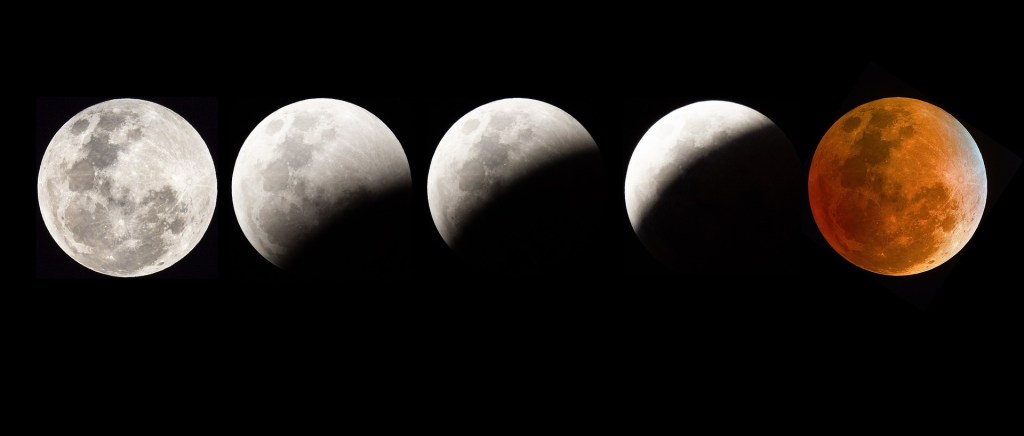
On the evening of September 7, the Full Moon will slip into Earth’s shadow, transforming into a coppery red “Blood Moon” for lucky viewers across Africa, Asia, Australia, and parts of Europe and the Pacific. Since lunar eclipses are safe to watch with unaided eyes, it’s a perfect family event!starwalk+3

How to Watch:

  • No special equipment needed, though binoculars reveal extra detail in the reddish lunar surface.
  • Try taking a photo: even a smartphone will capture the dramatic change in color.
  • Make it fun: have children sketch the moon’s phases or write “moon eclipse diaries.”

Partial Solar Eclipse — September 21

This deep partial solar eclipse is visible from Antarctica, parts of Australia and New Zealand’s south, southern South America, and the South Pacific. For safety, only use special eclipse glasses or viewers.planetary+2

Family Tip:

  • If you aren’t in the path: Many observatories and NASA stream eclipses live. Make popcorn and have a “solar eclipse party” at home!

2. Planetary Spectacles: Saturn, Jupiter, Venus & More

Saturn at Opposition — September 21

Saturn rises as the sun sets and is visible all night at its biggest and brightest of the year, in Pisces. Binoculars will show its golden hue; even a small telescope (especially if borrowed from a local library or club!) may reveal Saturn’s rings, although the rings are nearly edge-on this year—a rare geometric arrangement that makes them appear very thin or almost vanish.starwalk+3

How to See:

  • Look southeast after dusk for a bright golden “star” — that’s Saturn.
  • Binoculars or telescopes reveal more detail.
  • For kids: Have them pretend “lining a marble up” with Saturn’s rings — are they really flat?

Jupiter Returns

Jupiter rises after midnight and stays up until dawn, growing spectacularly bright through the month. It’s great for “early bird” skywatchers and a favorite target for binoculars; in crisp conditions, you can spot up to four of Jupiter’s large moons in a little row!ts2+2

Venus — The Glorious Morning Star

Venus blazes before sunrise in the east, sometimes called the “Morning Star.” On September 19, Venus and the slender crescent Moon perform a special dance. In certain regions (Europe, Africa, Russia, Asia, Canada, Greenland), the Moon will actually “cover” Venus in a rare occultation. If you’re outside the path, you’ll still enjoy the pair’s close, sparkly approach.starwalk+2

Try This: Use a free stargazing app (like Sky Tonight or Stellarium) to see exactly where Venus, Saturn, and Jupiter are hiding each morning or evening.

Distant Planets at Opposition

  • Neptune (September 23): Only visible with binoculars or a telescope but at its brightest for the year.
  • Uranus: Begins retrograde; faint but fun to find with star maps and optics.

3. Constellations to Watch as Summer Fades

September skies transition from summer to autumn starshows. Here’s what to scan for:

  • Summer Triangle (Vega–Deneb–Altair): High overhead at dusk, these three bright stars anchor the constellations Lyra (look for the Ring Nebula with optics!), Cygnus (the Northern Cross), and Aquila (the eagle).
  • Pegasus & Andromeda: Rising higher each night in the east, these constellations signal fall’s return. Try to spot the Andromeda Galaxy — bare eye in very dark skies, binoculars make it easy even in suburbs.
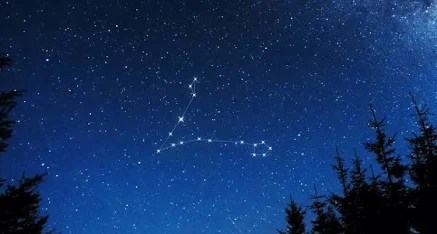
  • Pisces, Aquarius, Capricornus: Look along the “ecliptic” (the Sun’s path). Use a star map or app to help orient yourself.
  • Pisces Austrinus: Low in the southern sky (northern hemisphere) — try to spot its bright “alpha” star, Fomalhaut.

Make it a family game to spot new constellations each week and compare how they move across the night sky!


4. September’s Minor Meteor Showers

Aurigids (September 1), ε-Perseids (September 9), and Daytime Sextantids (September 27) offer glimpses of shooting stars. These are minor showers (5–10 meteors/hour) and sometimes washed out by moonlight — but if you do catch one, it’s a fun bonus for night owls and early risers. For best results, go outside after midnight, find a dark spot, and let your eyes adjust.in-the-sky+2


5. Special Nights and Skywatching Events

  • September 12: The Moon crosses in front of the beautiful Pleiades Star Cluster. Binoculars show this “jewel box” hiding behind the bright limb of the moon!
  • September 16–17: The Moon passes near Jupiter and the Beehive Cluster.
  • September 21: New Moon = best night for deep-space viewing; no moonlight to wash out faint galaxies and clusters.
  • September 22: The Equinox — day and night are nearly equal. The autumn sky takes center stage!
  • September 23: Neptune at opposition — use binoculars or a telescope for a special challenge.
  • September 27: The Moon briefly “occults” (blocks) fiery red Antares.

6. Skywatching Tips: Making the Most of September

  • Find Dark Skies: Light pollution hides many celestial treats; visit parks, open fields, or dark-sky preserves if possible.
  • Let Your Eyes Adapt: Wait 15–30 minutes outside for full night vision — avoid phone glare.
  • Use Apps: Tools like Stellarium Mobile, Sky Tonight, and Star Walk 2 make it easy for families and beginners to locate objects and understand what they’re seeing.
  • Bring Binoculars: Unlock details in the Moon, star clusters, and see Jupiter’s moons and Saturn’s rings (when visible).
  • Log Your Observations: Keep a “sky journal” to track each sighting and share the sky with friends or family.
  • Join a Club or Attend Star Parties: Most astronomy groups welcome all ages and love to share telescopic views during big events (like Saturn at opposition or lunar eclipses).

7. Activities for the Whole Family

  • Sky Scavenger Hunt: List the planets, constellations, or major stars you want to find — see who spots the most in one night!
  • Eclipse Story Night: Read about ancient eclipse myths and invite kids (and grownups!) to draw what they see.
  • Take Photos: Use a tripod and even a basic smartphone to snap the Big Three—Moon, Jupiter, Saturn—plus wide-field shots during eclipses or conjunctions.

References

  1. [Star Walk: Astronomical Events in September 2025]starwalk
  2. [Sea and Sky: Astronomy Calendar of Celestial Events 2025]seasky
  3. [The Planetary Society: Calendar of Space Events 2025]planetary
  4. [In-The-Sky.org: Calendar of Astronomical Events 2025]in-the-sky
  5. [Space.com: Must-See Naked-Eye Events in 2025]space
  6. [Star Walk: Calendar of All Astronomical Events 2025]starwalk
  7. [All Eyes on the Skies: September Spectacles 2025]ts2

Footnotes

  • For exact eclipse, occultation, and opposition times in your location, use a reputable mobile app (e.g., Sky Tonight, Stellarium Mobile) or check your local observatory’s website.
  • Eclipses require safety precautions for solar viewing — only use certified eclipse glasses or safe indirect viewing methods.
  • Many events are perfectly visible without any equipment, but binoculars and even entry-level telescopes will enrich every experience.
  • Family star parties can be hosted at local parks, schoolyards, or anyone’s backyard!

September 2025 offers something special for everyone — from total lunar eclipses and bright Saturn to the rhythms of the autumn equinox and the return of the Andromeda Galaxy. There’s never been a better time to look up, learn together, and create memories that will last a lifetime. Happy skywatching!

  1. https://starwalk.space/en/news/night-sky-tonight-september
  2. https://www.planetary.org/articles/calendar-of-space-events-2025
  3. https://starwalk.space/en/news/astronomy-calendar-2025
  4. https://ts2.tech/en/all-eyes-on-the-skies-september-2025-celestial-spectacles-meteor-showers-eclipses-more/
  5. http://www.seasky.org/astronomy/astronomy-calendar-current.html
  6. https://www.space.com/stargazing/15-must-see-naked-eye-skywatching-events-in-2025
  7. https://in-the-sky.org/newscal.php?year=2025&month=9
  8. https://whenthecurveslineup.com/2025/08/21/2025-september-3-uranus-and-neptune-before-sunrise/
  9. https://thevlm.org/the-planets-in-our-night-sky-what-you-can-see-this-month/
  10. https://koa.com/blog/celestial-events-2025/

The August 2025 Six-Planet Parade: A Family-Friendly Guide to a Rare Celestial Spectacle

In the early mornings of August 10 and 11, 2025, the night sky will present a dazzling spectacle: a rare alignment of six planets—Mercury, Venus, Jupiter, Saturn, Uranus, and Neptune—stretching in a graceful arc across the pre-dawn sky. Planetary alignments like this are infrequent and always generate excitement among both new stargazers and seasoned skywatchers. This article explains how to witness the event, what to look for, and how to make it an educational and joyful experience for the whole family.

What Is a Six-Planet Alignment?

A six-planet alignment happens when six of the solar system’s major planets are visible together along the ecliptic—the path the Sun takes across the sky. On August 10–11, the planets won’t literally “line up” in space (they are spread across vast distances and orbits), but from Earth, they appear to gather in a sweeping arc above the horizon, creating an unforgettable sight.

Why Is This Event Special?

  • Rarity: Alignments with this many visible planets occur only every few years. The next comparable event won’t happen until 2026.
  • Visibility: Four of the six—Mercury, Venus, Jupiter, and Saturn—will be visible to the naked eye, making this a beginner-friendly event.
  • Educational Value: It’s a hands-on way to grasp planetary movements and differences.
  • Photographic Opportunity: For astro-photographers and families, capturing multiple planets in one shot is a rewarding challenge.

When and Where to Watch

Dates:

  • August 10 and 11, 2025 (with some planetary groupings visible a few days before and after)

Best Time:

  • 1 hour before sunrise (This is when the sky is still dark enough, but planets have risen above the horizon.)

Location:

  • Face East and Southeast: The lineup forms a curve from the low eastern horizon up toward the southern sky.
  • Find a Low Horizon: A clear, unobstructed view of the eastern sky is essential—avoid trees and buildings.

General Timing for Sunrise (USA):

  • East Coast sunrise: about 6:05–6:20 am local
  • Midwest sunrise: 6:15–6:30 am
  • Mountain/West: 6:30–7:00 am

Ideal Viewing:

  • 5:00 am–6:00 am local time

How to Find Each Planet

Let’s walk east to south along the horizon—and up in the sky—following the parade.

1. Mercury

  • Where: Very low in the east, just above the horizon.
  • How bright: Bright, but requires a very clear view and is easily lost in twilight.
  • Tip: Spot it first—it rises soon before the Sun and disappears quickly in the dawn glow.

2. Venus

  • Where: Just above Mercury, higher in the eastern sky.
  • How bright: The brightest “star” in the sky (often called the Morning Star)—can even cast a shadow in very dark places!

3. Jupiter

  • Where: High above and a little right of Venus.
  • How bright: Second only to Venus in brightness. Look for a steady, bright point; unlike stars, it does not twinkle.

4. Saturn

  • Where: Further to the right (toward south), middle-high above the horizon.
  • How bright: Fainter than Jupiter and Venus, with a golden to yellow hue. With binoculars or a small telescope, its rings are visible.

5. Uranus

  • Where: Lying between Jupiter and Venus, but not visible to the naked eye.
  • How to see: Use binoculars or a small telescope, and a sky map or app to pinpoint its faint, aqua dot.

6. Neptune

  • Where: Further right (toward south-southeast), near Saturn on the sky arc.
  • How to see: The farthest and faintest, Neptune requires a telescope, appearing as a tiny, bluish dot. Use a detailed sky app to locate precisely.

Making It Fun for Everyone: Activities for Families and Stargazers

1. Host a Planet Parade Party

  • Lay out blankets or set up chairs for the family in the backyard, a park, or a local high vantage point.
  • Bring breakfast treats and hot drinks for the early-morning adventure.

2. Use Sky Apps

  • Apps like Stellarium, Sky Tonight, or SkySafari will show exactly where to find each planet in your local sky.

3. Planet Scavenger Hunt

  • Give kids a checklist of planets to find. See who can spot the most with the naked eye and who finds Uranus and Neptune with binoculars.

4. Comparing Colors and Brightness

  • Talk about how planets look different:
    • Venus and Jupiter: very bright and white-yellow
    • Saturn: softer golden glow
    • Mercury: low, sometimes reddish, slightly twinkly
    • Uranus: faint blue-green dot
    • Neptune: faintest, blue-tinted (for telescope users)

5. Astrophotography Challenge

  • Take wide-angle smartphone or camera pictures. Jupiter, Venus, and Saturn can appear as bright dots; more advanced cameras may catch all six.

6. Incorporate Simple Astronomy Lessons

  • Explain orbits and why planets sometimes gather in our sky.
  • Teach why planets don’t twinkle (their disks are larger than pinpoint stars).
  • Share facts about each planet’s features (rings of Saturn, moons of Jupiter, etc.)

Tips for a Memorable Planet Parade Experience

  • Arrive Early: Give yourself time to get set up before dawn.
  • Check Weather: A cloud-free eastern horizon is key.
  • Let Eyes Adapt: The longer you’re outside, the more you’ll see; avoid bright screens.
  • Safety: Be cautious if venturing away from home—bring a flashlight, stay together, and be mindful of uneven ground.

Fun Facts to Share

  • Venus and Jupiter are so bright because their dense clouds reflect lots of sunlight.
  • Saturn’s rings are visible even in small telescopes, and Jupiter’s moons sometimes show as tiny points beside it.
  • Uranus and Neptune, while faint, are about 1.8 and 2.8 billion miles from Earth!
  • Planetary alignments are a quirk of our view from Earth, not cosmic rarity—yet seeing so many together is special.

Wrapping Up

The August 2025 six-planet parade is a cosmic event you won’t want to miss—whether you’re sharing first-time discoveries with your children, adding Uranus or Neptune to your observing log, or simply marveling at the solar system’s grandeur. The memories of waking before dawn and exploring the universe together can last a lifetime. So set your alarm, gather your family, and look east for an extraordinary morning under the planets!

References & Further Reading

  1. EarthSky – 2025 Planet Parade and Viewing Guides
  2. Sky & Telescope – How to See the 2025 Planetary Alignment
  3. NASA Night Sky Network – August 2025 Preview
  4. Stellarium Web – Interactive Sky Map (Free)
  5. Royal Astronomical Society – Family Skywatching Tips
  6. American Meteor Society – August 2025 Sky Calendar

Viewing times may vary slightly by location; use a planetarium app for the most accurate sunrise and planet positions in your area. For an even better experience, combine planet-watching with the Perseid meteor shower, which peaks a day later!

Clear skies and happy planet hunting!

Why July 2025 Is a Stellar Month for Astronomy

July 2025 is shaping up to be a truly stellar month for astronomy, offering a rich tapestry of celestial events that will captivate both casual skywatchers and experienced astronomers. Here’s why this month stands out and what makes it so special for anyone looking up at the night sky:

1. Mercury at Greatest Elongation – Best Time to Spot the Elusive Planet

On July 4, Mercury reaches its greatest western elongation, appearing at its farthest distance from the Sun in the morning sky. This is the best time of the year to observe Mercury, as it will be higher above the horizon and easier to find just before sunrise. For many observers, Mercury is a challenging target, so this event is a rare opportunity to add it to your planetary checklist12.

2. Venus and Uranus Pair Up in the Dawn

Also on July 4, Venus—the brilliant “morning star”—makes a close approach to Uranus. While Venus is easily visible to the naked eye, Uranus will require binoculars or a small telescope. The two planets will appear just a couple of degrees apart in the constellation Taurus, providing a striking sight for early risers and a great chance to spot distant Uranus13.

3. Full Buck Moon and Penumbral Eclipse

The Full Moon on July 10, known as the Buck Moon, will be fully illuminated and located in the constellation Sagittarius. This full moon is named for the time when male deer start to grow new antlers. In some regions, a subtle penumbral lunar eclipse may also be visible, with the Moon passing through the outer part of Earth’s shadow. While not as dramatic as a total eclipse, it’s still a noteworthy event for lunar enthusiasts124.

4. Saturn’s Grand Entrance

Saturn becomes a showstopper in July, rising earlier each night and dominating the late evening and pre-dawn skies. By mid-month, the ringed planet is easily visible in Pisces, and on July 16, the Moon will appear close to Saturn, creating a beautiful pairing that’s easily seen with the naked eye or binoculars. Saturn’s rings are tilted for optimal viewing, making this a great time for telescopic observations134.

5. Mars and Mercury After Sunset

After sunset, both Mars and Mercury are visible in the western sky. Mars, with its reddish hue, is easy to spot, while Mercury’s position is best in the first week of July. These planetary pairings offer excellent opportunities for comparison and planetary photography34.

6. Delta Aquariid Meteor Shower – A Summer Classic

Late July brings the Delta Aquariid meteor shower, peaking around July 28–31. This shower is known for its steady stream of meteors, with up to 20 meteors per hour under ideal dark-sky conditions. The Moon will be only slightly illuminated, so its light won’t interfere much, making this one of the best meteor showers of the year for southern and mid-latitude observers. Watch after midnight for the best display, and keep an eye out for meteors with persistent glowing trails562.

7. Prime Time for Deep-Sky Observing

With the New Moon on July 24, the skies will be at their darkest, providing perfect conditions for observing faint galaxies, nebulae, and star clusters. July’s warm nights and minimal moonlight make it a favorite month for deep-sky exploration, whether with binoculars or a telescope24.

8. The Summer Milky Way and Classic Constellations

July is the heart of Milky Way season. As darkness falls, the bright band of our galaxy stretches across the sky, especially prominent in rural locations. Constellations like Scorpius and Sagittarius mark the Milky Way’s core, while the Summer Triangle (Vega, Deneb, Altair) climbs high overhead. These star patterns are easy to spot and serve as gateways to countless deep-sky wonders4.

9. Opportunities for All Ages and Skill Levels

Whether you’re a beginner using just your eyes or an advanced astronomer with a telescope, July 2025 offers something for everyone:

  • Beginners can enjoy bright planets, the full Moon, and the Milky Way.
  • Families can host meteor-watching parties or try spotting Mercury at dawn.
  • Advanced observers can chase faint galaxies and nebulae during the new moon window.

10. Easy Planning with Modern Tools

Apps like Sky Tonight and interactive sky maps make it simple to locate planets, stars, and meteor showers in real time, ensuring you don’t miss any celestial highlights1.

Summary Table: July 2025 Night Sky Highlights

DateEventViewing Tip
July 4Mercury at greatest elongation (west)Best dawn view of Mercury
July 4Venus near UranusBinoculars for Uranus
July 10Full Buck Moon & penumbral eclipseLook southeast at moonrise
July 16Moon near SaturnNaked eye or binoculars
July 24New MoonBest for deep-sky objects
July 28–31Delta Aquariid meteor shower peakAfter midnight, dark location

References & Further Reading

  1. Star Walk – Astronomy Calendar 2025
  2. When the Curves Line Up – July 7, 2025: A Celestial Showcase
  3. EarthSky – Meteor Shower Guide 2025
  4. Planetary Society – Calendar of Space Events 2025
  5. Sea and Sky – Astronomy Calendar 2025
  6. Almanac.com – Night Sky for July 2025

In short: July 2025 is packed with planetary encounters, a bright full Moon, a top-tier meteor shower, and some of the best deep-sky viewing of the year. Whether you’re a first-time stargazer or a seasoned astronomer, this month’s night sky is not to be missed!

  1. https://starwalk.space/en/news/astronomy-calendar-2025
  2. http://www.seasky.org/astronomy/astronomy-calendar-2025.html
  3. https://whenthecurveslineup.com/2025/06/22/2025-july-7-a-celestial-showcase-planets-and-the-moon-light-up-the-sky/
  4. https://www.almanac.com/night-sky-july
  5. https://earthsky.org/astronomy-essentials/earthskys-meteor-shower-guide/
  6. https://www.planetary.org/articles/calendar-of-space-events-2025
  7. https://www.rmg.co.uk/stories/space-astronomy/space-astronomy-highlights-2025
  8. https://www.spacecentre.co.uk/news/space-now-blog/stargazing-challenges-july-2025/
  9. https://timesofindia.indiatimes.com/science/best-stargazing-events-of-summer-2025-full-moons-meteor-showers-and-eclipses-you-cant-miss/articleshow/121263047.cms
  10. https://www.reddit.com/r/UKWitches/comments/1ht02q9/astrological_events_2025/
  11. https://in-the-sky.org/newscal.php?year=2025&month=7
  12. https://tpwd.texas.gov/calendar/bonham/copy_of_night-sky-2/2025-07-25
  13. https://repeatreplay.com/july-2024-astrological-events/
  14. https://www.bankbazaar.com/indian-holiday/july-holidays.html
  15. https://www.space.com/stargazing/international-dark-sky-week-2025-see-these-10-night-sky-sights-to-celebrate
  16. https://matadornetwork.com/read/night-sky-events/
  17. https://shop.australiangeographic.com.au/products/astronomy-2025-australia-your-guide-to-the-night-sky