Moon Gazing

For many of us, our very first experience of learning about the celestial bodies begins when we saw our first full moon in the sky. It is truly a magnificent view even to the naked eye. If the night is clear, you can see amazing detail of the lunar surface just star gazing on in your back yard.

Naturally, as you grow in your love of astronomy, you will find many celestial bodies fascinating. But the moon may always be our first love because is the one far away space object that has the unique distinction of flying close to the earth and upon which man has walked.

Your study of the moon, like anything else, can go from the simple to the very complex. To gaze at the moon with the naked eye, making yourself familiar with the lunar map will help you pick out the seas, craters and other geographic phenomenon that others have already mapped to make your study more enjoyable. Moon maps can be had from any astronomy shop or online and they are well worth the investment.

The best time to view the moon, obviously, is at night when there are few clouds and the weather is accommodating for a long and lasting study. The first quarter yields the greatest detail of study. And don’t be fooled but the blotting out of part of the moon when it is not in full moon stage. The phenomenon known as “earthshine” gives you the ability to see the darkened part of the moon with some detail as well, even if the moon is only at quarter or half display.

To kick it up a notch, a good pair of binoculars can do wonders for the detail you will see on the lunar surface. For best results, get a good wide field in the binocular settings so you can take in the lunar landscape in all its beauty. And because it is almost impossible to hold the binoculars still for the length of time you will want to gaze at this magnificent body in space, you may want to add to your equipment arsenal a good tripod that you can affix the binoculars to so you can study the moon in comfort and with a stable viewing platform.

Binoculars for Astronomy

Of course, to take your moon worship to the ultimate, stepping your equipment up to a good starter telescope will give you the most stunning detail of the lunar surface. With each of these upgrades your knowledge and the depth and scope of what you will be able to see will improve geometrically. For many amateur astronomers, we sometimes cannot get enough of what we can see on this our closest space object.

To take it to a natural next level, you may want to take advantage of partnerships with other astronomers or by visiting one of the truly great telescopes that have been set up by professionals who have invested in better techniques for eliminating atmospheric interference to see the moon even better. The internet can give you access to the Hubble and many of the huge telescopes that are pointed at the moon all the time. Further, many astronomy clubs are working on ways to combine multiple telescopes, carefully synchronized with computers for the best view of the lunar landscape.

Becoming part of the society of devoted amateur astronomers will give you access to these organized efforts to reach new levels in our ability to study the Earth’s moon. And it will give you peers and friends who share your passion for astronomy and who can share their experience and areas of expertise as you seek to find where you might look next in the huge night sky, at the moon and beyond it in your quest for knowledge about the seemingly endless universe above us.

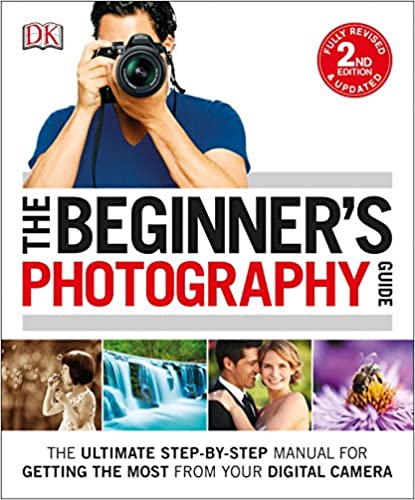
Beginning In Photography: Choosing A Camera

Youve been snapping away with your nifty little point and shoot camera for a while now and you’ve discovered you really like taking pictures and want to get more creative and have more control over your photos. Naturally the next step is to upgrade to an DSLR camera. But which one? There is a ridiculous number of products out there with all sorts of buttons and dials that do this or that. This article attempts to give a brief overview of the things that are actually important when considering which camera to buy.

Firstly, lets dispel one of the most common myths associated with upgrading equipment. Buying a new camera will not make you a better photographer. Repeat: it will NOT make you a better photographer. Not instantly, not in 2 years time, not in 10 years. What will make you a better photographer is you. Your willingness to learn and develop your skills. Sure a high end camera will give you more control over your image making, but thats just it; its you controlling the camera, and therefore the end image. Ok, now that were on the same track, a few things to think about.

How many megapixels do I need?

We are going to assume that you are looking at digital cameras here, although I should point out that there are some excellent film cameras around at much less expense. So dont discount film altogether (its not dead just yet!). But to answer the question, we first need to answer another: What do you want to do with your photos? If you only want to post your photos on the web, e-mail them or make small prints to put in a photo album, the resolution you need for this is quite low. To give you an idea, a camera with 2 megapixels will create an image that can make a good quality 6 x 4 print (standard photo album size). Most entry level DSLR cameras start at around 6 megapixels. Therefore if this is all you want to do with your images, the amount of megapixels does not need to be a major concern. If, however, you want to make large sized prints, you may need a higher resolution camera. While entry level DSLRs often produce very good quality prints up to a certain size, more pixels gives you the freedom of being able to enlarge even further. While image software programs can increase the size of your photos they will lose some quality. Starting with a larger image means that fewer pixels are added by the program and less quality is lost.

Is brand important?

Not as important as some would have you think. While photographers will continue to debate the Nikon vs Canon issue, my belief is that it is a moot point. Both companies produce some excellent products and some pretty ordinary ones. What should be foremost in your mind is build quality. How many plastic parts does the camera have versus metal ones? Metal parts can be replaced, while plastic parts are usually set into a mold and cannot be. Potentially this could mean the difference between having to buy a new part or a new camera a few years down the track. Check how the camera feels in your hand. If it feels solid and sturdy, it probably is. Quality between brands doesn’t differ greatly until you get into the higher end cameras. This is where Nikon and Canon come to the fore and other brands that don’t target this market drop off. However if you decide you don’t need a higher end camera, don’t discount other brands.

What about features?

Cameras come with all sorts of different modes and features. Some of them seem to be included for no other reason than to be a selling point for that particular model. It takes a little research to discern which are actually going to be useful. There are, however, some that you should factor into your considerations. Firstly, what mode settings does the camera have? Many entry level DSLRs have similar settings to point and shoot cameras. I.e. Portrait, landscape, low light etc. While these make things easy, the point of moving up to an DSLR camera is to gain more control over your photos. You will never gain the control you want without learning how to use a camera in full manual mode.
Other features, such as a built if flash or cable release socket, may be important to you depending on the type of photography you want to do. If you like to shoot portraits, a built in flash can be a huge help in lighting shadows. If you are interested in landscape photography, you will at some point want to set you camera up on a tripod to capture a low light scene. Using a cable release allows you to press the shutter without actually touching the camera, removing the camera shake that blurs a picture.

One final consideration.

This is possibly the most important of all. Make sure the camera you choose is comfortable and easy to use. Check that you can reach all the buttons easily while shooting and that the dial and menu configurations are logical. This allows you to learn your gear easily so that you can concentrate on the most important thing: taking pictures.

Beginning In Photography: Composition

It is one of the most essential elements to taking pictures. It can either make or break a photo. Entire books could be, and have been, written on the subject. As an introduction to composition, this article aims to give an overview of the main points on how to compose photos and improve your photography.

What is your subject?
The most important part of composition is having a clearly defined subject. Decide what the photo is about and hone in on that. It may be a single person in a crowd, or an abandoned house sitting in a rustic landscape. Whatever you decide to make the subject of your photo, decide how to emphasize it and go from there. Choose whether to include other elements in an image based on weather they say something about your subject or not. For example, you may wish to include that huge tree standing near your abandoned house to give scale to the image. On the other hand, you might decide to leave it out if you want the house to appear larger. What you leave out of an image is as important as what you include.

Rule of Thirds
Firstly, what is it? Using the rule of thirds means to divide the scene into thirds horizontally and vertically, so you have an imaginary 9 square grid, and place your subject along one of these lines. Generally this produces a composition that is more pleasing to the eye. Some photographers stick religiously to this rule and others intentionally break it every time they take a photo. Me? Im somewhere in the middle. I believe that there are times when the rule works best and other times when it leaves the image looking a little bland. So my advice on this is learn the rule and practice with it, but also practice breaking it.

Get creative
Being a travel photographer, I often end up in places that have been photographed before. In fact, in this age of high volume digital photography, it is nearly impossible to find a subject that hasnt been covered comprehensively. This presents a challenge: to come up with a new take on an old subject. To make your images stand out you need to do something different. Often this means looking for different angles. Something new and fresh. This might mean getting down on the ground for a low viewpoint, or tilting your camera on an angle to create a new perspective. Whatever your tactics, always strive to do something that hasnt been done. One of my favorite methods is to look at pictures others have taken of your subject before you shoot and think what the opposite viewpoint would be.

Composition can be a simple task. But is essential to understand what makes a good composition rise above a bad one. Like with everything else, the more you practice the easier it will come to you. Eventually it will become so ingrained that you will do it without realizing you are doing it. It is simply a matter of experimenting and finding what works for you.

Beginning In Photography: Exposure Basics

So you’ve just bought a shiny new DSLR camera huh? And a lens or two to go with it? That’s great. Now all you have to do is learn how to use it. I’m assuming here you bought an DSLR camera because you want to do a little bit more than take happy snaps at family events and holidays. So for those new to photography as anything more than that, this article aims to give you a little background on the basics of exposure to help you on your way.

Shutter speed

There are two elements to creating a correct exposure. These are aperture, and shutter speed, which we will look at first. When you press the trigger button on your camera to take a picture, it opens a set of sliders, like opening a window. How long it stays open, depends on how you set the shutter speed. Shutter speeds can range from extremely fast (ie 1/8000 of a second), to very slow (30 seconds), or even infinity if your camera has a bulb setting. These are extreme shutter speeds and not often used, except by people who shoot fast moving subjects, or in very low light. For most of us, we tend to stick to somewhere in the middle. As a general rule, the faster the shutter speed, the sharper your photo will be. For most people, anything at 1/60 of a second or above is acceptable when hand holding a camera. Lower if you have a particularly steady hand. If you need to use slower shutter speeds, you will need to use a tripod or rest your camera on a steady surface. These slow speeds can be particularly useful for creating blurred effects. For example the flowing water in a waterfall.

Aperture

Ever wondered how photographers get their subjects to really stand out by blurring the background? The secret (which really is no secret) is adjusting the aperture. The aperture changes the depth of field in your photo. Depth of field is how much of the image is in focus. For example, if you have a depth of field of 4 meters, anything within that distance of the subject you are focusing on will also be in focus. There is as much variety with this control as there is with shutter speed. You can choose to set a narrow aperture (long depth of field) when you want the whole shot in focus, for instance a great, sweeping landscape, or a wider aperture for portraits.

Ok, so youve got your shutter speed sorted from your aperture. Now we just have to put them together. Any SLR camera will have an inbuilt light meter. This little gadget measures the amount of light you will need to create a correct exposure. It is usually in the form of a little bar with a too high (+) and a too low () sign at each end. It is simply a matter of balancing one against the other so that the meter is centered. Once youve done that you can press the button! Thats all there is to it.

ISO

Another choice that will effect your exposure is the ISO you use. With film cameras, this means the speed of film that you use. If you use a 100 speed film, your ISO is 100. Digital cameras also have an adjustable ISO speed. Its just in the form of turning a dial instead of loading a different film. A general rule is to use the lowest ISO you can get away with. Higher ISO films or digital settings can result in noisy (grainy) pictures. They do, however, allow you more freedom in your exposures in that you can shoot with less available light. Experiment with your particular camera, see what you can get away with. Remember that the quality required will be different for everyone. If you only want to make small prints to put in an album, or just store the photos digitally on your computer, then you will not need the same quality as if you want to make large prints to hang on your wall.

So there is some food for thought for those starting out in photography and looking to do more than just point and shoot. Now its time to go out there and shoot. Experiment with different settings. Try new things. The technical side of photography you can read about anywhere. The creative side, well, thats up to you.

5 Myths About Homemade Wine

There are many misconceptions and misguided assumptions about making wine at home. Most all of them are perpetuated by individuals who never even tasted or made homemade wine. Others are simply born out of the mystique surrounding the commercial wine industry.

How can something so sophisticated be made at home?

Here are the ones that we run into the most. The ones that flat-out drive us silly every time we hear them.

  1. Homemade Wines Don’t Taste That Good.
    Without question, you can easily make wines that are just as good, if not better, than the wines you find on the store shelf. And not with practice, but with your very first batch. I can’t tell you how many times I’ve done side-by-side, blind tastings with a challenging friend or an acquaintance between a glass of wine made from one of our wine ingredient kits and a glass of store bought wine, only to have the homemade wine win – hands-down. I’m not going to name any names, but I’m not talking about doing a blind tasting against the $8 stuff. I’m talking about higher dollar stuff that you’d buy to take to a dinner party, etc. Wouldn’t it be nicer to take your own personalized wine gift, that you made, to the party instead.
  2. Homemade Wine Takes A Lot Of Time To Make.
    Learning how to make your own wine is much easier than most individuals can even begin to imagine. It’s deceptively easy. There are a lot of wine making products on the market today that make it as simple as following a few directions. And, it doesn’t take that long. You can be bottling your first batch of wine in as little as 28 days. And as far as the time it takes out of your day, I’d say it doesn’t get any worse than the time it takes to bottle the wine – an hour to get it start, another half-hour to siphon it to a second container, etc.
  3. Making Homemade Wine Requires A Lot Of Expensive Equipment.
    This may have been partially true 20 or 30 years ago. Back then, depending on what type of wine you were making, you might need a grape crusher to crush the fruit and a grape press to press the fruit. Today it’s different. You don’t need to crush and press the fruit if you don’t want to. You can buy it already done for you. Now there are hundreds of wine making juices packaged up and ready for use from all over the world. You can get Cabernet grape from France, Shiraz grape from Australia, Merlot grape from California…  The choices are endless.
  4. Homemade Wine Spoils Easy.
    Absolutely not. Homemade wine keeps just as good as commercially made wine. There is no difference in the keeping abilities between the two. There is no reason for one to keep better than the other. They are both made the same way from the same basic wine making materials. One’s just on a smaller scale than the other.I currently have several bottles of homemade wine that have been in my cellar aging since 1998 and 2002 and I would not hesitate to drink them myself or serve them to my friends and family.
  5. Making Homemade Wine Is Illegal.
    Wrong! Ever since October 14, 1978 it has been perfectly legal for Americans to make their own wine and beer. This is when President Jimmy Carter signed into law legislation introduced by Senator Alan Cranston of California. You can make up to 100 gallons per year. If you live in a household with another adult, you can make up to 200 gallons per year. It can be for your own personal consumption or to hand out has wine making gifts to friend and relatives. Just make sure you don’t sell it. That would be illegal!

—–
Ed Kraus is a 3rd generation home brewer/winemaker and has been an owner of E. C. Kraus since 1999. He has been helping individuals make better wine and beer for over 25 years.

Courtesy Adventures in Homebrewing

Try something new

How to make wine at home. A Great lesson. CLICK HERE

Small Batch wine Kits to try. Learning is Fun. CLICK HERE

ONE GALLON WINE KITS

The Total Wine System

Home Winemaking: The Simple Way to Make Delicious Wine

Some Important Principles Of Photography

A camera is actually a sensitive machine, which will follow your command and you will be able to take the picture exactly the way you want it. Of course, there are quite a few things that you need to keep in mind before you push the camera button. Here is an insight into certain elements that needs to be taken into account when you are going for that classic picture!

Creativity using camera controls
Mastery over camera controls is necessary. You just cannot do without that. You need to first read the guidebook that most camera manufacturing companies provide with the camera. You need to know the various modes your camera offers from macro to panoramic, back lighting and others.

If you have bought a DSLR then there are several elements that you will have to master and understand to bring out the best composition. A serious digital camera has the ability to provide you with a creative control over the images that you shoot. A digital camera can do this by allowing you the luxury to control both motion and light in all your photographs and at the same time it can demarcate between sharpness and softness. Most of the commonly available consumer digital cameras are completely automatic and hence you will not have to make too many adjustments. But high-end cameras like the DSLR offer the ability to work upon a wider range of controls. So before, you can even think of clicking away to glory; check the automatic exposure as well as the focusing systems, which is a key to achieving a good composition.

The automatic mode
Most of the digital cameras work on an automatic mode. The automatic mode can set the focus as well as the exposure for you and all you have to do is click the subject. The automatic mode will help you in situations where you do not have the luxury of changing lenses or manually focusing especially when you are taking shot of a moving subject. But in spite of the automatic mode, you should choose a sub-mode like the night mode for taking pictures at night, so that according to the sub-mode the camera can adjust itself.

Some key areas
Some of the key areas that most amateurs miss are too basic to be noticed and yet hold a lot of importance. For instance, you should always check in advance if the battery is full or not. You should not be in a situation where you get a great opportunity for a classic composition and the camera battery dies. Check all the minute things and then turn your camera on and set it to the automatic mode. Most digital cameras have an icon that says Auto mode.

Another key area is lighting, which is something that you will need to understand and feel to become a professional photographer. Here are some of the most important lighting conditions that assist photography composition:

Backlighting: This kind of lighting comes from behind the subject. If you are unable to control the requirement of backlighting then it can turn your photography session into a disaster. Most of your pictures will either be over-exposed or burnt. The best way to take pictures with high amount of backlight like the sun behind your subject is by using a fill-flash.

Diffused lighting: As you will learn on the way that sometimes whether the lighting is through an artificial source or a natural source, it can be quite harsh. When the lighting is harsh, you will need to soften it and try to minimize the contrast. Normally, it is advised not to take pictures in such a lighting condition. It is extensively encountered in landscape or nature photography and the best you can do is come back at a different time when the lighting conditions are better.

Framing
This is an important aspect and you need to frame your subject before you can push the camera button to take the picture. The automatic mode gives you a well-prepared platform but if you are unable to frame the primary subject then the final outcome will not be to your liking. Images can become hazy, blur or even distorted. You can frame the subject by using the viewfinder or the LCD monitor. Digital cameras have the zoom view also. So if you need to bring the subject closer then press the optical zoom or digital zoom as necessary. Once all your elements are in place, then go ahead and click the picture.

There will be times when you might not be satisfied with the outcome in spite of having framed the subject and following the guidelines. Do not be disheartened! The best way to move ahead is by experimenting with controls and through improvisations!

Tips For Getting Started In Astronomy

When you are thinking about astronomy, the first thing that comes to mind is a telescope. This misconception is found every day. Actually, the first thing you need to do is look at the stars with a pair of binoculars. You cam spend hundreds of dollars on a telescope that might not be the right one. One thing that star glazers will tell you is that some of the lunar eclipses and bright comets look better with binoculars than with a high-powered telescope.

Celestron 70mm Travel Scope

BINOCULARS for ASTRONOMY

You need to look around the sky with a star map and learn about the stars and other objects in space before you jump in and buy a telescope. Sometimes what you see through a telescope will be ugly, where as through the binoculars, it is a beautiful focused site to see. Once you learn about the stars themselves, you will have a better understanding of what you are looking at and how far away it really is.

Guide to the Stars

After you learn about the sky above you are ready to look for a telescope. Before rushing out and buying a telescope, you should find some astronomers who will share their experiences and maybe even their telescopes with a group. Trying out a telescope before you buy it is something that will help you decide on what telescope will be best for you.

Some things to consider are what you plan to do with the telescope, how much you have to spend and are you going to take photographs of your sightings. If you are a causal backyard astronomer, you might even look at the Dobsonian telescopes. Never worry about power, but be more concerned about aperture and optics. If you will be viewing planets, you will need a telescope with high magnification. You would not want to buy a telescope with 600 power, as it will not have the aperture needed.

Most professional astronomers use a reflector type of telescope. This is where the light path is diverted to the concave lens or eyepiece. With the refractor telescopes, the light passes through the telescope by way of a lens to the eyepiece. In some of the opinions from astronomers, the refractor is the best type of telescope for looking at the solar system. However, reflectors are cheaper than the refractors. Reflector telescopes are recommended for beginning astronomers.

Celestron – AstroMaster 130EQ Newtonian Telescope – Reflector Telescope for Beginners

You will find areas with complete darkness are the best, but city viewing is fine if you have very little light to distract your viewing. Keep in mind that planet viewing is spectacular. You can see the ring around Saturn as well as view Venus. Jupiter, which changes every time you view it, is an amazing planet to keep an eye on.

You will want to have a star map, planet map and keep an eye on the news to find out when any interesting things are appearing in the solar system. Experience the sighting of a comet or meter shower, you will find that astronomy is a great way to spend the evening by yourself or with friends.

The Science Of Astronomy Really Is Fascinating

Galaxies, the cosmos, astrophysics, observatories, telescopes: How do we possibly comprehend the reality that the universe is beyond measure, infinite, and endlessly mesmerizing?

We can’t; that’s why astronomy remains so completely fascinating. It’s the things in life we do not understand that most often draw our interest; that’s simply a natural human impulse — to be curious, to wonder and to want to be in awe of something far beyond and outside ourselves.

We know that stars, like everything else, live and die and that there are scientifically “correct” patterns in the remote sky that both perplex and bewitch us. If astronomy fascinates, it is because there exists in everyone a profound empathy with a world that is inaccessible in its complexity. Who among us has not felt, even fleetingly, spellbound by the immensity of this cosmos, this universe?

Modern observatories regularly function as educational centers, providing this feeling of entrancement by presenting the wonder of the cosmos directly to the audience, short-circuiting the intellect for an hour or so and uncovering the wonder at the magic of theuniverse; promoting a sensory, visceral feeling for the human condition and its place in the great book of the cosmos.

Astronomy, the science of stars, planets, galaxies, and black holes, is the oldest science, yet it is the most intriguing because the study of the universe will help answer the most important questions human beings can ask, such as:

How did the universe begin?

What is the structure of the universe?

How will the universe change in the future?

How do the planet Earth and its inhabitants fit into the larger universe of space and time?

Though we may never know the answers to these kinds of questions in our lifetime, we’re always thankful for those who will follow us, prepared, with a scientific brain, to one day provide answers — and maybe more — to humankind.

It’s difficult to understand our own galaxy, and we’re constantly “adding to it,” or discovering new frontiers and small, more distant planets than those we’re already familiar with. The sun, and the concept of the planets just in our galaxy alone, provoke wonder and all kinds of speculation. It’s food for our brain; it’s one of those applications of learning that so enthrall, it doesn’t seem like we’re “studying” anything. It’s an effortless exercise in the Unknown Sphere of the Universe.

What better way to pass the time, to postulate upon, to have an intellectually stimulating discussion, maybe with people you don’t even know yet?

And what about the theories of particle physics that have been developed in conjunction with the standard Big Bang model to explain the origin, evolution and
present structure of the universe?

What about the origins, evolution, interiors, and energy production of the stars themselves? How are they formed? Why? And we’ve all heard of “interacting galaxies,” but just what, exactly, does it mean? It all sounds like, well, a kind of heaven — a place we know exists, but that we cannot quite see or understand.

Then, there’s Newton’s laws, the concept of work and energy, momentum, gravitation, sound and light waves.

If you haven’t felt a slight thrill yet, it’s eitherbecause you already know about these atmospheric wonders, or you’ve been living under a local rock.

So get out there and Observe the Universe! It’s absolutely spellbinding!

The Benefits Of Wine Kits vs Fresh Grapes

What is the going opinion of making wine with fresh grapes and crushing them, as opposed to using a wine kit? Is one better than the other by default, or would you say either method can produce excellent or horrible results?

What is the going opinion of making wine with fresh grapes and crushing them, as opposed to using a wine kit? Is one better than the other by default, or would you say either method can produce excellent or horrible results?

Phil B. – TN
_____

Hello Phil,

Thanks for bringing up this great question about wine kits vs fresh grapes. It’s a question we get from time to time, so I’ll be more than happy to answer it here…

Whether you are making wine from grapes or making wine from kits the quality of the wine starts with the quality of the grapes. There is an adage in the wine making industry that says:

“You can never make a wine that is
better than the grapes used to make it.”

What this means is that you’ll never make great wine out of poor wine grapes. The quality of the wine always starts with the quality of the grapes.

When making wine from fresh grapes the individual winemaker usually has a limited selection of grapes to choose from. Quality can suffer when dealing in the take-it-or-leave-it type of market that often arises for the home winemaker.

The quality of grapes that you will find in wine kits varies from good to outstanding. It is not in the interest of these kit producers to spend their time preparing and packaging poor wine grapes. It doesn’t make economic sense, so great care is taken to locate and acquire grapes that are above average quality.

This is one of the major advantages to using a wine kit vs fresh grapes. You are able to rely on the wine kit producer’s expertise in selecting quality grapes. So on the whole you’ll be starting with a better quality grape when using a wine kit than when obtaining grapes on your own. Of coarse, there are always exceptions. Living near a grape growing mecca such as Napa can turn this point on its head, but for most home winemakers, this is a consideration that should be given some weight.

We offer an array of different brands of wine kits. As you go up the ladder in price, the finer your selection of grape. How much you spend depends on the level of taste. Some people are completely happy with the On The House wine kits and could not tell a difference even if they did choose a more expensive kit. For others, the On The House simply would not do. How far up the ladder one goes is very much a personal choice.

Unfortunately, quality grapes do not guarantee a stellar wine, it’s just the first requirement necessary to get there. Between the grapes and the wine bottle is a whole host of other factors such as: acidity, alcohol, sweetness, etc.

Making wine from a wine kit alleviates you from these variables. This is because all these factors have already been taken care of for you by the wine kit producers. They balance the acidity, sugar content and many other features such as clarification and oak treatment to match the typical character of the wine you are making. By eliminating as many variables as possible they are helping to insure that you will make a remarkable wine every time. This is a very valuable benefit of using wine kits vs fresh grapes – especially for the beginner.

Now having said this, I understand completely that we are talking about a hobby, and for some, part of the hobby is the passion that goes into the picking, the crushing, the pressing, and so forth. I get that. And if this is you, I completely support your efforts to make wine from the dirt to the wine bottle. I’m just trying to bring total objectivity to the consideration of using wine kits vs fresh grapes.

Shop Wine Making Kits

So while both wine kits and fresh grapes holds their own rewards, by starting with a wine you are virtually eliminating any chance of producing a bad wine. Add to that the incredible selection that is now available to the home winemaker and it starts to become apparent that a wine kit is the way to go for the beginner.

I hope this covers all your questions and curiosities about wine kits vs fresh grapes. Please realize that regardless of which path you decide to take, we will be more than happy to help you in any way you need.

Best Wishes,
Ed Kraus
—–
Ed Kraus is a 3rd generation home brewer/winemaker and has been an owner of E. C. Kraus since 1999. He has been helping individuals make better wine and beer for over 25 years.

From ADVENTURES IN HOMEBREWING

Below you will find listings for Small Batch Wine Kits and One Gallon Wine Kits, there are several wines listed. What is your favorite wine? If you see it or one similar make note, Read the article How to Make Wine at Home, watch the videos read the article, and see how easy a wine kit can be. Try one, enjoy the results of your efforts. Start your new hobby and share it with family and friends. You never know your wine could be in great demand.

Try something new

How to make wine at home. A Great lesson. CLICK HERE

Small Batch wine Kits to try. Learning is Fun. CLICK HERE

ONE GALLON WINE KITS

The Total Wine System

Home Winemaking: The Simple Way to Make Delicious Wine

5 Beer Recipe Kits Perfect For Beginners

Homebrewing is not especially difficult… at least it doesn’t have to be. For the beginning homebrewer, extract beer recipe kits are the easiest way to get into the hobby, requiring the least amount of time and energy and still resulting very remarkable beer.
As an absolute beginner, try to focus on the most important steps (like cleaning and sanitation) and just try to get the process down. As you continue to brew, you’ll have plenty of opportunities to try new and exciting brewing methods.
To get you started on that first batch, here are five excellent, easy-to-brew beer recipe kits:

  1. Munton’s Connoisseur Kit: India Pale Al
    IPAs are one of most popular styles of craft beer today, delighting hop heads from coast to coast. With this beer recipe kit, the hoppy bitterness is already present in the malt extract, so there is no need for a 60-minute boil with multiple hop additions. Add 2.2 pounds of dried malt extract to make a full 5-6 gallons of beer. Yeast packet included.
  2. Steam Freak: “Steam Stoker” American Stout
    Stouts, with their robust, roasted flavor, are very forgiving for the beginning homebrewer. Steeped specialty grains offer flavors of caramel, chocolate, and coffee, supported by bitterness and spicy, floral hop flavor from Nugget and Willamette hops. Steam Freak beer recipe kits include caps, priming sugar, yeast, and complete instructions to guide you through the brewing process.
  3. Munton’s Connoisseur Kit: Nut Brown Ale
    Many brewers start with a brown ale. It’s the perfect middle of the road beer to break into brewing. The Nut Brown Ale is a malt-forward, English-style beer with a subtle nutty flavor. Just like the IPA above, this one is super-easy to brew.
  4. Brewer’s Best: American Pale Wheat
    This beer recipe kit is as easy to make as it is easy-drinking. It produces a remarkable wheat beer with a beautiful light-copper cooler. It’s moderately hoppy from a combination of Cluster and Liberty hops, with an enjoyable, crisp finish.
  5. Steam Freak: Samuel Smith Taddy Porter Clone
    This beer recipe kit replicates the popular Samuel Smith brand of robust porter. Steep the specialty grains for improved body and flavor, then mix in the dark liquid malt extract. English hops (included in the kit) are boiled to provide bitterness, flavor, and aroma as characteristic for the style.

Looking for a beginner homebrewing equipment kit? Our Steam Freak Beermaking Starter Kit has everything you need. This starter kit is the ultimate way to start brewing.
—–
David Ackley is a beer writer, brewer, and self-described “craft beer crusader.” He holds a General Certificate in Brewing from the Institute of Brewing and Distilling and is founder and editor of the Local Beer Blog.