Finding The Best Home Brewing Kits

Are you one of those people who are just beginning to appreciate the art of home brewing beer? If you are just a beginner and do not really have much experience on shopping for home brewing supplies and materials, it would be best for you to stick to home brewing kits for a start.

The good thing about home brewing kits is that you already have all the things that you need in one package so you need not spend so much time figuring out what materials and ingredients you should buy to be able to produce your own beer. Note that as a beginner, you may not really be very familiar with the things that you need to produce your own beer so it is not really advisable to shop for these materials and ingredients individually.

Getting Your Starter Kits

Before you go shopping for your home brewing kits, it would be a good idea for you to first research on the things that you need. If you know somebody or if you have a friend who is into beer brewing, talk to this person and ask for advice. Most beer brewing enthusiasts are very eager to share their knowledge so it will not be difficult for you to extract some information from this person.

In fact, your friend might even invite you for a demonstration on how he or she makes his or her won beer. In case you get invited to watch him or her make his or her own beer, bring a notebook along and take notes. Pay close attention to the details especially on the materials and equipments being used. This information will be very useful when you go out and buy your own home brewing kits.

Most home brewing kits come in small and handy packages which you can use easily. For instance, if you are interested in buying some organic beer kits, there are many home brewing kits that are composed of small grain bags. The grain bags may contain organic malt extract and fresh organic hops. A brewing instruction can be found inside the grain bags. In most cases, the instructions attached to these home brewing kits are usually illustrated and are very simple to follow.

Now, many cases beginners do not really get the right taste of the beer on their first few tries. If your beer happens to taste funny or even horrid, dont give up. Always remember that learning to make great beer takes time and a lot of patience. With constant practice, you will soon be making great tasting beer.

Beginning In Photography: Choosing The Right Lens

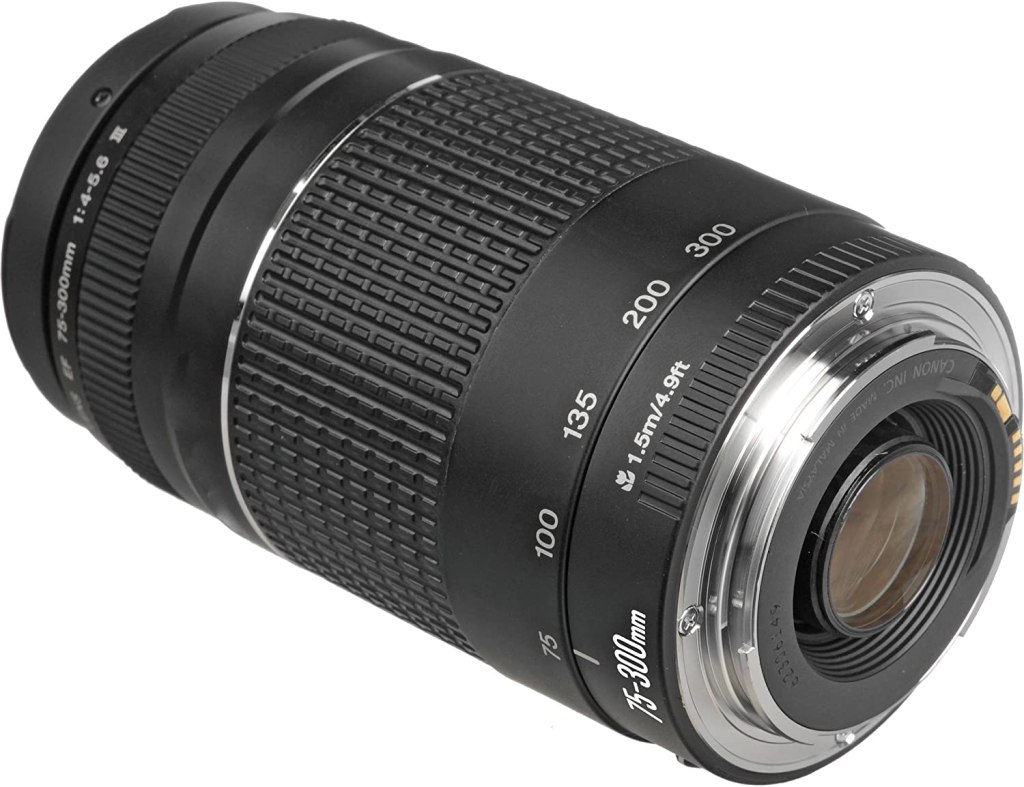
There is a dizzying array of choices when it comes to choosing lenses for DSLR cameras. From wide angle to telephoto, zoom to prime lenses, fish eye, fast lenses, wide aperture lenses, the choice seems to be impossible. Its not really. What it comes down to is asking yourself a simple question: What do I want to shoot?

Different Lenses for Different Subjects

If you are just beginning in photography, chances are you are still experimenting and finding out what you like to shoot. You might shoot a few family portraits one day and landscapes from your vacation the next. On the other hand, you may have decided right from the start that you love taking photos of wild animals and this is all you want to do. Either way, the lenses required to get the best out of these subjects differ greatly. To fit an expansive landscape image into your viewfinder, you would need a wide angle lens. However, trying to take a portrait with the same lens would result in a tiny little person and not much else in the frame unless you are right in that persons face and smelling their breath. While trying to take a picture of a wild bear from 100 or more meters away is just impossible (and you really don’t want to get any closer to a wild bear). In a perfect world you would have 3 different lenses for each of these subjects. But in a perfect world you’d also be a millionaire and be able to afford them all. So the thing to do is to decide what type of photography interests you and choose your lenses accordingly.

Length: Zoom versus Prime

There are benefits to using both zoom lenses and prime (fixed or non zoom) lenses. On one hand, zoom lenses are versatile, and reduce the need for a whole bag full of lenses that you need to change and change again while you are out shooting. On the other hand, a good quality prime lens can be gold. Prime lenses, if they are well built, generally produce a crisper, better quality image. This is because they have fewer pieces of glass and moveable parts. Therefore the light coming in doesnt need to pass through as many objects and so is less diffused. The other great advantage of prime lenses is that because of this, they tend to be faster than zoom lenses. Practically, this means that you can use slower shutter speeds as the lens needs less light to create a correct exposure. This is especially useful if you want to take portraits with available light.

Aperture

Another important factor to consider when choosing your lens is its maximum aperture. This is indicated in the description by an f symbol. Eg. f/2.8. The lower this number, the wider your aperture choices. For example, if you want to take a portrait with only your subjects facial features in focus, you would use a wide aperture. If you want to take a sweeping landscape where everything needs to be in focus you would use a narrow (high number) aperture. Selecting a lens with a wider aperture gives you more options when out shooting.

It is well known that lenses can cost as much, or more, than cameras themselves. It is also worth noting that with lenses you get what you pay for. While no piece of equipment can singularly make the difference between a good photo and a bad one, a well built lens using quality glass, can lead to sharper pictures. Therefore it is worth considering the lenses you buy carefully and investing in the best quality you can afford. Knowing what sort of photography you want to pursue can make this process a whole lot less daunting and more cost effective.

Getting that First Batch of Beer Brewing

Beer is such a popular beverage because it has such a deep earthy flavor and because the variety of flavors, brands, colors and textures of beers is so diverse that you can explore a new brew each and every time you want a beer and never get bored. And yet most of us pretty much settle on one taste and stick with it. That is until we discover brew pubs. That is when our eyes are opened to the idea that we don’t have to depend on Budweiser and Miller for good beer. It can be made right at home.


Some of the finest beers you could hope to taste are not made in the big commercial factories but in small brew pubs all around the country. So if you have discovered some particularly flavorful home brewed beers, it isn’t long before you might decide to take a stab at brewing a batch yourself. Be careful because once you start experimenting with brewing your own beer, you may become hooked into an addictive hobby that will provide hours of fun as you tinker with your recipes, get new and better equipment and become a true beer expert in brewing your own custom blends for the best flavored beer.
But it all starts with that very first batch. You might approach that moment when you decide to make your first batch of beer with some fear and trembling. But keep your spirit of adventure and experimentation because, after all, if you bought good equipment, you will get the hang of it. As the wise man said, that the journey of a hundred miles begins with the first step. So too your journey toward becoming a master brewer starts with your first batch.


The process of brewing that first batch is pretty simple actually. Here are the steps to go through to get your first brew underway.
… Gather the ingredients to have them on hand as you step through the brewing process. You don’t’ want to have to stop and go dig something up so have them ready to go when they are added in as the brewing process is underway.
… It all starts with water. One gallon of good water will do. You don’t need specialty water as tap water in most areas of the country does well due to a good combination of minerals that actually makes the beer taste better. So get a gallon of water boiling in a large pot capable of holding 2-3 gallons of water. You need that extra space for adding ingredients.
… The first ingredient to add to the boiling water is the brewing yeast that you bought just for this purpose. The yeast will have specific instructions but in essence you will mix the yeast with piping hot tap water and stir it in a separate pot or pan until it becomes a thick paste.
…You can prepare the yeast while the water boils and when it’s ready, add the mixture to the water.
… Once the yeast is mixed in well, add the malt extract that you bought for this brewing process. Make sure the malt is mixed in well and dissolved before moving on.
… Hops will come as pellets when you bought them from the supplier so add them when the water is boiling again and allow the entire mixture to boil for another five minutes.
…During this preparation time, get your fermenting equipment sanitized and ready to go. As the brewing process approaches completion, fill the fermenter about three quarters full with cold water from the tap.
… The strong beer you have boiled is called the “wort” which is now ready for fermenting. Pour the hot wort into the cold water in the fermenter. What you are looking for is an end result of five gallons of mixture in the fermenter so if you don’t find you are at that level, add more water.


The brewing process is done and you can follow the directions for fermenting that are provided with the equipment or that you learn from other resources about the fine art of fermenting beer. Now it’s just a matter of letting nature do what it does to ferment your beer. Enjoy the anticipation as you allow the fermenting to continue and then enjoy the flavor of your very own first batch of home brewed beer.

How To Choose Digital Photography Books

For those of you who simply cannot make it to a Digital Photography class, do not lose faith. There is still plenty of information to obtain through reading a digital photography book! Plus they also make a great complement to taking a class.

I know what some of you are saying. “With so information out on the web, I can just find something on Digital Photography. After all I’m reading your website, aren’t I?”

This is all very true. And while I am very pleased that you’re reading my website, however there is more to be said. In my personal experience, I have never come across a website that can hold the amount of information in a 300 page book. Plus the book is great guide to carry around when I use my camera outdoors!

Click on this site and you are bound to find a very good selection on digital photography books that encompass everything from beginner levels to much more advanced photography techniques. Obviously you’re going to have to do a little research but the one thing you want to keep in mind is that “You’re looking for a book that will tell you what you want to know about Digital Photography!” So if you want to know about shooting outdoors, or simply how to work your camera then search for that topic and several books that discusses just that will appear!

Make sure you read over the books. You might feel a tad intimidated and overwhelmed (Trust me, I’ve been there) but you will eventually find what you’re looking for.

While you’re free to do your own research, I would like to pass along one of my own favorites entitled “Complete Digital Photography” by Ben Long. What I really enjoyed about this book is that the author takes you through a very comprehensive instruction on not only the proper steps to take great pictures, but also how to buy the right digital camera for you. Its not as basic as “Digital Photography for Dummies,” but its not as though you need a PhD to understand it either.

Some of the other books you may want to look into are ones that deal with Digital Camera Printers.

Some books also come with software help you. I find these to both good and bad. Some of these are touting their own products and some are just using up space on my hard-drive.

Follow this link for many books covering this topic.

Moon Gazing

For many of us, our very first experience of learning about the celestial bodies begins when we saw our first full moon in the sky. It is truly a magnificent view even to the naked eye. If the night is clear, you can see amazing detail of the lunar surface just star gazing on in your back yard.

Naturally, as you grow in your love of astronomy, you will find many celestial bodies fascinating. But the moon may always be our first love because is the one far away space object that has the unique distinction of flying close to the earth and upon which man has walked.

Your study of the moon, like anything else, can go from the simple to the very complex. To gaze at the moon with the naked eye, making yourself familiar with the lunar map will help you pick out the seas, craters and other geographic phenomenon that others have already mapped to make your study more enjoyable. Moon maps can be had from any astronomy shop or online and they are well worth the investment.

The best time to view the moon, obviously, is at night when there are few clouds and the weather is accommodating for a long and lasting study. The first quarter yields the greatest detail of study. And don’t be fooled but the blotting out of part of the moon when it is not in full moon stage. The phenomenon known as “earthshine” gives you the ability to see the darkened part of the moon with some detail as well, even if the moon is only at quarter or half display.

To kick it up a notch, a good pair of binoculars can do wonders for the detail you will see on the lunar surface. For best results, get a good wide field in the binocular settings so you can take in the lunar landscape in all its beauty. And because it is almost impossible to hold the binoculars still for the length of time you will want to gaze at this magnificent body in space, you may want to add to your equipment arsenal a good tripod that you can affix the binoculars to so you can study the moon in comfort and with a stable viewing platform.

Binoculars for Astronomy

Of course, to take your moon worship to the ultimate, stepping your equipment up to a good starter telescope will give you the most stunning detail of the lunar surface. With each of these upgrades your knowledge and the depth and scope of what you will be able to see will improve geometrically. For many amateur astronomers, we sometimes cannot get enough of what we can see on this our closest space object.

To take it to a natural next level, you may want to take advantage of partnerships with other astronomers or by visiting one of the truly great telescopes that have been set up by professionals who have invested in better techniques for eliminating atmospheric interference to see the moon even better. The internet can give you access to the Hubble and many of the huge telescopes that are pointed at the moon all the time. Further, many astronomy clubs are working on ways to combine multiple telescopes, carefully synchronized with computers for the best view of the lunar landscape.

Becoming part of the society of devoted amateur astronomers will give you access to these organized efforts to reach new levels in our ability to study the Earth’s moon. And it will give you peers and friends who share your passion for astronomy and who can share their experience and areas of expertise as you seek to find where you might look next in the huge night sky, at the moon and beyond it in your quest for knowledge about the seemingly endless universe above us.

Beginning In Photography: Choosing A Camera

Youve been snapping away with your nifty little point and shoot camera for a while now and you’ve discovered you really like taking pictures and want to get more creative and have more control over your photos. Naturally the next step is to upgrade to an DSLR camera. But which one? There is a ridiculous number of products out there with all sorts of buttons and dials that do this or that. This article attempts to give a brief overview of the things that are actually important when considering which camera to buy.

Firstly, lets dispel one of the most common myths associated with upgrading equipment. Buying a new camera will not make you a better photographer. Repeat: it will NOT make you a better photographer. Not instantly, not in 2 years time, not in 10 years. What will make you a better photographer is you. Your willingness to learn and develop your skills. Sure a high end camera will give you more control over your image making, but thats just it; its you controlling the camera, and therefore the end image. Ok, now that were on the same track, a few things to think about.

How many megapixels do I need?

We are going to assume that you are looking at digital cameras here, although I should point out that there are some excellent film cameras around at much less expense. So dont discount film altogether (its not dead just yet!). But to answer the question, we first need to answer another: What do you want to do with your photos? If you only want to post your photos on the web, e-mail them or make small prints to put in a photo album, the resolution you need for this is quite low. To give you an idea, a camera with 2 megapixels will create an image that can make a good quality 6 x 4 print (standard photo album size). Most entry level DSLR cameras start at around 6 megapixels. Therefore if this is all you want to do with your images, the amount of megapixels does not need to be a major concern. If, however, you want to make large sized prints, you may need a higher resolution camera. While entry level DSLRs often produce very good quality prints up to a certain size, more pixels gives you the freedom of being able to enlarge even further. While image software programs can increase the size of your photos they will lose some quality. Starting with a larger image means that fewer pixels are added by the program and less quality is lost.

Is brand important?

Not as important as some would have you think. While photographers will continue to debate the Nikon vs Canon issue, my belief is that it is a moot point. Both companies produce some excellent products and some pretty ordinary ones. What should be foremost in your mind is build quality. How many plastic parts does the camera have versus metal ones? Metal parts can be replaced, while plastic parts are usually set into a mold and cannot be. Potentially this could mean the difference between having to buy a new part or a new camera a few years down the track. Check how the camera feels in your hand. If it feels solid and sturdy, it probably is. Quality between brands doesn’t differ greatly until you get into the higher end cameras. This is where Nikon and Canon come to the fore and other brands that don’t target this market drop off. However if you decide you don’t need a higher end camera, don’t discount other brands.

What about features?

Cameras come with all sorts of different modes and features. Some of them seem to be included for no other reason than to be a selling point for that particular model. It takes a little research to discern which are actually going to be useful. There are, however, some that you should factor into your considerations. Firstly, what mode settings does the camera have? Many entry level DSLRs have similar settings to point and shoot cameras. I.e. Portrait, landscape, low light etc. While these make things easy, the point of moving up to an DSLR camera is to gain more control over your photos. You will never gain the control you want without learning how to use a camera in full manual mode.
Other features, such as a built if flash or cable release socket, may be important to you depending on the type of photography you want to do. If you like to shoot portraits, a built in flash can be a huge help in lighting shadows. If you are interested in landscape photography, you will at some point want to set you camera up on a tripod to capture a low light scene. Using a cable release allows you to press the shutter without actually touching the camera, removing the camera shake that blurs a picture.

One final consideration.

This is possibly the most important of all. Make sure the camera you choose is comfortable and easy to use. Check that you can reach all the buttons easily while shooting and that the dial and menu configurations are logical. This allows you to learn your gear easily so that you can concentrate on the most important thing: taking pictures.

Beginning In Photography: Composition

It is one of the most essential elements to taking pictures. It can either make or break a photo. Entire books could be, and have been, written on the subject. As an introduction to composition, this article aims to give an overview of the main points on how to compose photos and improve your photography.

What is your subject?
The most important part of composition is having a clearly defined subject. Decide what the photo is about and hone in on that. It may be a single person in a crowd, or an abandoned house sitting in a rustic landscape. Whatever you decide to make the subject of your photo, decide how to emphasize it and go from there. Choose whether to include other elements in an image based on weather they say something about your subject or not. For example, you may wish to include that huge tree standing near your abandoned house to give scale to the image. On the other hand, you might decide to leave it out if you want the house to appear larger. What you leave out of an image is as important as what you include.

Rule of Thirds
Firstly, what is it? Using the rule of thirds means to divide the scene into thirds horizontally and vertically, so you have an imaginary 9 square grid, and place your subject along one of these lines. Generally this produces a composition that is more pleasing to the eye. Some photographers stick religiously to this rule and others intentionally break it every time they take a photo. Me? Im somewhere in the middle. I believe that there are times when the rule works best and other times when it leaves the image looking a little bland. So my advice on this is learn the rule and practice with it, but also practice breaking it.

Get creative
Being a travel photographer, I often end up in places that have been photographed before. In fact, in this age of high volume digital photography, it is nearly impossible to find a subject that hasnt been covered comprehensively. This presents a challenge: to come up with a new take on an old subject. To make your images stand out you need to do something different. Often this means looking for different angles. Something new and fresh. This might mean getting down on the ground for a low viewpoint, or tilting your camera on an angle to create a new perspective. Whatever your tactics, always strive to do something that hasnt been done. One of my favorite methods is to look at pictures others have taken of your subject before you shoot and think what the opposite viewpoint would be.

Composition can be a simple task. But is essential to understand what makes a good composition rise above a bad one. Like with everything else, the more you practice the easier it will come to you. Eventually it will become so ingrained that you will do it without realizing you are doing it. It is simply a matter of experimenting and finding what works for you.

Beginning In Photography: Exposure Basics

So you’ve just bought a shiny new DSLR camera huh? And a lens or two to go with it? That’s great. Now all you have to do is learn how to use it. I’m assuming here you bought an DSLR camera because you want to do a little bit more than take happy snaps at family events and holidays. So for those new to photography as anything more than that, this article aims to give you a little background on the basics of exposure to help you on your way.

Shutter speed

There are two elements to creating a correct exposure. These are aperture, and shutter speed, which we will look at first. When you press the trigger button on your camera to take a picture, it opens a set of sliders, like opening a window. How long it stays open, depends on how you set the shutter speed. Shutter speeds can range from extremely fast (ie 1/8000 of a second), to very slow (30 seconds), or even infinity if your camera has a bulb setting. These are extreme shutter speeds and not often used, except by people who shoot fast moving subjects, or in very low light. For most of us, we tend to stick to somewhere in the middle. As a general rule, the faster the shutter speed, the sharper your photo will be. For most people, anything at 1/60 of a second or above is acceptable when hand holding a camera. Lower if you have a particularly steady hand. If you need to use slower shutter speeds, you will need to use a tripod or rest your camera on a steady surface. These slow speeds can be particularly useful for creating blurred effects. For example the flowing water in a waterfall.

Aperture

Ever wondered how photographers get their subjects to really stand out by blurring the background? The secret (which really is no secret) is adjusting the aperture. The aperture changes the depth of field in your photo. Depth of field is how much of the image is in focus. For example, if you have a depth of field of 4 meters, anything within that distance of the subject you are focusing on will also be in focus. There is as much variety with this control as there is with shutter speed. You can choose to set a narrow aperture (long depth of field) when you want the whole shot in focus, for instance a great, sweeping landscape, or a wider aperture for portraits.

Ok, so youve got your shutter speed sorted from your aperture. Now we just have to put them together. Any SLR camera will have an inbuilt light meter. This little gadget measures the amount of light you will need to create a correct exposure. It is usually in the form of a little bar with a too high (+) and a too low () sign at each end. It is simply a matter of balancing one against the other so that the meter is centered. Once youve done that you can press the button! Thats all there is to it.

ISO

Another choice that will effect your exposure is the ISO you use. With film cameras, this means the speed of film that you use. If you use a 100 speed film, your ISO is 100. Digital cameras also have an adjustable ISO speed. Its just in the form of turning a dial instead of loading a different film. A general rule is to use the lowest ISO you can get away with. Higher ISO films or digital settings can result in noisy (grainy) pictures. They do, however, allow you more freedom in your exposures in that you can shoot with less available light. Experiment with your particular camera, see what you can get away with. Remember that the quality required will be different for everyone. If you only want to make small prints to put in an album, or just store the photos digitally on your computer, then you will not need the same quality as if you want to make large prints to hang on your wall.

So there is some food for thought for those starting out in photography and looking to do more than just point and shoot. Now its time to go out there and shoot. Experiment with different settings. Try new things. The technical side of photography you can read about anywhere. The creative side, well, thats up to you.

5 Myths About Homemade Wine

There are many misconceptions and misguided assumptions about making wine at home. Most all of them are perpetuated by individuals who never even tasted or made homemade wine. Others are simply born out of the mystique surrounding the commercial wine industry.

How can something so sophisticated be made at home?

Here are the ones that we run into the most. The ones that flat-out drive us silly every time we hear them.

  1. Homemade Wines Don’t Taste That Good.
    Without question, you can easily make wines that are just as good, if not better, than the wines you find on the store shelf. And not with practice, but with your very first batch. I can’t tell you how many times I’ve done side-by-side, blind tastings with a challenging friend or an acquaintance between a glass of wine made from one of our wine ingredient kits and a glass of store bought wine, only to have the homemade wine win – hands-down. I’m not going to name any names, but I’m not talking about doing a blind tasting against the $8 stuff. I’m talking about higher dollar stuff that you’d buy to take to a dinner party, etc. Wouldn’t it be nicer to take your own personalized wine gift, that you made, to the party instead.
  2. Homemade Wine Takes A Lot Of Time To Make.
    Learning how to make your own wine is much easier than most individuals can even begin to imagine. It’s deceptively easy. There are a lot of wine making products on the market today that make it as simple as following a few directions. And, it doesn’t take that long. You can be bottling your first batch of wine in as little as 28 days. And as far as the time it takes out of your day, I’d say it doesn’t get any worse than the time it takes to bottle the wine – an hour to get it start, another half-hour to siphon it to a second container, etc.
  3. Making Homemade Wine Requires A Lot Of Expensive Equipment.
    This may have been partially true 20 or 30 years ago. Back then, depending on what type of wine you were making, you might need a grape crusher to crush the fruit and a grape press to press the fruit. Today it’s different. You don’t need to crush and press the fruit if you don’t want to. You can buy it already done for you. Now there are hundreds of wine making juices packaged up and ready for use from all over the world. You can get Cabernet grape from France, Shiraz grape from Australia, Merlot grape from California…  The choices are endless.
  4. Homemade Wine Spoils Easy.
    Absolutely not. Homemade wine keeps just as good as commercially made wine. There is no difference in the keeping abilities between the two. There is no reason for one to keep better than the other. They are both made the same way from the same basic wine making materials. One’s just on a smaller scale than the other.I currently have several bottles of homemade wine that have been in my cellar aging since 1998 and 2002 and I would not hesitate to drink them myself or serve them to my friends and family.
  5. Making Homemade Wine Is Illegal.
    Wrong! Ever since October 14, 1978 it has been perfectly legal for Americans to make their own wine and beer. This is when President Jimmy Carter signed into law legislation introduced by Senator Alan Cranston of California. You can make up to 100 gallons per year. If you live in a household with another adult, you can make up to 200 gallons per year. It can be for your own personal consumption or to hand out has wine making gifts to friend and relatives. Just make sure you don’t sell it. That would be illegal!

—–
Ed Kraus is a 3rd generation home brewer/winemaker and has been an owner of E. C. Kraus since 1999. He has been helping individuals make better wine and beer for over 25 years.

Courtesy Adventures in Homebrewing

Try something new

How to make wine at home. A Great lesson. CLICK HERE

Small Batch wine Kits to try. Learning is Fun. CLICK HERE

ONE GALLON WINE KITS

The Total Wine System

Home Winemaking: The Simple Way to Make Delicious Wine

Some Important Principles Of Photography

A camera is actually a sensitive machine, which will follow your command and you will be able to take the picture exactly the way you want it. Of course, there are quite a few things that you need to keep in mind before you push the camera button. Here is an insight into certain elements that needs to be taken into account when you are going for that classic picture!

Creativity using camera controls
Mastery over camera controls is necessary. You just cannot do without that. You need to first read the guidebook that most camera manufacturing companies provide with the camera. You need to know the various modes your camera offers from macro to panoramic, back lighting and others.

If you have bought a DSLR then there are several elements that you will have to master and understand to bring out the best composition. A serious digital camera has the ability to provide you with a creative control over the images that you shoot. A digital camera can do this by allowing you the luxury to control both motion and light in all your photographs and at the same time it can demarcate between sharpness and softness. Most of the commonly available consumer digital cameras are completely automatic and hence you will not have to make too many adjustments. But high-end cameras like the DSLR offer the ability to work upon a wider range of controls. So before, you can even think of clicking away to glory; check the automatic exposure as well as the focusing systems, which is a key to achieving a good composition.

The automatic mode
Most of the digital cameras work on an automatic mode. The automatic mode can set the focus as well as the exposure for you and all you have to do is click the subject. The automatic mode will help you in situations where you do not have the luxury of changing lenses or manually focusing especially when you are taking shot of a moving subject. But in spite of the automatic mode, you should choose a sub-mode like the night mode for taking pictures at night, so that according to the sub-mode the camera can adjust itself.

Some key areas
Some of the key areas that most amateurs miss are too basic to be noticed and yet hold a lot of importance. For instance, you should always check in advance if the battery is full or not. You should not be in a situation where you get a great opportunity for a classic composition and the camera battery dies. Check all the minute things and then turn your camera on and set it to the automatic mode. Most digital cameras have an icon that says Auto mode.

Another key area is lighting, which is something that you will need to understand and feel to become a professional photographer. Here are some of the most important lighting conditions that assist photography composition:

Backlighting: This kind of lighting comes from behind the subject. If you are unable to control the requirement of backlighting then it can turn your photography session into a disaster. Most of your pictures will either be over-exposed or burnt. The best way to take pictures with high amount of backlight like the sun behind your subject is by using a fill-flash.

Diffused lighting: As you will learn on the way that sometimes whether the lighting is through an artificial source or a natural source, it can be quite harsh. When the lighting is harsh, you will need to soften it and try to minimize the contrast. Normally, it is advised not to take pictures in such a lighting condition. It is extensively encountered in landscape or nature photography and the best you can do is come back at a different time when the lighting conditions are better.

Framing
This is an important aspect and you need to frame your subject before you can push the camera button to take the picture. The automatic mode gives you a well-prepared platform but if you are unable to frame the primary subject then the final outcome will not be to your liking. Images can become hazy, blur or even distorted. You can frame the subject by using the viewfinder or the LCD monitor. Digital cameras have the zoom view also. So if you need to bring the subject closer then press the optical zoom or digital zoom as necessary. Once all your elements are in place, then go ahead and click the picture.

There will be times when you might not be satisfied with the outcome in spite of having framed the subject and following the guidelines. Do not be disheartened! The best way to move ahead is by experimenting with controls and through improvisations!