As summer begins in the Northern Hemisphere, June 2025 promises a dazzling array of celestial events, from bright planets and constellations to subtle meteor showers and rare planetary encounters. Whether you’re a beginner eager to spot your first star or an advanced astronomer seeking deep-sky targets, there’s something magical to discover every night. This guide will help you make the most of the June night sky, with tips and highlights for every level of experience.
Planets: Bright Guests in the Night Sky
Mercury and Jupiter—A Rare Evening Encounter
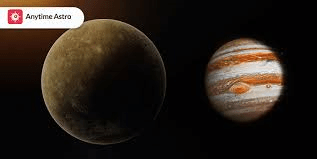
Early June brings a special treat: Mercury and Jupiter appear close together in the western sky just after sunset. On June 6, Mercury, shining at magnitude –1.5, stands about 3.7° west of Jupiter, which glows at magnitude –1.9. Both planets are visible low on the horizon about 30 minutes after sunset, but your window for observation is brief—they set within 25 minutes. For the best view, use binoculars and choose a spot with a clear western horizon. By June 8, Mercury and Jupiter are at their closest, with Mercury just 2° north of Jupiter. As the month progresses, Mercury’s disk grows from a tiny 5″ to a fatter 8″ crescent, making it an interesting target for telescopes134.
Venus—The Morning Star
June kicks off with Venus at its greatest western elongation on June 1, making it a brilliant “morning star.” Look for Venus in the eastern sky about an hour before sunrise. No telescope is needed—Venus is the third-brightest object in the night sky after the Sun and Moon. Its silvery glow is unmistakable, and it’s perfect for early risers and families wanting a gentle introduction to planet spotting43.
Mars—Leo’s Red Guest
Mars spends the month in the constellation Leo, visible in the western sky after sunset. On June 1, a waxing crescent Moon joins Mars, just 8° apart. Mars glows with a warm orange hue, making it easy to spot. By June 16, Mars has a close encounter with Regulus, Leo’s brightest star, standing just 48′ (less than a full degree) north of it. This pairing offers a beautiful color contrast—Mars’s orange against Regulus’s bluish-white. On June 29, the Moon returns to Leo, passing less than a degree from Mars. By month’s end, look for the galaxy pairing M95 and M96, just northeast of Mars—a treat for telescope users14.
Saturn and Neptune—A Distant Duo
Saturn is visible in the morning sky, rising higher as the month progresses. On June 16, early risers in the Eastern U.S. can catch the shadow of Saturn’s moon Titan transiting the planet’s disk starting at 4:11 a.m. EDT. By June 29, Neptune lies just 1° north of Saturn, making it easier to find with binoculars. Neptune shines at magnitude 7.8, and while its disk is tiny (just 2″ across), it’s a fascinating target for those with a telescope1.
Constellations and Stars: The Backbone of the Night Sky
The Summer Triangle
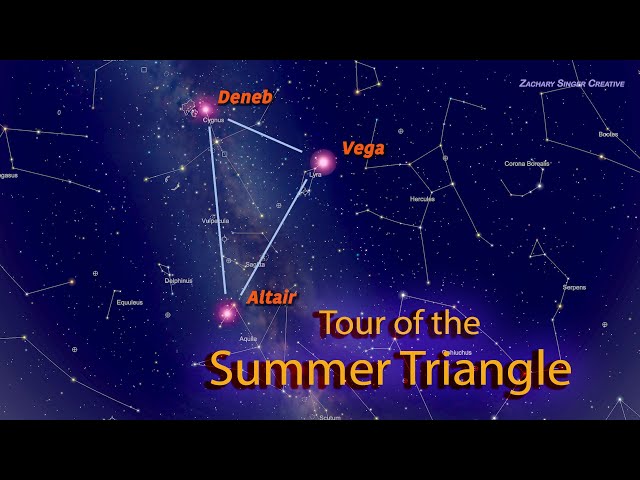
As darkness falls, look for the Summer Triangle—a giant asterism formed by three bright stars: Vega in Lyra, Deneb in Cygnus, and Altair in Aquila. This trio is visible all night and is a great starting point for beginners to navigate the sky23.
Boötes and Arcturus
Boötes, the Herdsman, is easily found by following the curve of the Big Dipper’s handle to Arcturus, one of the brightest stars in the sky. Arcturus shines with a golden hue and is a favorite among stargazers of all ages2.
Other Notable Constellations
- Hercules: Home to the famous Hercules Cluster (M13), a globular cluster visible with binoculars or a small telescope.
- Sagittarius and Scorpius: Rising in the southeast, these constellations are rich in star clusters and nebulae, especially for those with darker skies.
- Ursa Major and Ursa Minor: The Big and Little Dippers are always visible in the north, helping orient you to the night sky2.
- Capella in Auriga, Aquarius, Pegasus, Perseus, Andromeda, Capricornus, Cepheus, Ophiuchus, Cassiopeia, Draco: These constellations are visible at various times and offer a wealth of deep-sky objects for advanced observers2.
Special Celestial Events and Phenomena
June Solstice—The Longest Day
The summer solstice occurs on June 20 at 9:42 p.m. CDT (10:42 p.m. EDT), marking the official start of summer in the Northern Hemisphere. This is the longest day of the year, with up to 15 hours of daylight in some regions. While not a visual event, the solstice is a great time to observe the Sun’s path and reflect on Earth’s journey around it34.
Full Strawberry Moon
The full moon on June 11, known as the Strawberry Moon, rises at 3:45 a.m. and is a beautiful sight for early risers. Its name comes from the strawberry harvest season and is a highlight for families and photographers2.
Arietids Meteor Shower
From June 7 to 10, the Arietids meteor shower peaks. This is one of the strongest daytime meteor showers, but a few meteors can be seen in the early morning hours before sunrise. Look east about 30–60 minutes before dawn for the best chance to spot a meteor4.
Moon and Pleiades

On June 23, the waning crescent Moon meets the Pleiades star cluster in the early morning sky. This delicate pairing is easily visible to the naked eye and makes for a lovely photo opportunity4.
New Moon—Dark Sky Delight
The new moon on June 25 brings some of the darkest skies of the month, ideal for observing faint stars, galaxies, and nebulae. This is the best time for deep-sky observing and astrophotography4.
Tips for Stargazing with the Family
Make It a Family Adventure
Stargazing is a wonderful way to spend time together. Pack a picnic, bring blankets, and let everyone take turns spotting planets, stars, and constellations. Use free apps like Sky Tonight or Stellarium to help identify what you see5.
Start Simple
Begin with the brightest objects—Venus, Jupiter, Mars, and the Summer Triangle. Use the Big Dipper to find Polaris, the North Star, and explore the constellations around it5.
Try a Star Wheel or Star Deck
Download a star wheel or use a “Star Deck” of cards to make learning the constellations fun and interactive for kids. These tools are easy to use and help build confidence in navigating the night sky5.
Observe the Moon’s Phases
Follow the Moon throughout the month. Note how its shape changes and how it moves past different stars and planets. This is a great way to introduce the concept of lunar phases to children5.
Join a Star Party
Look for local astronomy clubs or star parties in your area. These events are family-friendly and often feature telescopes for public use, allowing everyone to see planets, star clusters, and nebulae up close5.
Summary Table: June 2025 Night Sky Highlights
| Date/Event | What to See | Best Time to View | Equipment Needed |
|---|---|---|---|
| June 1 | Venus at greatest elongation | Before sunrise, east | Naked eye |
| June 6–9 | Mercury & Jupiter close | After sunset, west | Binoculars |
| June 11 | Full Strawberry Moon | Early morning, east | Naked eye |
| June 16 | Mars near Regulus | Before sunrise, east | Naked eye |
| June 16 | Titan’s shadow on Saturn | Early morning, east | Telescope |
| June 20 | Summer Solstice | All day | N/A |
| June 23 | Moon near Pleiades | Before sunrise, east | Naked eye |
| June 25 | New Moon | All night | Binoculars/telescope |
| June 29 | Saturn & Neptune close | Early morning, east | Binoculars/telescope |
Educational Activities for All Ages
Star Clocks and Sundials
Build a simple star clock or sundial to learn how ancient people told time using the Sun and stars. These projects are fun, educational, and require minimal materials5.
Astrophotography for Beginners
Try capturing the Moon, planets, or constellations with a smartphone or camera. Use a tripod for stability and experiment with different exposure settings to get the best results45.
Constellation Stories
Learn the myths behind the constellations. Share stories about Hercules, Leo, and the Summer Triangle to make stargazing even more engaging for children5.
Conclusion
June 2025 is packed with celestial wonders for everyone—from the bright planets and the Summer Triangle to meteor showers and the solstice. Whether you’re a beginner or an advanced astronomer, the night sky offers endless opportunities for discovery and learning. Gather your family, head outside, and let the stars inspire you.
References and Further Reading
- Astronomy Magazine: June 2025 Sky Guide
What’s in the sky this month? Titan’s shadow transits Saturn, and Mercury meets with Jupiter in the evening
https://www.astronomy.com/observing/sky-this-month-june-2025/1 - Amateur Astronomers Association: What’s Up in the Sky? June 2025
Look for Arcturus in Boötes, Capella in Auriga, and the stars of Hercules, Sagittarius, Aquarius, and more
https://aaa.org/2025/06/01/whats-up-in-the-sky-june-2025/2 - Adler Planetarium: Adler Skywatch: June 2025
When is the summer solstice and how to see the planets Venus, Saturn, Mercury, and Mars this month
https://www.adlerplanetarium.org/blog/what-to-see-stargazing-tips-june-2025/3 - Orbital Today: Stargazing Guide for June 2025
Best astronomy events of the month, including Venus at greatest elongation, Mercury and Jupiter conjunction, and the Arietids meteor shower
https://orbitaltoday.com/2025/05/29/stargazing-guide-for-june-2025-best-astronomy-events-of-the-month/4 - Sky & Telescope: Family Fun with Sky Watching
Make stargazing a family activity! Find and view the planets together, or spend an early morning watching a meteor shower
https://skyandtelescope.org/astronomy-resources/stargazing-basics/family-projects-and-experiments/5
Footnotes
- Planetary Conjunctions: When two planets appear close together in the sky. Great for photography and naked-eye viewing14.
- Greatest Elongation: The point when a planet is farthest from the Sun in our sky, making it easier to observe4.
- Summer Triangle: An asterism of three bright stars (Vega, Deneb, Altair) that helps orient observers in the summer sky23.
- Meteor Shower: A celestial event where many meteors are seen radiating from one point in the sky4.
- Solstice: The day when the Sun reaches its highest or lowest point in the sky at noon, marking the start of summer or winter34.
Citations:
- https://www.astronomy.com/observing/sky-this-month-june-2025/
- https://aaa.org/2025/06/01/whats-up-in-the-sky-june-2025/
- https://www.adlerplanetarium.org/blog/what-to-see-stargazing-tips-june-2025/
- https://orbitaltoday.com/2025/05/29/stargazing-guide-for-june-2025-best-astronomy-events-of-the-month/
- https://skyandtelescope.org/astronomy-resources/stargazing-basics/family-projects-and-experiments/
- https://www.irishastronomy.org/kunena/42-celestial-events/102436-june-2025-observing-guide
- https://www.photopills.com/articles/astronomical-events-photography-guide
- https://www.planetary.org/night-sky/night-sky-what-to-see-this-month
- https://www.astronomy.com/observing/june-2025-whats-in-the-southern-hemisphere-sky-this-month/
- https://starwalk.space/en/news/night-sky-tonight-june
- https://www.nationalgeographic.com/science/article/night-sky-strawberry-moon-june-2025
- https://www.timeanddate.com/news/astronomy/night-sky-june-2025
- https://earthsky.org/astronomy-essentials/visible-planets-tonight-mars-jupiter-venus-saturn-mercury/
- https://universemagazine.com/en/celestial-highlights-of-june-2025/
- https://www.hipcamp.com/journal/camping/stargazing-guide-astronomical-calendar/
- https://www.almanac.com/night-sky-june
- https://www.youtube.com/watch?v=NZDbKMeUX7Q
- https://spacecenter.org/education-programs/explorer-camps/
- https://www.greenchildmagazine.com/stargazing-with-kids-101/
 Stan's Hobbies and Interests