There is an unforgettable magic the first time you steer a telescope across the dark void and watch a distant world swim into focus. You are no longer looking at a glossy photograph or a high-tech simulation; you are looking at live, raw photons that bounced off another planet millions of miles away and traveled through deep space to reach your eye.
For families and newcomers, jumping into planetary observing is one of the most rewarding hobbies on Earth. But how do you go from staring at a confusing tube on a tripod to tracking the cloud bands of Jupiter or the icy rings of Saturn?
Whether you are using a modest starter scope or optimizing a classic reflector, this comprehensive guide will give you the essential science, practical tips, and gear know-how to turn your backyard into a front-row seat for the solar system.
The Big Secret: Why Stars Twinkle and Planets Don’t
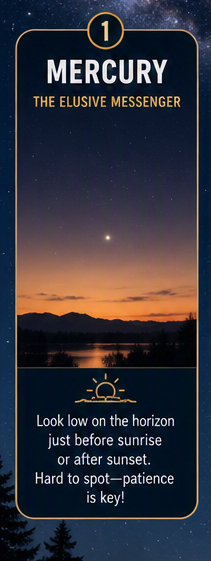
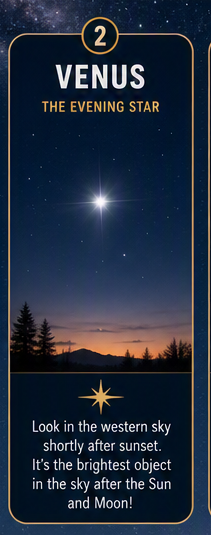
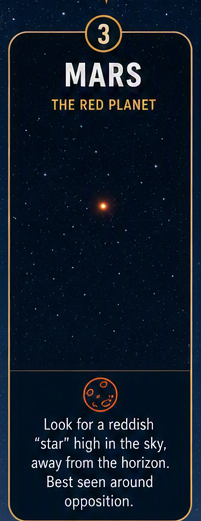
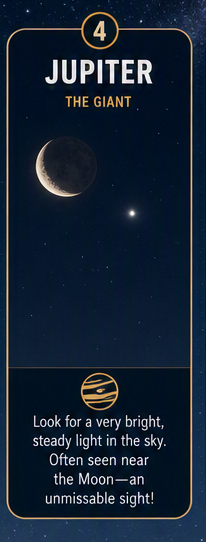
Before you even touch a focuser, the absolute first step to finding a planet is knowing how to spot one with your naked eye.
Have you ever wondered why stars flicker rapidly while some bright “stars” shine with a smooth, rock-steady light? It comes down to physics and optical distance:
- Point Sources vs. Disk Sources: Stars are so unfathomably far away that even through the world’s largest telescopes, their light arrives at Earth as a microscopic point. As that tiny needle of light passes through our turbulent atmosphere, atmospheric motion bends it back and forth, making it “twinkle”.
- Planetary Disks: Planets are much closer to Earth. Through a optic system, they are physical disks. Because the light comes from a wider beam rather than a single point, our atmosphere cannot easily distort the entire beam at once.
- The Golden Rule: If you see a bright object high in the sky that refuses to twinkle, you are almost certainly looking at a planet!
All planets move along a predictable highway across the night sky known as the ecliptic—the imaginary line representing the flat plane of our solar system. The Sun, Moon, and all major planets travel along this exact path through the constellations of the Zodiac.
What Can You Actually See Through a Backyard Scope?
It is vital to set realistic expectations. Backyard astronomy is not about massive Hubble-style images; it is about delicate, razor-sharp real-time details that reward patient observation.
1. Jupiter: The King of Planets
Jupiter is the undisputed champion for beginner astronomers. Even through a small 60mm telescope, Jupiter reveals its distinct dark reddish-brown Equatorial Belts and bright white zones.
- The Jovian Dance: With almost any telescope, you will immediately notice up to four bright specks lined up alongside the planet. These are the Galilean Moons—Io, Europa, Ganymede, and Callisto. If you sketch their positions night after night, you can watch them physically orbit Jupiter, just as Galileo did in 1610!
- Advanced Target: Try tracking the Great Red Spot—a giant storm larger than Earth itself that has raged for centuries. Because Jupiter rotates rapidly (one full day takes under 10 hours!), the Red Spot crosses the front of the disk every night.
2. Saturn: The Jewel of the Solar System
If you want to spark a lifelong love of science in a child, show them Saturn. Even at 30x to 50x magnification, Saturn’s icy ring system snaps into sharp contrast against the deep black of space.
- What to Look For: On nights with steady atmospheric conditions, look for the subtle gap within the main rings known as the Cassini Division. You will also easily spot Saturn’s giant moon Titan, shimmering nearby like a solitary star.
- Pro Tip: Earth periodically passes through Saturn’s ring plane, turning the rings edge-on and making them temporarily appear to vanish! Observing how the angle of the rings shifts from year to year is a incredible long-term family project.
3. Venus & Mercury: The Inner Phases
Because Venus and Mercury orbit closer to the Sun than Earth does, we view them from the side. As a result, they display crescent, half, and gibbous phases just like our Moon!
- Venus: Glowing as the brilliant “Evening Star” or “Morning Star,” Venus is the brightest natural object in the sky after the Moon. While dense sulfuric acid clouds prevent us from seeing surface features, tracking its dramatic changing crescent phases over several months is breathtaking.
4. Mars: The Red Planet
Mars is famously challenging because its distance from Earth changes dramatically. During “opposition” events (when Earth and Mars are closest), a small telescope under high magnification can reveal the stark white polar ice caps and dark surface markings like Syrtis Major.
3 Essential Tips for Crisp Planetary Views
┌─────────────────────────────────────────────────────────────────┐
│ PLANETARY OBSERVING CHECKLIST │
├─────────────────────────────────────────────────────────────────┤
│ [ ] Let your telescope cool down outdoors (30–60 mins) │
│ [ ] Observe from grass instead of warm concrete decks │
│ [ ] Check atmospheric “seeing” (are stars steady overhead?) │
│ [ ] Start with a lower power eyepiece, then boost magnification │
└─────────────────────────────────────────────────────────────────┘
Getting a great view is less about buying the biggest telescope and more about mastering light and atmosphere.
For great information on starter telescopes visit either Amazon or Optics Planet.
1. Let Your Optics Equalize (Thermal Equilibrium)
Glass and metal expand and contract with temperature changes. If you carry a warm telescope straight out of a heated house into the cool night air, internal thermal currents will blur your views like heat waves rising off a summer highway. Set your telescope outside 30 to 60 minutes before observing to let the mirror or lens adjust.
2. Avoid Thermal Plumes (Location Matters)
Never set up your tripod on an asphalt driveway or a wooden deck that has been baking in the summer sun. These surfaces radiate heat upwards all night, creating severe atmospheric distortion. Set up your tripod on grass or bare dirt whenever possible!
3. Do Not Over-Magnify!
The biggest trap for beginners is buying cheap eyepieces that promise “600x Magnification!” On most nights, Earth’s atmospheric turbulence caps usable magnification at around 150x to 200x, regardless of your telescope’s size.
A smaller, sharp, razor-clear planetary image at 100x magnification will always reveal more detail than a large, blurry, washed-out image at 300x!
Gear Up: Essential Accessories for Planetary Astronomy
To get the most out of your backyard sessions, having the right auxiliary gear makes all the difference:
- Quality Plössl or Planetary Eyepieces: Upgrading from the basic plastic eyepieces bundled with starter telescopes to mid-range dedicated eyepieces dramatically improves contrast and color fidelity. Wide-Field Planetary Eyepieces.
- Barlow Lenses: A high-quality 2x Barlow lens instantly doubles the magnification of every eyepiece you own without sacrificing eye relief. 2x Achromatic Barlow Lenses.
- Color Planetary Filters: Threading colored glass filters onto your eyepiece cuts down intense planetary glare and enhances subtle surface features—a #80A Blue filter brings out Jupiter’s cloud belts, while a #23A Light Red filter boosts contrast on Martian ice caps. Planetary Eyepiece Color Filter Sets.
- Manual Drive Motors & Slow-Motion Knobs: Because Earth rotates, planets will quickly drift out of your field of view at high magnification. Adding a simple clock-drive tracking motor or upgraded slow-motion control cables keeps targets smoothly centered. Telescope Tracking Motors & Mount Upgrades.
Step Outside and Look Up!
You don’t need a degree in astrophysics or an observatory dome on your roof to explore the solar system. Armed with a basic scope, a little thermal preparation, and an eager curious mindset, your family can step out into the yard tonight and witness real cosmic wonders.
Grab your star chart, let your optical tube cool down, and enjoy your journey across the night sky!
To help you get your telescope pointed in the right direction, here is a fantastic video breakdown on aligning finder scopes and star-hopping to solar system targets: How to Use a Beginner Telescope.
This video provides an excellent visual demonstration of setting up a beginner telescope, aligning the finder, and using star charts to locate targets easily.
Clear skies and happy hunting!