July 2026 Night Sky Guide: Planetary Conjunctions, the Milky Way, and Midsummer Meteors

Warm summer nights provide the perfect backdrop for backyard stargazing. Whether you are a seasoned observer with a telescope or a family using nothing but your naked eyes from a blanket in the grass, the celestial calendar for July 2026 is packed with spectacles.

This month features brilliant evening planets, stunning predawn celestial meetups, the peak of our home galaxy’s visibility, and the opening acts of the summer meteor season. Here is your complete guide on what to look for, when to watch, and how to find July’s best cosmic events.

Earth at Its Furthest Point: Aphelion (July 6)

We begin the month with a mind-boggling cosmic fact to share around the campfire. On July 6, 2026, Earth reaches aphelion—the exact point in our annual elliptical orbit where we are furthest from the Sun.

SUN –>>> 94.5 Million Miles to Earth

On this day, Earth will sit roughly 94.5 million miles away from our star. It feels counterintuitive for those of us experiencing midsummer heat in the Northern Hemisphere, but our seasons are dictated by the tilt of Earth’s axis, not our physical distance from the Sun. While it is a purely mathematical milestone that doesn’t change how the sky looks, it is a wonderful reminder of our steady journey through space.

The Evening Star: Venus Swaps Greetings with Regulus and the Moon

If you step outside just after sunset during the first half of July, your eyes will immediately be drawn to the western horizon. Venus reigns supreme as the “Evening Star,” blazing intensely against the twilight glow.

July 9 — Venus and Regulus

Shortly after the sun sinks on July 9, look closely at Venus. Right next to it, you will see a sharp, blue-white point of light. This is Regulus, the brightest star in the constellation Leo the Lion. Known historically as the “Heart of the Lion,” Regulus sits roughly 79 light-years away from us. The visual contrast between the steady, dazzling white light of nearby Venus and the twinkling, distant sapphire of Regulus makes this the prettiest naked-eye pairing of the week.

July 15–17 — The Cosmic Crescent

A few nights later, a young, razor-thin crescent Moon enters the western sky, climbing closer to Venus each evening. By dusk on July 17, the Moon will sit directly beside Venus.

Keep an eye out for a phenomenon known as earthshine, or the “Da Vinci glow.” This is when sunlight reflects off Earth’s oceans and clouds back onto the dark portion of the Moon, subtly illuminating the entire lunar disc. It creates a breathtaking, cinematic view easily seen without any equipment.

The Predawn Parade: Saturn, Mars, and the Seven Sisters

For the early risers—or the night owls who stay up past midnight—the eastern sky before dawn acts as a bustling planetary crossroads this month.

July 7–8 — The Saturn-Moon Rendezvous

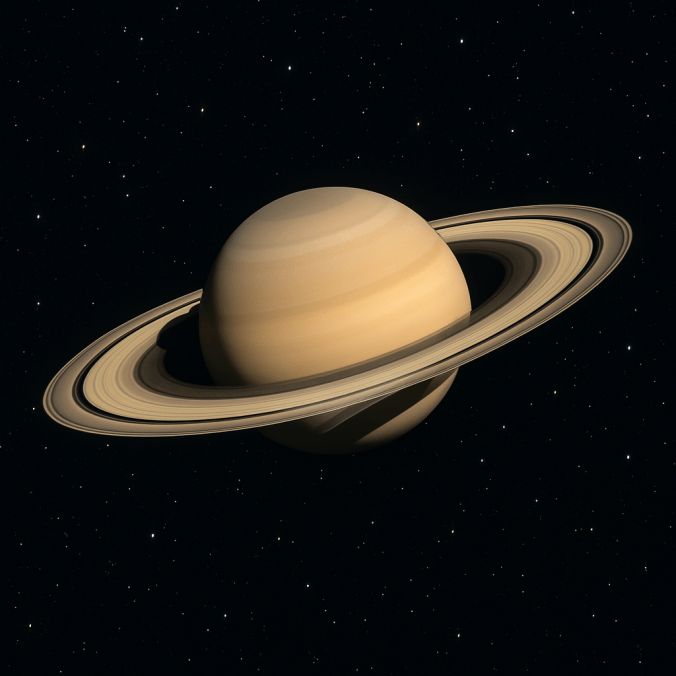
In the early hours of July 7 and 8, the Third Quarter Moon climbs above the eastern horizon accompanied by Saturn. The pair will be separated by less than nine degrees, roughly the width of a fist held at arm’s length. Saturn will shine with a steady, golden glow. If you have a modest backyard telescope or high-powered binoculars, this is an excellent time to view Saturn’s famous ring system, which is currently tilted at a narrow angle relative to Earth.

July 11 — The Morning Trio

Set your alarm roughly two hours before sunrise on July 11 for the crown jewel of the month’s planetary alignments. Looking east, a delicate crescent Moon will form a tight, striking triangle with an orange-hued Mars and the sparkling Pleiades star cluster (also known as the Seven Sisters).
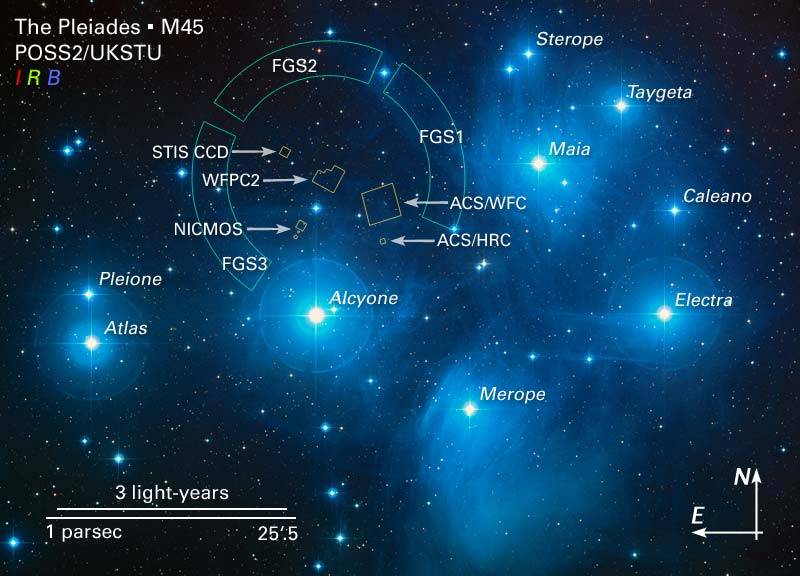
While the naked eye can comfortably spot six or seven stars in the Pleiades, viewing this triangle through a pair of standard binoculars will completely change your perspective. Optics pull dozens of hidden, icy-blue stars out of the dark velvet sky, framed beautifully by the ruddy glow of Mars.

July 14: Dark Skies and the Milky Way’s Core

Some of the best stargazing nights do not center around what is arriving in the sky, but rather what is missing. On July 14, the Moon reaches its New Moon phase, meaning it sits between the Earth and the Sun and leaves our night sky entirely dark.

Without natural lunar light pollution, mid-July provides the absolute best window of the year to witness the Milky Way.

How to Find the Galactic Center

  • When to look: Wait until late evening when the sun’s glare is entirely gone.
  • Where to look: Face directly south.
  • The Guidepost: Look for a cluster of stars that forms a shape resembling a classic Teapot (part of the constellation Sagittarius).

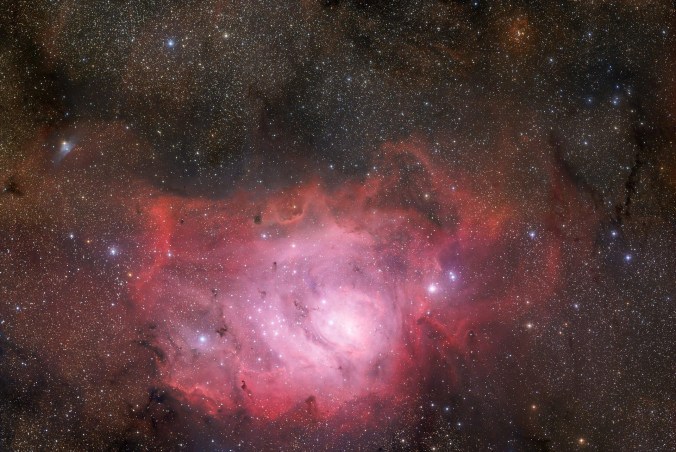
From a dark-sky location, such as a state or national park, the dense, glittering core of our home galaxy will appear to rise straight out of the Teapot’s spout like a pale, smoky column of steam.

Late July: The Buck Moon and Overlapping Meteors

The end of the month brings a massive shift in nighttime lighting, transitioning from deepest dark to full lunar brilliance, alongside the kickoff of summer shooting star season.

July 28–29 — The Full Buck Moon
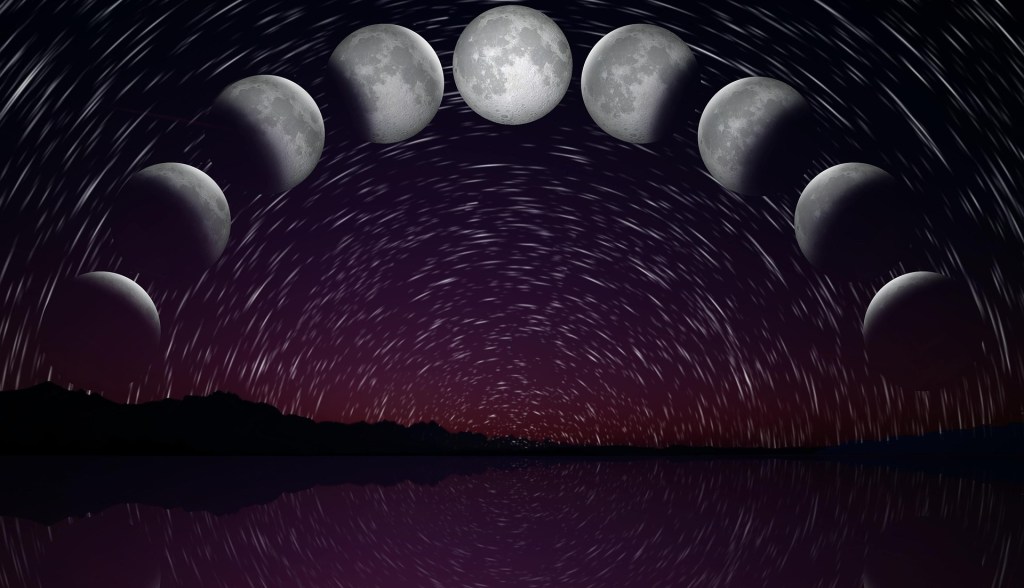
July’s full lunar orb reaches its official peak illumination on the morning of July 29, meaning the evenings of both July 28 and July 29 will offer spectacular moonrises. Known traditionally as the Buck Moon because male deer grow their new antlers rapidly during this stretch of summer, it will dominate the sky from dusk until dawn.

For the most magical view, catch it right as it clears the eastern horizon at sunset. An optical trick of human perception called the “Moon Illusion” will make the orb appear unnaturally massive as it hovers behind distant trees and buildings.

July 30–31 — A Double Meteor Shower

The month closes out with a dual cosmic performance: the Southern Delta Aquariids and the Alpha Capricornids meteor showers both reach their peak on the same nights.

The Delta Aquariids are a steady shower capable of producing up to 20 to 25 meteors per hour under ideal conditions, while the Alpha Capricornids are much sparser but famous for producing slow-moving, bright, colorful fireballs.

Stargazing Tip: Because the moon will be roughly 98% illuminated during the peak nights, its brilliant light will wash out the fainter meteors. To maximize your chances of spotting a shooting star, position yourself so a building or a line of trees blocks the direct light of the moon, and watch the darker patches of sky further away from the lunar disc.

For the best Astronomy equipment and supplies check Amazon and Optics Planet

Summary of Key July 2026 Skywatching Dates

DateCelestial EventBest Time to WatchWhere to Look
July 6Earth at AphelionAll Day (Orbital Milestone)N/A
July 7–8Moon and Saturn ConjunctionAfter Midnight until DawnEastern Sky
July 9Venus glides past Regulus45–60 Minutes After SunsetLow Western Horizon
July 11Moon, Mars, and Pleiades Trio2 Hours Before SunriseEastern Sky
July 14New Moon & Peak Milky Way CoreLate Night / MidnightSouthern Sky (Near the “Teapot”)
July 17Crescent Moon and Venus MeetupJust After SunsetLow Western Horizon
July 28–29The Full Buck MoonSunset to SunriseRises in the East
July 30–31Double Meteor Shower PeakMidnight to DawnAcross the Entire Sky

July 2026 reminds us that exploring the frontier of space doesn’t require expensive technology or long journeys. Grab a blanket, invite your family outside, and simply look up!

For a visual breakdown of where to find these planetary alignments and a preview of the upcoming meteor paths, check out this comprehensive July 2026 Skywatching Video Guide, which walks through each event chronologically to help you plan your nights under the stars.

Clear skies and happy hunting!
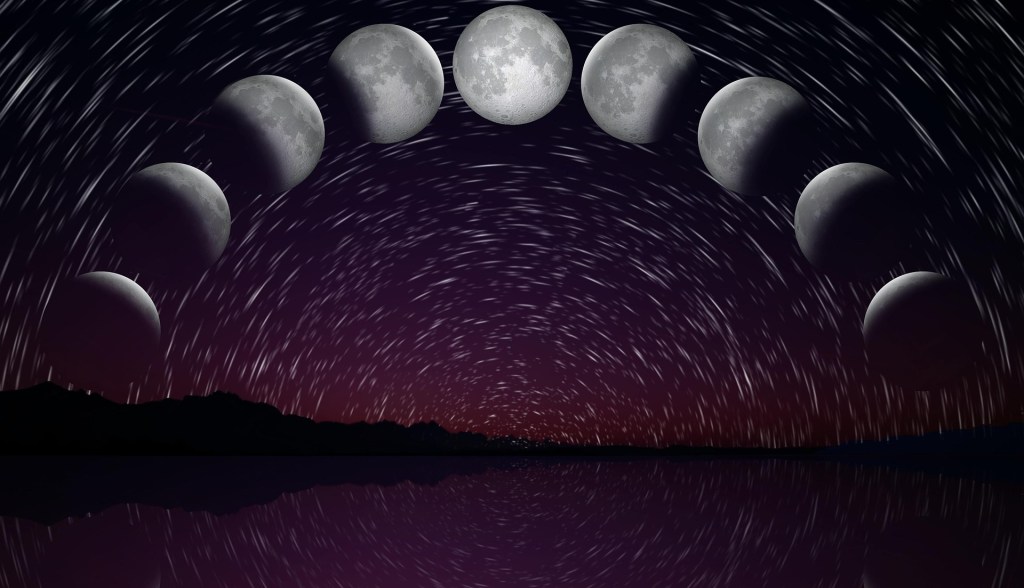
The Best Sights For Astronomy: A 2026 Guide to the Cosmos

Reprint from 2021

The night sky has been a source of wonder since the dawn of time, but the way we view it is constantly evolving. Since this guide was first published in 2021, new technology and celestial events have transformed the hobby. Whether you are stepping out into the backyard with a pair of binoculars or setting up a dedicated “light bucket” telescope, this updated guide highlights the absolute best sights to find in the 2026-night sky.

1. The Moon: Our Closest Neighbor

The Moon remains the most accessible and rewarding target for any astronomer. In 2026, we are paying closer attention than ever as international lunar missions prepare for a new era of human presence.

  • What to look for: Focus on the “terminator line”—the shadow line between day and night on the lunar surface. This is where craters like Tycho and Copernicus show the most dramatic relief.
  • Mission Gear: To see these details without the blinding glare, a high-quality lunar filter is essential. I recommend the Celestron 1.25-Inch Moon Filter to bring out hidden textures in the lunar highlands.

2. The Ringed Jewel: Saturn

Saturn is often the “wow” moment that turns a casual observer into a lifelong hobbyist.

  • The 2026 Perspective: We are currently approaching a period where Saturn’s rings appear very thin from our perspective on Earth. This unique angle allows you to focus on the planet’s golden hue and its largest moon, Titan, which appears as a bright pinprick of light nearby.
  • Mission Gear: For crisp views of planetary rings, a steady tripod and a specialized eyepiece are key. The Celestron Omni Series Barlow Lens doubles the magnification of your existing eyepieces, perfect for getting a closer look at Saturn.

3. Deep-Sky Wonders: The Andromeda Galaxy (M31)

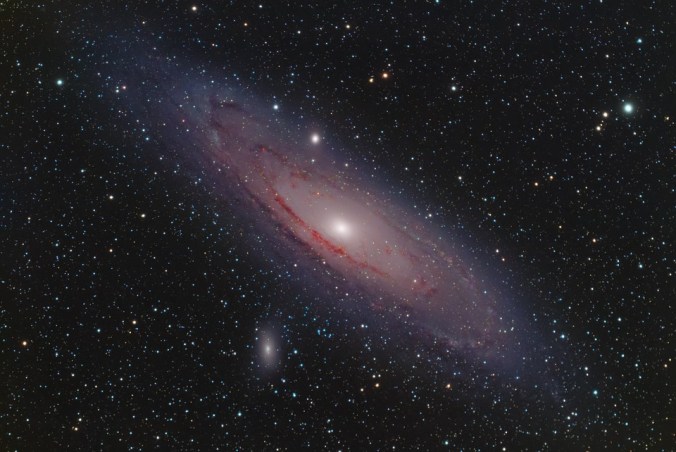
If you want to look beyond our own neighborhood, the Andromeda Galaxy is your best target. Located 2.5 million light-years away, it is the most distant object visible to the naked eye under dark skies.

  • The View: Through a telescope, it appears as a magnificent glowing oval. In 2026, smartphone astrophotography has made it easier than ever to capture the spiraling dust lanes of this galactic neighbor.
  • Mission Gear: Capturing the Andromeda Galaxy is simple with the right mount. The Celestron NexADapter Universal Smartphone Adapter lets you align your phone to your telescope perfectly for stunning deep-space photos.

4. The Great Orion Nebula (M42)

Found in the “sword” of the constellation Orion, this stellar nursery is a must-see during the winter and spring months.

  • The Experience: Even with modest binoculars, you can see the fuzzy glow of glowing gas where new stars are being born. A medium-sized telescope reveals the Trapezium, a tight cluster of four bright stars at the nebula’s heart.

5. 2026 Special Feature: Comet Wierzchos

While the planets are reliable, 2026 brings us unique visitors. Keep an eye on the latest charts for Comet Wierzchos. Comets are the “wild cards” of astronomy, often growing bright enough to be seen with simple binoculars as they swing around the Sun, trailing beautiful tails of ice and dust.


Recommended “Mission Gear” for 2026

To get the most out of these sights, having the right equipment is key. Here are the top-rated tools for this year’s mission:

  • Binoculars (10×50): The Celestron UpClose G2 10×50 Binoculars are perfect for scanning the Milky Way and finding large star clusters like the Pleiades.
  • The “Light Bucket” Telescope: For those ready to see Andromeda and the Orion Nebula in breathtaking detail, the Celestron NexStar 8SE Schmidt-Cassegrain Telescope is the gold standard for deep-sky observation.
  • Star Maps & Apps: Use a modern sky-mapping app to align your telescope and identify constellations in real-time.

Integrated Article Section

The Best Sights For Astronomy: A 2026 Guide to the Cosmos

June–December 2026 Night Sky Calendar: A Beginner‑Friendly Narrative Guide

As the year moves into summer, the night sky begins a gentle transformation. Constellations shift, the Milky Way rises earlier, and some of the most beloved celestial events return. This extended guide is designed to help beginners, families, and casual skywatchers feel confident exploring the cosmos from June through December.

🌠 June 2026 — The Gateway to Summer Skies

June marks the beginning of true Milky Way season. Once twilight fades, the sky darkens enough to reveal a soft, glowing river stretching across the heavens — our galaxy seen edge‑on.

To find it, step outside after 10 PM and face south. Look for the bright red star Antares in Scorpius, then shift your gaze slightly left toward Sagittarius, shaped like a teapot. The Milky Way rises like steam from that celestial teapot, making it one of the easiest sky landmarks for beginners.

Families can turn this into a fun challenge: who can spot the “teapot” first? And if you have a tripod, even a smartphone can capture the Milky Way with a 20‑second exposure.

🌌 July 2026 — Warm Nights and Falling Stars

July brings the gentle Delta Aquariid Meteor Shower, peaking around July 28–30. These meteors are subtle but steady, offering a peaceful show for late‑night skywatchers.

To find the radiant, look southeast after midnight. Start by locating the Great Square of Pegasus — a large, bright square high in the sky — then drift downward toward the faint constellation Aquarius.

Let your eyes adjust for at least 20 minutes, avoid bright screens, and settle into a reclining chair. You may see 15–20 meteors per hour, each a delicate streak of cosmic dust burning high above.

🌠 August 2026 — The Perseid Celebration

The Perseid Meteor Shower peaks August 11–13, and it’s the highlight of the summer sky. Even from suburban backyards, the Perseids produce bright, fast meteors that often leave glowing trails.

To find the radiant, face northeast after midnight. Look for Cassiopeia, shaped like a giant “W.” The Perseids appear to stream from just below it, near the constellation Perseus.

Beginners should lie flat and look halfway up the sky rather than directly at the radiant — meteors can appear anywhere. Many families make this an annual tradition, complete with blankets, snacks, and whispered wishes under the stars.

🌌 September 2026 — Rings and Equinox

September brings the Autumn Equinox on September 22, when day and night balance perfectly. Around this time, Saturn becomes a showpiece in the evening sky.

Look southeast around 9 PM for a steady, golden light that doesn’t twinkle — that’s Saturn. Through binoculars, it appears as a tiny oval; through a small telescope, its rings become unmistakable.

A helpful beginner trick: use the Moon as a guide. When the Moon passes near Saturn mid‑month, simply follow the Moon’s glow to the planet. It’s a magical moment for first‑time observers.

🌠 October 2026 — Twin Meteor Shows

October offers two meteor showers with very different personalities.

The Draconids peak around October 8 and are unusual because they’re best seen just after sunset. Look north toward the constellation Draco, which winds between the Big and Little Dippers.

Later in the month, the Orionids peak around October 21. These meteors are fast and bright, streaking from the east after midnight near the rising constellation Orion. Beginners can find Orion by spotting the three stars in a row that form his belt.

Both showers are excellent for families — easy to find, easy to enjoy, and full of surprises.

🌌 November 2026 — The Leonid Legacy

The Leonid Meteor Shower peaks November 17–18, famous for its occasional bursts of activity. Even in quieter years, the Leonids offer crisp, fast meteors slicing through the cold autumn air.

To find the radiant, face east‑northeast after midnight and look for the constellation Leo, shaped like a backward question mark. If you’re new to stargazing, use the Big Dipper as a pointer — follow the curve of its handle downward to find Leo.

It’s a rewarding challenge for beginners and a beautiful way to welcome the colder months.

🌠 December 2026 — The Geminid Finale

The year ends with the spectacular Geminid Meteor Shower, peaking December 13–14. Unlike most showers, the Geminids are visible all night, making them perfect for early‑evening family viewing.

Their radiant lies near Gemini, marked by the twin stars Castor and Pollux high overhead. Beginners can find Gemini by locating Orion’s Belt and following it upward.

Geminid meteors are slow, bright, and often colorful — green, yellow, even blue — making them ideal for photography and unforgettable for kids. It’s the perfect cosmic finale to the year


A Dramatic Conclusion

As we gaze upward, we aren’t just looking at points of light; we are looking back through time itself. The photons hitting your eye from the Andromeda Galaxy tonight began their journey long before humans walked the Earth. This connection to the infinite is what makes astronomy a lifelong passion.

But the cosmos is never still, and the wonders of the night sky are constantly shifting. Prepare your lenses and steady your tripods, for next month we journey even further into the void. Join us as we reveal the hidden giants of our solar system in our upcoming April guide!

Space Mysteries: Exploring the Unknown Universe

The universe is a vast and fascinating place filled with mysteries that have captivated humans for centuries. From enigmatic black holes to the possibility of alien life, space holds secrets that challenge our understanding of science and inspire curiosity in people of all ages. In this family-friendly article, we’ll explore some of the most intriguing space mysteries, explain them in simple terms, and discuss what scientists are doing to uncover their secrets.


1. What Are Black Holes?

Black holes are among the most mysterious objects in the universe. They form when massive stars collapse under their own gravity, creating a region where gravity is so strong that nothing—not even light—can escape.

Scientists have discovered different types of black holes:

  • Stellar black holes form from dying stars.
  • Supermassive black holes sit at the centers of galaxies, including our Milky Way.
  • Intermediate black holes are a rare type that falls between the other two categories.

One of the biggest mysteries about black holes is what happens inside them. The center of a black hole, called the singularity, is a point where gravity becomes infinite and space-time breaks down. Scientists use mathematical models to study these regions, but no one knows for sure what lies beyond the event horizon—the boundary around a black hole where escape becomes impossible[^1].


2. Are We Alone in the Universe?

The question of whether life exists beyond Earth is one of humanity’s greatest mysteries. Scientists search for alien life by studying planets outside our solar system, known as exoplanets.

To find habitable worlds, researchers look for planets in the “Goldilocks zone”—a region around a star where conditions are just right for liquid water to exist. NASA’s Kepler Space Telescope and its successor, the James Webb Space Telescope, have identified thousands of exoplanets[^2].

One intriguing candidate is Proxima Centauri b, an Earth-sized planet orbiting our closest neighboring star. While scientists haven’t found direct evidence of alien life yet, they continue to study atmospheres and chemical compositions to look for signs like oxygen or methane that might indicate biological activity[^3].


3. The Mystery of Dark Matter

When astronomers observe galaxies, they notice something strange: The stars within them move as if there’s far more mass than we can see. This invisible material is called dark matter, and it makes up about 27% of the universe[^4].

Dark matter doesn’t emit light or energy, which means scientists can’t see it directly. Instead, they detect its presence through its gravitational effects on visible objects like stars and galaxies.

Despite decades of research, scientists still don’t know what dark matter is made of. Some theories suggest it could be composed of exotic particles that interact weakly with ordinary matter[^5]. Experiments like CERN’s Large Hadron Collider aim to uncover its secrets by studying particle collisions at high energies.


4. What Are Fast Radio Bursts?

Fast Radio Bursts (FRBs) are mysterious flashes of radio waves coming from deep space. These bursts last only milliseconds but release as much energy as the Sun does in an entire day[^6].

FRBs were first discovered in 2007, and since then, astronomers have detected hundreds more using radio telescopes like Canada’s CHIME Observatory. Some FRBs seem to repeat from the same location, while others occur only once[^7].

What causes FRBs? Scientists think they might be produced by neutron stars (the dense remnants of supernova explosions), but other theories suggest exotic phenomena like magnetars or even advanced alien civilizations[^8].


5. The Enigma of Time Travel

Time travel has fascinated humans for centuries and often appears in science fiction stories. But is it possible according to science?

Einstein’s theory of relativity suggests that time isn’t fixed—it can stretch or compress depending on how fast you’re moving or how close you are to a massive object like a black hole[^9]. This means traveling into the future is theoretically possible if you move at near-light speeds or experience intense gravitational fields.

However, traveling into the past presents paradoxes (like changing events before they happen) that make it much harder to explain scientifically. While time travel remains a mystery, it continues to inspire both scientists and storytellers alike!


6. Why Do Galaxies Collide?

Galaxies are enormous collections of stars, gas, and dust held together by gravity—but they don’t stay still! Over billions of years, galaxies can collide and merge into larger structures[^10].

One famous example is the Andromeda Galaxy, which is on a collision course with our Milky Way Galaxy. In about 4 billion years, these two galaxies will merge into one giant galaxy called “Milkomeda”[^11].

Galactic collisions might seem chaotic, but they rarely result in star collisions because stars are so far apart relative to their sizes. Instead, these events create new star-forming regions and reshape galaxies’ appearances over time[^12].


7. The Mystery of Cosmic Inflation

The Big Bang theory explains how the universe began about 13.8 billion years ago—but scientists believe something extraordinary happened just moments after: cosmic inflation. During this period, the universe expanded faster than the speed of light[^13].

Why did inflation occur? Scientists don’t fully understand what caused this rapid expansion or why it stopped after such a short time (less than a trillionth of a second). Studying cosmic microwave background radiation—the faint glow left over from the Big Bang—helps researchers learn more about inflation’s effects on today’s universe[^14].


Fun Activities for Families

Want to explore space mysteries at home? Here are some engaging activities:

  1. Black Hole Simulation: Use marbles and bowls to simulate how objects fall into a black hole’s gravity well!
  2. Alien Planet Design: Create your own exoplanet with features like oceans or diamond rain (inspired by real discoveries).
  3. Dark Matter Hunt: Use flashlights and shadows to explain how invisible forces affect visible objects!
  4. Time Travel Debate: Discuss whether you’d rather visit the future or change history—and why!

Conclusion

Space mysteries remind us how vast and complex our universe truly is—and how much more we have yet to discover! Whether it’s black holes swallowing light or galaxies colliding over billions of years, each mystery challenges us to think bigger and ask deeper questions about existence itself.

As scientists continue exploring these phenomena with cutting-edge technology like telescopes and particle accelerators, we gain new insights into our cosmic origins—and perhaps even clues about our future among the stars! So grab your telescope or stargazing app tonight—you never know what wonders await just beyond Earth’s atmosphere!


References & Footnotes

[^1]: NASA Goddard Space Flight Center (2025). “Black Holes Explained.” https://www.nasa.gov/blackholes
[^2]: Kepler Mission Team (2025). “Exoplanet Discoveries.” https://kepler.nasa.gov/discoveries/
[^3]: James Webb Space Telescope Team (2025). “Proxima Centauri b Observations.” https://jwst.nasa.gov/observations/
[^4]: European Space Agency (2025). “Understanding Dark Matter.” https://www.darkmatter.eu/
[^5]: CERN (2025). “Particle Physics Experiments.” https://home.cern/science/darkmatterresearch
[^6]: CHIME Observatory (2025). “Fast Radio Burst Catalog.” https://chimeobservatory.org/frbs/
[^7]: Nature Astronomy Journal (2025). “Repeating FRBs.” https://nature.com/articles/frbs-repeating-patterns
[^8]: Harvard-Smithsonian Center for Astrophysics (2025). “FRB Origins.” https://cfa.harvard.edu/frb-research/
[^9]: Einstein Relativity Institute (2025). “Time Travel Possibilities.” https://einsteinrelativity.org/timetravel/
[^10]: Hubble Space Telescope Team (2025). “Galactic Collisions.” https://hubblesite.org/galaxies-colliding/
[^11]: NASA Science News (2025). “Milky Way-Andromeda Collision Course.” https://science.nasa.gov/milkomeda-future-galaxy/
[^12]: Space.com (2025). “Star Formation During Collisions.” https://space.com/star-formation-collisions/
[^13]: Planck Satellite Mission Team (2025). “Cosmic Inflation Studies.” https://planckmission.org/inflation-data/
[^14]: Astrophysical Journal Letters (2025). “Microwave Background Radiation Insights.” https://astrophysicaljournal.org/cosmic-background-radiation/