Comets Visitors From Beyond

The one thing we love the most in the world of astronomy is a good mystery. And if there was ever a mysterious and yet very powerful force of nature that we witness in the night skies, it is the coming of the mighty comet.

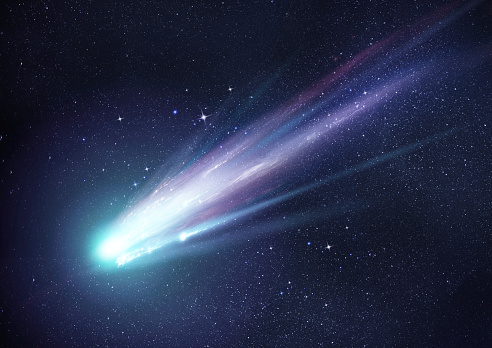
A bright comet with large dust and gas trails as the comets orbit brings it close to the Sun. Illustration.

The arrival of a comet within view of Earth is an event of international importance. Witness the huge media attention that the Haley or Hale-Bopp have had when they have come within view The sight of these amazing space objects is simultaneously frightening and awe inspiring.

Above all, it is during these comet viewings that the astronomer comes out in all of us. But what is a comet? Where did it come from? And how does it get that magnificent tail?

We should never confuse comets with asteroids. Asteroids are small space rocks that come from an asteroid belt between Mars and Jupiter. While still quite stunning to see, they pale in comparison to the arrival of a comet. Asteroids also have received considerable study by the scientific community.

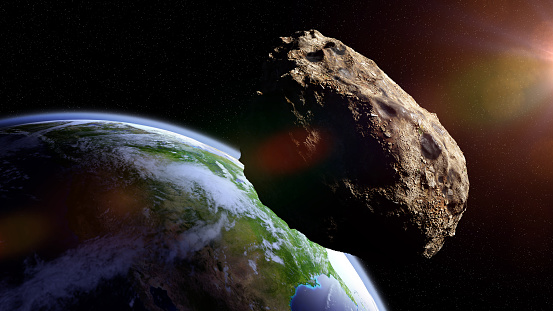
meteorite from outer space, falling toward planet Earth, dramatic science fiction scene

Not as much is known about comets. As a rule, comets are considerably larger than asteroids. The composition of a comet is a mixture of nebulous, gasses, ice, dust and space debris. One scientist called the composition of a comet as similar to a “dirty snowball” because the composition is so diverse and changeable. The center or nucleus of a comet is usually quiet solid but the “snowball” materials often create a “cloud” around that nucleus that can become quite large and that extends at great lengths behind the comet as it moves through space. That trailing plume is what makes up the comet’s magnificent tail that makes it so exciting to watch when a comet comes within view of Earth.

The origins of comets is similarly mysterious. There are a number of theories about where they come from but it is clear that they originate from outside our solar system, somewhere in deep space. Some have speculated they are fragments left over from the organization of planets that get loose from whatever gravitational pull and are sent flying across space to eventually get caught up in the gravity of our sun bringing them into our solar system.

Another theory is that they come from a gaseous cloud called the Oort cloud which is cooling out there after the organization of the sun. As this space debris cools, it gets organized into one body which then gathers sufficient mass to be attracted into the gravity of our solar system turning into a fast moving comet plummeting toward our sun. However, because of the strong gravitational orbits of the many planets in our solar system, the comet does not always immediately collide with the sun and often takes on an orbit of its own.

The life expectancy of comets varies widely. Scientists refer to a comet that is expected to burn out or impact the sun within two hundred years as a short period comet whereas a long period comet has a life expectancy of over two hundred years. That may seem long to us as earth dwellers but in terms of stars and planets, this is a very short life as a space object indeed.

Scientists across the globe have put together some pretty impressive probes to learn more about comets to aid our understanding of these visitors from beyond. In 1985, for example, the United States put a probe into the path of the comet Giacobini-Zinner which passed through the comets tail gathering tremendous scientific knowledge about comets. Then in 1986, an international collation of scientists were able to launch a probe that was able to fly close to Haley’s comet as it passed near Earth and continue the research.

While science fiction writers and tabloid newspapers like to alarm us with the possibility of a comet impacting the earth, scientists who understand the orbits of comets and what changes their paths tell us this is unlikely. That is good because some comets reach sizes that are as big as a planet so that impact would be devastating. For now, we can enjoy the fun of seeing comets make their rare visits to our night sky and marvel at the spectacular shows that these visitors from beyond put on when they are visible in the cosmos.

Space The Final Frontier

While it was just a TV show, that little speech at the beginning of the original Star Trek show really did do a good job of capturing our feelings about space. It is those feelings that drive our love of astronomy and our desire to learn more and more about it.

The thing that is most exciting about studying the universe is also the most frustrating and that is that no matter how expert we get, we are always just getting started. But if it’s any consolation, some of the most advanced minds in science and from history always felt that way about space. Even the greats such as Copernicus and Einstein looked up into space and felt like they were just a spec in the presence of such infinity.

USS Enterprise

Of course space is not infinite. It has to be finite which means somehow there must be an end to it. But if there is, nobody on this tiny planet has figured out where it is. The only thing that has brought us to “the end of the universe” is our limited ability to see any deeper into space.

But conquering the final frontier of space means more than just seeing more stars and planets and building the biggest telescope we can. There are some mind blowing concepts about how space works that we have ahead of us to conquer. The big bang and the expanding universe alone was enough to set your mind to spinning. But then we have the coming of Einstein and the theory of relativity to set the entire idea on its ear. All of a sudden space is not just three dimensions but the dimension of time becomes exportable and the twisting and maybe even travel through time seems almost possible.

The frontier of space is as much a journey of the mind as it is of distance. When Steven Hawking showed us the mysteries of black holes, all of a sudden, time and space could collapse and be twisted and changed in those intergalactic pressure cookers. If not for the wonders of radio astronomy, these ideas would remain just ideas but slowly science is catching up with theory.

But the brilliance of mathematicians and genius minds like Hawking and Einstein continue to stretch our concepts of space. Now we have the string theory that could revolutionize everything we know about space, time and how the universe relates to itself. We can’t just say, no, we have discovered enough. It’s the final frontier. The Starship Enterprise would not stop exploring so neither can we. Because there is a hurdle still ahead that has a name but no real answer to it yet. It’s called the Unified Field Theory and those that know tell us that when the Einsteins and Hawkings of our day crack that theory, every other theory will fall into place.

These exciting concepts seem some tools to put the enormity of space in context. That may also be the value of science fiction. Not only are science fiction writers often the visionaries of what comes to be in the future but they give us the idea that space is knowable, that despite how big it is and how small we are, we can conquer this frontier like we have conquered others before us.

For mankind, that is often enough. If we can get the vision that we can conquer something, even if it is something so massive, so impossibly huge, it seems that we are capable of anything. And the love of astronomy, maybe unlike any other force on earth, has brought together mankind toward that common goal of conquering the universe. The quest to establish an international space station and to cooperate on spreading our reach off of this planet seems to find commonality between nations that otherwise cannot get along on the surface of the earth.

That alone may be a reason that we must continue to support astronomy locally and the space program nationally. It is something that seems to bring peace rather than war and make us a better people. But more than that it is as though this is what we were created to do. To reach out to the stars may be our destiny. If so then our love of astronomy is more than a hobby, it’s a calling.

The Wow Hobby

Some people sometimes view hobbies as sometimes silly or frivolous pastimes. And it’s true some hobbies are like that. But it is healthy to have a hobby because it diversifies our interests and keeps us active and fun to be with. But many hobbies are for the few that really get into that area of study. Stamp collecting or rock climbing are valid hobbies. But to be sure, these are not hobbies that just anybody will get into.

Astronomy, by contract, that you could say everybody gets into at some point or another. It is safe to say that everybody at some point has looked up at a magnificent night sky and said “WOW.” At that moment, even if was only for that moment, that person became an amateur astronomy hobbyist. They had that “Wow” moment in what can only be described as the “WOW” hobby.

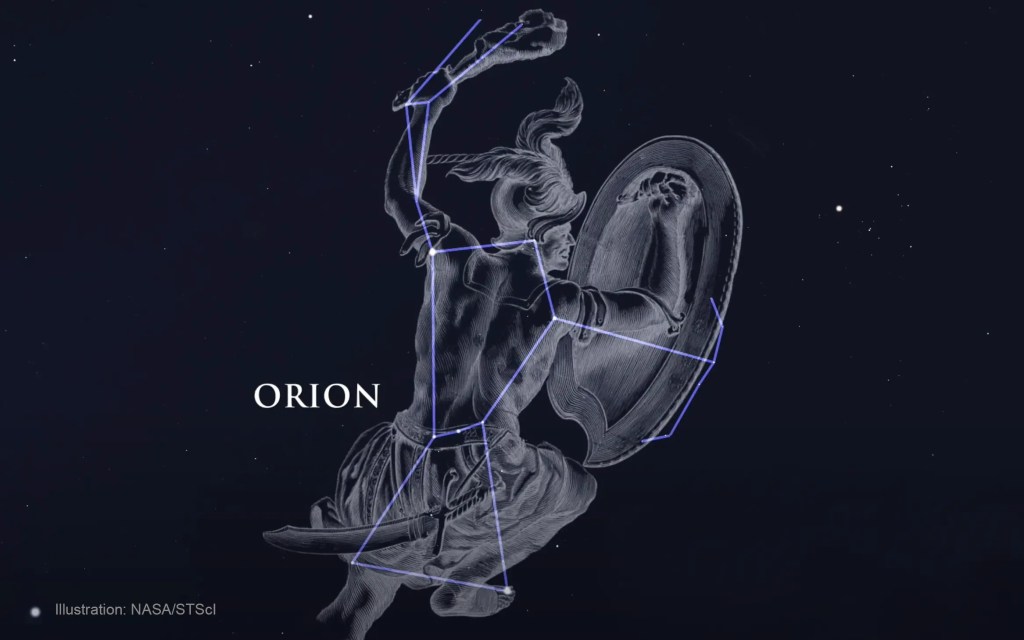
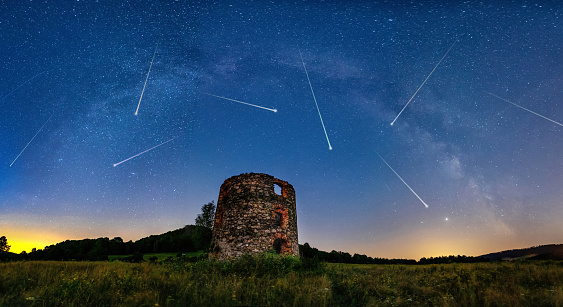
That common experience is what makes astronomy one of the most exciting and popular hobbies of them all. Any hobby has to have a few “wow” moments. Whether it’s hitting that strike in bowling or finding that perfect stamp, there has to be a moment when the bell rings. Well astronomy has many “wow” moments that occur virtually any clear night in the stars. From the coming of an asteroid shower to just figuring out another constellation, there is so much to do and play with in astronomy that you can be a hobbyist your whole life and never get bored.

THIS LINK WILL TAKE YOU TO THE WEBB TELESCOPE LAUNCH MEDIA KIT

WEBB TELESCOPE PICTURES

Besides the excitement of astronomy, another reason it makes a great hobby is that it is easy and cheap to get started. Unlike skiing for example, to just start enjoying astronomy, all you need is the night sky. But there is no end to the levels of complexity and sophistication you can get to as you move along in astronomy as well. So like any good hobby, astronomy is endlessly fascinating and tremendously addictive because there is always more you want to learn and more you can do to make your knowledge and experiences more interesting and fun.

A great side benefit of how many people are into astronomy is that it is a tremendously social hobby as well. This is unusual for a hobby that is associated with a science, that is executed by staring up in the sky by yourself and that is not competitive. But in any town or city, there are at least a few and probably dozens of astronomy clubs and associations that meet regularly to discuss astronomy.

This is the perfect way to introduce a new recruit to the hobby of astronomy. These clubs thrive on sharing their love of astronomy with new members, kids and those just learning how to explore the stars. Most astronomy clubs schedule regular “safaris” to go out away from the lights of the city and get a good night of sky watching done. Going on such an outing with a big group of enthusiasts is the type of experience that will take a passive interest into astronomy and change it into a healthy obsession.

This side-by-side comparison shows observations of the Southern Ring Nebula in near-infrared light, at left, and mid-infrared light, at right, from NASA’s Webb Telescope. This scene was created by a white dwarf star – the remains of a star like our Sun after it shed its outer layers and stopped burning fuel though nuclear fusion. Those outer layers now form the ejected shells all along this view. In the Near-Infrared Camera (NIRCam) image, the white dwarf appears to the lower left of the bright, central star, partially hidden by a diffraction spike. The same star appears – but brighter, larger, and redder – in the Mid-Infrared Instrument (MIRI) image. This white dwarf star is cloaked in thick layers of dust, which make it appear larger. The brighter star in both images hasn’t yet shed its layers. It closely orbits the dimmer white dwarf, helping to distribute what it’s ejected. Over thousands of years and before it became a white dwarf, the star periodically ejected mass – the visible shells of material. As if on repeat, it contracted, heated up – and then, unable to push out more material, pulsated. Stellar material was sent in all directions – like a rotating sprinkler – and provided the ingredients for this asymmetrical landscape. Today, the white dwarf is heating up the gas in the inner regions – which appear blue at left and red at right. Both stars are lighting up the outer regions, shown in orange and blue, respectively. The images look very different because NIRCam and MIRI collect different wavelengths of light. NIRCam observes near-infrared light, which is closer to the visible wavelengths our eyes detect. MIRI goes farther into the infrared, picking up mid-infrared wavelengths. The second star more clearly appears in the MIRI image, because this instrument can see the gleaming dust around it, bringing it more clearly into view. The stars – and their layers of light – steal more attention in the NIRCam image, while dust pl

THIS LINK WILL TAKE YOU TO THE Webb Telescope Launch Media Kit

WEBB TELESCOPE PICTURES

By going out with a group, you can rub elbows with people who know the night sky, can help you learn how to spot the great constellations and how to train your eyes to see the really cool stuff going on over our heads virtually every night. Astronomy is a passion that is shared equally by everyone from children, to college students to serious scholars in the field to even professional astronomers who work at exploring the universe full time. On any given night, you or your child may be sitting next to an award winning professional astronomer who will happily provide a private lesson looking up at the cosmos just for the sheer fun of shared learning.

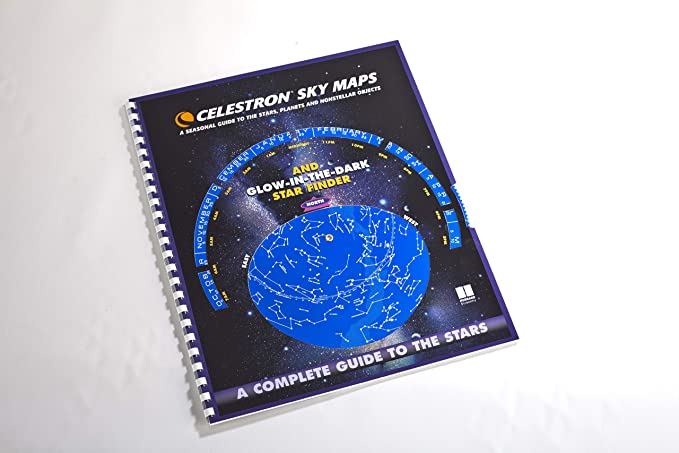
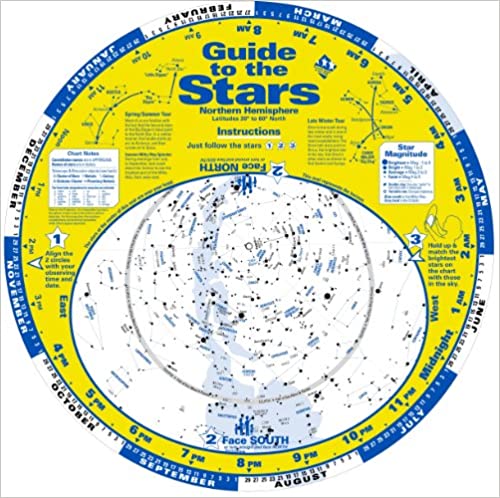
The great thing is that everything we have talked about here costs virtually nothing. You can get started with your love of astronomy and learn as you go so when you are ready to make some investment in equipment, you have learned from others what is just the right thing for you. Sure, eventually you will want some astronomy magazine subscriptions, a star map or two and binoculars or a telescope. But those things come as your love of the hobby matures. Meanwhile, get out there, meet others who share your excitement about star gazing and get to know a hobby that never stops making you say “WOW”.

Astronomy Binoculars A Great Alternative

It seems from the moment you begin to take your love of astronomy seriously, the thing that is on your mind is what kind of telescope will you get. And there is no question, investing in a good telescope can really enhance your enjoyment of your new passion in astronomy. But don’t be too hasty to keep up with the big wigs in the astronomy clubs that have advanced telescopes. There is another alternative that can give you most of the advantages of a telescope and some extra flexibility and reduced cost to boot.

That alternative is a good pair of astronomy binoculars. Mostly we think of binoculars as the thing you use to see the football game when you have to sit in the cheap seats. But if you do some homework and had a good grasp on what your stargazing objectives are, the advantages of astronomy binoculars over an entry level telescope can be pretty convincing.

Stephen James O’Meara’s Observing the Night Sky with Binoculars: A Simple Guide to the Heavens 

* As a rule, they are cheaper. So you can get a lot of good stargazing at much less of an investment. You can always spend more money later but for now, this may be just the solution for you.

* There are not so many accessories. To own and operate a telescope takes a lot of orientation to how to set up and use the device. Beyond that, tuning it for optimum view and diagnosing it when you have problems can sometimes make the telescope more of the passion than stargazing itself.

* It is much easier to use. If you have not bought a telescope yet, you may have seen telescope owners going through a laborious set up and break down discipline for each use. This is time they are not looking at the stars. The binocular users are happily stargazing as this goes on.

* Binoculars are lightweight and portable. Unless you have the luxury to set up and operate an observatory from your deck, you are probably going to travel to perform your viewings. Binoculars go with you much easier and they are more lightweight to carry to the country and use while you are there than a cumbersome telescope set up kit.

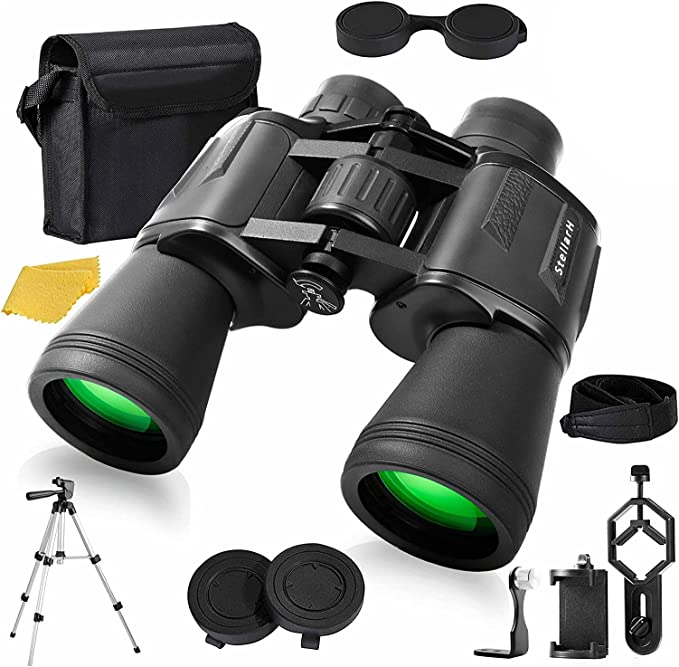
Professional High Powered Binoculars】Binoculars with 20X high power magnification and 50mm objective lens, provides wider field of view at 1000 yards

So give the binocular option some consideration. To make the most effective choice, however, here are a few facts about astronomy binoculars that will help you evaluate which ones are best for you…

Binoculars have two lens sets, one at the end of the eyepiece and a set right next to your eyes. The ones closest to the eye are called the ocular lenses which magnify the image (make it bigger). The ones closest to the sky are called the objective lenses and the size of these lenses will determine how much sky you can see at once. So anytime you are evaluating binoculars, there are two numbers associated with the set. So if the binoculars have a rating of 15-40, that means that the ocular lenses magnify 15 times and the later number is a relative number to how much of the sky you can see. The higher the second number, the more you can see. The explanation is simple. The bigger the lens, the more light it lets in. But be aware that the bigger the second number, the larger, heavier and more cumbersome the binoculars will be.

You will have to balance these two numbers with both your budget and what you want the binoculars to do for you. If you decide to go with a lower power binoculars, you could become frustrated with what you can see and you may have to take your eyes away from the view to get your orientation and consult the star map more often because your range of vision is so limited.

There will also be a temptation to buy a set of binoculars that have zoom functions and other features that will allow you to use it for other purposes such as hunting, whale watching or seeing the football game from the cheap seats. While this is good economy, those functions will get in the way when you are using the binoculars for astronomy. So if you are considering this purchase as your alternative to buying a telescope, our advice is buy binoculars made just for astronomy and don’t take them to the ball game.

Look Up In The Sky

When television was young, there was a hugely popular show based on the still popular fictional character of Superman. The opening of that show had a familiar phrase that went, “Look. Up in the sky. It’s a bird. It’s a plane. It’s Superman!” How beloved Superman has become in our culture and the worldwide fascination with extraterrestrials and all things cosmic only emphasizes that there is a deep curiosity in all humans about nature and astronomy, even if many people would not know to call it astronomy.

Astronomy is one of the oldest sciences of all time. When archeologists unearth ancient civilizations, even as far back as the cavemen, they invariably find art that shows mans unquenchable fascination with the stars. To this day, you can easily get an animated discussion at any gathering on the topic of “Is there intelligent life on other planets?”

Many have tried to explain mankind’s seeming obsession with outer space as a result of an ancient memory or as part of mankind’s eternal nature. Whatever the cause, people of every age and every nation share this one deep interest, to know more about the universe that our tiny planet is just a part of.

It’s rather strange because the actual conduct of a serious student of astronomy is really not the stuff of high adventure. You will never see a “Raiders of the Lost Arc” or “Jurassic Park” movie made about an astronomer. Excitement for lovers of this science is to stay up all night watching the cosmos through a powerful telescope. But that fact does not seem to discourage the tens of thousands to get into astronomy each year and the huge interest worldwide with the stars, the planets and the universe.

There may be no other universal human fascination that does so much to make national boundaries and even international animosity seem to evaporate. Other than the Olympic movement, international cooperation to achieve great strides for human kind in space seems to go forward without interruption even when the nations cooperating in those projects are virtually at war back on the surface of the earth. It is a strange thing to watch as Russian, American and other astronauts work together like brothers on space missions even as their home nations are busily pointing missiles at each other back at home. It almost makes you think that we should put more energy and money into the space program, not less because it seems to be a bond that heals tension rather than creates it.

Why is astronomy so exciting even though we have no dinosaurs, moving animals or any real danger to most who are obsessed with the discipline? It may go back to a basic curiosity that all human beings have about their natural habitat and this big mysterious thing out there called space. Maybe it goes back to that old saying at the beginning of Star Trek that space is “the final frontier”.

But we all share that ongoing sense of excitement each time we take out our telescopes and gaze directly at the cosmos above us. We feel we are looking at the very dawn of time. And in light of the issues with the speed of light which means that many of the twinkling stars out there are really light from those stars that started their journey to us thousands of years ago, we are in actually looking directly at the past every time we direct our eyes skyward.

But we don’t have to worry about ever conquering the final frontier and finding our curiosity satisfied. There will always be more to learn and discover in the world of astronomy. And it is likely that mankind’s curiosity about astronomy is just as limitless as well.