Beginner Parent’s Guide: Finding a First Train Set Your Child Will Love for Years”

When you’re a parent shopping on Amazon for your 6–10-year-old’s first model train set, it helps to go in knowing exactly what to ask and what details to check. This ensures you pick a set that’s fun, safe, durable, expandable, and—most importantly—something your child will love and can handle independently. The questions below are based on expert guidance and family-friendly hobby resources. More Information


1. Is this train set the right age level for my child?

Search on Amazon:
“Best model train set for 6–10 years old”

  • Avoid sets with small parts or fragile pieces.
  • Check the age recommendation on the box.
  • Look for “Age 6+” or “family starter sets.”

Tip: If your child is careful and you plan to help, you can safely start with simple HO or O scale electric sets.


2. What type of train is best for my child—wooden, battery, or electric?

Ask yourself:

  • “Will my son play with this mostly on his own or with me?”
  • “Do we want quick, creative play or a long-term hobby?”

Options:

  • Wooden train sets (like BRIO, Tiny Land, or Thomas & Friends): Safe and durable for ages under 8, great for free play.
  • Battery-powered trains: Move on their own but stay safe for kids to operate.
  • Electric model trains (Lionel, Bachmann): More realistic but require adult supervision and help with setup. More Information

Search on Amazon:
“Wooden train starter set for kids 6–10” or
“Battery-powered model train for beginners”


3. What scale or size should I buy?

Scale = how big the train is compared to real life.

  • O scale (large, easy to handle): Great for kids.
  • HO scale (medium, detailed): Ideal for older children with patience.
  • N scale (tiny, detailed): Best for adults or advanced teens.

Ask on Amazon:

  • “Best O scale model train set for beginners”
  • “HO scale train for kids 8–10 years old”

Tip: Bigger trains are easier for younger children and more resistant to rough handling. More Information


4. How safe and durable is this train set?

Search phrases:

  • “Non-toxic paint wooden train set”
  • “Child-safe battery train with large parts”

Check for:

  • Rounded edges and sturdy materials
  • Secure magnets or connectors on cars
  • Non-toxic or safety-certified markings (ASTM, CE)

BRIO’s “My First Railway” and Tiny Land sets are top-rated for safety and indoor use. More Information


5. How easy is it to set up and put away?

Single moms often ask:

  • “Can my child assemble this without help?”
  • “Does it include a table or storage bin?”

Look for:

  • Click-together tracks or magnetic connectors
  • Ready-to-run or Plug-and-play labeled sets
  • Sets that come with storage boxes or fold-flat designs

Search:
“Train set easy setup storage box kids”
“Lionel ready-to-run electric train set beginner”

Model Train Starter Sets – Information


6. Is it expandable so my child won’t get bored?

Look for:

  • “Compatible with BRIO / Thomas / Tiny Land” — for wooden sets
  • “Expandable track set” or “Add-on packs available” — for electric ones

Expandable sets keep your child interested for years as they collect new track pieces, freight cars, or bridges later on. More Information


7. What kind of features make it engaging?

Ask:

  • “Does it have lights, sound, or interactive accessories?”
  • “Can my child rebuild or modify the track easily?”

Fun features include:

  • Battery engines with forward/reverse controls
  • Whistle and train sounds
  • Bridges, tunnels, or cranes
  • Interchangeable layouts (oval, figure-eight, loop)

Search:
“Battery train set with lights and sound for kids”
“Expandable wooden railway with tunnels and bridges”


8. Does it fit our space?

Measure before buying:

  • “Can this run on the living room floor or table?”
  • “Do I have storage for pieces when not in use?”

Space Tip:

  • Wooden and battery sets can go on any floor or table.
  • Larger electric O-scale trains need about a 4-foot circle minimum.

Search:
“Compact train set for small space”
“Train set with foldable table for kids”


9. How much maintenance or supervision will it need?

For a busy single mom, the goal is low maintenance.

Ask:

  • “Does this need constant cleaning or delicate wiring?”
  • “Is it durable if it’s bumped or dropped?”

Wooden and battery sets need minimal care. Electric trains require supervision, especially during setup and track wiring.

Search:
“Low-maintenance kids train set”
“Durable electric train for families”


10. Is it educational and imaginative?

A good starter train should develop more than play—it helps kids learn:

  • Hand-eye coordination
  • Patience and problem-solving
  • Storytelling and design through layout building

Look for:
Descriptions mentioning “STEM,” “creative play,” or “motor skills.”

Search on Amazon:
“Educational wooden train set for creativity and learning”
“STEM model train set for kids age 6–10”. More Information


11. What is a realistic budget range?

TypeTypical Price RangeGood Starter Brand
Wooden$40–$80BRIO, Tiny Land, Thomas
Battery-Powered Plastic$60–$120Lionel Battery Sets, Fisher-Price
Electric (HO or O Scale)$130–$250Bachmann, Lionel Ready-to-Run

Remember: You don’t need the priciest one to make it meaningful! Focus on simplicity, sturdiness, and play value.More Information


12. What do parent reviews say?

Before adding to your cart, scroll through Amazon reviews and look for:

  • Mentions of “6-year-old loved it!” or “easy to assemble”
  • 4.5-star average ratings or higher
  • Verified video reviews showing playtime or setup ease

High-volume reviews often highlight durability, track fit, or customer support—use these to avoid frustration later.


Quick Amazon Search Examples:

  • “Best train set for kids 6–10 expandable and safe”
  • “Wooden train with bridges and tunnels for boys”
  • “Lionel ready-to-run battery train set family gift”
  • “Starter set HO scale train for beginners 2025 kids”

Model Train Starter Sets – Information

Final Tip for Parents

If your son (or daughter!) loves building worlds, playing pretend, or watching trains pass, a model train set can become a lifelong hobby. Focus on simplicity, safety, and fun, and let curiosity carry the rest. Ask these questions up front, and your Amazon search will lead you to the perfect starter set for hands-on creativity and years of shared joy.

  1. https://charlesro.com/how-to-choose-the-right-model-train-set/
  2. https://www.tinylandus.com/en-de/blogs/collections/what-is-the-best-train-set-for-kids
  3. https://www.parents.com/best-train-sets-for-kids-8606278
  4. https://tandkhobby.com/blog/how-to-choose-juniors-first-train-set/
  5. https://play-trains.com/best-wooden-train-sets/
  6. https://www.trainworld.com/which-train-set-is-right-for-me
  7. https://www.strasburgrailroad.com/blog/best-train-toys-and-model-trains/
  8. https://www.reddit.com/r/modeltrains/comments/rjywci/how_young_is_too_young_for_model_trains/
  9. https://www.facebook.com/groups/438725726326410/posts/2600023460196615/
  10. http://www.joesherlock.com/train-faq.html
  11. https://www.reddit.com/r/modeltrains/comments/18dxjfv/whats_the_best_starter_train_set_for_kids/
  12. https://www.tcmrm.org/about/ask-the-train-doctor/
  13. https://www.trainworld.com/train-set.html
  14. https://forum.trains.com/t/store-bought-train-set-vs-indavidual-bought-pieces/116133
  15. https://www.reddit.com/r/modeltrains/comments/5lao6n/what_train_set_would_you_recommend_for_a_first/
  16. https://factorydirecthobbies.com/collections/kids-toys
  17. https://www.nmra.org/beginners-guide
  18. https://www.youtube.com/watch?v=5-wf2tEmUAI
  19. https://forum.trains.com/t/which-is-the-best-train-set-for-a-young-child/99592
  20. https://www.youtube.com/watch?v=J11J3hG0vUk

Complete Beginner’s Guide to Laying Track for an HO Scale Layout

Building an HO scale model railroad is a fun, creative, and rewarding family project. This guide covers everything a beginner needs to know-from planning and preparing the roadbed to choosing the right track and tools, step-by-step installation, and long-term maintenance. Each section is easy to follow and designed to help you achieve smooth, reliable operation and a realistic look.

1. Planning Your Layout

Start by sketching your track plan on paper or using planning software. This helps you visualize your layout and ensures it fits your available space. Mark the centerlines for your track on your baseboard using a pencil for accurate placement later. A well-thought-out plan saves time and prevents mistakes down the line13.

2. Preparing the Baseboard

A sturdy, flat base is essential for a reliable layout. Use plywood or foam board supported by a simple wooden framework. Make sure the surface is level and strong enough to support your scenery, track, and trains3.

Tools you’ll need:

  • Saw (for cutting wood)
  • Drill and screwdriver
  • Measuring tape and ruler
  • Pencil and set square

3. Understanding HO Scale Track Types

HO scale (1:87.1) is the most popular choice for model railroaders, offering a balance of detail and manageable size1.

Code 100 vs. Code 83 Track

Track TypeDescriptionProsCons
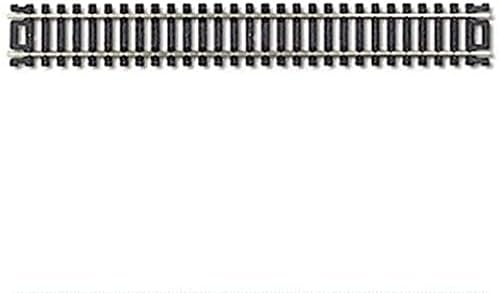
Code 100Taller rail (0.100″)Durable, easy for beginners, compatible with older trainsLess realistic appearance
Code 83Lower, more prototypical rail (0.083″)Realistic look, preferred for modern layoutsSlightly more delicate, not always compatible with vintage models
  • Code 100 is robust and forgiving, making it ideal for beginners.
  • Code 83 offers a more realistic look, perfect for those focused on detail.

Sectional vs. Flex Track

  • Sectional Track: Pre-formed, easy to assemble, ideal for beginners and temporary layouts.
  • Flex Track: Bendable, allows custom curves and more realistic layouts but requires careful cutting and fitting.

Integrated Roadbed Track

Some brands offer track with built-in roadbed (e.g., Bachmann EZ Track), simplifying installation for beginners and families.

4. Choosing and Preparing the Roadbed

The roadbed raises the track, provides sound dampening, and gives a realistic profile.

Roadbed TypeProsCons
FoamLightweight, easy to shape, quiets noiseSlightly more expensive
CorkTraditional, durable, easy to work withCan dry out or crumble over time
Integrated TrackSimplifies installation, portableLess realistic, limited flexibility
  • Foam (e.g., Woodland Scenics) is popular for its ease of use and sound dampening.
  • Cork is a classic, affordable choice.
  • Integrated roadbed track is best for quick setups and portability.

Step-by-Step: Preparing the Roadbed

  1. Mark Your Track Path:
    Use your track plan to draw the centerline on your baseboard.
  2. Cut and Fit the Roadbed:
    For curves, cut slits in the roadbed to help it bend smoothly. Dry-fit the roadbed along the marked centerline.
  3. Secure the Roadbed:
    Apply white glue or double-sided tape to attach the roadbed. Press firmly and use pins or small weights while the glue dries. Ensure it’s level and follows the centerline.
  4. Smooth the Surface:
    Once dry, check for bumps or gaps. Sand any rough edges or uneven spots gently.

5. Essential Tools for Accurate Track Laying

  • Track alignment gauges (for correct rail spacing)
  • Track cutters (for cutting track sections)
  • Needle-nose pliers (for bending rail ends and inserting joiners)
  • Small hammer or rubber mallet (for gently tapping in track nails or pins)
  • Measuring tape or ruler
  • Pencil/marker
  • Straightedge or flexible curve
  • Small level
  • Adhesive (white glue or double-sided tape)
  • Sandpaper or small file

6. Laying the Track: Step-by-Step

  1. Position the Track:
    Lay track sections on the prepared roadbed, aligning with the centerline. Shape flex track as needed.
  2. Connect and Secure:
    Join track sections using rail joiners. Use alignment gauges for correct spacing. Secure track with small nails, pins, or a dab of glue (avoid glue near moving parts).
  3. Test and Adjust:
    Run a piece of rolling stock over the track to check for bumps or misalignments. Adjust before final securing.
  4. (Optional) Ballasting:
    Spread model railroad ballast along the track for realism. Mist with a 50/50 water-glue mix (add a drop of dish soap) to secure, avoiding moving parts.

7. Maintenance and Repair Tips

  • Regular Cleaning:
    Use a soft cloth or track cleaning car to remove dust and dirt. Avoid harsh chemicals.
  • Inspect Joints:
    Check rail joiners and connections for gaps or looseness.
  • Check for Warping:
    Look for any warping or shifting in the roadbed or track, especially after temperature changes.
  • Repair as Needed:
    If a section becomes loose, re-glue or re-nail it. Replace damaged track or roadbed promptly.
  • Wheel and Coupler Checks:
    Make sure rolling stock wheels and couplers are clean and in good condition to prevent derailments.
  • Schedule Maintenance:
    Create a simple checklist to regularly inspect track, roadbed, and rolling stock.

8. Tips for Success

  • Start simple: Use sectional track and foam or cork roadbed for your first layout.
  • Test as you go to catch and fix issues early.
  • Take your time-patience leads to better results.
  • Involve family members in planning and assembly for a fun, shared project.

Suggested Images

  • Step-by-step photos: marking the baseboard, fitting roadbed, laying track, testing with rolling stock.
  • Close-ups of track types (Code 100 vs. Code 83).
  • Examples of foam and cork roadbed installation.

References

  1. Train scale guide – Webflow1
  2. How to Build a Model Railway | Step-by-Step Guide for Beginners & Railfans – YouTube3
  3. Walthers Model Railroading Products5

With these steps, you’ll be on your way to building a smooth-running, reliable HO scale railroad that the whole family can enjoy!

For Model Railroad Supplies check amazon.com

Citations:

  1. https://uploads-ssl.webflow.com/65f0212e0d7ed90e8f284129/681956687209e4ec9278c24d_58250850358.pdf
  2. https://lancemindheim.com/model-railroad-blog/
  3. https://www.youtube.com/watch?v=ZbPkf5B4zXo
  4. https://www.tiktok.com/discover/how-to-put-together-train-tracks
  5. https://www.walthers.com/about-us

Answer from Perplexity: pplx.ai/share

Adding Depth to Your Model Train Layout by Using Flats on the Backdrop

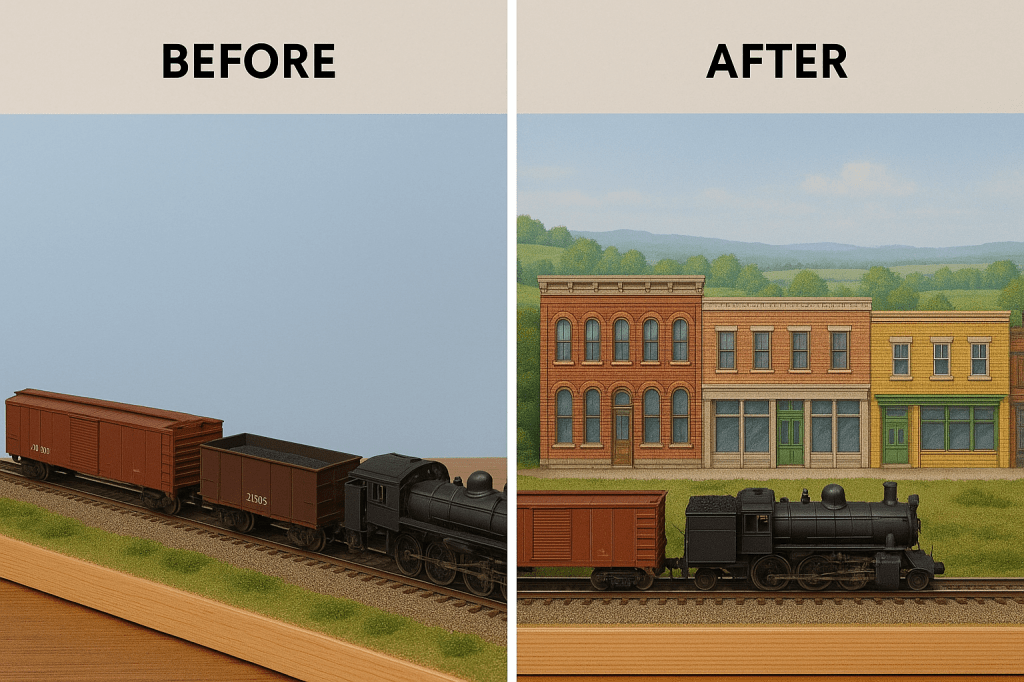
Model railroading is more than creating tracks and running trains—it’s about building a miniature world that sparks imagination and invites viewers to explore its stories. One of the simplest and most effective ways to enhance your layout’s realism and give it a greater sense of depth is by using flats on the backdrop. Flats are a clever solution for adding layers, scenery, and visual interest to your layout, all while saving space and keeping things budget-friendly. Whether you’re a beginner dipping your feet into this rewarding hobby or a seasoned model railroader looking to elevate your setup, this guide will walk you through everything you need to know about flats—from what they are to how to prepare, install, and customize them.

What Are Flats in Model Railroads?

Backdrop flats, commonly referred to as “flats,” are shallow or two-dimensional models of buildings, scenery, or other features designed to sit against the backdrop of a layout. Instead of being fully three-dimensional, flats are either partially 3D or completely flat, creating the illusion of depth without occupying much space.

Flats work by tricking the eye through “forced perspective.” They blend the foreground (where 3D elements like tracks and buildings sit) with the background (the painted or printed scenery behind your layout). A row of flats depicting distant buildings, for instance, can make an urban layout feel like a sprawling city, even if the actual layout table is small.

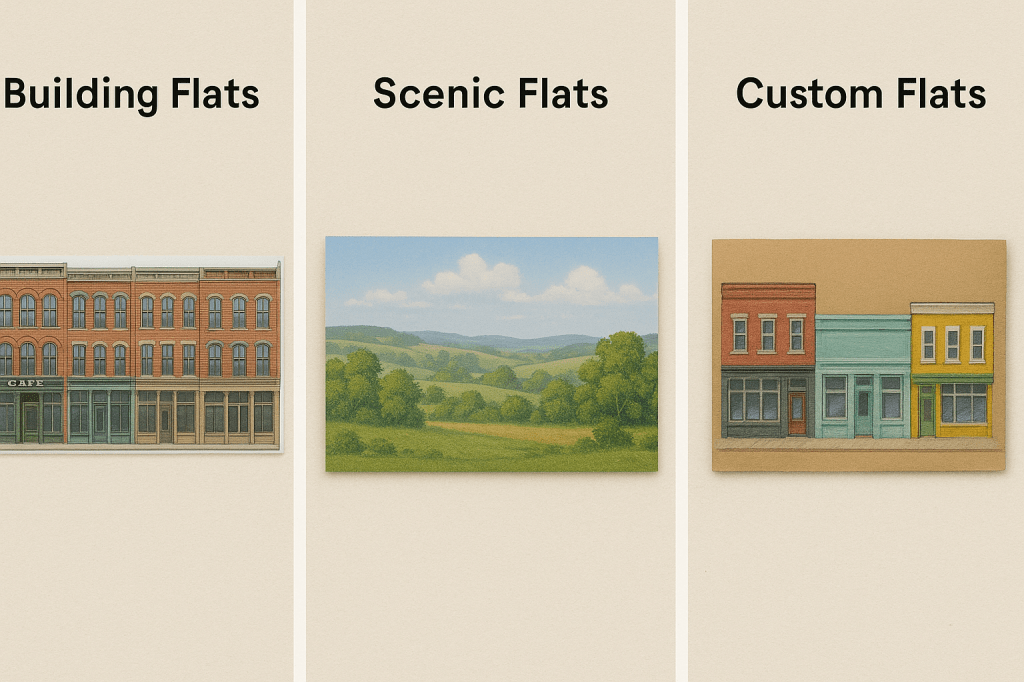
Types of Flats

  1. Building Flats
    These replicate structures such as factories, warehouses, houses, or skyscrapers. They’re ideal for creating cityscapes or industrial areas.
  2. Scenic Flats
    These feature natural elements like hills, trees, or mountains, offering a perfect solution for rural or wilderness scenes.
  3. Custom Flats
    Want something unique? Custom flats let you design elements to match your exact layout theme, whether it’s a vintage small town, futuristic city, or fantasy world.

Why Flats Are Important

Flats bridge the gap between your foreground and backdrop, creating a smooth transition that immerses viewers in the world you’re building. They’re also a space-saving marvel, allowing you to add complexity and character to layouts of any size.

Why Use Flats?

Flats aren’t just practical; they’re a game-changer for any model train enthusiast. Here’s why you should consider incorporating them into your layout:

1. Save Space

Layouts often have limited real estate, and flats allow you to pack in detail and depth without taking up valuable space. Instead of building a large factory, a flat on the backdrop can represent a distant industrial zone, leaving room for tracks, trains, and other scenery closer to the viewer.

2. Enhance Realism

Flats create the illusion of a larger world by layering scenery. By playing with scale and perspective, flats can make your layout feel expansive and immersive. For example, a backdrop featuring hills painted with scenic flats can suggest miles of open countryside stretching beyond the layout.

3. Budget-Friendly

Full-scale buildings and scenery can be expensive, but flats are often more affordable. Pre-made kits, printable flats, or DIY options can save you money while allowing for incredible creativity.

4. Expand Storytelling Opportunities

Every model railroad tells a story, and flats add rich context to your scene. A row of building flats on a cityscape could suggest bustling neighborhoods or industrial hubs, while scenic flats showing barns or forests evoke quiet rural charm.

5. Perfect for Beginners

Flats are easy to use and beginner-friendly. With pre-made options and print-and-mount designs widely available, you can quickly add depth to your layout without advanced modeling skills or tools.

Choosing Flats for Your Layout

Selecting the right flats depends on your layout’s theme, scale, and overall vision. Follow these tips to choose flats that will elevate your scene.

1. Match Flats to Your Theme

  • Urban Layouts: Use building flats like skyscrapers, shops, or factories.
  • Rural Layouts: Scenic flats featuring barns, trees, rolling hills, or mountain ranges work well.
  • Custom Layouts: Design flats that fit your unique theme, such as historic towns, futuristic cities, or fantasy villages.

2. Pay Attention to Scale

Flats must match the scale of your layout to maintain realism. For example:

  • HO Scale (1:87): The most common scale with plenty of pre-made options.
  • N Scale (1:160): Great for compact layouts. Flats should have fine details.
  • O Scale (1:48): Larger layouts need bigger flats with intricate textures to maintain proportionality.

3. Flat Materials

  • Pre-Made Kits: Plastic, resin, or cardstock kits from trusted brands like Walthers, Woodland Scenics, or Faller.
  • DIY Options: Create flats using foam board, cardboard, or printed images. More on DIY later!

Preparing and Installing Flats

1. Preparing the Backdrop

Proper preparation and installation ensure your flats look polished and cohesive.

  • Painted Backdrops: Create a gradient from light blue (sky) to white (horizon). Add clouds or distant hills for realism.
  • Printed Backdrops: Use photo-realistic backdrops featuring skies or landscapes from brands like Scenic Express or TrainJunkies.

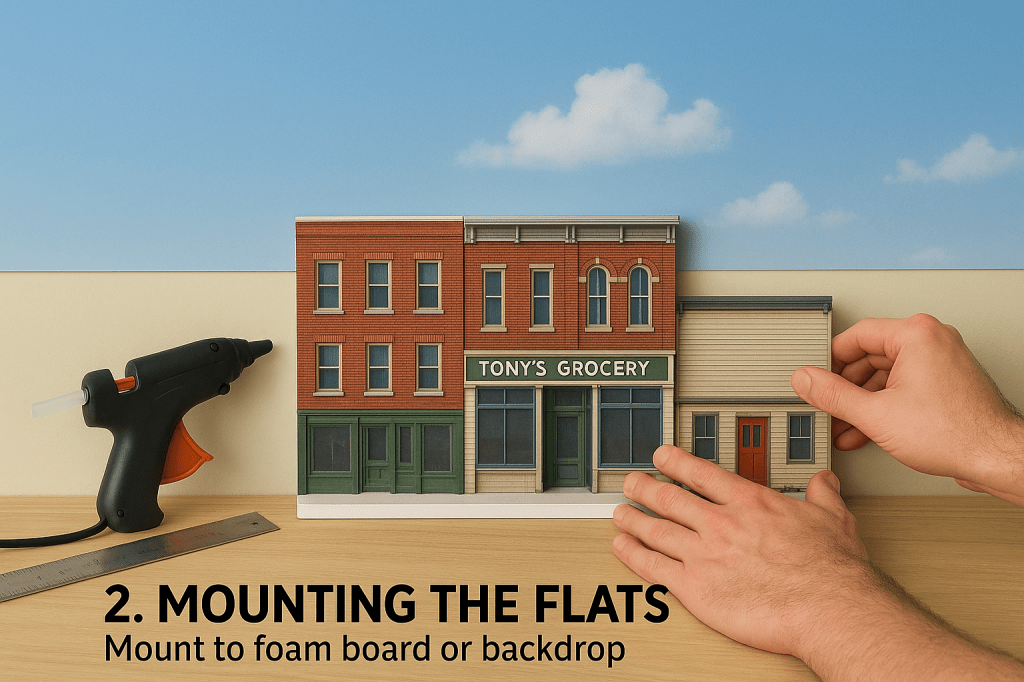
2. Installing Flats

  • Use double-sided tape or spray adhesive for lightweight flats.
  • Heavier flats can be attached with Velcro for removability or mounted on a wooden frame for support.
  • Align flats with the backdrop’s horizon line to ensure a smooth transition between flat and background.

3. Blend Flats with the Foreground

  • Add bushes, fences, or roads at the base of the flats to hide edges and create a natural transition.
  • For scenic flats, use foam flocking or static grass to blend seamlessly.

Enhancing Flats for Realism

Simple flats can become stunning with the right enhancements:

Add Details:

  • Apply decals for windows, signs, or advertisements.
  • Weather them with chalk pastels or dry brushing to simulate age and wear.

Lighting:

  • Add LEDs behind building windows for a glowing effect.
  • Use strip lights or spotlights to cast shadows and create depth.

Play with Perspective:

  • Position taller, more detailed flats closer to the foreground and smaller, muted flats further back to mimic distance.

DIY Flats: Save Money and Add Personality

Creating your own flats is affordable, fun, and lets you add unique touches to your layout.

Steps for DIY Flats:

  1. Print Templates: Use printable flats from sites like Railserve or Pinterest. Print on cardstock and mount on foam board for durability.
  2. Hand-Paint Designs: Sketch buildings or landscapes on foam board and paint them with acrylics.
  3. Layer for Depth: Add raised windows, doors, or signage for a 3D effect.

DIY flats let you recreate landmarks, add personal flair, and experiment with themes in a cost-effective way.

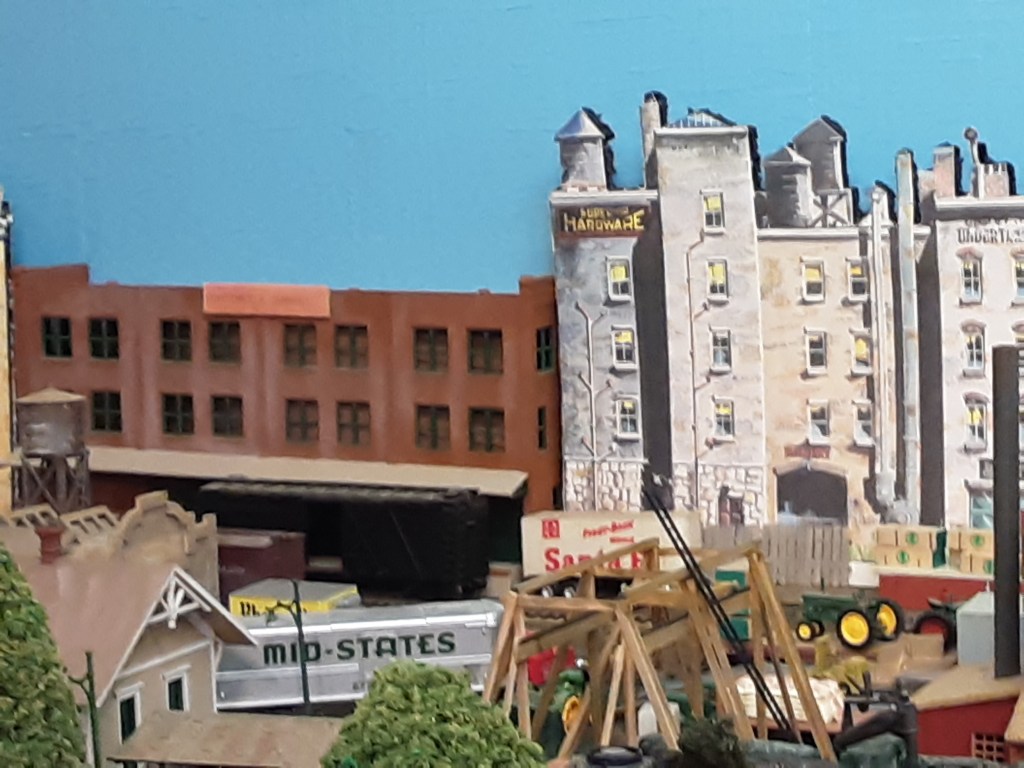
Photos from my layout showing the use of flats all of which are described above.

The photos above show how I use flats to enhance the depth of the layout. In the photo above I inserted a photo from google city scenes to add depth to the street continueing on.

Common Mistakes and How to Avoid Them

  1. Misalignment: Ensure flats align with the backdrop’s horizon. Use a ruler to check placement.
  2. Overcrowding: Space flats appropriately to avoid a cluttered look.
  3. Ignoring Scale: Match flats to the scale of your layout to maintain realism.
  4. Poor Blending: Use foliage or scenery to integrate flats with 3D elements.

Conclusion

Using flats is a transformative technique for model railroading, adding depth, realism, and personality to your layout without taking up extra space. From pre-made kits to DIY creations, flats bring your miniature world to life and immerse viewers in the story you’re telling. Whether you’re a beginner or an experienced model railroader, mastering the art of flats will elevate your layout to new heights. So, grab some flats, experiment with their placement, and watch your layout expand before your eyes!

References

  1. Walthers Model Railroading (2025). Building and Scenic Flats.
    Website: https://www.walthers.com
  2. Woodland Scenics (2025). Backdrop Design Techniques.
    Website: https://woodlandscenics.woodlandscenics.com
  3. TrainJunkies Backdrops (2025). Printed Backdrops and Scenic Flats.
    Website: https://www.trainjunkies.com
  4. RailServe (2025). Downloadable Flats & Templates.
    Website: https://www.railserve.com