Exploring the February Night Sky: A Family-Friendly Cosmic Adventure

Welcome to the enchanting world of stargazing! February brings with it a celestial tapestry that is both captivating and mesmerizing. As an expert astronomer, I’m thrilled to guide you and your family through the wonders of the February night sky. Together, we’ll embark on a cosmic journey filled with stars, planets, and celestial delights, all visible with the naked eye or a simple pair of binoculars. Get ready to explore the celestial wonders that await you in the February night sky.

Chapter 1: The Beauty of February’s Constellations

1.1 Orion the Hunter
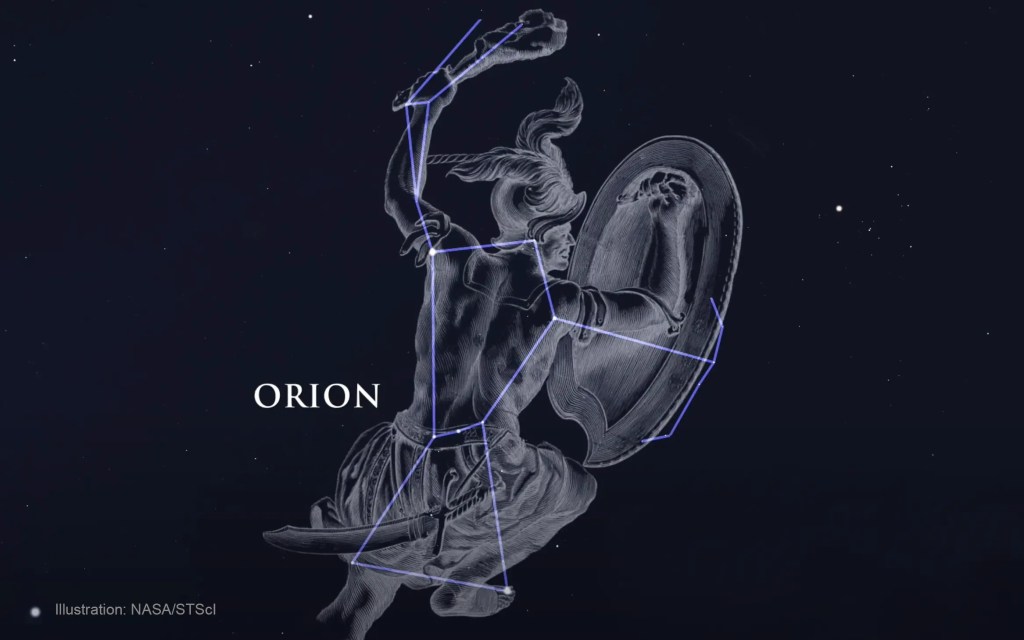
One of the most prominent constellations in the February night sky is Orion the Hunter. Look towards the southeast after sunset, and you’ll see the distinctive shape of Orion, with its bright stars forming a recognizable pattern. Betelgeuse, a red supergiant, marks one of Orion’s shoulders, while Rigel shines brightly as one of his feet. The three stars in Orion’s Belt are another notable feature, easily identifiable even in light-polluted areas.

1.2 Canis Major and Sirius

Just below Orion lies Canis Major, the Great Dog, with its brightest star, Sirius. Known as the Dog Star, Sirius is the brightest star in the night sky, outshining all others with its brilliant white light. Its proximity to the horizon gives it a twinkling appearance, adding to its allure. With binoculars, you can explore the stars surrounding Sirius, revealing a cluster of celestial gems.

1.3 Taurus the Bull and the Pleiades

To the northwest of Orion, you’ll find Taurus the Bull, easily recognizable by the V-shaped cluster of stars known as the Hyades. At the heart of Taurus lies the beautiful Pleiades star cluster, also called the Seven Sisters. With its blue-white stars, the Pleiades are a stunning sight in binoculars, resembling a tiny jewel box against the backdrop of the night sky.

Shop for Astronomy Equipment HERE

Chapter 2: Planetary Highlights in February

2.1 Brilliant Venus

In February, Venus graces the western sky shortly after sunset. Look for the dazzling white light of Venus, often referred to as the Evening Star, as it shines brightly against the fading twilight. Venus is the second planet from the Sun and is often mistaken for a UFO due to its intense brightness.

2.2 Jupiter and Saturn in the Predawn Sky

Before dawn, two giant planets, Jupiter and Saturn, adorn the southeastern sky. Jupiter, with its creamy white glow, is unmistakable as it rises above the horizon. Binoculars reveal Jupiter’s four largest moons, known as the Galilean moons, which appear as tiny points of light surrounding the planet. Nearby, Saturn’s golden hue adds to the celestial spectacle, with its magnificent rings visible even through small telescopes.

Chapter 3: Meteor Showers and Celestial Events

3.1 The Quadrantids Meteor Shower
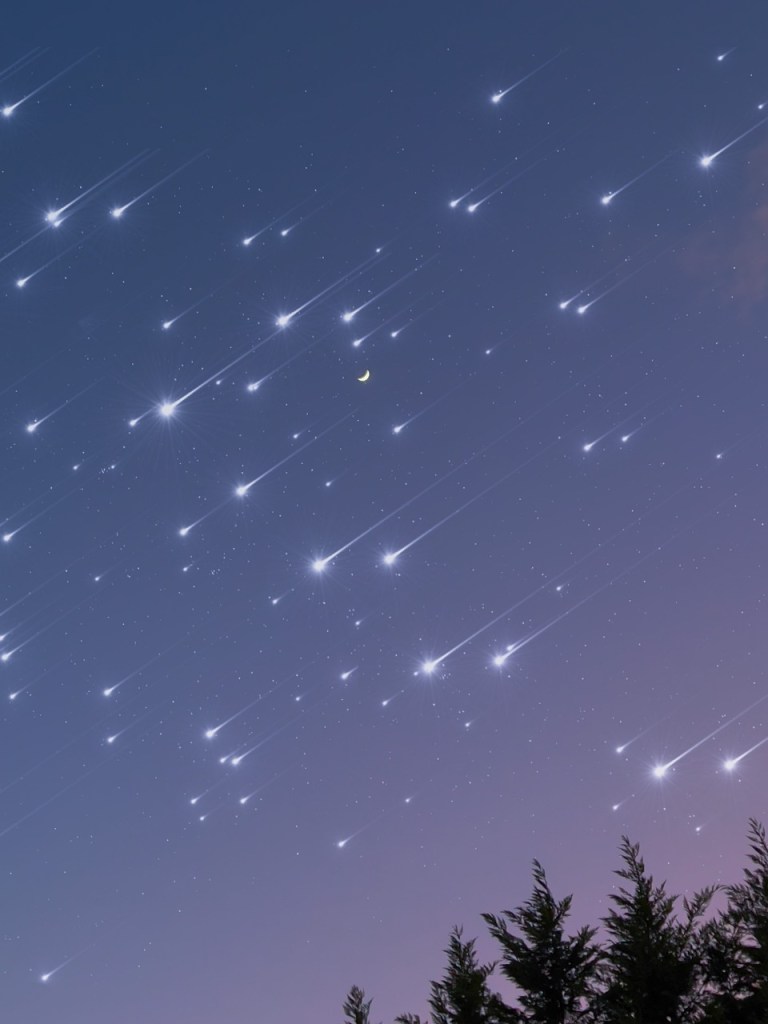
Although the peak of the Quadrantids meteor shower occurs in early January, some meteors may still be visible in early February. Look towards the northeast after midnight to catch a glimpse of these fast-moving shooting stars. Bundle up warmly, bring a blanket or reclining chair, and enjoy the celestial fireworks.

3.2 Lunar Highlights

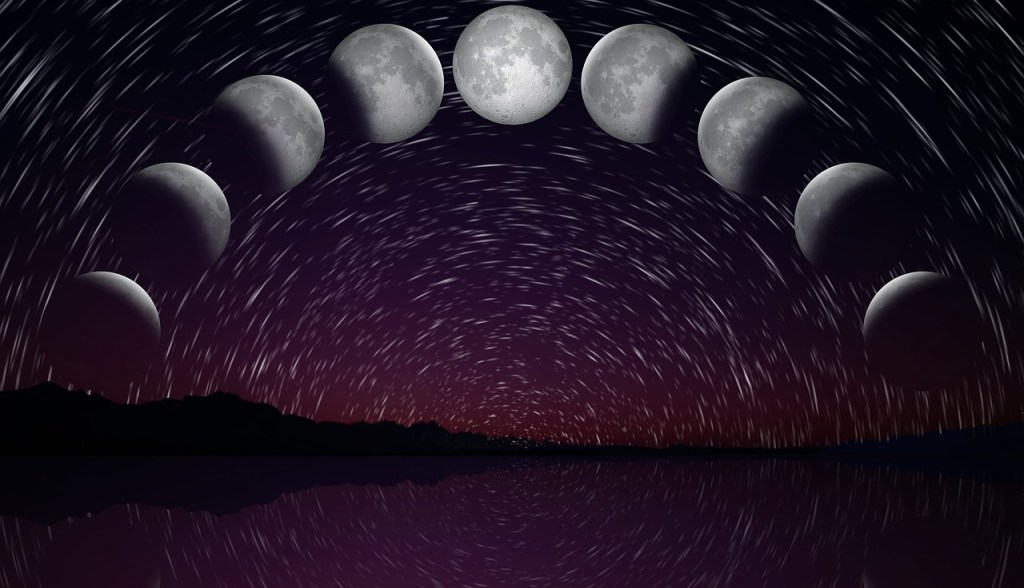
Keep an eye on the Moon’s phases throughout February. From the slender crescent of the New Moon to the bright disk of the Full Moon, each phase offers its own unique beauty. Use binoculars to explore the craters and lunar seas visible along the Moon’s terminator, the line dividing its illuminated and darkened halves.

Chapter 4: Stargazing Tips for Families

4.1 Stargazing Apps and Tools

Enhance your stargazing experience with the help of astronomy apps and tools. Apps like SkyView, Stellarium, or Star Walk provide real-time information about celestial objects visible in the night sky. Simply point your smartphone or tablet towards a particular constellation or planet, and the app will identify it for you, making stargazing a fun and educational activity for the whole family.

4.2 Night Sky Photography

Capture the beauty of the February night sky with your camera or smartphone. Experiment with long exposure shots to capture the trails of passing meteors during meteor showers. You can also try astrophotography techniques to photograph the Moon’s craters or the planets Jupiter and Saturn. Don’t forget to share your photos with friends and family to inspire their own stargazing adventures.

Chapter 5: Engaging Activities for Families

5.1 Celestial Storytelling

Gather around a cozy fire pit or snuggle up indoors and share stories inspired by the constellations. Encourage creativity by inventing your own myths and legends about the stars and planets. Use the constellations as a backdrop for imaginative tales of adventure and discovery.

5.2 DIY Constellation Project

Create your own constellation map using glow-in-the-dark stickers or paint. Designate a wall or ceiling in your home as your personal observatory and map out the constellations you’ve observed in the night sky. This hands-on activity is a fun way to reinforce learning about the stars and their patterns.

Find Astronomy Equipment HERE

Chapter 6: Conclusion

As February unfolds its celestial wonders, take the time to explore the night sky with your family. Whether you’re admiring the beauty of Orion’s Belt, marveling at the brilliance of Venus, or counting shooting stars during a meteor shower, each celestial sight offers a unique opportunity for discovery and wonder. So, bundle up, grab your binoculars, and let the February night sky be your guide to a family-friendly cosmic adventure. Happy stargazing!


This comprehensive guide aims to make stargazing in February a delightful and educational experience for families. From identifying constellations to observing planets and meteor showers, there’s something for everyone to enjoy under the starry canopy of the February night sky.

A Celestial Spectacle: Highlights to be on the Lookout for in the 2024 Night Sky

As we usher in the new year, the night sky promises a stellar show for families and astronomy enthusiasts alike. The celestial tapestry of 2024 unfolds with a myriad of highlights—planetary alignments, meteor showers, and the dance of constellations—that invite us to gaze upward and marvel at the wonders of the universe. In this family-friendly guide, we’ll embark on a journey through the upcoming year, unveiling the astronomical delights that will grace our night sky.

Chapter 1: The Dance of the Planets

1.1 Venus as the Evening Star

In the early months of 2024, Venus takes center stage as the Evening Star. Visible shortly after sunset, Venus gleams brightly in the western sky. Its brilliance and steady presence make it an excellent object for families to observe. Encourage children to spot Venus and witness how its position changes over the weeks.

1.2 Mars and the Red Planet’s Close Encounter

Mars, the Red Planet, makes a notable appearance in the night sky. Keep an eye out for Mars as it gradually becomes more prominent, presenting a reddish glow. In the latter part of the year, Mars and Earth experience a close encounter known as opposition, bringing Mars closer to us and offering optimal viewing opportunities. This celestial event occurs approximately every 26 months, making 2024 an ideal time to observe the Red Planet.

1.3 Jovian Delights: Jupiter and Its Moons

Jupiter, the largest planet in our solar system, graces the night sky throughout 2024. What makes this year special is the opportunity to observe Jupiter and its four largest moons, known as the Galilean moons—Io, Europa, Ganymede, and Callisto. These moons are visible through binoculars or a small telescope, providing a captivating sight for families. Challenge your loved ones to identify and track the changing positions of these celestial companions.

Chapter 2: Meteor Showers Painting the Night Sky

2.1 Lyrid Meteor Shower: April’s Celestial Fireworks

In April, the Lyrid meteor shower treats stargazers to a celestial fireworks display. This annual event is known for its fast and bright meteors, originating from the debris left behind by Comet C/1861 G1 Thatcher. Find a dark spot away from city lights, set up some blankets, and enjoy the Lyrid meteor shower as it peaks in mid-April. Each shooting star carries with it the remnants of a comet’s journey through our solar system.

2.2 Perseids Meteor Shower: August’s Dazzling Show

One of the most anticipated meteor showers of the year, the Perseids, graces the night sky in August. Known for its prolific display, the Perseids are caused by the debris trail left by Comet Swift-Tuttle. This shower is family-friendly, offering a high meteor count and often producing bright fireballs. Make it a summer night tradition to observe the Perseids, lying back on a blanket and counting shooting stars.

Chapter 3: Celestial Alignments and Conjunctions

3.1 Venus and Mercury Embrace

In the early part of the year, Venus and Mercury engage in a celestial dance. Look for these two planets low in the western sky after sunset. Their close proximity creates a captivating sight, especially in February and March. Witnessing planetary alignments provides a unique opportunity to appreciate the orbital dynamics of our solar system.

3.2 Triple Conjunction of Venus, Mars, and Saturn

As 2024 progresses, an exciting triple conjunction occurs involving Venus, Mars, and Saturn. This celestial alignment unfolds in the pre-dawn sky, creating a celestial trio that captivates early risers. The juxtaposition of these planets offers a stunning visual treat and a memorable moment for families to share.

3.3 Jupiter and Saturn’s Continued Dance

Building on the Great Conjunction of 2020, Jupiter and Saturn continue their celestial dance in 2024. While not as close as in the previous conjunction, the ongoing proximity of these gas giants provides a visual spectacle. Observe their changing positions throughout the year, tracing the majestic orbits of these two giant planets.

Chapter 4: Lunar Marvels and Moonlit Nights

4.1 Supermoons: Luna’s Close Encounters

Several supermoons, where the Moon appears larger and brighter due to its closer proximity to Earth, adorn the night sky in 2024. These include the Full Moons of April, May, and June. Supermoons provide an excellent opportunity for families to observe and appreciate the Moon’s beauty, especially when it hangs low on the horizon, creating a mesmerizing illusion.

4.2 Total Lunar Eclipse: May’s Celestial Show

May brings a total lunar eclipse, a celestial phenomenon where the Earth casts its shadow on the Moon, resulting in a captivating red hue. Lunar eclipses are safe to observe with the naked eye, making them family-friendly events. Set up a telescope or simply step outside to witness the Moon’s transformation during this awe-inspiring celestial show.

4.3 Partial Solar Eclipse: A Glimpse of Cosmic Geometry

Later in the year, a partial solar eclipse occurs, treating certain regions to a celestial spectacle where the Moon

partially covers the Sun. While not visible everywhere, families within the eclipse path can safely observe this cosmic ballet. Remember to use proper solar viewing techniques to protect your eyes during solar events.

Chapter 5: Stargazing Tips for Families

5.1 Celestial Calendar for Family Planning

Create a celestial calendar for your family, marking the dates of meteor showers, planetary conjunctions, and other astronomical events. Engaging with a celestial calendar helps build excitement and anticipation for upcoming stargazing sessions.

5.2 Stellar Apps for Astronomical Exploration

Leverage stargazing apps that cater to families and beginners. These apps use augmented reality and real-time tracking to help identify constellations, stars, and planets. They can turn a simple stargazing session into an interactive and educational experience for the whole family.

5.3 Telescope and Binocular Adventures

Invest in a small telescope or a pair of binoculars to enhance your family’s stargazing experience. Telescopes reveal details on planets, while binoculars provide a broader view of the night sky. Encourage family members to take turns observing celestial objects, fostering a shared sense of wonder.

5.4 Night Sky Rituals and Traditions

Establish night sky rituals within your family. Whether it’s a monthly stargazing outing, creating celestial-themed artwork, or sharing space-related bedtime stories, these traditions create a sense of unity and foster a love for astronomy among family members.

5.5 Celestial Creativity: Sketching and Storytelling

Encourage your children to engage in celestial creativity. Whether it’s sketching the Moon’s phases, creating stories about constellations, or crafting a visual representation of a meteor shower, these activities blend artistic expression with a love for the cosmos.

Chapter 6: The Cosmic Connection

6.1 Educational Exploration of the Universe

Stargazing offers an excellent platform for educational exploration. Use your time under the stars to discuss the science behind celestial events, explore the mythology associated with constellations, and foster a sense of curiosity about the universe. Turn stargazing into a family science adventure.

6.2 Quality Family Time under the Stars

Make stargazing an opportunity for quality family time. Disconnect from screens, set up a cozy stargazing spot, and enjoy the serenity of the night sky together. Engage in conversations about the cosmos, share stories, and create lasting memories under the stars.

6.3 Inspiration from the Cosmos

Encourage family members to draw inspiration from the cosmos. Whether it’s creating art, writing poems, or composing music inspired by the night sky, these creative endeavors not only express individuality but also strengthen the connection between your family and the wonders of the universe.

6.4 Shared Experiences and Lifelong Memories

Stargazing experiences create shared memories that last a lifetime. Whether you’re watching a meteor shower, identifying constellations, or marveling at the planets, these moments become cherished memories that bind families together through a shared love for the night sky.

Conclusion: A Year of Celestial Marvels

As we venture into the celestial wonders of 2024, the night sky beckons families to engage in a cosmic journey. From the dance of planets to the brilliance of meteor showers, each celestial event offers a unique opportunity for shared exploration and discovery. So, mark your calendars, gather your loved ones, and let the night sky be the canvas for a year filled with celestial marvels that will inspire, educate, and create lasting memories for your family. Happy stargazing!

Preparing for a Night of Stargazing with Binoculars

Stargazing with binoculars offers an enchanting way to explore the wonders of the night sky. Whether you’re a novice or an experienced observer, the celestial realm beckons with its captivating array of stars, constellations, and celestial phenomena. To make the most of your stargazing experience with binoculars, it’s essential to prepare adequately and equip yourself with the knowledge and tools needed to embark on a celestial adventure. Here, we’ll delve into the essential steps and tips for preparing for a night of stargazing with binoculars, ensuring an enriching and memorable experience for the entire family.

Understanding the Basics of Binocular Stargazing

Before venturing into the night to explore the celestial wonders, it’s important to grasp the fundamental aspects of stargazing with binoculars. Binoculars offer a wide field of view and enhanced clarity, allowing observers to appreciate the intricate details of celestial objects. They are portable, easy to use, and provide an immersive viewing experience, making them an ideal choice for both beginners and seasoned astronomers.

Essential Tips for Stargazing with Binoculars

  1. Choosing the Right Binoculars: Opt for a pair of binoculars with moderate magnification and aperture. A common recommendation is 7×50 binoculars, which provide a good balance of magnification and light-gathering capability. Larger binoculars may require a tripod to stabilize the view, while smaller ones may not offer sufficient light-gathering power[2].
  2. Familiarize Yourself with the Night Sky: Before heading out for stargazing, acquaint yourself with the prominent constellations, stars, and celestial landmarks visible in the night sky. Sky maps, astronomy guides, and mobile apps can aid in identifying these celestial wonders, enhancing your stargazing experience[2].
  3. Location and Timing: Choose a suitable location away from urban light pollution, such as a dark-sky site or a rural area with minimal artificial light. Additionally, consider the timing of your stargazing session, aiming for nights with clear skies and minimal atmospheric disturbance for optimal viewing conditions[2].
  4. Prepare for Comfort: Stargazing can be a prolonged activity, so ensure you are adequately prepared for comfort. Dress warmly, especially during the cooler fall nights, and consider bringing along a comfortable chair or blanket for extended stargazing sessions. Additionally, a red flashlight can be useful for reading star charts and adjusting your eyes to the darkness without disrupting your night vision[2].

Resources for Stargazing with Binoculars

To further enhance your stargazing experience with binoculars, consider utilizing educational resources and guides tailored to celestial observation. Books such as “Exploring the Night Sky with Binoculars” by Patrick Moore offer valuable insights and practical tips for stargazing enthusiasts of all ages[5]. Additionally, online tutorials, astronomy vodcasts, and educational videos provide a wealth of information on stargazing techniques, celestial navigation, and the art of observing the night sky with binoculars[1][4].

Shop now for Binoculars for Stargazing

Embracing the Night Sky with Binoculars

As you prepare for a night of stargazing with binoculars, remember that the celestial realm holds a treasure trove of wonders waiting to be discovered. Whether you’re observing the intricate patterns of constellations, the ethereal glow of nebulae, or the distant allure of galaxies, stargazing with binoculars promises an enriching and awe-inspiring experience for the entire family. So, equip yourself with the right knowledge, choose a suitable location, and immerse yourself in the celestial splendor of the night sky with binoculars.

By following these essential tips and preparing adequately, you can embark on a captivating journey into the celestial realm, where the beauty of the cosmos unfolds before your eyes. Stargazing with binoculars offers an opportunity to connect with the wonders of the universe and create lasting memories with loved ones, making it a truly magical and rewarding experience for enthusiasts of all ages. So, grab your binoculars, venture outdoors, and prepare to be captivated by the celestial wonders that await you in the night sky.

Citations:
[1] https://youtube.com/watch?v=wAnAZz-ZPJ0&t=0
[2] https://earthsky.org/astronomy-essentials/top-tips-for-using-ordinary-binoculars-for-stargazing/
[3] https://www.davidchandler.com/shop/exploring-the-night-sky-with-binoculars/
[4] https://youtube.com/watch?v=68snWC9b8fE&t=0
[5] https://www.amazon.com/Exploring-Night-Binoculars-Patrick-Moore/dp/0521555388

How to get started in the hobby of Astronomy

If you’re interested in getting started in the hobby of astronomy, there are a few things you should know. Here are some of the most common questions people have about getting started in astronomy, along with some answers and tips to help you get started.

What is Astronomy?

Astronomy is the study of celestial objects such as stars, planets, galaxies, and other phenomena that exist outside of Earth’s atmosphere. It is a field that has been around for centuries and has contributed significantly to our understanding of the universe.

Why Get into Astronomy?

There are many reasons why people get into astronomy. Here are some of the most common reasons:

  • It’s Fascinating: Astronomy is a fascinating field that can teach you a lot about the universe. It’s a field that is constantly evolving, and there is always something new to learn.
  • It’s Accessible: Astronomy is an accessible hobby that anyone can enjoy. You don’t need a lot of expensive equipment to get started, and you can observe celestial objects from your own backyard.
  • It’s Relaxing: Observing the night sky can be a relaxing and calming experience. It’s a great way to unwind after a long day and connect with the universe.
  • It’s Educational: Astronomy is an educational hobby that can teach you a lot about science, math, and physics. It’s a great way to learn about the universe and how it works.

What Equipment Do I Need?

One of the most common questions people have about getting started in astronomy is what equipment they need. Here are some of the basics:

  • Telescope: A telescope is an essential tool for observing celestial objects. You don’t need an expensive telescope to get started. A basic telescope will do.
  • Binoculars: Binoculars can be a great alternative to a telescope, especially if you’re just starting out. They’re less expensive and easier to use.
  • Star Chart: A star chart is a map of the night sky that can help you locate celestial objects. You can use a printed star chart or a smartphone app.
  • Red Flashlight: A red flashlight is essential for observing the night sky. It helps preserve your night vision.

For Astronomy Equipment on Amazon Shop Here

How Do I Learn the Night Sky?

Learning the night sky is essential for observing celestial objects. Here are some tips to help you learn the night sky:

  • Use a Star Chart: A star chart is a map of the night sky that can help you locate celestial objects. You can use a printed star chart or a smartphone app.
  • Attend Events: Attending astronomy events is a great way to learn more about astronomy and meet other people who share your interest. Many observatories and planetariums offer events and programs for the public.
  • Join a Club: Joining an astronomy club is a great way to meet other people who share your interest in astronomy. You can learn from other members and get advice on observing celestial objects.

For Astronomy Equipment on Optics Planet.com SHOP HERE

How Do I Observe Celestial Objects?

Observing celestial objects is a crucial part of astronomy. Here are some tips to help you observe celestial objects:

  • Choose the Right Time: The best time to observe celestial objects is when the sky is dark and clear. Avoid observing on cloudy or hazy nights.
  • Choose the Right Location: Choose a location that is away from city lights and has a clear view of the sky.
  • Use the Right Equipment: Use a telescope or binoculars to observe celestial objects. Use a star chart or smartphone app to help you locate objects.

Conclusion

Getting started in the hobby of astronomy is easy and accessible. With a few basic tools and some knowledge of the night sky, you can start observing celestial objects and learning about the universe. Whether you’re a beginner or an experienced astronomer, there is always something new to discover in the night sky. So, grab a telescope, learn the night sky, and start exploring the universe today!

Contributors:
[1] https://link.springer.com/content/pdf/10.1007/978-0-387-46322-3.pdf
[2] https://dr.lib.iastate.edu/bitstreams/88bc5204-cb41-4dee-b9ff-d672d1e99b07/download
[3] http://staff.ustc.edu.cn/~xuey/IAC/000_Introduction_to_Astronomy_and_Cosmology.pdf
[4] https://spacemath.gsfc.nasa.gov/SMBooks/AstrophotographyV1.pdf
[5] https://spark.iop.org/stories-space
[6] https://static1.squarespace.com/static/54e8acf6e4b003ce1bcf3c4d/t/5715d8caa3360ca1d47a7f5c/1461049555650/2002.pdf

night sky thru binoculars

Exploring the night sky through binoculars can be an amazing experience, offering a unique and immersive view of the stars above. Unlike telescopes, which often provide a more zoomed-in view, binoculars offer a wider field of view, allowing you to take in more of the night sky at once.

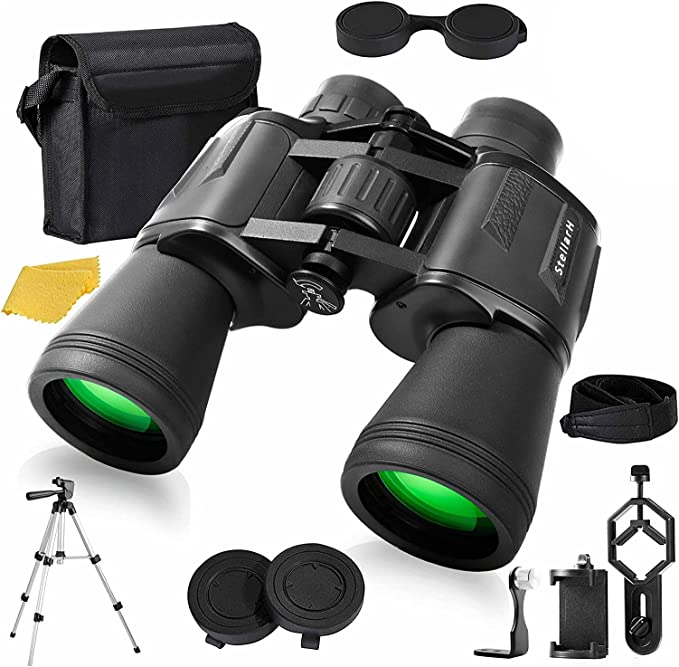
12X50 Full Size Binoculars for Adults with Photography Video Kit [Upgraded] Pro Tripod & Carrying Bag & Strap, Easy Focus for Camping,Travel,Stargazing,Bird Watching

One of the joys of using binoculars for stargazing is the ability to see the constellations in more detail. With the increased magnification, you can easily spot individual stars and trace the shapes of the constellations across the sky. Binoculars can also reveal fainter stars that may not be visible to the naked eye, making it easier to appreciate the full beauty of the night sky.

Another benefit of using binoculars is the ability to observe celestial objects that may be difficult to locate with the naked eye. For example, the Andromeda Galaxy is visible to the naked eye as a faint smudge in the sky, but with binoculars, you can see the galaxy in more detail and appreciate its spiral arms and bright central core. Binoculars can also provide a stunning view of the moon, allowing you to see the craters and mountains in incredible detail.

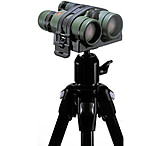
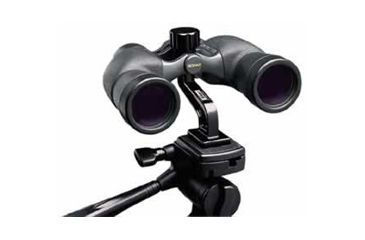
Nikon Binocular Tripod Adpater for Nikon E2, Superior E, Astronomy Series and Zoom XL Binoculars 7806 Color: Black,

When using binoculars for stargazing, it’s important to find a dark location away from city lights. Light pollution can make it difficult to see fainter stars and celestial objects, so finding a dark spot with clear skies is key. It’s also important to use a tripod or stabilize the binoculars against a solid surface to prevent hand shake and ensure a stable viewing experience.

Overall, exploring the night sky through binoculars can be a rewarding and exciting experience for stargazers of all levels. With a pair of binoculars, you can appreciate the beauty of the night sky in a whole new way, discovering new constellations, stars, and celestial objects with every viewing.

Binoculars can be a great choice for amateur astronomy

Binoculars are a great choice for amateur astronomy for several reasons. They offer a wider field of view than most telescopes, allowing you to take in more of the night sky at once. This can be especially helpful for identifying constellations and navigating the sky. Additionally, binoculars are generally more portable and easier to set up than telescopes, making them a convenient option for backyard stargazing.

Celestron – SkyMaster 15×70 Binocular – #1 Bestselling Astronomy Binocular – Large Aperture for Long Distance Viewing – Multi-coated Optics – Carrying Case Included – Ultra Sharp Focus

  1. Cost-effective: Binoculars are generally less expensive than telescopes, making them a great entry point for those who are new to astronomy or want to try it out before investing in more expensive equipment.
  2. Portability: Binoculars are small and lightweight, making them easy to transport and set up. This makes them ideal for those who want to stargaze in different locations or travel to dark-sky sites.
  3. Wide field of view: Binoculars provide a wider field of view than telescopes, making it easier to locate objects in the sky. They also allow you to see larger areas of the sky at once, making them ideal for observing star clusters, nebulae, and other deep-sky objects.
  4. Easy to use: Binoculars are simple to use and require minimal setup, making them accessible to beginners. They also have a low learning curve, which means you can start observing right away.
  5. Versatility: Binoculars can be used for a variety of other activities, such as bird watching, hiking, and other outdoor activities, making them a great all-around tool for nature enthusiasts.

Another benefit of binoculars is that they can offer a more immersive observing experience, giving you a sense of being “in” the night sky. This can be especially true when observing objects like the Milky Way or large star clusters, which can fill the entire field of view of a pair of binoculars.

12×50 HD Full Size Binoculars for Adults with Photography Kit – Smartphone Adapter Universal Tripod Carrying Bag & Strap for Bird Watching Hunting Stargazing Sporting & Sightseeing

Ultimately, whether you choose binoculars or a telescope for your astronomy pursuits depends on your personal preferences and observing goals. However, if you’re just starting out or looking for a more portable and versatile observing option, binoculars can be a great choice.

Overall, binoculars are a great choice for amateur astronomy because they are affordable, portable, versatile, and easy to use. They can provide a rewarding viewing experience and can help beginners learn the basics of astronomy before investing in more advanced equipment.

BINOCULARS the underrated Tool for Backyard Astronomy

Why binoculars are the underrated tool for backyard astronomy,

Have you ever gazed up at the night sky, mesmerized by the twinkling stars and sparkling constellations? If so, you may be considering investing in a telescope for backyard astronomy. But have you considered the power of binoculars? These often-overlooked tools can be just as effective, if not more so, than larger telescopes. In this article, we’ll explore why binoculars deserve more credit in the world of amateur astronomy and share tips for using them to get the most out of your stargazing experience. So whether you’re a seasoned pro or a beginner in the world of stargazing, grab a pair of binoculars along with your star maps and observing charts, and let’s explore the night sky together.,

Binoculars vs telescopes: a comparison

While binoculars are often overlooked in the world of amateur astronomy, they can provide a unique observing experience compared to telescopes. Let’s take a closer look at some of the differences between binoculars and telescopes.

One advantage of binoculars is their portability. They are smaller and lighter than telescopes, making them easier to transport and set up in different locations. Additionally, binoculars provide a wider field of view than telescopes, allowing you to observe larger sections of the night sky at once.

On the other hand, telescopes offer greater magnification than binoculars, allowing you to see finer details of celestial objects. They are also better suited for observing planets and deep-sky objects like galaxies and nebulae.

Ultimately, choosing between binoculars and telescopes depends on personal preference and observing goals. While telescopes may be better for specific types of celestial objects, binoculars offer a different perspective and can be more versatile for general stargazing.

So, whether you choose binoculars, a telescope or both, remember that the most important thing is to enjoy the wonders of the night sky and keep exploring.,

TELESCOPES

Reflecting Telescope Information

When viewing distant objects through the use of a telescope, the most important part of that telescope is called the objective. The objective is that component of the telescope that has the ability of gathering the light that is available. Obviously, the larger the objective the greater is the capacity of the telescope to gather light which in turn allows the viewed image to be better visualized.

In addition, there are two types of telescopes. One type of telescope is called the refractor telescope and the other is known as the reflecting telescope. The difference between these two telescopes is how the light is captured.

Celestron – 70mm Travel Scope – Portable Refractor Telescope – Fully-Coated Glass Optics – Ideal Telescope for Beginners – BONUS Astronomy Software Package
Celestron – PowerSeeker 127EQ Telescope – Manual German Equatorial Telescope for Beginners – Compact and Portable – Bonus Astronomy Software Package – 127mm Aperture

Refracting and Reflecting Telescope

The refracting telescope obtains the light through its objective that is made out of glass. Basically, in this type of telescope, the glass lens is situated towards the front of the telescope. As the light is captured by the objective, it is then refracted or deflected through a lens which allows for the viewed image to be magnified. Examples of this type of telescopic equipment include scopes that are used on rifles, binoculars and spyglasses.

A reflecting telescope uses a mirror as its objective. This mirror is located towards the distal end of the telescope. In addition, the mirror has a concave shape. The curvature of the mirror allows for the midpoint of the mirror to be the focal point for all of the light that strikes each part of the surface of the bowl-like mirror. This reflection is then captured by the lens to view the item of interest.

Advantages Of The Reflecting Telescope

There are several advantages to the use of a reflecting telescope. The major advantage is that distortion of what is being viewed is minimal. This is because, through the use of the mirror, the wavelengths are all reflected consistently. This advantage also leads to the reflecting telescope being less expensive than the refracting telescope.

In addition, through the use of the mirror as the objective, the support for this mirror can be all along the posterior portion of the telescope. This allows for the housing to be very large which will accommodate a larger mirror. Larger mirrors mean more light which results in increased visibility.

Disadvantages

However, as with anything else, there are a few disadvantages in the use of a reflecting telescope. One of those disadvantages is size. This is due to the fact that these types of telescopes can accommodate larger mirrors. This results in the telescope itself being larger which may prove to be an issue when storing or relocating the reflecting telescope.

In addition, because of the use of mirrors, there may need to be occasional adjustments made so that optimum light alignment is maintained.

The World Of Refractor Telescopes

Refractor telescopes are some of the oldest telescopes available, utilized at around the beginning of the 15th century and still around today the refractor telescope is quite possibly one of the oldest telescopes in use today. Made up of concave lenses that allow the light to be refracted and images to appear bright and larger than looking at it with the normal eye the refractor telescope can greatly aid in seeing stars, planets and moons.

These telescopes are made up of convex lenses and an eyepiece lens similar to binoculars, these refractors gather light and bend it in order to view objects at a distance, which is particularly useful when looking at stars and the night sky Refractor telescopes may seem complicated and are made up of lenses that are concave and refract the light.

The telescope come in a variety of versions; the Galilean telescope which is named after its creator was one of the first versions and was improved upon by Johannes Kepler with the Keplerian Telescope, which is a refractor telescope that utilized a convex eyepiece as opposed to a concave of the Galilean model. The decades and centuries since have observed newer inventions and different lenses, with the achromatic refractors invented in the mid 16th century and later with apochromatic refractors.

Pros and Cons of Refractor Telescopes

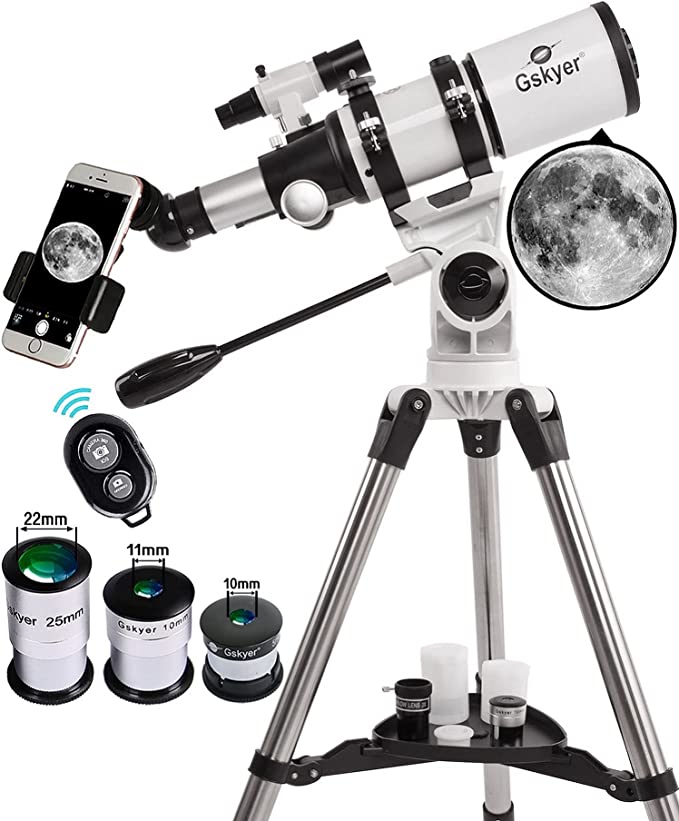
Telescope for Kids & Adults – 70mm Aperture 500mm AZ Mount Fully Multi-Coated Optics Astronomical refracting Portable Telescopes, with Tripod Phone Adapter, Carrying Bag, Remote Control

I stated previously that refractor telescopes have been around a long time and with that comes a definite plus since there is a definitive ability to know what the pros and cons of the telescope. These telescopes have obviously come a long was since the 15th century yet the technology has increased to a point in which the refractors have improved yet the size of refractor telescopes pose a problem in the fact that the larger the refractor lens the more chance that it can have defects or begin to sag.

While technology continues to grow and there is no telling where refractor lenses in telescopes will go to in the future one thing for sure is that refractor telescopes have been around for centuries and thus show no decline in their use by many of astronomers. So no matter what telescope you choose to utilize to view the universe or neighborhood, you can not dismiss the value of the refractor telescope and the impact that its utilization has had on astronomy and the search of the skies.

Shooting Stars

If you are a serious astronomy fanatic like a lot of us are, you can probably remember that one event in childhood that started you along this exciting hobby. It might have been that first time you looked through a telescope. But for many of us, it was that first time we saw a rain of fire from the sky that we eventually came to know as a meteoroid shower.

A view of a Meteor Shower and the Milky Way with a pine trees forest silhouette in the foreground. Night sky nature summer landscape. Perseid Meteor Shower observation.

At the time when you see the first one, it’s easy to remember the movie “war of the worlds” or some other fantastic image of aliens entering our atmosphere in droves to take over the planet. But with some guidance and explanation of what was going on, we eventually learned that these showers were not at all threatening or any kind of invasion. For the most part meteoroid showers are harmless, part of nature and very fun to watch.

So what are these strange lights in the sky? Are they aliens invading from Mars? Are the comets coming to start the next ice age? Or perhaps asteroids burning up as they enter the earths atmosphere. The answer to the above questions is no to the first and “yes and no” to the other two.

A meteoroid is actually a small piece of space rubble, usually dust or small rocks that come from either a comet or the break up of an asteroid in space and that eventually plummets toward the earth. We say “toward the earth” because the lights you see are the friction of the atmosphere burning up those small space tidbits and creating a spectacular show for all of us as they do so. A particularly exciting moment to witness is when a meteoroid breaks up or explodes on entry. A meteoroid that explodes is called bolides.

There are some interesting details about the life of a meteoroid that make the viewing of shooting stars even more fun. To be seen, a meteoroid only needs to weigh as little as a millionth of a gram. But the thing that makes them so spectacular to see is the tremendous speeds they reach as they enter the atmosphere. Before burning up, a meteoroid will reach between 11 and 74 kilometers per second which is 100 times faster than a speeding bullet.

We tend to think of seeing a shooting star as a freak event and we associate it with superstition (hence, wish on a lucky star). But there are actually thousands of them every year so it really isn’t that rare to see one. In fact, scientists tell us that over 200,000 tons of space matter enters the atmosphere each year and burns up on entry.

Comets are a big source of meteoroids because of the nature of those long tails. A large amount of dust, ice and other space debris gets caught up in a comet’s tail as it moves toward the sun. Then as the comet moves away from the sun in its orbit, tons of this matter is thrown off into space to disperse. As the Earth moves in its routine orbit around the sun, it often crosses through clouds of this discarded matter which becomes one of those “meteor showers” that are so popular for viewing.

These showers of shooting stars are pretty easy for astronomers to predict so you can get into position to see the excitement at just the right time of night and be looking at the right area of the night sky. Usually the astronomy magazine or site will give you a general time and location to be ready to look when the meteoroids start to fall.

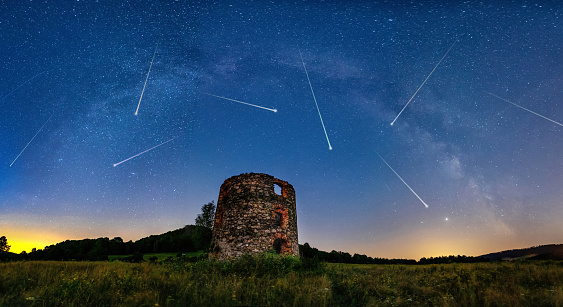
Meteor Shower and the Milky Way with old ruin on foreground

Now keep in mind, this is a phenomenon of nature, so it may not observe the time table exactly. Also note that there is a notation system for where the meteoroid shower will occur based on what constellation is its backdrop. The section of the sky to focus on for the show is called the “radiant” because that is where the entering meteoroids begin to glow or radiate. The radiant is named for the constellation it is nearest too. So if the meteor shower is going to occur in the constellation of Leo, then its radiant will be called Leonid. This will help you decipher the listing of asteroid showers in the publications.

Comets Visitors From Beyond

The one thing we love the most in the world of astronomy is a good mystery. And if there was ever a mysterious and yet very powerful force of nature that we witness in the night skies, it is the coming of the mighty comet.

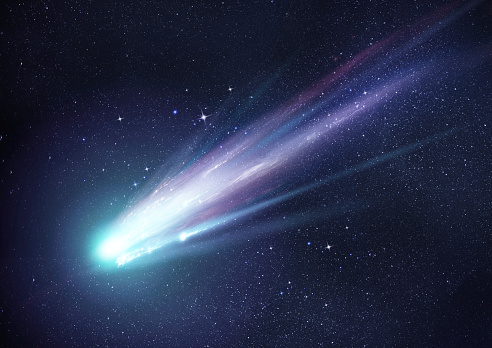
A bright comet with large dust and gas trails as the comets orbit brings it close to the Sun. Illustration.

The arrival of a comet within view of Earth is an event of international importance. Witness the huge media attention that the Haley or Hale-Bopp have had when they have come within view The sight of these amazing space objects is simultaneously frightening and awe inspiring.

Above all, it is during these comet viewings that the astronomer comes out in all of us. But what is a comet? Where did it come from? And how does it get that magnificent tail?

We should never confuse comets with asteroids. Asteroids are small space rocks that come from an asteroid belt between Mars and Jupiter. While still quite stunning to see, they pale in comparison to the arrival of a comet. Asteroids also have received considerable study by the scientific community.

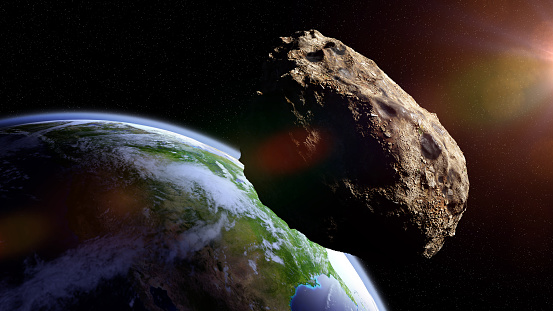
meteorite from outer space, falling toward planet Earth, dramatic science fiction scene

Not as much is known about comets. As a rule, comets are considerably larger than asteroids. The composition of a comet is a mixture of nebulous, gasses, ice, dust and space debris. One scientist called the composition of a comet as similar to a “dirty snowball” because the composition is so diverse and changeable. The center or nucleus of a comet is usually quiet solid but the “snowball” materials often create a “cloud” around that nucleus that can become quite large and that extends at great lengths behind the comet as it moves through space. That trailing plume is what makes up the comet’s magnificent tail that makes it so exciting to watch when a comet comes within view of Earth.

The origins of comets is similarly mysterious. There are a number of theories about where they come from but it is clear that they originate from outside our solar system, somewhere in deep space. Some have speculated they are fragments left over from the organization of planets that get loose from whatever gravitational pull and are sent flying across space to eventually get caught up in the gravity of our sun bringing them into our solar system.

Another theory is that they come from a gaseous cloud called the Oort cloud which is cooling out there after the organization of the sun. As this space debris cools, it gets organized into one body which then gathers sufficient mass to be attracted into the gravity of our solar system turning into a fast moving comet plummeting toward our sun. However, because of the strong gravitational orbits of the many planets in our solar system, the comet does not always immediately collide with the sun and often takes on an orbit of its own.

The life expectancy of comets varies widely. Scientists refer to a comet that is expected to burn out or impact the sun within two hundred years as a short period comet whereas a long period comet has a life expectancy of over two hundred years. That may seem long to us as earth dwellers but in terms of stars and planets, this is a very short life as a space object indeed.

Scientists across the globe have put together some pretty impressive probes to learn more about comets to aid our understanding of these visitors from beyond. In 1985, for example, the United States put a probe into the path of the comet Giacobini-Zinner which passed through the comets tail gathering tremendous scientific knowledge about comets. Then in 1986, an international collation of scientists were able to launch a probe that was able to fly close to Haley’s comet as it passed near Earth and continue the research.

While science fiction writers and tabloid newspapers like to alarm us with the possibility of a comet impacting the earth, scientists who understand the orbits of comets and what changes their paths tell us this is unlikely. That is good because some comets reach sizes that are as big as a planet so that impact would be devastating. For now, we can enjoy the fun of seeing comets make their rare visits to our night sky and marvel at the spectacular shows that these visitors from beyond put on when they are visible in the cosmos.