Warm summer nights provide the perfect backdrop for backyard stargazing. Whether you are a seasoned observer with a telescope or a family using nothing but your naked eyes from a blanket in the grass, the celestial calendar for July 2026 is packed with spectacles.
This month features brilliant evening planets, stunning predawn celestial meetups, the peak of our home galaxy’s visibility, and the opening acts of the summer meteor season. Here is your complete guide on what to look for, when to watch, and how to find July’s best cosmic events.
Earth at Its Furthest Point: Aphelion (July 6)
We begin the month with a mind-boggling cosmic fact to share around the campfire. On July 6, 2026, Earth reaches aphelion—the exact point in our annual elliptical orbit where we are furthest from the Sun.
SUN –>>> 94.5 Million Miles to Earth
On this day, Earth will sit roughly 94.5 million miles away from our star. It feels counterintuitive for those of us experiencing midsummer heat in the Northern Hemisphere, but our seasons are dictated by the tilt of Earth’s axis, not our physical distance from the Sun. While it is a purely mathematical milestone that doesn’t change how the sky looks, it is a wonderful reminder of our steady journey through space.
The Evening Star: Venus Swaps Greetings with Regulus and the Moon
If you step outside just after sunset during the first half of July, your eyes will immediately be drawn to the western horizon. Venus reigns supreme as the “Evening Star,” blazing intensely against the twilight glow.
July 9 — Venus and Regulus

Shortly after the sun sinks on July 9, look closely at Venus. Right next to it, you will see a sharp, blue-white point of light. This is Regulus, the brightest star in the constellation Leo the Lion. Known historically as the “Heart of the Lion,” Regulus sits roughly 79 light-years away from us. The visual contrast between the steady, dazzling white light of nearby Venus and the twinkling, distant sapphire of Regulus makes this the prettiest naked-eye pairing of the week.
July 15–17 — The Cosmic Crescent
A few nights later, a young, razor-thin crescent Moon enters the western sky, climbing closer to Venus each evening. By dusk on July 17, the Moon will sit directly beside Venus.
Keep an eye out for a phenomenon known as earthshine, or the “Da Vinci glow.” This is when sunlight reflects off Earth’s oceans and clouds back onto the dark portion of the Moon, subtly illuminating the entire lunar disc. It creates a breathtaking, cinematic view easily seen without any equipment.
The Predawn Parade: Saturn, Mars, and the Seven Sisters
For the early risers—or the night owls who stay up past midnight—the eastern sky before dawn acts as a bustling planetary crossroads this month.
July 7–8 — The Saturn-Moon Rendezvous
In the early hours of July 7 and 8, the Third Quarter Moon climbs above the eastern horizon accompanied by Saturn. The pair will be separated by less than nine degrees, roughly the width of a fist held at arm’s length. Saturn will shine with a steady, golden glow. If you have a modest backyard telescope or high-powered binoculars, this is an excellent time to view Saturn’s famous ring system, which is currently tilted at a narrow angle relative to Earth.
July 11 — The Morning Trio
Set your alarm roughly two hours before sunrise on July 11 for the crown jewel of the month’s planetary alignments. Looking east, a delicate crescent Moon will form a tight, striking triangle with an orange-hued Mars and the sparkling Pleiades star cluster (also known as the Seven Sisters).
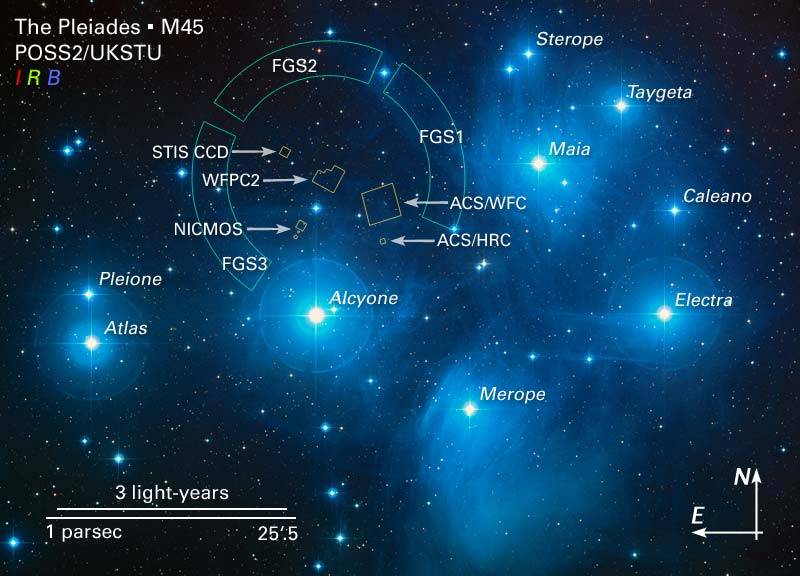
While the naked eye can comfortably spot six or seven stars in the Pleiades, viewing this triangle through a pair of standard binoculars will completely change your perspective. Optics pull dozens of hidden, icy-blue stars out of the dark velvet sky, framed beautifully by the ruddy glow of Mars.
July 14: Dark Skies and the Milky Way’s Core
Some of the best stargazing nights do not center around what is arriving in the sky, but rather what is missing. On July 14, the Moon reaches its New Moon phase, meaning it sits between the Earth and the Sun and leaves our night sky entirely dark.
Without natural lunar light pollution, mid-July provides the absolute best window of the year to witness the Milky Way.
How to Find the Galactic Center
- When to look: Wait until late evening when the sun’s glare is entirely gone.
- Where to look: Face directly south.
- The Guidepost: Look for a cluster of stars that forms a shape resembling a classic Teapot (part of the constellation Sagittarius).
From a dark-sky location, such as a state or national park, the dense, glittering core of our home galaxy will appear to rise straight out of the Teapot’s spout like a pale, smoky column of steam.
Late July: The Buck Moon and Overlapping Meteors
The end of the month brings a massive shift in nighttime lighting, transitioning from deepest dark to full lunar brilliance, alongside the kickoff of summer shooting star season.
July 28–29 — The Full Buck Moon
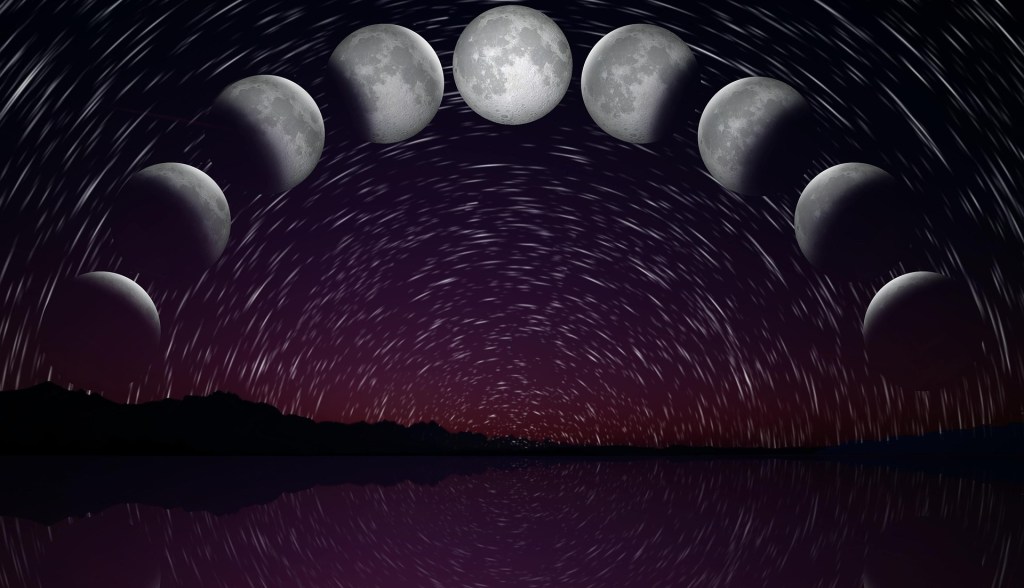
July’s full lunar orb reaches its official peak illumination on the morning of July 29, meaning the evenings of both July 28 and July 29 will offer spectacular moonrises. Known traditionally as the Buck Moon because male deer grow their new antlers rapidly during this stretch of summer, it will dominate the sky from dusk until dawn.
For the most magical view, catch it right as it clears the eastern horizon at sunset. An optical trick of human perception called the “Moon Illusion” will make the orb appear unnaturally massive as it hovers behind distant trees and buildings.
July 30–31 — A Double Meteor Shower

The month closes out with a dual cosmic performance: the Southern Delta Aquariids and the Alpha Capricornids meteor showers both reach their peak on the same nights.
The Delta Aquariids are a steady shower capable of producing up to 20 to 25 meteors per hour under ideal conditions, while the Alpha Capricornids are much sparser but famous for producing slow-moving, bright, colorful fireballs.
Stargazing Tip: Because the moon will be roughly 98% illuminated during the peak nights, its brilliant light will wash out the fainter meteors. To maximize your chances of spotting a shooting star, position yourself so a building or a line of trees blocks the direct light of the moon, and watch the darker patches of sky further away from the lunar disc.
For the best Astronomy equipment and supplies check Amazon and Optics Planet
Summary of Key July 2026 Skywatching Dates
| Date | Celestial Event | Best Time to Watch | Where to Look |
| July 6 | Earth at Aphelion | All Day (Orbital Milestone) | N/A |
| July 7–8 | Moon and Saturn Conjunction | After Midnight until Dawn | Eastern Sky |
| July 9 | Venus glides past Regulus | 45–60 Minutes After Sunset | Low Western Horizon |
| July 11 | Moon, Mars, and Pleiades Trio | 2 Hours Before Sunrise | Eastern Sky |
| July 14 | New Moon & Peak Milky Way Core | Late Night / Midnight | Southern Sky (Near the “Teapot”) |
| July 17 | Crescent Moon and Venus Meetup | Just After Sunset | Low Western Horizon |
| July 28–29 | The Full Buck Moon | Sunset to Sunrise | Rises in the East |
| July 30–31 | Double Meteor Shower Peak | Midnight to Dawn | Across the Entire Sky |
July 2026 reminds us that exploring the frontier of space doesn’t require expensive technology or long journeys. Grab a blanket, invite your family outside, and simply look up!
For a visual breakdown of where to find these planetary alignments and a preview of the upcoming meteor paths, check out this comprehensive July 2026 Skywatching Video Guide, which walks through each event chronologically to help you plan your nights under the stars.
Clear skies and happy hunting!


