The Ultimate 2026 Guide to Buying a Kid’s First Telescope — From a Mom (and Grandpa) Who’s Been There

If you have ever stood in your backyard on a clear autumn night, looking up at the Moon while your child gasps at the outline of a lunar crater, you know the magic of astronomy. Getting kids hooked on stargazing is one of the most rewarding family activities imaginable. But let’s be honest: walk down the toy aisle or search online, and you are immediately flooded with plastic scopes promising “600x magnification!” that end up gathering dust in the garage.

As we navigate 2026, telescope technology and optics have evolved significantly. From classic budget refractors to smartphone-guided stars and compact smart imaging devices, finding the perfect scope depends on your family’s experience level, patience, and goals.

Whether you are a total beginner introducing your child to the night sky, a slightly experienced observer looking to upgrade, or a serious amateur astronomer seeking equipment the whole family can share, this comprehensive 2026 guide breaks down everything you need to know.

What Changed for 2026? Key Features to Look For

Before diving into specific models, it helps to know what modern astronomy gear offers today. The era of frustrating, shaky tripods and impossible manual alignment is largely behind us.

  1. Plate-Solving Smartphone Tech: Smartphone-assisted docks use your phone’s camera and location data to analyze star patterns overhead in real time. The screen shows arrows pointing exactly where to push the scope to hit your target.
  2. Accessible Tabletop Dobsonians: Small Newtonian reflectors mounted on sturdy, swivel tabletop bases remain the undisputed champions of value. They drop setup time to under sixty seconds.
  3. Smart Robotic Scopes: All-in-one digital imaging scopes have become lighter and far more affordable. These stack light digitally and stream crisp live color images of faint nebulae directly to smartphones or tablets.

1. Visual Spark / Beginner’s Guide: Young Kids & First-Time Families

Focus: Capturing immediate interest, ease of setup, zero maintenance, rugged design.

When buying for young children (ages 6–10) or families completely new to stargazing, your main goal is quick wins. If it takes thirty minutes to set up, your young astronomer will lose interest before you align the finderscope. You want clear lunar views, bright planets like Jupiter and Saturn, and intuitive manual controls.

Top Beginner Recommendation: Celestron AstroMaster 70AZ Refractor

  • Type: 70mm Refractor on Alt-Azimuth Mount
  • Best For: Kids ages 6–10 and stargazing newcomers
  • Why It Wins: Refractors use glass lenses sealed in a tube—meaning zero optical alignment (collimation) is required. The alt-azimuth mount uses smooth panning controls so kids can naturally point it like a camera tripod. It provides razor-sharp views of Moon craters, Saturn’s rings, and Jupiter’s four main moons.
  • Check Price on Amazon for Celestron AstroMaster 70AZ (Affiliate Link)

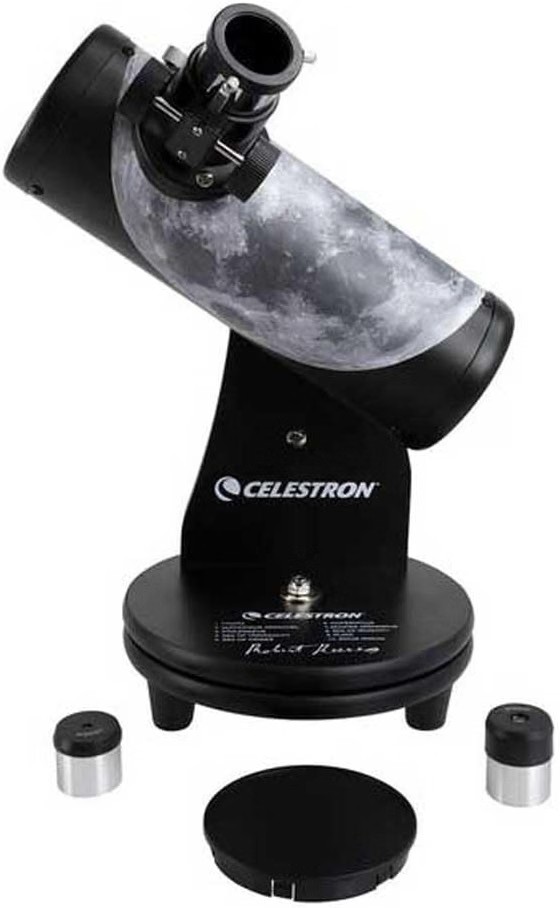
Budget Alternative: Celestron FirstScope Signature Series Moon

  • Type: 76mm Tabletop Newtonian Reflector
  • Best For: Young children (ages 5–8)
  • Why It Wins: Weighing under 5 lbs, this ultra-portable tabletop design sits right on a patio table or lap. Kids simply swivel the optical tube toward the Moon without wrestling tall tripod legs.
  • Check Price on Amazon for Celestron FirstScope (Affiliate Link)
Stan’s Tip: When starting out with young ones, don’t worry about distant galaxies right away. Focus on the Moon! Use a low-power eyepiece (like a 25mm) first to give a wide, bright view. Finding your target easily builds instant excitement.

2. Infographic / Backyard Explorer: Slightly Experienced Astronomers

Focus: Practical, action-oriented backyard observation, larger light gathering, smartphone guidance.

If your family already knows a few major constellations, or if you have a tween ready for a serious tool, it is time to step up in aperture (lens/mirror size). Light gathering power is the true engine of any telescope—the bigger the mirror, the brighter and clearer deep-sky objects become.
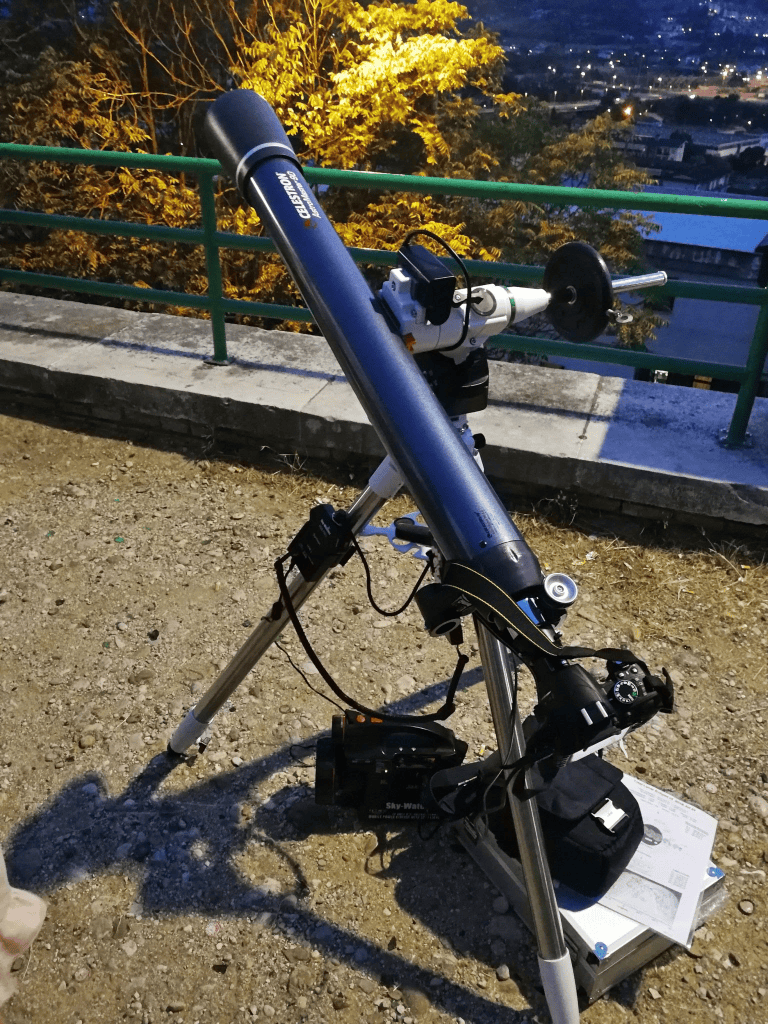
Tripod refractors set up easily in the yard.. Source: lucamato / Getty Images

App-guided scopes point directly at celestial targets.. Source: Saturated / Getty Images

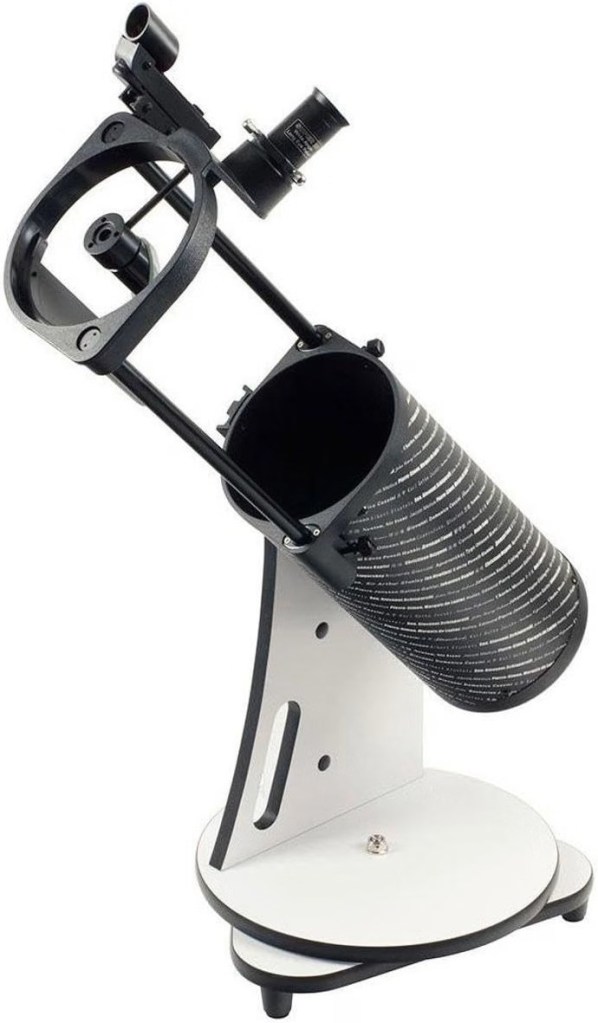
Top Mid-Range Pick: Sky-Watcher Heritage 130 Tabletop Dobsonian

  • Type: 130mm (5.1-inch) Parabolic Truss-Reflector
  • Best For: Growing astronomers, teens, and family backyard nights
  • Why It Wins: The Heritage 130 delivers huge optical performance for its price tag. Its collapsible truss tube makes it compact enough to store on a bedroom shelf or pack for camping trips. The 130mm mirror pulls in subtle details in the Orion Nebula (M42), the Andromeda Galaxy (M31), and delicate star clusters.
  • Check Price on Amazon for Sky-Watcher Heritage 130 (Affiliate Link)
Top Tech Pick: Celestron StarSense Explorer DX 130AZ

  • Type: 130mm Smartphone-Guided Reflector
  • Best For: Digitally-minded kids and families who want zero-frustration target finding.
  • Why It Wins: Place your phone in the integrated dock, open the StarSense app, and let plate-solving technology map the night sky overhead. Follow on-screen arrows to manually push the scope right to open clusters, double stars, and nebulae.
  • Check Price on Amazon for Celestron StarSense Explorer DX 130AZ (Affiliate Link)
Telescope ModelOptical DesignApertureBest Target AudienceKey Advantage
Celestron AstroMaster 70AZRefractor70mmBeginners / Kids 6–10No optical maintenance; sharp lunar views
Sky-Watcher Heritage 130Dobsonian Reflector130mmBackyard Explorers / TweensMaximum aperture per dollar; collapsible
StarSense Explorer DX 130AZSmartphone-Guided Reflector130mmTech-Savvy Families / TeensReal-time smartphone star navigation
Apertura AD8 / 8″ DobsonianFull-Size Dobsonian203mm (8″)Advanced Hobbyists / Lifetime UseDeep-space detail; planetary resolution
ZWO Seestar S30 ProSmart Digital Telescope30mm Triple Apo + SensorAstrophotography / Group ViewingStacks full-color photos to phone screens

Stan’s Tip: Keep a simple red LED flashlight in your pocket during stargazing sessions. White light from smartphones degrades night vision for up to 30 minutes, but red light lets you read star charts without ruining your eye’s dark adaptation!

3. Deep Space & Astrophotography: Advanced Hobbyists & Serious Enthusiasts

Focus: Deep-sky detail, large mirrors, automated tracking, family image sharing.

For families where astronomy has become a serious shared hobby, or for parents wanting a scope that delivers lifetime views, you have two clear directions: massive optical aperture or modern smart imaging.

The Classic Visual Powerhouse: Apertura AD8 8-Inch Dobsonian

  • Type: 203mm (8-inch) Ground-Standing Dobsonian Reflector
  • Best For: Serious amateur astronomers and older teens
  • Why It Wins: Ask almost any experienced astronomer what telescope they would choose if they could only have one, and the answer is almost always an 8-inch Dobsonian. An 8-inch mirror gathers over 800 times more light than the human eye. Spiral arms in distant galaxies, individual stars resolved in globular clusters, and intricate cloud bands on Jupiter are all within reach.
  • Check Price on Amazon for Apertura AD8 Dobsonian (Affiliate Link)

The Modern Smart Revolution: ZWO Seestar S30 Pro Smart Telescope

  • Type: All-In-One Smart Digital Astrophotography Scope
  • Best For: Families wanting living-room image sharing and deep-sky astrophotography without complex software setup.
  • Why It Wins: Compact enough to fit in a small backpack, the Seestar S30 Pro auto-aligns, tracks targets, and digitally stacks light exposures. Within minutes, a vibrant, full-color view of the Ring Nebula or Whirlpool Galaxy renders directly on your tablet or smartphone screen—making it ideal for sharing views with multiple family members simultaneously.
  • Check Price on Amazon for ZWO Seestar S30 Pro (Affiliate Link)

4 Essential Accessories to Complete Your Kit

No matter which telescope you pick, adding a few inexpensive accessories can turn a good night into an unforgettable one:

  1. Planisphere / Adjustable Star Chart: A physical plastic star wheel helps kids learn how constellations rotate throughout the season without relying on batteries.
  2. Quality Moon Filter: The Moon is incredibly bright through a telescope. A neutral density filter threads onto the eyepiece to cut glare and highlight fine crater detail.
  3. Universal Smartphone Adapter: Let your kids snap their very first photo of lunar craters through the eyepiece to share with grandparents or classmates.
  4. Stargazing Logbook: Keep track of targets observed, dates, atmospheric conditions, and drawings of planetary features.

Watching hands-on demonstrations can also make setting up tripods, aligning red-dot finders, and using tabletop bases much simpler.

The video below shows setup steps, manual balancing, and alignment tips for entry-level refractor and reflector telescopes.

Final Thoughts: Making Memories Under the Stars

Buying a child’s first telescope isn’t just about optics, focal lengths, or apertures—it’s about opening a window into the wider universe and sharing moments of wonder together as a family. Start with an manageable scope that fits your space, pack a thermos of hot cocoa, and head out onto the deck or into the backyard on the next clear evening.

Here is a proper summary that reflects the full scope of each of the three article areas:

Visual Spark / Beginner’s Guide: Focuses on capturing immediate interest for newcomers by demystifying the night sky in an accessible, quick-read format. It covers fundamental stargazing basics, constellation identification, and initial celestial navigation without requiring specialized equipment.

Infographic / Naked-Eye Stargazing: A practical, action-oriented guide designed for immediate backyard observation. It outlines clear, step-by-step targets visible to the naked eye or basic binoculars—including bright planets like Jupiter and Saturn, the Orion constellation, and tracking the International Space Station.

Deep Space & Astrophotography: Explores more advanced astronomical concepts, shifting focus beyond the solar system toward deep-sky phenomena like nebulae, star clusters, and distant galaxies. It bridges the gap between basic visual stargazing and using telescope optics to capture and understand cosmic structures.

Clear sky’s and happy hunting.

Beginner Parent’s Guide: Finding a First Train Set Your Child Will Love for Years”

When you’re a parent shopping on Amazon for your 6–10-year-old’s first model train set, it helps to go in knowing exactly what to ask and what details to check. This ensures you pick a set that’s fun, safe, durable, expandable, and—most importantly—something your child will love and can handle independently. The questions below are based on expert guidance and family-friendly hobby resources. More Information​


1. Is this train set the right age level for my child?

Search on Amazon:
“Best model train set for 6–10 years old”

  • Avoid sets with small parts or fragile pieces.
  • Check the age recommendation on the box.
  • Look for “Age 6+” or “family starter sets.”

Tip: If your child is careful and you plan to help, you can safely start with simple HO or O scale electric sets.


2. What type of train is best for my child—wooden, battery, or electric?

Ask yourself:

  • “Will my son play with this mostly on his own or with me?”
  • “Do we want quick, creative play or a long-term hobby?”

Options:

  • Wooden train sets (like BRIO, Tiny Land, or Thomas & Friends): Safe and durable for ages under 8, great for free play.
  • Battery-powered trains: Move on their own but stay safe for kids to operate.
  • Electric model trains (Lionel, Bachmann): More realistic but require adult supervision and help with setup. More Information​

Search on Amazon:
“Wooden train starter set for kids 6–10” or
“Battery-powered model train for beginners”


3. What scale or size should I buy?

Scale = how big the train is compared to real life.

  • O scale (large, easy to handle): Great for kids.
  • HO scale (medium, detailed): Ideal for older children with patience.
  • N scale (tiny, detailed): Best for adults or advanced teens.

Ask on Amazon:

  • “Best O scale model train set for beginners”
  • “HO scale train for kids 8–10 years old”

Tip: Bigger trains are easier for younger children and more resistant to rough handling. More Information​


4. How safe and durable is this train set?

Search phrases:

  • “Non-toxic paint wooden train set”
  • “Child-safe battery train with large parts”

Check for:

  • Rounded edges and sturdy materials
  • Secure magnets or connectors on cars
  • Non-toxic or safety-certified markings (ASTM, CE)

BRIO’s “My First Railway” and Tiny Land sets are top-rated for safety and indoor use. More Information​


5. How easy is it to set up and put away?

Single moms often ask:

  • “Can my child assemble this without help?”
  • “Does it include a table or storage bin?”

Look for:

  • Click-together tracks or magnetic connectors
  • Ready-to-run or Plug-and-play labeled sets
  • Sets that come with storage boxes or fold-flat designs

Search:
“Train set easy setup storage box kids”
“Lionel ready-to-run electric train set beginner”

Model Train Starter Sets – Information


6. Is it expandable so my child won’t get bored?

Look for:

  • “Compatible with BRIO / Thomas / Tiny Land” — for wooden sets
  • “Expandable track set” or “Add-on packs available” — for electric ones

Expandable sets keep your child interested for years as they collect new track pieces, freight cars, or bridges later on. More Information​


7. What kind of features make it engaging?

Ask:

  • “Does it have lights, sound, or interactive accessories?”
  • “Can my child rebuild or modify the track easily?”

Fun features include:

  • Battery engines with forward/reverse controls
  • Whistle and train sounds
  • Bridges, tunnels, or cranes
  • Interchangeable layouts (oval, figure-eight, loop)

Search:
“Battery train set with lights and sound for kids”
“Expandable wooden railway with tunnels and bridges”


8. Does it fit our space?

Measure before buying:

  • “Can this run on the living room floor or table?”
  • “Do I have storage for pieces when not in use?”

Space Tip:

  • Wooden and battery sets can go on any floor or table.
  • Larger electric O-scale trains need about a 4-foot circle minimum.

Search:
“Compact train set for small space”
“Train set with foldable table for kids”


9. How much maintenance or supervision will it need?

For a busy single mom, the goal is low maintenance.

Ask:

  • “Does this need constant cleaning or delicate wiring?”
  • “Is it durable if it’s bumped or dropped?”

Wooden and battery sets need minimal care. Electric trains require supervision, especially during setup and track wiring.

Search:
“Low-maintenance kids train set”
“Durable electric train for families”


10. Is it educational and imaginative?

A good starter train should develop more than play—it helps kids learn:

  • Hand-eye coordination
  • Patience and problem-solving
  • Storytelling and design through layout building

Look for:
Descriptions mentioning “STEM,” “creative play,” or “motor skills.”

Search on Amazon:
“Educational wooden train set for creativity and learning”
“STEM model train set for kids age 6–10”. More Information​


11. What is a realistic budget range?

TypeTypical Price RangeGood Starter Brand
Wooden$40–$80BRIO, Tiny Land, Thomas
Battery-Powered Plastic$60–$120Lionel Battery Sets, Fisher-Price
Electric (HO or O Scale)$130–$250Bachmann, Lionel Ready-to-Run

Remember: You don’t need the priciest one to make it meaningful! Focus on simplicity, sturdiness, and play value.More Information​


12. What do parent reviews say?

Before adding to your cart, scroll through Amazon reviews and look for:

  • Mentions of “6-year-old loved it!” or “easy to assemble”
  • 4.5-star average ratings or higher
  • Verified video reviews showing playtime or setup ease

High-volume reviews often highlight durability, track fit, or customer support—use these to avoid frustration later.


Quick Amazon Search Examples:

  • “Best train set for kids 6–10 expandable and safe”
  • “Wooden train with bridges and tunnels for boys”
  • “Lionel ready-to-run battery train set family gift”
  • “Starter set HO scale train for beginners 2025 kids”

Model Train Starter Sets – Information

Final Tip for Parents

If your son (or daughter!) loves building worlds, playing pretend, or watching trains pass, a model train set can become a lifelong hobby. Focus on simplicity, safety, and fun, and let curiosity carry the rest. Ask these questions up front, and your Amazon search will lead you to the perfect starter set for hands-on creativity and years of shared joy.

  1. https://charlesro.com/how-to-choose-the-right-model-train-set/
  2. https://www.tinylandus.com/en-de/blogs/collections/what-is-the-best-train-set-for-kids
  3. https://www.parents.com/best-train-sets-for-kids-8606278
  4. https://tandkhobby.com/blog/how-to-choose-juniors-first-train-set/
  5. https://play-trains.com/best-wooden-train-sets/
  6. https://www.trainworld.com/which-train-set-is-right-for-me
  7. https://www.strasburgrailroad.com/blog/best-train-toys-and-model-trains/
  8. https://www.reddit.com/r/modeltrains/comments/rjywci/how_young_is_too_young_for_model_trains/
  9. https://www.facebook.com/groups/438725726326410/posts/2600023460196615/
  10. http://www.joesherlock.com/train-faq.html
  11. https://www.reddit.com/r/modeltrains/comments/18dxjfv/whats_the_best_starter_train_set_for_kids/
  12. https://www.tcmrm.org/about/ask-the-train-doctor/
  13. https://www.trainworld.com/train-set.html
  14. https://forum.trains.com/t/store-bought-train-set-vs-indavidual-bought-pieces/116133
  15. https://www.reddit.com/r/modeltrains/comments/5lao6n/what_train_set_would_you_recommend_for_a_first/
  16. https://factorydirecthobbies.com/collections/kids-toys
  17. https://www.nmra.org/beginners-guide
  18. https://www.youtube.com/watch?v=5-wf2tEmUAI
  19. https://forum.trains.com/t/which-is-the-best-train-set-for-a-young-child/99592
  20. https://www.youtube.com/watch?v=J11J3hG0vUk

Five Starter Track Plans That Make Model Railroading Fun.


Stepping into the world of model trains is exhilarating—especially if a shiny new starter set found its way under the tree this holiday season! While simply running loops is good fun, adding a layout designed for operational challenges opens up new levels of enjoyment and learning. Below, you’ll find five proven, easy-to-build layouts ideal for new modelers. Each plan encourages hands-on activity and sets you up for deeper adventures in the world’s greatest hobby.


1. The Classic Oval with a Siding

Why it’s great for beginners:
Every starter set includes enough track for a simple oval. The continuous closed loop lets you just run trains and watch them go. Once the thrill of spinning laps wanes, it’s time to add a short siding. Using a turnout, you can branch off for storage, pretend deliveries, or engine changes.

How to make it interesting:

  • Use your siding as a delivery spot for different freight cars.
  • Invent stories: “Drop the boxcar at the bakery, pick up the flatcar at the lumber mill.”
  • Challenge yourself with basic operations, such as swapping cars between trains using the siding to minimize moves.

Scalability:
This layout is endlessly expandable. Add sidings and industries as your collection grows, turning a simple loop into a busy rail network.More Info.


2. Inglenook Sidings – The Puzzle Champion

Why it’s great for new modelers:
This classic British yard puzzle fits on a bookshelf and works in HO, N, or OO scale—especially if space is limited. The basic ingredients are a headshunt (main track) and three sidings: one long, two short.

How to play the Inglenook puzzle:

  • Arrange 8 cars in the sidings.
  • Draw cards to assemble a train of 5 cars in a set order.
  • Only use the available track space—no cheating!
    The fun comes from working out how to marshal the train by shunting back and forth, often with limited room to maneuver.

Learning from it:
The Inglenook teaches essential switching skills, logical thinking, and real-world railroading practices like coupling, reversing, and making strategic decisions. It’s endlessly replayable, and you can compete against friends or your own “best score.”
For detailed building tips, see resources like the [Wymann sidings guide].More Info.


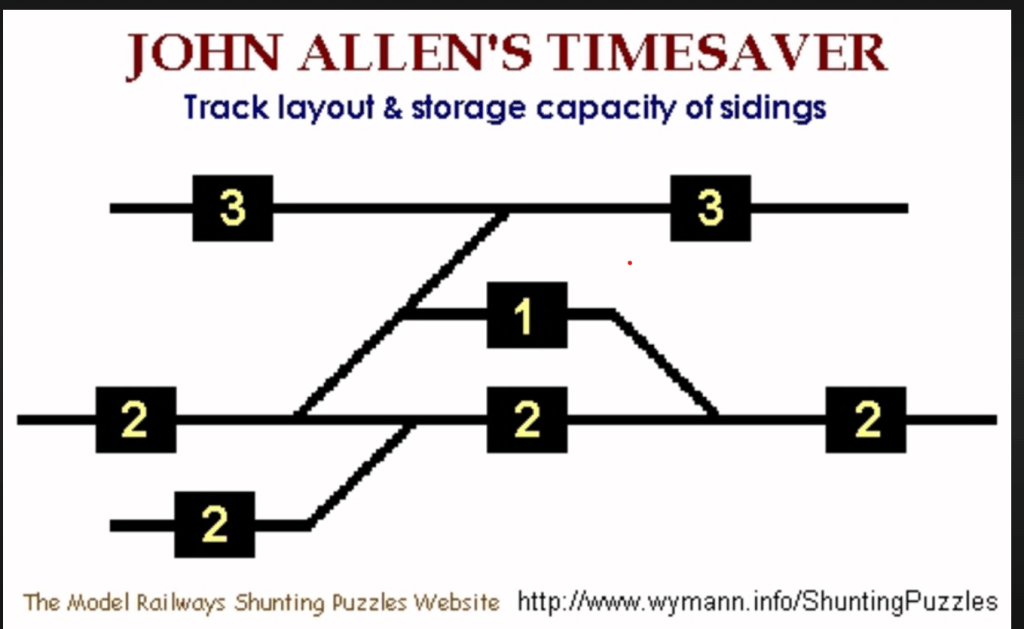
3. The Timesaver – A Tidy Little Challenge

Why it’s great:
Invented by John Allen, the Timesaver is a classic switching puzzle famous worldwide for its tricky operations. It uses a simple yard ladder with five stub sidings and a connecting main line.

How to set up:

  • Place a car in each siding, randomly.
  • Assign each car a destination: warehouse, station, mill, etc.
  • Your goal is to sort the cars to those destinations using as few moves as possible.

Why you’ll love it:
Timesaver fits on a door-sized table or smaller and can be customized with extra spurs, scenery, or industries. It brings real railroad logic to the living room, keeps you thinking, and becomes even more fun when played as a timed challenge or shared with friends.More Info.


4. Point-to-Point Branch Line

Why it’s great for play and realism:
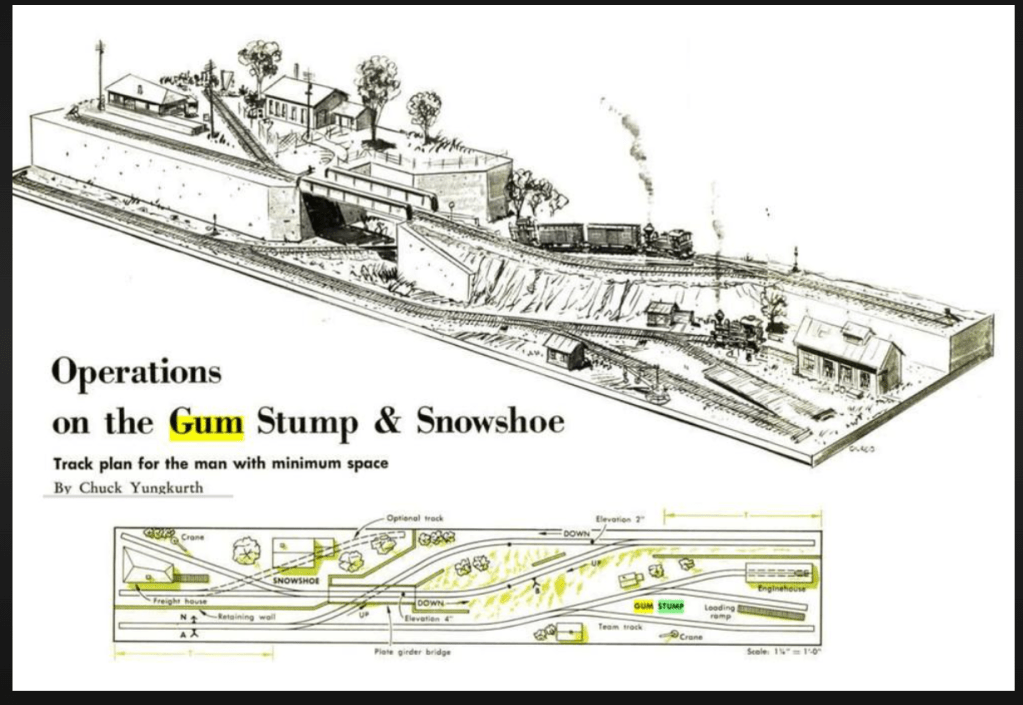
Not all trains run in endless circles! Many real railroads operate “branches” linking small towns or factories in a straight (or gently curved) line. A point-to-point layout brings purpose and realism to your runs.

How to use it:

  • Build a straight or L-shaped track with a station at either end and optional sidings for industry.
  • Send your train from one end to the other, making “collections” and “deliveries” along the journey.
  • Use waybills or dice rolls to assign tasks: “Deliver the blue boxcar to the furniture factory, then pick up the coal hopper.”

Benefits for beginners:
The branch line approach teaches scheduling, multi-tasking, and has a much more realistic feel than pure loops or ovals. Best of all, it can fit on a bookshelf or desktop and you can expand it by adding stations or yards over time.More Info.

For Model Railroad Supplies look Here.


5. Holiday Village Layout – Family, Fun, and Festivity

Why it’s a perennial favorite:
Trains and Christmas go together perfectly! Building a simple loop around the tree, through a festive village, offers unlimited imaginative play and family tradition.

How to set up:

  • Lay a continuous loop around your tree or under the living room table.
  • Add short sidings and decorate with miniature buildings, people, and seasonal scenery (fake snow, street lamps, even Santa!).
  • Play delivery games: “Drop presents at the post office,” “Pick up candy from the sweet shop,” etc.

Making memories:
This layout isn’t just for rail fans—it’s for everyone! Kids can get hands-on, grownups can compete in delivery races, and every year, you can add new accessories or rolling stock.More Info.


Tips for Starting Strong with Your First Layout

Stay Simple:
Don’t stress about complex wiring or scenery for your first build. Focus on reliable track-laying, smooth running, and fun operations.

Adapt to Your Space:
From tabletops to under-the-tree villages, these track plans work in small spaces and can be moved or modified as needed.

Build Gradually:
Start with the basics, then add turnouts, sidings, and mini-scenes as your skills grow and your interest deepens. Every new piece brings new challenges and fun.

Embrace the Community:
Model railroading is filled with welcoming enthusiasts who love helping beginners. Join a local club, watch YouTube build-alongs, or follow forums to ask questions and get inspired.More Info.


Conclusion: The Start of a Wonderful Journey

No matter which starter set you received or which track plan you choose, remember: every layout is a blank canvas for creativity, learning, and play. These five layouts are practical, accessible, and designed to teach you the joys of operations—a lifelong model railroad adventure awaits!

Whether you chase holiday magic, puzzle out switching challenges, or simply enjoy the whir and click of wheels on rails, you’re now part of a worldwide tradition. So set up your tracks, gather loved ones, and let imagination lead the way—steam ahead into model railroading fun!


Happy Railroading!
For more inspiration and detailed beginner guides, explore resources at Trains.com and join local groups or online communities to boost your skills and enthusiasm.More Info

  1. https://www.trains.com/mrr/beginners/model-railroading-the-beginners-guide/
  2. https://www.trains.com/mrr/beginners/10-recommended-track-plans-for-beginners/
  3. https://www.reddit.com/r/modeltrains/comments/1uuxfb/complete_beginner_wondering_where_to_start_on_a/
  4. http://www.wymann.info/ShuntingPuzzles/SPL-build.html
  5. https://www.reddit.com/r/modeltrains/comments/zm1o0k/jd_railroad_ho_scale_christmas_train_layout/
  6. https://shop.trains.com/blogs/the-trains-com-store-blog/crafting-your-christmas-model-train-layout
  7. https://www.hearnshobbies.com/blogs/model-kits/what-is-the-most-expensive-model-railway-layout-the-cheapest-which-layout-should-you-go-for
  8. https://www.reddit.com/r/modeltrains/comments/wxi987/looking_to_get_started_with_my_first_model_train/
  9. https://www.armballast.com/best-starter-set-for-model-railroading/
  10. https://forum.mrhmag.com/post/good-starter-sets-for-newbie-12192816
  11. https://www.trainshop.co.uk/blog/post/1400-shunting-yards-designing-a-track-plan-for-realistic-operations.html
  12. https://www.youtube.com/watch?v=GHLMFrk9zXY
  13. https://www.youtube.com/watch?v=Ozo7gK4oc6Y
  14. https://www.nmra.org/beginners-guide-part-9-operations
  15. https://www.trainworld.com/train-set/ho-scale-train-set.html
  16. https://www.youtube.com/watch?v=le6MmX7wZHU
  17. https://www.reddit.com/r/modeltrains/comments/qfp2no/recommendations_needed_christmas_village_meets/
  18. https://www.youtube.com/watch?v=cUcVJM5bsSw
  19. https://www.modeltrainforum.com/threads/designing-for-operations.198257/
  20. https://www.trainz.com