Exploring the November Night Sky: A Celestial Odyssey for the Whole Family

As the crisp autumn air settles in, November 2024 offers a spectacular array of celestial events for backyard astronomers of all levels. This guide will help novice stargazers navigate the night sky, highlighting key events and providing tips for optimal viewing. Remember, patience and persistence are key when exploring the cosmos.

Preparing for Your Stargazing Sessions:

  1. Choose a dark location away from city lights.
  2. Allow your eyes to adjust to the darkness for about 30 minutes.
  3. Use red light to preserve night vision when reading charts or adjusting equipment.
  4. Dress warmly, as November nights can be cold.
  5. Bring star charts, a compass, and a planisphere to help locate objects.

Now, let’s explore the celestial highlights for November 2024:

  1. New Moon – November 1

The month begins with a New Moon on November 1 at 4:49 am Alaska time. This is an excellent opportunity for deep-sky observation, as the absence of moonlight allows for optimal viewing of faint objects like galaxies and star clusters[4].

Tip for Novices: Use this dark night to familiarize yourself with constellations. Start with easily recognizable patterns like the Big Dipper or Orion, then use these as guideposts to explore further.

  1. Taurid Meteor Shower – Peak on November 4-5

The Taurids meteor shower, while minor, offers an interesting viewing opportunity. This long-running shower produces about 5-10 meteors per hour and consists of two separate streams[4].

Observing Tips:

  • Best viewing will be just after midnight from a dark location.
  • Look towards the constellation Taurus, but remember meteors can appear anywhere in the sky.
  • Be patient, as this is not a prolific shower.
  1. Jupiter at Opposition – November 7

Jupiter reaches opposition on November 7, making it an excellent time to observe the gas giant. The planet will be at its closest approach to Earth and fully illuminated by the Sun[2].

Observing Tips:

  • Look for Jupiter as a bright, non-twinkling “star” in the eastern sky after sunset.
  • With binoculars or a small telescope, you may be able to see Jupiter’s four largest moons.
  • A medium-sized telescope might reveal Jupiter’s cloud bands.
  1. Uranus at Opposition – November 17

Uranus reaches opposition on November 17, offering a rare opportunity to observe this distant ice giant[2].

Observing Tips:

  • Uranus is barely visible to the naked eye under perfect conditions. Binoculars or a small telescope are recommended.
  • Look for a tiny, blue-green disk in the constellation Aries.
  • Use a star chart or astronomy app to help locate Uranus, as it’s not easily distinguishable from stars.
  1. Full Moon (Beaver Moon) and Supermoon – November 15

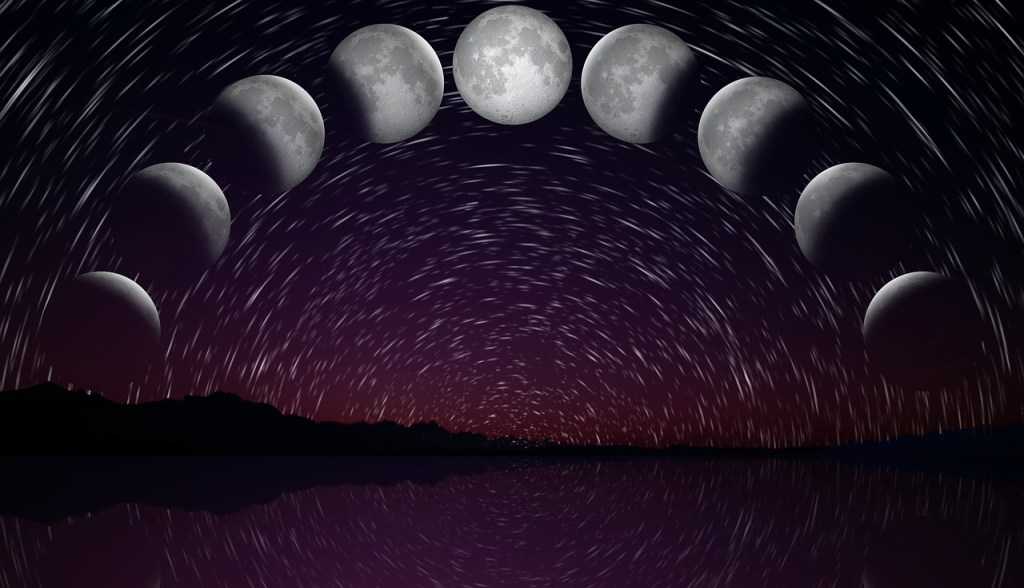
The Full Moon on November 15 is known as the Beaver Moon, Frosty Moon, or Dark Moon. It’s also the last of three supermoons for 2024, appearing slightly larger and brighter than usual[4].
Observing Tips:

  • The Full Moon rises around sunset and sets around sunrise.
  • Use binoculars or a small telescope to observe lunar features, especially along the terminator (the line between light and dark).
  • Try to spot the “Moon illusion” when it’s near the horizon, appearing larger due to an optical illusion.
  1. Leonid Meteor Shower – Peak on November 17-18

The Leonids meteor shower, while not as spectacular as some years, can still provide an enjoyable viewing experience. It typically produces up to 15 meteors per hour at its peak[2].

Observing Tips:

  • The shower peaks on the night of November 17 and early morning of November 18.
  • Look towards the constellation Leo, but remember meteors can appear anywhere in the sky.
  • The best viewing is usually after midnight and before dawn.
  1. Mercury at Greatest Eastern Elongation – November 16

Mercury reaches its greatest eastern elongation on November 16, making it visible in the evening sky just after sunset[4].

Observing Tips:

  • Look for Mercury low in the southwestern sky shortly after sunset.
  • Use binoculars to help spot this elusive planet, as it’s often difficult to see with the naked eye.
  • Don’t confuse Mercury with brighter Venus, which will be higher in the sky.

Check out these Beginner Telescopes

Constellation Highlights for November:

  1. Cassiopeia: This W-shaped constellation is high in the northeast.
    Tip: Use Cassiopeia to find the Andromeda Galaxy (M31), our nearest large galactic neighbor.
  2. Perseus: Look for this constellation below Cassiopeia.
    Tip: Try to spot the Perseus Double Cluster with binoculars or a small telescope.
  3. Taurus: The V-shaped face of the bull is prominent in the eastern sky.
    Tip: Observe
  4. the Pleiades star cluster (M45) within Taurus, visible to the naked eye but stunning through binoculars.
  5. Orion: Rising in the east later in the evening, Orion is one of the most recognizable winter constellations.
    Tip: Use Orion’s Belt to find the Orion Nebula (M42), visible as a fuzzy patch below the belt.

Additional Tips for Novice Backyard Astronomers:

  1. Start with Naked-Eye Observing: Begin by identifying bright stars and constellations before moving on to binoculars or telescopes. This will help you learn to navigate the night sky.
  2. Use Star Charts or Apps: Familiarize yourself with the night sky using star charts or smartphone apps like Stellarium or Sky Map. These can help you identify objects and plan your observing sessions.
  3. Join an Astronomy Club: Local astronomy clubs often host star parties and can provide valuable guidance for beginners. They’re also a great way to meet fellow enthusiasts and learn from more experienced observers.
  4. Keep a Log: Record your observations, including date, time, and sky conditions. This can help you track your progress and remember what you’ve seen.
  5. Be Patient: Astronomical observing requires patience. Take your time and don’t rush from object to object. Allow your eyes to adjust and really soak in the views.
  6. Experiment with Astrophotography: Try capturing the night sky with your smartphone or camera. The Moon and bright planets can make great subjects for beginner astrophotographers.
  7. Learn to Star-Hop: Practice finding objects by using bright stars as guideposts. This skill will serve you well as you progress in your astronomical journey.
  8. Understand Light Pollution: Be aware of how light pollution affects your observations. Even in cities, you can often find darker areas in parks or on the outskirts of town.
  9. Maintain Your Equipment: Keep your optics clean and properly aligned. Learn basic maintenance for your binoculars or telescope to ensure the best views.
  10. Stay Safe and Comfortable: Always let someone know where you’re going if observing alone. Bring snacks, water, and extra layers to stay comfortable during long observing sessions.

Conclusion:

November 2024 offers a wealth of celestial wonders for backyard astronomers to explore. From the Taurid and Leonid meteor showers to the oppositions of Jupiter and Uranus, there’s something for everyone to enjoy in the night sky this month. The New Moon at the beginning of the month provides an excellent opportunity for deep-sky observing, while the Full Supermoon mid-month offers its own unique charm.

As you embark on your astronomical journey, remember that every night under the stars is an opportunity to learn and grow. Don’t be discouraged if you can’t immediately find or identify everything – astronomy is a lifelong pursuit, and there’s always something new to discover.

Take time to appreciate the vastness of the universe and our place within it. Stargazing not only offers a chance to learn about astronomy but also provides a unique perspective on our world and our place in the cosmos. It’s a hobby that can inspire wonder, foster curiosity, and provide a sense of connection to the universe around us.

So bundle up, grab your binoculars or telescope, and head outside to experience the magic of the November night sky. Who knows? You might just inspire the next generation of astronomers, astrophysicists, or space explorers. Happy stargazing!

Citations:
[1] https://spacetourismguide.com/november-night-sky/
[2] https://www.mestarocks.org/Celestial-Events-2024
[3] https://www.timeanddate.com/astronomy/sights-to-see.html
[4] https://www.uaf.edu/museum/education/educators/heliophysics-aurora-outre/astronomy-calendar/
[5] http://www.seasky.org/astronomy/astronomy-calendar-2024.html
[6] https://www.space.com/16149-night-sky.html
[7] https://getthekidsoutside.com/celestial-events-in-2024/
[8] https://earthsky.org/astronomy-essentials/visible-planets-tonight-mars-jupiter-venus-saturn-mercury/
Exploring the Celestial Wonders of the May Night Sky

As the spring season blossoms and the days grow longer, the May night sky offers a spectacular showcase of celestial wonders for stargazers of all ages. From dazzling planets to mesmerizing meteor showers, May’s cosmic display is sure to inspire awe and wonder in both novice and experienced observers alike. In this guide, we’ll embark on an astronomical journey through the May night sky, highlighting some of the most captivating sights and celestial events visible to the naked eye and with the aid of binoculars or a small telescope.

The Majestic Constellations of Spring

One of the most prominent features of the May night sky is the array of majestic constellations that grace the heavens. As the Earth continues its journey around the Sun, we are treated to a new cast of celestial characters that take center stage in the evening hours.

Ursa Major and the Big Dipper

High in the northern sky, the familiar asterism known as the Big Dipper, part of the larger constellation Ursa Major (the Great Bear), is a reliable signpost for stargazers. Its distinctive shape, with a bowl and handle, is easily recognizable and can serve as a starting point for exploring other nearby constellations. [1][4]

Virgo and the Springtime Galaxies

To the southeast, the constellation Virgo is home to a wealth of deep-sky objects, including numerous galaxies. With the aid of binoculars or a small telescope, you can spot the Sombrero Galaxy (M104), a striking spiral galaxy known for its prominent dust lane and central bulge. [1][2]

Boötes and Arcturus

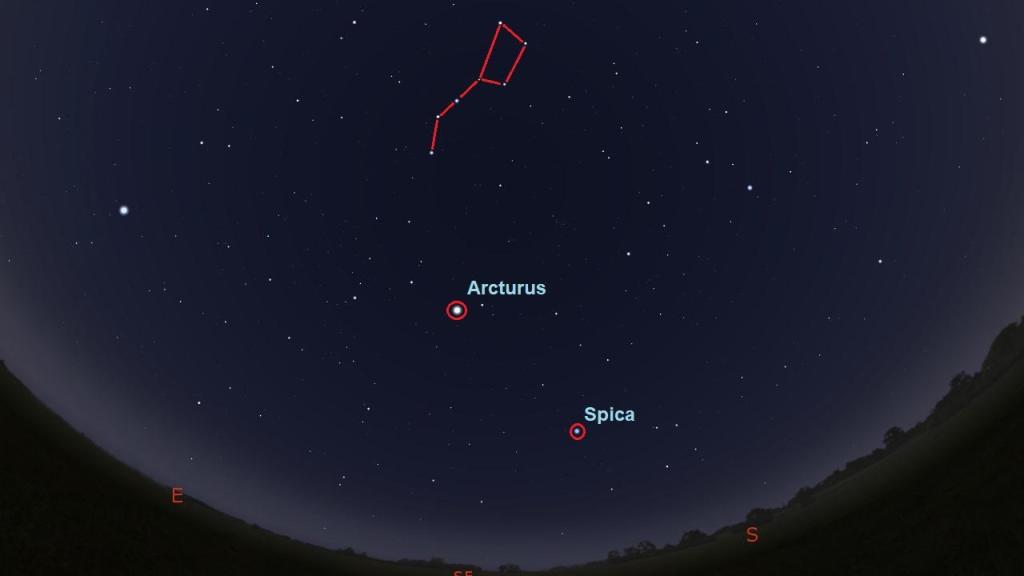
Another prominent spring constellation is Boötes, the Herdsman, which features the brilliant orange-red star Arcturus. Arcturus is the fourth-brightest star in the night sky and can be easily found by following the arc of the Big Dipper’s handle. [1][4]

Night Sky Charts and Maps HERE

The Planetary Parade

As the month of May progresses, stargazers are treated to a celestial parade of planets gracing the evening sky. From the dazzling brilliance of Venus to the distant majesty of Saturn, each planet offers a unique perspective on our solar system.

Venus and the Crescent Moon

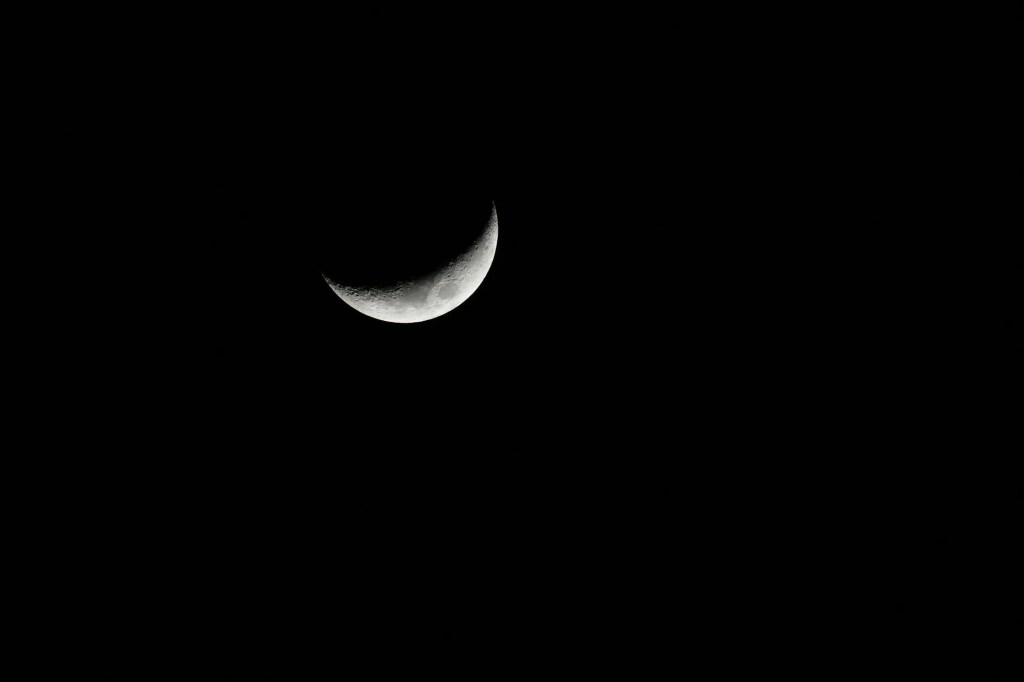
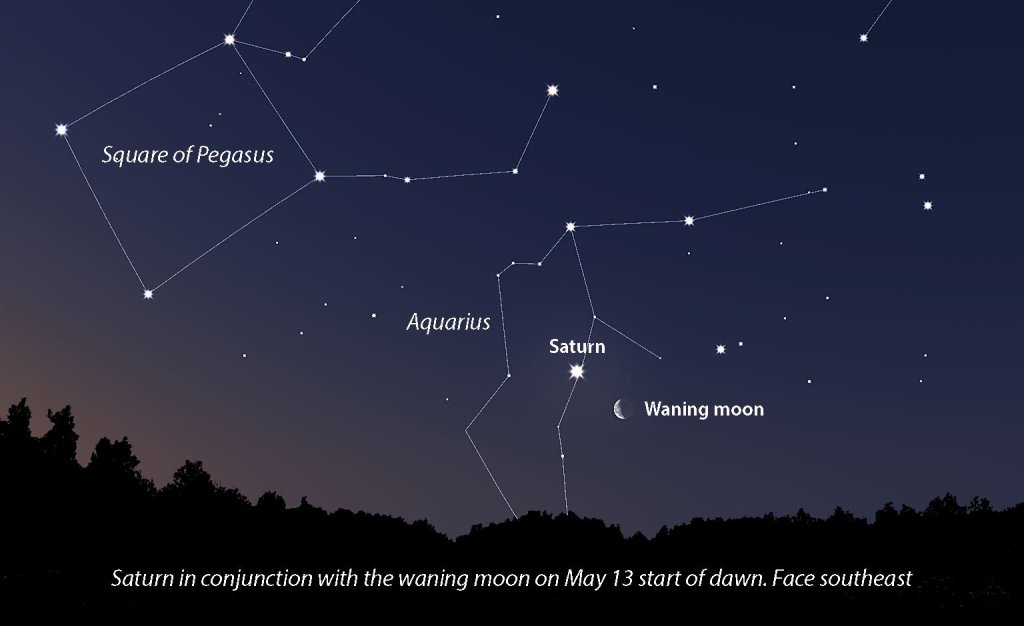
Early in the month, look for the brilliant planet Venus low in the western sky shortly after sunset. On May 11th, Venus will form a striking pair with a slender crescent Moon, creating a breathtaking celestial sight. [1]

Jupiter and Saturn

As the night progresses, turn your gaze to the southeast to spot the gas giants Jupiter and Saturn. Jupiter, the larger of the two, is easily recognizable by its bright, steady glow. With a small telescope, you can even glimpse some of Jupiter’s moons and the planet’s famous Great Red Spot. [1][2]

Saturn, known for its stunning ring system, appears slightly fainter than Jupiter but is still a captivating sight through a telescope. Look for its distinctive golden hue and the rings, which are currently tilted at a favorable angle for observation. [1][2]

Meteor Showers and Lunar Eclipses

In addition to the dazzling planets and constellations, May also offers a few celestial events that are sure to delight stargazers of all ages.

The Eta Aquariids Meteor Shower

One of the highlights of the May night sky is the Eta Aquariids meteor shower, which peaks on the night of May 5th and early morning of May 6th. This shower, originating from the debris of Halley’s Comet, can produce up to 30 meteors per hour under ideal conditions. [1][3]

To catch a glimpse of these shooting stars, find a dark location away from city lights, lie back, and gaze at the sky. Be patient and let your eyes adjust to the darkness – you may be rewarded with a dazzling display of celestial fireworks. [3]

A Total Lunar Eclipse

On May 26th, stargazers in parts of the world will be treated to a total lunar eclipse. During this event, the Moon passes through the Earth’s shadow, causing it to appear red or coppery in color. This phenomenon is sometimes referred to as a “Blood Moon.” [3]

The eclipse will be visible from most of the Americas, Europe, Africa, and parts of Asia. Check online resources or consult with local astronomy clubs to find out if the eclipse will be visible from your location and what time it will occur. [3]

Observing Tips and Resources

While many celestial objects are visible to the naked eye, binoculars or a small telescope can greatly enhance your views and allow you to see more detail. Consider investing in a pair of binoculars or a beginner-friendly telescope to enhance your stargazing experience. [1][4]

When planning your stargazing sessions, keep an eye on the weather forecast and aim for clear, moonless nights. The New Moon phase, when the Moon is not visible in the sky, is an ideal time for observing faint deep-sky objects. [3]

To learn more about the night sky and stay up-to-date with the latest celestial events, consider joining a local astronomy club or attending public stargazing events in your area. Many clubs offer beginner-friendly workshops, star parties, and telescope-viewing sessions that can help you get started on your cosmic journey. [4]

Help Observing the Night Sky

Conclusion: Embrace the Magic of the May Night Sky

As May unfolds its celestial wonders, take the time to explore the night sky and marvel at the beauty of the cosmos. Whether you’re admiring the brilliance of Venus, spotting planets in the evening sky, or counting shooting stars during the Eta Aquariids meteor shower, each celestial sight offers a unique opportunity for discovery and wonder. [1]

So gather your loved ones, step outside, and let the magic of the May night sky ignite your imagination and inspire your cosmic journey. Happy stargazing!

Citations:
[1] https://stanshobbiesandinterests.com/2024/04/03/exploring-the-april-night-sky-a-beginners-guide-to-celestial-wonders/
[2] https://stanshobbiesandinterests.com/2024/04/10/the-different-types-of-celestial-bodies-that-are-our-neighbors-in-space/
[3] https://darksky.org/news/planning-your-next-trip-to-the-dark-side/
[4] https://www.skyatnightmagazine.com/advice/astronomy-for-beginners
[5] https://www.kashiwaya.org/e/magazine/shimaonsen/starry-night-sky.html

Exploring the December Night Sky: A Celestial Celebration for Families

As December unfolds, the night sky becomes a canvas of celestial wonders, inviting families to embark on a cosmic adventure. From dazzling constellations to bright planets and a meteor shower, the December night sky offers a celestial celebration for stargazers of all ages. In this family-friendly guide, we’ll delve into the splendors awaiting you and your loved ones as you gaze upwards during this magical time of the year.

Chapter 1: The Winter Constellations

December marks the official arrival of winter in the Northern Hemisphere, bringing with it a host of iconic winter constellations. These stellar patterns, rich in mythology and beauty, add a touch of enchantment to the crisp winter nights.

1. Orion, the Hunter: One of the most recognizable and prominent winter constellations is Orion, the Hunter. Known for its distinctive “belt” of three bright stars, Orion dominates the southwestern sky during December evenings. For families, spotting Orion is like finding an old friend in the night sky.

2. Taurus, the Bull: The constellation Taurus, with its prominent orange star Aldebaran and the stunning Pleiades star cluster, graces the eastern sky. These celestial gems are a delight to observe, especially for children fascinated by the stories of ancient mythology.

3. Canis Major and Canis Minor: Keep an eye out for the bright star Sirius in Canis Major, often referred to as the “Dog Star.” Sirius is the brightest star in our night sky and adds a brilliant twinkle to winter evenings. Canis Minor, a smaller constellation, features the star Procyon, another gem in December’s celestial display.

Chapter 2: The Geminid Meteor Shower: Nature’s Fireworks

December offers stargazers one of the most spectacular meteor showers of the year—the Geminids. Known for their bright and colorful meteors, the Geminids provide a celestial fireworks display that is perfect for families to enjoy.

The Geminid Meteor Shower: Peaking around mid-December, the Geminids are associated with the asteroid 3200 Phaethon. This shower is unique because it produces a high number of meteors, some of which can be quite bright and leave persistent trails. Find a dark location away from city lights, bundle up in warm clothes, and witness nature’s own light show.

Chapter 3: The Great Conjunction of Jupiter and Saturn

A celestial event of special significance occurs in December—the Great Conjunction of Jupiter and Saturn. These gas giants come together in the night sky, creating a mesmerizing celestial alignment that hasn’t been this close in centuries.

The Great Conjunction: Jupiter and Saturn appear in the southwestern sky after sunset, gradually drawing closer throughout December. On December 21, they reach their closest point, creating a stunning double planet effect. Even a small telescope will reveal the distinct rings of Saturn and the cloud bands of Jupiter.

For families, witnessing this rare event can be a memorable experience. Encourage your children to observe the changing positions of Jupiter’s moons and Saturn’s rings over the course of several nights. This celestial dance is a testament to the dynamic nature of our solar system.

Chapter 4: The Moon’s Phases and Observations

The Moon, our constant celestial companion, graces the December night sky with its changing phases. Observing the Moon’s craters, mountains, and lunar seas can be an engaging activity for families.

Moon Phases in December:

  • New Moon (December 4): The Moon is not visible, presenting an excellent opportunity for stargazers to observe faint celestial objects.
  • First Quarter (December 11): Half of the Moon is illuminated, revealing striking shadows along the lunar terminator.
  • Full Moon (December 19): The entire face of the Moon is lit, casting a silvery glow. Use binoculars or a telescope to explore lunar features in detail.
  • Last Quarter (December 27): Half of the Moon is again illuminated, but on the opposite side from the First Quarter phase.

Lunar Observations: Challenge your family to observe the Moon’s changing phases throughout December. Discuss the reasons behind these phases and explore the lunar features visible through binoculars or a telescope. Identify prominent craters like Tycho and Copernicus, enhancing your family’s lunar exploration.

SHOP NOW for Star Gazing supplies

Chapter 5: Stargazing Tips for Families

To make the most of your December stargazing experiences, consider these practical tips for families:

  1. Dress Warmly: December nights can be chilly, so dress in layers to stay warm. Blankets, gloves, and hats can make your stargazing sessions more comfortable.
  2. Use Stellar Apps: Take advantage of stargazing apps that help identify constellations, stars, and planets. Some apps even include augmented reality features, allowing you to point your device at the sky and see information about celestial objects.
  3. Telescope and Binoculars: While not mandatory, a small telescope or binoculars can enhance your stargazing experience. They allow for closer views of the Moon, planets, and even deep-sky objects.
  4. Create Sky Stories: Weave your own stories about the constellations. Encourage your children to imagine shapes and characters in the stars, fostering creativity and a sense of wonder.
  5. Celestial Calendar: Plan your stargazing sessions around celestial events like meteor showers, planetary conjunctions, and Moon phases. Mark these dates on a calendar, making astronomy an integral part of your family’s monthly activities.

Chapter 6: The Cosmic Connection in December

Beyond the scientific and observational aspects, stargazing in December provides families with a unique opportunity to connect with the cosmos on a deeper level:

  • Cultural Exploration: Explore the cultural significance of celestial objects. Share myths and stories associated with constellations from different cultures, fostering a sense of connection to human history.
  • Family Traditions: Establish stargazing traditions within your family. Whether it’s setting up a telescope in the backyard, creating celestial-themed art projects, or sharing hot cocoa under the stars, these traditions create lasting memories.
  • Wonder and Awe: Embrace the sense of wonder and awe that the night sky evokes. Instill in your children a curiosity about the universe, igniting a lifelong passion for exploration and discovery.
  • Reflection and Contemplation: Use the quiet moments under the stars for reflection and contemplation. Discuss the vastness of the cosmos and our place within it, fostering a sense of humility and interconnectedness.

SHOP HERE for Star Gazing Equipment

Conclusion: A Celestial Journey for the Whole Family

In conclusion, the December night sky unfolds as a celestial celebration, inviting families to partake in the wonders of the cosmos. Whether you’re observing the Geminid meteor shower, marveling at the Great Conjunction, or simply exploring the beauty of the Moon, the December sky offers a rich tapestry for families to explore together. So, bundle up, gather your loved ones, and let the December night sky be the backdrop for a celestial journey that will leave lasting impressions and spark a lifelong love for the wonders of the universe. Happy stargazing!

**

The Wow Hobby

Some people sometimes view hobbies as sometimes silly or frivolous pastimes. And it’s true some hobbies are like that. But it is healthy to have a hobby because it diversifies our interests and keeps us active and fun to be with. But many hobbies are for the few that really get into that area of study. Stamp collecting or rock climbing are valid hobbies. But to be sure, these are not hobbies that just anybody will get into.

Astronomy, by contract, that you could say everybody gets into at some point or another. It is safe to say that everybody at some point has looked up at a magnificent night sky and said “WOW.” At that moment, even if was only for that moment, that person became an amateur astronomy hobbyist. They had that “Wow” moment in what can only be described as the “WOW” hobby.

That common experience is what makes astronomy one of the most exciting and popular hobbies of them all. Any hobby has to have a few “wow” moments. Whether it’s hitting that strike in bowling or finding that perfect stamp, there has to be a moment when the bell rings. Well astronomy has many “wow” moments that occur virtually any clear night in the stars. From the coming of an asteroid shower to just figuring out another constellation, there is so much to do and play with in astronomy that you can be a hobbyist your whole life and never get bored.

THIS LINK WILL TAKE YOU TO THE WEBB TELESCOPE LAUNCH MEDIA KIT

WEBB TELESCOPE PICTURES

Besides the excitement of astronomy, another reason it makes a great hobby is that it is easy and cheap to get started. Unlike skiing for example, to just start enjoying astronomy, all you need is the night sky. But there is no end to the levels of complexity and sophistication you can get to as you move along in astronomy as well. So like any good hobby, astronomy is endlessly fascinating and tremendously addictive because there is always more you want to learn and more you can do to make your knowledge and experiences more interesting and fun.

A great side benefit of how many people are into astronomy is that it is a tremendously social hobby as well. This is unusual for a hobby that is associated with a science, that is executed by staring up in the sky by yourself and that is not competitive. But in any town or city, there are at least a few and probably dozens of astronomy clubs and associations that meet regularly to discuss astronomy.

This is the perfect way to introduce a new recruit to the hobby of astronomy. These clubs thrive on sharing their love of astronomy with new members, kids and those just learning how to explore the stars. Most astronomy clubs schedule regular “safaris” to go out away from the lights of the city and get a good night of sky watching done. Going on such an outing with a big group of enthusiasts is the type of experience that will take a passive interest into astronomy and change it into a healthy obsession.

This side-by-side comparison shows observations of the Southern Ring Nebula in near-infrared light, at left, and mid-infrared light, at right, from NASA’s Webb Telescope. This scene was created by a white dwarf star – the remains of a star like our Sun after it shed its outer layers and stopped burning fuel though nuclear fusion. Those outer layers now form the ejected shells all along this view. In the Near-Infrared Camera (NIRCam) image, the white dwarf appears to the lower left of the bright, central star, partially hidden by a diffraction spike. The same star appears – but brighter, larger, and redder – in the Mid-Infrared Instrument (MIRI) image. This white dwarf star is cloaked in thick layers of dust, which make it appear larger. The brighter star in both images hasn’t yet shed its layers. It closely orbits the dimmer white dwarf, helping to distribute what it’s ejected. Over thousands of years and before it became a white dwarf, the star periodically ejected mass – the visible shells of material. As if on repeat, it contracted, heated up – and then, unable to push out more material, pulsated. Stellar material was sent in all directions – like a rotating sprinkler – and provided the ingredients for this asymmetrical landscape. Today, the white dwarf is heating up the gas in the inner regions – which appear blue at left and red at right. Both stars are lighting up the outer regions, shown in orange and blue, respectively. The images look very different because NIRCam and MIRI collect different wavelengths of light. NIRCam observes near-infrared light, which is closer to the visible wavelengths our eyes detect. MIRI goes farther into the infrared, picking up mid-infrared wavelengths. The second star more clearly appears in the MIRI image, because this instrument can see the gleaming dust around it, bringing it more clearly into view. The stars – and their layers of light – steal more attention in the NIRCam image, while dust pl

THIS LINK WILL TAKE YOU TO THE Webb Telescope Launch Media Kit

WEBB TELESCOPE PICTURES

By going out with a group, you can rub elbows with people who know the night sky, can help you learn how to spot the great constellations and how to train your eyes to see the really cool stuff going on over our heads virtually every night. Astronomy is a passion that is shared equally by everyone from children, to college students to serious scholars in the field to even professional astronomers who work at exploring the universe full time. On any given night, you or your child may be sitting next to an award winning professional astronomer who will happily provide a private lesson looking up at the cosmos just for the sheer fun of shared learning.

The great thing is that everything we have talked about here costs virtually nothing. You can get started with your love of astronomy and learn as you go so when you are ready to make some investment in equipment, you have learned from others what is just the right thing for you. Sure, eventually you will want some astronomy magazine subscriptions, a star map or two and binoculars or a telescope. But those things come as your love of the hobby matures. Meanwhile, get out there, meet others who share your excitement about star gazing and get to know a hobby that never stops making you say “WOW”.

Astronomy Binoculars A Great Alternative

It seems from the moment you begin to take your love of astronomy seriously, the thing that is on your mind is what kind of telescope will you get. And there is no question, investing in a good telescope can really enhance your enjoyment of your new passion in astronomy. But don’t be too hasty to keep up with the big wigs in the astronomy clubs that have advanced telescopes. There is another alternative that can give you most of the advantages of a telescope and some extra flexibility and reduced cost to boot.

That alternative is a good pair of astronomy binoculars. Mostly we think of binoculars as the thing you use to see the football game when you have to sit in the cheap seats. But if you do some homework and had a good grasp on what your stargazing objectives are, the advantages of astronomy binoculars over an entry level telescope can be pretty convincing.

Stephen James O’Meara’s Observing the Night Sky with Binoculars: A Simple Guide to the Heavens 

* As a rule, they are cheaper. So you can get a lot of good stargazing at much less of an investment. You can always spend more money later but for now, this may be just the solution for you.

* There are not so many accessories. To own and operate a telescope takes a lot of orientation to how to set up and use the device. Beyond that, tuning it for optimum view and diagnosing it when you have problems can sometimes make the telescope more of the passion than stargazing itself.

* It is much easier to use. If you have not bought a telescope yet, you may have seen telescope owners going through a laborious set up and break down discipline for each use. This is time they are not looking at the stars. The binocular users are happily stargazing as this goes on.

* Binoculars are lightweight and portable. Unless you have the luxury to set up and operate an observatory from your deck, you are probably going to travel to perform your viewings. Binoculars go with you much easier and they are more lightweight to carry to the country and use while you are there than a cumbersome telescope set up kit.

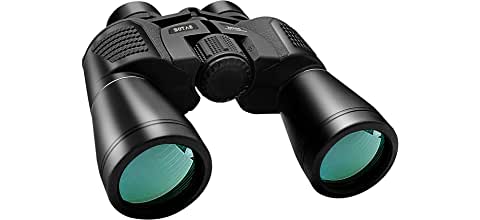
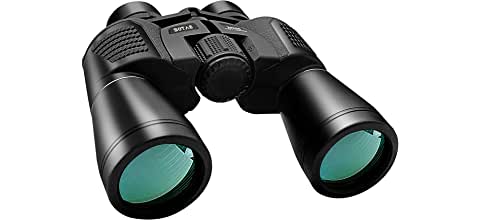
Professional High Powered Binoculars】Binoculars with 20X high power magnification and 50mm objective lens, provides wider field of view at 1000 yards

So give the binocular option some consideration. To make the most effective choice, however, here are a few facts about astronomy binoculars that will help you evaluate which ones are best for you…

Binoculars have two lens sets, one at the end of the eyepiece and a set right next to your eyes. The ones closest to the eye are called the ocular lenses which magnify the image (make it bigger). The ones closest to the sky are called the objective lenses and the size of these lenses will determine how much sky you can see at once. So anytime you are evaluating binoculars, there are two numbers associated with the set. So if the binoculars have a rating of 15-40, that means that the ocular lenses magnify 15 times and the later number is a relative number to how much of the sky you can see. The higher the second number, the more you can see. The explanation is simple. The bigger the lens, the more light it lets in. But be aware that the bigger the second number, the larger, heavier and more cumbersome the binoculars will be.

You will have to balance these two numbers with both your budget and what you want the binoculars to do for you. If you decide to go with a lower power binoculars, you could become frustrated with what you can see and you may have to take your eyes away from the view to get your orientation and consult the star map more often because your range of vision is so limited.

There will also be a temptation to buy a set of binoculars that have zoom functions and other features that will allow you to use it for other purposes such as hunting, whale watching or seeing the football game from the cheap seats. While this is good economy, those functions will get in the way when you are using the binoculars for astronomy. So if you are considering this purchase as your alternative to buying a telescope, our advice is buy binoculars made just for astronomy and don’t take them to the ball game.

The Best Sights For Astronomy

What are the best sights for astronomy? That’s hard to say. There is so much out there that the determination of what are the best sights for astronomy probably requires you to do some advance study and decide for yourself what you’d like to learn about.

There are a couple of very helpful books that can guide you through a determination of what are the best views for astronomy.

A new beginner or intermediate handbook for stargazers is the “Guide to Astronomy” by Patrick Moore. This accomplished astronomer has concisely gathered reference information on the night sky that details the best views for astronomy. It looks at the moon as well as the various constellations. You’ll find charts, photographs and maps that have been garnered through study with earth bound and space telescopes. The best areas for astronomy are laid out in this book as well as some guidance on how you’re going to take a look at the best views for astronomy yourself.

Patrick Moore’s Pocket Guide to the Stars and Planets

Here you’ll find guidance on what telescope to buy, how to set up an observatory for yourself as home and how to become a good amateur astronomer. Details about the perfect sights for astronomy include information on the moon, our sun, the various planets, the debris found in the solar system, a myriad number of stars, the various galaxies we know about, the constellations, and comets, asteroids, meteors and eclipses that humans have noted and photographed in the past.

The best sights for astronomy have been highlighted in the book, including important features in the moon and the stars we’ve studied extensively.

Look Up In The Sky

When television was young, there was a hugely popular show based on the still popular fictional character of Superman. The opening of that show had a familiar phrase that went, “Look. Up in the sky. It’s a bird. It’s a plane. It’s Superman!” How beloved Superman has become in our culture and the worldwide fascination with extraterrestrials and all things cosmic only emphasizes that there is a deep curiosity in all humans about nature and astronomy, even if many people would not know to call it astronomy.

Astronomy is one of the oldest sciences of all time. When archeologists unearth ancient civilizations, even as far back as the cavemen, they invariably find art that shows mans unquenchable fascination with the stars. To this day, you can easily get an animated discussion at any gathering on the topic of “Is there intelligent life on other planets?”

Many have tried to explain mankind’s seeming obsession with outer space as a result of an ancient memory or as part of mankind’s eternal nature. Whatever the cause, people of every age and every nation share this one deep interest, to know more about the universe that our tiny planet is just a part of.

It’s rather strange because the actual conduct of a serious student of astronomy is really not the stuff of high adventure. You will never see a “Raiders of the Lost Arc” or “Jurassic Park” movie made about an astronomer. Excitement for lovers of this science is to stay up all night watching the cosmos through a powerful telescope. But that fact does not seem to discourage the tens of thousands to get into astronomy each year and the huge interest worldwide with the stars, the planets and the universe.

There may be no other universal human fascination that does so much to make national boundaries and even international animosity seem to evaporate. Other than the Olympic movement, international cooperation to achieve great strides for human kind in space seems to go forward without interruption even when the nations cooperating in those projects are virtually at war back on the surface of the earth. It is a strange thing to watch as Russian, American and other astronauts work together like brothers on space missions even as their home nations are busily pointing missiles at each other back at home. It almost makes you think that we should put more energy and money into the space program, not less because it seems to be a bond that heals tension rather than creates it.

Why is astronomy so exciting even though we have no dinosaurs, moving animals or any real danger to most who are obsessed with the discipline? It may go back to a basic curiosity that all human beings have about their natural habitat and this big mysterious thing out there called space. Maybe it goes back to that old saying at the beginning of Star Trek that space is “the final frontier”.

But we all share that ongoing sense of excitement each time we take out our telescopes and gaze directly at the cosmos above us. We feel we are looking at the very dawn of time. And in light of the issues with the speed of light which means that many of the twinkling stars out there are really light from those stars that started their journey to us thousands of years ago, we are in actually looking directly at the past every time we direct our eyes skyward.

But we don’t have to worry about ever conquering the final frontier and finding our curiosity satisfied. There will always be more to learn and discover in the world of astronomy. And it is likely that mankind’s curiosity about astronomy is just as limitless as well.