The Science Of Astronomy Really Is Fascinating

Galaxies, the cosmos, astrophysics, observatories, telescopes: How do we possibly comprehend the reality that the universe is beyond measure, infinite, and endlessly mesmerizing?

We can’t; that’s why astronomy remains so completely fascinating. It’s the things in life we do not understand that most often draw our interest; that’s simply a natural human impulse — to be curious, to wonder and to want to be in awe of something far beyond and outside ourselves.

We know that stars, like everything else, live and die and that there are scientifically “correct” patterns in the remote sky that both perplex and bewitch us. If astronomy fascinates, it is because there exists in everyone a profound empathy with a world that is inaccessible in its complexity. Who among us has not felt, even fleetingly, spellbound by the immensity of this cosmos, this universe?

Modern observatories regularly function as educational centers, providing this feeling of entrancement by presenting the wonder of the cosmos directly to the audience, short-circuiting the intellect for an hour or so and uncovering the wonder at the magic of theuniverse; promoting a sensory, visceral feeling for the human condition and its place in the great book of the cosmos.

Astronomy, the science of stars, planets, galaxies, and black holes, is the oldest science, yet it is the most intriguing because the study of the universe will help answer the most important questions human beings can ask, such as:

How did the universe begin?

What is the structure of the universe?

How will the universe change in the future?

How do the planet Earth and its inhabitants fit into the larger universe of space and time?

Though we may never know the answers to these kinds of questions in our lifetime, we’re always thankful for those who will follow us, prepared, with a scientific brain, to one day provide answers — and maybe more — to humankind.

It’s difficult to understand our own galaxy, and we’re constantly “adding to it,” or discovering new frontiers and small, more distant planets than those we’re already familiar with. The sun, and the concept of the planets just in our galaxy alone, provoke wonder and all kinds of speculation. It’s food for our brain; it’s one of those applications of learning that so enthrall, it doesn’t seem like we’re “studying” anything. It’s an effortless exercise in the Unknown Sphere of the Universe.

What better way to pass the time, to postulate upon, to have an intellectually stimulating discussion, maybe with people you don’t even know yet?

And what about the theories of particle physics that have been developed in conjunction with the standard Big Bang model to explain the origin, evolution and
present structure of the universe?

What about the origins, evolution, interiors, and energy production of the stars themselves? How are they formed? Why? And we’ve all heard of “interacting galaxies,” but just what, exactly, does it mean? It all sounds like, well, a kind of heaven — a place we know exists, but that we cannot quite see or understand.

Then, there’s Newton’s laws, the concept of work and energy, momentum, gravitation, sound and light waves.

If you haven’t felt a slight thrill yet, it’s eitherbecause you already know about these atmospheric wonders, or you’ve been living under a local rock.

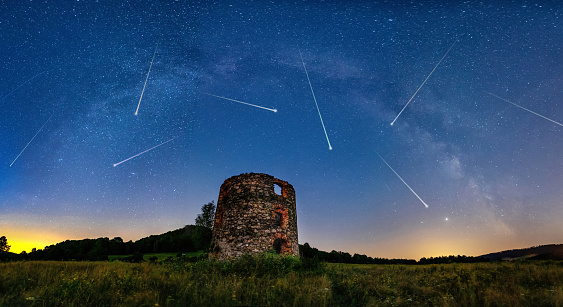
So get out there and Observe the Universe! It’s absolutely spellbinding!

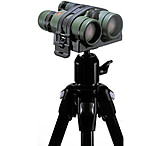
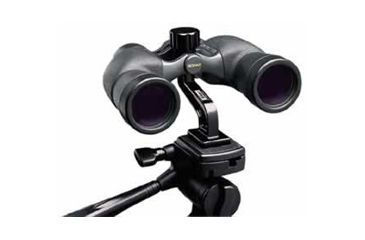
Astronomy Binoculars A Great Alternative

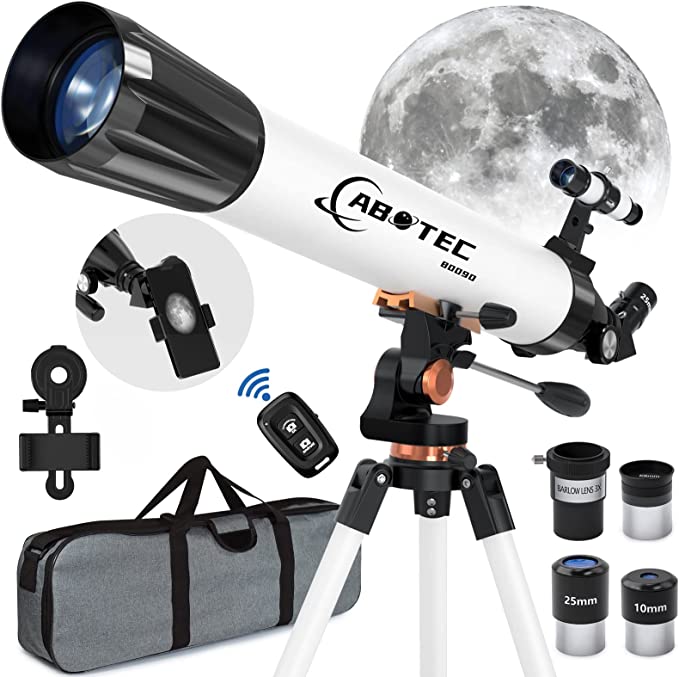
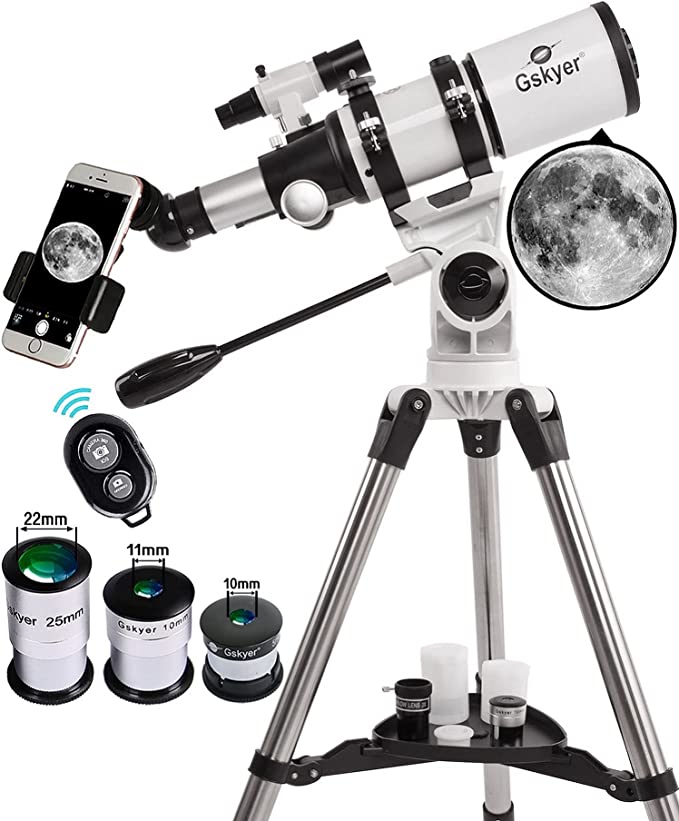
It seems from the moment you begin to take your love of astronomy seriously, the thing that is on your mind is what kind of telescope will you get. And there is no question, investing in a good telescope can really enhance your enjoyment of your new passion in astronomy. But don’t be too hasty to keep up with the big wigs in the astronomy clubs that have advanced telescopes. There is another alternative that can give you most of the advantages of a telescope and some extra flexibility and reduced cost to boot.

That alternative is a good pair of astronomy binoculars. Mostly we think of binoculars as the thing you use to see the football game when you have to sit in the cheap seats. But if you do some homework and had a good grasp on what your stargazing objectives are, the advantages of astronomy binoculars over an entry level telescope can be pretty convincing.

Stephen James O’Meara’s Observing the Night Sky with Binoculars: A Simple Guide to the Heavens 

* As a rule, they are cheaper. So you can get a lot of good stargazing at much less of an investment. You can always spend more money later but for now, this may be just the solution for you.

* There are not so many accessories. To own and operate a telescope takes a lot of orientation to how to set up and use the device. Beyond that, tuning it for optimum view and diagnosing it when you have problems can sometimes make the telescope more of the passion than stargazing itself.

* It is much easier to use. If you have not bought a telescope yet, you may have seen telescope owners going through a laborious set up and break down discipline for each use. This is time they are not looking at the stars. The binocular users are happily stargazing as this goes on.

* Binoculars are lightweight and portable. Unless you have the luxury to set up and operate an observatory from your deck, you are probably going to travel to perform your viewings. Binoculars go with you much easier and they are more lightweight to carry to the country and use while you are there than a cumbersome telescope set up kit.

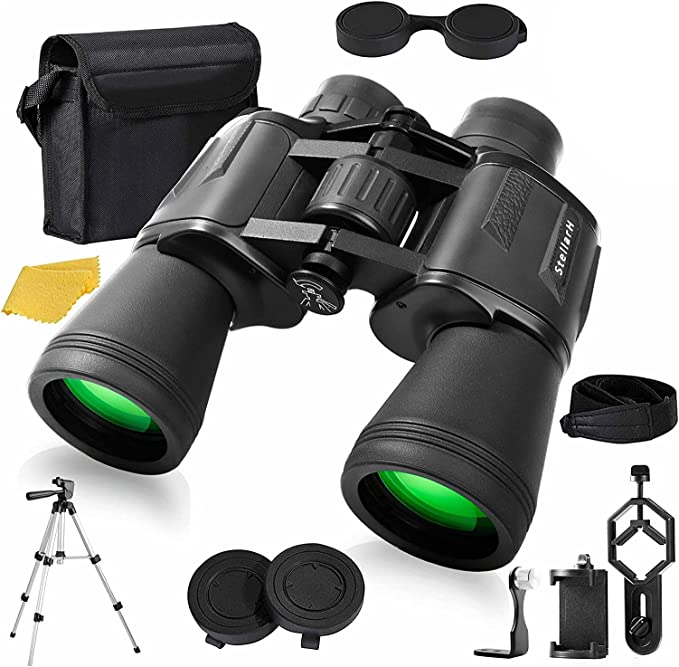
Professional High Powered Binoculars】Binoculars with 20X high power magnification and 50mm objective lens, provides wider field of view at 1000 yards

So give the binocular option some consideration. To make the most effective choice, however, here are a few facts about astronomy binoculars that will help you evaluate which ones are best for you…

Binoculars have two lens sets, one at the end of the eyepiece and a set right next to your eyes. The ones closest to the eye are called the ocular lenses which magnify the image (make it bigger). The ones closest to the sky are called the objective lenses and the size of these lenses will determine how much sky you can see at once. So anytime you are evaluating binoculars, there are two numbers associated with the set. So if the binoculars have a rating of 15-40, that means that the ocular lenses magnify 15 times and the later number is a relative number to how much of the sky you can see. The higher the second number, the more you can see. The explanation is simple. The bigger the lens, the more light it lets in. But be aware that the bigger the second number, the larger, heavier and more cumbersome the binoculars will be.

You will have to balance these two numbers with both your budget and what you want the binoculars to do for you. If you decide to go with a lower power binoculars, you could become frustrated with what you can see and you may have to take your eyes away from the view to get your orientation and consult the star map more often because your range of vision is so limited.

There will also be a temptation to buy a set of binoculars that have zoom functions and other features that will allow you to use it for other purposes such as hunting, whale watching or seeing the football game from the cheap seats. While this is good economy, those functions will get in the way when you are using the binoculars for astronomy. So if you are considering this purchase as your alternative to buying a telescope, our advice is buy binoculars made just for astronomy and don’t take them to the ball game.

Moon Fever

A NEW WAY TO VIEW THE MOON

Of all of the celestial bodies that capture our attention and fascination as astronomers, none has a greater influence on life on planet Earth than it’s own satellite, the moon. When you think about it, we regard the moon with such powerful significance that unlike the moons of other planets which we give names, we only refer to our one and only orbiting orb as THE moon. It is not a moon. To us, it is the one and only moon.

The moon works its way into our way of thinking, our feelings about romance, our poetry and literature and even how we feel about our day in day out lives in many cases. It is not only primitive societies that ascribe mood swings, changes in social conduct and changes in weather to the moon. Even today, a full moon can have a powerful effect on these forces which we acknowledge even if we cannot explain them scientifically.

The most obvious physical phenomenon that is directly affected by the gravity of the moon are the tides of the ocean. The tides are an integral part of how maritime life is regulated and the comings and goings of the fishing world in coastal communities. But not very many people know that at certain times of the year when the orbits of the earth bring the sun and moon into right alignment, there can even be tidal effect on inland bodies of water and even on the solid earth. Eons ago, when the moon’s orbit was closer to the Earth, it was the effect of the moon that caused massive changes in the topography of the land and on continental drift as well. This reflects the powerful effect the moon has had on both human history and on global geographical history as well.

The Book of the Moon: A Guide to our Closest Neighbor

You may sometimes wonder where the moon came from. Was it a planet that traveled too close to Earth and was captured in our orbit? Actually, the prevailing theory of modern science is that the moon was the result of a large scale collision with the still developing Earth early in its development which caused this large “chuck” to spin off into an orbiting body. This explains the similarity in composition as has been confirmed by many of the moon exploratory space missions that were conducted by NASA.

But this background also highlights another important influence the moon has had on Earth’s development that is seldom recognized and that is the stabilization of Earth’s orbital pattern. Most know that Earth is not round but more of an egg shaped orb. To be blunt, the Earth would wobble. Without the moon’s stabilizing influence, this shape would shift dramatically so the tilt of the axis, that is the polar caps would shift dramatically with each seasonal rotation producing climacteric, changes much more violent and drastic than we are used to. It is possible that life as we know it could not have developed here had the moon not been there to “keep the Earth in line” and continue to stabilize the orbital position of the Earth so our climate could remain stable and mild.

A third significant influence of the moon comes from that origin as coming from a collision which “ripped” the body of the moon from the developing core of the Earth. Because of this disruption in how the core of our planet developed, the metals that are usually intact in the core of the planet are actually scattered up and down the geography of the earth in diverse ways. Usually the metals of the planet are all concentrated deep in the core. But because of the collision which took the moon out to orbit, metals that have been crucial to the development of our industrial and technological cultures are readily available and easy for use to mine. This again, is something we can thank the presence of that lovely moon in the sky for.

The Best Sights For Astronomy

What are the best sights for astronomy? That’s hard to say. There is so much out there that the determination of what are the best sights for astronomy probably requires you to do some advance study and decide for yourself what you’d like to learn about.

There are a couple of very helpful books that can guide you through a determination of what are the best views for astronomy.

A new beginner or intermediate handbook for stargazers is the “Guide to Astronomy” by Patrick Moore. This accomplished astronomer has concisely gathered reference information on the night sky that details the best views for astronomy. It looks at the moon as well as the various constellations. You’ll find charts, photographs and maps that have been garnered through study with earth bound and space telescopes. The best areas for astronomy are laid out in this book as well as some guidance on how you’re going to take a look at the best views for astronomy yourself.

Patrick Moore’s Pocket Guide to the Stars and Planets

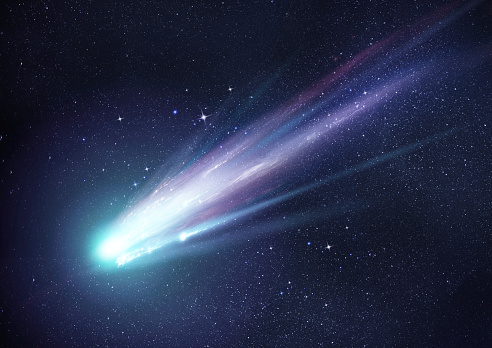
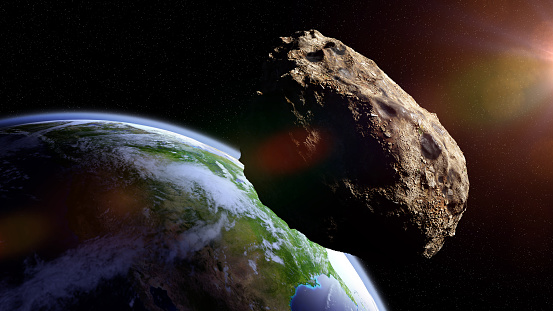
Here you’ll find guidance on what telescope to buy, how to set up an observatory for yourself as home and how to become a good amateur astronomer. Details about the perfect sights for astronomy include information on the moon, our sun, the various planets, the debris found in the solar system, a myriad number of stars, the various galaxies we know about, the constellations, and comets, asteroids, meteors and eclipses that humans have noted and photographed in the past.

The best sights for astronomy have been highlighted in the book, including important features in the moon and the stars we’ve studied extensively.