Easy-to-Build Model Industries for Beginners

Adding industries to your model railroad layout brings it to life and provides engaging operational possibilities. For beginners, starting with simple yet effective industries is key. Here are some easy-to-build model industries that will enhance your layout without overwhelming you:

Grain Elevator

A grain elevator is a classic rail-served industry that’s visually striking and operationally significant2.

Key Elements:

  • Tall cylindrical silos
  • Loading/unloading area
  • Small office building

Materials Needed:

  • Plastic tubing or PVC pipe for silos
  • Styrene sheets for walls and roofs
  • Small-scale ladders and railings

Construction Steps:

  1. Cut plastic tubing to desired heights for silos
  2. Create a base and top for silos using styrene sheet
  3. Build a small office structure using styrene
  4. Add details like ladders, conveyor belts, and signage

Operation:

  • Receive covered hoppers of grain
  • Ship out processed products in boxcars

A grain elevator provides excellent opportunities for switching operations and adds vertical interest to your layout5.

Lumber Yard

A lumber yard is easy to model and offers varied operational possibilities3.

Key Elements:

  • Stacks of lumber
  • Loading dock
  • Small office or shed

Materials Needed:

  • Stripwood or basswood sheets for lumber stacks
  • Styrene for the loading dock and office
  • Glue and paint

Construction Steps:

  1. Cut stripwood into various lengths for lumber stacks
  2. Glue strips together to form stacks of different sizes
  3. Build a simple loading dock from styrene
  4. Construct a small office or shed

Operation:

  • Receive flatcars of raw lumber
  • Ship out finished products in boxcars

Team Track
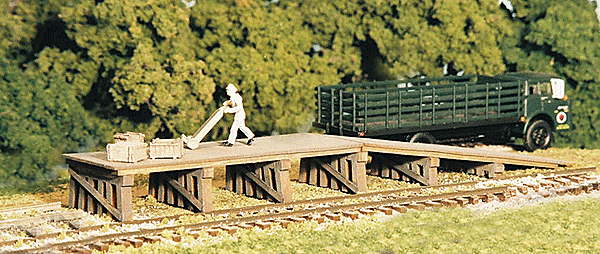
A team track is versatile and perfect for beginners, accommodating various car types without complex structures.

Key Elements:

  • Simple track siding
  • Small loading area
  • Optional small storage shed

Materials Needed:

  • Track and ballast
  • Styrene or cardstock for the loading area
  • Optional kit for a small shed

Construction Steps:

  1. Lay a siding track parallel to your mainline
  2. Create a small paved area using styrene or textured cardstock
  3. Add details like pallets, crates, and barrels
  4. Optionally, build a small storage shed nearby

Operation:

  • Load and unload various car types (boxcars, flatcars, gondolas)
  • Simulate different small businesses using the same track

Small Factory or Warehouse

A generic industrial building offers flexibility in operations and is simple to construct.

Key Elements:

  • Rectangular building with loading docks
  • Parking area
  • Signage

Materials Needed:

  • Styrene sheets for walls and roof
  • Window and door castings
  • Acrylic paints

Construction Steps:

  1. Cut styrene sheets for walls and roof
  2. Add windows and doors
  3. Create loading docks on one side
  4. Paint and weather the structure
  5. Add signage and details like air conditioning units and downspouts

Operation:

  • Receive raw materials in various car types
  • Ship out finished products in boxcars or flatcars

Coal Dealer

A small coal yard with a simple unloading trestle provides opportunities for hopper car operations.

Key Elements:

  • Elevated track or small trestle
  • Coal pile
  • Small office or scale house

Materials Needed:

  • Styrene or balsa wood for the trestle
  • Fine gravel or commercial coal material
  • Small kit for the office

Construction Steps:

  1. Construct a simple elevated track or trestle
  2. Create a coal pile using fine gravel or commercial coal material
  3. Build a small office or scale house
  4. Add details like fencing and equipment

Operation:

  • Receive hopper cars of coal
  • Simulate local delivery operations

Tips for Building Model Industries

  1. Start Small: Begin with one or two industries and expand as you gain confidence and skills.
  2. Research: Look at photos of real industries for inspiration and accuracy.
  3. Use Kits: Many manufacturers offer kits for beginners that can be easily assembled.
  4. Weathering: Add realism by lightly weathering your structures and surrounding areas.
  5. Lighting: Consider adding simple LED lighting to bring your industries to life at night.
  6. Scenery: Integrate your industries into the landscape with appropriate ground cover, trees, and details.
  7. Operations: Plan how your industries will interact with your trains to create interesting operating sessions.

Conclusion

Building model industries for your railroad layout doesn’t have to be daunting. These easy-to-build options provide a great starting point for beginners. They offer a balance of simplicity in construction and interest in operation. As you become more comfortable with modeling techniques, you can add more details or expand to more complex industries.

Remember, the key to enjoying model railroading is to have fun and be creative. Don’t worry about perfect realism at first – focus on creating a layout that you enjoy operating and looking at. With these simple industries, you’ll be well on your way to creating an engaging and operational model railroad that will provide hours of enjoyment.

As your skills grow, you can always modify or replace these starter industries with more complex ones. The beauty of model railroading is that your layout can evolve with your skills and interests. So start simple, enjoy the process, and watch your miniature world come to life!

Citations:

  1. https://www.indeed.com/career-advice/finding-a-job/how-to-find-model-jobs
  2. https://www.scarm.info/blog/tutorials-and-examples/ho-scale-grain-elevator/
  3. https://www.armballast.com/modeling-a-lumber-operation-and-sawmill-a-detailed-guide/
  4. https://www.brandonandrephoto.com/blog/fashion-industry-101-a-guide-for-beginner-models
  5. https://www.youtube.com/watch?v=_BjVEAfxi9I
  6. https://www.youtube.com/watch?v=1yzfPK5LQwc
  7. https://www.reddit.com/r/modelmakers/comments/17wywax/whats_the_best_model_brand_in_your_opinion_for/
  8. https://forum.trains.com/t/grain-elevator-placement/315078

Answer from Perplexity: pplx.ai/share

Model Railroading: A Great Family-Friendly Hobby (Updated for 2025)

Model railroading is a hobby that has captivated people of all ages for generations. This unique craft allows enthusiasts, from novices to professionals, to develop small-scale railway systems complete with miniature trains and intricate scenery. With no skill or age restrictions, it’s an ideal activity for bringing families together. Let’s explore why model railroading remains a fantastic family-friendly hobby in 2025.

Everyone Can Participate

One of the most appealing aspects of model railroading is its inclusivity. Individuals of all ages, from young children to seniors, can participate and find enjoyment. Building a model railroad fosters teamwork and collaboration within the family. Each member can contribute to different aspects of the project, whether it’s designing the layout, constructing buildings, laying track, or adding scenery. This shared effort creates a sense of accomplishment and strengthens family bonds.

Educational Value

Model railroading offers significant educational opportunities. The hobby encompasses various subjects, including history, engineering, and design. Researching prototype railroads and their historical context deepens knowledge of transportation history and technological advancements. Constructing the model railroad itself involves practical engineering skills such as electrical wiring, track design, and spatial planning. These hands-on activities encourage problem-solving, critical thinking, and creativity.

Therapeutic Value

Beyond its educational benefits, model railroading can also be incredibly therapeutic. The hobby provides a means of stress relief and relaxation. The focus and concentration required in model railroading can help individuals detach from daily worries and immerse themselves in a positive and engaging activity. The creative process of designing and building a miniature world can be deeply satisfying, fostering a sense of accomplishment and well-being.

Endless Possibilities

Model railroading offers endless possibilities for customization and creativity. Enthusiasts can create their own unique worlds, designing layouts that reflect their personal interests and preferences. The choice of era, location, and type of trains allows for endless variation. Adding scenery, buildings, and other details allows for further personalization, making each model railroad a one-of-a-kind creation.

Long-Lasting Hobby

Model railroading is a hobby that can span a lifetime. Many enthusiasts begin their journey in childhood and continue to enjoy the hobby throughout their lives. Model railroading creates lasting memories and provides an opportunity to pass on a cherished tradition to future generations. Additionally, the hobby fosters connections with other enthusiasts through clubs, online forums, and model railroad shows, creating a supportive community of like-minded individuals.

What’s New in 2025?

  • Digital Command Control (DCC) is More Accessible: DCC systems are more user-friendly and affordable, making it easier for families to control multiple trains independently and add sound effects to their layouts.
  • 3D Printing Revolutionizes Customization: 3D printers have become more accessible, allowing modelers to create custom parts, buildings, and details that were previously difficult or impossible to find.
  • Augmented Reality (AR) Integration: New AR apps allow users to overlay virtual scenery and details onto their physical layouts, creating a blended reality experience that enhances immersion and realism.
  • Focus on Sustainability: There’s growing interest in using sustainable materials and practices in model railroading, such as recycled cardboard, biodegradable ground cover, and energy-efficient LED lighting.
  • Emphasis on Realistic Operations: More modelers are focusing on replicating real-world railroad operations, including switching maneuvers, freight car routing, and timetable-based operation.

Conclusion

In conclusion, model railroading remains a rewarding and family-friendly hobby in 2025. It provides opportunities for learning, creativity, relaxation, and connection. With its endless possibilities and long-lasting appeal, model railroading is sure to provide hours of entertainment and enjoyment for families for years to come. Now is the perfect time to gather your family, spark your imagination, and embark on the exciting journey of building your own miniature world. The innovative technologies and techniques available today make it easier than ever to create a truly immersive and engaging model railroad experience.

Citations:
[1] https://stanshobbiesandinterests.com/2023/09/18/model-railroading-a-great-family-friendly-hobby/


Deciding a Track Plan Before Building Your Model Railroad Layout

Introduction:
As we enter 2025, the world of model railroading continues to evolve, offering enthusiasts new and exciting ways to plan and build their layouts. Whether you’re a seasoned hobbyist or just starting out, proper planning remains the cornerstone of a successful model railroad. This guide will walk you through the latest trends, tools, and considerations for planning your model railroad layout in 2024, with a focus on making the information both informative and entertaining.

  1. Embracing Digital Planning Tools:
    The digital revolution has transformed how we approach layout planning. In 2024, software like AnyRail, SCARM, and CADRail have become more sophisticated, offering realistic 3D rendering and even virtual reality previews of your layout. These tools allow you to experiment with different track configurations, elevations, and scenery without lifting a finger in the physical world.

Fun Fact: Did you know that some software can even simulate train operations on your virtual layout? It’s like playing a video game of your own design!

  1. Space Optimization:
    With urban living spaces becoming more compact, there’s a growing trend towards efficient use of space in model railroading. The “Model Railroad Planning 2024” guide showcases several innovative designs for small spaces, including modular layouts that can be easily stored when not in use.

Tip: Think vertically! Multi-level layouts can maximize your available space and add exciting operational possibilities.

  1. Multi-Scale Layouts:
    A fascinating trend in 2024 is the rise of multi-scale layouts. These innovative designs incorporate different scales within the same layout, creating forced perspective and the illusion of greater depth and distance. For example, using N scale in the background transitioning to HO scale in the foreground.

Imagine This: You could create a layout where a bustling city in N scale gives way to a detailed rural scene in HO scale, all in the same space!

  1. Eco-Friendly Considerations:
    Environmental consciousness has reached the model railroading world. Consider incorporating sustainable materials and energy-efficient LED lighting solutions into your plan from the outset.

Green Tip: Repurpose household items for scenery. Old sponges can make great bushes, and used coffee grounds can simulate soil!

  1. Interactive Elements:
    Modern layouts are becoming more interactive. Plan for areas where you can incorporate sound effects, working signals, and even smartphone-controlled turnouts and accessories. These features add a new dimension of engagement to your railroad.

Tech Talk: Some modelers are experimenting with augmented reality (AR) to overlay digital information onto their physical layouts. The future is now!

  1. Prototypical Accuracy:
    With access to vast online resources, there’s a renewed focus on creating historically accurate layouts. When planning, research the specific era and location you’re modeling to ensure authenticity in your track plan and scenery choices.

History Buff Alert: Dive deep into railroad archives and historical societies for inspiration. You might uncover fascinating details to incorporate into your layout!

  1. Modular Design:
    The modular approach to layout building has gained significant popularity. Planning your layout in modules allows for easier construction, transportation, and modification. It’s also great for those who might need to move their layout in the future.

Bonus: Modular designs make it easier to collaborate with other enthusiasts. Imagine connecting your modules with friends for a mega layout!

  1. Operations-Focused Planning:
    There’s a growing interest in operations-based layouts. When planning, consider how your trains will run realistically, incorporating industries, switching puzzles, and timetables into your design.

Game On: Treat your layout planning like a strategy game. How can you create the most engaging and challenging operations for yourself and fellow enthusiasts?

  1. Blending Eras:
    A creative trend in 2024 is the concept of blending different historical eras within the same layout. This allows for a diverse range of rolling stock and architectural styles, adding visual interest and storytelling opportunities.

Time Travel Tip: Create “transition zones” where one era seamlessly blends into another. It’s like having a miniature time machine on your layout!

Building your model Railroad

  1. Essential Tools for Planning:
    Don’t forget the basics! While digital tools are great, sometimes you can’t beat a good old-fashioned ruler, square, and pencil for sketching out ideas. The NMRA (National Model Railroad Association) recommends having a standard ruler or tape measure, a model scale ruler, and a square in your toolbox.

Pro Tip: Invest in a thin beam machinist square for precise 90-degree markings on your benchwork.

Conclusion:
As we move through 2024, the possibilities for model railroad layouts are more exciting than ever. By incorporating these modern trends, technologies, and tools into your planning process, you can create a layout that’s not only visually stunning but also engaging, efficient, and future-proof. Remember, the key to a great model railroad is thorough planning – take your time, explore your options, and most importantly, enjoy the creative process!

Final Thought: Model railroading isn’t just a hobby; it’s a journey through time, space, and imagination. So grab your tools, fire up your planning software, and let’s build something amazing together!

For Model Railroad Supplies check amazon.com

Citations:
[1] https://www.trains.com/mrr/videos-photos/videos/how-to/track-planning/track-planning-software/
[2] https://www.scarm.info/index.php
[3] https://shop.trains.com/products/model-railroad-planning-2024
[4] https://www.zinio.com/publications/model-railroad-planning/7052
[5] https://www.nmra.org/beginners-guide-part-11-tools
[6] https://www.semrush.com/blog/article-writing/
[7] https://ictrainsandhobbies.com/products/kalmbach-model-railroad-planning-2024
[8] https://www.linkedin.com/advice/3/how-can-you-make-your-writing-both-informative-3bh3f

How to Lay Track on a Model Train Layout: A Guide for Novices

Model railroading is a wonderful hobby that combines creativity, engineering, and a love for trains. One of the most important steps in building your model train layout is laying the track. Properly laid track ensures smooth and reliable operation of your trains and adds to the overall realism of your layout. For novices, this task can seem daunting, but with the right guidance, it can be a manageable and enjoyable project. In this article, we’ll walk you through the essential steps to lay track on your model train layout.

Understanding the Basics

Before we dive into the step-by-step process, it’s important to understand some basic concepts related to model train track:

1. Types of Track

There are two main types of model train track: sectional track and flex track.

  • Sectional Track: Comes in fixed lengths and curves. It is easy to assemble and is ideal for beginners.
  • Flex Track: Comes in long, flexible sections that can be bent and cut to fit any layout design. It offers greater flexibility and allows for more realistic track arrangements.

2. Track Gauges

Track gauge refers to the distance between the rails. Common gauges include:

  • HO Scale (1:87): One of the most popular scales, suitable for detailed layouts.
  • N Scale (1:160): Smaller than HO, ideal for limited spaces.
  • O Scale (1:48): Larger than HO, provides more detail but requires more space.

3. Track Bed

The track bed is the foundation on which the track is laid. It provides stability and helps reduce noise. Common materials for track beds include cork, foam, and rubber.

Step-by-Step Guide to Laying Track

Step 1: Plan Your Layout

Before you start laying track, it’s crucial to plan your layout. Draw a detailed track plan, including all tracks, turnouts, and any accessories you plan to use. Consider the following:

  • Space: Measure the area where you will set up your layout.
  • Scale: Choose the scale that best fits your space and preferences.
  • Track Plan: Decide on the type of track plan (e.g., continuous loop, point-to-point, switching layout).

See my article on Factors to consider on your Track Plan

Step 2: Prepare the Base

The base of your layout is the surface on which you will lay the track. Common materials for the base include plywood, foam board, and MDF (medium-density fiberboard). Follow these steps to prepare the base:

  1. Cut the Base: Cut the base material to the desired size and shape.
  2. Support the Base: Build a sturdy frame or table to support the base. Ensure it is level and stable.
  3. Mark the Track Plan: Transfer your track plan onto the base using a pencil or marker. This will serve as a guide when laying the track.

Step 3: Install the Track Bed

The track bed provides a stable foundation for the track and helps reduce noise. Follow these steps to install the track bed:

  1. Cut the Track Bed: Cut the track bed material (e.g., cork or foam) to match the shape of your track plan.
  2. Glue the Track Bed: Apply a thin layer of adhesive (e.g., white glue or contact cement) to the base and press the track bed into place. Allow the adhesive to dry completely.
  3. Smooth the Track Bed: Ensure the track bed is smooth and level. Sand any rough edges if necessary.

Step 4: Lay the Track

Now it’s time to lay the track on the track bed. Follow these steps:

  1. Position the Track: Place the track sections on the track bed according to your track plan. Use track joiners (rail joiners) to connect the sections.
  2. Secure the Track: Once you are satisfied with the track placement, secure the track to the track bed using track nails or adhesive. If using track nails, be careful not to bend the rails.
  3. Cut Flex Track: If you are using flex track, cut it to the desired length using a rail cutter. Bend the flex track to fit your layout and secure it in place.
  4. Install Turnouts: If your layout includes turnouts (switches), install them according to the manufacturer’s instructions. Ensure they operate smoothly and align with the rest of the track.

Step 5: Wire the Track

Proper wiring is essential for smooth operation of your trains. Follow these steps to wire the track:

  1. Power Supply: Connect the power supply (DC or DCC) to the track. For DC layouts, connect the power pack to the track using feeder wires. For DCC layouts, connect the command station to the track.
  2. Feeder Wires: Install feeder wires at regular intervals to ensure consistent power distribution. Solder the feeder wires to the rails and connect them to the bus wires running underneath the layout.
  3. Test the Wiring: Use a multimeter to check for proper voltage and continuity. Ensure there are no short circuits or loose connections.

See my article on tips on How to Wire your Layout

Step 6: Test the Track

Before you start running trains, it’s important to test the track to ensure smooth operation. Follow these steps:

  1. Run a Test Train: Run a test train slowly around the entire layout. Check for any rough spots, derailments, or electrical issues.
  2. Adjust the Track: Make any necessary adjustments to the track alignment, elevation, or wiring. Ensure all turnouts operate smoothly.
  3. Clean the Track: Clean the track using a track cleaning eraser or isopropyl alcohol to remove any dirt or debris.

Step 7: Add Ballast

Ballasting the track adds realism and helps secure the track in place. Follow these steps to add ballast:

  1. Apply the Ballast: Spread the ballast evenly along the track using a small spoon or brush. Ensure the ballast covers the track bed and fills the space between the ties (sleepers).
  2. Shape the Ballast: Use a small brush to shape the ballast and remove any excess. Ensure the ballast is level and does not interfere with the rails.
  3. Glue the Ballast: Apply a mixture of white glue and water (50:50 ratio) to the ballast using a dropper or spray bottle. Allow the glue to dry completely.

Step 8: Add Scenery and Details

Once the track is laid and ballasted, you can add scenery and details to enhance the realism of your layout. Consider adding:

  • Buildings and Structures: Add stations, factories, houses, and other structures to create a realistic scene.
  • Vegetation: Use ground foam, static grass, and trees to add greenery to your layout.
  • Roads and Pathways: Create roads and pathways using paint, plaster, or pre-made road materials.
  • Figures and Vehicles: Add figures, vehicles, and other details to bring your layout to life.

For Model Railroad Scenery Supplies check this SITE

Conclusion

Laying track on a model train layout is a crucial step in creating a realistic and enjoyable model railroad. By following the steps outlined in this guide, you can ensure that your track is properly laid, wired, and tested for smooth operation. Remember, patience and attention to detail are key to a successful track-laying project. With practice and experience, you’ll become more confident in your skills and enjoy the rewarding process of building your model train layout. Happy railroading!

Citations:
[1] https://www.youtube.com/watch?v=oJL8DZO5mks
[2] https://www.nmra.org/beginners-guide-part-2-layout-planning
[3] https://cs.trains.com/mrr/f/11/t/212570.aspx
[4] https://www.building-your-model-railroad.com/model-railroad-track-plans.html
[5] https://www.youtube.com/watch?v=rbPZkp8gaY0

Creating Cherished Memories: A Family-Friendly Guide to Choosing a Train Set for Christmas

Introduction:

The holiday season is upon us, and there’s a timeless charm to the idea of a train set encircling the Christmas tree, bringing joy and nostalgia to the entire family. Choosing the perfect train set for Christmas involves more than just selecting a model; it’s about creating lasting memories and fostering a sense of togetherness. In this family-friendly guide, we’ll explore the enchanting world of train sets, offering insights into selecting the ideal set that will become a cherished part of your family’s holiday traditions.

The Magic of a Christmas Train Set:

A Christmas train set is not merely a toy; it’s a conduit for creating magical moments. The gentle chug of the locomotive, the clickety-clack of the wheels, and the warm glow of the miniature village passing by – these elements evoke a sense of wonder that captivates both young and old. As you embark on this journey to choose the perfect train set, consider the following factors to make this Christmas truly special for your family.

1. Consider the Age Range:

Family-friendly gifts should be age-appropriate, ensuring that everyone can enjoy the experience. Fortunately, there are a variety of train sets designed for different age groups. For younger children, look for sets with large, durable pieces that are easy to handle. Older kids and adults might appreciate sets with more intricate details and advanced features.

2. Size and Space:

Before selecting a train set, consider the available space in your home. If you have a small living room, a compact set might be more suitable. On the other hand, if you have ample space, you can go for a larger, more elaborate set that includes intricate landscapes and multiple cars.

3. Easy Assembly and Durability:

Christmas is a busy time, and complicated setups can be a source of stress. Look for train sets that are easy to assemble and disassemble, allowing more time for enjoyment. Additionally, opt for durable materials to withstand the inevitable bumps and excitement that come with family gatherings.

4. Theme and Aesthetics:

Train sets come in various themes, from classic steam engines to modern high-speed trains. Consider your family’s preferences and the overall aesthetic of your holiday decorations. A traditional, festive-themed set might complement a cozy, nostalgic Christmas atmosphere, while a more modern set could add a touch of excitement.

5. Inclusivity:

For a true family experience, involve everyone in the decision-making process. Allow children to express their preferences and consider the interests of all family members. Whether it’s a winter wonderland scene, a quaint village, or a bustling cityscape, choose a theme that resonates with everyone.

6. Interactive Features:

Engage your family with a train set that offers interactive features. Some sets come with remote controls, sound effects, and even apps that allow you to control the train’s speed and direction. These features add an extra layer of excitement and engagement for both kids and adults.

7. Expandability:

A great thing about train sets is that they can be expanded upon year after year. Consider this as a long-term investment in your family’s holiday traditions. Look for sets that are compatible with expansion packs, allowing you to add new cars, tracks, and features over time.

8. Safety First:

Safety is paramount, especially when children are involved. Ensure that the train set adheres to safety standards and is made from non-toxic materials. Be cautious with small parts that could pose a choking hazard for younger children.

Creating Traditions:

Once you’ve selected the perfect train set, it’s time to integrate it into your family’s Christmas traditions. Here are some ideas to make the experience even more memorable:

1. Family Decorating Day:

  • Turn the selection and setup of the train set into a family decorating day. Let each family member contribute to the layout and add personal touches.

SHOP NOW for Train Sets

2. Storytelling Sessions:

  • Use the train set as a backdrop for storytelling. Create narratives about the destinations the train is traveling to, involving everyone in the creation of the story.

3. Annual Unveiling:

  • Turn the setup of the train set into an annual event. Unveil it together, perhaps during a special family dinner or as part of your holiday decorations.

4. Christmas Eve Express:

  • Make the train set the centerpiece of your Christmas Eve. Set it in motion as part of the festivities, creating a magical atmosphere for the night before Christmas.

5. Family Competitions:

  • Organize friendly competitions. Who can build the longest track extension? Who can come up with the most creative landscape? This fosters a sense of friendly rivalry and collaboration.

SHOP HERE for Christmas Train Sets

Conclusion:

A Christmas train set is not just a delightful gift; it’s a conduit for creating enduring family memories. As you embark on the journey of choosing the perfect set, consider the age range, available space, ease of assembly, theme, and inclusivity. Opt for durability, interactive features, and expandability to ensure a long-lasting investment in your family’s holiday traditions. With careful consideration and a touch of creativity, your Christmas train set can become a cherished part of your family’s festive celebrations for years to come.