The Ultimate Summer Space Race: Your Night-by-Night Cosmic Scavenger Hunt (July & August 2026 Edition)

Are you ready to turn your backyard into a launching pad for interstellar discovery? This summer, we are hosting the ultimate Summer Space Race! Whether you are a parent looking for an exciting, screen-free family project or a seasoned visual observer eager to test the limits of your optics, this progressive, night-by-night scavenger hunt is built just for you.

We have broken this challenge into two parallel tracks that build in excitement from one target to the next:

  • The Starlight Cadet Track: Perfect for families, beginners, and anyone using the naked eye or a pair of entry-level binoculars.
  • The Cosmic Veteran Track: Tailored for experienced backyard astronomers with manual or motorized telescopes who love a good tracking challenge.

Grab your red-lens flashlights, head out to your favorite local dark-sky park, and let the space race begin!

Part 1: The July Warm-Up – Cosmic Alignments & The Teapot

Our scavenger hunt begins in July as the summer Milky Way rises high in the southern sky. To find the best views, consider taking a family trip to a certified international dark-sky location or a national park near you to escape city light pollution.

Level 1: The Planetary Gateway (July 11, 2026)

  • Starlight Cadet Challenge: Wake up early! Two hours before sunrise, look toward the eastern horizon. Your mission is to locate the thin crescent Moon forming a striking celestial triangle with the bright orange spark of Mars and the sparkling, pale-blue fuzzy patch of the Pleiades Star Cluster. Can you see all three within a single glance?
  • Cosmic Veteran Challenge: Center your telescope on that tight cosmic trio. Use a wide-field eyepiece to capture Mars and the Pleiades in the same frame. For an advanced astrophotography goal, try a long-exposure stack to reveal the delicate reflection nebulosity surrounding the Pleiades stars right next to the planetary glow of Mars.

Level 2: Steaming Up the Milky Way (July 14, 2026 – New Moon)

  • Starlight Cadet Challenge: With the moon completely dark tonight, look due south to find the constellation Sagittarius. Look for the famous “Teapot” asterism. Once you spot the spout of the teapot, look closely—can you see the thick, cloudy band of our Milky Way galaxy appearing to “steam” right out of the spout?
  • Cosmic Veteran Challenge: Use the Teapot’s spout as your jumping-off point to hunt down the Lagoon Nebula (Messier 8) and the Trifid Nebula (Messier 20). For a true test of manual navigation, attempt to split the three distinct dust lanes of the Trifid using a high-quality UHN/O-III nebula filter.

🛒 Gear Upgrade: If you want to make the jump from naked-eye viewing to crisp celestial details, a durable pair of waterproof binoculars is the perfect family companion. For deep-sky hunting, a classic, high-light-gathering reflector telescope provides unmatched views of nebulas without breaking the bank.

For Astronomy products please check the links for Amazon and OpticsPlanet.com

Part 2: The August Peak – Meteors, Eclipses, and Deep-Space Gems

August 2026 is bringing some of the most spectacular, pristine astronomical conditions of the decade. The moon is cooperating perfectly for the year’s best celestial fireworks.

Level 3: Navigating the Summer Triangle
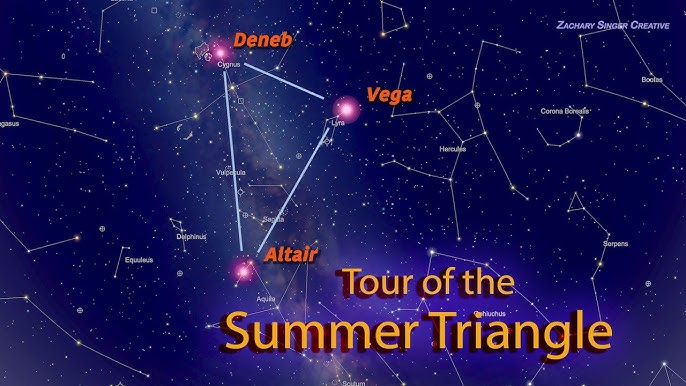
  • Starlight Cadet Challenge: Look straight up after dark to find the three brightest stars of summer: Vega, Altair, and Deneb. Congratulations, you’ve found the Summer Triangle! Now, look closer at Altair—did you know this young star spins so fast (once every 8 hours) that it’s actually flattened like a squished beach ball?
  • Cosmic Veteran Challenge: Dive inside the Summer Triangle to locate Messier 27 (The Dumbbell Nebula), the first planetary nebula ever discovered. Once you’ve checked that off your list, slide over to Cygnus and manually star-hop your way to the Veil Nebula. Can you resolve the delicate, wispy shockwaves of this ancient supernova remnant?

Level 4: The Moonlight-Free Finale (August 12–14, 2026)

This is the peak of the Summer Space Race. On August 12, parts of the world will witness a historic solar eclipse. Then, on the nights of August 12 and 13, the legendary Perseid Meteor Shower peaks under a 0% illumination New Moon—meaning absolute darkness!
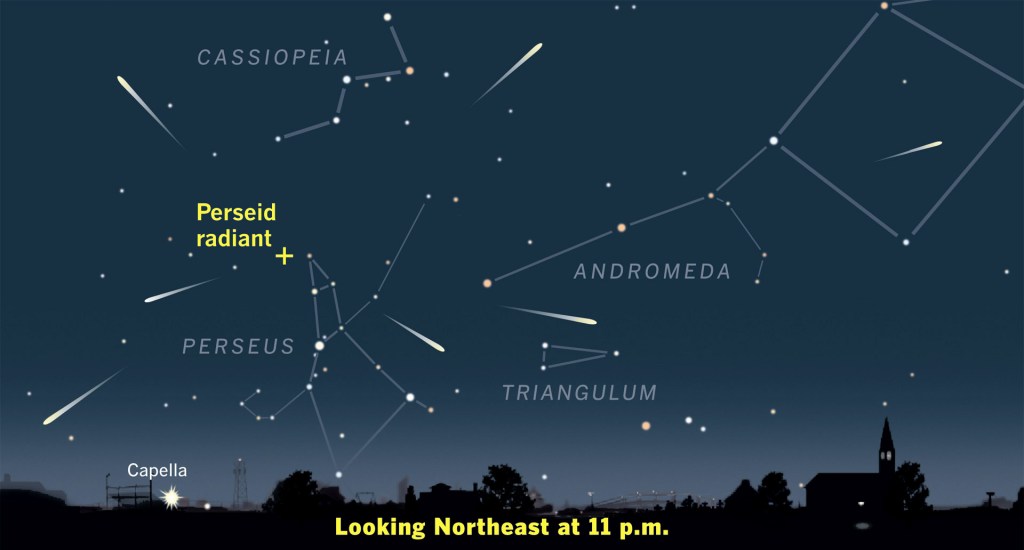
  • Starlight Cadet Challenge: Find an open field, spread out a blanket, lay flat on your back, and look up toward the constellation Perseus. Because the sky is perfectly dark this year, count how many shooting stars you can spot in a single hour. Keep an eye out for “fireballs”—extra bright meteors that leave glowing smoke trails across the sky!
  • Cosmic Veteran Challenge: This is the ultimate astrophotography challenge of the summer. Set up your camera with a wide-angle lens, attach it to a reliable star tracker, and program an intervalometer to capture continuous exposures throughout the night. Your goal? Capture a single, high-definition composite frame showing multiple Perseid meteors radiating outwards from the constellation Perseus against a sharp, tracked background of the Milky Way core.

The Space Race Scorecard

Track your family’s progress through the summer using our quick checklist:

Target LevelStarlight Cadet GoalCosmic Veteran GoalDate to AttemptCompleted?
Level 1Spot Moon, Mars, & PleiadesImage Mars & Pleiades togetherJuly 11[ ]
Level 2Locate the Sagittarius “Teapot”Manually resolve the Trifid NebulaJuly 14[ ]
Level 3Identify the Summer TriangleResolve the wispy edges of the Veil NebulaEarly August[ ]
Level 4Count 30+ Perseid MeteorsCapture a tracked meteor composite imageAugust 12–14[ ]

🛠️ Pro-Tip for Manual Trackers: Keeping these deep-sky objects centered at high magnification requires a steady hand and a smooth mount. If you are modifying a vintage scope or optimizing a manual mount, upgrading your slow-motion control knobs or introducing an entry-level clock drive can completely transform your tracking accuracy.

For Astronomy products please check the links for Amazon and OpticsPlanet.com

No matter which track you choose, the real prize of the Summer Space Race is the time spent looking up at the wonders of our universe together as a family. Pack up your gear, check your local sky charts, and get out there.

Clear skies and happy hunting!

September & October 2025 Night Sky Constellations: A Family-Friendly Guide

September and October are magical months for family stargazing. As days grow shorter, evenings cool, and the night sky swells with brilliant stars, both beginners and seasoned astronomers can find joy in the constellations that rise and sweep overhead. Whether stargazing from a backyard, a park, or on a camping trip, here’s a friendly guide to the brightest, easiest, and most memorable constellations on display—and how families can best enjoy them together throughout early autumn.


Why Early Autumn Is Perfect for Family Stargazing

September and October offer nights that come earlier and last longer, making it easy for kids and adults to explore the sky without staying up late. The air is clear, there’s less humidity and haze than summer, and the moon’s phase lets some moonless nights reveal even fainter stars. For experienced observers, the shift in constellations marks a transition between summer and winter favorites, and brings the celestial equinox—a balance between day and night—right overhead. For more information.


The Brightest Autumn Constellations: Your Top Six

1. Aquila (The Eagle)

  • How to Find: Look high in the southern sky on September evenings for Altair, a blazing white star. Two nearby fainter stars, Tarazed and Alshain, outline Aquila’s “head,” forming a short straight line. Aquila is a part of the famous Summer Triangle, along with Cygnus and Lyra. For more information.
  • Best Time: 9 p.m.–midnight, from September through early October.
  • How to View: Naked-eye for the main shape; sweep binoculars along the Milky Way for star clusters and nebulae.
  • Family Fact: In Greek myth, Aquila carried Zeus’s thunderbolts and the youth Ganymede to the gods.

2. Cygnus (The Swan, or Northern Cross)

  • How to Find: High overhead right after dusk, Cygnus stretches across the Milky Way. Find Deneb, a bright star, as the top of the “cross.”
  • Best Time: 9 p.m.–midnight, best viewed in September; in October it moves westward.
  • How to View: Very easy with just your eyes. Binoculars bring out the rich star clouds nearby.
  • Family Fact: Cygnus resembles a swan flying along the river of the Milky Way.

3. Lyra

  • How to Find: Vega, the dazzling blue-white star, marks Lyra; search overhead or a bit west after sunset.
  • Best Time: 9–11 p.m. in September, earlier evenings in October.
  • How to View: Vega can be seen from cities; binoculars pick out the tiny parallelogram of Lyra and may show the famous Ring Nebula.
  • Family Fact: Vega is one of the closest bright stars to Earth and part of the Summer Triangle.

4. Cassiopeia (The Queen)

  • How to Find: A big “W” or “M” of five bright stars in the northeast. As autumn progresses, Cassiopeia rises higher and is easily spotted all night. For more information.
  • Best Time: All evening, from dusk onward.
  • How to View: Naked-eye; it’s perfect for teaching star patterns to kids.
  • Family Fact: Cassiopeia was a vain queen from Greek myth—her throne now glimmers in the sky.

5. Pegasus (The Winged Horse)

  • How to Find: At dusk in September, look east for the Great Square—a near-perfect diamond of four stars. Through October, Pegasus soars higher, marking the gateway to other autumn constellations.For additional information.
  • Best Time: 9 p.m.–midnight, climbs higher each night.
  • How to View: Naked-eye for the Square; with binoculars, scan for faint star clusters like M15.
  • Family Fact: Imagine the Winged Horse carrying heroes across the sky—let kids create their own stories!

6. Andromeda

  • How to Find: Trace a line from the top left corner of Pegasus’s Square upward. Look for a chain of stars running northeast.
  • Best Time: 10 p.m.–midnight in September; by October, visible earlier in the east. More information.
  • How to View: Naked-eye may reveal the faint smudge of Andromeda Galaxy (M31) under dark skies. Binoculars or a small scope show it as a clear oval.
  • Family Fact: Light from Andromeda’s stars started traveling here over two million years ago!

Other Notable Constellations and Features

  • Capricornus: Faint, low in the south—best seen on moonless nights with a star chart.
  • Pisces & Aquarius: Zodiac patterns rising in the east. Binoculars make finding their stars easier.
  • Perseus & Auriga: In the northeast after 10 p.m., lovely for finding star clusters.
  • Milky Way: Still visible sweeping overhead in early autumn—binoculars reveal clouds and dark lanes near Aquila and Cygnus.Additional information.

How to View: Family-Friendly Tips

With the Naked Eye

  • All the constellations above are easily visible without any equipment, especially under clear, moonless skies.
  • Let your eyes adapt to the dark for 15–20 minutes.
  • Use a reclining chair or blanket for comfort—looking up is much easier!
  • A printed star chart or a phone app (try “Star Walk 2” or “Stellarium”) helps everyone find patterns and learn names.

With Binoculars

  • All you need is a basic pair (7×50 or 10×50). They reveal more stars, clusters, and even the Andromeda Galaxy’s true shape.
  • Sweep Cygnus and Aquila for star clouds; scan Andromeda for the galaxy M31.
  • Avoid city lights; the darker the sky, the more you’ll see.

Best Times to View

  • Early Evening (8–10 p.m.): Great for young families; Pegasus, Cygnus, Vega, Cassiopeia are high.
  • Late Night (10 p.m.–midnight): Andromeda, Perseus, Auriga, and the Milky Way move higher.

Activities for All Ages

  • Star Pattern Drawing: Let everyone draw their favorite constellation or invent new ones.
  • Sky Storytelling: Share the myths for each constellation, or create your family’s own!
  • Constellation Bingo: Make a game out of spotting shapes, bright stars, and unique patterns.
  • Sky Journals: Track what you see each week, watch how the sky moves and changes.

Special September & October Events

  • Equinox: September brings the celestial balance of day and night—observe how sunset time changes!
  • Saturn at Opposition (Sept 21): Glows golden, near Pisces, visible all night. Spot it with the naked eye or binoculars.
  • Blood Moon Eclipse (Sept 7): A total lunar eclipse turns the Moon red for many regions.
  • Orionid Meteor Shower (October 21–22): Watch for “falling stars” near Orion after midnight.

References & Further Learning

  1. [Star Walk – September Constellations]starwalk
  2. [Constellation Guide – September Constellations]constellation-guide
  3. [Sky Guide September 2025 – Bresser]bresser
  4. [Sea and Sky – Astronomy Calendar]seasky
  5. [Young Stargazers – What’s Up for September]popastro

For best stargazing, check local weather, moon phase, and sunset times before heading out. Use apps, join astronomy clubs, and let every family member’s curiosity guide the adventure! Clear autumn skies and happy stargazing!

  1. https://starwalk.space/en/news/september-constellations
  2. https://www.planetary.org/night-sky/night-sky-what-to-see-this-month
  3. https://www.bresser.com/recommendations/sky-guide/sky-guide-september-2025/
  4. https://www.astronomy.com/observing/sky-this-month-september-2025/
  5. https://powerhouse.com.au/stories/sky-guide-september-2025
  6. http://www.seasky.org/astronomy/astronomy-calendar-current.html
  7. https://www.popastro.com/youngstargazers/whats-up/
  8. https://www.constellation-guide.com/constellations-by-month/september-constellations/