Holiday Night Sky 2025: Family Guide to Late‑December Wonders

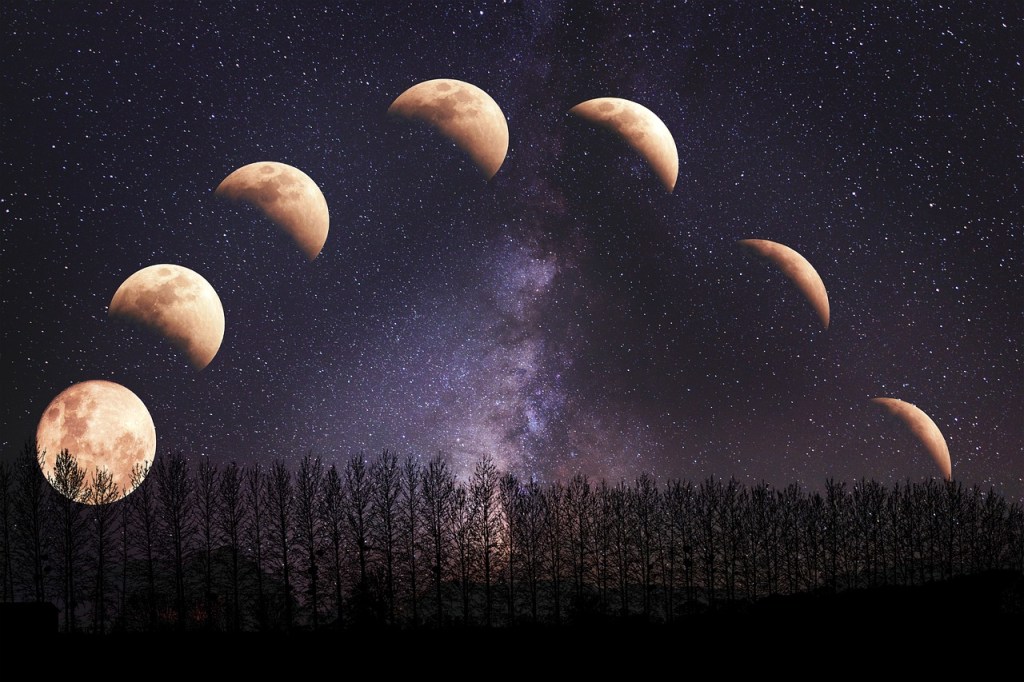
The last half of December 2025 brings some of the longest, darkest nights of the year, making it a perfect time for family‑friendly stargazing that excites both beginners and experienced astronomers. The sky offers a dark New Moon, a Christmas‑week meteor shower, bright planets, and the great winter constellations that pair beautifully with the themes of Christmas—light, hope, and wonder. starwalk+1


From the New Moon on December 20 through New Year’s Eve, the night sky of 2025 becomes a natural Christmas light show—no electricity required. Long, frosty nights in the Northern Hemisphere give everyone time to step outside and enjoy meteor showers, bright planets, and glittering constellations that have inspired stories for thousands of years. Whether you are brand‑new to astronomy or already own a telescope, the last half of December is your invitation to slow down, look up, and share the sky with those you love. timeanddate+2

This guide walks through what to see, when to see it, and how to observe each event, with tips for turning every clear night into an educational, family‑friendly adventure.


December 20: New Moon and the Darkest Skies

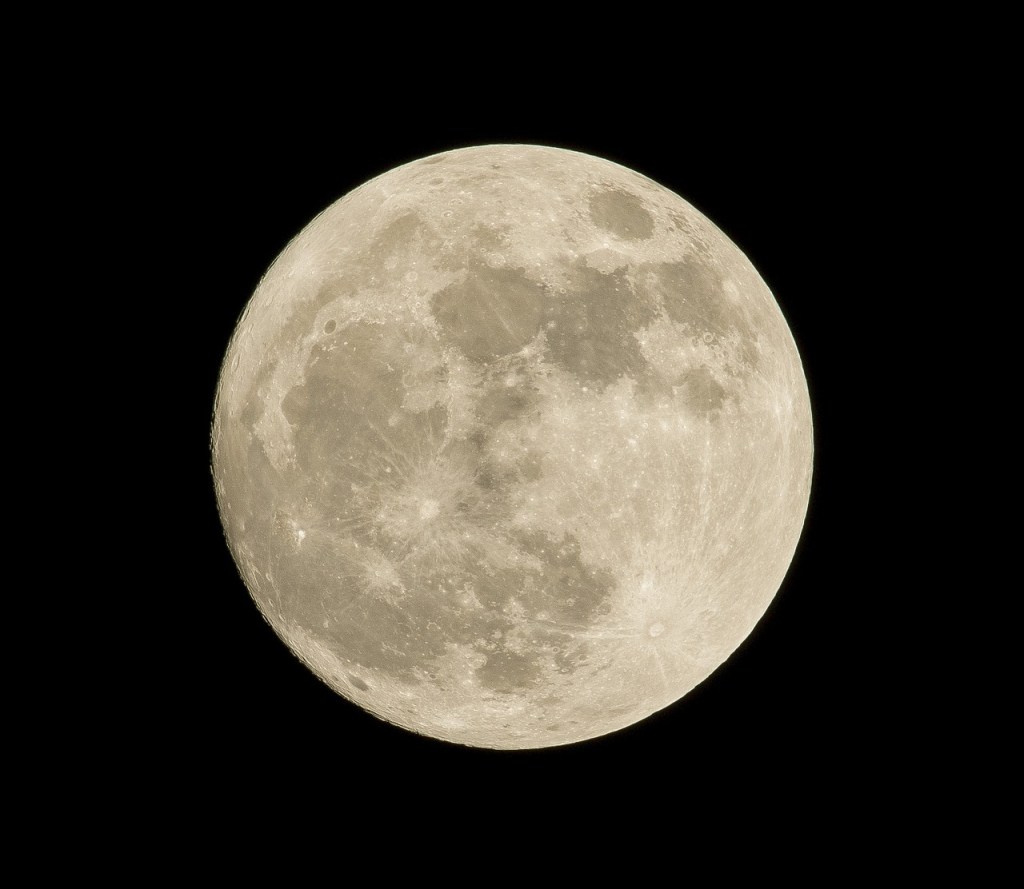
The New Moon on December 20, 2025, marks the darkest night of the month, because the Moon is essentially invisible in the sky. Without its glare, faint star clusters, nebulae, and even some galaxies become easier to see, especially from rural or suburban locations with less light pollution. planetary+1

For beginners, this is the ideal opportunity to learn the basic winter constellations. Look for:

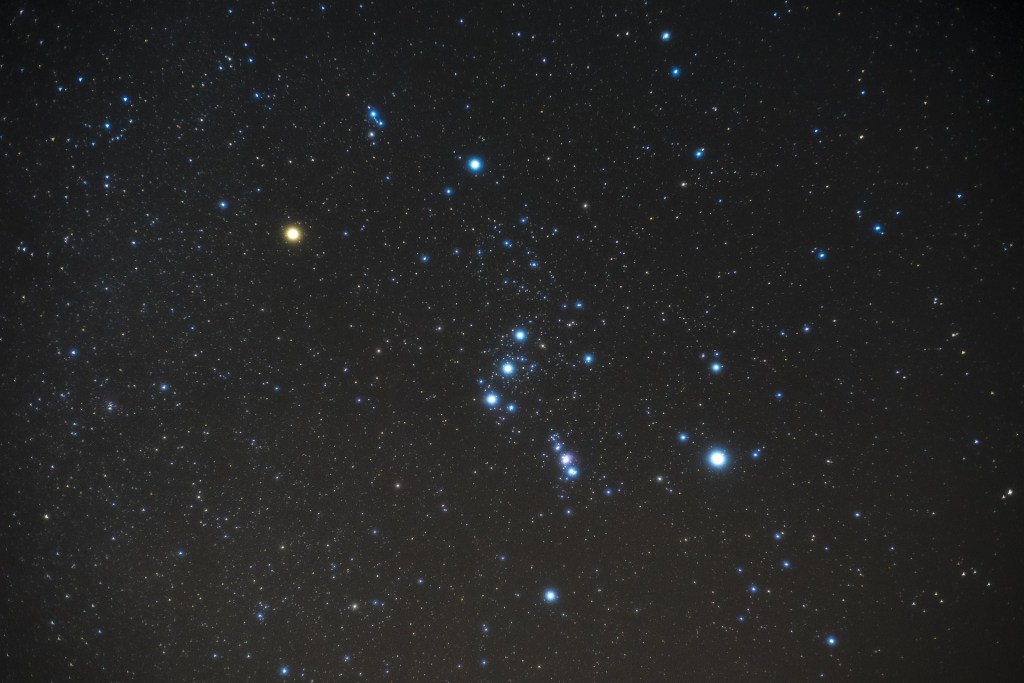
  • Orion the Hunter rising in the east after sunset, with his three‑star belt forming a straight line.
  • Taurus the Bull above Orion, marked by the V‑shaped Hyades cluster and the brighter Pleiades (Seven Sisters) nearby.
  • Canis Major with Sirius, the brightest star in the night sky, shining low in the southeast later in the evening.

Experienced observers can use the New Moon sky to hunt deep‑sky treasures like the Orion Nebula (M42), the open clusters M36–M38 in Auriga, and the richly populated Pleiades through binoculars and telescopes. This is a great night to invite family or neighbors over for a “dark‑sky star party” complete with hot drinks and warm blankets. science.nasa+1


December 21: The Solstice and the Spirit of Christmas

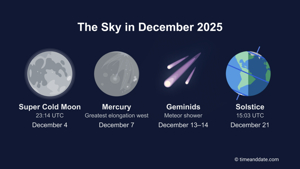
The December solstice occurs on December 21, 2025, marking the official start of winter in the Northern Hemisphere and the longest night of the year. Many Christmas traditions—candles in windows, strings of lights, and the story of a guiding star—are rooted in this turning point from deep darkness toward lengthening days. blogs.loc+1

A simple family tradition is to step outside on solstice evening, look up at Orion, the Pleiades, and Jupiter or Saturn if visible, and talk about how people have used the sky to mark seasons and celebrations for thousands of years. For Christian families, this is a natural time to discuss the “Star of Bethlehem” and how ancient skywatchers interpreted unusual celestial events as meaningful signs. rmg+2


December 21–22: The Ursid Meteor Shower

Just after the solstice, the Ursid meteor shower reaches its peak around the night of December 21–22. The Ursids are not as intense as the earlier Geminids, typically producing around 10 meteors per hour under dark skies, but in 2025 they benefit from very favorable conditions: the peak occurs just two days after New Moon, so the sky is wonderfully dark. starwalk+1

How to watch the Ursids

  • Best time: After midnight until the pre‑dawn hours, when the radiant in Ursa Minor (near the Little Dipper) climbs higher in the sky. starwalk
  • Where to look: Do not stare only at the Little Dipper; instead, look about 40° away from the radiant for longer meteor trails. Meteors can appear anywhere in the sky.
  • What you need: No telescope is required. A reclining lawn chair, warm layers, blanket or sleeping bag, and a thermos of hot chocolate are more important than any equipment. celestron+1

For families, the Ursids are a quieter, more contemplative meteor shower—perfect for a school‑break night or a youth‑group outing. Encourage children to:

  • Count how many meteors they see in 10‑ or 15‑minute intervals.
  • Note whether meteors are “faint,” “medium,” or “very bright.”
  • Talk about how meteors are tiny bits of rock and dust burning up high in Earth’s atmosphere.

This turns a relaxing night under the stars into a simple science project that introduces data‑collection and observation skills. cloudynights+1


Late December: Bright Planets in the Christmas Sky

The last half of December 2025 features several bright planets that are easy to spot with the naked eye and rewarding through binoculars or telescopes. astronomy+1

Jupiter: The “Christmas Lantern”

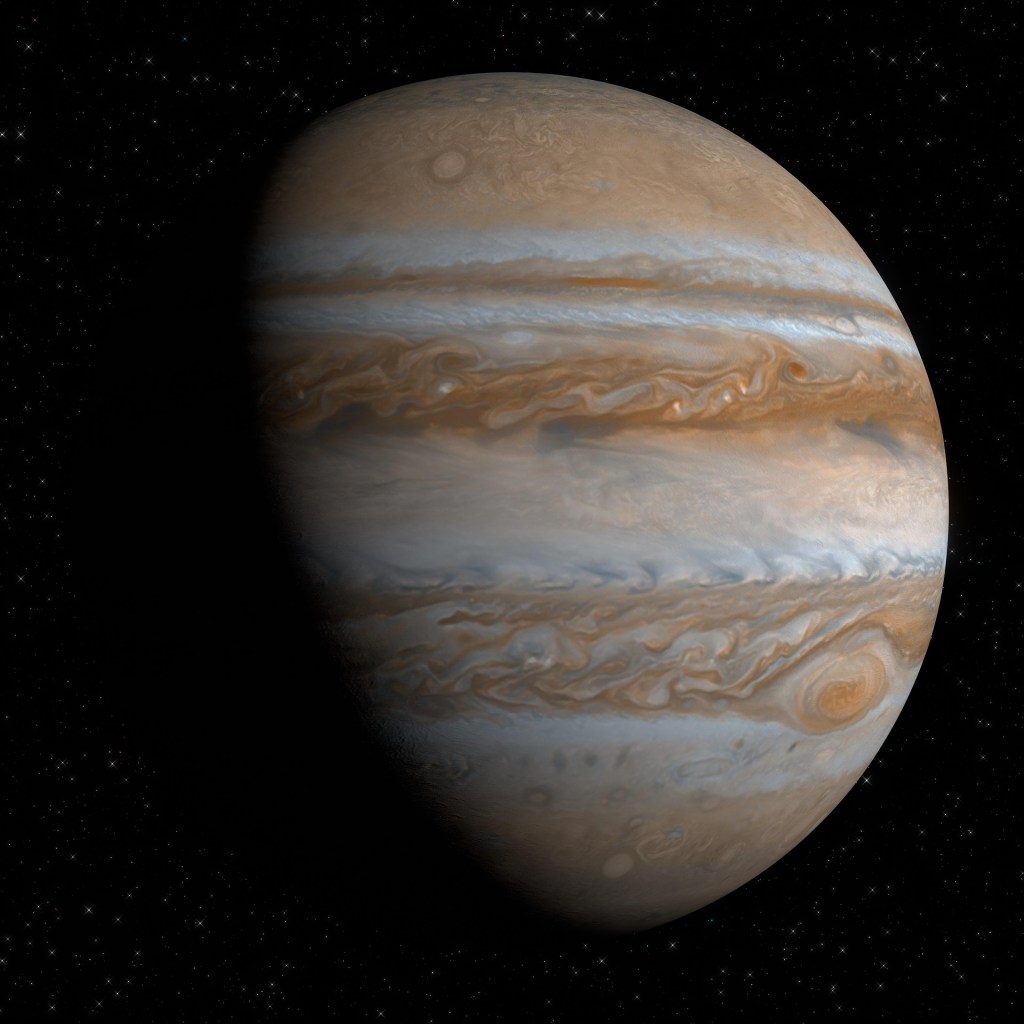
By late December, Jupiter is rising in the early evening and shines brilliantly for most of the night. For beginners, Jupiter looks like an especially bright, steady “star” that does not twinkle as much as the surrounding stars. nationalgeographic+1

Through a small telescope at moderate magnification, even first‑time observers can see:

  • The planet’s disk, slightly flattened at the poles.
  • Two darker cloud bands across its middle.
  • Four bright Galilean moons lined up in different configurations, changing from hour to hour.science. nasa+1

Families can check the positions of Jupiter’s moons with a simple phone app, then step outside and see how well the view matches. Advanced observers might sketch the moons’ locations or time an eclipse or transit event to compare with published predictions. astronomy

Saturn and the Growing Crescent Moon

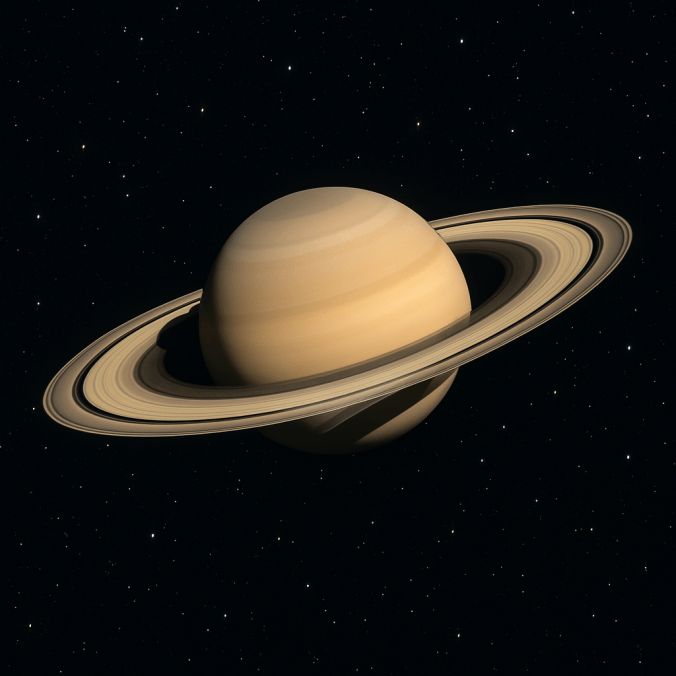
On December 26, the waxing Moon passes near Saturn, appearing only a few degrees apart in the evening sky. This close pairing makes a lovely Christmas‑week photo opportunity, even with a smartphone placed against binoculars or a small telescope eyepiece. nationalgeographic+1

Saturn’s rings are still visible through modest telescopes, though not as widely open as in previous years, and even a brief view can be unforgettable for children. astronomy


December 27–31: Growing Moon, Comets, and a Year‑End Sky Show

As the Moon waxes from First Quarter on December 27 toward a bright gibbous phase at the end of the month, it returns to the evening sky and gently washes out the faintest stars. Beginners can use this time to focus on bright, easy targets: the Moon, the main winter constellations, and Jupiter. starwalk

Comet Opportunities for Advanced Observers

December 2025 also brings at least one interesting comet, C/2024 E1 (Wierzchos), and the interstellar visitor 3I/ATLAS, which may be visible in small to medium telescopes from dark sites. These objects are not likely to be naked‑eye showstoppers, but they give experienced observers a challenge and a chance to explain to newcomers: science.nasa+2

  • What comets are made of.
  • How comets differ from interstellar visitors like 3I/ATLAS.
  • Why some comets become famous “Christmas comets” and others remain faint fuzzies.

How to Observe: Practical Holiday Stargazing Tips

Late December nights can be cold—even dangerously so—if you are not prepared, but with a little planning they can be cozy and comfortable.

Dress and Comfort

  • Wear multiple layers: thermal base layer, warm sweater or fleece, insulated coat, hat, scarf, two pairs of socks, and insulated boots. science.nasa+1
  • Use blankets, sleeping bags, or foam pads under your legs and feet to block cold from the ground.
  • Pack hot drinks and snacks; a thermos of cocoa or tea keeps spirits and body temperatures up.

Gear for Beginners

You do not need expensive equipment to enjoy the holiday night sky:

  • Naked eyes are best for meteor showers and learning constellations.
  • Binoculars (7×50 or 10×50) reveal the Pleiades, star clusters, the Orion Nebula, and the Moon’s craters in impressive detail. starwalk
  • A small telescope adds “wow” views of Jupiter’s moons, Saturn’s rings, and structure in nebulae, but keep expectations realistic for first‑timers. astronomy
  • Red‑light flashlights or headlamps protect night vision; avoid bright white phone screens when possible. idealcu+1

Light Pollution and Location

If you live in a city, you can still enjoy the holiday sky. Focus on:

  • The Moon and planets.
  • Bright constellations like Orion and Taurus.
  • Meteor showers, which can still produce noticeable meteors even from suburban skies. planetary+1

Whenever feasible, drive to a darker park, field, or countryside location and make it a family “night sky road trip,” checking local rules and safety conditions before you go. eaglecreek


Educational Ideas and Christmas Connections

The last two weeks of December offer rich connections between science and the themes of Christmas—perfect for parents, homeschoolers, church groups, and astronomy clubs.

  • Science of light and darkness: Use the solstice and long nights to talk about Earth’s tilt, seasons, and why winter brings longer nights in the Northern Hemisphere. planetary+1
  • The Star of Bethlehem: Explore historical and astronomical ideas about what the “Christmas Star” may have been—a planetary conjunction, a comet, or a nova—while emphasizing that the story also carries deep symbolic meaning for many people. blogs.loc+1
  • Stargazing journals: Encourage kids to keep a simple logbook of dates, times, temperatures, what they saw, and how they felt. This builds observation skills and creates a keepsake of their Christmas sky memories. celestron+1
  • Art and photography: Have children draw the constellations or meteors they saw; advanced observers can try wide‑field astrophotography that captures Orion and the winter Milky Way as a backdrop for Christmas cards.

By combining hands‑on observing with storytelling and reflection, the late‑December night sky becomes more than a backdrop—it becomes part of how your family experiences Christmas.


Conclusion: A Season of Wonder Above

From the dark New Moon around December 20 to the gentle glow of the waxing Moon and bright planets at year’s end, the last half of December 2025 offers something for every level of skywatcher. Beginners can enjoy easy targets and meteor showers, while experienced astronomers chase comets, sketch nebulae, and share telescope views that may inspire a new generation. planetary+1

In a season filled with lights, gifts, and celebrations, stepping outside to look up is a powerful reminder that the greatest show is still the one written in the sky—steady, beautiful, and shared by people all over the world.


References and Footnotes

  1. StarWalk – “December Astronomical Events 2025: Explore the Night Sky This Month” (calendar of December 2025 events, Moon phases, meteor showers, comets).starwalk
  2. Timeanddate.com – “What’s Up in the Night Sky in December 2025” (Geminids, solstice, planetary visibility).timeanddate
  3. National Geographic – “Night sky events to see in December 2025” (Supermoon, comets 3I/ATLAS and C/2024 E1, meteor showers).nationalgeographic
  4. Astronomy Magazine – “December 2025: What’s in the sky this month?” (planetary observing details, Jupiter and Saturn highlights).astronomy
  5. The Planetary Society – “What’s up in the night sky: December 2025” (easy monthly targets for casual observers).planetary
  6. NASA – “What’s Up: December 2025 Skywatching Tips” and “Hubble’s Night Sky Challenge – December” (observing projects and educational background).science.nasa+1
  7. Sea and Sky – “Astronomy Calendar of Celestial Events 2025” (year‑long listing of major events, including the Ursids and Moon phases).seasky
  8. Library of Congress – “The Christmas Star” and Royal Museums Greenwich – “What was the Christmas Star?” (historical and astronomical perspectives on the Star of Bethlehem).rmg+1
  9. NASA and other outreach sources on winter stargazing comfort and safety (clothing, equipment, and family‑friendly tips).science.nasa+2
  1. https://starwalk.space/en/news/night-sky-tonight-december
  2. https://www.nationalgeographic.com/science/article/december-night-sky-events-2025
  3. https://www.astronomy.com/observing/sky-this-month-december-2025/
  4. https://www.timeanddate.com/news/astronomy/night-sky-december-2025
  5. http://www.seasky.org/astronomy/astronomy-calendar-2025.html
  6. https://www.planetary.org/night-sky/night-sky-what-to-see-this-month
  7. https://in-the-sky.org/newscal.php?year=2025&month=12
  8. https://science.nasa.gov/mission/hubble/science/explore-the-night-sky/hubbles-night-sky-challenge-december/
  9. https://science.nasa.gov/solar-system/skywatching/whats-up-december-2025-skywatching-tips-from-nasa/
  10. https://www.planetary.org/articles/calendar-of-space-events-2025
  11. https://blogs.loc.gov/inside_adams/2011/12/the-christmas-star/
  12. https://www.rmg.co.uk/stories/space-astronomy/what-was-christmas-star
  13. https://www.celestron.com/blogs/knowledgebase/the-ultimate-guide-to-observing-the-meteor-showers
  14. https://www.cloudynights.com/topic/742482-how-to-observe-a-meteor-shower/
  15. https://science.nasa.gov/solar-system/skywatching/night-sky-network/winter-stargazing-tips-stay-warm-and-cozy/
  16. https://eaglecreek.com/blogs/articles/stargazing-tips-cozy-winter-nights
  17. https://www.idealcu.com/blog/entry/frosty-nights-starry-sights-top-winter-stargazing-tips
Stargazing Wonders of November 2025: A Family Guide to Planets, Constellations, and Celestial Magic

November 2025 is a holiday gift for skywatchers, offering planetary displays, dazzling meteor showers, a record-bright supermoon, and a host of famous constellations and stars. Whether you’re spending quiet moments in your backyard with family or gathering fellow enthusiasts in a local astronomy club, the month promises magic for stargazers of all ages and experience levels.


Planets on Parade

November is one of the richest months for planet watching in 2025. On clear nights, nearly every naked-eye planet makes a memorable appearance:

  • Mercury: The elusive innermost planet appears just above the southeastern horizon at dawn near the end of the month (November 28–30). Its fleeting glow is best caught about 30 minutes before sunrise, challenging even for seasoned observers but a thrill for patient families. farmersalmanac+1
  • Venus: Brilliant Venus shines low in the morning twilight the first three weeks of November before disappearing from view—look for it before sunrise in the east and southeast. astroshop+4
  • Saturn: The ringed planet graces the southwest after sunset all month. On November 1–2, Saturn pairs closely with the waxing gibbous Moon—don’t miss the pairing with binoculars or a telescope. adlerplanetarium+3
  • Jupiter: Jupiter rises in the east after 9 PM and dominates the late-night sky. Its moons and cloud bands are visible in even small telescopes, offering an inviting family observing project. skyatnightmagazine+2
  • Uranus: On November 21, Uranus reaches opposition and shines all night in Aries. Usually invisible to the naked eye, it’s within reach of binoculars or a modest telescope—a blue-green gem for those ready to find new worlds. timeanddate+3
  • Neptune: Faint Neptune lurks in Pisces, crossing the southern sky late at night. Binoculars or a telescope are needed, but locating this distant planet can be a rewarding family challenge. farmersalmanac+1

Moon Facts and Lunar Events

This November offers a lunar showstopper sure to spark curiosity and creativity, plus several phase changes for sky journaling:

  • Supermoon – November 5: The year’s biggest and brightest full moon rises on Nov. 5. Named the Beaver Moon or Frosty Moon, it appears nearly 8% larger and up to 16% brighter than a typical full moon. Early Native Americans used this time to set beaver traps ahead of winter. rmg+5
  • Moon-Planet Conjunctions: The Moon passes near Saturn on Nov. 1–2 and pairs up with Aldebaran (the “Bull’s Eye”) in Taurus on Nov. 7—a great reason for crafty photos or family stories about the sky’s ancient myths. whenthecurveslineup+1
  • Other Phases: The moon’s changing face is easy to track and sketch:
    • Full Moon: Nov. 5
    • Last Quarter: Nov. 12
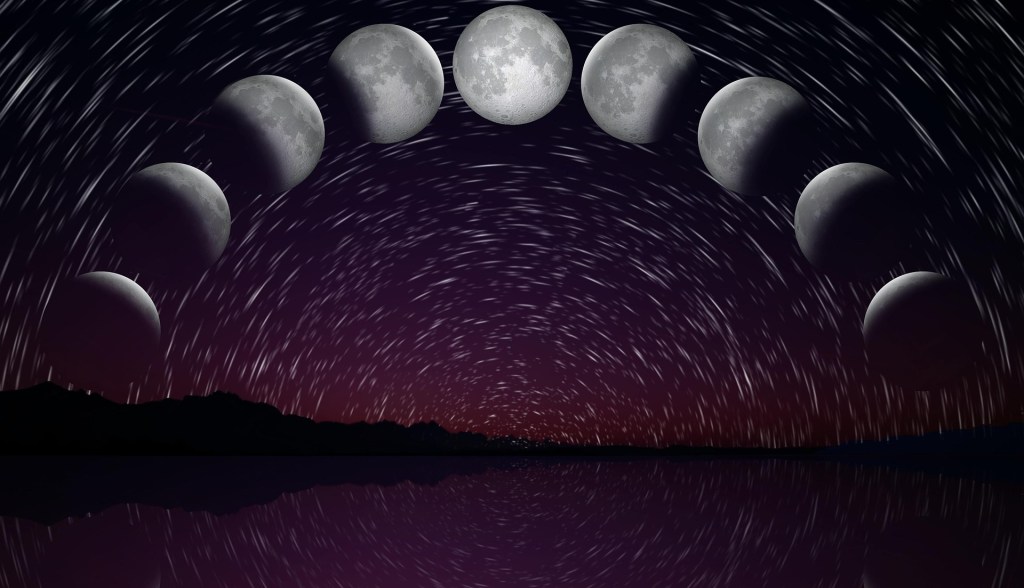
    • New Moon: Nov. 20 (a “micro” new moon at farthest distance from Earth)
    • First Quarter: Nov. 28. theskylive+1

Meteor Showers to Watch

November delivers two meteor showers—one spectacular, the other subtle but known for bright fireballs:

  • Southern Taurids – Nov. 4–5: This minor shower produces slow, bright meteors. Only 5–10 meteors per hour, but some may become fireballs as they radiate from Taurus. Try viewing after midnight—best with the whole family, lying back and sharing wishes. seasky+1
  • Leonids – Nov. 17: The Leonid meteor shower, famed for epic storms, produces 10–15 bright meteors per hour at its peak just before dawn. Look southeast from a safe, dark spot. The crescent moon will set early, leaving a perfectly dark sky for viewing. planetary+3

Constellations: Old Friends Return

As November evenings lengthen, classic constellations and famous stars reclaim their positions:

  • Orion the Hunter: Orion rises by midnight, instantly recognizable by his three-star “belt.” Follow the belt downward left to find Sirius, the sky’s brightest star, rising in the southeast near the end of the month. nationalgeographic+2
  • Taurus the Bull: Home to red-orange Aldebaran (the “Bull’s Eye”), the glimmering Pleiades (Seven Sisters), and the Hyades cluster—the V-shaped “face” of Taurus. rmg+2
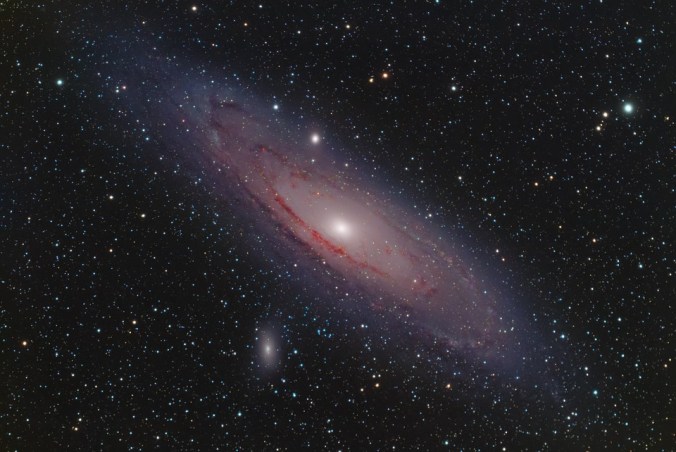
  • Andromeda: High overhead, Andromeda forms a graceful arc and hosts the Andromeda Galaxy (M31)—a faint smudge in dark skies visible to the naked eye, binoculars, or small telescopes. starwalk+1
  • Pegasus: The Great Square of Pegasus marks autumn and is a great jumping-off point for star-hopping.
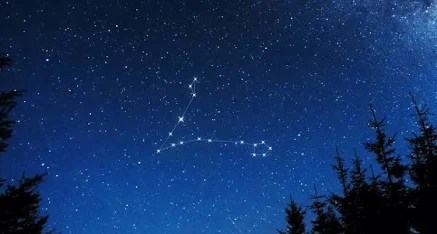
  • Cassiopeia, Pisces, and more: Cassiopeia’s “W” shape dominates the northeast. Pisces, the Fishes, is less obvious but sits south of Andromeda. starwalk
  • Sirius and Canis Major: By late November, Sirius—known as the “Dog Star”—rises in the southeast. It’s 25 times more luminous than the sun and just 8.6 light years away, a brilliant beacon for cold nights. rmg

Other Notable Night Sky Events

  • Planetary Encounters: Nov. 3, the Moon and three planets (Venus, Saturn, Jupiter) are on display overnight. Nov. 25, Venus and Mercury share the dawn in a rare pairing. whenthecurveslineup+1
  • Hyades at Apex – Nov. 27: The Hyades cluster, making the V of Taurus’s face, reaches its highest point around midnight. This is the best time to see its dozens of stars under dark skies, an ideal binocular or family-accessible target. nationalgeographic
  • Comet c/2025 A6: Expected to be visible from dark locations in late October and early November. It may be possible to spot it with binoculars just before sunrise or after sunset—watch astronomy news sites for updates. facebook

More Astronomy Information

Bright Stars to Visit

  • Aldebaran (Taurus): Orange-red, marking the Bull’s eye.
  • Betelgeuse and Rigel (Orion): Red and blue supergiants, highlighting Orion’s shoulder and foot.
  • Capella (Auriga): Bright, yellowish star rising high in the northeast.
  • Spica (Virgo): Visible near Venus in the dawn sky early in the month. whenthecurveslineup

Family Activities and Tips

  • Make a Sky Journal: Track phases of the moon and meteor counts. Sketch constellations or note unusual “shooting stars.”
  • Try Star Storytelling: Share myths about Orion, Taurus, and the Pleiades, or invent your own tales.
  • Holiday Stargazing: Pair a hot cocoa night with meteor counting or supermoon watching. Invite friends or neighbors for a “full moon walk” or a “Leonids pajama party.”
  • Binocular Astronomy: Many November targets—the moon’s craters, Pleiades, Hyades, Jupiter’s moons—look wonderful even through basic binoculars.
  • Prepare for the Cold: Layer up, bring blankets and sleeping bags, and warm drinks.

Handy Stargazing Tips

  • Allow 15 minutes for your eyes to adapt to the darkness.
  • Avoid bright lights (use red flashlights to preserve night vision).
  • Choose a safe, dark location away from city lights.
  • Use free sky map apps or printable star charts to help identify targets.
  • Record your sightings and try to spot new constellations each week.rmg

More Astronomy Information.

Looking Ahead and Inspiring Wonder

As the nights lengthen and the year edges closer to holidays, November 2025 offers families and astronomers a cosmos packed with both new wonders and returning favorites. There’s no better time to start a skywatching tradition with your children, friends, or students—nature’s awe-inspiring show is always free and never repeats in quite the same way.

From the joy of the supermoon’s silvery glow and the thrill of counting Leonid meteors to the satisfaction of picking out planets and patterns among the stars, the night sky rewards curiosity and connects us to ancient stories and ongoing scientific discovery.

Wishing clear skies, many discoveries, and countless family memories under the November night sky! kenpress+17

  1. https://www.farmersalmanac.com/visible-planets-guide
  2. https://www.astroshop.eu/magazine/practical-tips/observation/astronomy-highlights-in-autumn-2025/i,1244
  3. https://www.adlerplanetarium.org/blog/what-to-see-stargazing-tips-november-2025/
  4. https://www.skyatnightmagazine.com/advice/skills/astronomy-guide-viewing-planets-night-sky
  5. https://whenthecurveslineup.com/2025/10/23/2025-november-3-moon-and-three-planets-on-display-in-the-night-sky/
  6. https://www.rmg.co.uk/stories/space-astronomy/astronomy/night-sky-highlights-november-2025
  7. https://kenpress.com/files/2025WOT11Nov.pdf
  8. https://www.timeanddate.com/news/astronomy/night-sky-november-2025
  9. http://www.seasky.org/astronomy/astronomy-calendar-current.html
  10. https://www.planetary.org/articles/calendar-of-space-events-2025
  11. https://starlust.org/november-2025-skywatching-guide-this-years-biggest-supermoon-leonids-fireballs-and-more/
  12. https://theskylive.com/moon-calendar?year=2025&month=11
  13. https://www.calendarr.com/united-states/lunar-calendar-november-2025/
  14. https://whenthecurveslineup.com/2025/10/27/2025-november-7-moon-and-bulls-eye/
  15. https://www.nationalgeographic.com/science/article/november-night-sky-events-2025
  16. https://starwalk.space/en/news/november-constellations-and-stars
  17. https://www.space.com/stargazing/autumn-skywatching-targets-to-see-in-the-night-sky-2025
  18. https://www.facebook.com/groups/auroraaustralia/posts/2376217279460361/
  19. https://www.spaceweatherlive.com/en/moon-phases-calendar/2025/11.html
  20. https://www.timeanddate.com/astronomy/sights-to-see.html

October 2025 Night Sky — Beginner’s Calendar.

Here’s a concise, beginner-friendly October 2025 night-sky events calendar for easy skywatching:


October 6–7: Full Harvest Supermoon

  • The brightest, closest full moon of the yelar! Look east just after sunset—no equipment needed. More Info.

October 8–9: Draconid Meteor Shower

  • Watch for a few “shooting stars” from the Dragon constellation just after sunset. This year’s display will be faint due to moonlight, but it’s a fun, easy event for families. More Info.

October 13: Moon Close to Jupiter

  • Spot the moon and bright Jupiter together in the east after sunset—great with naked eyes or binoculars. More Info.

October 19: Moon Close to Venus at Dawn

  • Before sunrise, look east to see super-bright Venus and a thin crescent moon side by side. More Info.

October 20–22: Orionid Meteor Shower Peaks

  • Watch after midnight for bright, fast meteors “shooting” from Orion’s shoulder. Best seen from dark spots, and this year, the moon will be out of the way for better viewing. More Info.

October 21: New Moon

  • The sky will be extra dark—you’ll see more stars than usual. Perfect for spotting constellations and the Milky Way. More Info.

October 29: Mercury at Its Best

  • Mercury shines low in the west just after sunset. Use binoculars and a clear horizon to catch it, as it fades quickly with twilight. More info.

Planets All Month

  • Saturn visible after sunset, high in the southeast.
  • Jupiter rises in the east, growing brighter each week.
  • Venus—spectacular before dawn in the east.

Pro Tips for Beginners:

  • For most events, just step outside—no telescope needed!
  • Use a stargazing app to help identify planets and constellations.
  • The best nights for stargazing are near the new moon (October 21–24).

Clear skies! October is packed with easy, awe-inspiring sky events for everyone to enjoy.


🌟 October 2025 Night Sky Calendar 🌟

Plan Your Stargazing Month – Beginner Friendly

October Highlights

DateEventWhat to Watch forViewing Tips
Oct 5Moon near SaturnMoon & bright Saturn together in SE8–10 PM: naked eye or binocularsstarwalk+2
Oct 6–7Full Harvest SupermoonLarge, golden moonrise in eastAfter sunset; great for family photosseasky+1
Oct 8–9Draconid Meteor ShowerSlow, bright “shooting stars”After dusk, face north; moonlight may lessen showkenpress
Oct 10Moon near PleiadesMoon close to star cluster in Taurus9–11 PM, binoculars add sparklestarwalk+1
Oct 13–14Moon near JupiterMoon & brightest planet in eastJust after moonrise; spot Jupiter’s moons with binocularsstarwalk+1
Oct 19Moon near VenusCrescent moon & Venus at dawnLook east, 30 min before sunrise highpointscientific
Oct 19Mercury & Mars at duskTwo planets low in west after sunsetUse binoculars; flat western horizonstarwalk+1
Oct 20–22Orionid Meteor Shower PeakUp to 20 meteors/hour, dark skiesAfter midnight, face southeast, best after moonsetstarwalk+1
Oct 21New MoonDeepest dark sky of the monthPerfect for seeing faint stars & Milky Wayseasky+1
Oct 23Moon near Mars & MercuryThree close at sunset in southwest15–30 min after sunset; binoculars helpstarwalk+1
Oct 29Mercury at greatest elongationBright Mercury low in west at dusk30–45 min after sunset, use low horizonstarwalk+1

All Month

  • Saturn: Southeast, golden glow after sunset
  • Jupiter: Rises in east, 4 moons visible with binoculars
  • Venus: Dazzling “Morning Star” before sunrise
  • Pegasus, Andromeda, Cassiopeia: Easy autumn constellations overhead for family star-hopping
  • Comet Lemmon: May be visible with binoculars after sunset; check astronomy news for updatests2
  • Milky Way: Visible from dark sites after sunset (best Oct 21–24)

Family Tips:

  • Print and hang this calendar for easy reference.
  • Use a blanket or chair for comfort. Let eyes adjust 20 minutes for best night vision.
  • Download the “Star Walk 2” or “Sky Tonight” app for real-time planet and constellation guides.

Celebrate autumn under the stars—every night is a new adventure!

starwalk+4

If you need a PDF or image file for printing, just ask—this format can be adapted to any design you like!

  1. https://www.wiki-calendar.com/october-calendars.html
  2. https://starwalk.space/en/news/astronomy-calendar-2025
  3. http://www.seasky.org/astronomy/astronomy-calendar-current.html
  4. https://www.highpointscientific.com/astronomy-hub/post/night-sky-news/2025-astronomical-calendar
  5. https://kenpress.com/files/2025WOT10Oct.pdf
  6. https://science.nasa.gov/multimedia/2025-nasa-science-planning-guide/
  7. https://www.etsy.com/listing/1623609853/printable-calendar-2025-night-sky
  8. https://in-the-sky.org/newscal.php?year=2025&month=10
  9. https://capturetheatlas.com/milky-way-calendars/
  10. https://ts2.tech/en/dont-miss-these-skywatch-wonders-in-october-2025/
  1. https://www.tensixphotography.com/eclipse-blog/2025-astrophotography-events
  2. https://discoveryplace.org/stay-at-home-science/celestial-events-to-see-in-octobers-night-sky/
  3. https://koa.com/blog/celestial-events-2025/
  4. https://starwalk.space/en/news/astronomy-calendar-2025
  5. http://www.seasky.org/astronomy/astronomy-calendar-current.html
  6. https://www.planetary.org/articles/calendar-of-space-events-2025
  7. https://in-the-sky.org/newscal.php?year=2025&month=10
  8. https://www.highpointscientific.com/astronomy-hub/post/night-sky-news/2025-astronomical-calendar
  9. https://www.space.com/39469-best-meteor-showers.html
  10. https://www.adlerplanetarium.org/blog/what-to-see-stargazing-tips-october-2025/
  11. https://www.hipcamp.com/journal/camping/stargazing-guide-astronomical-calendar/
  12. https://www.timeanddate.com/astronomy/sights-to-see.html
  13. https://ts2.tech/en/dont-miss-these-skywatch-wonders-in-october-2025/

September 2025 Night Sky Guide: A Family-Friendly Tour from Beginner to Advanced Stargazer.

September 2025 is set to dazzle skywatchers on every continent, with celestial spectacles ranging from dramatic eclipses and bright planets to subtle meteor showers and shifting constellations. Whether you’re an absolute beginner or a longtime astronomy lover, this educational, family-friendly guide will walk you through this month’s most rewarding highlights. We’ll explore naked-eye and binocular sights, provide skywatching tips, and show you how to make the most of every clear night — all optimized for high engagement, readability, and shareability in today’s online world.


Why September 2025 Is So Special

September 2025 brings a rare convergence of events:

  • A stunning total lunar (“Blood Moon”) eclipse
  • A striking partial solar eclipse
  • Saturn and Neptune at their brightest (“opposition”)
  • A lunar meet-up with Venus, visible occultations, and close planetary approaches
  • Constellations shifting from summer to autumn dominance
  • Meteor showers, celestial equinox, and more

No expensive gear is required for many of these sights — just your own eyes, curiosity, and a sense of wonder.


September 2025: Celestial Events Calendar (All dates are approximate; check local apps for timing in your region)

  • September 1: Aurigid meteor shower peaks
  • September 7: Full Moon & total lunar eclipse (“Blood Moon”)
  • September 8: Moon close to Saturn & Neptune
  • September 9: ε-Perseid meteor shower peaks
  • September 12: Moon occults the Pleiades cluster
  • September 14: Last Quarter Moon
  • September 16–17: Moon near Jupiter and the Beehive Cluster
  • September 19: Moon near Venus, lunar occultation of Venus in some regions
  • September 21: Saturn at opposition & partial solar eclipse & New Moon
  • September 22: September Equinox (start of fall)
  • September 23: Neptune at opposition
  • September 27: Daytime Sextantids meteor shower
  • September 29: First Quarter Moon

1. The Eclipses: September’s Main Attractions

Total Lunar Eclipse — September 7

On the evening of September 7, the Full Moon will slip into Earth’s shadow, transforming into a coppery red “Blood Moon” for lucky viewers across Africa, Asia, Australia, and parts of Europe and the Pacific. Since lunar eclipses are safe to watch with unaided eyes, it’s a perfect family event!starwalk+3

How to Watch:

  • No special equipment needed, though binoculars reveal extra detail in the reddish lunar surface.
  • Try taking a photo: even a smartphone will capture the dramatic change in color.
  • Make it fun: have children sketch the moon’s phases or write “moon eclipse diaries.”

Partial Solar Eclipse — September 21

This deep partial solar eclipse is visible from Antarctica, parts of Australia and New Zealand’s south, southern South America, and the South Pacific. For safety, only use special eclipse glasses or viewers.planetary+2

Family Tip:

  • If you aren’t in the path: Many observatories and NASA stream eclipses live. Make popcorn and have a “solar eclipse party” at home!

2. Planetary Spectacles: Saturn, Jupiter, Venus & More

Saturn at Opposition — September 21

Saturn rises as the sun sets and is visible all night at its biggest and brightest of the year, in Pisces. Binoculars will show its golden hue; even a small telescope (especially if borrowed from a local library or club!) may reveal Saturn’s rings, although the rings are nearly edge-on this year—a rare geometric arrangement that makes them appear very thin or almost vanish.starwalk+3

How to See:

  • Look southeast after dusk for a bright golden “star” — that’s Saturn.
  • Binoculars or telescopes reveal more detail.
  • For kids: Have them pretend “lining a marble up” with Saturn’s rings — are they really flat?

Jupiter Returns

Jupiter rises after midnight and stays up until dawn, growing spectacularly bright through the month. It’s great for “early bird” skywatchers and a favorite target for binoculars; in crisp conditions, you can spot up to four of Jupiter’s large moons in a little row!ts2+2

Venus — The Glorious Morning Star

Venus blazes before sunrise in the east, sometimes called the “Morning Star.” On September 19, Venus and the slender crescent Moon perform a special dance. In certain regions (Europe, Africa, Russia, Asia, Canada, Greenland), the Moon will actually “cover” Venus in a rare occultation. If you’re outside the path, you’ll still enjoy the pair’s close, sparkly approach.starwalk+2

Try This: Use a free stargazing app (like Sky Tonight or Stellarium) to see exactly where Venus, Saturn, and Jupiter are hiding each morning or evening.

Distant Planets at Opposition

  • Neptune (September 23): Only visible with binoculars or a telescope but at its brightest for the year.
  • Uranus: Begins retrograde; faint but fun to find with star maps and optics.

3. Constellations to Watch as Summer Fades

September skies transition from summer to autumn starshows. Here’s what to scan for:

  • Summer Triangle (Vega–Deneb–Altair): High overhead at dusk, these three bright stars anchor the constellations Lyra (look for the Ring Nebula with optics!), Cygnus (the Northern Cross), and Aquila (the eagle).
  • Pegasus & Andromeda: Rising higher each night in the east, these constellations signal fall’s return. Try to spot the Andromeda Galaxy — bare eye in very dark skies, binoculars make it easy even in suburbs.
  • Pisces, Aquarius, Capricornus: Look along the “ecliptic” (the Sun’s path). Use a star map or app to help orient yourself.
  • Pisces Austrinus: Low in the southern sky (northern hemisphere) — try to spot its bright “alpha” star, Fomalhaut.

Make it a family game to spot new constellations each week and compare how they move across the night sky!


4. September’s Minor Meteor Showers

Aurigids (September 1), ε-Perseids (September 9), and Daytime Sextantids (September 27) offer glimpses of shooting stars. These are minor showers (5–10 meteors/hour) and sometimes washed out by moonlight — but if you do catch one, it’s a fun bonus for night owls and early risers. For best results, go outside after midnight, find a dark spot, and let your eyes adjust.in-the-sky+2


5. Special Nights and Skywatching Events

  • September 12: The Moon crosses in front of the beautiful Pleiades Star Cluster. Binoculars show this “jewel box” hiding behind the bright limb of the moon!
  • September 16–17: The Moon passes near Jupiter and the Beehive Cluster.
  • September 21: New Moon = best night for deep-space viewing; no moonlight to wash out faint galaxies and clusters.
  • September 22: The Equinox — day and night are nearly equal. The autumn sky takes center stage!
  • September 23: Neptune at opposition — use binoculars or a telescope for a special challenge.
  • September 27: The Moon briefly “occults” (blocks) fiery red Antares.

6. Skywatching Tips: Making the Most of September

  • Find Dark Skies: Light pollution hides many celestial treats; visit parks, open fields, or dark-sky preserves if possible.
  • Let Your Eyes Adapt: Wait 15–30 minutes outside for full night vision — avoid phone glare.
  • Use Apps: Tools like Stellarium Mobile, Sky Tonight, and Star Walk 2 make it easy for families and beginners to locate objects and understand what they’re seeing.
  • Bring Binoculars: Unlock details in the Moon, star clusters, and see Jupiter’s moons and Saturn’s rings (when visible).
  • Log Your Observations: Keep a “sky journal” to track each sighting and share the sky with friends or family.
  • Join a Club or Attend Star Parties: Most astronomy groups welcome all ages and love to share telescopic views during big events (like Saturn at opposition or lunar eclipses).

7. Activities for the Whole Family

  • Sky Scavenger Hunt: List the planets, constellations, or major stars you want to find — see who spots the most in one night!
  • Eclipse Story Night: Read about ancient eclipse myths and invite kids (and grownups!) to draw what they see.
  • Take Photos: Use a tripod and even a basic smartphone to snap the Big Three—Moon, Jupiter, Saturn—plus wide-field shots during eclipses or conjunctions.

References

  1. [Star Walk: Astronomical Events in September 2025]starwalk
  2. [Sea and Sky: Astronomy Calendar of Celestial Events 2025]seasky
  3. [The Planetary Society: Calendar of Space Events 2025]planetary
  4. [In-The-Sky.org: Calendar of Astronomical Events 2025]in-the-sky
  5. [Space.com: Must-See Naked-Eye Events in 2025]space
  6. [Star Walk: Calendar of All Astronomical Events 2025]starwalk
  7. [All Eyes on the Skies: September Spectacles 2025]ts2

Footnotes

  • For exact eclipse, occultation, and opposition times in your location, use a reputable mobile app (e.g., Sky Tonight, Stellarium Mobile) or check your local observatory’s website.
  • Eclipses require safety precautions for solar viewing — only use certified eclipse glasses or safe indirect viewing methods.
  • Many events are perfectly visible without any equipment, but binoculars and even entry-level telescopes will enrich every experience.
  • Family star parties can be hosted at local parks, schoolyards, or anyone’s backyard!

September 2025 offers something special for everyone — from total lunar eclipses and bright Saturn to the rhythms of the autumn equinox and the return of the Andromeda Galaxy. There’s never been a better time to look up, learn together, and create memories that will last a lifetime. Happy skywatching!

  1. https://starwalk.space/en/news/night-sky-tonight-september
  2. https://www.planetary.org/articles/calendar-of-space-events-2025
  3. https://starwalk.space/en/news/astronomy-calendar-2025
  4. https://ts2.tech/en/all-eyes-on-the-skies-september-2025-celestial-spectacles-meteor-showers-eclipses-more/
  5. http://www.seasky.org/astronomy/astronomy-calendar-current.html
  6. https://www.space.com/stargazing/15-must-see-naked-eye-skywatching-events-in-2025
  7. https://in-the-sky.org/newscal.php?year=2025&month=9
  8. https://whenthecurveslineup.com/2025/08/21/2025-september-3-uranus-and-neptune-before-sunrise/
  9. https://thevlm.org/the-planets-in-our-night-sky-what-you-can-see-this-month/
  10. https://koa.com/blog/celestial-events-2025/

September 2025’s Brightest Constellations for Family Stargazing: How, When, and Where to See Them

September

September is one of the finest months for family stargazing—with mild evenings, earlier nightfall, and some of the sky’s most brilliant and easily recognized constellations on full display. Whether you have a backyard, a park, or can drive to a darker spot, these constellations offer a beautiful way for kids and adults to connect with the universe—no telescope required.


Why September Is a Great Month for Beginner Skywatchers

September brings longer nights without freezing temperatures and showcases both late summer and early fall stars. Early evening hours are packed with bright patterns, making it easier for families to enjoy lingering outside together. And this month, you’ll find sky features that spark wonder, stories, and learning in equal measure.starwalk+2


1. Pegasus (The Winged Horse)

  • Best Time: By 9–10 p.m., Pegasus’s “Great Square” is climbing high in the eastern sky.
  • Where to Look: Find a large, almost perfect diamond of four stars rising east, then higher southeast as night advances.
  • How to See: Just your eyes; the four stars make a huge square. Kids can connect the dots in the sky!
  • Fun Fact: The “Great Square” is used as a sky landmark for finding other autumn constellations.constellation-guide+1

2. Andromeda

  • Best Time: 10 p.m. and later, following the line of stars from Pegasus upward.
  • Where to Look: Trace a curved chain of stars leading northeast from Pegasus’s upper left star.
  • How to See: Naked eye. Look for a faint smudge above Andromeda’s stars—this is the Andromeda Galaxy, our nearest galactic neighbor (binoculars show it better!).
  • Fun Fact: Light from the Andromeda Galaxy began its journey over 2 million years ago.kenpress+1

3. Cassiopeia (The Queen)

  • Best Time: Visible all night, easiest in the northeast at 9–11 p.m.
  • Where to Look: Look for a bright, unmistakable “W” or “M” shape of five stars.
  • How to See: Naked eye—its zigzag is excellent for teaching kids patterns and sky mapping.
  • Fun Fact: Cassiopeia was named for a vain queen in Greek myth; the “W” forms her throne in the sky.starwalk+1

4. Cygnus (The Swan, a.k.a. The Northern Cross)

  • Best Time: Overhead or slightly west by 9–11 p.m.
  • Where to Look: High overhead; a long cross pattern with the bright star Deneb at its top.
  • How to See: Naked eye; the Northern Cross shape is easy to point out, with the long “body” running north–south.
  • Fun Fact: Cygnus is part of the giant “Summer Triangle” with Lyra and Aquila, making an epic sky marker for children.skyandtelescope+2

5. Lyra

  • Best Time: Directly overhead or just west of overhead, after dusk.
  • Where to Look: Spot the dazzling, blue-white star Vega—one of the three corners of the Summer Triangle.
  • How to See: Naked eye for the main star; those with binoculars can find nearby star clusters.
  • Fun Fact: Vega is one of the brightest stars in the sky and just 25 light years away.constellation-guide+1

6. Aquila

  • Best Time: High in the southern sky during evening.
  • Where to Look: Look for its bright star Altair, flanked by two fainter stars in a straight line.
  • How to See: Naked eye; the straight line points the way to other Summer Triangle stars.
  • Fun Fact: Aquila represents an eagle in mythology and is connected to the hero Hercules.skyandtelescope+2

  • Best Time: 9:00 p.m. to midnight. This is when all the bright “autumn constellations” are above the horizon and easy for kids who don’t want to stay up too late.
  • Best Place: Any clear spot with an open view of the sky (backyard, field, park). City lights drown out fainter stars, but the constellations above are bright enough to see from suburbs and cities alike.
  • Weather: Look for dry, clear nights—the stars will look their sharpest after a cool front sweeps through.
  • Moon Phase: For spotting more stars, plan viewing near a New Moon (September 21, 2025). Even with some moonlight, bright constellations listed here remain visible.

Family-Friendly Viewing Tips

  • Use a Blanket or Reclining Chair: Looking up for long periods is much more comfortable lying down or with good back support.
  • Let Your Eyes Adjust: Fifteen minutes in darkness helps everyone spot more stars—avoid cell phone screens.
  • Apps and Charts: Use a family-friendly app (like Sky Tonight or Star Walk 2) or print a sky chart to help kids “star-hop.”
  • Star Story Nights: Share the myths and facts about each constellation—let kids imagine and create their own sky stories!

Bonus: What About Binoculars?

Most constellations above are best recognized by eye—but binoculars unlock new delights:

  • See fuzzy star clusters in Andromeda, Cassiopeia, and Cygnus.
  • Spot Jupiter’s moons, Saturn’s golden glow, and even the Andromeda Galaxy’s shape more clearly.

References & Further Exploration

  1. [Star Walk – Astronomical Events September 2025]starwalk
  2. [Constellation Guide – September Constellations]constellation-guide
  3. [Adler Planetarium Skywatch – September 2025]adlerplanetarium
  4. [What’s Out Tonight PDF Sky Chart]kenpress
  5. [Sky at Night Magazine]skyandtelescope
  1. https://starwalk.space/en/news/deep-sky-objects-in-september
  2. https://starwalk.space/en/news/night-sky-tonight-september
  3. https://www.kenpress.com/files/2025WOT09Sep.pdf
  4. https://ts2.tech/en/all-eyes-on-the-skies-september-2025-celestial-spectacles-meteor-showers-eclipses-more/
  5. https://www.space.com/stargazing/15-must-see-naked-eye-skywatching-events-in-2025
  6. https://www.highpointscientific.com/astronomy-hub/post/night-sky-news/2025-astronomical-calendar
  7. https://www.skyatnightmagazine.com/space-science/t-coronae-borealis-nova
  8. https://skyandtelescope.org/astronomy-news/observing-news/this-weeks-sky-at-a-glance-september-20-29/
  9. https://www.livescience.com/space/the-10-best-stargazing-events-of-2025
  10. https://www.rmg.co.uk/stories/space-astronomy/space-astronomy-highlights-2025
  11. https://www.constellation-guide.com/constellations-by-month/september-constellations/
  12. https://www.adlerplanetarium.org/?p=gray_picnic

How to Get Started in the Hobby of Astronomy: The Updated 2025 Guide.

Curiosity about the cosmos has never been higher, and with today’s wealth of resources, getting started in astronomy is easier and more rewarding than ever. Whether you dream of seeing the rings of Saturn, want to marvel at meteor showers with your family, or simply crave quiet nights under the stars, 2025 offers new tools, sky events, and community connections for beginner and advancing astronomers alike. Here’s your updated roadmap to exploring the universe from right where you are.


Why Astronomy?

Astronomy connects us across space and time. Watching the night sky fosters awe, science curiosity, and a sense of place in the cosmos. It’s also an easy, affordable hobby—no expensive gear required to begin—making it perfect for families, solo explorers, and lifelong learners.


1. Start With the Naked Eye

Astronomy is an outdoor nature hobby. The most important first step is simply to go outside at night and look up. Take in the Moon, note the brightest “stars” (some are planets!), and see if you can spot patterns or constellations as the ancients did.skyandtelescope+2

  • Learn the sky’s basics:
    • Identify a few bright stars (like Vega, Arcturus, or Sirius).
    • Trace constellation shapes: the Big Dipper, Orion, Cassiopeia, or the Summer Triangle are perfect starters.
  • Use a star wheel (planisphere) or printable star map to guide your exploration—these show you “what’s up” based on date and time.ras
  • Observe the sky regularly: Patterns change with the seasons, making the hobby fresh all year.planetary+1

2. Leverage Modern Technology: Apps and Online Resources

Smartphones and tablets have revolutionized astronomy. Point your device at the sky, and apps instantly tell you what you’re seeing—stars, planets, constellations, satellites, and more.highpointscientific+2

Top free/recommended apps for 2025:

  • Stellarium Mobile (Android free, iOS paid): A digital planetarium; see real-time sky maps.
  • SkyView Lite (iOS/Android): AR overlays highlight and name sky objects.
  • Star Walk 2 Free (iOS/Android): Beautiful, intuitive, and great for families.
  • Sky Map (Android): Simple, reliable, always free.

Tips:

  • Download your app of choice and allow camera/location access.
  • Use the built-in night mode (often red light) to preserve your night vision.
  • Try exploring ahead of time: many apps let you “time travel” to future (or past) sky events.

3. Upgrade Your Sky Experience With Binoculars

You don’t need a telescope to see more! Binoculars are a simple, budget-friendly next step that reveal lunar craters, Jupiter’s moons, and star clusters invisible to the naked eye.discoverspace+1

  • Ideal specs: 7×50 or 10×50 binoculars are a common recommendation—big enough to gather light, light enough to hold.ras+1
  • Bonus: Binoculars are great for daytime use as well (birds, landscapes)—and you might already have a set in the closet!

4. Join the Astronomy Community

Astronomy is a social hobby!

  • Find a local astronomy club: Most welcome beginners and host star parties, telescope “try-it” nights, and educational programs.reddit+1
  • Online forums and social groups (Cloudy Nights, Reddit’s r/Astronomy or r/Stargazing): Share your questions, photos, and discoveries; get advice before buying equipment.cloudynights
  • Attend virtual sky events: Many observatories stream sky tours or planetary alignments, with real-time Q&A.

5. Try a Telescope (When Ready!)

Ready to go deeper? Take your time before buying a telescope; starting with binoculars or observing with a club is often best.pathloom+2

For 2025, these beginner scopes earn high marks:

  • Celestron Inspire 100AZ (refractor): “Best beginner telescope for kids,” easy to use.space+3
  • Celestron NexStar 5SE (computerized): Tracks objects for you, great optics, top pick for families and serious beginners.nytimes+1
  • Sky-Watcher Heritage 100P Tabletop Dobsonian: Compact, portable, and praised for value.skyatnightmagazine+1

Pro tips:

  • Avoid low-quality “toy store” telescopes—they often disappoint.ras
  • Look for scopes with sturdy mounts, good finders, and included eyepieces.
  • Many scopes now feature smartphone app integration to help you find and track objects.pathloom+1

6. Keep Learning and Observing

  • Get a good starter book: “NightWatch” by Terence Dickinson or “Turn Left at Orion” are favorites.
  • Follow a sky calendar: Websites like Stellarium-Web, timeanddate.com, or astronomy magazines highlight each month’s best events.
  • Track your observations: Keep a simple logbook or photo journal—kids especially love charting their “discoveries.”

7. Best Practices for Enjoyable Stargazing

  • Dress warmly, bring snacks, and a comfortable chair.
  • Use red light only: Protect your (and your family’s) night vision.
  • Be patient: Some objects (distant galaxies, nebulae) can be faint even through good optics.
  • Adapt to your sky: Even in cities, planets, the Moon, and some bright stars/charts remain visible.planetary+1
  • Share the moment: Stargazing is more fun with others—invite friends, neighbors, or participate in community events.

8. Exciting 2025 Sky Events for Beginners

This year’s memorable highlights include:astronomy

  • Saturn’s rings edge-on (rare sight!).
  • Total lunar eclipse (visible in the Americas).
  • Mars at opposition (bright and easy to spot).
  • Meteor showers: Perseids (August), Geminids (December)—great with the naked eye or binoculars.

Summary Checklist: Getting Started in Astronomy, 2025 Edition

  • Step outside and look up often
  • Use a planisphere/star chart or a free sky app
  • Grab binoculars for a better view (7×50 or 10×50)
  • Join a club or online community
  • Try a telescope only after learning your way around the sky
  • Keep a log and have fun with family and friends
  • Follow a sky calendar for upcoming cosmic events

Resources and References

  1. Sky & Telescope – How to Start Right in Astronomyskyandtelescope
  2. The Planetary Society – Astronomy for Beginners Guideplanetary
  3. Royal Astronomical Society – Getting Started in Astronomyras
  4. BBC Sky at Night Magazine – Best Telescopes for Beginners 2025skyatnightmagazine
  5. Space.com – Best Beginner Telescopes 2025space+2
  6. Wirecutter (NYT) – Best Telescopes for Beginners 2025nytimes
  7. High Point Scientific – Top 25 Essential Tips for Beginner Astronomershighpointscientific
  8. Reddit Beginners’ Advice – Astronomy & Stargazingreddit+1
  9. Pathloom – Astronomy Gear Guidepathloom
  10. Stellarium Web, SkyView Lite, Star Walk 2 Free, Sky Map – Top Free Astronomy Apps for 2025

Enjoy your journey—every night sky is a new adventure. Clear skies in 2025 and beyond!

  1. https://skyandtelescope.org/astronomy-resources/stargazing-basics/how-to-start-right-in-astronomy/
  2. https://ras.ac.uk/education-and-careers/for-everyone/92-getting-started-in-astronomy
  3. https://milwaukeeastro.org/beginners/getting_started.asp
  4. https://www.planetary.org/night-sky/astronomy-for-beginners
  5. https://www.highpointscientific.com/astronomy-hub/post/astronomy-101/top-25-tips-for-beginner-astronomers
  6. https://www.reddit.com/r/Stargazing/comments/nzonu1/a_beginners_guide_to_stargazing/
  7. https://discoverspace.org/astronomy-equipment-dos-and-donts/
  8. https://www.reddit.com/r/Astronomy/comments/4xuin1/i_want_to_get_into_astronomy_as_a_hobby_but_dont/
  9. https://raleighastro.org/getting-started-in-astronomy/
  10. https://www.cloudynights.com/topic/957045-new-to-astronomy-advice/
  11. https://www.pathloom.com/post/beginners-astronomy-guide-basic-astronomy-gear
  12. https://www.space.com/15693-telescopes-beginners-telescope-reviews-buying-guide.html
  13. https://www.skyatnightmagazine.com/top-astronomy-kit/best-telescopes-beginners
  14. https://www.space.com/31229-best-beginner-telescopes.html
  15. https://www.livescience.com/best-telescopes
  16. https://www.nytimes.com/wirecutter/reviews/best-telescopes-for-beginners/
  17. https://www.reddit.com/r/telescopes/comments/1j0hv3f/is_it_just_me_or_is_this_a_terrible_list_of_2025/
  18. https://www.astronomy.com/observing/sky-guide-2025/
  19. https://www.instructables.com/How-to-Get-Started-in-Amateur-Astronomy/
  20. https://skyandtelescope.org/astronomy-resources/stargazing-basics/

Exploring the Night Sky with Astronomy Apps: A Family-Friendly Guide for Beginners and Advanced Stargazers

Whether you’re peering out at the Milky Way from your backyard, helping your kids spot the Big Dipper, or hunting down Saturn’s rings with binoculars, the universe is easier to explore today than ever before—thanks to an amazing new generation of astronomy apps. These digital tools turn any smartphone or tablet into an instant, interactive stargazing guide, making skywatching fun, accessible, and endlessly educational for people of all ages.

Here’s a comprehensive, family-friendly article that introduces the best sky identification apps, explains how they work, and shares tips so beginners and advanced astronomers can get the most from every night under the stars.


Why Astronomy Apps Are a Game-Changer for Families

Remember the days of star charts and red flashlights? While they’re still classic tools, today’s stargazers, from kids to grandparents, can now simply hold up a phone or tablet, point it at the sky, and instantly see celestial names and constellation outlines overlaid on the live view. These apps use your device’s compass, gyroscope, and camera to pinpoint exactly what you’re looking at—planets, stars, nebulae, satellites, and more—right in your backyard, on vacation, or at a campground.

Benefits for Families and Beginners:

  • No prior astronomy knowledge needed.
  • Instantly answers “What’s that bright light?” or “Where’s Mars?”
  • Interactive, engaging, and fun for all ages—ideal for family skywatching nights, school projects, and even solo exploration.
  • Encourages outdoor, screen-free learning (well, almost screen-free!).

Advanced Features for Experienced Observers:

  • Deep databases for finding faint objects and rare events.
  • Detailed information, including visibility charts, rise/set times, and object tracking.
  • Telescope-control integration (for compatible models).
  • Event alerts for planet conjunctions, meteor showers, eclipses, and more.

The Best Smartphone & Tablet Astronomy Apps (2025 Edition)

Let’s dive into the top star-gazing apps—their features, platforms, and what makes them stand out for new and experienced astronomy fans alike.

1. Stellarium Mobile – Star Map

Why families love it:
Stellarium is widely praised for its accuracy, beautiful interface, and sheer depth of information. Just open the app, point your device at any part of the sky, and it labels everything you see. Tap any star, planet, or constellation for real-time facts and myths, or explore its catalog of thousands of celestial objects tailored to your exact location and time.

  • Best For: Families wanting a rich, interactive learning experience. Advanced users appreciate the comprehensive settings and search tools.
  • Top Features:
    • AR overlays; identify what’s in frame, day or night
    • Rich constellation art (choose various cultural traditions)
    • Satellites and ISS tracking
    • Calendar of visible events
    • Night (red) mode
  • Platforms: iOS, Android

2. SkyView / SkyView Lite

Why families love it:
SkyView is easy, accessible, and visually striking. Its augmented reality overlays make it simple for anyone to recognize stars, planets, and satellites instantly by just holding up their phone. Great for quick “wow” moments and impromptu learning.

  • Best For: Quick identification and family fun—especially with younger kids.
  • Top Features:
    • “Time Travel” mode—see past and future skies!
    • Find and track the International Space Station
    • Custom reminders for when planets or satellites become visible
    • Simple, colorful graphics
  • Platforms: iOS, Android (free and paid versions)

3. Sky Guide

Why families love it:
Sky Guide’s clean interface and gorgeous animation make it a hit for iPhone and iPad users. It works offline, so it’s great for campouts or rural adventures. Families love its event notifications and easy-to-read constellation stories.

  • Best For: Apple device users and those who enjoy beautiful, intuitive design.
  • Top Features:
    • Real-time AR sky view with overlays
    • Works without Wi-Fi or GPS
    • Notifies you when the ISS or major events are overhead
    • Background music and soundscape for added immersion
  • Platforms: iOS

4. Star Walk 2

Why families love it:
Star Walk 2 combines AR technology with educational stories, vibrant illustrations, and a daily “Visible Tonight” guide—a big help for planning family stargazing outings.

  • Best For: Kids and teens who love bright visuals and learning fun facts.
  • Top Features:
    • Night mode and customizable notifications
    • Calendar of celestial events
    • Mythology and facts for all objects
    • Identify planets, stars, constellations, comets, and satellites
  • Platforms: iOS, Android

5. Night Sky

Why families love it:
Night Sky is a robust, all-in-one tool for sky exploration—especially for Apple users. It features AR overlays, satellite tracking, planet info, and even “Sky Tags” for cataloging discoveries.

  • Best For: iPhones, iPads, and Apple Watch users who want the most features.
  • Top Features:
    • AR planetarium and constellation overlays
    • Works with Apple Watch; use voice search
    • Meteor shower and satellite tracking
    • Deep object catalog
  • Platforms: iOS

How to Use These Apps: Step-by-Step

  1. Download and install your chosen app.
    • Many offer free “Lite” versions; premium versions unlock all features, but basics are usually free.
  2. Allow necessary permissions.
    • The app needs access to your camera, compass, and sometimes location.
  3. Step outside, away from bright lights.
    • The darker your surroundings, the more you’ll see on both the app and in the real sky.
  4. Point your phone or tablet up.
    • The live sky will appear labeled—object names, constellation lines, and sometimes mythological illustrations.
  5. Tap and explore!
    • Press on objects for quick facts, stories, distances, and even telescope recommendations.
  6. Try time-travel or AR features.
    • See what the sky looked like on your birthday, or preview an upcoming meteor shower.

Family and Beginner Activity Ideas

  • Constellation Quest: Each night, challenge the family to find one new constellation or planet using the app.
  • Sky Bingo: Make a list or use the app’s suggestions—can you spot the ISS, Saturn, and the Summer Triangle in one night?
  • Star Stories: Read aloud the myths and facts that most apps include for every constellation or object.
  • Photography Night: Use the app to identify and frame stars or planets, then try to capture them with your smartphone or camera.

Advanced Explorer Tips

  • Plan deep-sky observations: Apps let you know the best nights for faint clusters, galaxies, or nebulae.
  • Track satellites: See the ISS pass overhead (big hit with all ages).
  • Telescope control: Some premium apps can connect to compatible telescopes for automated pointing.
  • Monitor events: Get alerts for eclipses, meteor showers, or planet conjunctions—never miss a sky show!

Frequently Asked Questions

Q: Do I need internet or data while stargazing?
A: No—most good apps download star catalogs in advance and work offline. Some event updates require checking in while you’re still on Wi-Fi.

Q: Are the apps safe for kids?
A: Absolutely! Most are family-oriented, ad-free in paid versions, and full of educational content. Supervise young children using devices outside, especially at night.

Q: Can these apps help in the city?
A: Yes—they filter out objects hidden by light pollution and highlight bright stars and planets visible from your location.

Q: Will binoculars or telescopes work with these apps?
A: Definitely! Use your phone to find the object, then line up your optics for a closer view. Some apps can even suggest telescope settings.


Wrapping Up: A Universe of Adventure in Your Pocket

From finding the North Star to spotting planets and satellites, modern astronomy apps let every family unlock the mysteries of the night with a simple swipe. They level the playing field—no need for expensive gear or expert knowledge—just curiosity and a sense of wonder.

Download one of these top apps, gather the family, and start your sky adventure—who knows what amazing sights you’ll discover together tonight?


References & Further Exploration

  1. Stellarium Mobile – Star Map (stellarium-labs.com)
  2. SkyView® and SkyView® Lite (terminaleleven.com)
  3. Sky Guide (fifthstarlabs.com)
  4. Star Walk 2 (starwalk.space)
  5. Night Sky (iCandi Apps Ltd)
  6. NASA Night Sky Network – Family Stargazing Activities
  7. Sky & Telescope – Best Astronomy Apps for 2025
  8. EarthSky – Getting Started with Stargazing Apps

Clear skies and happy exploring!