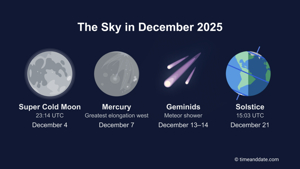
Holiday Night Sky 2025: Family Guide to Late‑December Wonders

The last half of December 2025 brings some of the longest, darkest nights of the year, making it a perfect time for family‑friendly stargazing that excites both beginners and experienced astronomers. The sky offers a dark New Moon, a Christmas‑week meteor shower, bright planets, and the great winter constellations that pair beautifully with the themes of Christmas—light, hope, and wonder. starwalk+1


From the New Moon on December 20 through New Year’s Eve, the night sky of 2025 becomes a natural Christmas light show—no electricity required. Long, frosty nights in the Northern Hemisphere give everyone time to step outside and enjoy meteor showers, bright planets, and glittering constellations that have inspired stories for thousands of years. Whether you are brand‑new to astronomy or already own a telescope, the last half of December is your invitation to slow down, look up, and share the sky with those you love. timeanddate+2

This guide walks through what to see, when to see it, and how to observe each event, with tips for turning every clear night into an educational, family‑friendly adventure.


December 20: New Moon and the Darkest Skies

The New Moon on December 20, 2025, marks the darkest night of the month, because the Moon is essentially invisible in the sky. Without its glare, faint star clusters, nebulae, and even some galaxies become easier to see, especially from rural or suburban locations with less light pollution. planetary+1

For beginners, this is the ideal opportunity to learn the basic winter constellations. Look for:

  • Orion the Hunter rising in the east after sunset, with his three‑star belt forming a straight line.
  • Taurus the Bull above Orion, marked by the V‑shaped Hyades cluster and the brighter Pleiades (Seven Sisters) nearby.
  • Canis Major with Sirius, the brightest star in the night sky, shining low in the southeast later in the evening.
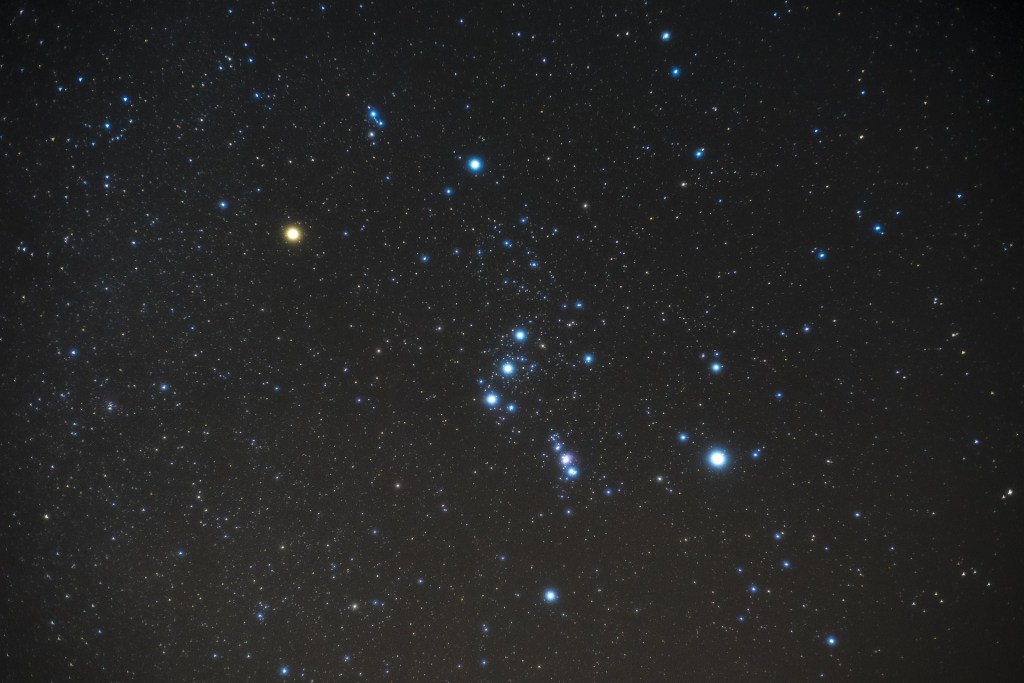
Experienced observers can use the New Moon sky to hunt deep‑sky treasures like the Orion Nebula (M42), the open clusters M36–M38 in Auriga, and the richly populated Pleiades through binoculars and telescopes. This is a great night to invite family or neighbors over for a “dark‑sky star party” complete with hot drinks and warm blankets. science.nasa+1


December 21: The Solstice and the Spirit of Christmas

The December solstice occurs on December 21, 2025, marking the official start of winter in the Northern Hemisphere and the longest night of the year. Many Christmas traditions—candles in windows, strings of lights, and the story of a guiding star—are rooted in this turning point from deep darkness toward lengthening days. blogs.loc+1

A simple family tradition is to step outside on solstice evening, look up at Orion, the Pleiades, and Jupiter or Saturn if visible, and talk about how people have used the sky to mark seasons and celebrations for thousands of years. For Christian families, this is a natural time to discuss the “Star of Bethlehem” and how ancient skywatchers interpreted unusual celestial events as meaningful signs. rmg+2


December 21–22: The Ursid Meteor Shower

Just after the solstice, the Ursid meteor shower reaches its peak around the night of December 21–22. The Ursids are not as intense as the earlier Geminids, typically producing around 10 meteors per hour under dark skies, but in 2025 they benefit from very favorable conditions: the peak occurs just two days after New Moon, so the sky is wonderfully dark. starwalk+1

How to watch the Ursids

  • Best time: After midnight until the pre‑dawn hours, when the radiant in Ursa Minor (near the Little Dipper) climbs higher in the sky. starwalk
  • Where to look: Do not stare only at the Little Dipper; instead, look about 40° away from the radiant for longer meteor trails. Meteors can appear anywhere in the sky.
  • What you need: No telescope is required. A reclining lawn chair, warm layers, blanket or sleeping bag, and a thermos of hot chocolate are more important than any equipment. celestron+1

For families, the Ursids are a quieter, more contemplative meteor shower—perfect for a school‑break night or a youth‑group outing. Encourage children to:

  • Count how many meteors they see in 10‑ or 15‑minute intervals.
  • Note whether meteors are “faint,” “medium,” or “very bright.”
  • Talk about how meteors are tiny bits of rock and dust burning up high in Earth’s atmosphere.

This turns a relaxing night under the stars into a simple science project that introduces data‑collection and observation skills. cloudynights+1


Late December: Bright Planets in the Christmas Sky

The last half of December 2025 features several bright planets that are easy to spot with the naked eye and rewarding through binoculars or telescopes. astronomy+1

Jupiter: The “Christmas Lantern”
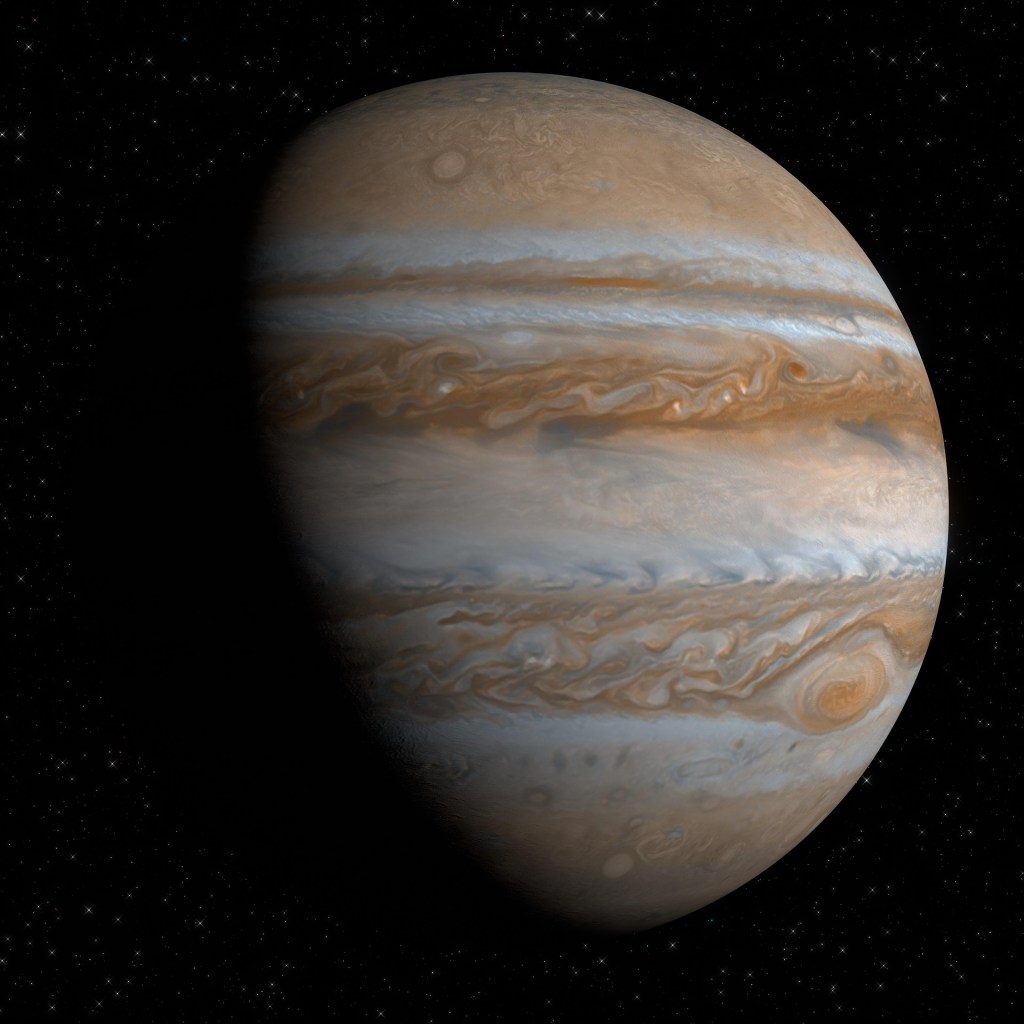
By late December, Jupiter is rising in the early evening and shines brilliantly for most of the night. For beginners, Jupiter looks like an especially bright, steady “star” that does not twinkle as much as the surrounding stars. nationalgeographic+1

Through a small telescope at moderate magnification, even first‑time observers can see:

  • The planet’s disk, slightly flattened at the poles.
  • Two darker cloud bands across its middle.
  • Four bright Galilean moons lined up in different configurations, changing from hour to hour.science. nasa+1

Families can check the positions of Jupiter’s moons with a simple phone app, then step outside and see how well the view matches. Advanced observers might sketch the moons’ locations or time an eclipse or transit event to compare with published predictions. astronomy

Saturn and the Growing Crescent Moon

On December 26, the waxing Moon passes near Saturn, appearing only a few degrees apart in the evening sky. This close pairing makes a lovely Christmas‑week photo opportunity, even with a smartphone placed against binoculars or a small telescope eyepiece. nationalgeographic+1

Saturn’s rings are still visible through modest telescopes, though not as widely open as in previous years, and even a brief view can be unforgettable for children. astronomy


December 27–31: Growing Moon, Comets, and a Year‑End Sky Show

As the Moon waxes from First Quarter on December 27 toward a bright gibbous phase at the end of the month, it returns to the evening sky and gently washes out the faintest stars. Beginners can use this time to focus on bright, easy targets: the Moon, the main winter constellations, and Jupiter. starwalk

Comet Opportunities for Advanced Observers

December 2025 also brings at least one interesting comet, C/2024 E1 (Wierzchos), and the interstellar visitor 3I/ATLAS, which may be visible in small to medium telescopes from dark sites. These objects are not likely to be naked‑eye showstoppers, but they give experienced observers a challenge and a chance to explain to newcomers: science.nasa+2

  • What comets are made of.
  • How comets differ from interstellar visitors like 3I/ATLAS.
  • Why some comets become famous “Christmas comets” and others remain faint fuzzies.

How to Observe: Practical Holiday Stargazing Tips

Late December nights can be cold—even dangerously so—if you are not prepared, but with a little planning they can be cozy and comfortable.

Dress and Comfort

  • Wear multiple layers: thermal base layer, warm sweater or fleece, insulated coat, hat, scarf, two pairs of socks, and insulated boots. science.nasa+1
  • Use blankets, sleeping bags, or foam pads under your legs and feet to block cold from the ground.
  • Pack hot drinks and snacks; a thermos of cocoa or tea keeps spirits and body temperatures up.

Gear for Beginners

You do not need expensive equipment to enjoy the holiday night sky:

  • Naked eyes are best for meteor showers and learning constellations.
  • Binoculars (7×50 or 10×50) reveal the Pleiades, star clusters, the Orion Nebula, and the Moon’s craters in impressive detail. starwalk
  • A small telescope adds “wow” views of Jupiter’s moons, Saturn’s rings, and structure in nebulae, but keep expectations realistic for first‑timers. astronomy
  • Red‑light flashlights or headlamps protect night vision; avoid bright white phone screens when possible. idealcu+1

Light Pollution and Location

If you live in a city, you can still enjoy the holiday sky. Focus on:

  • The Moon and planets.
  • Bright constellations like Orion and Taurus.
  • Meteor showers, which can still produce noticeable meteors even from suburban skies. planetary+1

Whenever feasible, drive to a darker park, field, or countryside location and make it a family “night sky road trip,” checking local rules and safety conditions before you go. eaglecreek


Educational Ideas and Christmas Connections

The last two weeks of December offer rich connections between science and the themes of Christmas—perfect for parents, homeschoolers, church groups, and astronomy clubs.

  • Science of light and darkness: Use the solstice and long nights to talk about Earth’s tilt, seasons, and why winter brings longer nights in the Northern Hemisphere. planetary+1
  • The Star of Bethlehem: Explore historical and astronomical ideas about what the “Christmas Star” may have been—a planetary conjunction, a comet, or a nova—while emphasizing that the story also carries deep symbolic meaning for many people. blogs.loc+1
  • Stargazing journals: Encourage kids to keep a simple logbook of dates, times, temperatures, what they saw, and how they felt. This builds observation skills and creates a keepsake of their Christmas sky memories. celestron+1
  • Art and photography: Have children draw the constellations or meteors they saw; advanced observers can try wide‑field astrophotography that captures Orion and the winter Milky Way as a backdrop for Christmas cards.

By combining hands‑on observing with storytelling and reflection, the late‑December night sky becomes more than a backdrop—it becomes part of how your family experiences Christmas.


Conclusion: A Season of Wonder Above

From the dark New Moon around December 20 to the gentle glow of the waxing Moon and bright planets at year’s end, the last half of December 2025 offers something for every level of skywatcher. Beginners can enjoy easy targets and meteor showers, while experienced astronomers chase comets, sketch nebulae, and share telescope views that may inspire a new generation. planetary+1

In a season filled with lights, gifts, and celebrations, stepping outside to look up is a powerful reminder that the greatest show is still the one written in the sky—steady, beautiful, and shared by people all over the world.


References and Footnotes

  1. StarWalk – “December Astronomical Events 2025: Explore the Night Sky This Month” (calendar of December 2025 events, Moon phases, meteor showers, comets).starwalk
  2. Timeanddate.com – “What’s Up in the Night Sky in December 2025” (Geminids, solstice, planetary visibility).timeanddate
  3. National Geographic – “Night sky events to see in December 2025” (Supermoon, comets 3I/ATLAS and C/2024 E1, meteor showers).nationalgeographic
  4. Astronomy Magazine – “December 2025: What’s in the sky this month?” (planetary observing details, Jupiter and Saturn highlights).astronomy
  5. The Planetary Society – “What’s up in the night sky: December 2025” (easy monthly targets for casual observers).planetary
  6. NASA – “What’s Up: December 2025 Skywatching Tips” and “Hubble’s Night Sky Challenge – December” (observing projects and educational background).science.nasa+1
  7. Sea and Sky – “Astronomy Calendar of Celestial Events 2025” (year‑long listing of major events, including the Ursids and Moon phases).seasky
  8. Library of Congress – “The Christmas Star” and Royal Museums Greenwich – “What was the Christmas Star?” (historical and astronomical perspectives on the Star of Bethlehem).rmg+1
  9. NASA and other outreach sources on winter stargazing comfort and safety (clothing, equipment, and family‑friendly tips).science.nasa+2
  1. https://starwalk.space/en/news/night-sky-tonight-december
  2. https://www.nationalgeographic.com/science/article/december-night-sky-events-2025
  3. https://www.astronomy.com/observing/sky-this-month-december-2025/
  4. https://www.timeanddate.com/news/astronomy/night-sky-december-2025
  5. http://www.seasky.org/astronomy/astronomy-calendar-2025.html
  6. https://www.planetary.org/night-sky/night-sky-what-to-see-this-month
  7. https://in-the-sky.org/newscal.php?year=2025&month=12
  8. https://science.nasa.gov/mission/hubble/science/explore-the-night-sky/hubbles-night-sky-challenge-december/
  9. https://science.nasa.gov/solar-system/skywatching/whats-up-december-2025-skywatching-tips-from-nasa/
  10. https://www.planetary.org/articles/calendar-of-space-events-2025
  11. https://blogs.loc.gov/inside_adams/2011/12/the-christmas-star/
  12. https://www.rmg.co.uk/stories/space-astronomy/what-was-christmas-star
  13. https://www.celestron.com/blogs/knowledgebase/the-ultimate-guide-to-observing-the-meteor-showers
  14. https://www.cloudynights.com/topic/742482-how-to-observe-a-meteor-shower/
  15. https://science.nasa.gov/solar-system/skywatching/night-sky-network/winter-stargazing-tips-stay-warm-and-cozy/
  16. https://eaglecreek.com/blogs/articles/stargazing-tips-cozy-winter-nights
  17. https://www.idealcu.com/blog/entry/frosty-nights-starry-sights-top-winter-stargazing-tips

September & October 2025 Night Sky Constellations: A Family-Friendly Guide

September and October are magical months for family stargazing. As days grow shorter, evenings cool, and the night sky swells with brilliant stars, both beginners and seasoned astronomers can find joy in the constellations that rise and sweep overhead. Whether stargazing from a backyard, a park, or on a camping trip, here’s a friendly guide to the brightest, easiest, and most memorable constellations on display—and how families can best enjoy them together throughout early autumn.


Why Early Autumn Is Perfect for Family Stargazing

September and October offer nights that come earlier and last longer, making it easy for kids and adults to explore the sky without staying up late. The air is clear, there’s less humidity and haze than summer, and the moon’s phase lets some moonless nights reveal even fainter stars. For experienced observers, the shift in constellations marks a transition between summer and winter favorites, and brings the celestial equinox—a balance between day and night—right overhead. For more information.


The Brightest Autumn Constellations: Your Top Six

1. Aquila (The Eagle)

  • How to Find: Look high in the southern sky on September evenings for Altair, a blazing white star. Two nearby fainter stars, Tarazed and Alshain, outline Aquila’s “head,” forming a short straight line. Aquila is a part of the famous Summer Triangle, along with Cygnus and Lyra. For more information.
  • Best Time: 9 p.m.–midnight, from September through early October.
  • How to View: Naked-eye for the main shape; sweep binoculars along the Milky Way for star clusters and nebulae.
  • Family Fact: In Greek myth, Aquila carried Zeus’s thunderbolts and the youth Ganymede to the gods.

2. Cygnus (The Swan, or Northern Cross)

  • How to Find: High overhead right after dusk, Cygnus stretches across the Milky Way. Find Deneb, a bright star, as the top of the “cross.”
  • Best Time: 9 p.m.–midnight, best viewed in September; in October it moves westward.
  • How to View: Very easy with just your eyes. Binoculars bring out the rich star clouds nearby.
  • Family Fact: Cygnus resembles a swan flying along the river of the Milky Way.

3. Lyra

  • How to Find: Vega, the dazzling blue-white star, marks Lyra; search overhead or a bit west after sunset.
  • Best Time: 9–11 p.m. in September, earlier evenings in October.
  • How to View: Vega can be seen from cities; binoculars pick out the tiny parallelogram of Lyra and may show the famous Ring Nebula.
  • Family Fact: Vega is one of the closest bright stars to Earth and part of the Summer Triangle.

4. Cassiopeia (The Queen)

  • How to Find: A big “W” or “M” of five bright stars in the northeast. As autumn progresses, Cassiopeia rises higher and is easily spotted all night. For more information.
  • Best Time: All evening, from dusk onward.
  • How to View: Naked-eye; it’s perfect for teaching star patterns to kids.
  • Family Fact: Cassiopeia was a vain queen from Greek myth—her throne now glimmers in the sky.

5. Pegasus (The Winged Horse)

  • How to Find: At dusk in September, look east for the Great Square—a near-perfect diamond of four stars. Through October, Pegasus soars higher, marking the gateway to other autumn constellations.For additional information.
  • Best Time: 9 p.m.–midnight, climbs higher each night.
  • How to View: Naked-eye for the Square; with binoculars, scan for faint star clusters like M15.
  • Family Fact: Imagine the Winged Horse carrying heroes across the sky—let kids create their own stories!

6. Andromeda

  • How to Find: Trace a line from the top left corner of Pegasus’s Square upward. Look for a chain of stars running northeast.
  • Best Time: 10 p.m.–midnight in September; by October, visible earlier in the east. More information.
  • How to View: Naked-eye may reveal the faint smudge of Andromeda Galaxy (M31) under dark skies. Binoculars or a small scope show it as a clear oval.
  • Family Fact: Light from Andromeda’s stars started traveling here over two million years ago!

Other Notable Constellations and Features

  • Capricornus: Faint, low in the south—best seen on moonless nights with a star chart.
  • Pisces & Aquarius: Zodiac patterns rising in the east. Binoculars make finding their stars easier.
  • Perseus & Auriga: In the northeast after 10 p.m., lovely for finding star clusters.
  • Milky Way: Still visible sweeping overhead in early autumn—binoculars reveal clouds and dark lanes near Aquila and Cygnus.Additional information.

How to View: Family-Friendly Tips

With the Naked Eye

  • All the constellations above are easily visible without any equipment, especially under clear, moonless skies.
  • Let your eyes adapt to the dark for 15–20 minutes.
  • Use a reclining chair or blanket for comfort—looking up is much easier!
  • A printed star chart or a phone app (try “Star Walk 2” or “Stellarium”) helps everyone find patterns and learn names.

With Binoculars

  • All you need is a basic pair (7×50 or 10×50). They reveal more stars, clusters, and even the Andromeda Galaxy’s true shape.
  • Sweep Cygnus and Aquila for star clouds; scan Andromeda for the galaxy M31.
  • Avoid city lights; the darker the sky, the more you’ll see.

Best Times to View

  • Early Evening (8–10 p.m.): Great for young families; Pegasus, Cygnus, Vega, Cassiopeia are high.
  • Late Night (10 p.m.–midnight): Andromeda, Perseus, Auriga, and the Milky Way move higher.

Activities for All Ages

  • Star Pattern Drawing: Let everyone draw their favorite constellation or invent new ones.
  • Sky Storytelling: Share the myths for each constellation, or create your family’s own!
  • Constellation Bingo: Make a game out of spotting shapes, bright stars, and unique patterns.
  • Sky Journals: Track what you see each week, watch how the sky moves and changes.

Special September & October Events

  • Equinox: September brings the celestial balance of day and night—observe how sunset time changes!
  • Saturn at Opposition (Sept 21): Glows golden, near Pisces, visible all night. Spot it with the naked eye or binoculars.
  • Blood Moon Eclipse (Sept 7): A total lunar eclipse turns the Moon red for many regions.
  • Orionid Meteor Shower (October 21–22): Watch for “falling stars” near Orion after midnight.

References & Further Learning

  1. [Star Walk – September Constellations]starwalk
  2. [Constellation Guide – September Constellations]constellation-guide
  3. [Sky Guide September 2025 – Bresser]bresser
  4. [Sea and Sky – Astronomy Calendar]seasky
  5. [Young Stargazers – What’s Up for September]popastro

For best stargazing, check local weather, moon phase, and sunset times before heading out. Use apps, join astronomy clubs, and let every family member’s curiosity guide the adventure! Clear autumn skies and happy stargazing!

  1. https://starwalk.space/en/news/september-constellations
  2. https://www.planetary.org/night-sky/night-sky-what-to-see-this-month
  3. https://www.bresser.com/recommendations/sky-guide/sky-guide-september-2025/
  4. https://www.astronomy.com/observing/sky-this-month-september-2025/
  5. https://powerhouse.com.au/stories/sky-guide-september-2025
  6. http://www.seasky.org/astronomy/astronomy-calendar-current.html
  7. https://www.popastro.com/youngstargazers/whats-up/
  8. https://www.constellation-guide.com/constellations-by-month/september-constellations/

September 2025’s Brightest Constellations for Family Stargazing: How, When, and Where to See Them

September

September is one of the finest months for family stargazing—with mild evenings, earlier nightfall, and some of the sky’s most brilliant and easily recognized constellations on full display. Whether you have a backyard, a park, or can drive to a darker spot, these constellations offer a beautiful way for kids and adults to connect with the universe—no telescope required.


Why September Is a Great Month for Beginner Skywatchers

September brings longer nights without freezing temperatures and showcases both late summer and early fall stars. Early evening hours are packed with bright patterns, making it easier for families to enjoy lingering outside together. And this month, you’ll find sky features that spark wonder, stories, and learning in equal measure.starwalk+2


1. Pegasus (The Winged Horse)

  • Best Time: By 9–10 p.m., Pegasus’s “Great Square” is climbing high in the eastern sky.
  • Where to Look: Find a large, almost perfect diamond of four stars rising east, then higher southeast as night advances.
  • How to See: Just your eyes; the four stars make a huge square. Kids can connect the dots in the sky!
  • Fun Fact: The “Great Square” is used as a sky landmark for finding other autumn constellations.constellation-guide+1

2. Andromeda

  • Best Time: 10 p.m. and later, following the line of stars from Pegasus upward.
  • Where to Look: Trace a curved chain of stars leading northeast from Pegasus’s upper left star.
  • How to See: Naked eye. Look for a faint smudge above Andromeda’s stars—this is the Andromeda Galaxy, our nearest galactic neighbor (binoculars show it better!).
  • Fun Fact: Light from the Andromeda Galaxy began its journey over 2 million years ago.kenpress+1

3. Cassiopeia (The Queen)

  • Best Time: Visible all night, easiest in the northeast at 9–11 p.m.
  • Where to Look: Look for a bright, unmistakable “W” or “M” shape of five stars.
  • How to See: Naked eye—its zigzag is excellent for teaching kids patterns and sky mapping.
  • Fun Fact: Cassiopeia was named for a vain queen in Greek myth; the “W” forms her throne in the sky.starwalk+1

4. Cygnus (The Swan, a.k.a. The Northern Cross)

  • Best Time: Overhead or slightly west by 9–11 p.m.
  • Where to Look: High overhead; a long cross pattern with the bright star Deneb at its top.
  • How to See: Naked eye; the Northern Cross shape is easy to point out, with the long “body” running north–south.
  • Fun Fact: Cygnus is part of the giant “Summer Triangle” with Lyra and Aquila, making an epic sky marker for children.skyandtelescope+2

5. Lyra

  • Best Time: Directly overhead or just west of overhead, after dusk.
  • Where to Look: Spot the dazzling, blue-white star Vega—one of the three corners of the Summer Triangle.
  • How to See: Naked eye for the main star; those with binoculars can find nearby star clusters.
  • Fun Fact: Vega is one of the brightest stars in the sky and just 25 light years away.constellation-guide+1

6. Aquila

  • Best Time: High in the southern sky during evening.
  • Where to Look: Look for its bright star Altair, flanked by two fainter stars in a straight line.
  • How to See: Naked eye; the straight line points the way to other Summer Triangle stars.
  • Fun Fact: Aquila represents an eagle in mythology and is connected to the hero Hercules.skyandtelescope+2

  • Best Time: 9:00 p.m. to midnight. This is when all the bright “autumn constellations” are above the horizon and easy for kids who don’t want to stay up too late.
  • Best Place: Any clear spot with an open view of the sky (backyard, field, park). City lights drown out fainter stars, but the constellations above are bright enough to see from suburbs and cities alike.
  • Weather: Look for dry, clear nights—the stars will look their sharpest after a cool front sweeps through.
  • Moon Phase: For spotting more stars, plan viewing near a New Moon (September 21, 2025). Even with some moonlight, bright constellations listed here remain visible.

Family-Friendly Viewing Tips

  • Use a Blanket or Reclining Chair: Looking up for long periods is much more comfortable lying down or with good back support.
  • Let Your Eyes Adjust: Fifteen minutes in darkness helps everyone spot more stars—avoid cell phone screens.
  • Apps and Charts: Use a family-friendly app (like Sky Tonight or Star Walk 2) or print a sky chart to help kids “star-hop.”
  • Star Story Nights: Share the myths and facts about each constellation—let kids imagine and create their own sky stories!

Bonus: What About Binoculars?

Most constellations above are best recognized by eye—but binoculars unlock new delights:

  • See fuzzy star clusters in Andromeda, Cassiopeia, and Cygnus.
  • Spot Jupiter’s moons, Saturn’s golden glow, and even the Andromeda Galaxy’s shape more clearly.

References & Further Exploration

  1. [Star Walk – Astronomical Events September 2025]starwalk
  2. [Constellation Guide – September Constellations]constellation-guide
  3. [Adler Planetarium Skywatch – September 2025]adlerplanetarium
  4. [What’s Out Tonight PDF Sky Chart]kenpress
  5. [Sky at Night Magazine]skyandtelescope
  1. https://starwalk.space/en/news/deep-sky-objects-in-september
  2. https://starwalk.space/en/news/night-sky-tonight-september
  3. https://www.kenpress.com/files/2025WOT09Sep.pdf
  4. https://ts2.tech/en/all-eyes-on-the-skies-september-2025-celestial-spectacles-meteor-showers-eclipses-more/
  5. https://www.space.com/stargazing/15-must-see-naked-eye-skywatching-events-in-2025
  6. https://www.highpointscientific.com/astronomy-hub/post/night-sky-news/2025-astronomical-calendar
  7. https://www.skyatnightmagazine.com/space-science/t-coronae-borealis-nova
  8. https://skyandtelescope.org/astronomy-news/observing-news/this-weeks-sky-at-a-glance-september-20-29/
  9. https://www.livescience.com/space/the-10-best-stargazing-events-of-2025
  10. https://www.rmg.co.uk/stories/space-astronomy/space-astronomy-highlights-2025
  11. https://www.constellation-guide.com/constellations-by-month/september-constellations/
  12. https://www.adlerplanetarium.org/?p=gray_picnic

How to Get Started in the Hobby of Astronomy: The Updated 2025 Guide.

Curiosity about the cosmos has never been higher, and with today’s wealth of resources, getting started in astronomy is easier and more rewarding than ever. Whether you dream of seeing the rings of Saturn, want to marvel at meteor showers with your family, or simply crave quiet nights under the stars, 2025 offers new tools, sky events, and community connections for beginner and advancing astronomers alike. Here’s your updated roadmap to exploring the universe from right where you are.


Why Astronomy?

Astronomy connects us across space and time. Watching the night sky fosters awe, science curiosity, and a sense of place in the cosmos. It’s also an easy, affordable hobby—no expensive gear required to begin—making it perfect for families, solo explorers, and lifelong learners.


1. Start With the Naked Eye

Astronomy is an outdoor nature hobby. The most important first step is simply to go outside at night and look up. Take in the Moon, note the brightest “stars” (some are planets!), and see if you can spot patterns or constellations as the ancients did.skyandtelescope+2

  • Learn the sky’s basics:
    • Identify a few bright stars (like Vega, Arcturus, or Sirius).
    • Trace constellation shapes: the Big Dipper, Orion, Cassiopeia, or the Summer Triangle are perfect starters.
  • Use a star wheel (planisphere) or printable star map to guide your exploration—these show you “what’s up” based on date and time.ras
  • Observe the sky regularly: Patterns change with the seasons, making the hobby fresh all year.planetary+1

2. Leverage Modern Technology: Apps and Online Resources

Smartphones and tablets have revolutionized astronomy. Point your device at the sky, and apps instantly tell you what you’re seeing—stars, planets, constellations, satellites, and more.highpointscientific+2

Top free/recommended apps for 2025:

  • Stellarium Mobile (Android free, iOS paid): A digital planetarium; see real-time sky maps.
  • SkyView Lite (iOS/Android): AR overlays highlight and name sky objects.
  • Star Walk 2 Free (iOS/Android): Beautiful, intuitive, and great for families.
  • Sky Map (Android): Simple, reliable, always free.

Tips:

  • Download your app of choice and allow camera/location access.
  • Use the built-in night mode (often red light) to preserve your night vision.
  • Try exploring ahead of time: many apps let you “time travel” to future (or past) sky events.

3. Upgrade Your Sky Experience With Binoculars

You don’t need a telescope to see more! Binoculars are a simple, budget-friendly next step that reveal lunar craters, Jupiter’s moons, and star clusters invisible to the naked eye.discoverspace+1

  • Ideal specs: 7×50 or 10×50 binoculars are a common recommendation—big enough to gather light, light enough to hold.ras+1
  • Bonus: Binoculars are great for daytime use as well (birds, landscapes)—and you might already have a set in the closet!

4. Join the Astronomy Community

Astronomy is a social hobby!

  • Find a local astronomy club: Most welcome beginners and host star parties, telescope “try-it” nights, and educational programs.reddit+1
  • Online forums and social groups (Cloudy Nights, Reddit’s r/Astronomy or r/Stargazing): Share your questions, photos, and discoveries; get advice before buying equipment.cloudynights
  • Attend virtual sky events: Many observatories stream sky tours or planetary alignments, with real-time Q&A.

5. Try a Telescope (When Ready!)

Ready to go deeper? Take your time before buying a telescope; starting with binoculars or observing with a club is often best.pathloom+2

For 2025, these beginner scopes earn high marks:

  • Celestron Inspire 100AZ (refractor): “Best beginner telescope for kids,” easy to use.space+3
  • Celestron NexStar 5SE (computerized): Tracks objects for you, great optics, top pick for families and serious beginners.nytimes+1
  • Sky-Watcher Heritage 100P Tabletop Dobsonian: Compact, portable, and praised for value.skyatnightmagazine+1

Pro tips:

  • Avoid low-quality “toy store” telescopes—they often disappoint.ras
  • Look for scopes with sturdy mounts, good finders, and included eyepieces.
  • Many scopes now feature smartphone app integration to help you find and track objects.pathloom+1

6. Keep Learning and Observing

  • Get a good starter book: “NightWatch” by Terence Dickinson or “Turn Left at Orion” are favorites.
  • Follow a sky calendar: Websites like Stellarium-Web, timeanddate.com, or astronomy magazines highlight each month’s best events.
  • Track your observations: Keep a simple logbook or photo journal—kids especially love charting their “discoveries.”

7. Best Practices for Enjoyable Stargazing

  • Dress warmly, bring snacks, and a comfortable chair.
  • Use red light only: Protect your (and your family’s) night vision.
  • Be patient: Some objects (distant galaxies, nebulae) can be faint even through good optics.
  • Adapt to your sky: Even in cities, planets, the Moon, and some bright stars/charts remain visible.planetary+1
  • Share the moment: Stargazing is more fun with others—invite friends, neighbors, or participate in community events.

8. Exciting 2025 Sky Events for Beginners

This year’s memorable highlights include:astronomy

  • Saturn’s rings edge-on (rare sight!).
  • Total lunar eclipse (visible in the Americas).
  • Mars at opposition (bright and easy to spot).
  • Meteor showers: Perseids (August), Geminids (December)—great with the naked eye or binoculars.

Summary Checklist: Getting Started in Astronomy, 2025 Edition

  • Step outside and look up often
  • Use a planisphere/star chart or a free sky app
  • Grab binoculars for a better view (7×50 or 10×50)
  • Join a club or online community
  • Try a telescope only after learning your way around the sky
  • Keep a log and have fun with family and friends
  • Follow a sky calendar for upcoming cosmic events

Resources and References

  1. Sky & Telescope – How to Start Right in Astronomyskyandtelescope
  2. The Planetary Society – Astronomy for Beginners Guideplanetary
  3. Royal Astronomical Society – Getting Started in Astronomyras
  4. BBC Sky at Night Magazine – Best Telescopes for Beginners 2025skyatnightmagazine
  5. Space.com – Best Beginner Telescopes 2025space+2
  6. Wirecutter (NYT) – Best Telescopes for Beginners 2025nytimes
  7. High Point Scientific – Top 25 Essential Tips for Beginner Astronomershighpointscientific
  8. Reddit Beginners’ Advice – Astronomy & Stargazingreddit+1
  9. Pathloom – Astronomy Gear Guidepathloom
  10. Stellarium Web, SkyView Lite, Star Walk 2 Free, Sky Map – Top Free Astronomy Apps for 2025

Enjoy your journey—every night sky is a new adventure. Clear skies in 2025 and beyond!

  1. https://skyandtelescope.org/astronomy-resources/stargazing-basics/how-to-start-right-in-astronomy/
  2. https://ras.ac.uk/education-and-careers/for-everyone/92-getting-started-in-astronomy
  3. https://milwaukeeastro.org/beginners/getting_started.asp
  4. https://www.planetary.org/night-sky/astronomy-for-beginners
  5. https://www.highpointscientific.com/astronomy-hub/post/astronomy-101/top-25-tips-for-beginner-astronomers
  6. https://www.reddit.com/r/Stargazing/comments/nzonu1/a_beginners_guide_to_stargazing/
  7. https://discoverspace.org/astronomy-equipment-dos-and-donts/
  8. https://www.reddit.com/r/Astronomy/comments/4xuin1/i_want_to_get_into_astronomy_as_a_hobby_but_dont/
  9. https://raleighastro.org/getting-started-in-astronomy/
  10. https://www.cloudynights.com/topic/957045-new-to-astronomy-advice/
  11. https://www.pathloom.com/post/beginners-astronomy-guide-basic-astronomy-gear
  12. https://www.space.com/15693-telescopes-beginners-telescope-reviews-buying-guide.html
  13. https://www.skyatnightmagazine.com/top-astronomy-kit/best-telescopes-beginners
  14. https://www.space.com/31229-best-beginner-telescopes.html
  15. https://www.livescience.com/best-telescopes
  16. https://www.nytimes.com/wirecutter/reviews/best-telescopes-for-beginners/
  17. https://www.reddit.com/r/telescopes/comments/1j0hv3f/is_it_just_me_or_is_this_a_terrible_list_of_2025/
  18. https://www.astronomy.com/observing/sky-guide-2025/
  19. https://www.instructables.com/How-to-Get-Started-in-Amateur-Astronomy/
  20. https://skyandtelescope.org/astronomy-resources/stargazing-basics/

Space Mysteries: Exploring the Unknown Universe

The universe is a vast and fascinating place filled with mysteries that have captivated humans for centuries. From enigmatic black holes to the possibility of alien life, space holds secrets that challenge our understanding of science and inspire curiosity in people of all ages. In this family-friendly article, we’ll explore some of the most intriguing space mysteries, explain them in simple terms, and discuss what scientists are doing to uncover their secrets.


1. What Are Black Holes?

Black holes are among the most mysterious objects in the universe. They form when massive stars collapse under their own gravity, creating a region where gravity is so strong that nothing—not even light—can escape.

Scientists have discovered different types of black holes:

  • Stellar black holes form from dying stars.
  • Supermassive black holes sit at the centers of galaxies, including our Milky Way.
  • Intermediate black holes are a rare type that falls between the other two categories.

One of the biggest mysteries about black holes is what happens inside them. The center of a black hole, called the singularity, is a point where gravity becomes infinite and space-time breaks down. Scientists use mathematical models to study these regions, but no one knows for sure what lies beyond the event horizon—the boundary around a black hole where escape becomes impossible[^1].


2. Are We Alone in the Universe?

The question of whether life exists beyond Earth is one of humanity’s greatest mysteries. Scientists search for alien life by studying planets outside our solar system, known as exoplanets.

To find habitable worlds, researchers look for planets in the “Goldilocks zone”—a region around a star where conditions are just right for liquid water to exist. NASA’s Kepler Space Telescope and its successor, the James Webb Space Telescope, have identified thousands of exoplanets[^2].

One intriguing candidate is Proxima Centauri b, an Earth-sized planet orbiting our closest neighboring star. While scientists haven’t found direct evidence of alien life yet, they continue to study atmospheres and chemical compositions to look for signs like oxygen or methane that might indicate biological activity[^3].


3. The Mystery of Dark Matter

When astronomers observe galaxies, they notice something strange: The stars within them move as if there’s far more mass than we can see. This invisible material is called dark matter, and it makes up about 27% of the universe[^4].

Dark matter doesn’t emit light or energy, which means scientists can’t see it directly. Instead, they detect its presence through its gravitational effects on visible objects like stars and galaxies.

Despite decades of research, scientists still don’t know what dark matter is made of. Some theories suggest it could be composed of exotic particles that interact weakly with ordinary matter[^5]. Experiments like CERN’s Large Hadron Collider aim to uncover its secrets by studying particle collisions at high energies.


4. What Are Fast Radio Bursts?

Fast Radio Bursts (FRBs) are mysterious flashes of radio waves coming from deep space. These bursts last only milliseconds but release as much energy as the Sun does in an entire day[^6].

FRBs were first discovered in 2007, and since then, astronomers have detected hundreds more using radio telescopes like Canada’s CHIME Observatory. Some FRBs seem to repeat from the same location, while others occur only once[^7].

What causes FRBs? Scientists think they might be produced by neutron stars (the dense remnants of supernova explosions), but other theories suggest exotic phenomena like magnetars or even advanced alien civilizations[^8].


5. The Enigma of Time Travel

Time travel has fascinated humans for centuries and often appears in science fiction stories. But is it possible according to science?

Einstein’s theory of relativity suggests that time isn’t fixed—it can stretch or compress depending on how fast you’re moving or how close you are to a massive object like a black hole[^9]. This means traveling into the future is theoretically possible if you move at near-light speeds or experience intense gravitational fields.

However, traveling into the past presents paradoxes (like changing events before they happen) that make it much harder to explain scientifically. While time travel remains a mystery, it continues to inspire both scientists and storytellers alike!


6. Why Do Galaxies Collide?

Galaxies are enormous collections of stars, gas, and dust held together by gravity—but they don’t stay still! Over billions of years, galaxies can collide and merge into larger structures[^10].

One famous example is the Andromeda Galaxy, which is on a collision course with our Milky Way Galaxy. In about 4 billion years, these two galaxies will merge into one giant galaxy called “Milkomeda”[^11].

Galactic collisions might seem chaotic, but they rarely result in star collisions because stars are so far apart relative to their sizes. Instead, these events create new star-forming regions and reshape galaxies’ appearances over time[^12].


7. The Mystery of Cosmic Inflation

The Big Bang theory explains how the universe began about 13.8 billion years ago—but scientists believe something extraordinary happened just moments after: cosmic inflation. During this period, the universe expanded faster than the speed of light[^13].

Why did inflation occur? Scientists don’t fully understand what caused this rapid expansion or why it stopped after such a short time (less than a trillionth of a second). Studying cosmic microwave background radiation—the faint glow left over from the Big Bang—helps researchers learn more about inflation’s effects on today’s universe[^14].


Fun Activities for Families

Want to explore space mysteries at home? Here are some engaging activities:

  1. Black Hole Simulation: Use marbles and bowls to simulate how objects fall into a black hole’s gravity well!
  2. Alien Planet Design: Create your own exoplanet with features like oceans or diamond rain (inspired by real discoveries).
  3. Dark Matter Hunt: Use flashlights and shadows to explain how invisible forces affect visible objects!
  4. Time Travel Debate: Discuss whether you’d rather visit the future or change history—and why!

Conclusion

Space mysteries remind us how vast and complex our universe truly is—and how much more we have yet to discover! Whether it’s black holes swallowing light or galaxies colliding over billions of years, each mystery challenges us to think bigger and ask deeper questions about existence itself.

As scientists continue exploring these phenomena with cutting-edge technology like telescopes and particle accelerators, we gain new insights into our cosmic origins—and perhaps even clues about our future among the stars! So grab your telescope or stargazing app tonight—you never know what wonders await just beyond Earth’s atmosphere!


References & Footnotes

[^1]: NASA Goddard Space Flight Center (2025). “Black Holes Explained.” https://www.nasa.gov/blackholes
[^2]: Kepler Mission Team (2025). “Exoplanet Discoveries.” https://kepler.nasa.gov/discoveries/
[^3]: James Webb Space Telescope Team (2025). “Proxima Centauri b Observations.” https://jwst.nasa.gov/observations/
[^4]: European Space Agency (2025). “Understanding Dark Matter.” https://www.darkmatter.eu/
[^5]: CERN (2025). “Particle Physics Experiments.” https://home.cern/science/darkmatterresearch
[^6]: CHIME Observatory (2025). “Fast Radio Burst Catalog.” https://chimeobservatory.org/frbs/
[^7]: Nature Astronomy Journal (2025). “Repeating FRBs.” https://nature.com/articles/frbs-repeating-patterns
[^8]: Harvard-Smithsonian Center for Astrophysics (2025). “FRB Origins.” https://cfa.harvard.edu/frb-research/
[^9]: Einstein Relativity Institute (2025). “Time Travel Possibilities.” https://einsteinrelativity.org/timetravel/
[^10]: Hubble Space Telescope Team (2025). “Galactic Collisions.” https://hubblesite.org/galaxies-colliding/
[^11]: NASA Science News (2025). “Milky Way-Andromeda Collision Course.” https://science.nasa.gov/milkomeda-future-galaxy/
[^12]: Space.com (2025). “Star Formation During Collisions.” https://space.com/star-formation-collisions/
[^13]: Planck Satellite Mission Team (2025). “Cosmic Inflation Studies.” https://planckmission.org/inflation-data/
[^14]: Astrophysical Journal Letters (2025). “Microwave Background Radiation Insights.” https://astrophysicaljournal.org/cosmic-background-radiation/