The Best Sights For Astronomy: A 2026 Guide to the Cosmos

Reprint from 2021

The night sky has been a source of wonder since the dawn of time, but the way we view it is constantly evolving. Since this guide was first published in 2021, new technology and celestial events have transformed the hobby. Whether you are stepping out into the backyard with a pair of binoculars or setting up a dedicated “light bucket” telescope, this updated guide highlights the absolute best sights to find in the 2026-night sky.

1. The Moon: Our Closest Neighbor
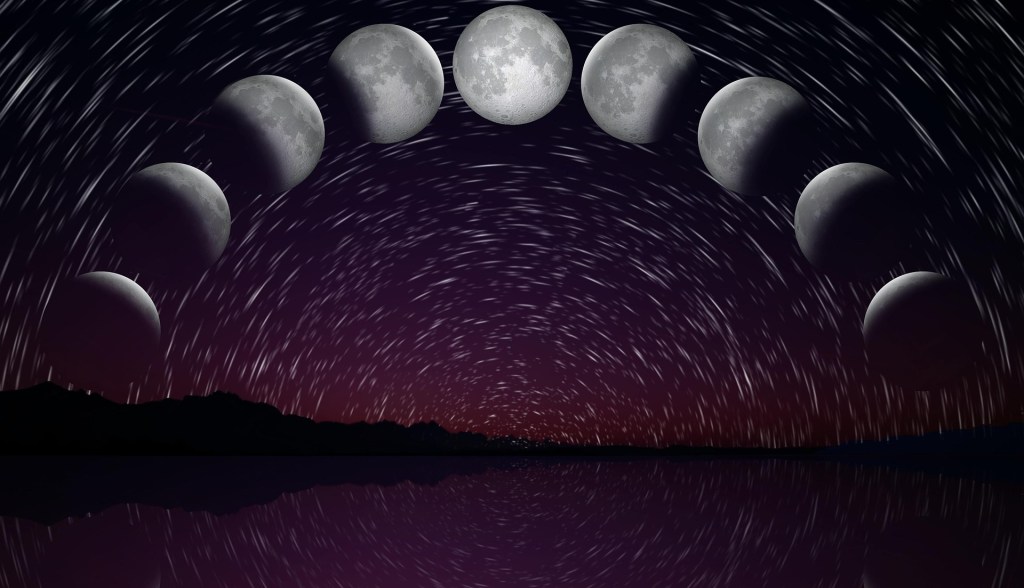
The Moon remains the most accessible and rewarding target for any astronomer. In 2026, we are paying closer attention than ever as international lunar missions prepare for a new era of human presence.

  • What to look for: Focus on the “terminator line”—the shadow line between day and night on the lunar surface. This is where craters like Tycho and Copernicus show the most dramatic relief.
  • Mission Gear: To see these details without the blinding glare, a high-quality lunar filter is essential. I recommend the Celestron 1.25-Inch Moon Filter to bring out hidden textures in the lunar highlands.

2. The Ringed Jewel: Saturn
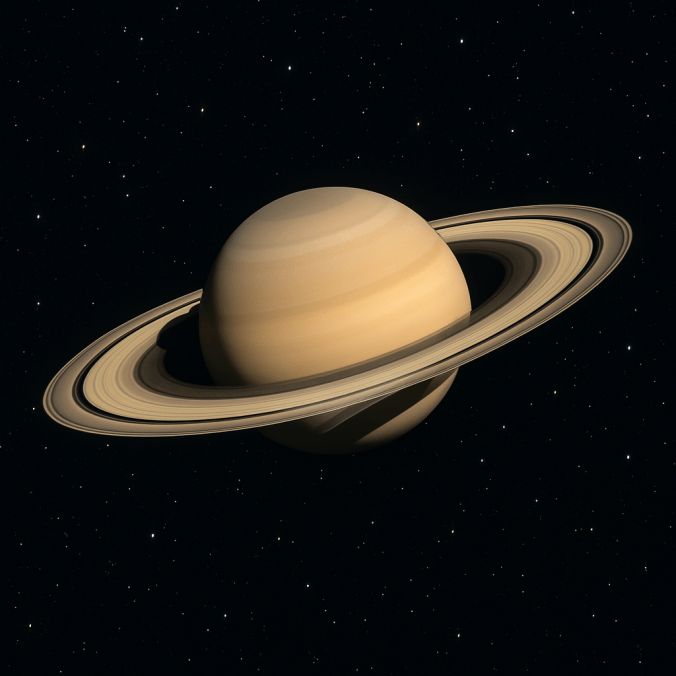
Saturn is often the “wow” moment that turns a casual observer into a lifelong hobbyist.

  • The 2026 Perspective: We are currently approaching a period where Saturn’s rings appear very thin from our perspective on Earth. This unique angle allows you to focus on the planet’s golden hue and its largest moon, Titan, which appears as a bright pinprick of light nearby.
  • Mission Gear: For crisp views of planetary rings, a steady tripod and a specialized eyepiece are key. The Celestron Omni Series Barlow Lens doubles the magnification of your existing eyepieces, perfect for getting a closer look at Saturn.

3. Deep-Sky Wonders: The Andromeda Galaxy (M31)
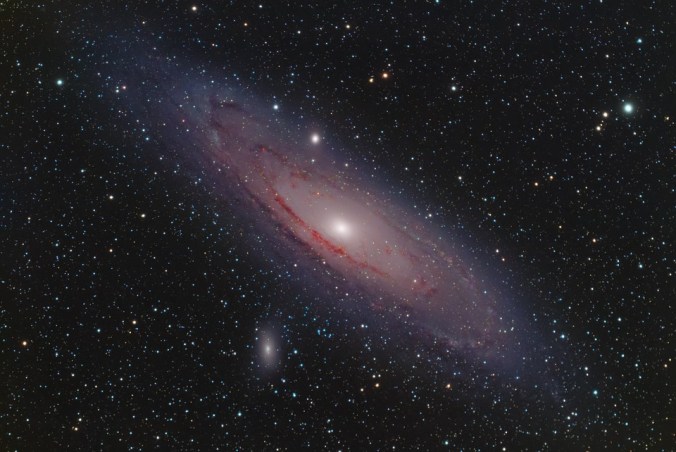
If you want to look beyond our own neighborhood, the Andromeda Galaxy is your best target. Located 2.5 million light-years away, it is the most distant object visible to the naked eye under dark skies.

  • The View: Through a telescope, it appears as a magnificent glowing oval. In 2026, smartphone astrophotography has made it easier than ever to capture the spiraling dust lanes of this galactic neighbor.
  • Mission Gear: Capturing the Andromeda Galaxy is simple with the right mount. The Celestron NexADapter Universal Smartphone Adapter lets you align your phone to your telescope perfectly for stunning deep-space photos.

4. The Great Orion Nebula (M42)
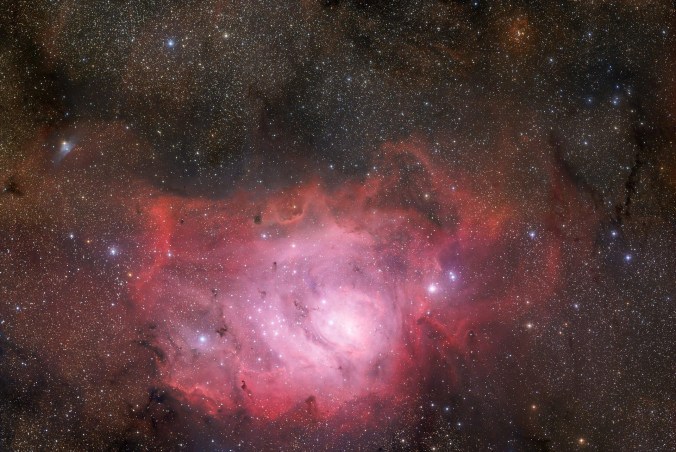
Found in the “sword” of the constellation Orion, this stellar nursery is a must-see during the winter and spring months.

  • The Experience: Even with modest binoculars, you can see the fuzzy glow of glowing gas where new stars are being born. A medium-sized telescope reveals the Trapezium, a tight cluster of four bright stars at the nebula’s heart.

5. 2026 Special Feature: Comet Wierzchos

While the planets are reliable, 2026 brings us unique visitors. Keep an eye on the latest charts for Comet Wierzchos. Comets are the “wild cards” of astronomy, often growing bright enough to be seen with simple binoculars as they swing around the Sun, trailing beautiful tails of ice and dust.


Recommended “Mission Gear” for 2026

To get the most out of these sights, having the right equipment is key. Here are the top-rated tools for this year’s mission:

  • Binoculars (10×50): The Celestron UpClose G2 10×50 Binoculars are perfect for scanning the Milky Way and finding large star clusters like the Pleiades.
  • The “Light Bucket” Telescope: For those ready to see Andromeda and the Orion Nebula in breathtaking detail, the Celestron NexStar 8SE Schmidt-Cassegrain Telescope is the gold standard for deep-sky observation.
  • Star Maps & Apps: Use a modern sky-mapping app to align your telescope and identify constellations in real-time.

A Dramatic Conclusion

As we gaze upward, we aren’t just looking at points of light; we are looking back through time itself. The photons hitting your eye from the Andromeda Galaxy tonight began their journey long before humans walked the Earth. This connection to the infinite is what makes astronomy a lifelong passion.

But the cosmos is never still, and the wonders of the night sky are constantly shifting. Prepare your lenses and steady your tripods, for next month we journey even further into the void. Join us as we reveal the hidden giants of our solar system in our upcoming April guide!

Special Comet Alert: The Arrival of Comet Wierzchos (C/2024 E1)

A “Dirty Snowball” from Deep Space Makes a Once-in-a-Lifetime Visit

Get ready to add a truly special event to your February stargazing plans! While our monthly guide highlighted the fantastic Planet Parade and the challenge of the Hidden Galaxy, there’s another celestial visitor stealing the show this month: Comet Wierzchos (C/2024 E1).

This isn’t just any comet. It’s a true wanderer from the outer reaches of our solar system, making its closest approach to Earth on February 17, 2026. What makes this so exciting? For many of us, this will be our first opportunity to witness a comet with our own eyes—a faint, ethereal “fuzzball” with a shimmering tail, a genuine relic from the dawn of our solar system.


The Discovery: A Name Etched in Cosmic History

Comets are often named after their discoverers, and C/2024 E1 is no exception. It carries the name of Polish astronomer Mariusz Wierzchos, who first spotted this icy wanderer.

Imagine the thrill! On March 15, 2024, Mariusz was diligently observing the night sky through the famous Catalina Sky Survey (CSS) telescope in Arizona. The CSS is a project specifically designed to scan the heavens for near-Earth objects—asteroids and comets that might pose a risk or simply offer a spectacular show. As he compared images taken moments apart, a faint, fuzzy smudge moved ever so slightly against the background of distant stars. It wasn’t an asteroid; its slightly blurred appearance hinted at a coma, a gassy cloud typical of a comet.

Mariusz Wierzchos wasn’t just observing; he was writing his name into the history books of astronomy. His discovery means that for decades, possibly centuries, this comet will carry his name, a testament to the patient dedication of astronomers who tirelessly monitor the vastness of space.


What IS a Comet, Anyway? The “Dirty Snowball” Explained

If you’ve never seen a comet before, you might be imagining a fiery streaking ball. But the truth is far more fascinating!

Think of a comet as a “dirty snowball” the size of a mountain, hurtling through space. These are cosmic time capsules, left over from when our solar system first formed, nearly 4.6 billion years ago. They are made of ice (water, carbon dioxide, methane, ammonia), dust, and rocky bits.

Most comets spend billions of years in the deep freeze far beyond Pluto, in regions like the Oort Cloud. But sometimes, the gravitational tug of a distant star or a passing planet knocks one of these icy mountains out of its quiet orbit and sends it plunging toward the Sun.

The Grand Transformation: How a Comet Gets Its Tail

As Comet Wierzchos approaches the Sun, something magical happens. The Sun’s warmth begins to heat up its icy core. The ice doesn’t just melt; it sublimates, turning directly from a solid into a gas. This escaping gas carries dust particles with it, creating two distinct features:

  1. The Coma: A fuzzy, glowing “atmosphere” or cloud of gas and dust around the comet’s nucleus (the icy core). This is what makes a comet look like a “fuzzball” rather than a sharp star.
  2. The Tails: Comets often have two tails!
    • Dust Tail: This is often broad and curved, made of tiny dust particles pushed away from the Sun by sunlight.
    • Ion Tail: This is usually thinner, straighter, and can glow bluish. It’s made of electrically charged gas particles pushed directly away from the Sun by the solar wind.

Comet Wierzchos: Your February Viewing Guide

This is truly a “blink and you’ll miss it” opportunity, as comets only appear this brightly for a short window.

  • Closest Approach to Earth: February 17, 2026 (approx. 94 million miles away!)
  • Best Viewing Window: From February 15 to February 25, especially around the New Moon on February 17. A moonless sky will be crucial for seeing this faint visitor.
  • Where to Look: In the early evening sky, it will be passing through the constellation Cetus the Whale. Cetus is a large, sprawling constellation that is relatively easy to find in the southern sky after sunset.

What You’ll Need (and What to Expect):

  • Naked Eye: Likely not visible to the naked eye, even under dark skies. This comet is predicted to reach about magnitude 7.
  • Binoculars (Highly Recommended!): This is your best friend for comet hunting! A good pair of 10×50 binoculars (like those found in my Astronomy Equipment Collection) will show you a distinct fuzzy patch, perhaps even with a hint of a tail.
  • Telescope: If you have a telescope, even a small one, you’ll get a better view of the coma and potentially a longer, more defined tail.
  • Dark Skies: The further away from city lights you can get, the better your chances of seeing this faint object.
  • Patience: Comets are subtle. Don’t expect a bright, spectacular show like the famous Hale-Bopp (which was a once-in-a-generation event). Take your time, let your eyes adjust to the dark, and sweep the area with your binoculars.

A Photographer’s Dream: Comet & Galaxy in One Frame!

For the avid astrophotographers out there, Comet Wierzchos offers an incredible opportunity. In late February, the comet will be passing near several distant galaxies within Cetus. Capturing a comet alongside a distant galaxy in a single photograph is a rare and highly sought-after prize in astrophotography. Set up your camera on a tripod, use a wider lens, and take multiple long exposures (similar to our “Light Bucket” technique!) to try and snag this unique cosmic portrait.


Why This Comet Matters to You

Comets are messengers from the beginning of time. They travel through space for eons, only to grace our skies for a brief, shining moment. Seeing one connect you to the vast, dynamic nature of our universe. It’s a reminder that even in our familiar night sky, there are always new wonders passing by, waiting to be discovered.

So, mark your calendars for mid-February, especially around the New Moon on the 17th. Bundle up, grab your binoculars, and step outside. You might just catch your first glimpse of a “dirty snowball” that has traveled billions of miles just to say hello.

Clear skies and happy comet hunting!


References & Footnotes: