Exploring the December Night Sky: A Celestial Celebration for Families

As December unfolds, the night sky becomes a canvas of celestial wonders, inviting families to embark on a cosmic adventure. From dazzling constellations to bright planets and a meteor shower, the December night sky offers a celestial celebration for stargazers of all ages. In this family-friendly guide, we’ll delve into the splendors awaiting you and your loved ones as you gaze upwards during this magical time of the year.

Chapter 1: The Winter Constellations

December marks the official arrival of winter in the Northern Hemisphere, bringing with it a host of iconic winter constellations. These stellar patterns, rich in mythology and beauty, add a touch of enchantment to the crisp winter nights.

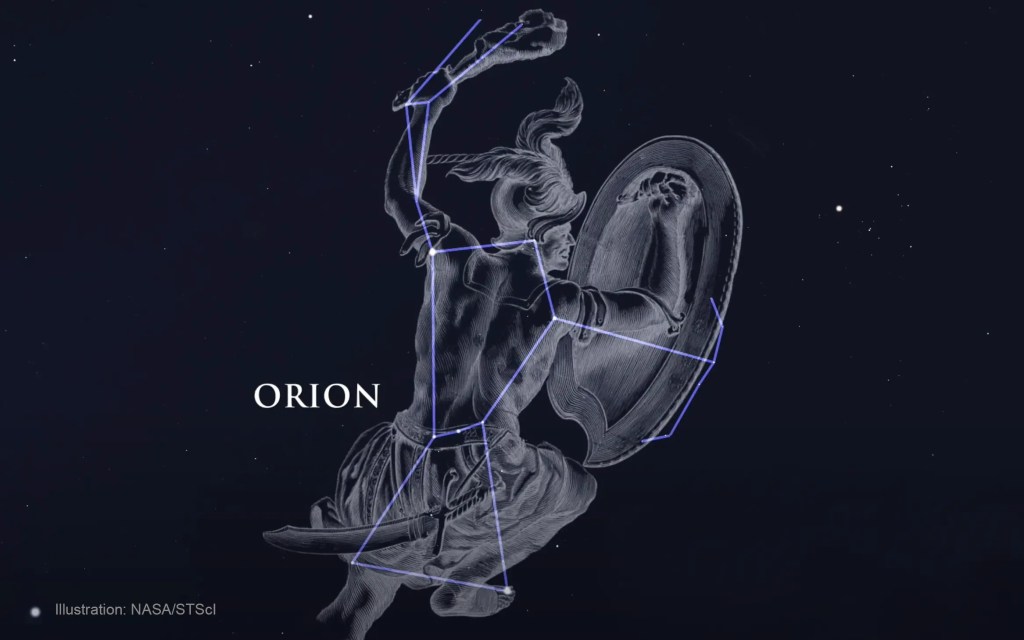
1. Orion, the Hunter: One of the most recognizable and prominent winter constellations is Orion, the Hunter. Known for its distinctive “belt” of three bright stars, Orion dominates the southwestern sky during December evenings. For families, spotting Orion is like finding an old friend in the night sky.

2. Taurus, the Bull: The constellation Taurus, with its prominent orange star Aldebaran and the stunning Pleiades star cluster, graces the eastern sky. These celestial gems are a delight to observe, especially for children fascinated by the stories of ancient mythology.

3. Canis Major and Canis Minor: Keep an eye out for the bright star Sirius in Canis Major, often referred to as the “Dog Star.” Sirius is the brightest star in our night sky and adds a brilliant twinkle to winter evenings. Canis Minor, a smaller constellation, features the star Procyon, another gem in December’s celestial display.

Chapter 2: The Geminid Meteor Shower: Nature’s Fireworks

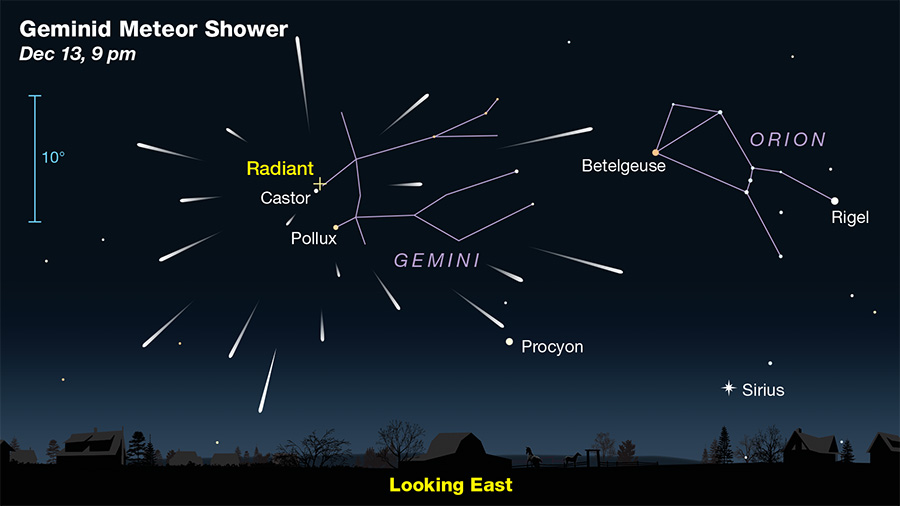
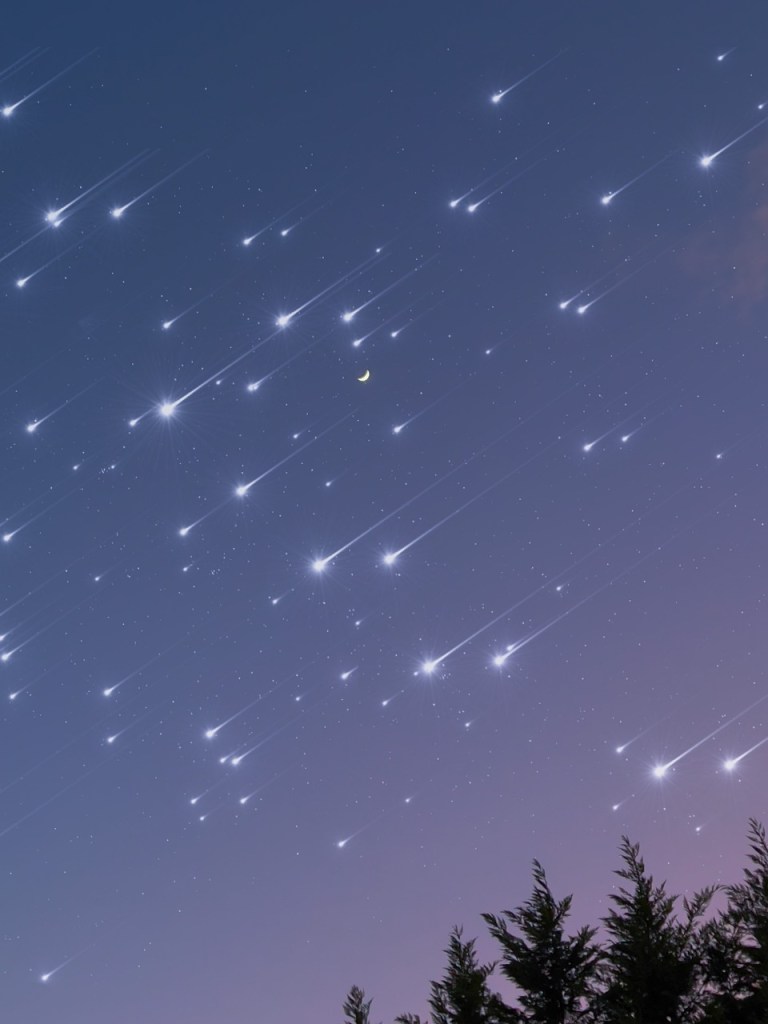
December offers stargazers one of the most spectacular meteor showers of the year—the Geminids. Known for their bright and colorful meteors, the Geminids provide a celestial fireworks display that is perfect for families to enjoy.

The Geminid Meteor Shower: Peaking around mid-December, the Geminids are associated with the asteroid 3200 Phaethon. This shower is unique because it produces a high number of meteors, some of which can be quite bright and leave persistent trails. Find a dark location away from city lights, bundle up in warm clothes, and witness nature’s own light show.

Chapter 3: The Great Conjunction of Jupiter and Saturn

A celestial event of special significance occurs in December—the Great Conjunction of Jupiter and Saturn. These gas giants come together in the night sky, creating a mesmerizing celestial alignment that hasn’t been this close in centuries.

The Great Conjunction: Jupiter and Saturn appear in the southwestern sky after sunset, gradually drawing closer throughout December. On December 21, they reach their closest point, creating a stunning double planet effect. Even a small telescope will reveal the distinct rings of Saturn and the cloud bands of Jupiter.

For families, witnessing this rare event can be a memorable experience. Encourage your children to observe the changing positions of Jupiter’s moons and Saturn’s rings over the course of several nights. This celestial dance is a testament to the dynamic nature of our solar system.

Chapter 4: The Moon’s Phases and Observations

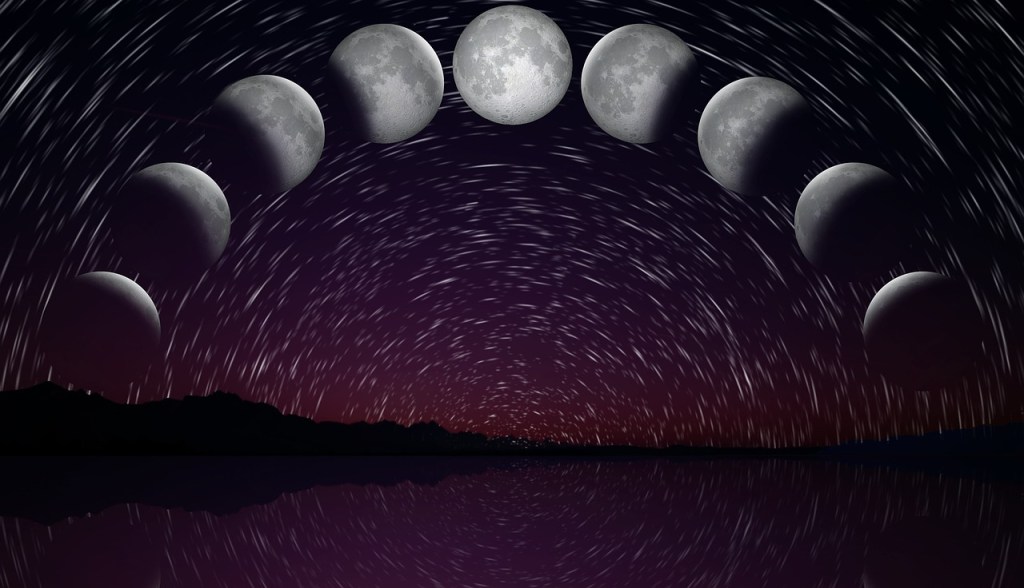
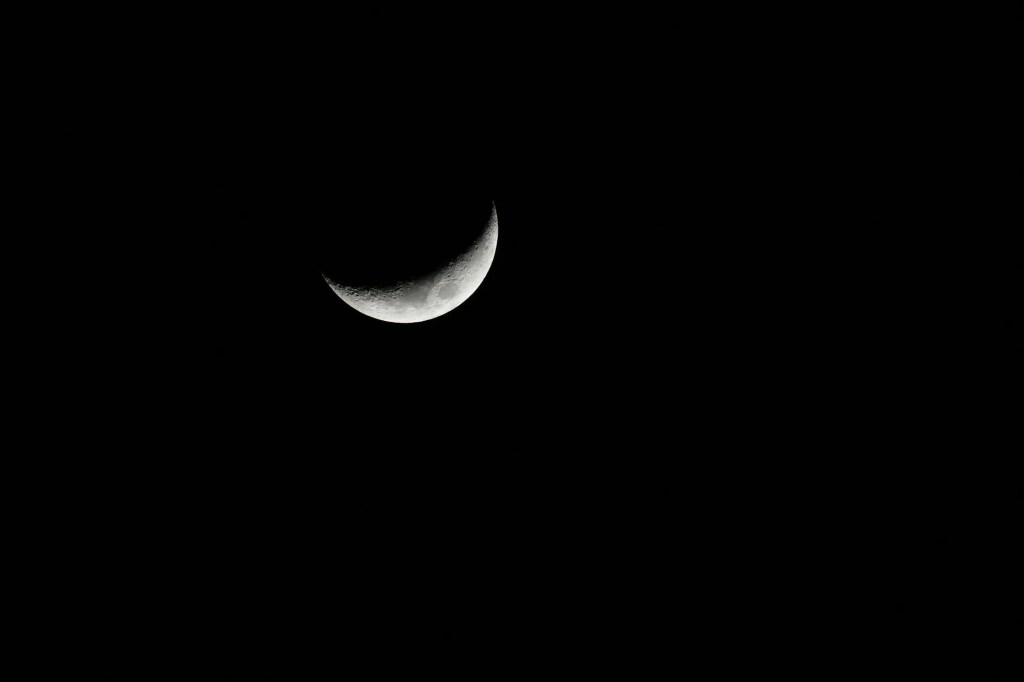
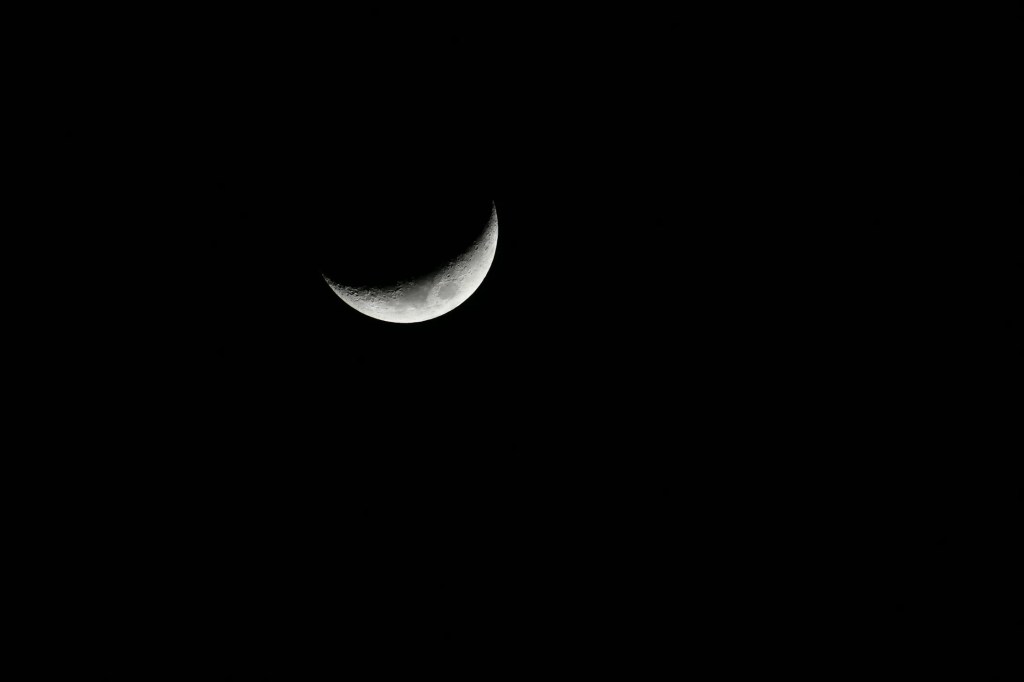
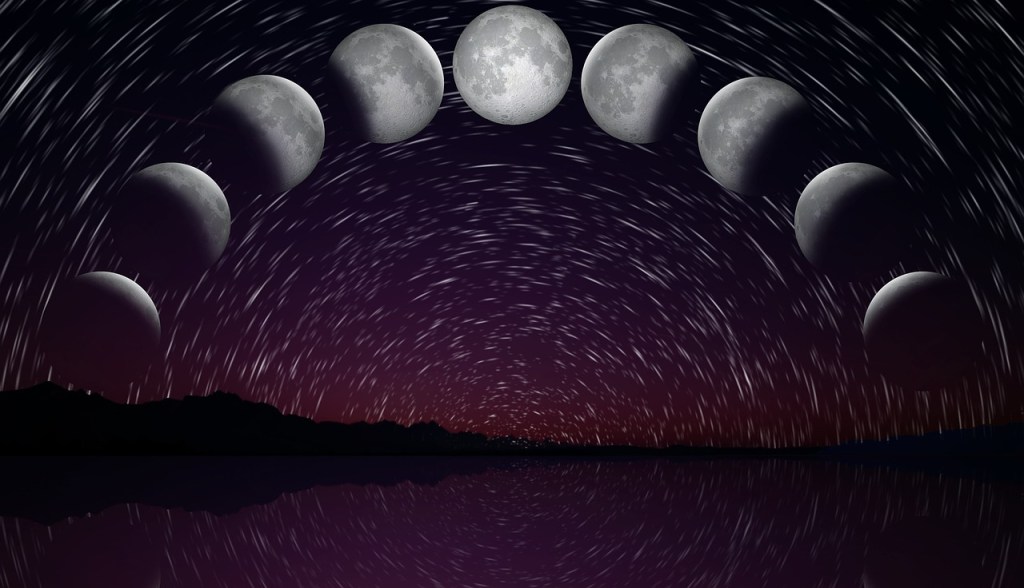
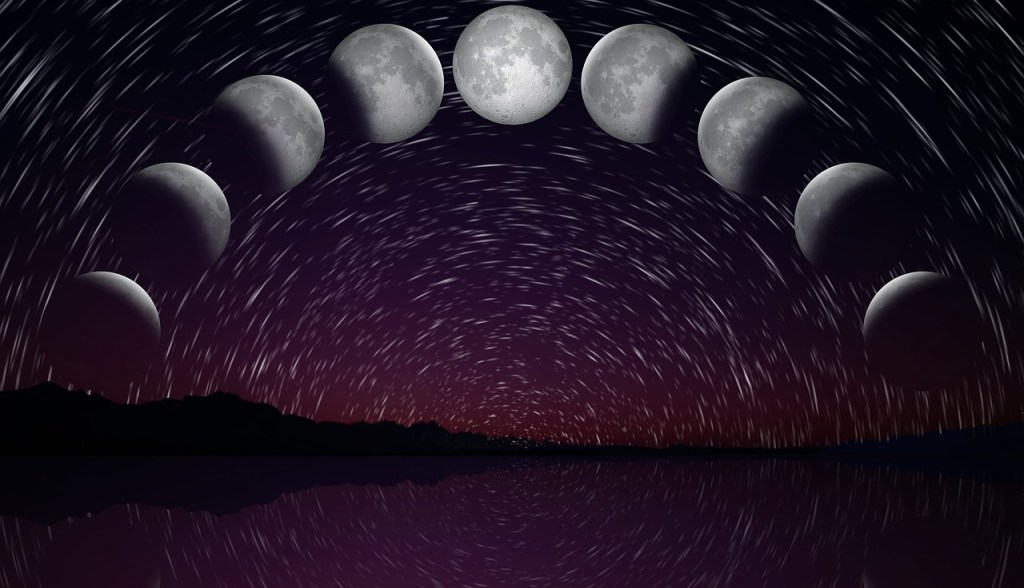
The Moon, our constant celestial companion, graces the December night sky with its changing phases. Observing the Moon’s craters, mountains, and lunar seas can be an engaging activity for families.

Moon Phases in December:

  • New Moon (December 4): The Moon is not visible, presenting an excellent opportunity for stargazers to observe faint celestial objects.
  • First Quarter (December 11): Half of the Moon is illuminated, revealing striking shadows along the lunar terminator.
  • Full Moon (December 19): The entire face of the Moon is lit, casting a silvery glow. Use binoculars or a telescope to explore lunar features in detail.
  • Last Quarter (December 27): Half of the Moon is again illuminated, but on the opposite side from the First Quarter phase.

Lunar Observations: Challenge your family to observe the Moon’s changing phases throughout December. Discuss the reasons behind these phases and explore the lunar features visible through binoculars or a telescope. Identify prominent craters like Tycho and Copernicus, enhancing your family’s lunar exploration.

SHOP NOW for Star Gazing supplies

Chapter 5: Stargazing Tips for Families

To make the most of your December stargazing experiences, consider these practical tips for families:

  1. Dress Warmly: December nights can be chilly, so dress in layers to stay warm. Blankets, gloves, and hats can make your stargazing sessions more comfortable.
  2. Use Stellar Apps: Take advantage of stargazing apps that help identify constellations, stars, and planets. Some apps even include augmented reality features, allowing you to point your device at the sky and see information about celestial objects.
  3. Telescope and Binoculars: While not mandatory, a small telescope or binoculars can enhance your stargazing experience. They allow for closer views of the Moon, planets, and even deep-sky objects.
  4. Create Sky Stories: Weave your own stories about the constellations. Encourage your children to imagine shapes and characters in the stars, fostering creativity and a sense of wonder.
  5. Celestial Calendar: Plan your stargazing sessions around celestial events like meteor showers, planetary conjunctions, and Moon phases. Mark these dates on a calendar, making astronomy an integral part of your family’s monthly activities.

Chapter 6: The Cosmic Connection in December

Beyond the scientific and observational aspects, stargazing in December provides families with a unique opportunity to connect with the cosmos on a deeper level:

  • Cultural Exploration: Explore the cultural significance of celestial objects. Share myths and stories associated with constellations from different cultures, fostering a sense of connection to human history.
  • Family Traditions: Establish stargazing traditions within your family. Whether it’s setting up a telescope in the backyard, creating celestial-themed art projects, or sharing hot cocoa under the stars, these traditions create lasting memories.
  • Wonder and Awe: Embrace the sense of wonder and awe that the night sky evokes. Instill in your children a curiosity about the universe, igniting a lifelong passion for exploration and discovery.
  • Reflection and Contemplation: Use the quiet moments under the stars for reflection and contemplation. Discuss the vastness of the cosmos and our place within it, fostering a sense of humility and interconnectedness.

SHOP HERE for Star Gazing Equipment

Conclusion: A Celestial Journey for the Whole Family

In conclusion, the December night sky unfolds as a celestial celebration, inviting families to partake in the wonders of the cosmos. Whether you’re observing the Geminid meteor shower, marveling at the Great Conjunction, or simply exploring the beauty of the Moon, the December sky offers a rich tapestry for families to explore together. So, bundle up, gather your loved ones, and let the December night sky be the backdrop for a celestial journey that will leave lasting impressions and spark a lifelong love for the wonders of the universe. Happy stargazing!

**

Preparing for a Night of Stargazing with Binoculars

Stargazing with binoculars offers an enchanting way to explore the wonders of the night sky. Whether you’re a novice or an experienced observer, the celestial realm beckons with its captivating array of stars, constellations, and celestial phenomena. To make the most of your stargazing experience with binoculars, it’s essential to prepare adequately and equip yourself with the knowledge and tools needed to embark on a celestial adventure. Here, we’ll delve into the essential steps and tips for preparing for a night of stargazing with binoculars, ensuring an enriching and memorable experience for the entire family.

Understanding the Basics of Binocular Stargazing

Before venturing into the night to explore the celestial wonders, it’s important to grasp the fundamental aspects of stargazing with binoculars. Binoculars offer a wide field of view and enhanced clarity, allowing observers to appreciate the intricate details of celestial objects. They are portable, easy to use, and provide an immersive viewing experience, making them an ideal choice for both beginners and seasoned astronomers.

Essential Tips for Stargazing with Binoculars

  1. Choosing the Right Binoculars: Opt for a pair of binoculars with moderate magnification and aperture. A common recommendation is 7×50 binoculars, which provide a good balance of magnification and light-gathering capability. Larger binoculars may require a tripod to stabilize the view, while smaller ones may not offer sufficient light-gathering power[2].
  2. Familiarize Yourself with the Night Sky: Before heading out for stargazing, acquaint yourself with the prominent constellations, stars, and celestial landmarks visible in the night sky. Sky maps, astronomy guides, and mobile apps can aid in identifying these celestial wonders, enhancing your stargazing experience[2].
  3. Location and Timing: Choose a suitable location away from urban light pollution, such as a dark-sky site or a rural area with minimal artificial light. Additionally, consider the timing of your stargazing session, aiming for nights with clear skies and minimal atmospheric disturbance for optimal viewing conditions[2].
  4. Prepare for Comfort: Stargazing can be a prolonged activity, so ensure you are adequately prepared for comfort. Dress warmly, especially during the cooler fall nights, and consider bringing along a comfortable chair or blanket for extended stargazing sessions. Additionally, a red flashlight can be useful for reading star charts and adjusting your eyes to the darkness without disrupting your night vision[2].

Resources for Stargazing with Binoculars

To further enhance your stargazing experience with binoculars, consider utilizing educational resources and guides tailored to celestial observation. Books such as “Exploring the Night Sky with Binoculars” by Patrick Moore offer valuable insights and practical tips for stargazing enthusiasts of all ages[5]. Additionally, online tutorials, astronomy vodcasts, and educational videos provide a wealth of information on stargazing techniques, celestial navigation, and the art of observing the night sky with binoculars[1][4].

Shop now for Binoculars for Stargazing

Embracing the Night Sky with Binoculars

As you prepare for a night of stargazing with binoculars, remember that the celestial realm holds a treasure trove of wonders waiting to be discovered. Whether you’re observing the intricate patterns of constellations, the ethereal glow of nebulae, or the distant allure of galaxies, stargazing with binoculars promises an enriching and awe-inspiring experience for the entire family. So, equip yourself with the right knowledge, choose a suitable location, and immerse yourself in the celestial splendor of the night sky with binoculars.

By following these essential tips and preparing adequately, you can embark on a captivating journey into the celestial realm, where the beauty of the cosmos unfolds before your eyes. Stargazing with binoculars offers an opportunity to connect with the wonders of the universe and create lasting memories with loved ones, making it a truly magical and rewarding experience for enthusiasts of all ages. So, grab your binoculars, venture outdoors, and prepare to be captivated by the celestial wonders that await you in the night sky.

Citations:
[1] https://youtube.com/watch?v=wAnAZz-ZPJ0&t=0
[2] https://earthsky.org/astronomy-essentials/top-tips-for-using-ordinary-binoculars-for-stargazing/
[3] https://www.davidchandler.com/shop/exploring-the-night-sky-with-binoculars/
[4] https://youtube.com/watch?v=68snWC9b8fE&t=0
[5] https://www.amazon.com/Exploring-Night-Binoculars-Patrick-Moore/dp/0521555388

night sky thru binoculars

Exploring the night sky through binoculars can be an amazing experience, offering a unique and immersive view of the stars above. Unlike telescopes, which often provide a more zoomed-in view, binoculars offer a wider field of view, allowing you to take in more of the night sky at once.

12X50 Full Size Binoculars for Adults with Photography Video Kit [Upgraded] Pro Tripod & Carrying Bag & Strap, Easy Focus for Camping,Travel,Stargazing,Bird Watching

One of the joys of using binoculars for stargazing is the ability to see the constellations in more detail. With the increased magnification, you can easily spot individual stars and trace the shapes of the constellations across the sky. Binoculars can also reveal fainter stars that may not be visible to the naked eye, making it easier to appreciate the full beauty of the night sky.

Another benefit of using binoculars is the ability to observe celestial objects that may be difficult to locate with the naked eye. For example, the Andromeda Galaxy is visible to the naked eye as a faint smudge in the sky, but with binoculars, you can see the galaxy in more detail and appreciate its spiral arms and bright central core. Binoculars can also provide a stunning view of the moon, allowing you to see the craters and mountains in incredible detail.

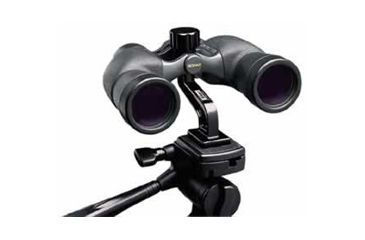
Nikon Binocular Tripod Adpater for Nikon E2, Superior E, Astronomy Series and Zoom XL Binoculars 7806 Color: Black,

When using binoculars for stargazing, it’s important to find a dark location away from city lights. Light pollution can make it difficult to see fainter stars and celestial objects, so finding a dark spot with clear skies is key. It’s also important to use a tripod or stabilize the binoculars against a solid surface to prevent hand shake and ensure a stable viewing experience.

Overall, exploring the night sky through binoculars can be a rewarding and exciting experience for stargazers of all levels. With a pair of binoculars, you can appreciate the beauty of the night sky in a whole new way, discovering new constellations, stars, and celestial objects with every viewing.

Binoculars can be a great choice for amateur astronomy

Binoculars are a great choice for amateur astronomy for several reasons. They offer a wider field of view than most telescopes, allowing you to take in more of the night sky at once. This can be especially helpful for identifying constellations and navigating the sky. Additionally, binoculars are generally more portable and easier to set up than telescopes, making them a convenient option for backyard stargazing.

Celestron – SkyMaster 15×70 Binocular – #1 Bestselling Astronomy Binocular – Large Aperture for Long Distance Viewing – Multi-coated Optics – Carrying Case Included – Ultra Sharp Focus

  1. Cost-effective: Binoculars are generally less expensive than telescopes, making them a great entry point for those who are new to astronomy or want to try it out before investing in more expensive equipment.
  2. Portability: Binoculars are small and lightweight, making them easy to transport and set up. This makes them ideal for those who want to stargaze in different locations or travel to dark-sky sites.
  3. Wide field of view: Binoculars provide a wider field of view than telescopes, making it easier to locate objects in the sky. They also allow you to see larger areas of the sky at once, making them ideal for observing star clusters, nebulae, and other deep-sky objects.
  4. Easy to use: Binoculars are simple to use and require minimal setup, making them accessible to beginners. They also have a low learning curve, which means you can start observing right away.
  5. Versatility: Binoculars can be used for a variety of other activities, such as bird watching, hiking, and other outdoor activities, making them a great all-around tool for nature enthusiasts.

Another benefit of binoculars is that they can offer a more immersive observing experience, giving you a sense of being “in” the night sky. This can be especially true when observing objects like the Milky Way or large star clusters, which can fill the entire field of view of a pair of binoculars.

12×50 HD Full Size Binoculars for Adults with Photography Kit – Smartphone Adapter Universal Tripod Carrying Bag & Strap for Bird Watching Hunting Stargazing Sporting & Sightseeing

Ultimately, whether you choose binoculars or a telescope for your astronomy pursuits depends on your personal preferences and observing goals. However, if you’re just starting out or looking for a more portable and versatile observing option, binoculars can be a great choice.

Overall, binoculars are a great choice for amateur astronomy because they are affordable, portable, versatile, and easy to use. They can provide a rewarding viewing experience and can help beginners learn the basics of astronomy before investing in more advanced equipment.

BINOCULARS the underrated Tool for Backyard Astronomy

Why binoculars are the underrated tool for backyard astronomy,

Have you ever gazed up at the night sky, mesmerized by the twinkling stars and sparkling constellations? If so, you may be considering investing in a telescope for backyard astronomy. But have you considered the power of binoculars? These often-overlooked tools can be just as effective, if not more so, than larger telescopes. In this article, we’ll explore why binoculars deserve more credit in the world of amateur astronomy and share tips for using them to get the most out of your stargazing experience. So whether you’re a seasoned pro or a beginner in the world of stargazing, grab a pair of binoculars along with your star maps and observing charts, and let’s explore the night sky together.,

Binoculars vs telescopes: a comparison

While binoculars are often overlooked in the world of amateur astronomy, they can provide a unique observing experience compared to telescopes. Let’s take a closer look at some of the differences between binoculars and telescopes.

One advantage of binoculars is their portability. They are smaller and lighter than telescopes, making them easier to transport and set up in different locations. Additionally, binoculars provide a wider field of view than telescopes, allowing you to observe larger sections of the night sky at once.

On the other hand, telescopes offer greater magnification than binoculars, allowing you to see finer details of celestial objects. They are also better suited for observing planets and deep-sky objects like galaxies and nebulae.

Ultimately, choosing between binoculars and telescopes depends on personal preference and observing goals. While telescopes may be better for specific types of celestial objects, binoculars offer a different perspective and can be more versatile for general stargazing.

So, whether you choose binoculars, a telescope or both, remember that the most important thing is to enjoy the wonders of the night sky and keep exploring.,

Pictures In The Sky

One of the earliest activities we engaged in when we first got into astronomy is the same one we like to show our children just as soon as their excitement about the night sky begins to surface. That is the fun of finding constellations. But finding constellations and using them to navigate the sky is a discipline that goes back virtually to the dawn of man. In fact, we have cave pictures to show that the more primitive of human societies could “see pictures” in the sky and ascribe to their importance.

Constellations also have been important in culture and navigation long before we had sophisticated systems of navigation. Early explorers, particularly by sea, relied exclusively on the night sky to help them find their way to their destination. In fact, when “Columbus sailed the ocean blue in 1492″ and “discovered” America, he could not have done it without astronomy and the help of navigation of the cosmos, much of which is made possible because of the important constellations.

When learning to find the great constellations in the sky, we use the “find one, you found them all” system. That is because the easiest constellation to find will guide us to the rest of them. That constellation is The Big Dipper. Look to the northern sky on a clear night and widen your field of vision from just focusing on one star and it will pretty much jump out at you. In will look like a big kitchen pot or ladle, right side up in the fall, upside down in the spring.

When you have the big dipper under control, you can pretty easily find the North Star. This is the star that those ancient sailors depended on the most to find their way to land. Start with the far edge of the bowl of the Big Dipper, the side that is opposite the handle. There are two stars that make up that side of the bowl. So start at the bottom of the pot and mentally draw a line to the top star of the bowl. These two stars are “pointing” to the North Star. Just keep following that line, curving a bit with the sky and the bright star that you come to is the North Star. You can impress your friends or family if you know the scientific name for this star is Polaris.

The North Star can then take you to The Little Dipper. The key here is that Polaris is the tip of the handle of The Little Dipper and the bowl hangs down from the handle like it was hanging up in the kitchen. Be patient with this one as the stars that make up The Little Dipper are dimmer than The Big Dipper. But it pretty cool once you find it.

These are the obvious starting places but from The Little Dipper you can find the constellation known as “The Swan” or Cygnus. Just use the same system you used to find The North Star but continue drawing that line that started in those pointer stars in the bowl of The Big Dipper. Go about half as far as you went to find Polaris and you are there. You will see a trapezoid of stars about as big as The Big Dipper. This trapezoid forms the tail of The Swan.

That line that we are drawing from the pointer stars is our roadmap to another well known constellation which is Cassiopeia. If you use that line and imagine you are directly under the two pointer stars, you will se a big “W” just off to the left of the line. This is the constellation Cassiopeia, the wife of the king of Egypt, Cepheus, in Greek mythology. There are so many more wonderful constellations to find and a good star map can continue your search.

Like Cassiopeia, all of the constellations have wonderful stories and myths related to Greek culture. It is just as fun to find the star clusters themselves as it is to enjoy the rich culture related to that constellation. For all of the signs of the zodiac, for example, there is a related constellation in the sky. So whether you are serious about astrology or not, its fun to find the constellation that relates to your “sign” (or that of your children) and be able to see how the ancients related to these pictures in the sky.

Shooting Stars

If you are a serious astronomy fanatic like a lot of us are, you can probably remember that one event in childhood that started you along this exciting hobby. It might have been that first time you looked through a telescope. But for many of us, it was that first time we saw a rain of fire from the sky that we eventually came to know as a meteoroid shower.

A view of a Meteor Shower and the Milky Way with a pine trees forest silhouette in the foreground. Night sky nature summer landscape. Perseid Meteor Shower observation.

At the time when you see the first one, it’s easy to remember the movie “war of the worlds” or some other fantastic image of aliens entering our atmosphere in droves to take over the planet. But with some guidance and explanation of what was going on, we eventually learned that these showers were not at all threatening or any kind of invasion. For the most part meteoroid showers are harmless, part of nature and very fun to watch.

So what are these strange lights in the sky? Are they aliens invading from Mars? Are the comets coming to start the next ice age? Or perhaps asteroids burning up as they enter the earths atmosphere. The answer to the above questions is no to the first and “yes and no” to the other two.

A meteoroid is actually a small piece of space rubble, usually dust or small rocks that come from either a comet or the break up of an asteroid in space and that eventually plummets toward the earth. We say “toward the earth” because the lights you see are the friction of the atmosphere burning up those small space tidbits and creating a spectacular show for all of us as they do so. A particularly exciting moment to witness is when a meteoroid breaks up or explodes on entry. A meteoroid that explodes is called bolides.

There are some interesting details about the life of a meteoroid that make the viewing of shooting stars even more fun. To be seen, a meteoroid only needs to weigh as little as a millionth of a gram. But the thing that makes them so spectacular to see is the tremendous speeds they reach as they enter the atmosphere. Before burning up, a meteoroid will reach between 11 and 74 kilometers per second which is 100 times faster than a speeding bullet.

We tend to think of seeing a shooting star as a freak event and we associate it with superstition (hence, wish on a lucky star). But there are actually thousands of them every year so it really isn’t that rare to see one. In fact, scientists tell us that over 200,000 tons of space matter enters the atmosphere each year and burns up on entry.

Comets are a big source of meteoroids because of the nature of those long tails. A large amount of dust, ice and other space debris gets caught up in a comet’s tail as it moves toward the sun. Then as the comet moves away from the sun in its orbit, tons of this matter is thrown off into space to disperse. As the Earth moves in its routine orbit around the sun, it often crosses through clouds of this discarded matter which becomes one of those “meteor showers” that are so popular for viewing.

These showers of shooting stars are pretty easy for astronomers to predict so you can get into position to see the excitement at just the right time of night and be looking at the right area of the night sky. Usually the astronomy magazine or site will give you a general time and location to be ready to look when the meteoroids start to fall.

Meteor Shower and the Milky Way with old ruin on foreground

Now keep in mind, this is a phenomenon of nature, so it may not observe the time table exactly. Also note that there is a notation system for where the meteoroid shower will occur based on what constellation is its backdrop. The section of the sky to focus on for the show is called the “radiant” because that is where the entering meteoroids begin to glow or radiate. The radiant is named for the constellation it is nearest too. So if the meteor shower is going to occur in the constellation of Leo, then its radiant will be called Leonid. This will help you decipher the listing of asteroid showers in the publications.

Comets Visitors From Beyond

The one thing we love the most in the world of astronomy is a good mystery. And if there was ever a mysterious and yet very powerful force of nature that we witness in the night skies, it is the coming of the mighty comet.

A bright comet with large dust and gas trails as the comets orbit brings it close to the Sun. Illustration.

The arrival of a comet within view of Earth is an event of international importance. Witness the huge media attention that the Haley or Hale-Bopp have had when they have come within view The sight of these amazing space objects is simultaneously frightening and awe inspiring.

Above all, it is during these comet viewings that the astronomer comes out in all of us. But what is a comet? Where did it come from? And how does it get that magnificent tail?

We should never confuse comets with asteroids. Asteroids are small space rocks that come from an asteroid belt between Mars and Jupiter. While still quite stunning to see, they pale in comparison to the arrival of a comet. Asteroids also have received considerable study by the scientific community.

meteorite from outer space, falling toward planet Earth, dramatic science fiction scene

Not as much is known about comets. As a rule, comets are considerably larger than asteroids. The composition of a comet is a mixture of nebulous, gasses, ice, dust and space debris. One scientist called the composition of a comet as similar to a “dirty snowball” because the composition is so diverse and changeable. The center or nucleus of a comet is usually quiet solid but the “snowball” materials often create a “cloud” around that nucleus that can become quite large and that extends at great lengths behind the comet as it moves through space. That trailing plume is what makes up the comet’s magnificent tail that makes it so exciting to watch when a comet comes within view of Earth.

The origins of comets is similarly mysterious. There are a number of theories about where they come from but it is clear that they originate from outside our solar system, somewhere in deep space. Some have speculated they are fragments left over from the organization of planets that get loose from whatever gravitational pull and are sent flying across space to eventually get caught up in the gravity of our sun bringing them into our solar system.

Another theory is that they come from a gaseous cloud called the Oort cloud which is cooling out there after the organization of the sun. As this space debris cools, it gets organized into one body which then gathers sufficient mass to be attracted into the gravity of our solar system turning into a fast moving comet plummeting toward our sun. However, because of the strong gravitational orbits of the many planets in our solar system, the comet does not always immediately collide with the sun and often takes on an orbit of its own.

The life expectancy of comets varies widely. Scientists refer to a comet that is expected to burn out or impact the sun within two hundred years as a short period comet whereas a long period comet has a life expectancy of over two hundred years. That may seem long to us as earth dwellers but in terms of stars and planets, this is a very short life as a space object indeed.

Scientists across the globe have put together some pretty impressive probes to learn more about comets to aid our understanding of these visitors from beyond. In 1985, for example, the United States put a probe into the path of the comet Giacobini-Zinner which passed through the comets tail gathering tremendous scientific knowledge about comets. Then in 1986, an international collation of scientists were able to launch a probe that was able to fly close to Haley’s comet as it passed near Earth and continue the research.

While science fiction writers and tabloid newspapers like to alarm us with the possibility of a comet impacting the earth, scientists who understand the orbits of comets and what changes their paths tell us this is unlikely. That is good because some comets reach sizes that are as big as a planet so that impact would be devastating. For now, we can enjoy the fun of seeing comets make their rare visits to our night sky and marvel at the spectacular shows that these visitors from beyond put on when they are visible in the cosmos.

Space The Final Frontier

While it was just a TV show, that little speech at the beginning of the original Star Trek show really did do a good job of capturing our feelings about space. It is those feelings that drive our love of astronomy and our desire to learn more and more about it.

The thing that is most exciting about studying the universe is also the most frustrating and that is that no matter how expert we get, we are always just getting started. But if it’s any consolation, some of the most advanced minds in science and from history always felt that way about space. Even the greats such as Copernicus and Einstein looked up into space and felt like they were just a spec in the presence of such infinity.

USS Enterprise

Of course space is not infinite. It has to be finite which means somehow there must be an end to it. But if there is, nobody on this tiny planet has figured out where it is. The only thing that has brought us to “the end of the universe” is our limited ability to see any deeper into space.

But conquering the final frontier of space means more than just seeing more stars and planets and building the biggest telescope we can. There are some mind blowing concepts about how space works that we have ahead of us to conquer. The big bang and the expanding universe alone was enough to set your mind to spinning. But then we have the coming of Einstein and the theory of relativity to set the entire idea on its ear. All of a sudden space is not just three dimensions but the dimension of time becomes exportable and the twisting and maybe even travel through time seems almost possible.

The frontier of space is as much a journey of the mind as it is of distance. When Steven Hawking showed us the mysteries of black holes, all of a sudden, time and space could collapse and be twisted and changed in those intergalactic pressure cookers. If not for the wonders of radio astronomy, these ideas would remain just ideas but slowly science is catching up with theory.

But the brilliance of mathematicians and genius minds like Hawking and Einstein continue to stretch our concepts of space. Now we have the string theory that could revolutionize everything we know about space, time and how the universe relates to itself. We can’t just say, no, we have discovered enough. It’s the final frontier. The Starship Enterprise would not stop exploring so neither can we. Because there is a hurdle still ahead that has a name but no real answer to it yet. It’s called the Unified Field Theory and those that know tell us that when the Einsteins and Hawkings of our day crack that theory, every other theory will fall into place.

These exciting concepts seem some tools to put the enormity of space in context. That may also be the value of science fiction. Not only are science fiction writers often the visionaries of what comes to be in the future but they give us the idea that space is knowable, that despite how big it is and how small we are, we can conquer this frontier like we have conquered others before us.

For mankind, that is often enough. If we can get the vision that we can conquer something, even if it is something so massive, so impossibly huge, it seems that we are capable of anything. And the love of astronomy, maybe unlike any other force on earth, has brought together mankind toward that common goal of conquering the universe. The quest to establish an international space station and to cooperate on spreading our reach off of this planet seems to find commonality between nations that otherwise cannot get along on the surface of the earth.

That alone may be a reason that we must continue to support astronomy locally and the space program nationally. It is something that seems to bring peace rather than war and make us a better people. But more than that it is as though this is what we were created to do. To reach out to the stars may be our destiny. If so then our love of astronomy is more than a hobby, it’s a calling.

The Science Of Astronomy Really Is Fascinating

Galaxies, the cosmos, astrophysics, observatories, telescopes: How do we possibly comprehend the reality that the universe is beyond measure, infinite, and endlessly mesmerizing?

We can’t; that’s why astronomy remains so completely fascinating. It’s the things in life we do not understand that most often draw our interest; that’s simply a natural human impulse — to be curious, to wonder and to want to be in awe of something far beyond and outside ourselves.

We know that stars, like everything else, live and die and that there are scientifically “correct” patterns in the remote sky that both perplex and bewitch us. If astronomy fascinates, it is because there exists in everyone a profound empathy with a world that is inaccessible in its complexity. Who among us has not felt, even fleetingly, spellbound by the immensity of this cosmos, this universe?

Modern observatories regularly function as educational centers, providing this feeling of entrancement by presenting the wonder of the cosmos directly to the audience, short-circuiting the intellect for an hour or so and uncovering the wonder at the magic of theuniverse; promoting a sensory, visceral feeling for the human condition and its place in the great book of the cosmos.

Astronomy, the science of stars, planets, galaxies, and black holes, is the oldest science, yet it is the most intriguing because the study of the universe will help answer the most important questions human beings can ask, such as:

How did the universe begin?

What is the structure of the universe?

How will the universe change in the future?

How do the planet Earth and its inhabitants fit into the larger universe of space and time?

Though we may never know the answers to these kinds of questions in our lifetime, we’re always thankful for those who will follow us, prepared, with a scientific brain, to one day provide answers — and maybe more — to humankind.

It’s difficult to understand our own galaxy, and we’re constantly “adding to it,” or discovering new frontiers and small, more distant planets than those we’re already familiar with. The sun, and the concept of the planets just in our galaxy alone, provoke wonder and all kinds of speculation. It’s food for our brain; it’s one of those applications of learning that so enthrall, it doesn’t seem like we’re “studying” anything. It’s an effortless exercise in the Unknown Sphere of the Universe.

What better way to pass the time, to postulate upon, to have an intellectually stimulating discussion, maybe with people you don’t even know yet?

And what about the theories of particle physics that have been developed in conjunction with the standard Big Bang model to explain the origin, evolution and
present structure of the universe?

What about the origins, evolution, interiors, and energy production of the stars themselves? How are they formed? Why? And we’ve all heard of “interacting galaxies,” but just what, exactly, does it mean? It all sounds like, well, a kind of heaven — a place we know exists, but that we cannot quite see or understand.

Then, there’s Newton’s laws, the concept of work and energy, momentum, gravitation, sound and light waves.

If you haven’t felt a slight thrill yet, it’s eitherbecause you already know about these atmospheric wonders, or you’ve been living under a local rock.

So get out there and Observe the Universe! It’s absolutely spellbinding!