Stargazing Wonders of November 2025: A Family Guide to Planets, Constellations, and Celestial Magic

November 2025 is a holiday gift for skywatchers, offering planetary displays, dazzling meteor showers, a record-bright supermoon, and a host of famous constellations and stars. Whether you’re spending quiet moments in your backyard with family or gathering fellow enthusiasts in a local astronomy club, the month promises magic for stargazers of all ages and experience levels.


Planets on Parade
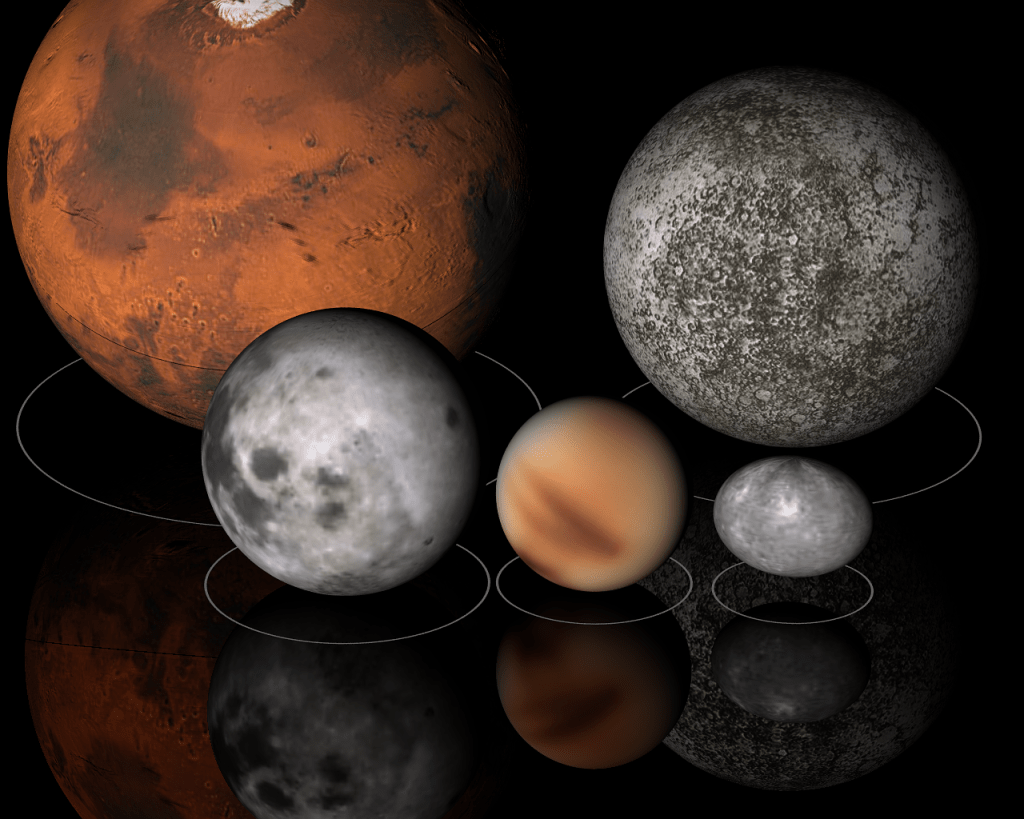
November is one of the richest months for planet watching in 2025. On clear nights, nearly every naked-eye planet makes a memorable appearance:

  • Mercury: The elusive innermost planet appears just above the southeastern horizon at dawn near the end of the month (November 28–30). Its fleeting glow is best caught about 30 minutes before sunrise, challenging even for seasoned observers but a thrill for patient families. farmersalmanac+1
  • Venus: Brilliant Venus shines low in the morning twilight the first three weeks of November before disappearing from view—look for it before sunrise in the east and southeast. astroshop+4
  • Saturn: The ringed planet graces the southwest after sunset all month. On November 1–2, Saturn pairs closely with the waxing gibbous Moon—don’t miss the pairing with binoculars or a telescope. adlerplanetarium+3
  • Jupiter: Jupiter rises in the east after 9 PM and dominates the late-night sky. Its moons and cloud bands are visible in even small telescopes, offering an inviting family observing project. skyatnightmagazine+2
  • Uranus: On November 21, Uranus reaches opposition and shines all night in Aries. Usually invisible to the naked eye, it’s within reach of binoculars or a modest telescope—a blue-green gem for those ready to find new worlds. timeanddate+3
  • Neptune: Faint Neptune lurks in Pisces, crossing the southern sky late at night. Binoculars or a telescope are needed, but locating this distant planet can be a rewarding family challenge. farmersalmanac+1

Moon Facts and Lunar Events
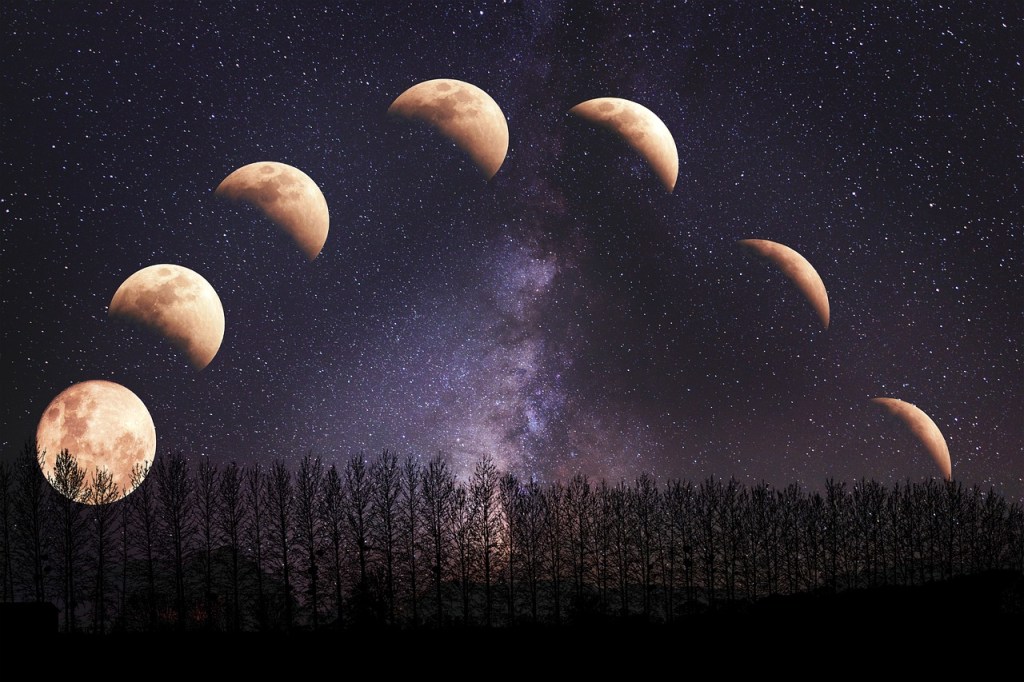
This November offers a lunar showstopper sure to spark curiosity and creativity, plus several phase changes for sky journaling:

  • Supermoon – November 5: The year’s biggest and brightest full moon rises on Nov. 5. Named the Beaver Moon or Frosty Moon, it appears nearly 8% larger and up to 16% brighter than a typical full moon. Early Native Americans used this time to set beaver traps ahead of winter. rmg+5
  • Moon-Planet Conjunctions: The Moon passes near Saturn on Nov. 1–2 and pairs up with Aldebaran (the “Bull’s Eye”) in Taurus on Nov. 7—a great reason for crafty photos or family stories about the sky’s ancient myths. whenthecurveslineup+1
  • Other Phases: The moon’s changing face is easy to track and sketch:
    • Full Moon: Nov. 5
    • Last Quarter: Nov. 12
    • New Moon: Nov. 20 (a “micro” new moon at farthest distance from Earth)
    • First Quarter: Nov. 28. theskylive+1

Meteor Showers to Watch

November delivers two meteor showers—one spectacular, the other subtle but known for bright fireballs:

  • Southern Taurids – Nov. 4–5: This minor shower produces slow, bright meteors. Only 5–10 meteors per hour, but some may become fireballs as they radiate from Taurus. Try viewing after midnight—best with the whole family, lying back and sharing wishes. seasky+1
  • Leonids – Nov. 17: The Leonid meteor shower, famed for epic storms, produces 10–15 bright meteors per hour at its peak just before dawn. Look southeast from a safe, dark spot. The crescent moon will set early, leaving a perfectly dark sky for viewing. planetary+3

Constellations: Old Friends Return

As November evenings lengthen, classic constellations and famous stars reclaim their positions:

  • Orion the Hunter: Orion rises by midnight, instantly recognizable by his three-star “belt.” Follow the belt downward left to find Sirius, the sky’s brightest star, rising in the southeast near the end of the month. nationalgeographic+2
  • Taurus the Bull: Home to red-orange Aldebaran (the “Bull’s Eye”), the glimmering Pleiades (Seven Sisters), and the Hyades cluster—the V-shaped “face” of Taurus. rmg+2
  • Andromeda: High overhead, Andromeda forms a graceful arc and hosts the Andromeda Galaxy (M31)—a faint smudge in dark skies visible to the naked eye, binoculars, or small telescopes. starwalk+1
  • Pegasus: The Great Square of Pegasus marks autumn and is a great jumping-off point for star-hopping.
  • Cassiopeia, Pisces, and more: Cassiopeia’s “W” shape dominates the northeast. Pisces, the Fishes, is less obvious but sits south of Andromeda. starwalk
  • Sirius and Canis Major: By late November, Sirius—known as the “Dog Star”—rises in the southeast. It’s 25 times more luminous than the sun and just 8.6 light years away, a brilliant beacon for cold nights. rmg

Other Notable Night Sky Events

  • Planetary Encounters: Nov. 3, the Moon and three planets (Venus, Saturn, Jupiter) are on display overnight. Nov. 25, Venus and Mercury share the dawn in a rare pairing. whenthecurveslineup+1
  • Hyades at Apex – Nov. 27: The Hyades cluster, making the V of Taurus’s face, reaches its highest point around midnight. This is the best time to see its dozens of stars under dark skies, an ideal binocular or family-accessible target. nationalgeographic
  • Comet c/2025 A6: Expected to be visible from dark locations in late October and early November. It may be possible to spot it with binoculars just before sunrise or after sunset—watch astronomy news sites for updates. facebook

More Astronomy Information

Bright Stars to Visit

  • Aldebaran (Taurus): Orange-red, marking the Bull’s eye.
  • Betelgeuse and Rigel (Orion): Red and blue supergiants, highlighting Orion’s shoulder and foot.
  • Capella (Auriga): Bright, yellowish star rising high in the northeast.
  • Spica (Virgo): Visible near Venus in the dawn sky early in the month. whenthecurveslineup

Family Activities and Tips

  • Make a Sky Journal: Track phases of the moon and meteor counts. Sketch constellations or note unusual “shooting stars.”
  • Try Star Storytelling: Share myths about Orion, Taurus, and the Pleiades, or invent your own tales.
  • Holiday Stargazing: Pair a hot cocoa night with meteor counting or supermoon watching. Invite friends or neighbors for a “full moon walk” or a “Leonids pajama party.”
  • Binocular Astronomy: Many November targets—the moon’s craters, Pleiades, Hyades, Jupiter’s moons—look wonderful even through basic binoculars.
  • Prepare for the Cold: Layer up, bring blankets and sleeping bags, and warm drinks.

Handy Stargazing Tips

  • Allow 15 minutes for your eyes to adapt to the darkness.
  • Avoid bright lights (use red flashlights to preserve night vision).
  • Choose a safe, dark location away from city lights.
  • Use free sky map apps or printable star charts to help identify targets.
  • Record your sightings and try to spot new constellations each week.rmg

More Astronomy Information.

Looking Ahead and Inspiring Wonder

As the nights lengthen and the year edges closer to holidays, November 2025 offers families and astronomers a cosmos packed with both new wonders and returning favorites. There’s no better time to start a skywatching tradition with your children, friends, or students—nature’s awe-inspiring show is always free and never repeats in quite the same way.

From the joy of the supermoon’s silvery glow and the thrill of counting Leonid meteors to the satisfaction of picking out planets and patterns among the stars, the night sky rewards curiosity and connects us to ancient stories and ongoing scientific discovery.

Wishing clear skies, many discoveries, and countless family memories under the November night sky! kenpress+17

  1. https://www.farmersalmanac.com/visible-planets-guide
  2. https://www.astroshop.eu/magazine/practical-tips/observation/astronomy-highlights-in-autumn-2025/i,1244
  3. https://www.adlerplanetarium.org/blog/what-to-see-stargazing-tips-november-2025/
  4. https://www.skyatnightmagazine.com/advice/skills/astronomy-guide-viewing-planets-night-sky
  5. https://whenthecurveslineup.com/2025/10/23/2025-november-3-moon-and-three-planets-on-display-in-the-night-sky/
  6. https://www.rmg.co.uk/stories/space-astronomy/astronomy/night-sky-highlights-november-2025
  7. https://kenpress.com/files/2025WOT11Nov.pdf
  8. https://www.timeanddate.com/news/astronomy/night-sky-november-2025
  9. http://www.seasky.org/astronomy/astronomy-calendar-current.html
  10. https://www.planetary.org/articles/calendar-of-space-events-2025
  11. https://starlust.org/november-2025-skywatching-guide-this-years-biggest-supermoon-leonids-fireballs-and-more/
  12. https://theskylive.com/moon-calendar?year=2025&month=11
  13. https://www.calendarr.com/united-states/lunar-calendar-november-2025/
  14. https://whenthecurveslineup.com/2025/10/27/2025-november-7-moon-and-bulls-eye/
  15. https://www.nationalgeographic.com/science/article/november-night-sky-events-2025
  16. https://starwalk.space/en/news/november-constellations-and-stars
  17. https://www.space.com/stargazing/autumn-skywatching-targets-to-see-in-the-night-sky-2025
  18. https://www.facebook.com/groups/auroraaustralia/posts/2376217279460361/
  19. https://www.spaceweatherlive.com/en/moon-phases-calendar/2025/11.html
  20. https://www.timeanddate.com/astronomy/sights-to-see.html

Saturn and the Moon’s Celestial Dance: How to Watch Their Close Encounter on July 16, 2025

On the night of July 16, 2025, the Moon and Saturn will create a beautiful spectacle in the sky, appearing close together in a conjunction visible across the United States. This event is perfect for families, beginners, and seasoned astronomers alike. Here’s how to make the most of this cosmic rendezvous—including the best times to watch from different US regions, simple ways to identify Saturn, and a look back at memorable images of similar events.

What’s Happening?

On July 16, the waning gibbous Moon will pass near Saturn, the solar system’s iconic ringed planet. While the two are separated by vast distances in space, they’ll appear just a few degrees apart in the sky, creating a striking visual pairing for observers on Earth123.

Best Times to View Across the US

US RegionSaturn & Moon RiseClosest ApproachHighest in SkyBest Viewing Window
East Coast~11:00 p.m. EDT~2:00 a.m. EDT2:00–4:00 a.m.11:00 p.m.–4:30 a.m.
Central~10:00 p.m. CDT~1:00 a.m. CDT1:00–3:30 a.m.10:00 p.m.–4:00 a.m.
Mountain~9:00 p.m. MDT~12:00 a.m. MDT12:00–3:00 a.m.9:00 p.m.–4:00 a.m.
Pacific~8:30 p.m. PDT~11:00 p.m. PDT11:00 p.m.–2:30 a.m.8:30 p.m.–4:00 a.m.
  • Where to Look: The pair will rise in the east after sunset, climb high in the southeast by midnight, and drift toward the south by dawn245.
  • Peak Viewing: Around midnight to 3 a.m. local time, when both are highest and most easily seen.

How to Identify Saturn: A Beginner’s Guide

Saturn can be mistaken for a bright star, but here’s how to spot it:

  • Color: Saturn appears as a steady, pale yellow or gold “star.” Most stars are white or blue-white, while Saturn’s subtle hue stands out675.
  • No Twinkle: Unlike stars, Saturn does not twinkle. Its light remains steady because it’s close enough to appear as a tiny disk rather than a pinpoint.
  • Position: On July 16, Saturn will be just a few degrees below or beside the bright Moon, making it easy to locate.
  • Brightness: Saturn shines brighter than most surrounding stars but is dimmer than the Moon and Venus.
  • Movement: Over weeks, Saturn slowly shifts eastward among the stars, unlike the fixed star patterns.

Tip: Use a free sky app (like Stellarium, SkySafari, or Star Walk) to confirm Saturn’s position in real time75.

Viewing Tips for All Ages

  • Naked Eye: Simply look for the bright Moon, then spot the steady yellow “star” nearby—that’s Saturn!
  • Binoculars: Enhance Saturn’s color and may reveal its oval shape.
  • Telescope: Even a small telescope will reveal Saturn’s famous rings and perhaps a few moons.
  • Family Fun: Bring blankets, snacks, and sketchpads. Encourage kids to draw the Moon and Saturn or try smartphone photography.

Sample Viewing Timeline (Local Time)

TimeWhat to SeeWhere to Look
10:00 p.m.–12:00 a.m.Moon and Saturn rising togetherEast
12:00–2:00 a.m.Closest approach, high in skySoutheast
2:00–4:00 a.m.Pair moves toward southSouth
4:00 a.m.–DawnSetting, still visibleSouthwest

Memorable Images of Past Moon-Saturn Conjunctions

Below are examples of how the Moon and Saturn have appeared together in the night sky during previous conjunctions. These images illustrate what you can expect to see, whether with your eyes, binoculars, or a telescope.

  • Smartphone Photo of Saturn and the Moon:
    Astrophotographers have captured stunning images using just a smartphone and a small telescope, showing Saturn as a bright dot near the Moon8.
  • Telescope View:
    Through a telescope, Saturn’s rings are visible, while the Moon’s craters and maria provide a dramatic backdrop910.
  • Wide-Angle Sky Photos:
    Many skywatchers have shared beautiful wide-angle images of the Moon and Saturn together, highlighting their proximity and the Moon’s brightness10.

Why This Event Is Special

  • Easy and Accessible: No special equipment or expertise needed—just look up!
  • Great for Families: The Moon and Saturn are bright, easy targets for all ages.
  • A Gateway to Astronomy: Seeing Saturn’s rings for the first time is unforgettable.
  • Rare and Beautiful: While the Moon and Saturn pair up monthly, this July’s conjunction is especially well-placed for nighttime viewing across the US25.

Safety and Comfort Tips

  • Dress for the weather—even summer nights can get cool.
  • Use red flashlights to preserve night vision.
  • Bring bug spray if stargazing outdoors.

Fun Saturn and Moon Facts

  • Saturn is about 890 million miles from Earth; the Moon is just 239,000 miles away.
  • Saturn’s rings are made of ice and rock and stretch over 170,000 miles wide.
  • The Moon will be a waning gibbous, more than half full but shrinking nightly.

References & Further Reading

  1. [In-The-Sky.org – US Rise/Set Times for Planets]11
  2. [When the Curves Line Up – Saturn-Moon Conjunction July 16, 2025]1
  3. [Astronomy Magazine – July 2025 Sky Guide]12
  4. [Travel + Leisure – July 2025 Night Sky]2
  5. [Star Walk – July 2025 Astronomy Calendar]13
  6. [High Point Scientific – How to Observe Saturn]6
  7. [Business Insider – Smartphone Photos of Saturn and the Moon]8
  8. [Adler Planetarium – July 2025 Skywatching]4
  9. [Cosmic Pursuits – Guide to Observing Saturn]9
  10. [EarthSky – Moon and Saturn Close Together]10
  11. [National Geographic – July 2025 Sky Events]3
  12. [Adler Planetarium – How to Identify Planets]7
  13. [The Planetary Society – July 2025 Night Sky]5
  14. [BBC Sky at Night Magazine – Observing Planets July 2025]14

Clear skies and happy stargazing!

  1. https://whenthecurveslineup.com/2025/07/01/2025-july-16-pre-dawn-saturn-moon-conjunction-venus-aims-at-jupiter/
  2. https://www.travelandleisure.com/july-2025-stargazing-astronomy-guide-11766109
  3. https://www.nationalgeographic.com/science/article/best-night-sky-events-july-2025
  4. https://www.adlerplanetarium.org/blog/what-to-see-stargazing-tips-july-2025/
  5. https://www.planetary.org/night-sky/night-sky-what-to-see-this-month
  6. https://www.highpointscientific.com/astronomy-hub/post/astronomy-101/how-to-observe-saturn
  7. https://www.adlerplanetarium.org/blog/how-to-identify-planets/
  8. https://www.businessinsider.com/saturn-moon-conjunction-smartphone-pictures-2019-4
  9. https://cosmicpursuits.com/2560/guide-to-observing-saturn/
  10. https://earthsky.org/space/moon-and-saturn-close-together-this-week-see-the-images/
  11. https://in-the-sky.org/whatsup_times.php
  12. https://www.astronomy.com/observing/sky-this-month-july-2025/
  13. https://starwalk.space/en/news/astronomy-calendar-2025
  14. https://www.skyatnightmagazine.com/advice/skills/how-see-planets-night-sky-july
  15. https://whenthecurveslineup.com/2024/12/20/2025-january-4-saturn-moon-conjunction-after-sunset/
  16. https://www.skyatnightmagazine.com/advice/skills/how-to-find-planets-night-sky
  17. https://www.reddit.com/r/astrophotography/comments/1e8g776/moon_and_saturn_conjunction_composite_image/
  18. https://www.space.com/33619-visible-planets-guide.html
  19. https://www.youtube.com/watch?v=iTT6Kkh57Rw
  20. https://www.instagram.com/p/C0-nVx7svoY/

Exploring the February 2025 Night Sky: A Family-Friendly Guide

February 2025 offers an exciting array of celestial events for families to enjoy together. As the winter chill lingers, the night sky presents a perfect opportunity for stargazing adventures. Let’s explore what the February 2025 night sky has in store for us!

The Planet Parade Continues

One of the month’s highlights is the continuation of the planet parade from late January. This spectacular alignment of planets provides an excellent chance for families to explore our solar system neighbors.

Venus and the Moon – February 1

Start your month with a beautiful pairing of Venus and the crescent Moon. Look to the southwestern sky after sunset to spot this dazzling duo. Venus will appear as an extremely bright “star” near the delicate crescent Moon.

Observing tip: This is an excellent opportunity for astrophotography beginners. Try capturing the scene with a smartphone camera or a DSLR on a tripod.

Moon near Uranus – February 5

On February 5, the Moon will pass close to Uranus. While Uranus itself is too faint to see with the naked eye, you can use the Moon as a guide to locate its position.

Observing tip: You’ll need a telescope to spot Uranus. Look for a tiny, blue-green disk near the Moon.

Moon and Jupiter – February 6

Jupiter, the largest planet in our solar system, will have its turn with the Moon on February 6. Look for the bright planet near the Moon in the evening sky.

Observing tip: With binoculars or a small telescope, you might be able to spot Jupiter’s four largest moons as tiny “stars” around the planet.

Moon near Mars – February 9

The Moon’s planetary tour continues with a close approach to Mars on February 9. Look for the reddish planet near the Moon in the night sky.

Observing tip: Mars’ distinctive reddish color should be visible to the naked eye. A telescope might reveal some of the planet’s surface features.

Venus at Peak Brightness – February 16

Mark your calendars for February 16, when Venus reaches its peak brightness for 2025. On this night, Venus will shine at an impressive magnitude of -4.9, making it the brightest object in the night sky after the Moon.

Observing tip: This is a great opportunity to show young stargazers how bright a planet can appear. Challenge them to spot Venus before any stars become visible after sunset.

Full Snow Moon – February 12

The Full Moon of February, traditionally known as the Snow Moon, will illuminate the night sky on February 12. This is an excellent opportunity for moon-watching and lunar photography.

Observing tip: Try observing the Moon with binoculars or a small telescope. Even low magnification will reveal craters, mountains, and dark “seas” on the lunar surface.

Alpha Centaurids Meteor Shower – February 8 and 9

While not one of the year’s most spectacular meteor showers, the Alpha Centaurids can still provide an enjoyable viewing experience. The shower peaks on the nights of February 8 and 9.

Observing tip: Find a dark location away from city lights. Look towards the constellation Centaurus in the southern sky. Remember, patience is key when watching for meteors!

Seven-Planet Alignment – February 28

The month concludes with a rare treat – all seven planets visible in the night sky simultaneously on February 28. While not all will be easily visible to the naked eye, this alignment offers a unique opportunity to explore our solar system neighbors.

Observing tip: Start with the easily visible planets like Venus and Jupiter, then use binoculars or a telescope to locate the fainter ones. A star chart or astronomy app can be helpful for identifying each planet.

Constellations of February

February’s long nights provide excellent opportunities to explore winter constellations. Here are a few to look out for:

  1. Orion: This prominent constellation is easy to spot with its distinctive “belt” of three stars. Look for the Orion Nebula below the belt – it’s visible as a fuzzy patch even to the naked eye.
  2. Taurus: Find the V-shaped face of the bull, marked by the bright orange star Aldebaran. The beautiful Pleiades star cluster is also part of this constellation.
  3. Gemini: Look for the twin stars Castor and Pollux marking the heads of the twins.
  4. Canis Major: Home to Sirius, the brightest star in the night sky, this constellation represents Orion’s larger hunting dog.

Family-Friendly Stargazing Activities

  1. Moon Journal: Throughout the month, observe and sketch the Moon’s changing phases. This is a great way to understand lunar cycles.
  2. Planet Scavenger Hunt: Use the planet parade as an opportunity to locate and identify different planets. Make it a friendly competition to see who can spot the most!
  3. Constellation Storytelling: Learn the myths associated with the winter constellations and share these stories while stargazing.
  4. Star Party: Host a family gathering for stargazing. Bring hot cocoa, blankets, and snacks for a cozy night under the stars.
  5. Astrophotography: Try capturing the night sky with a smartphone or camera. The Moon and bright planets make great subjects for beginners.

Tips for Successful Stargazing

  1. Choose the right location: Find a spot away from city lights for the best views.
  2. Allow time for dark adaptation: Give your eyes at least 30 minutes to adjust to the darkness.
  3. Use red light: If you need light to read star charts or adjust equipment, use a red flashlight to preserve your night vision.
  4. Dress warmly: February nights can be cold, so dress in layers and bring blankets.
  5. Bring the right tools: Binoculars are a great starting point for astronomy. They’re easier to use than telescopes and can show you many celestial wonders.
  6. Use star charts or apps: Sky maps or smartphone apps can help you identify what you’re seeing. Just remember to use night mode on your device to preserve your dark adaptation.

Remember, patience and persistence are key when exploring the night sky. Not every night will be clear, and it takes time to learn your way around the celestial sphere. But with each stargazing session, you’ll become more familiar with the wonders above us.

As you gaze up at the February sky, take a moment to reflect on the vastness of space and our place within it. The light from the stars you see has traveled for years, decades, or even centuries to reach your eyes. You’re not just looking at the sky – you’re looking back in time.

So bundle up, step outside, and look up. The February 2025 night sky is waiting to be explored, full of wonders both familiar and new. Whether you’re using your naked eyes, binoculars, or a telescope, there’s something for everyone to discover. Happy stargazing!

Citations:
[1] https://www.popsci.com/science/stargazing-guide-february-2025/
[2] https://starwalk.space/en/news/night-sky-tonight-february
[3] https://hudsonriverpark.org/visit/events/event/kids-week-at-the-intrepid-museum-february-24-2024/
[4] https://intrepidmuseum.org/kids-week
[5] http://www.seasky.org/astronomy/astronomy-calendar-current.html
[6] https://skyandtelescope.org/astronomy-resources/stargazing-basics/family-projects-and-experiments/
[7] https://www.instagram.com/starwalkapp/reel/DFeUisfoqX6/
[8] https://intrepidmuseum.org/kids-week-february-15-22-2025
[9] https://in-the-sky.org/newscal.php?year=2025&month=2
[10] https://science.nasa.gov/for-everyone/february-2025/


Answer from Perplexity: https://www.perplexity.ai/search/backyard-astronomy-as-a-beginn-5UrB9jN6TReA1CDQWmJimw?utm_source=copy_output

The Perfect Christmas Gifts for Astronomy Enthusiasts: Binoculars and Telescopes

As the holiday season approaches, finding the perfect gift for the budding astronomer in your family can be a delightful yet challenging task. Whether you’re shopping for a curious child or an adult hobbyist, binoculars and telescopes make excellent gifts that can ignite a passion for stargazing and exploration of the night sky. This guide will help you choose the right equipment, ensuring your loved ones have the best tools to embark on their astronomical adventures.

Why Choose Binoculars or Telescopes?

Binoculars and telescopes offer unique ways to explore the cosmos. Binoculars are portable, easy to use, and provide a wide field of view, making them ideal for beginners and casual stargazers. Telescopes, on the other hand, offer higher magnification and more detailed views of celestial objects, perfect for those ready to dive deeper into astronomy.

Binoculars: A Gateway to the Stars

Celestron SkyMaster Pro 20×80
For those seeking powerful magnification and large objective lenses, the Celestron SkyMaster Pro 20×80 binoculars are an excellent choice. These binoculars provide bright, clear images of stars and galaxies, making them perfect for serious stargazers[1].

Nikon 10×50 Aculon A211
Ideal for entry-level astronomy enthusiasts, these binoculars offer 10x magnification and 50mm objective lenses. They are lightweight and easy to handle, providing a great balance between performance and portability[6].

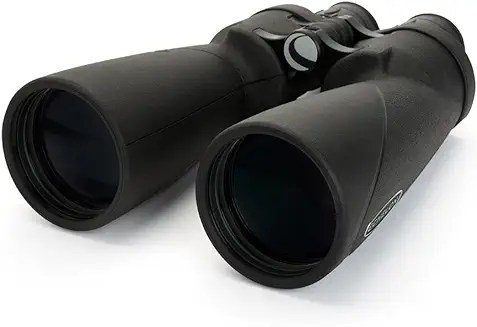
Celestron Echelon 20×70
Designed specifically for astronomy, these binoculars feature powerful magnification and are also suitable for long-range terrestrial viewing. They are robustly built to withstand various environmental conditions[4].

Look here for the perfect Binocular Gift

Telescopes: Delving Deeper into Space

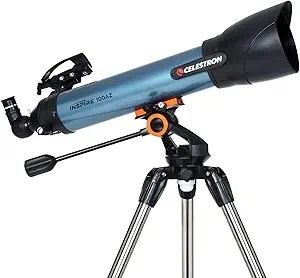
Celestron Inspire 100AZ Refractor Telescope
Perfect for beginners and families, this telescope is easy to set up and use. It features an innovative design with integrated smartphone adapters for capturing images of celestial objects. The Inspire 100AZ provides clear views of the Moon, planets, and bright deep-sky objects.

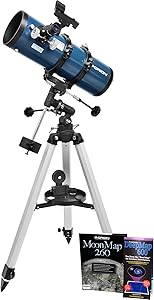
Orion StarBlast II 4.5 Equatorial Reflector Telescope
This telescope is an excellent choice for those who want to learn how to manually track celestial objects using an equatorial mount. Its compact design makes it portable, while its optics provide crisp views of planets and star clusters.

Sky-Watcher Dobsonian Telescope (8-inch)
For hobbyists ready to take their stargazing to the next level, this Dobsonian telescope offers large aperture optics at an affordable price. It delivers stunning views of deep-sky objects like nebulae and galaxies.

Choosing the right Christmas Gift

Choosing the Right Equipment

When selecting binoculars or telescopes as gifts, consider the recipient’s age, experience level, and interests. Here are some tips to guide your decision:

  1. Age Appropriateness: For young children or beginners, start with binoculars or simple telescopes that are easy to use. Avoid overly complex models that might discourage them.
  2. Portability: Consider how portable the equipment needs to be. Binoculars are generally more portable than telescopes, but some compact telescopes can also be easily transported.
  3. Ease of Use: Look for equipment with straightforward setup processes. Telescopes with alt-azimuth mounts are generally easier for beginners compared to equatorial mounts.
  4. Budget: Set a budget that fits your needs. There are quality options available at various price points.
  5. Features: Consider additional features like smartphone adapters for astrophotography or computerized mounts for automatic tracking of celestial objects.

Enhancing the Stargazing Experience

To complement binoculars or telescopes, consider these additional gift ideas:

  • Star Charts or Astronomy Apps: These tools help users identify constellations and celestial objects.
  • Red Flashlights: Preserve night vision while reading star charts.
  • Astronomy Books: Provide educational content about stars, planets, and other celestial phenomena.
  • Observation Journals: Encourage note-taking during stargazing sessions to track observations over time.

Family-Friendly Stargazing Activities

Stargazing can be a wonderful family activity that fosters curiosity and learning. Here are some ideas to make it engaging for all ages:

  • Plan a Stargazing Night: Choose a clear night and head outside with your new equipment. Use star charts or apps to locate constellations and planets.
  • Create a Constellation Craft: Use glow-in-the-dark stickers or paint to recreate constellations on paper or canvas.
  • Host a Meteor Shower Party: Gather friends and family during meteor showers like the Geminids in December for a night of sky-watching.
  • Attend Local Astronomy Events: Check if local observatories or astronomy clubs host public viewing nights or events.

Conclusion

Binoculars and telescopes make thoughtful Christmas gifts that can spark a lifelong interest in astronomy. Whether you’re gifting a child their first pair of binoculars or helping an adult upgrade their telescope setup, these tools open up a universe of exploration right from your backyard.

By considering factors like age appropriateness, ease of use, portability, budget, and features, you can select the perfect equipment tailored to your loved one’s needs. Complement these gifts with educational materials and family-friendly activities to enhance their stargazing experience.

As you prepare for the holiday season, remember that the gift of astronomy is not just about observing distant worlds but also about creating memories under the stars with family and friends. Happy stargazing!

Citations:
[1] https://www.livescience.com/best-binoculars-for-stargazing
[2] https://www.space.com/29798-best-telescopes-for-kids.html
[3] https://teachbesideme.com/fun-kids-astronomy-activities-for-teaching/
[4] https://www.bestbinocularsreviews.com/astronomy/best-astronomy-binoculars.php
[5] https://littlebinsforlittlehands.com/space-activities-for-kids/
[6] https://www.space.com/26021-best-binoculars.html
[7] https://www.skyatnightmagazine.com/advice/science-projects-kids-children
[8] https://www.skyatnightmagazine.com/advice/best-binoculars-for-astronomy