Exploring the February 2025 Night Sky: A Family-Friendly Guide

February 2025 offers an exciting array of celestial events for families to enjoy together. As the winter chill lingers, the night sky presents a perfect opportunity for stargazing adventures. Let’s explore what the February 2025 night sky has in store for us!

The Planet Parade Continues

One of the month’s highlights is the continuation of the planet parade from late January. This spectacular alignment of planets provides an excellent chance for families to explore our solar system neighbors.

Venus and the Moon – February 1

Start your month with a beautiful pairing of Venus and the crescent Moon. Look to the southwestern sky after sunset to spot this dazzling duo. Venus will appear as an extremely bright “star” near the delicate crescent Moon.

Observing tip: This is an excellent opportunity for astrophotography beginners. Try capturing the scene with a smartphone camera or a DSLR on a tripod.

Moon near Uranus – February 5

On February 5, the Moon will pass close to Uranus. While Uranus itself is too faint to see with the naked eye, you can use the Moon as a guide to locate its position.

Observing tip: You’ll need a telescope to spot Uranus. Look for a tiny, blue-green disk near the Moon.

Moon and Jupiter – February 6

Jupiter, the largest planet in our solar system, will have its turn with the Moon on February 6. Look for the bright planet near the Moon in the evening sky.

Observing tip: With binoculars or a small telescope, you might be able to spot Jupiter’s four largest moons as tiny “stars” around the planet.

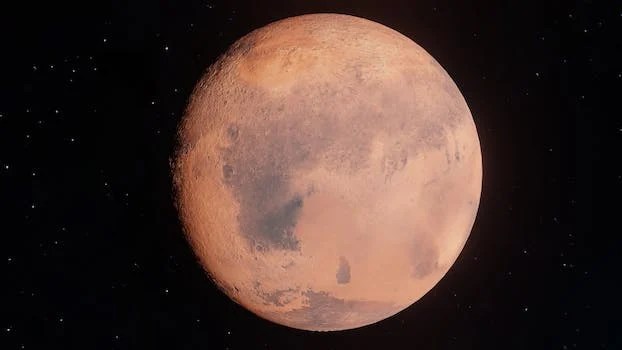
Moon near Mars – February 9

The Moon’s planetary tour continues with a close approach to Mars on February 9. Look for the reddish planet near the Moon in the night sky.

Observing tip: Mars’ distinctive reddish color should be visible to the naked eye. A telescope might reveal some of the planet’s surface features.

Venus at Peak Brightness – February 16

Mark your calendars for February 16, when Venus reaches its peak brightness for 2025. On this night, Venus will shine at an impressive magnitude of -4.9, making it the brightest object in the night sky after the Moon.

Observing tip: This is a great opportunity to show young stargazers how bright a planet can appear. Challenge them to spot Venus before any stars become visible after sunset.

Full Snow Moon – February 12

The Full Moon of February, traditionally known as the Snow Moon, will illuminate the night sky on February 12. This is an excellent opportunity for moon-watching and lunar photography.

Observing tip: Try observing the Moon with binoculars or a small telescope. Even low magnification will reveal craters, mountains, and dark “seas” on the lunar surface.

Alpha Centaurids Meteor Shower – February 8 and 9

While not one of the year’s most spectacular meteor showers, the Alpha Centaurids can still provide an enjoyable viewing experience. The shower peaks on the nights of February 8 and 9.

Observing tip: Find a dark location away from city lights. Look towards the constellation Centaurus in the southern sky. Remember, patience is key when watching for meteors!

Seven-Planet Alignment – February 28

The month concludes with a rare treat – all seven planets visible in the night sky simultaneously on February 28. While not all will be easily visible to the naked eye, this alignment offers a unique opportunity to explore our solar system neighbors.

Observing tip: Start with the easily visible planets like Venus and Jupiter, then use binoculars or a telescope to locate the fainter ones. A star chart or astronomy app can be helpful for identifying each planet.

Constellations of February

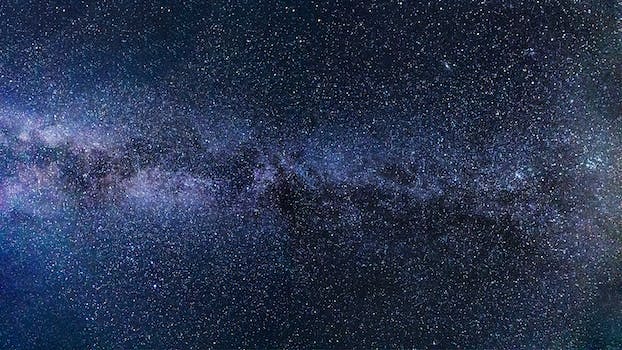
February’s long nights provide excellent opportunities to explore winter constellations. Here are a few to look out for:

  1. Orion: This prominent constellation is easy to spot with its distinctive “belt” of three stars. Look for the Orion Nebula below the belt – it’s visible as a fuzzy patch even to the naked eye.
  2. Taurus: Find the V-shaped face of the bull, marked by the bright orange star Aldebaran. The beautiful Pleiades star cluster is also part of this constellation.
  3. Gemini: Look for the twin stars Castor and Pollux marking the heads of the twins.
  4. Canis Major: Home to Sirius, the brightest star in the night sky, this constellation represents Orion’s larger hunting dog.

Family-Friendly Stargazing Activities

  1. Moon Journal: Throughout the month, observe and sketch the Moon’s changing phases. This is a great way to understand lunar cycles.
  2. Planet Scavenger Hunt: Use the planet parade as an opportunity to locate and identify different planets. Make it a friendly competition to see who can spot the most!
  3. Constellation Storytelling: Learn the myths associated with the winter constellations and share these stories while stargazing.
  4. Star Party: Host a family gathering for stargazing. Bring hot cocoa, blankets, and snacks for a cozy night under the stars.
  5. Astrophotography: Try capturing the night sky with a smartphone or camera. The Moon and bright planets make great subjects for beginners.

Tips for Successful Stargazing

  1. Choose the right location: Find a spot away from city lights for the best views.
  2. Allow time for dark adaptation: Give your eyes at least 30 minutes to adjust to the darkness.
  3. Use red light: If you need light to read star charts or adjust equipment, use a red flashlight to preserve your night vision.
  4. Dress warmly: February nights can be cold, so dress in layers and bring blankets.
  5. Bring the right tools: Binoculars are a great starting point for astronomy. They’re easier to use than telescopes and can show you many celestial wonders.
  6. Use star charts or apps: Sky maps or smartphone apps can help you identify what you’re seeing. Just remember to use night mode on your device to preserve your dark adaptation.

Remember, patience and persistence are key when exploring the night sky. Not every night will be clear, and it takes time to learn your way around the celestial sphere. But with each stargazing session, you’ll become more familiar with the wonders above us.

As you gaze up at the February sky, take a moment to reflect on the vastness of space and our place within it. The light from the stars you see has traveled for years, decades, or even centuries to reach your eyes. You’re not just looking at the sky – you’re looking back in time.

So bundle up, step outside, and look up. The February 2025 night sky is waiting to be explored, full of wonders both familiar and new. Whether you’re using your naked eyes, binoculars, or a telescope, there’s something for everyone to discover. Happy stargazing!

Citations:
[1] https://www.popsci.com/science/stargazing-guide-february-2025/
[2] https://starwalk.space/en/news/night-sky-tonight-february
[3] https://hudsonriverpark.org/visit/events/event/kids-week-at-the-intrepid-museum-february-24-2024/
[4] https://intrepidmuseum.org/kids-week
[5] http://www.seasky.org/astronomy/astronomy-calendar-current.html
[6] https://skyandtelescope.org/astronomy-resources/stargazing-basics/family-projects-and-experiments/
[7] https://www.instagram.com/starwalkapp/reel/DFeUisfoqX6/
[8] https://intrepidmuseum.org/kids-week-february-15-22-2025
[9] https://in-the-sky.org/newscal.php?year=2025&month=2
[10] https://science.nasa.gov/for-everyone/february-2025/


Answer from Perplexity: https://www.perplexity.ai/search/backyard-astronomy-as-a-beginn-5UrB9jN6TReA1CDQWmJimw?utm_source=copy_output

Night Sky for October 2024: A Family-Friendly Guide

October 2024 offers a wealth of celestial wonders for families to explore together. This guide will help you navigate the night sky, providing instructions for aligning manual telescopes and using binoculars to observe each event. Remember, patience and practice are key when stargazing with manual equipment.

Preparing for Your Stargazing Adventures:

  1. Choose a dark location away from city lights.
  2. Allow your eyes to adjust to the darkness for about 30 minutes.
  3. Use red light to preserve night vision when reading charts or adjusting equipment.
  4. Dress warmly, as October nights can be chilly.
  5. Bring star charts, a compass, and a planisphere to help locate objects.

Now, let’s explore the celestial highlights for October 2024:

  1. New Moon – October 2

While there’s no Moon to observe, this is an excellent night for deep-sky objects.

Manual Telescope: Use star charts to locate objects like the Andromeda Galaxy (M31) or the Pleiades (M45). For M31, find the constellation Andromeda and slowly sweep the area with your lowest power eyepiece until you spot a faint, fuzzy patch.

Binoculars: The Pleiades are easily visible in binoculars. Look for a small, tight cluster of stars in the constellation Taurus.

  1. Draconid Meteor Shower – Peak on October 8-9

This shower is best observed in the early evening hours.

Manual Telescope/Binoculars: Meteor showers are best viewed with the naked eye. Find a comfortable position looking towards the constellation Draco. Use binoculars to examine any persistent trails left by bright meteors.

  1. Mars near Regulus – October 12

Look for this pairing in the predawn sky.

Manual Telescope: First, locate the bright star Regulus in Leo. Then, look for the reddish “star” nearby, which will be Mars. Use your lowest power eyepiece to fit both objects in the same field of view.

Binoculars: This pairing should be easily visible in binoculars. The color contrast between blue-white Regulus and reddish Mars will be striking.

  1. Full Moon (Hunter’s Moon) – October 17

The full Moon is easy to spot with the naked eye.

Manual Telescope: Use your lowest power eyepiece to observe the Moon’s features. Focus on the terminator (the line between light and dark) for the best views of craters and mountains.

Binoculars: Even low-power binoculars will reveal major lunar features like the dark maria (seas) and larger craters.

  1. Orionid Meteor Shower – Peak on October 21-22

This shower is best observed after midnight.

Manual Telescope/Binoculars: Like the Draconids, this shower is best viewed with the naked eye. Look towards the constellation Orion. Use binoculars to examine any persistent trails left by bright meteors.

  1. Venus at Greatest Western Elongation – October 23

Look for Venus in the eastern sky before sunrise.

Manual Telescope: Locate Venus, which will be the brightest “star” in the morning sky. Use medium to high magnification to observe its phase, which should appear as a half-lit disk.

Binoculars: Venus will be easily visible as a bright point of light. While you won’t see its phase, you may notice its non-twinkling appearance compared to stars.

  1. Mercury at Greatest Western Elongation – October 31

Look for Mercury low in the eastern sky just before sunrise.

Manual Telescope: This can be challenging due to Mercury’s low altitude. Use your finder scope or lowest power eyepiece to sweep the area just above the eastern horizon. Once found, increase magnification to see its tiny disk.

Binoculars: Mercury will appear as a bright “star” near the horizon. Binoculars can help you spot it in the brightening dawn sky.

General Tips for Manual Telescope Alignment:

  1. Polar Alignment (for equatorial mounts):
  • Set your latitude on the mount.
  • Point the polar axis towards Polaris (the North Star).
  • Use the azimuth and altitude adjustments on your mount to center Polaris in your polar finder scope or main telescope.
  1. Two-Star Alignment (for alt-azimuth mounts):
  • Level your tripod.
  • Point your telescope at a bright star or planet.
  • Center the object in your finderscope, then in your eyepiece.
  • Repeat with a second bright star in a different part of the sky.
  1. Star Hopping:
  • Start from a bright, easily identifiable star near your target.
  • Use star charts to identify patterns of stars that lead to your target.
  • Move your telescope along this path, matching what you see in the eyepiece to the chart.

Tips for Using Binoculars:

Check here for Binoculars

  1. Choose binoculars with magnification between 7x and 10x for astronomical viewing.
  2. Use a tripod or lean against a stable object to minimize shake.
  3. Focus on one eye at a time for the sharpest view.
  4. Scan the sky slowly, giving your eyes time to detect faint objects.

Constellation Highlights for October:

  1. Pegasus: Look for the Great Square of Pegasus high in the eastern sky.
    Manual Telescope/Binoculars: Use the Square as a starting point to star-hop to other objects.
  2. Cassiopeia: This W-shaped constellation is high in the northeast.
    Manual Telescope/Binoculars: Scan the rich star fields in this area of the Milky Way.
  3. Andromeda: Adjacent to Pegasus, this constellation hosts the Andromeda Galaxy.
    Manual Telescope/Binoculars: Use the constellation to locate M31, the Andromeda Galaxy.
  4. Cygnus: The Northern Cross flies high overhead.
    Manual Telescope/Binoculars: Explore the rich star fields along the Milky Way in this constellation.

Additional Activities for Families:

  1. Moon Observation Challenge: Throughout the month, observe how the Moon’s appearance changes. Use a manual telescope or binoculars to sketch what you see each night.
  2. Planet Watch: Jupiter and Saturn are visible in the evening sky. Use your manual telescope to observe Jupiter’s moons and Saturn’s rings.
  3. Deep Sky Object Hunt: Use star charts to locate and observe different types of objects like star clusters, nebulae, and galaxies.
  4. Constellation Storytelling: Learn the myths associated with the constellations and share these stories while stargazing.
  5. Astrophotography: Try capturing the Moon or bright planets with a smartphone adapter for your telescope or binoculars.

Remember, the key to successful stargazing is patience and persistence. Don’t get discouraged if you can’t immediately find or identify everything. Each night under the stars is an opportunity to learn and improve your observing skills.

Check here for astronomy equipment

October 2024 offers a diverse array of celestial events for families to enjoy together. From meteor showers to planetary alignments, and from the full Moon to deep sky objects, there’s something for everyone to discover in the night sky this month.

As you explore the wonders of the cosmos, take time to appreciate the vastness of the universe and our place within it. Stargazing not only offers a chance to learn about astronomy but also provides a unique opportunity for family bonding and creating lasting memories.

So grab your manual telescope or binoculars, bundle up, and head outside to experience the magic of the October night sky. Who knows? You might just inspire the next generation of astronomers, astrophysicists, or space explorers. Happy stargazing!

Citations:
[1] https://www.youtube.com/watch?v=_VSgnRoOgoQ
[2] https://www.youtube.com/watch?v=plx6XXDgf2E
[3] https://www.cloudynights.com/topic/870454-align-using-manual-align/
[4] https://www.amazon.com/Celestron-NexStar-6-SE-Telescope/dp/B000GUKTDM
[5] https://www.highpointscientific.com/astronomy-hub/post/how-tos/how-to-polar-align-during-the-day
[6] https://www.astro-baby.com/astrobaby/help/simple-polar-alignment/
[7] https://www.youtube.com/watch?v=1umvV3XKtCs
[8] https://www.skyatnightmagazine.com/advice/how-to-master-setting-circles

Stargazing binoculars vs. telescope

Hey there fellow stargazers! Are you ready to embark on an astronomical adventure? Today, we’re diving into the world of stargazing with a friendly showdown between binoculars and telescopes. Strap in and let’s explore the cosmos together!

When it comes to stargazing, having the right equipment can make all the difference. So, let’s start with some essential stargazing tips that will help you make the most of your celestial journey. Whether you’re a seasoned enthusiast or just starting out, these tips will help you navigate the night sky with ease.

Now, let’s talk about the stars of the show – binoculars and telescopes. These two astronomy essentials are the key to unlocking the wonders of the universe. So, which one should you choose? Let’s dive deeper and find out.

First up, let’s take a peek through the lenses of binoculars. Ah, the portability of binoculars is simply unmatched. It’s like having a pair of magic glasses that you can carry with you wherever you go. Whether you’re planning a hike under the stars or a spontaneous stargazing escapade, binoculars are your trusty companions. Just grab them, adjust the focus, and let the adventure begin!

Speaking of adventure, let me share a personal anecdote. One clear night, armed with my binoculars, I embarked on a stargazing expedition in the remote countryside. Away from the city lights, I was mesmerized by the vastness of the night sky. With binoculars in hand, I marveled at the multitude of stars, constellations, and even caught a glimpse of a passing satellite. The wider field of view offered by binoculars allowed me to soak in the cosmic beauty, one constellation at a time.

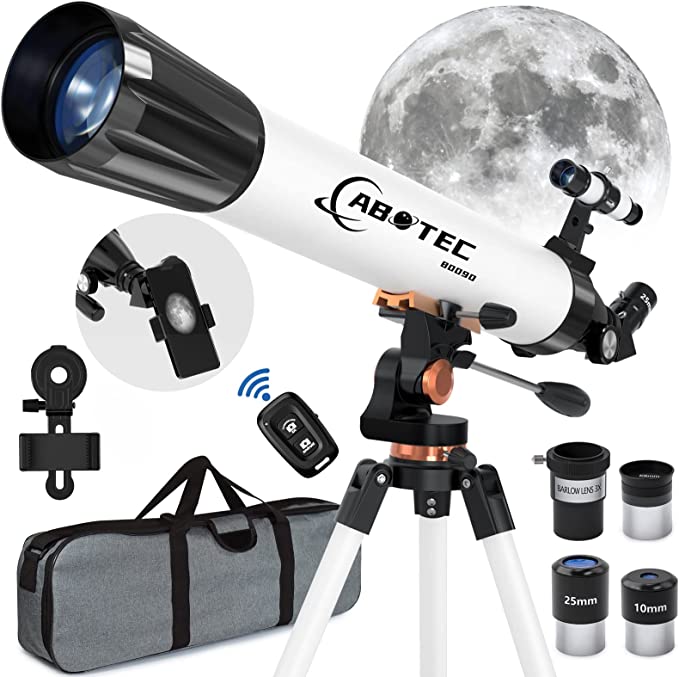
But what about telescopes, you ask? Ah, telescopes are like a portal to another dimension. Their ability to bring distant celestial objects up close and personal is nothing short of magical. Imagine peering through the eyepiece of a telescope and discovering intricate details on the surface of the moon or witnessing the rings of Saturn in all their majestic glory. It’s like having a front-row seat to the greatest cosmic spectacle ever.

I remember the first time I used a telescope. It was a surreal experience as I observed Jupiter and its Galilean moons. The sheer power of the telescope’s magnification took my breath away. I felt like an explorer, venturing into uncharted territories of the night sky. It was a moment of pure awe and wonder that I’ll never forget.

Now, let’s touch upon an important topic – telescope buying. If you’re ready to take your stargazing to the next level, choosing the right telescope is crucial. Consider factors such as aperture size, focal length, and mount stability. A well-informed decision will ensure that you have a telescope that aligns with your astronomical ambitions.

Similarly, if you’re leaning towards the portable and user-friendly option of binoculars, it’s essential to read some honest binoculars reviews. Get insights from fellow stargazers who have tested different models and can guide you towards the perfect pair for your cosmic explorations.

As we wrap up our celestial journey, remember that stargazing is about more than just equipment. It’s about immersing yourself in the beauty of the night sky, forging a connection with the cosmos, and discovering the wonders that lie beyond our earthly existence. So, don’t hesitate to grab your binoculars or telescope, head out into the night, and embark on your own night sky exploration.

Happy stargazing, my friends! May your astronomical adventures be filled with awe, wonder, and countless moments of celestial magic. And don’t forget to share your stories and experiences in the comment section.