Exploring the February 2025 Night Sky: A Family-Friendly Guide

February 2025 offers an exciting array of celestial events for families to enjoy together. As the winter chill lingers, the night sky presents a perfect opportunity for stargazing adventures. Let’s explore what the February 2025 night sky has in store for us!

The Planet Parade Continues

One of the month’s highlights is the continuation of the planet parade from late January. This spectacular alignment of planets provides an excellent chance for families to explore our solar system neighbors.

Venus and the Moon – February 1

Start your month with a beautiful pairing of Venus and the crescent Moon. Look to the southwestern sky after sunset to spot this dazzling duo. Venus will appear as an extremely bright “star” near the delicate crescent Moon.

Observing tip: This is an excellent opportunity for astrophotography beginners. Try capturing the scene with a smartphone camera or a DSLR on a tripod.

Moon near Uranus – February 5

On February 5, the Moon will pass close to Uranus. While Uranus itself is too faint to see with the naked eye, you can use the Moon as a guide to locate its position.

Observing tip: You’ll need a telescope to spot Uranus. Look for a tiny, blue-green disk near the Moon.

Moon and Jupiter – February 6

Jupiter, the largest planet in our solar system, will have its turn with the Moon on February 6. Look for the bright planet near the Moon in the evening sky.

Observing tip: With binoculars or a small telescope, you might be able to spot Jupiter’s four largest moons as tiny “stars” around the planet.

Moon near Mars – February 9

The Moon’s planetary tour continues with a close approach to Mars on February 9. Look for the reddish planet near the Moon in the night sky.

Observing tip: Mars’ distinctive reddish color should be visible to the naked eye. A telescope might reveal some of the planet’s surface features.

Venus at Peak Brightness – February 16

Mark your calendars for February 16, when Venus reaches its peak brightness for 2025. On this night, Venus will shine at an impressive magnitude of -4.9, making it the brightest object in the night sky after the Moon.

Observing tip: This is a great opportunity to show young stargazers how bright a planet can appear. Challenge them to spot Venus before any stars become visible after sunset.

Full Snow Moon – February 12

The Full Moon of February, traditionally known as the Snow Moon, will illuminate the night sky on February 12. This is an excellent opportunity for moon-watching and lunar photography.

Observing tip: Try observing the Moon with binoculars or a small telescope. Even low magnification will reveal craters, mountains, and dark “seas” on the lunar surface.

Alpha Centaurids Meteor Shower – February 8 and 9

While not one of the year’s most spectacular meteor showers, the Alpha Centaurids can still provide an enjoyable viewing experience. The shower peaks on the nights of February 8 and 9.

Observing tip: Find a dark location away from city lights. Look towards the constellation Centaurus in the southern sky. Remember, patience is key when watching for meteors!

Seven-Planet Alignment – February 28

The month concludes with a rare treat – all seven planets visible in the night sky simultaneously on February 28. While not all will be easily visible to the naked eye, this alignment offers a unique opportunity to explore our solar system neighbors.

Observing tip: Start with the easily visible planets like Venus and Jupiter, then use binoculars or a telescope to locate the fainter ones. A star chart or astronomy app can be helpful for identifying each planet.

Constellations of February

February’s long nights provide excellent opportunities to explore winter constellations. Here are a few to look out for:

  1. Orion: This prominent constellation is easy to spot with its distinctive “belt” of three stars. Look for the Orion Nebula below the belt – it’s visible as a fuzzy patch even to the naked eye.
  2. Taurus: Find the V-shaped face of the bull, marked by the bright orange star Aldebaran. The beautiful Pleiades star cluster is also part of this constellation.
  3. Gemini: Look for the twin stars Castor and Pollux marking the heads of the twins.
  4. Canis Major: Home to Sirius, the brightest star in the night sky, this constellation represents Orion’s larger hunting dog.

Family-Friendly Stargazing Activities

  1. Moon Journal: Throughout the month, observe and sketch the Moon’s changing phases. This is a great way to understand lunar cycles.
  2. Planet Scavenger Hunt: Use the planet parade as an opportunity to locate and identify different planets. Make it a friendly competition to see who can spot the most!
  3. Constellation Storytelling: Learn the myths associated with the winter constellations and share these stories while stargazing.
  4. Star Party: Host a family gathering for stargazing. Bring hot cocoa, blankets, and snacks for a cozy night under the stars.
  5. Astrophotography: Try capturing the night sky with a smartphone or camera. The Moon and bright planets make great subjects for beginners.

Tips for Successful Stargazing

  1. Choose the right location: Find a spot away from city lights for the best views.
  2. Allow time for dark adaptation: Give your eyes at least 30 minutes to adjust to the darkness.
  3. Use red light: If you need light to read star charts or adjust equipment, use a red flashlight to preserve your night vision.
  4. Dress warmly: February nights can be cold, so dress in layers and bring blankets.
  5. Bring the right tools: Binoculars are a great starting point for astronomy. They’re easier to use than telescopes and can show you many celestial wonders.
  6. Use star charts or apps: Sky maps or smartphone apps can help you identify what you’re seeing. Just remember to use night mode on your device to preserve your dark adaptation.

Remember, patience and persistence are key when exploring the night sky. Not every night will be clear, and it takes time to learn your way around the celestial sphere. But with each stargazing session, you’ll become more familiar with the wonders above us.

As you gaze up at the February sky, take a moment to reflect on the vastness of space and our place within it. The light from the stars you see has traveled for years, decades, or even centuries to reach your eyes. You’re not just looking at the sky – you’re looking back in time.

So bundle up, step outside, and look up. The February 2025 night sky is waiting to be explored, full of wonders both familiar and new. Whether you’re using your naked eyes, binoculars, or a telescope, there’s something for everyone to discover. Happy stargazing!

Citations:
[1] https://www.popsci.com/science/stargazing-guide-february-2025/
[2] https://starwalk.space/en/news/night-sky-tonight-february
[3] https://hudsonriverpark.org/visit/events/event/kids-week-at-the-intrepid-museum-february-24-2024/
[4] https://intrepidmuseum.org/kids-week
[5] http://www.seasky.org/astronomy/astronomy-calendar-current.html
[6] https://skyandtelescope.org/astronomy-resources/stargazing-basics/family-projects-and-experiments/
[7] https://www.instagram.com/starwalkapp/reel/DFeUisfoqX6/
[8] https://intrepidmuseum.org/kids-week-february-15-22-2025
[9] https://in-the-sky.org/newscal.php?year=2025&month=2
[10] https://science.nasa.gov/for-everyone/february-2025/


Answer from Perplexity: https://www.perplexity.ai/search/backyard-astronomy-as-a-beginn-5UrB9jN6TReA1CDQWmJimw?utm_source=copy_output

Night Sky for October 2024: A Family-Friendly Guide

October 2024 offers a wealth of celestial wonders for families to explore together. This guide will help you navigate the night sky, providing instructions for aligning manual telescopes and using binoculars to observe each event. Remember, patience and practice are key when stargazing with manual equipment.

Preparing for Your Stargazing Adventures:

  1. Choose a dark location away from city lights.
  2. Allow your eyes to adjust to the darkness for about 30 minutes.
  3. Use red light to preserve night vision when reading charts or adjusting equipment.
  4. Dress warmly, as October nights can be chilly.
  5. Bring star charts, a compass, and a planisphere to help locate objects.

Now, let’s explore the celestial highlights for October 2024:

  1. New Moon – October 2

While there’s no Moon to observe, this is an excellent night for deep-sky objects.

Manual Telescope: Use star charts to locate objects like the Andromeda Galaxy (M31) or the Pleiades (M45). For M31, find the constellation Andromeda and slowly sweep the area with your lowest power eyepiece until you spot a faint, fuzzy patch.

Binoculars: The Pleiades are easily visible in binoculars. Look for a small, tight cluster of stars in the constellation Taurus.

  1. Draconid Meteor Shower – Peak on October 8-9

This shower is best observed in the early evening hours.

Manual Telescope/Binoculars: Meteor showers are best viewed with the naked eye. Find a comfortable position looking towards the constellation Draco. Use binoculars to examine any persistent trails left by bright meteors.

  1. Mars near Regulus – October 12

Look for this pairing in the predawn sky.

Manual Telescope: First, locate the bright star Regulus in Leo. Then, look for the reddish “star” nearby, which will be Mars. Use your lowest power eyepiece to fit both objects in the same field of view.

Binoculars: This pairing should be easily visible in binoculars. The color contrast between blue-white Regulus and reddish Mars will be striking.

  1. Full Moon (Hunter’s Moon) – October 17

The full Moon is easy to spot with the naked eye.

Manual Telescope: Use your lowest power eyepiece to observe the Moon’s features. Focus on the terminator (the line between light and dark) for the best views of craters and mountains.

Binoculars: Even low-power binoculars will reveal major lunar features like the dark maria (seas) and larger craters.

  1. Orionid Meteor Shower – Peak on October 21-22

This shower is best observed after midnight.

Manual Telescope/Binoculars: Like the Draconids, this shower is best viewed with the naked eye. Look towards the constellation Orion. Use binoculars to examine any persistent trails left by bright meteors.

  1. Venus at Greatest Western Elongation – October 23

Look for Venus in the eastern sky before sunrise.

Manual Telescope: Locate Venus, which will be the brightest “star” in the morning sky. Use medium to high magnification to observe its phase, which should appear as a half-lit disk.

Binoculars: Venus will be easily visible as a bright point of light. While you won’t see its phase, you may notice its non-twinkling appearance compared to stars.

  1. Mercury at Greatest Western Elongation – October 31

Look for Mercury low in the eastern sky just before sunrise.

Manual Telescope: This can be challenging due to Mercury’s low altitude. Use your finder scope or lowest power eyepiece to sweep the area just above the eastern horizon. Once found, increase magnification to see its tiny disk.

Binoculars: Mercury will appear as a bright “star” near the horizon. Binoculars can help you spot it in the brightening dawn sky.

General Tips for Manual Telescope Alignment:

  1. Polar Alignment (for equatorial mounts):
  • Set your latitude on the mount.
  • Point the polar axis towards Polaris (the North Star).
  • Use the azimuth and altitude adjustments on your mount to center Polaris in your polar finder scope or main telescope.
  1. Two-Star Alignment (for alt-azimuth mounts):
  • Level your tripod.
  • Point your telescope at a bright star or planet.
  • Center the object in your finderscope, then in your eyepiece.
  • Repeat with a second bright star in a different part of the sky.
  1. Star Hopping:
  • Start from a bright, easily identifiable star near your target.
  • Use star charts to identify patterns of stars that lead to your target.
  • Move your telescope along this path, matching what you see in the eyepiece to the chart.

Tips for Using Binoculars:

Check here for Binoculars

  1. Choose binoculars with magnification between 7x and 10x for astronomical viewing.
  2. Use a tripod or lean against a stable object to minimize shake.
  3. Focus on one eye at a time for the sharpest view.
  4. Scan the sky slowly, giving your eyes time to detect faint objects.

Constellation Highlights for October:

  1. Pegasus: Look for the Great Square of Pegasus high in the eastern sky.
    Manual Telescope/Binoculars: Use the Square as a starting point to star-hop to other objects.
  2. Cassiopeia: This W-shaped constellation is high in the northeast.
    Manual Telescope/Binoculars: Scan the rich star fields in this area of the Milky Way.
  3. Andromeda: Adjacent to Pegasus, this constellation hosts the Andromeda Galaxy.
    Manual Telescope/Binoculars: Use the constellation to locate M31, the Andromeda Galaxy.
  4. Cygnus: The Northern Cross flies high overhead.
    Manual Telescope/Binoculars: Explore the rich star fields along the Milky Way in this constellation.

Additional Activities for Families:

  1. Moon Observation Challenge: Throughout the month, observe how the Moon’s appearance changes. Use a manual telescope or binoculars to sketch what you see each night.
  2. Planet Watch: Jupiter and Saturn are visible in the evening sky. Use your manual telescope to observe Jupiter’s moons and Saturn’s rings.
  3. Deep Sky Object Hunt: Use star charts to locate and observe different types of objects like star clusters, nebulae, and galaxies.
  4. Constellation Storytelling: Learn the myths associated with the constellations and share these stories while stargazing.
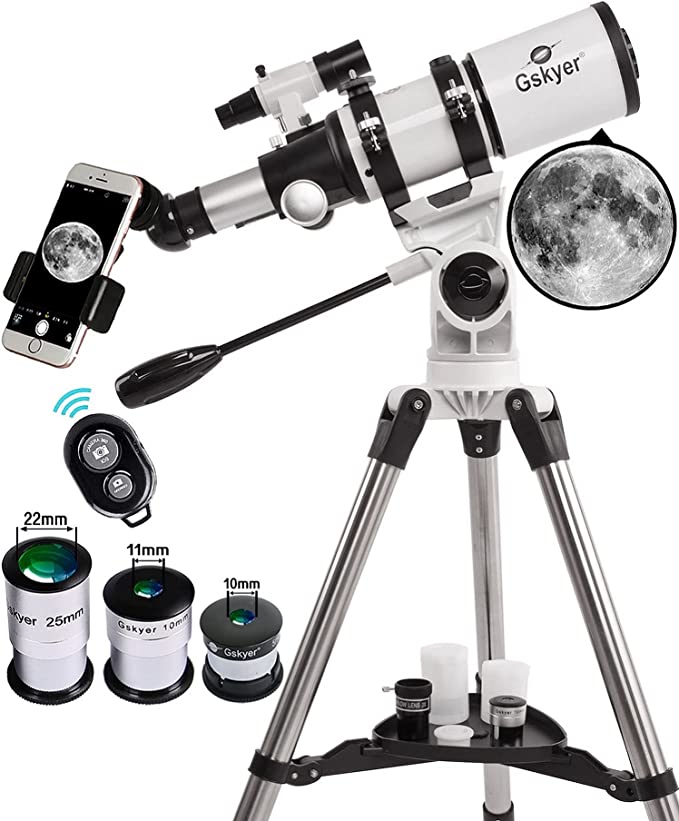
  5. Astrophotography: Try capturing the Moon or bright planets with a smartphone adapter for your telescope or binoculars.

Remember, the key to successful stargazing is patience and persistence. Don’t get discouraged if you can’t immediately find or identify everything. Each night under the stars is an opportunity to learn and improve your observing skills.

Check here for astronomy equipment

October 2024 offers a diverse array of celestial events for families to enjoy together. From meteor showers to planetary alignments, and from the full Moon to deep sky objects, there’s something for everyone to discover in the night sky this month.

As you explore the wonders of the cosmos, take time to appreciate the vastness of the universe and our place within it. Stargazing not only offers a chance to learn about astronomy but also provides a unique opportunity for family bonding and creating lasting memories.

So grab your manual telescope or binoculars, bundle up, and head outside to experience the magic of the October night sky. Who knows? You might just inspire the next generation of astronomers, astrophysicists, or space explorers. Happy stargazing!

Citations:
[1] https://www.youtube.com/watch?v=_VSgnRoOgoQ
[2] https://www.youtube.com/watch?v=plx6XXDgf2E
[3] https://www.cloudynights.com/topic/870454-align-using-manual-align/
[4] https://www.amazon.com/Celestron-NexStar-6-SE-Telescope/dp/B000GUKTDM
[5] https://www.highpointscientific.com/astronomy-hub/post/how-tos/how-to-polar-align-during-the-day
[6] https://www.astro-baby.com/astrobaby/help/simple-polar-alignment/
[7] https://www.youtube.com/watch?v=1umvV3XKtCs
[8] https://www.skyatnightmagazine.com/advice/how-to-master-setting-circles

BINOCULARS the underrated Tool for Backyard Astronomy

Why binoculars are the underrated tool for backyard astronomy,

Have you ever gazed up at the night sky, mesmerized by the twinkling stars and sparkling constellations? If so, you may be considering investing in a telescope for backyard astronomy. But have you considered the power of binoculars? These often-overlooked tools can be just as effective, if not more so, than larger telescopes. In this article, we’ll explore why binoculars deserve more credit in the world of amateur astronomy and share tips for using them to get the most out of your stargazing experience. So whether you’re a seasoned pro or a beginner in the world of stargazing, grab a pair of binoculars along with your star maps and observing charts, and let’s explore the night sky together.,

Binoculars vs telescopes: a comparison

While binoculars are often overlooked in the world of amateur astronomy, they can provide a unique observing experience compared to telescopes. Let’s take a closer look at some of the differences between binoculars and telescopes.

One advantage of binoculars is their portability. They are smaller and lighter than telescopes, making them easier to transport and set up in different locations. Additionally, binoculars provide a wider field of view than telescopes, allowing you to observe larger sections of the night sky at once.

On the other hand, telescopes offer greater magnification than binoculars, allowing you to see finer details of celestial objects. They are also better suited for observing planets and deep-sky objects like galaxies and nebulae.

Ultimately, choosing between binoculars and telescopes depends on personal preference and observing goals. While telescopes may be better for specific types of celestial objects, binoculars offer a different perspective and can be more versatile for general stargazing.

So, whether you choose binoculars, a telescope or both, remember that the most important thing is to enjoy the wonders of the night sky and keep exploring.,

Moon Gazing

For many of us, our very first experience of learning about the celestial bodies begins when we saw our first full moon in the sky. It is truly a magnificent view even to the naked eye. If the night is clear, you can see amazing detail of the lunar surface just star gazing on in your back yard.

Naturally, as you grow in your love of astronomy, you will find many celestial bodies fascinating. But the moon may always be our first love because is the one far away space object that has the unique distinction of flying close to the earth and upon which man has walked.

Your study of the moon, like anything else, can go from the simple to the very complex. To gaze at the moon with the naked eye, making yourself familiar with the lunar map will help you pick out the seas, craters and other geographic phenomenon that others have already mapped to make your study more enjoyable. Moon maps can be had from any astronomy shop or online and they are well worth the investment.

The best time to view the moon, obviously, is at night when there are few clouds and the weather is accommodating for a long and lasting study. The first quarter yields the greatest detail of study. And don’t be fooled but the blotting out of part of the moon when it is not in full moon stage. The phenomenon known as “earthshine” gives you the ability to see the darkened part of the moon with some detail as well, even if the moon is only at quarter or half display.

To kick it up a notch, a good pair of binoculars can do wonders for the detail you will see on the lunar surface. For best results, get a good wide field in the binocular settings so you can take in the lunar landscape in all its beauty. And because it is almost impossible to hold the binoculars still for the length of time you will want to gaze at this magnificent body in space, you may want to add to your equipment arsenal a good tripod that you can affix the binoculars to so you can study the moon in comfort and with a stable viewing platform.

Binoculars for Astronomy

Of course, to take your moon worship to the ultimate, stepping your equipment up to a good starter telescope will give you the most stunning detail of the lunar surface. With each of these upgrades your knowledge and the depth and scope of what you will be able to see will improve geometrically. For many amateur astronomers, we sometimes cannot get enough of what we can see on this our closest space object.

To take it to a natural next level, you may want to take advantage of partnerships with other astronomers or by visiting one of the truly great telescopes that have been set up by professionals who have invested in better techniques for eliminating atmospheric interference to see the moon even better. The internet can give you access to the Hubble and many of the huge telescopes that are pointed at the moon all the time. Further, many astronomy clubs are working on ways to combine multiple telescopes, carefully synchronized with computers for the best view of the lunar landscape.

Becoming part of the society of devoted amateur astronomers will give you access to these organized efforts to reach new levels in our ability to study the Earth’s moon. And it will give you peers and friends who share your passion for astronomy and who can share their experience and areas of expertise as you seek to find where you might look next in the huge night sky, at the moon and beyond it in your quest for knowledge about the seemingly endless universe above us.

The Wow Hobby

Some people sometimes view hobbies as sometimes silly or frivolous pastimes. And it’s true some hobbies are like that. But it is healthy to have a hobby because it diversifies our interests and keeps us active and fun to be with. But many hobbies are for the few that really get into that area of study. Stamp collecting or rock climbing are valid hobbies. But to be sure, these are not hobbies that just anybody will get into.

Astronomy, by contract, that you could say everybody gets into at some point or another. It is safe to say that everybody at some point has looked up at a magnificent night sky and said “WOW.” At that moment, even if was only for that moment, that person became an amateur astronomy hobbyist. They had that “Wow” moment in what can only be described as the “WOW” hobby.

That common experience is what makes astronomy one of the most exciting and popular hobbies of them all. Any hobby has to have a few “wow” moments. Whether it’s hitting that strike in bowling or finding that perfect stamp, there has to be a moment when the bell rings. Well astronomy has many “wow” moments that occur virtually any clear night in the stars. From the coming of an asteroid shower to just figuring out another constellation, there is so much to do and play with in astronomy that you can be a hobbyist your whole life and never get bored.

THIS LINK WILL TAKE YOU TO THE WEBB TELESCOPE LAUNCH MEDIA KIT

WEBB TELESCOPE PICTURES

Besides the excitement of astronomy, another reason it makes a great hobby is that it is easy and cheap to get started. Unlike skiing for example, to just start enjoying astronomy, all you need is the night sky. But there is no end to the levels of complexity and sophistication you can get to as you move along in astronomy as well. So like any good hobby, astronomy is endlessly fascinating and tremendously addictive because there is always more you want to learn and more you can do to make your knowledge and experiences more interesting and fun.

A great side benefit of how many people are into astronomy is that it is a tremendously social hobby as well. This is unusual for a hobby that is associated with a science, that is executed by staring up in the sky by yourself and that is not competitive. But in any town or city, there are at least a few and probably dozens of astronomy clubs and associations that meet regularly to discuss astronomy.

This is the perfect way to introduce a new recruit to the hobby of astronomy. These clubs thrive on sharing their love of astronomy with new members, kids and those just learning how to explore the stars. Most astronomy clubs schedule regular “safaris” to go out away from the lights of the city and get a good night of sky watching done. Going on such an outing with a big group of enthusiasts is the type of experience that will take a passive interest into astronomy and change it into a healthy obsession.

This side-by-side comparison shows observations of the Southern Ring Nebula in near-infrared light, at left, and mid-infrared light, at right, from NASA’s Webb Telescope. This scene was created by a white dwarf star – the remains of a star like our Sun after it shed its outer layers and stopped burning fuel though nuclear fusion. Those outer layers now form the ejected shells all along this view. In the Near-Infrared Camera (NIRCam) image, the white dwarf appears to the lower left of the bright, central star, partially hidden by a diffraction spike. The same star appears – but brighter, larger, and redder – in the Mid-Infrared Instrument (MIRI) image. This white dwarf star is cloaked in thick layers of dust, which make it appear larger. The brighter star in both images hasn’t yet shed its layers. It closely orbits the dimmer white dwarf, helping to distribute what it’s ejected. Over thousands of years and before it became a white dwarf, the star periodically ejected mass – the visible shells of material. As if on repeat, it contracted, heated up – and then, unable to push out more material, pulsated. Stellar material was sent in all directions – like a rotating sprinkler – and provided the ingredients for this asymmetrical landscape. Today, the white dwarf is heating up the gas in the inner regions – which appear blue at left and red at right. Both stars are lighting up the outer regions, shown in orange and blue, respectively. The images look very different because NIRCam and MIRI collect different wavelengths of light. NIRCam observes near-infrared light, which is closer to the visible wavelengths our eyes detect. MIRI goes farther into the infrared, picking up mid-infrared wavelengths. The second star more clearly appears in the MIRI image, because this instrument can see the gleaming dust around it, bringing it more clearly into view. The stars – and their layers of light – steal more attention in the NIRCam image, while dust pl

THIS LINK WILL TAKE YOU TO THE Webb Telescope Launch Media Kit

WEBB TELESCOPE PICTURES

By going out with a group, you can rub elbows with people who know the night sky, can help you learn how to spot the great constellations and how to train your eyes to see the really cool stuff going on over our heads virtually every night. Astronomy is a passion that is shared equally by everyone from children, to college students to serious scholars in the field to even professional astronomers who work at exploring the universe full time. On any given night, you or your child may be sitting next to an award winning professional astronomer who will happily provide a private lesson looking up at the cosmos just for the sheer fun of shared learning.

The great thing is that everything we have talked about here costs virtually nothing. You can get started with your love of astronomy and learn as you go so when you are ready to make some investment in equipment, you have learned from others what is just the right thing for you. Sure, eventually you will want some astronomy magazine subscriptions, a star map or two and binoculars or a telescope. But those things come as your love of the hobby matures. Meanwhile, get out there, meet others who share your excitement about star gazing and get to know a hobby that never stops making you say “WOW”.

Astronomy Binoculars A Great Alternative

It seems from the moment you begin to take your love of astronomy seriously, the thing that is on your mind is what kind of telescope will you get. And there is no question, investing in a good telescope can really enhance your enjoyment of your new passion in astronomy. But don’t be too hasty to keep up with the big wigs in the astronomy clubs that have advanced telescopes. There is another alternative that can give you most of the advantages of a telescope and some extra flexibility and reduced cost to boot.

That alternative is a good pair of astronomy binoculars. Mostly we think of binoculars as the thing you use to see the football game when you have to sit in the cheap seats. But if you do some homework and had a good grasp on what your stargazing objectives are, the advantages of astronomy binoculars over an entry level telescope can be pretty convincing.

Stephen James O’Meara’s Observing the Night Sky with Binoculars: A Simple Guide to the Heavens 

* As a rule, they are cheaper. So you can get a lot of good stargazing at much less of an investment. You can always spend more money later but for now, this may be just the solution for you.

* There are not so many accessories. To own and operate a telescope takes a lot of orientation to how to set up and use the device. Beyond that, tuning it for optimum view and diagnosing it when you have problems can sometimes make the telescope more of the passion than stargazing itself.

* It is much easier to use. If you have not bought a telescope yet, you may have seen telescope owners going through a laborious set up and break down discipline for each use. This is time they are not looking at the stars. The binocular users are happily stargazing as this goes on.

* Binoculars are lightweight and portable. Unless you have the luxury to set up and operate an observatory from your deck, you are probably going to travel to perform your viewings. Binoculars go with you much easier and they are more lightweight to carry to the country and use while you are there than a cumbersome telescope set up kit.

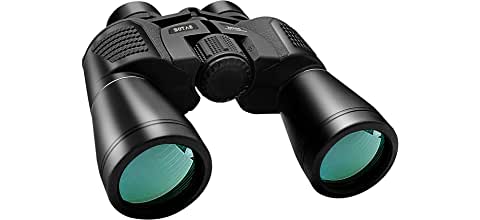
Professional High Powered Binoculars】Binoculars with 20X high power magnification and 50mm objective lens, provides wider field of view at 1000 yards

So give the binocular option some consideration. To make the most effective choice, however, here are a few facts about astronomy binoculars that will help you evaluate which ones are best for you…

Binoculars have two lens sets, one at the end of the eyepiece and a set right next to your eyes. The ones closest to the eye are called the ocular lenses which magnify the image (make it bigger). The ones closest to the sky are called the objective lenses and the size of these lenses will determine how much sky you can see at once. So anytime you are evaluating binoculars, there are two numbers associated with the set. So if the binoculars have a rating of 15-40, that means that the ocular lenses magnify 15 times and the later number is a relative number to how much of the sky you can see. The higher the second number, the more you can see. The explanation is simple. The bigger the lens, the more light it lets in. But be aware that the bigger the second number, the larger, heavier and more cumbersome the binoculars will be.

You will have to balance these two numbers with both your budget and what you want the binoculars to do for you. If you decide to go with a lower power binoculars, you could become frustrated with what you can see and you may have to take your eyes away from the view to get your orientation and consult the star map more often because your range of vision is so limited.

There will also be a temptation to buy a set of binoculars that have zoom functions and other features that will allow you to use it for other purposes such as hunting, whale watching or seeing the football game from the cheap seats. While this is good economy, those functions will get in the way when you are using the binoculars for astronomy. So if you are considering this purchase as your alternative to buying a telescope, our advice is buy binoculars made just for astronomy and don’t take them to the ball game.

Look Up In The Sky

When television was young, there was a hugely popular show based on the still popular fictional character of Superman. The opening of that show had a familiar phrase that went, “Look. Up in the sky. It’s a bird. It’s a plane. It’s Superman!” How beloved Superman has become in our culture and the worldwide fascination with extraterrestrials and all things cosmic only emphasizes that there is a deep curiosity in all humans about nature and astronomy, even if many people would not know to call it astronomy.

Astronomy is one of the oldest sciences of all time. When archeologists unearth ancient civilizations, even as far back as the cavemen, they invariably find art that shows mans unquenchable fascination with the stars. To this day, you can easily get an animated discussion at any gathering on the topic of “Is there intelligent life on other planets?”

Many have tried to explain mankind’s seeming obsession with outer space as a result of an ancient memory or as part of mankind’s eternal nature. Whatever the cause, people of every age and every nation share this one deep interest, to know more about the universe that our tiny planet is just a part of.

It’s rather strange because the actual conduct of a serious student of astronomy is really not the stuff of high adventure. You will never see a “Raiders of the Lost Arc” or “Jurassic Park” movie made about an astronomer. Excitement for lovers of this science is to stay up all night watching the cosmos through a powerful telescope. But that fact does not seem to discourage the tens of thousands to get into astronomy each year and the huge interest worldwide with the stars, the planets and the universe.

There may be no other universal human fascination that does so much to make national boundaries and even international animosity seem to evaporate. Other than the Olympic movement, international cooperation to achieve great strides for human kind in space seems to go forward without interruption even when the nations cooperating in those projects are virtually at war back on the surface of the earth. It is a strange thing to watch as Russian, American and other astronauts work together like brothers on space missions even as their home nations are busily pointing missiles at each other back at home. It almost makes you think that we should put more energy and money into the space program, not less because it seems to be a bond that heals tension rather than creates it.

Why is astronomy so exciting even though we have no dinosaurs, moving animals or any real danger to most who are obsessed with the discipline? It may go back to a basic curiosity that all human beings have about their natural habitat and this big mysterious thing out there called space. Maybe it goes back to that old saying at the beginning of Star Trek that space is “the final frontier”.

But we all share that ongoing sense of excitement each time we take out our telescopes and gaze directly at the cosmos above us. We feel we are looking at the very dawn of time. And in light of the issues with the speed of light which means that many of the twinkling stars out there are really light from those stars that started their journey to us thousands of years ago, we are in actually looking directly at the past every time we direct our eyes skyward.

But we don’t have to worry about ever conquering the final frontier and finding our curiosity satisfied. There will always be more to learn and discover in the world of astronomy. And it is likely that mankind’s curiosity about astronomy is just as limitless as well.