With the warmer air of 2026 finally settling in, it is the perfect season to turn off the patio lights, grab a blanket, and look up. For many of us, the winter months kept our telescopes tucked away in the garage, but spring and summer offer a “re-opening” of the heavens that is uniquely family-friendly. You don’t need a degree in astrophysics or a multi-thousand-dollar observatory to enjoy the show; all you need is a little curiosity and a clear view of the horizon.
This guide is a “refamiliarization” for the seasoned hobbyist and a roadmap for the newcomer. Let’s dive into the basics of exploring the cosmos from your own backyard.
1. Getting Started: The “Three-S” Rule
Before you even touch a telescope or a pair of binoculars, remember the Three-S rule: Space, Stillness, and Shadows.
- Space: Find the darkest spot in your yard. Even if you live in a suburban neighborhood with streetlights, positioning yourself so that a house or a fence blocks the direct glare of a neighbor’s porch light will dramatically improve what you can see.
- Stillness: Stargazing is a slow hobby. It takes about 15 to 20 minutes for your “night vision” to kick in. During this time, your pupils dilate to let in more light. If you look at your phone screen (unless it’s on a red-light filter), you reset that clock to zero!
- Shadows: This is the season of the Lunar Terminator. The “terminator” is the line where day meets night on the Moon. Looking at this line through a “Light Bucket” telescope reveals deep, dramatic shadows in the craters, making them look 3D.
2. The Spring “Anchor” Stars: Finding Your Way
The spring sky is dominated by a few “celebrity” stars that act as your primary landmarks. Once you find these, you can “star-hop” to almost anything else.
The Big Dipper (Ursa Major): High in the northern sky, the Big Dipper is your cosmic compass.

- The Pointer Stars: The two stars at the end of the “bowl” point directly to Polaris, the North Star.
- The Arc: Follow the curve of the Dipper’s handle in a smooth “Arc” to find Arcturus, a bright, friendly orange giant. Arcturus is the anchor for the constellation Boötes and is one of the oldest stars visible to the naked eye.
3. The Summer “Signposts”: The Great Triangle
As we move into June and July, the “Spring Diamond” fades, and the Summer Triangle takes over. This is a massive trio of bright stars: Vega, Deneb, and Altair.
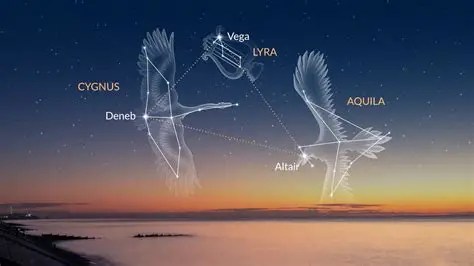
- Vega: Almost directly overhead and brilliant blue-white.
- Deneb: Marks the tail of Cygnus the Swan (also known as the Northern Cross).
- Altair: Marks the head of the Eagle.
- The Milky Way: If you are in a dark location, the “river” of our own galaxy runs right through the middle of this triangle. This is the best time of year to simply scan the sky with 10×50 binoculars to see “star clouds”—thousands of stars packed so closely they look like glowing dust.
4. Modern Tech: Your Phone as a 2026 Space Tool
We are living in a golden age of “Digital Astronomy.” As we discussed in our “NASA Tool” feature, your smartphone is now a vital piece of gear.
- Augmented Reality (AR) Apps: Apps like SkyView or Star Walk 2 allow you to point your phone at the sky and see the constellations drawn over the stars. This is the fastest way for kids to learn the difference between a planet and a star.
- Averted Vision: This is a classic trick every family should learn. When looking at a faint object (like the Hercules Cluster or a comet), don’t look directly at it. Look slightly to the side. The edges of your eyes are more sensitive to light than the center, and the object will suddenly “pop” into view.
5. Targets for the Family: 2026 Special Highlights
- The Planets: In late spring and early summer 2026, Jupiter remains a stunning target. With a small manual telescope, you can see its four largest moons (the Galilean moons) change positions every night. It’s like a mini-solar system in action!
- Double Stars: Find Mizar and Alcor in the handle of the Big Dipper. For centuries, this “Horse and Rider” pair was used as an eye test for ancient desert travelers. Can your family see both stars without help?
- The Hercules Cluster (M13): This is a “Globular Cluster”—a ball of 300,000 stars. In a backyard telescope, it looks like a glowing dandelion puff. It is one of the most popular deep-sky targets for beginners because it is relatively easy to find between the stars of the “Keystone” in Hercules.

6. Recommended Gear for the Season
To make the most of these warmer nights, here are a few “affiliate-ready” suggestions to keep in your astronomy kit:
- Celestron SkyMaster 15×70 Binoculars: Sometimes, a telescope is too much work for a quick Tuesday night session. These binoculars provide incredible views of the Moon and the Milky Way with almost no setup time.
- Red Light Headlamp (Black Diamond or Petzl): Essential for reading star charts or adjusting your tripod without ruining your night vision.
- Smartphone Tripod Adapter: If you want to try your hand at “Astrophotography,” a simple adapter will let you take 10-second exposures of the stars that will amaze your friends on social media.
- A “Light Bucket” Telescope (8″ Dobsonian): For families ready to see deep-space galaxies and the rings of Saturn in detail, a manual 8-inch Dobsonian telescope offers the best “bang for your buck” in terms of light-gathering power.
Conclusion: The Multitude of the Sky
Stargazing is more than just a hobby; it’s a way for families to connect with something much larger than themselves. When you stand in your backyard and look at the light of Arcturus, you are seeing light that left that star decades ago. You are literally looking into the past.
As we head into the summer of 2026, I encourage you to take at least one night a month to “go dark.” Turn off the screens, put on a light jacket, and remind yourself that the greatest show on Earth is actually happening just above it.
Stan’s Final Tip: “Don’t get frustrated if you can’t find a galaxy on your first try. The ‘hunt’ is half the fun. Even the pros spend nights just wandering the star-fields. The sky isn’t going anywhere—it’s been waiting for you for billions of years.”
The beauty of modern astronomy is that you don’t need to trek to a remote, dark-sky mountain peak to witness the grandeur of the universe. Most of the celestial highlights we’ve discussed—from the craters of the Moon to the brilliant “anchor” stars like Arcturus—are perfectly visible right from a typical suburban backyard. This accessibility turns stargazing into a nightly possibility rather than a rare expedition, allowing families to explore the cosmos in their pajamas. To add a layer of meaningful adventure to your sessions, I highly recommend joining the Globe at Night project. By participating in this citizen science initiative, your family moves beyond simple observation and begins contributing real-time data to NASA and global researchers. It transforms a quiet evening of looking at the stars into a purposeful mission to help protect our night skies for future generations.
Clear skies and happy hunting!

