As the warmth of summer gives way to the crispness of autumn, September offers a spectacular array of celestial events for backyard astronomers to explore. Whether you’re a novice stargazer or an experienced observer, the night sky in September 2024 provides a perfect opportunity for families to bond over the wonders of the universe. This guide will help you navigate the September night sky, offering tips and insights for a memorable stargazing experience.
Preparing for Your Stargazing Adventure
Before you head out to explore the night sky, it’s essential to prepare adequately:
- Choose a Dark Location: Find a spot away from city lights for the best viewing experience. A local park, rural area, or even your backyard can work well if it’s sufficiently dark.
- Allow Your Eyes to Adjust: Give your eyes about 20-30 minutes to adapt to the darkness. This will significantly improve your ability to see fainter celestial objects.
- Bring the Right Equipment: While many objects can be seen with the naked eye, a pair of binoculars can greatly enhance your viewing experience. A star chart or a smartphone app can also be helpful for identifying celestial objects.
- Dress Appropriately: September nights can be cool, so bring warm clothes and blankets for comfort during extended viewing sessions.
- Pack Snacks and Drinks: Stargazing can be a lengthy activity, so bring some treats to keep energy levels up.
Celestial Highlights for September 2024
New Moon – September 2
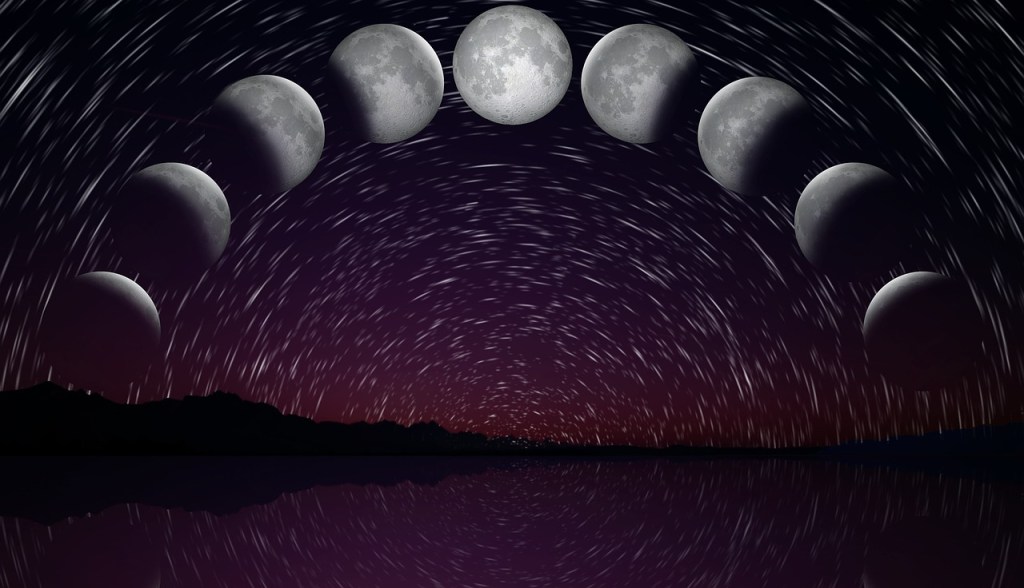
The month begins with a New Moon on September 2 at 9:56 p.m. EDT. This is an excellent time for stargazing as the sky will be at its darkest, allowing for optimal viewing of faint stars and deep-sky objects. Take advantage of the dark skies to explore constellations and other celestial wonders.
Saturn at Opposition – September 8
Saturn reaches opposition on September 8, meaning it’s directly opposite the Sun in our sky. This is the best time to observe the ringed planet as it’s at its closest and brightest. Look for Saturn low in the east-southeast after sunset. With a small telescope, you should be able to see Saturn’s iconic rings and possibly some of its larger moons.
Partial Lunar Eclipse – September 18
On the night of September 18, a partial lunar eclipse will occur. This event is when the Moon passes through a section of the Earth’s shadow. The eclipse will be visible from Europe, Africa, Asia, and parts of Australia. For those in North America, the Harvest Moon will still be a beautiful sight to behold.
Autumn Equinox – September 22
The Autumn Equinox occurs on September 22, marking the official start of fall in the Northern Hemisphere. On this day, the Sun crosses the celestial equator, and day and night are of approximately equal length. It’s a great time to reflect on the changing seasons and the celestial mechanics that govern our planet.
Moon and Pleiades – September 22

In the early morning hours of the equinox, look for the waning gibbous Moon as it approaches the Pleiades star cluster. This pairing will be visible in the eastern sky before dawn and offers a beautiful sight for early risers.
Constellations to Observe
September offers a great opportunity to spot several prominent constellations:
- Cassiopeia: Look for this distinctive W-shaped constellation in the northeastern sky. It’s a great starting point for exploring the night sky.
- Pegasus: The Great Square of Pegasus becomes prominent in the eastern sky during September evenings. It’s an excellent marker for finding other constellations.
- Cygnus: Also known as the Northern Cross, this constellation is high overhead in the early evening. Its bright star Deneb is part of the Summer Triangle.
- Ursa Major: The Big Dipper, part of Ursa Major, is visible year-round in the northern sky. Use it to find Polaris, the North Star.
Deep Sky Objects for Binocular Viewing
For families with binoculars, September offers some fantastic deep-sky objects to observe:

- Andromeda Galaxy (M31): On a clear, dark night, look for a faint, fuzzy patch in the constellation Andromeda. This is our nearest large galactic neighbor.
- Double Cluster in Perseus: This pair of open star clusters is a beautiful sight through binoculars. Look for them between the constellations Perseus and Cassiopeia.
- Pleiades (M45): Also known as the Seven Sisters, this open star cluster is visible to the naked eye but truly shines through binoculars.
Fun Activities for Family Stargazing
- Constellation Story Time: Many constellations have fascinating myths associated with them. Research these stories beforehand and share them as you identify the constellations in the sky.
- Moon Observation: If the Moon is visible, observe its phases and prominent features like craters and “seas” (large, dark plains).
- Meteor Watch: While September doesn’t host any major meteor showers, you can still spot the occasional “shooting star” on any clear night.
- Planet Hunt: Challenge your family to spot the visible planets. Venus, Saturn, and Jupiter should all be visible at various times throughout the month.
- Astrophotography: Try capturing the night sky with your smartphone or camera. The Moon and bright planets can make great subjects for beginner astrophotographers.
Tips for a Successful Stargazing Experience
- Be Patient: Stargazing requires patience. Take your time, let your eyes adjust, and don’t rush from object to object. The joy of stargazing often comes from the peaceful contemplation of the cosmos and the shared experience with loved ones.
- Use Red Light: If you need light to read star charts or move around, use a red flashlight to preserve your night vision.
- Get Comfortable: Bring comfortable seating like reclining chairs or blankets to make your stargazing session more enjoyable.
- Engage the Kids: Make stargazing fun for children by turning it into a game. Have them count stars in a constellation or be the first to spot a planet.
- Learn Together: Don’t worry if you can’t identify everything you see. Use this as an opportunity to learn together as a family.
Conclusion
September 2024 offers a wealth of celestial wonders for families to explore together. From the partial lunar eclipse of the Harvest Moon to the autumnal equinox, and from bright planets to deep-sky objects, there’s something for everyone to enjoy in the night sky this month.
Remember, the key to a successful family stargazing experience is to make it fun and engaging for all ages. Don’t focus too much on identifying every single star or constellation. Instead, use this time to bond with your family, share stories, and marvel at the wonders of the universe together.
As you gaze up at the September night sky, you’re not just looking at distant stars and planets—you’re looking back in time, seeing light that has traveled across vast distances of space to reach your eyes. It’s a humbling and awe-inspiring experience that can spark curiosity and wonder in both children and adults alike.
So this September, take some time to step outside with your family, look up, and explore the magnificent tapestry of the night sky. Who knows? You might just inspire the next generation of astronomers, astrophysicists, or space explorers. Happy stargazing!
Citations:
[1] https://pennypost.org.uk/2024/08/astronomy-guide-to-the-night-sky-september-2024/
[2] https://www.farmersalmanac.com/september-night-sky-guide-september-2024
[3] https://www.rmg.co.uk/stories/blog/astronomy/night-sky-highlights-september-2024
[4] https://earthsky.org/astronomy-essentials/visible-planets-tonight-mars-jupiter-venus-saturn-mercury/
[5] https://www.youtube.com/watch?v=FXnUIdQm85s
[6] https://getthekidsoutside.com/celestial-events-in-2024/
[7] https://www.adlerplanetarium.org/blog/what-to-see-stargazing-tips-september-24/
[8] https://science.nasa.gov/solar-system/skywatching/whats-up-august-2024-skywatching-tips-from-nasa/
 Stan's Hobbies and Interests