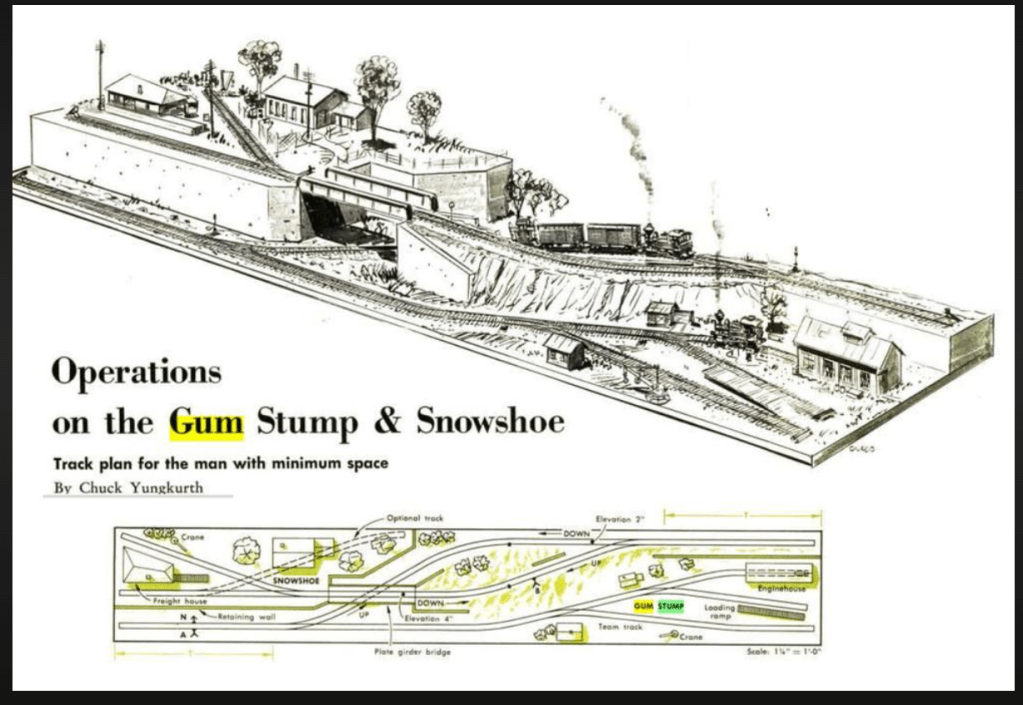
Festive Rails: Family-Friendly Ways to Celebrate and Discover Model Trains During the Holiday Season”

Several family-friendly holiday model train topics with descriptions to help introduce and make the season memorable and educational for all ages. Learn more.

1. Holiday Themed Train Layouts

Transform your train set into a festive display by adding seasonal decorations like miniature wreaths, snow, twinkle lights, and holiday-themed railcars. Invite your family to create scenes together—such as winter villages with sparkling buildings and snowy landscapes—using simple craft supplies. Encourage everyone to invent stories about the winter setting and the trains passing through; this activity mixes creativity, model building, and storytelling, appealing especially to beginners and children. Read more information.

2. Build-Your-Own Modular Railway

Beginner families can start with modular layouts, which allow each member to design and build a small section or “module” of the railway, then connect them for a collaborative train journey. This approach is educational, teaching spatial planning, basic construction, and teamwork, and it breaks the project into manageable steps ideal for holiday weekends or school break activities. More information.

3. Scavenger Hunt Among the Trains

Set up a “scavenger hunt” by hiding small holiday-themed objects (gift boxes, elves, animals) throughout a model train display. Challenge kids and adults to discover hidden details as trains run through tunnels, bridges, and villages. This can be done at home or at public train exhibits, and makes a great interactive event during family gatherings or holiday parties, fostering observational skills and a love for detail. More Information.

4. Santa Train Rides and Community Events

Seek out local model railroad clubs, museums, or heritage railways offering holiday train rides featuring Santa, carols, and festive treats. These events encourage family bonding and introduce newcomers to the joy of rail travel, history, and large-scale model setups. After visiting, discuss the real-life inspiration for your own home layouts, or start a scrapbook of “train memories” from the season. Learn more.

5. Train-Themed Story Nights

Host a story night where you gather around the layout and read train-inspired stories, sing railway carols, or invent tales about trains and their adventures. Invite each family member to create their own train or character and share what makes their train special. This role-playing builds confidence and communication skills, while keeping the atmosphere fun and inclusive for all ages. More how to’s.

6. Hands-on Educational Projects

Use the holiday break to introduce simple engineering and design concepts: show how tracks are planned on graph paper, experiment with different train speeds, or build basic scenery together. Discuss how railroads shaped towns and traditions, or how trains helped deliver holiday goods throughout history—making the session both fun and informative. More how to’s.

7. Seasonal Layout Refreshes

Encourage ongoing interest by updating the scenery as December progresses—add snow effects, holiday markets, or model Christmas trees. These mini projects give families regular new tasks and let children participate as their skills grow, making the hobby feel dynamic and rewarding all season long. Where to look.

Each activity can be scaled for any age group and space, helping families develop core skills, cherish shared moments, and spark lifelong interest in model railroading during the holidays. More information.

  1. https://www.hearnshobbies.com/blogs/model-railways/model-railroading-for-families-creating-memories-on-miniature-tracks
  2. https://www.nmra.org/beginners-guide
  3. https://www.cincymuseum.org/holiday-junction/
  4. https://www.ohiotraveler.com/christmas-trains/
  5. https://www.upparent.com/lists/columbus-train-activities
  6. https://www.morrisarboretum.org/see-do/holiday-garden-railway
  7. https://www.greattrainshow.com/great-train-show-information
  8. https://charlesro.com/how-to-get-your-train-set-ready-for-the-holiday/
  9. https://northlandz.com/blog/school-educational-tours-with-model-railroad-museum-
  10. https://www.trains.com/ctt/how-to/toy-train-layouts/10-tips-for-a-better-holiday-toy-train-display/

Five Starter Track Plans That Make Model Railroading Fun.


Stepping into the world of model trains is exhilarating—especially if a shiny new starter set found its way under the tree this holiday season! While simply running loops is good fun, adding a layout designed for operational challenges opens up new levels of enjoyment and learning. Below, you’ll find five proven, easy-to-build layouts ideal for new modelers. Each plan encourages hands-on activity and sets you up for deeper adventures in the world’s greatest hobby.


1. The Classic Oval with a Siding

Why it’s great for beginners:
Every starter set includes enough track for a simple oval. The continuous closed loop lets you just run trains and watch them go. Once the thrill of spinning laps wanes, it’s time to add a short siding. Using a turnout, you can branch off for storage, pretend deliveries, or engine changes.

How to make it interesting:

  • Use your siding as a delivery spot for different freight cars.
  • Invent stories: “Drop the boxcar at the bakery, pick up the flatcar at the lumber mill.”
  • Challenge yourself with basic operations, such as swapping cars between trains using the siding to minimize moves.

Scalability:
This layout is endlessly expandable. Add sidings and industries as your collection grows, turning a simple loop into a busy rail network.More Info.


2. Inglenook Sidings – The Puzzle Champion

Why it’s great for new modelers:
This classic British yard puzzle fits on a bookshelf and works in HO, N, or OO scale—especially if space is limited. The basic ingredients are a headshunt (main track) and three sidings: one long, two short.

How to play the Inglenook puzzle:

  • Arrange 8 cars in the sidings.
  • Draw cards to assemble a train of 5 cars in a set order.
  • Only use the available track space—no cheating!
    The fun comes from working out how to marshal the train by shunting back and forth, often with limited room to maneuver.

Learning from it:
The Inglenook teaches essential switching skills, logical thinking, and real-world railroading practices like coupling, reversing, and making strategic decisions. It’s endlessly replayable, and you can compete against friends or your own “best score.”
For detailed building tips, see resources like the [Wymann sidings guide].More Info.


3. The Timesaver – A Tidy Little Challenge

Why it’s great:
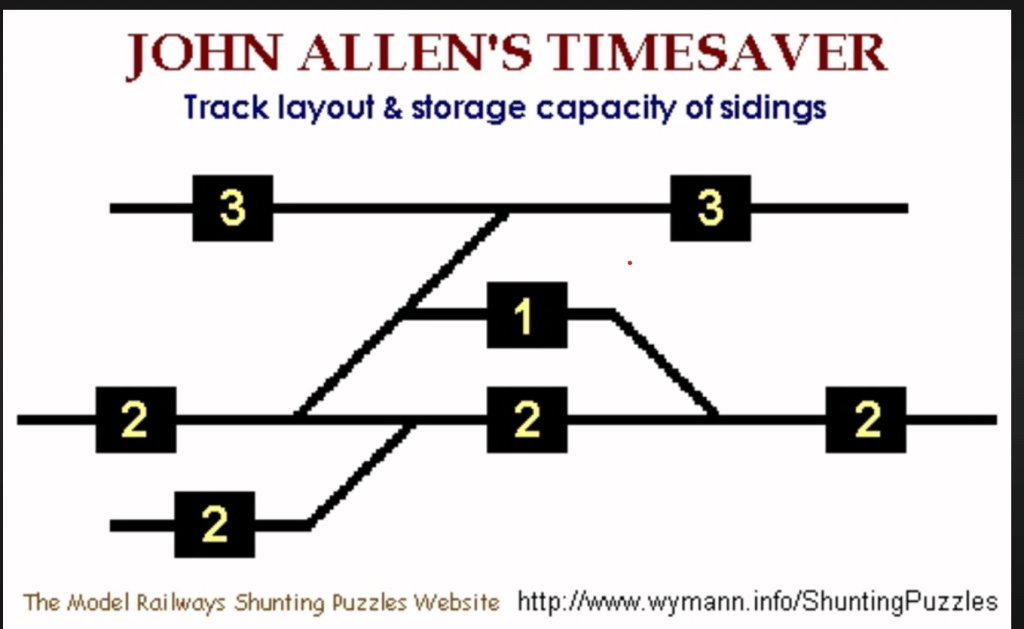
Invented by John Allen, the Timesaver is a classic switching puzzle famous worldwide for its tricky operations. It uses a simple yard ladder with five stub sidings and a connecting main line.

How to set up:

  • Place a car in each siding, randomly.
  • Assign each car a destination: warehouse, station, mill, etc.
  • Your goal is to sort the cars to those destinations using as few moves as possible.

Why you’ll love it:
Timesaver fits on a door-sized table or smaller and can be customized with extra spurs, scenery, or industries. It brings real railroad logic to the living room, keeps you thinking, and becomes even more fun when played as a timed challenge or shared with friends.More Info.


4. Point-to-Point Branch Line

Why it’s great for play and realism:
Not all trains run in endless circles! Many real railroads operate “branches” linking small towns or factories in a straight (or gently curved) line. A point-to-point layout brings purpose and realism to your runs.

How to use it:

  • Build a straight or L-shaped track with a station at either end and optional sidings for industry.
  • Send your train from one end to the other, making “collections” and “deliveries” along the journey.
  • Use waybills or dice rolls to assign tasks: “Deliver the blue boxcar to the furniture factory, then pick up the coal hopper.”

Benefits for beginners:
The branch line approach teaches scheduling, multi-tasking, and has a much more realistic feel than pure loops or ovals. Best of all, it can fit on a bookshelf or desktop and you can expand it by adding stations or yards over time.More Info.

For Model Railroad Supplies look Here.


5. Holiday Village Layout – Family, Fun, and Festivity

Why it’s a perennial favorite:
Trains and Christmas go together perfectly! Building a simple loop around the tree, through a festive village, offers unlimited imaginative play and family tradition.

How to set up:

  • Lay a continuous loop around your tree or under the living room table.
  • Add short sidings and decorate with miniature buildings, people, and seasonal scenery (fake snow, street lamps, even Santa!).
  • Play delivery games: “Drop presents at the post office,” “Pick up candy from the sweet shop,” etc.

Making memories:
This layout isn’t just for rail fans—it’s for everyone! Kids can get hands-on, grownups can compete in delivery races, and every year, you can add new accessories or rolling stock.More Info.


Tips for Starting Strong with Your First Layout

Stay Simple:
Don’t stress about complex wiring or scenery for your first build. Focus on reliable track-laying, smooth running, and fun operations.

Adapt to Your Space:
From tabletops to under-the-tree villages, these track plans work in small spaces and can be moved or modified as needed.

Build Gradually:
Start with the basics, then add turnouts, sidings, and mini-scenes as your skills grow and your interest deepens. Every new piece brings new challenges and fun.

Embrace the Community:
Model railroading is filled with welcoming enthusiasts who love helping beginners. Join a local club, watch YouTube build-alongs, or follow forums to ask questions and get inspired.More Info.


Conclusion: The Start of a Wonderful Journey

No matter which starter set you received or which track plan you choose, remember: every layout is a blank canvas for creativity, learning, and play. These five layouts are practical, accessible, and designed to teach you the joys of operations—a lifelong model railroad adventure awaits!

Whether you chase holiday magic, puzzle out switching challenges, or simply enjoy the whir and click of wheels on rails, you’re now part of a worldwide tradition. So set up your tracks, gather loved ones, and let imagination lead the way—steam ahead into model railroading fun!


Happy Railroading!
For more inspiration and detailed beginner guides, explore resources at Trains.com and join local groups or online communities to boost your skills and enthusiasm.More Info

  1. https://www.trains.com/mrr/beginners/model-railroading-the-beginners-guide/
  2. https://www.trains.com/mrr/beginners/10-recommended-track-plans-for-beginners/
  3. https://www.reddit.com/r/modeltrains/comments/1uuxfb/complete_beginner_wondering_where_to_start_on_a/
  4. http://www.wymann.info/ShuntingPuzzles/SPL-build.html
  5. https://www.reddit.com/r/modeltrains/comments/zm1o0k/jd_railroad_ho_scale_christmas_train_layout/
  6. https://shop.trains.com/blogs/the-trains-com-store-blog/crafting-your-christmas-model-train-layout
  7. https://www.hearnshobbies.com/blogs/model-kits/what-is-the-most-expensive-model-railway-layout-the-cheapest-which-layout-should-you-go-for
  8. https://www.reddit.com/r/modeltrains/comments/wxi987/looking_to_get_started_with_my_first_model_train/
  9. https://www.armballast.com/best-starter-set-for-model-railroading/
  10. https://forum.mrhmag.com/post/good-starter-sets-for-newbie-12192816
  11. https://www.trainshop.co.uk/blog/post/1400-shunting-yards-designing-a-track-plan-for-realistic-operations.html
  12. https://www.youtube.com/watch?v=GHLMFrk9zXY
  13. https://www.youtube.com/watch?v=Ozo7gK4oc6Y
  14. https://www.nmra.org/beginners-guide-part-9-operations
  15. https://www.trainworld.com/train-set/ho-scale-train-set.html
  16. https://www.youtube.com/watch?v=le6MmX7wZHU
  17. https://www.reddit.com/r/modeltrains/comments/qfp2no/recommendations_needed_christmas_village_meets/
  18. https://www.youtube.com/watch?v=cUcVJM5bsSw
  19. https://www.modeltrainforum.com/threads/designing-for-operations.198257/
  20. https://www.trainz.com

Saturn and the Moon’s Celestial Dance: How to Watch Their Close Encounter on July 16, 2025

On the night of July 16, 2025, the Moon and Saturn will create a beautiful spectacle in the sky, appearing close together in a conjunction visible across the United States. This event is perfect for families, beginners, and seasoned astronomers alike. Here’s how to make the most of this cosmic rendezvous—including the best times to watch from different US regions, simple ways to identify Saturn, and a look back at memorable images of similar events.

What’s Happening?

On July 16, the waning gibbous Moon will pass near Saturn, the solar system’s iconic ringed planet. While the two are separated by vast distances in space, they’ll appear just a few degrees apart in the sky, creating a striking visual pairing for observers on Earth123.

Best Times to View Across the US

US RegionSaturn & Moon RiseClosest ApproachHighest in SkyBest Viewing Window
East Coast~11:00 p.m. EDT~2:00 a.m. EDT2:00–4:00 a.m.11:00 p.m.–4:30 a.m.
Central~10:00 p.m. CDT~1:00 a.m. CDT1:00–3:30 a.m.10:00 p.m.–4:00 a.m.
Mountain~9:00 p.m. MDT~12:00 a.m. MDT12:00–3:00 a.m.9:00 p.m.–4:00 a.m.
Pacific~8:30 p.m. PDT~11:00 p.m. PDT11:00 p.m.–2:30 a.m.8:30 p.m.–4:00 a.m.
  • Where to Look: The pair will rise in the east after sunset, climb high in the southeast by midnight, and drift toward the south by dawn245.
  • Peak Viewing: Around midnight to 3 a.m. local time, when both are highest and most easily seen.

How to Identify Saturn: A Beginner’s Guide

Saturn can be mistaken for a bright star, but here’s how to spot it:

  • Color: Saturn appears as a steady, pale yellow or gold “star.” Most stars are white or blue-white, while Saturn’s subtle hue stands out675.
  • No Twinkle: Unlike stars, Saturn does not twinkle. Its light remains steady because it’s close enough to appear as a tiny disk rather than a pinpoint.
  • Position: On July 16, Saturn will be just a few degrees below or beside the bright Moon, making it easy to locate.
  • Brightness: Saturn shines brighter than most surrounding stars but is dimmer than the Moon and Venus.
  • Movement: Over weeks, Saturn slowly shifts eastward among the stars, unlike the fixed star patterns.

Tip: Use a free sky app (like Stellarium, SkySafari, or Star Walk) to confirm Saturn’s position in real time75.

Viewing Tips for All Ages

  • Naked Eye: Simply look for the bright Moon, then spot the steady yellow “star” nearby—that’s Saturn!
  • Binoculars: Enhance Saturn’s color and may reveal its oval shape.
  • Telescope: Even a small telescope will reveal Saturn’s famous rings and perhaps a few moons.
  • Family Fun: Bring blankets, snacks, and sketchpads. Encourage kids to draw the Moon and Saturn or try smartphone photography.

Sample Viewing Timeline (Local Time)

TimeWhat to SeeWhere to Look
10:00 p.m.–12:00 a.m.Moon and Saturn rising togetherEast
12:00–2:00 a.m.Closest approach, high in skySoutheast
2:00–4:00 a.m.Pair moves toward southSouth
4:00 a.m.–DawnSetting, still visibleSouthwest

Memorable Images of Past Moon-Saturn Conjunctions

Below are examples of how the Moon and Saturn have appeared together in the night sky during previous conjunctions. These images illustrate what you can expect to see, whether with your eyes, binoculars, or a telescope.

  • Smartphone Photo of Saturn and the Moon:
    Astrophotographers have captured stunning images using just a smartphone and a small telescope, showing Saturn as a bright dot near the Moon8.
  • Telescope View:
    Through a telescope, Saturn’s rings are visible, while the Moon’s craters and maria provide a dramatic backdrop910.
  • Wide-Angle Sky Photos:
    Many skywatchers have shared beautiful wide-angle images of the Moon and Saturn together, highlighting their proximity and the Moon’s brightness10.

Why This Event Is Special

  • Easy and Accessible: No special equipment or expertise needed—just look up!
  • Great for Families: The Moon and Saturn are bright, easy targets for all ages.
  • A Gateway to Astronomy: Seeing Saturn’s rings for the first time is unforgettable.
  • Rare and Beautiful: While the Moon and Saturn pair up monthly, this July’s conjunction is especially well-placed for nighttime viewing across the US25.

Safety and Comfort Tips

  • Dress for the weather—even summer nights can get cool.
  • Use red flashlights to preserve night vision.
  • Bring bug spray if stargazing outdoors.

Fun Saturn and Moon Facts

  • Saturn is about 890 million miles from Earth; the Moon is just 239,000 miles away.
  • Saturn’s rings are made of ice and rock and stretch over 170,000 miles wide.
  • The Moon will be a waning gibbous, more than half full but shrinking nightly.

References & Further Reading

  1. [In-The-Sky.org – US Rise/Set Times for Planets]11
  2. [When the Curves Line Up – Saturn-Moon Conjunction July 16, 2025]1
  3. [Astronomy Magazine – July 2025 Sky Guide]12
  4. [Travel + Leisure – July 2025 Night Sky]2
  5. [Star Walk – July 2025 Astronomy Calendar]13
  6. [High Point Scientific – How to Observe Saturn]6
  7. [Business Insider – Smartphone Photos of Saturn and the Moon]8
  8. [Adler Planetarium – July 2025 Skywatching]4
  9. [Cosmic Pursuits – Guide to Observing Saturn]9
  10. [EarthSky – Moon and Saturn Close Together]10
  11. [National Geographic – July 2025 Sky Events]3
  12. [Adler Planetarium – How to Identify Planets]7
  13. [The Planetary Society – July 2025 Night Sky]5
  14. [BBC Sky at Night Magazine – Observing Planets July 2025]14

Clear skies and happy stargazing!

  1. https://whenthecurveslineup.com/2025/07/01/2025-july-16-pre-dawn-saturn-moon-conjunction-venus-aims-at-jupiter/
  2. https://www.travelandleisure.com/july-2025-stargazing-astronomy-guide-11766109
  3. https://www.nationalgeographic.com/science/article/best-night-sky-events-july-2025
  4. https://www.adlerplanetarium.org/blog/what-to-see-stargazing-tips-july-2025/
  5. https://www.planetary.org/night-sky/night-sky-what-to-see-this-month
  6. https://www.highpointscientific.com/astronomy-hub/post/astronomy-101/how-to-observe-saturn
  7. https://www.adlerplanetarium.org/blog/how-to-identify-planets/
  8. https://www.businessinsider.com/saturn-moon-conjunction-smartphone-pictures-2019-4
  9. https://cosmicpursuits.com/2560/guide-to-observing-saturn/
  10. https://earthsky.org/space/moon-and-saturn-close-together-this-week-see-the-images/
  11. https://in-the-sky.org/whatsup_times.php
  12. https://www.astronomy.com/observing/sky-this-month-july-2025/
  13. https://starwalk.space/en/news/astronomy-calendar-2025
  14. https://www.skyatnightmagazine.com/advice/skills/how-see-planets-night-sky-july
  15. https://whenthecurveslineup.com/2024/12/20/2025-january-4-saturn-moon-conjunction-after-sunset/
  16. https://www.skyatnightmagazine.com/advice/skills/how-to-find-planets-night-sky
  17. https://www.reddit.com/r/astrophotography/comments/1e8g776/moon_and_saturn_conjunction_composite_image/
  18. https://www.space.com/33619-visible-planets-guide.html
  19. https://www.youtube.com/watch?v=iTT6Kkh57Rw
  20. https://www.instagram.com/p/C0-nVx7svoY/