October is one of the year’s very best months for skywatching—perfect for families, beginners, and experienced observers. The air is crisp, darkness falls early, and the heavens are packed with cosmic treats: a super harvest moon, meteor showers, bright planets, and famous constellations ready for everyone to explore. Here’s your guide to October’s best celestial events, how to see them, and why they’re worth a moment outdoors—whether you spend five minutes or all night under the stars.
The Super Harvest Moon & Saturn Dazzle the Skies

October 6–7 brings this year’s Harvest Full Moon—a supermoon, bigger and brighter than most.
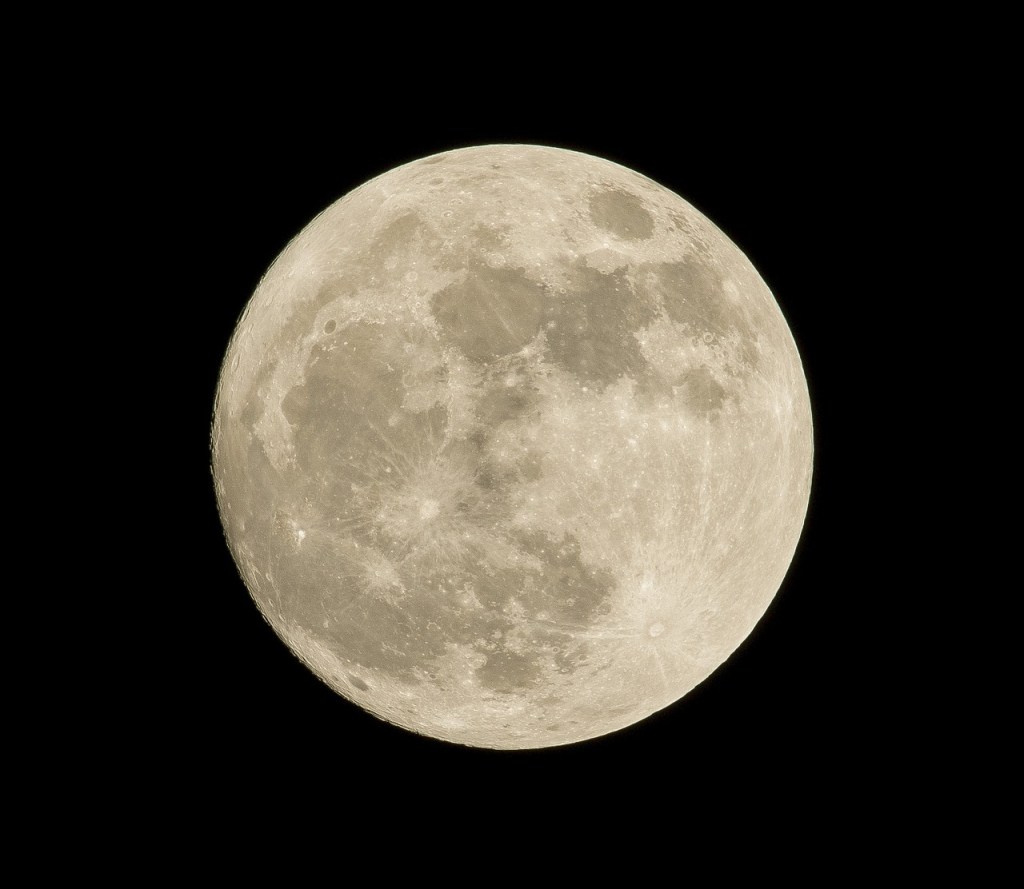
Also called the “Hunter’s Moon,” this full moon rises just after sunset, filling the eastern sky in gold and lighting up fields, parks, and city rooftops. This month’s moon is “super” because it’s especially close to Earth in its orbit, making it up to 14% larger and 30% brighter than average. More Information.
On October 5, Saturn appears close to the full moon in the southeast.
The ringed planet shines as a steady, golden “star” above and to the right of the glowing moon shortly after dark. Point out Saturn to kids: tell them that, even though its rings are not visible without a telescope, they can use their imagination and binoculars to spot its unique color.
Family tip:
No special equipment needed—just step outside after sunset and gaze east. Try taking a moonrise photo with a smartphone or watch the moon usefully light up an evening walk.
Meteor Showers: Orionids Steal the Show

The Orionid Meteor Shower peaks on the nights of October 21–22.
Each year, Earth passes through the leftover dust of Halley’s Comet, resulting in fast, sometimes bright meteors—up to 20 per hour streaking from the direction of Orion’s “shoulder.” This year, the new moon means truly dark skies for peak viewing. Look for the brightest meteors after midnight, anywhere from an open backyard or park. More Information.
Draconids (Oct 8–9):
A minor shower peaking after dusk, best for those who enjoy an early evening search for “shooting stars.” This year, strong moonlight means just a few may be visible.
How to watch a meteor shower:
- Find a dark spot away from streetlights.
- Bring blankets or reclining chairs and face southeast (for Orionids) or north (for Draconids).
- Let your eyes adjust 20–30 minutes to maximize faint meteor sightings.
- Don’t use binoculars—meteors fly across the whole sky!
Family tip:
Hold a contest: Who can spot the first meteor, or the most meteors in an hour? Every “shooting star” is a great chance for a wish!
Planet Perfection: Saturn, Jupiter, Venus, Mercury

Saturn
Visible all October in Pisces after sunset, Saturn is high in the southeast—easy to spot as a steady, golden light. Early in the month, Saturn appears close to the full moon. More Information.
Jupiter
By mid-October, the solar system’s brightest planet (after Venus) rises after 9 p.m. in the east and grows even brighter as it approaches its November opposition. With binoculars, you can see up to four of its big moons lined up beside it. The moon swings close to Jupiter on October 13. Details.
Venus
Dazzles as the “Morning Star” all month, especially when paired with a slender crescent moon on October 19. It blazes low in the east just before sunrise, impossible to miss—even from cities. Details.
Mercury
The solar system’s speediest planet is toughest to see but reaches its best evening show of 2025 around October 29. Look low in the west just after sunset for a tiny, bright “star.” Use binoculars for your best chance, and pick a flat, unobstructed view. More Information.
Family tip:
Challenge kids to spot Saturn’s steady glow (it doesn’t twinkle!), Jupiter’s brightness, and Venus’s dawn appearance. Use an astronomy app to find the planets’ exact places each night.
October’s Constellations & Deep-Sky Wonders
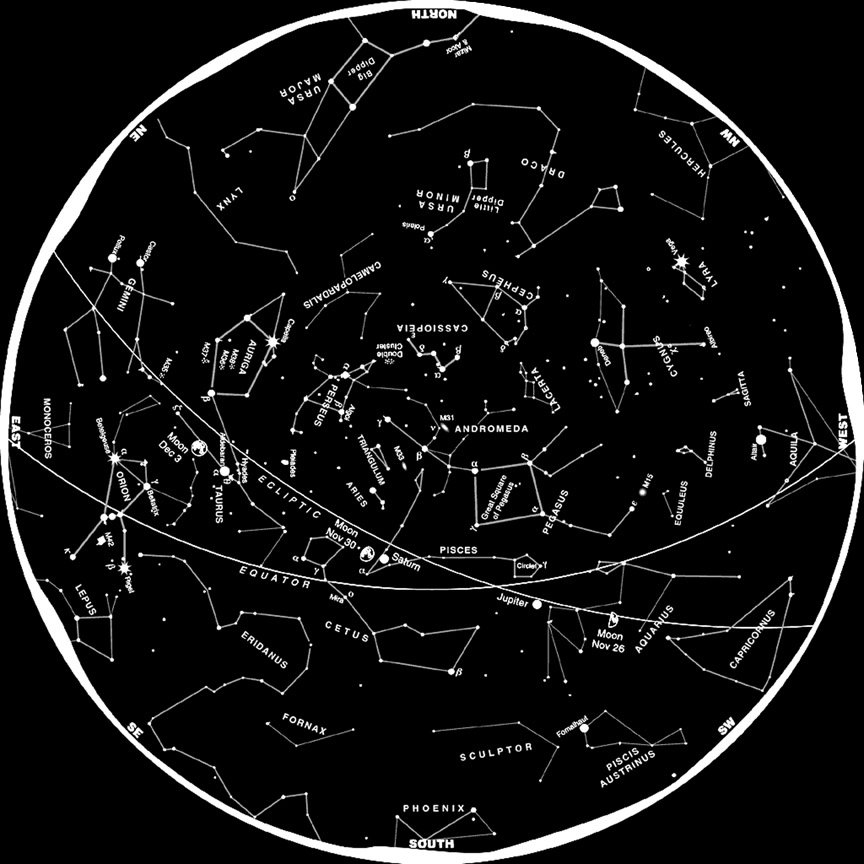
Pegasus
The Great Square of Pegasus is a huge, easy-to-spot diamond in the eastern sky after dusk, high overhead by midnight. It’s the “stepping stone” to autumn’s most famous constellations.
Andromeda
Follow a gentle line of stars away from the Square to see Andromeda, stretching northeast. If you’re far from city lights, you might spot the faint oval of the Andromeda Galaxy—2.5 million light-years away and the most distant object you can see with your eyes! Binoculars make it easy, even from suburbs.
Cassiopeia
Always visible as a giant “W” or “M” in the northeast, Cassiopeia is a perfect sky marker for beginners. Its legends of a vain queen are fun to share as you star-hop.
Other constellations:
- Pisces and Aquarius (zodiac): Lower and fainter, but both cross the sky through October, trailing Saturn and Jupiter.
- Taurus and the Pleiades (the “Seven Sisters”): Rising after 10 p.m. in the east and easily found with a star map or phone app.
Special Sky Events & Group Activities
October 10: Moon Meets The Pleiades
Look east 9–11 p.m. to see a lovely pairing between the waxing moon and the glittering “Seven Sisters” star cluster. Binoculars give a fantastic family view.
October 13–14: Moon and Jupiter Pairing
Shortly after moonrise, see bright Jupiter beside the moon in the evening sky. Binoculars show Jupiter’s moons.
October 19: Crescent Moon, Venus, and Comet Hunt
Before sunrise, look east for a bright Venus and a thin crescent moon paired in the twilight. At sunset, try for Mercury and possibly even Mars with binoculars, low in the west. Check astronomy news for updates about Comet Lemmon, which could make a faint binocular appearance after dusk. Details.
October 21: New Moon & Milky Way
With no moonlight, it’s the best night to see faint constellations and the full sweep of the Milky Way. Try for star clusters in Cassiopeia, Perseus, and Andromeda with binoculars. More Information.
October 23–24: Lunar Triangle
Right after sunset, the crescent moon, Mercury, and Mars gather to form a small triangle low in the southwest (binoculars best).
How, When, and Where to Watch
- Best Times:
- Evenings (8–11 p.m.) for the moon, Saturn, Jupiter, and major stars.
- Pre-dawn for Venus and the moon.
- After midnight for the Orionid meteor shower.
- Best Places:
- Any open space with a low view of the east and west.
- Parks, backyards, campgrounds, or drive a short way from city lights for a darker view.
- Even city dwellers can enjoy planets, the moon, and the brightest stars.
- Tips for Families:
- Bring a blanket or reclining chair, warm clothes, and snacks.
- Allow 20 minutes for eyes to adjust to darkness.
- Try a red flashlight or phone “night mode” to preserve night vision.
- Use phone apps (“Stellarium,” “Star Walk 2,” “Sky Tonight”) for real-time stargazing help.
Stargazing Fun & Learning
- Draw Your Night Sky: Sketch the moon’s different shapes or map constellations in a journal each night.
- Meteor Journals: Count “shooting stars” and make note of color or speed.
- Planet Spotting: Try to find all visible planets in one night—Jupiter, Saturn, Venus, and Mercury.
- Constellation Storytelling: Share the mythology of Pegasus, Andromeda, Orion, and Cassiopeia with kids—or create new family legends!
- Binocular Treasure Hunt: List interesting things to find: Jupiter’s moons, the Andromeda Galaxy, the Pleiades, Saturn’s color.
Quick October 2025 Event Calendar
| Date | Event | Best Viewing |
|---|---|---|
| Oct 5–7 | Supermoon & Saturn | After sunset, east/southeast |
| Oct 8–9 | Draconid Meteor Shower | After dusk, face north |
| Oct 10 | Moon near Pleiades | 9–11 p.m., east, binoculars helpful |
| Oct 13–14 | Moon near Jupiter | Evening, east |
| Oct 19 | Crescent Moon & Venus (dawn) | 30 minutes before sunrise, east |
| Oct 19 | Mercury & Mars (sunset) | 15–30 min after sunset, low west |
| Oct 20–22 | Orionid Meteor Shower | After midnight, southeast/anywhere |
| Oct 21 | New Moon (darkest skies) | Any time |
| Oct 23–24 | Moon, Mercury, Mars triangle | After sunset, low west |
| Oct 29 | Mercury at its best (evening) | 30–45 min after sunset, west |
Resources & Further Reading
- [Adler Planetarium – October 2025 Tips]adlerplanetarium
- [Hipcamp Stargazing Calendar]hipcamp
- [Star Walk Astronomy Calendar]starwalk
- [Sea and Sky Astronomy Calendar]seasky
- [High Point Scientific – Events Guide]highpointscientific
- [What’s Out Tonight PDF]kenpress
October’s night sky is rich with memories, new discoveries, and cosmic stories awaiting your family. Whether you’re five or ninety-five, clear a little space, look up, and let the universe dazzle you!
- https://www.hipcamp.com/journal/camping/stargazing-guide-astronomical-calendar/
- https://koa.com/blog/celestial-events-2025/
- https://www.adlerplanetarium.org/blog/what-to-see-stargazing-tips-october-2025/
- https://www.highpointscientific.com/astronomy-hub/post/night-sky-news/2025-astronomical-calendar
- https://blog.whiteduckoutdoors.com/stargazing-calendar-for-2025-where-to-camp-to-watch/
- https://www.farmersalmanac.com/monthly-stargazing-night-sky-guide
- https://phil.camera/2025/?mc
- https://www.cruiseamerica.com/trip-inspiration/ultimate-2024-stargazing-calendar
- https://www.metroparks.org/mark-your-calendar-astronomical-events/
- https://starwalk.space/en/news/astronomy-calendar-2025
- https://ts2.tech/en/dont-miss-these-skywatch-wonders-in-october-2025/
- http://www.seasky.org/astronomy/astronomy-calendar-current.html
- https://kenpress.com/files/2025WOT10Oct.pdf

 Stan's Hobbies and Interests