Wines That Pair Best with Grilled Foods

Grilling is a beloved cooking method that brings out the best in meats, vegetables, and even fruits. The smoky, charred flavors from the grill can be beautifully complemented by the right wine, enhancing the overall dining experience. Here are some wines that pair exceptionally well with various grilled foods, based on insights from multiple sources.
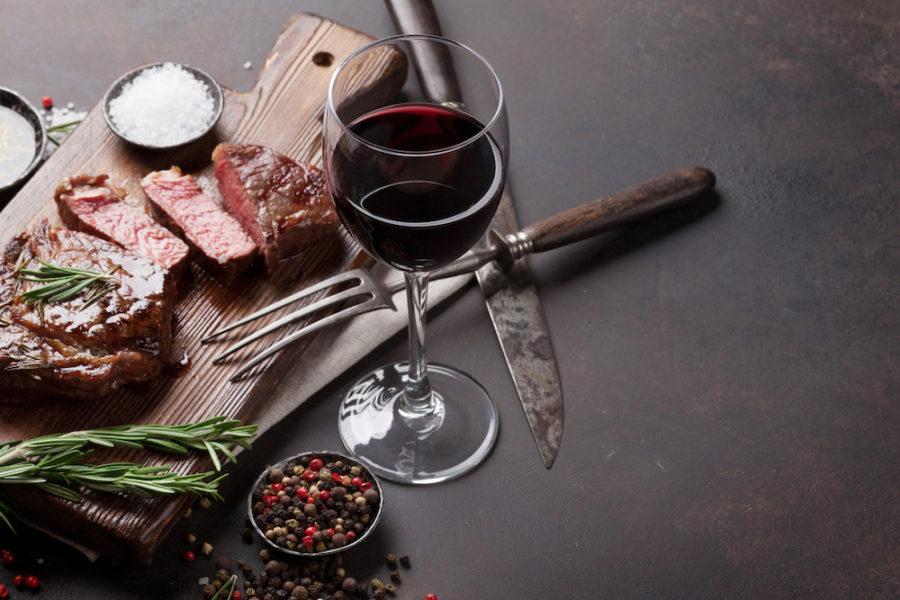
Grilled ribeye beef steak with red wine, herbs and spices on stone table

1. Zinfandel

Zinfandel is a robust red wine known for its bold fruit flavors and spicy notes, making it an excellent match for grilled meats. Its high alcohol content and rich texture can stand up to the intense flavors of barbecue sauces and charred meats.

  • Pair with: Grilled ribs, brisket, and burgers. The wine’s fruit-forward profile balances the smokiness and sweetness of barbecue sauces[1][2].
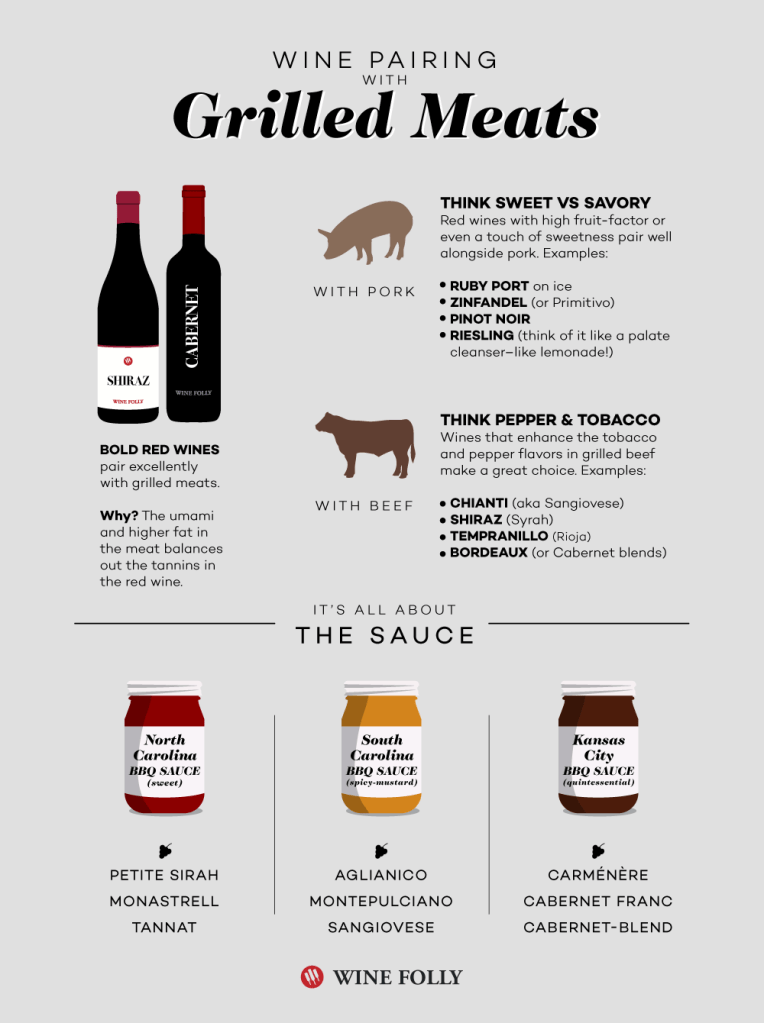
The Best Wines for Grilled Foods

2. Cabernet Sauvignon

Cabernet Sauvignon is a full-bodied red wine with firm tannins and dark fruit flavors. It pairs well with rich, fatty meats, as the tannins help cut through the fat, creating a balanced and enjoyable experience.

  • Pair with: Ribeye steaks, lamb chops, and grilled sausages. The wine’s structure complements the richness of these meats[1][3].

3. Syrah/Shiraz

Syrah (known as Shiraz in Australia) is a versatile red wine with flavors of dark berries, pepper, and smoke. Its bold profile makes it a great match for a variety of grilled dishes.

  • Pair with: Grilled pork chops, spicy sausages, and barbecued chicken. The wine’s spiciness and smokiness enhance the flavors of the grilled food[1][3].

4. Malbec

Malbec, particularly from Argentina, is known for its dark fruit flavors and smooth tannins. It pairs wonderfully with grilled meats, especially those with a bit of char and smokiness.

  • Pair with: Grilled steaks, especially with chimichurri sauce, and barbecued ribs. The wine’s fruitiness and slight smokiness complement the grilled flavors[3].

5. Pinot Noir

Pinot Noir is a lighter red wine with high acidity and delicate fruit flavors. It is one of the most food-friendly wines, capable of pairing with a wide range of dishes without overpowering them.

  • Pair with: Grilled salmon, chicken skewers, and vegetable kebabs. The wine’s acidity and subtle smokiness make it a versatile choice for lighter grilled foods[2][4].

6. Rosé

Rosé wines, with their refreshing acidity and fruity flavors, are perfect for summer grilling. They can handle a variety of flavors and are particularly good with lighter grilled dishes.

  • Pair with: Grilled shrimp, turkey burgers, and vegetable skewers. The wine’s crispness and fruitiness balance the smoky flavors of the grill[2][5].

7. Sauvignon Blanc

Sauvignon Blanc is a crisp, high-acid white wine with citrus and herbaceous notes. It pairs well with grilled vegetables and lighter meats, providing a refreshing contrast to the smoky flavors.

  • Pair with: Grilled asparagus, zucchini, and chicken. The wine’s acidity cuts through the char and enhances the natural flavors of the vegetables[4].

8. Chardonnay

Chardonnay can range from crisp and unoaked to rich and buttery, making it a versatile pairing option. The wine’s body and flavor profile can complement a variety of grilled dishes.

  • Pair with: Grilled lobster, chicken, and corn on the cob. The wine’s richness pairs well with the buttery and smoky flavors of these dishes[3][4].

9. Sparkling Wine

Sparkling wines, such as Cava or Prosecco, are excellent for cutting through the richness of grilled foods. Their bubbles and acidity provide a refreshing palate cleanser.

  • Pair with: Grilled pork chops, fried chicken, and seafood. The wine’s effervescence and acidity balance the richness and enhance the flavors of the grilled food[2].
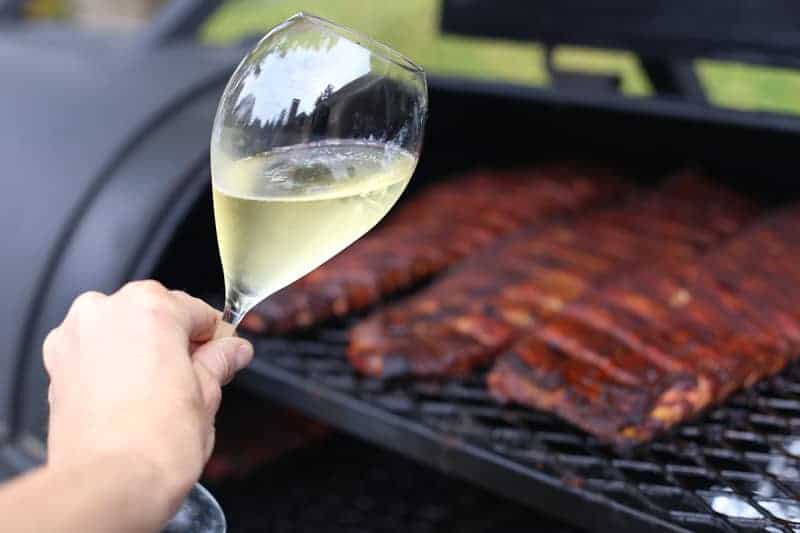
Tips for Pairing Wine with Grilled Foods

  1. Consider the Sauce: The sauce or marinade used in grilling can significantly impact the wine pairing. Sweet and tangy barbecue sauces pair well with fruit-forward wines, while herbaceous marinades might be better with more acidic wines[1].
  2. Match the Intensity: Pair the intensity of the wine with the intensity of the food. Bold, full-bodied wines work well with rich, fatty meats, while lighter wines are better suited for delicate dishes[1][3].
  3. Balance the Flavors: Look for wines that balance the flavors of the grilled food. For example, a wine with good acidity can cut through the richness of fatty meats, while a slightly sweet wine can balance spicy dishes[2][4].
  4. Experiment and Enjoy: Don’t be afraid to try different combinations and see what works best for your palate. The goal is to enhance your dining experience, so have fun experimenting with various wines and grilled foods[5].

SHOP for the Best Grilling tools

Conclusion

Pairing wine with grilled foods can elevate your barbecue experience, bringing out the best in both the wine and the food. By understanding the characteristics of different wines and how they complement various grilled dishes, you can create harmonious and enjoyable pairings. Whether you’re grilling steaks, seafood, or vegetables, there’s a perfect wine to enhance your meal. Cheers to discovering the delightful world of wine and grilling!

Citations:
[1] https://www.jjbuckley.com/wine-knowledge/blog/how-to-pair-wine-with-your-favorite-grilled-foods-/308
[2] https://www.platingsandpairings.com/7-wines-that-pair-with-bbq-perfectly/
[3] https://www.news-press.com/story/life/food/2021/06/30/best-wines-grilling-how-pair-wine-grilled-meats-vegetables/5320468001/
[4] https://discover.texasrealfood.com/the-pairing-post/what-wine-goes-well-with-grilled-vegetables
[5] https://www.yummly.com/dish/887562/an-easy-guide-to-the-best-wines-for-bbq
[6] https://winecountrytable.com/eat-drink/wine-food-pairings/bbq-wine-pairing/
[7] https://www.cardsofwine.com/food_vegetables_grilled.asp
[8] https://www.try.vi/wine-pairing/grilled-vegetables
[9] https://www.wineenthusiast.com/archive/what-to-drink-with-barbecue-food/
[10] https://www.foodandwine.com/lifestyle/best-wine-pairings-grilled-steak
[11] https://www.platingsandpairings.com/wine-with-fish/
[12] https://www.decanter.com/learn/pairing-wine-with-fish-what-to-choose-440973/
[13] https://www.davywine.co.uk/bbq-wines-best-wine-pairings-for-cheese-vegetables/
[14] https://www.coravin.com/community/grilling-best-wines-for-bbq
[15] https://www.coravin.com/blogs/community/grilling-best-wines-for-bbq
[16] https://winefolly.com/wine-pairing/never-fear-the-grill-wine-pairings-with-barbecue/
[17] https://www.thespruceeats.com/pairing-wine-with-seafood-1300638
[18] https://www.sizzlefish.com/pages/seafood-wine-pairings
[19] https://www.vivino.com/wine-news/the-cheat-sheet-to-pairing-wines-with-seafood
[20] https://www.decanter.com/learn/food/wines-at-a-barbeque-320919/

5 Myths About Homemade Wine

There are many misconceptions and misguided assumptions about making wine at home. Most all of them are perpetuated by individuals who never even tasted or made homemade wine. Others are simply born out of the mystique surrounding the commercial wine industry.

How can something so sophisticated be made at home?

Here are the ones that we run into the most. The ones that flat-out drive us silly every time we hear them.

  1. Homemade Wines Don’t Taste That Good.
    Without question, you can easily make wines that are just as good, if not better, than the wines you find on the store shelf. And not with practice, but with your very first batch. I can’t tell you how many times I’ve done side-by-side, blind tastings with a challenging friend or an acquaintance between a glass of wine made from one of our wine ingredient kits and a glass of store bought wine, only to have the homemade wine win – hands-down. I’m not going to name any names, but I’m not talking about doing a blind tasting against the $8 stuff. I’m talking about higher dollar stuff that you’d buy to take to a dinner party, etc. Wouldn’t it be nicer to take your own personalized wine gift, that you made, to the party instead.
  2. Homemade Wine Takes A Lot Of Time To Make.
    Learning how to make your own wine is much easier than most individuals can even begin to imagine. It’s deceptively easy. There are a lot of wine making products on the market today that make it as simple as following a few directions. And, it doesn’t take that long. You can be bottling your first batch of wine in as little as 28 days. And as far as the time it takes out of your day, I’d say it doesn’t get any worse than the time it takes to bottle the wine – an hour to get it start, another half-hour to siphon it to a second container, etc.
  3. Making Homemade Wine Requires A Lot Of Expensive Equipment.
    This may have been partially true 20 or 30 years ago. Back then, depending on what type of wine you were making, you might need a grape crusher to crush the fruit and a grape press to press the fruit. Today it’s different. You don’t need to crush and press the fruit if you don’t want to. You can buy it already done for you. Now there are hundreds of wine making juices packaged up and ready for use from all over the world. You can get Cabernet grape from France, Shiraz grape from Australia, Merlot grape from California…  The choices are endless.
  4. Homemade Wine Spoils Easy.
    Absolutely not. Homemade wine keeps just as good as commercially made wine. There is no difference in the keeping abilities between the two. There is no reason for one to keep better than the other. They are both made the same way from the same basic wine making materials. One’s just on a smaller scale than the other.I currently have several bottles of homemade wine that have been in my cellar aging since 1998 and 2002 and I would not hesitate to drink them myself or serve them to my friends and family.
  5. Making Homemade Wine Is Illegal.
    Wrong! Ever since October 14, 1978 it has been perfectly legal for Americans to make their own wine and beer. This is when President Jimmy Carter signed into law legislation introduced by Senator Alan Cranston of California. You can make up to 100 gallons per year. If you live in a household with another adult, you can make up to 200 gallons per year. It can be for your own personal consumption or to hand out has wine making gifts to friend and relatives. Just make sure you don’t sell it. That would be illegal!

—–
Ed Kraus is a 3rd generation home brewer/winemaker and has been an owner of E. C. Kraus since 1999. He has been helping individuals make better wine and beer for over 25 years.

Courtesy Adventures in Homebrewing

Try something new

How to make wine at home. A Great lesson. CLICK HERE

Small Batch wine Kits to try. Learning is Fun. CLICK HERE

ONE GALLON WINE KITS

The Total Wine System

Home Winemaking: The Simple Way to Make Delicious Wine

The Benefits Of Wine Kits vs Fresh Grapes

What is the going opinion of making wine with fresh grapes and crushing them, as opposed to using a wine kit? Is one better than the other by default, or would you say either method can produce excellent or horrible results?

What is the going opinion of making wine with fresh grapes and crushing them, as opposed to using a wine kit? Is one better than the other by default, or would you say either method can produce excellent or horrible results?

Phil B. – TN
_____

Hello Phil,

Thanks for bringing up this great question about wine kits vs fresh grapes. It’s a question we get from time to time, so I’ll be more than happy to answer it here…

Whether you are making wine from grapes or making wine from kits the quality of the wine starts with the quality of the grapes. There is an adage in the wine making industry that says:

“You can never make a wine that is
better than the grapes used to make it.”

What this means is that you’ll never make great wine out of poor wine grapes. The quality of the wine always starts with the quality of the grapes.

When making wine from fresh grapes the individual winemaker usually has a limited selection of grapes to choose from. Quality can suffer when dealing in the take-it-or-leave-it type of market that often arises for the home winemaker.

The quality of grapes that you will find in wine kits varies from good to outstanding. It is not in the interest of these kit producers to spend their time preparing and packaging poor wine grapes. It doesn’t make economic sense, so great care is taken to locate and acquire grapes that are above average quality.

This is one of the major advantages to using a wine kit vs fresh grapes. You are able to rely on the wine kit producer’s expertise in selecting quality grapes. So on the whole you’ll be starting with a better quality grape when using a wine kit than when obtaining grapes on your own. Of coarse, there are always exceptions. Living near a grape growing mecca such as Napa can turn this point on its head, but for most home winemakers, this is a consideration that should be given some weight.

We offer an array of different brands of wine kits. As you go up the ladder in price, the finer your selection of grape. How much you spend depends on the level of taste. Some people are completely happy with the On The House wine kits and could not tell a difference even if they did choose a more expensive kit. For others, the On The House simply would not do. How far up the ladder one goes is very much a personal choice.

Unfortunately, quality grapes do not guarantee a stellar wine, it’s just the first requirement necessary to get there. Between the grapes and the wine bottle is a whole host of other factors such as: acidity, alcohol, sweetness, etc.

Making wine from a wine kit alleviates you from these variables. This is because all these factors have already been taken care of for you by the wine kit producers. They balance the acidity, sugar content and many other features such as clarification and oak treatment to match the typical character of the wine you are making. By eliminating as many variables as possible they are helping to insure that you will make a remarkable wine every time. This is a very valuable benefit of using wine kits vs fresh grapes – especially for the beginner.

Now having said this, I understand completely that we are talking about a hobby, and for some, part of the hobby is the passion that goes into the picking, the crushing, the pressing, and so forth. I get that. And if this is you, I completely support your efforts to make wine from the dirt to the wine bottle. I’m just trying to bring total objectivity to the consideration of using wine kits vs fresh grapes.

Shop Wine Making Kits

So while both wine kits and fresh grapes holds their own rewards, by starting with a wine you are virtually eliminating any chance of producing a bad wine. Add to that the incredible selection that is now available to the home winemaker and it starts to become apparent that a wine kit is the way to go for the beginner.

I hope this covers all your questions and curiosities about wine kits vs fresh grapes. Please realize that regardless of which path you decide to take, we will be more than happy to help you in any way you need.

Best Wishes,
Ed Kraus
—–
Ed Kraus is a 3rd generation home brewer/winemaker and has been an owner of E. C. Kraus since 1999. He has been helping individuals make better wine and beer for over 25 years.

From ADVENTURES IN HOMEBREWING

Below you will find listings for Small Batch Wine Kits and One Gallon Wine Kits, there are several wines listed. What is your favorite wine? If you see it or one similar make note, Read the article How to Make Wine at Home, watch the videos read the article, and see how easy a wine kit can be. Try one, enjoy the results of your efforts. Start your new hobby and share it with family and friends. You never know your wine could be in great demand.

Try something new

How to make wine at home. A Great lesson. CLICK HERE

Small Batch wine Kits to try. Learning is Fun. CLICK HERE

ONE GALLON WINE KITS

The Total Wine System

Home Winemaking: The Simple Way to Make Delicious Wine

What Is In A Bottle Of Wine?

Wine is composed of unmodified grape juice which was fermented to create an alcoholic drink that many people enjoy the world over. In many countries, dinner or even lunch is not complete without a bottle of wine. Celebrations often require a bottle of wine and this is accompanied by cheers and saluts.

Generally, there are two types of wines; the red wine and the white wine. Both wines are made from grapes, although, different varieties of grapes and both are also fermented to create the wine. The two types of wines also have several kinds of wines. As such, they are usually named after the region they come from in the world or the type of grape used to make the bottle of wine. There are also several other kinds of wines other than the red and the white but these two are the more common.

Composition of a Bottle of Wine

A bottle of wine is primarily composed of grape juice. The grapes made into wine are the key factors to the taste of the beverage. These grapes are usually from the European grapes species. The location of the vineyard and the climate in the specific location has a lot to do with the taste of the wine. This is what is called the terroir and it plays a big role on the quality of the wine.

Yeast is also added to the wine composition to ferment the grape juice. The fermentation may take a few months to achieve the right flavor f the wine. Water is also one of the main components of a bottle of wine and definitely the most abundant component in it. Alcohol also comprises wine and the alcohol content depends on what kind of wine we are talking about.

The Uses of Wine

A bottle of wine is commonly used for drinking, of course. It is also used in liturgical events or other religious based events. Many use wine to celebrate victories and to drown out defeats. A bottle of wine can also be used in cooking, baking and to create cuisine around the world. It is usually used to flavor stocks (beef, chicken etc) or braising the food.

A bottle of wine can also be used to relax the body; as such it has gained a reputation of being medicinal and an aphrodisiac. Some researchers have stated that re wine may be more beneficial for preventing cancer compared to white because red wine contains more poyphenols.

Try something new

How to make wine at home. A Great lesson. CLICK HERE

Small Batch wine Kits to try. Learning is Fun. CLICK HERE

ONE GALLON WINE KITS

The Total Wine System

Home Winemaking: The Simple Way to Make Delicious Wine